Mots de Question
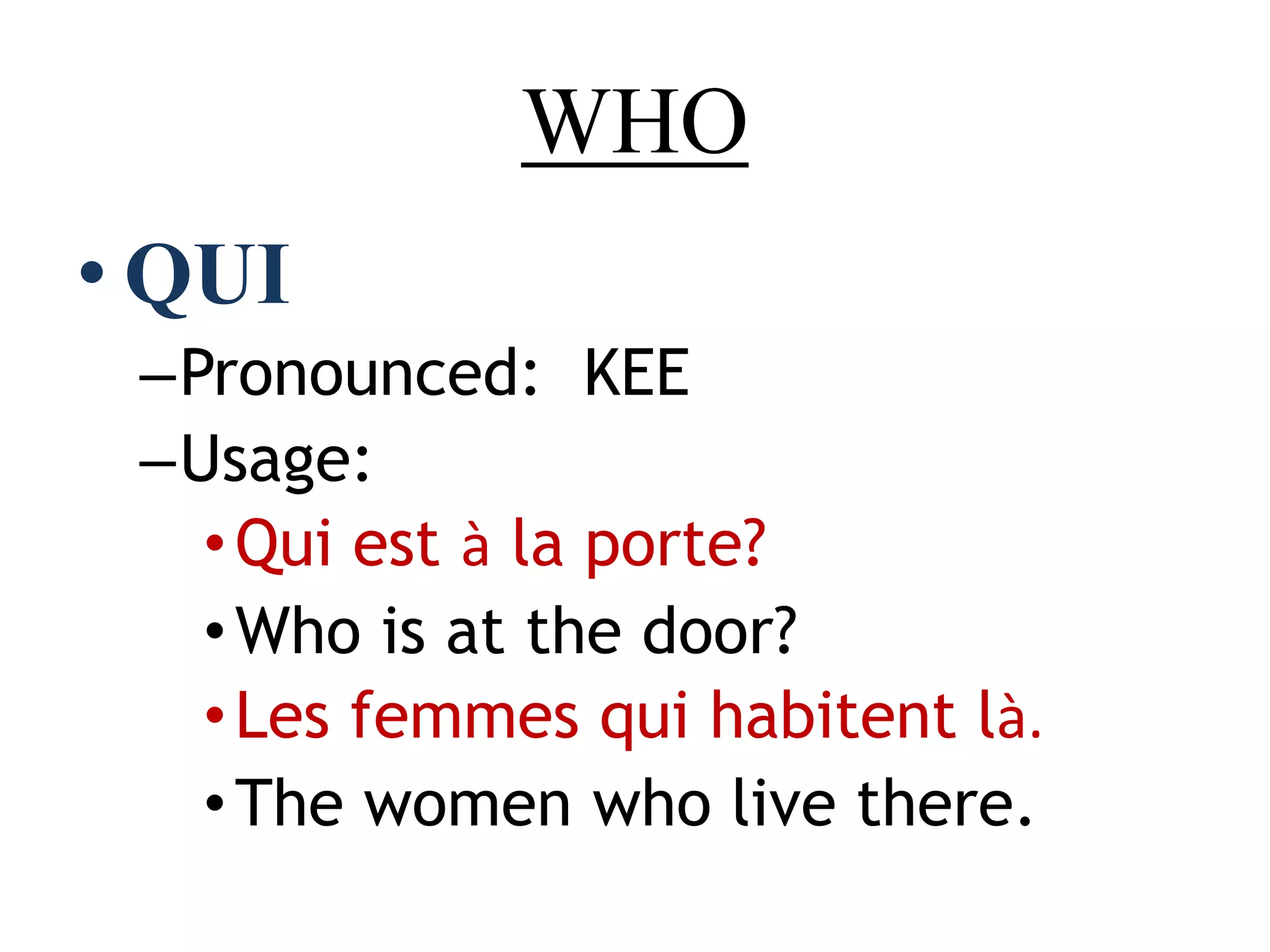
WHO
• QUI
–Pronounced: KEE
–Usage:
•Qui est à la porte?
•Who is at the door?
•Les femmes qui habitent là.
•The women who live there.
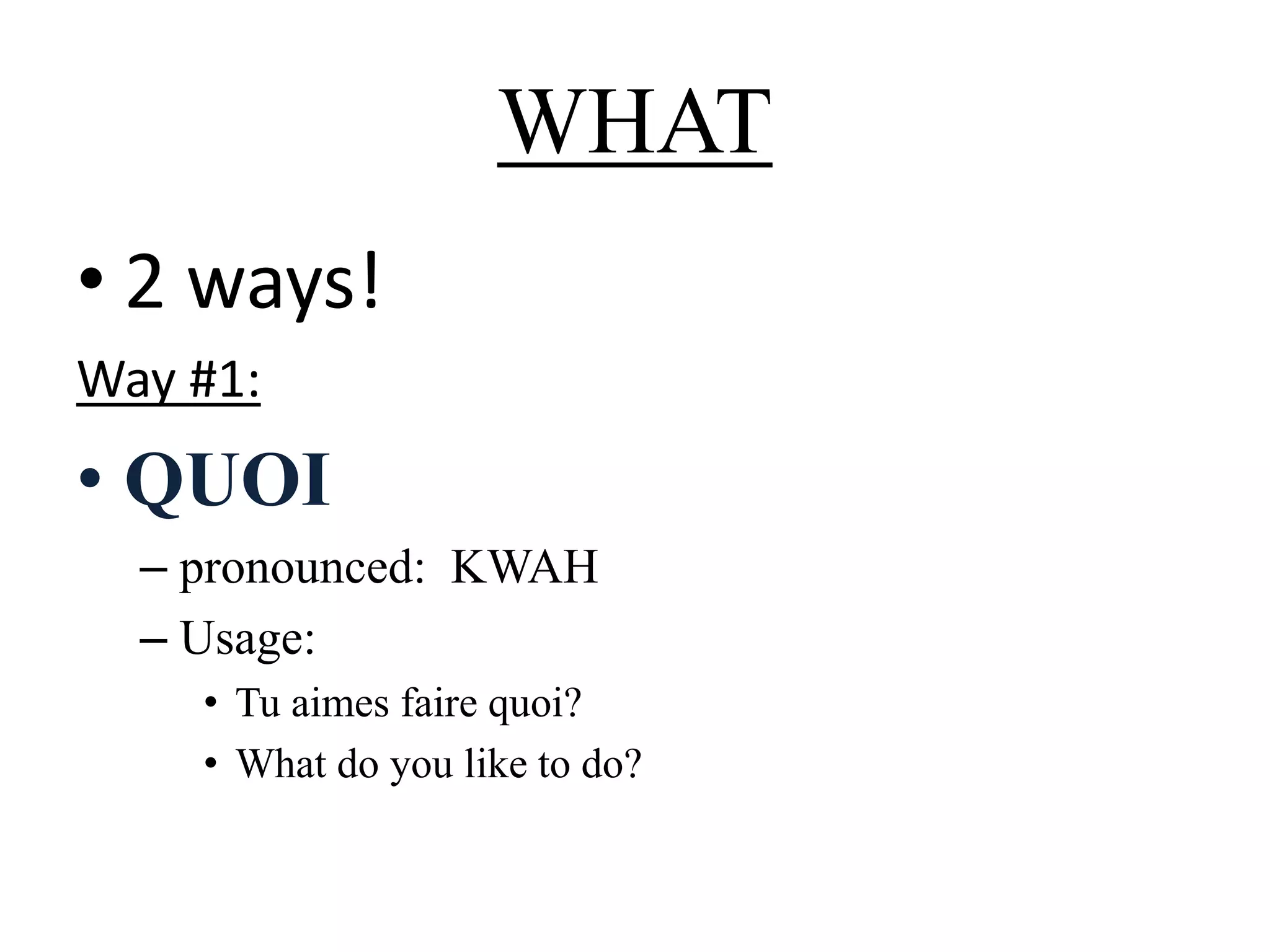
WHAT
• 2 ways!
Way #1:
• QUOI
– pronounced: KWAH
– Usage:
• Tu aimes faire quoi?
• What do you like to do?
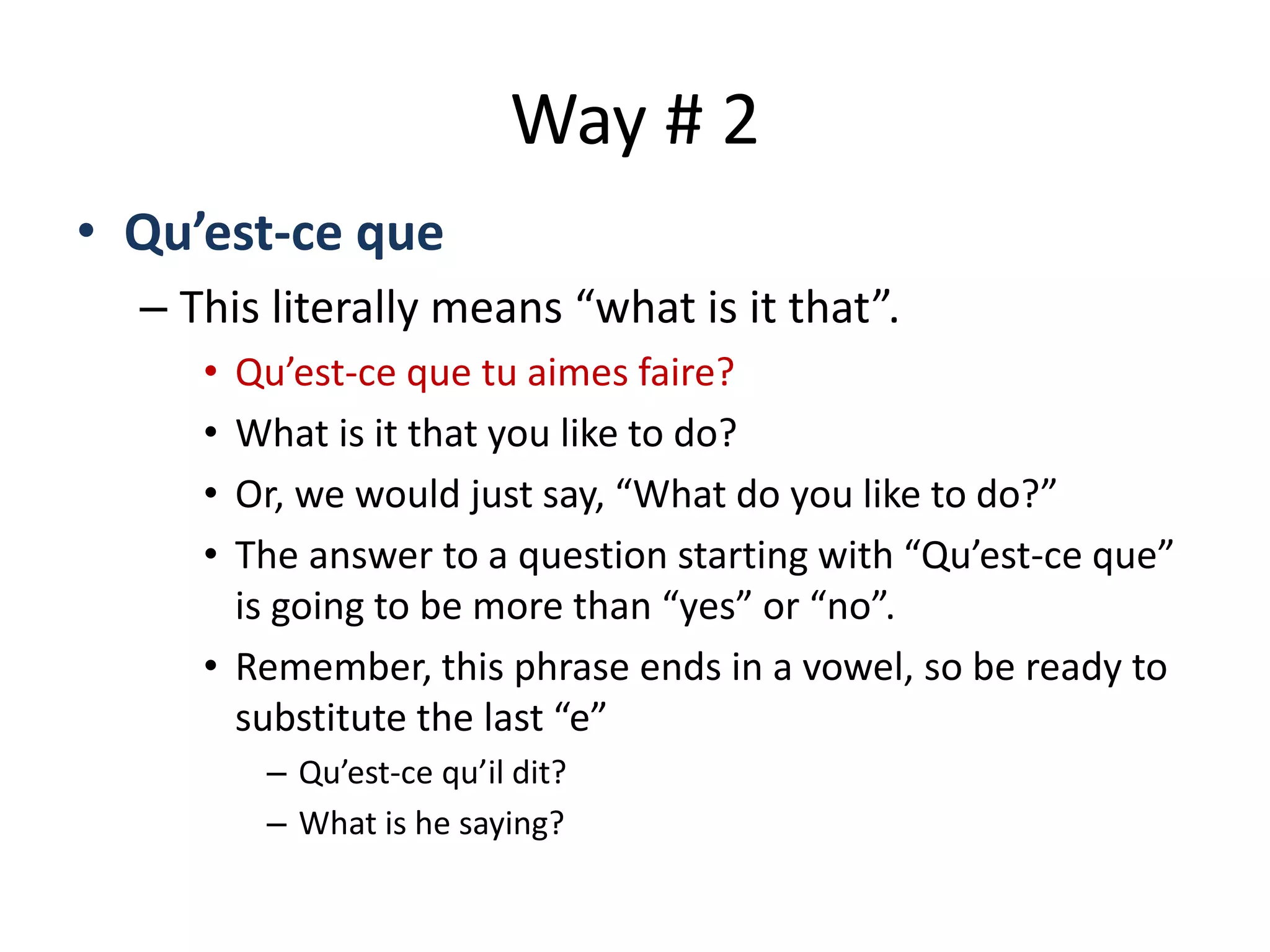
Way # 2
• Qu’est-ce que
– This literally means “what is it that”.
• Qu’est-ce que tu aimes faire?
• What is it that you like to do?
• Or, we would just say, “What do you like to do?”
• The answer to a question starting with “Qu’est-ce que”
is going to be more than “yes” or “no”.
• Remember, this phrase ends in a vowel, so be ready to
substitute the last “e”
– Qu’est-ce qu’il dit?
– What is he saying?
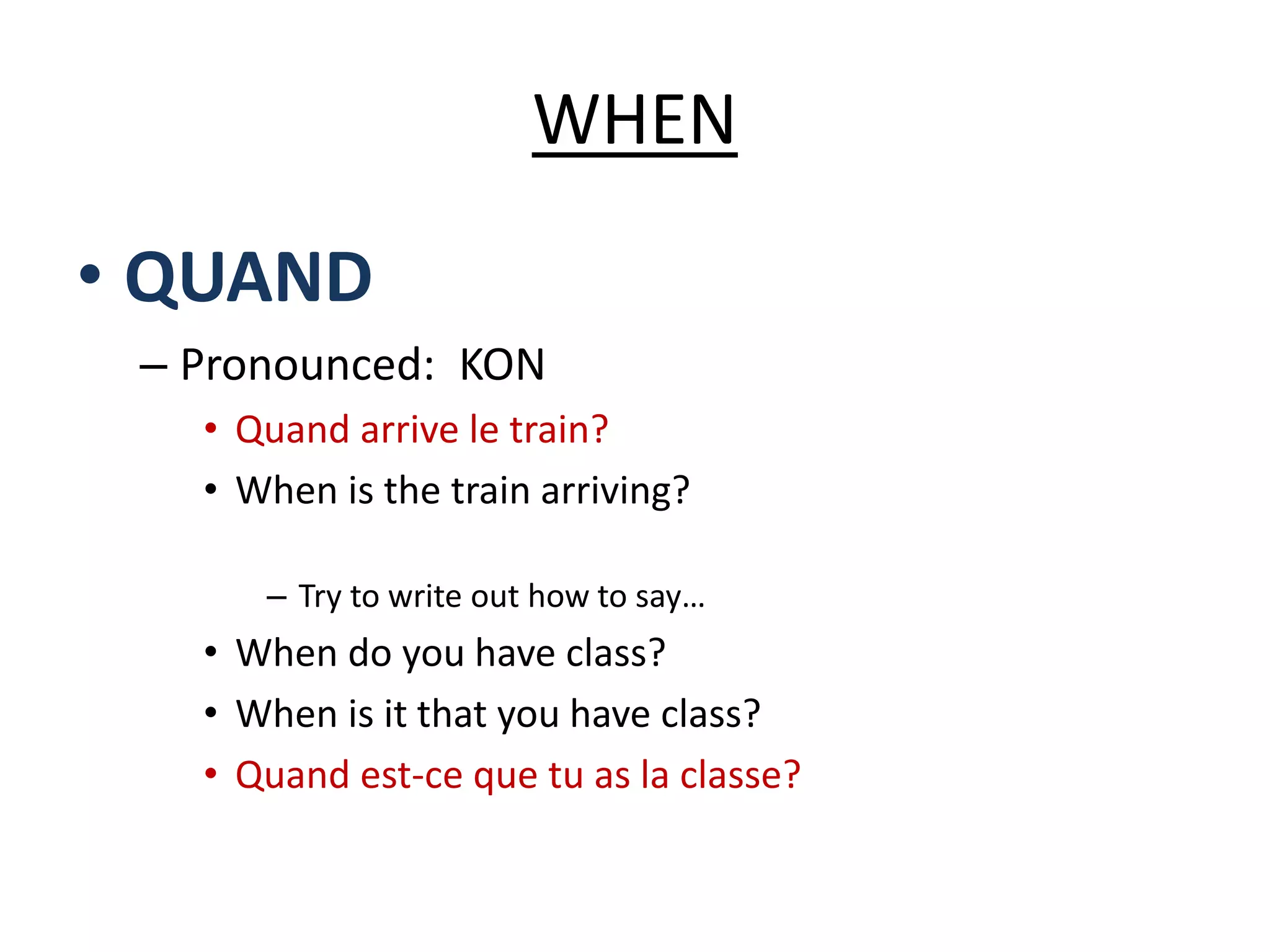
WHEN
• QUAND
– Pronounced: KON
• Quand arrive le train?
• When is the train arriving?
– Try to write out how to say…
• When do you have class?
• When is it that you have class?
• Quand est-ce que tu as la classe?
•
Où
Pronounced: oo
Où est Waldo?
Where is Waldo?
WHERE
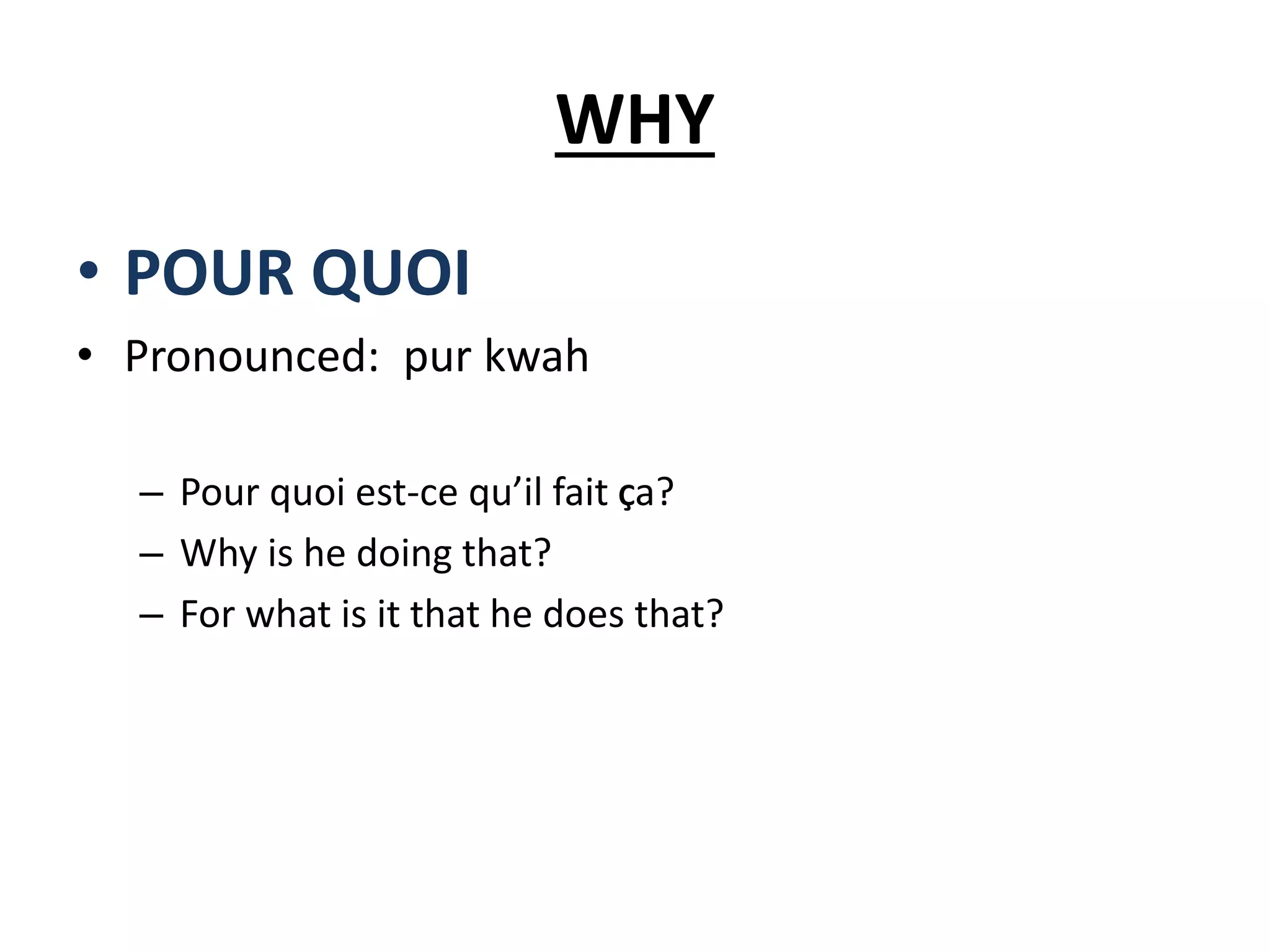
WHY
• POUR QUOI
• Pronounced: pur kwah
– Pour quoi est-ce qu’il fait Ça?
– Why is he doing that?
– For what is it that he does that?
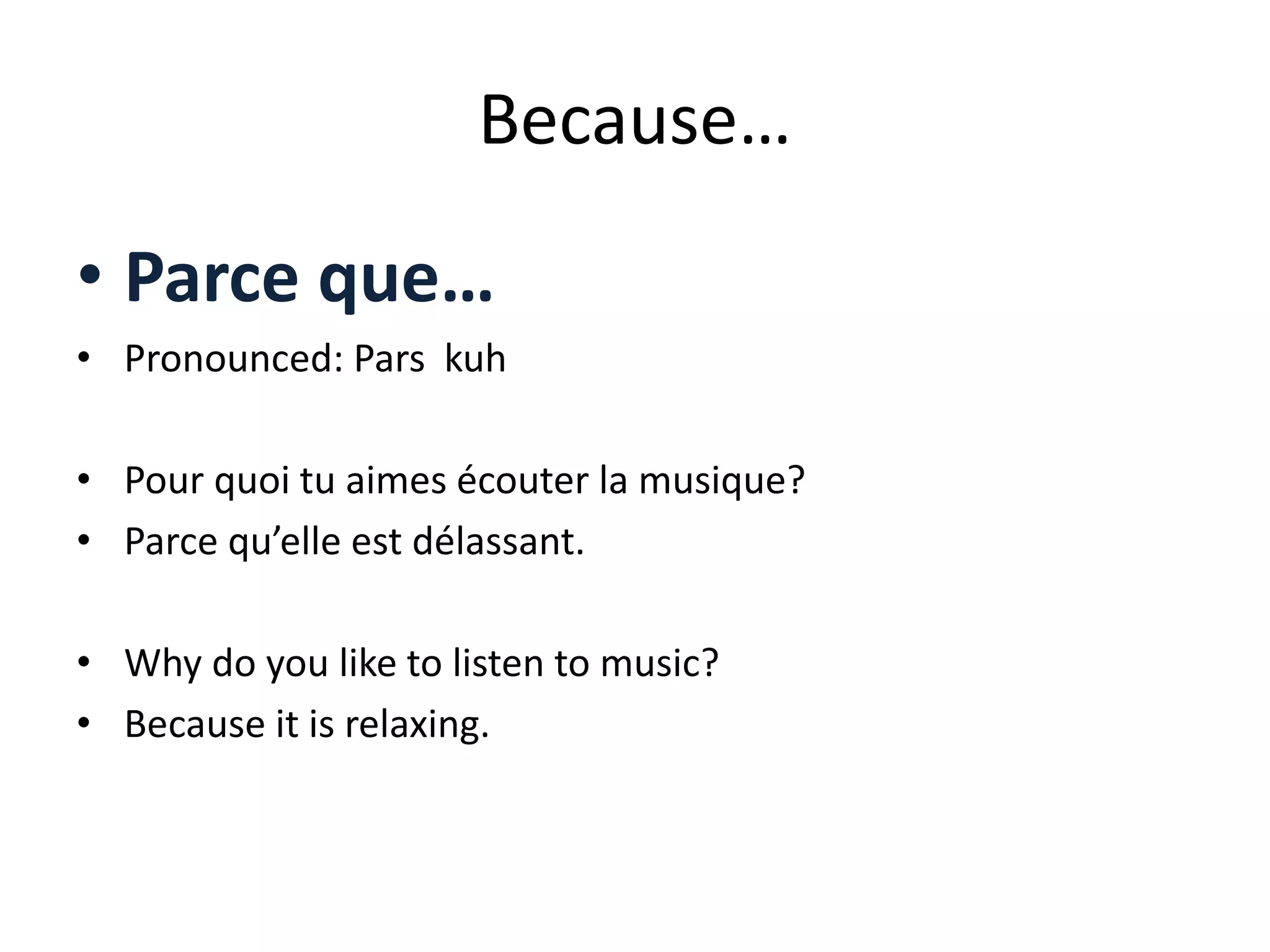
Because…
• Parce que…
• Pronounced: Pars kuh
• Pour quoi tu aimes écouter la musique?
• Parce qu’elle est délassant.
• Why do you like to listen to music?
• Because it is relaxing.
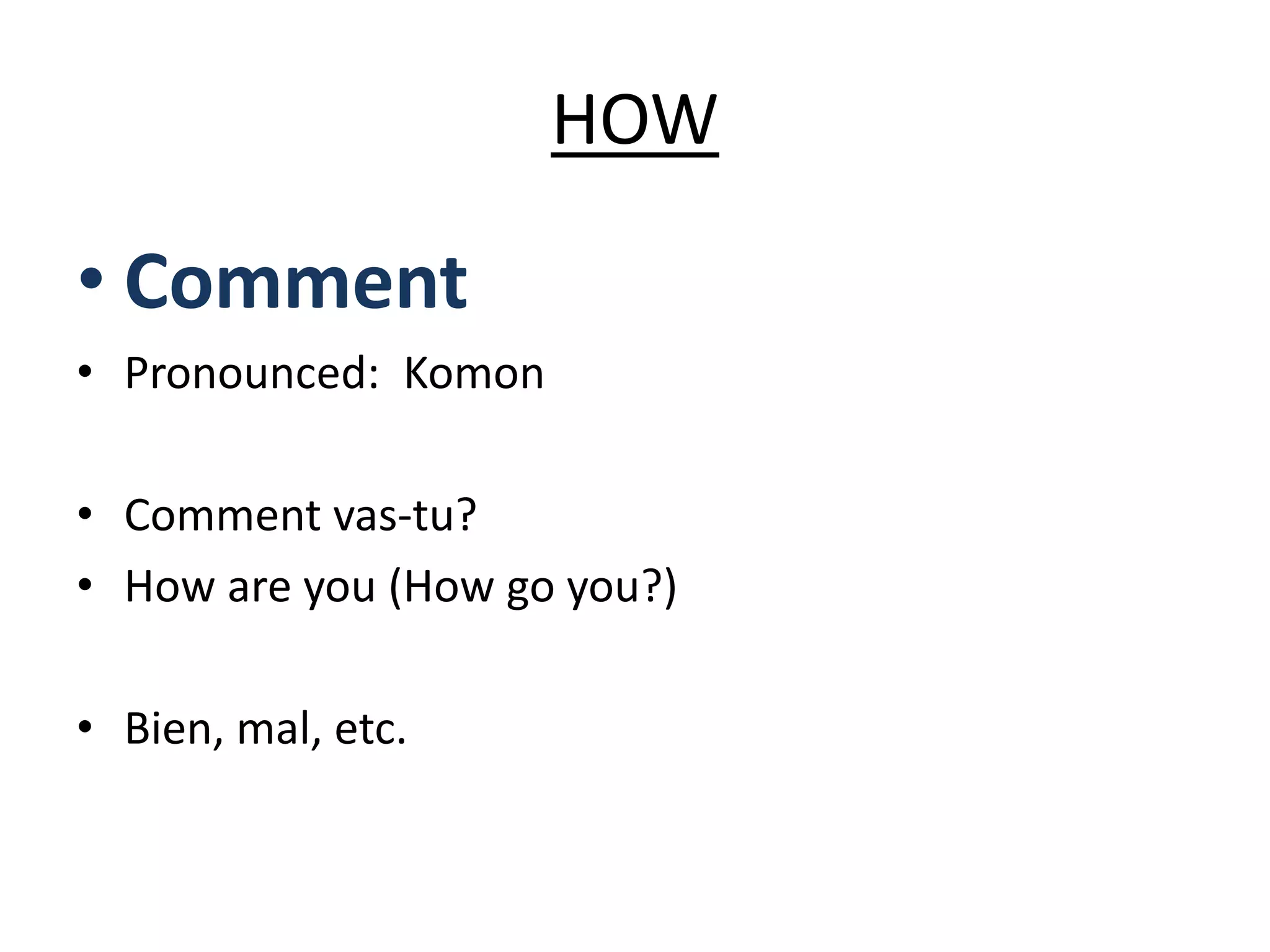
HOW
• Comment
• Pronounced: Komon
• Comment vas-tu?
• How are you (How go you?)
• Bien, mal, etc.
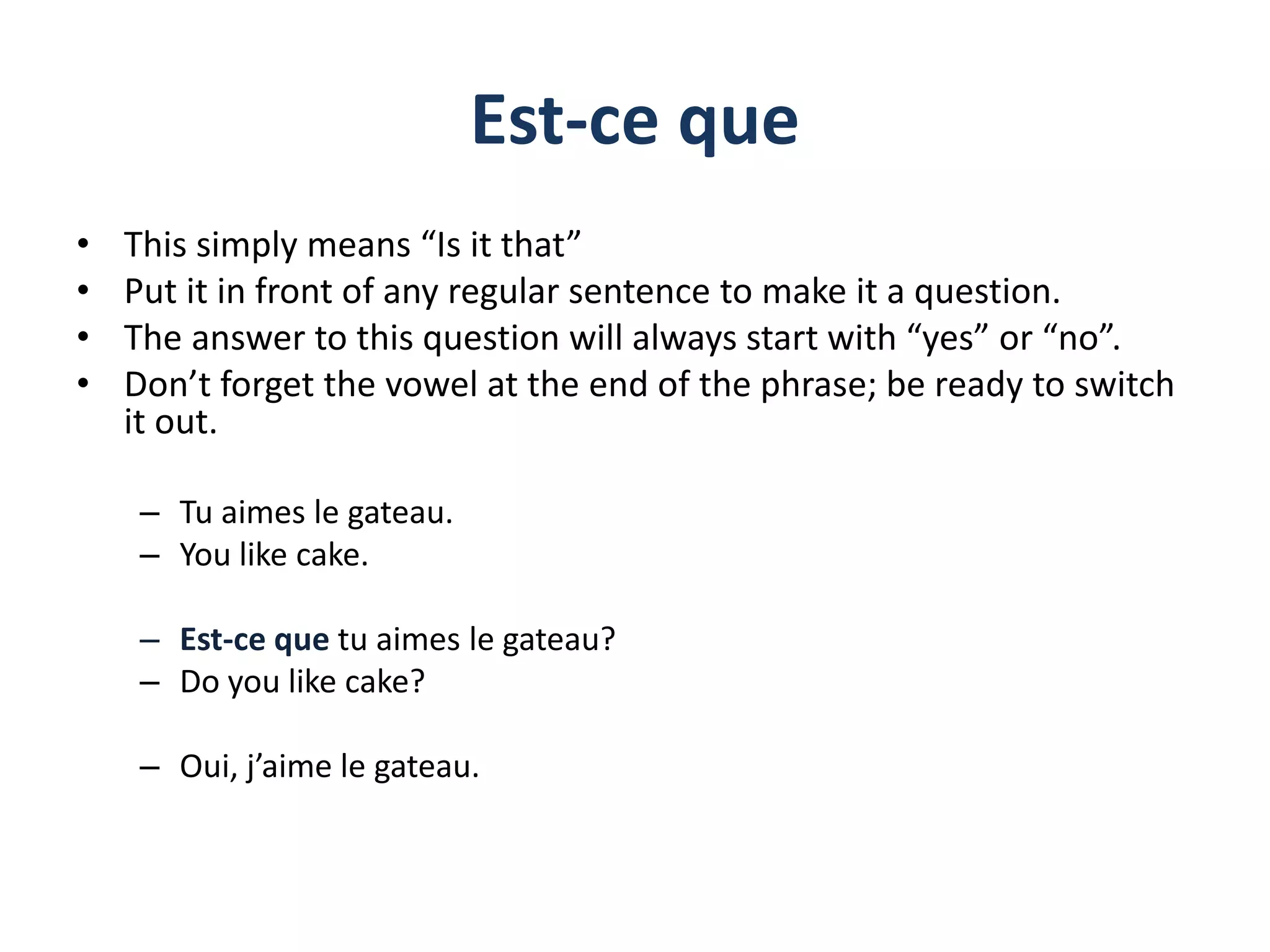
Est-ce que
• This simply means “Is it that”
• Put it in front of any regular sentence to make it a question.
• The answer to this question will always start with “yes” or “no”.
• Don’t forget the vowel at the end of the phrase; be ready to switch
it out.
– Tu aimes le gateau.
– You like cake.
– Est-ce que tu aimes le gateau?
– Do you like cake?
– Oui, j’aime le gateau.

1 Mots De Question

  • 1.
  • 2.
    WHO • QUI –Pronounced: KEE –Usage: •Quiest à la porte? •Who is at the door? •Les femmes qui habitent là. •The women who live there.
  • 3.
    WHAT • 2 ways! Way#1: • QUOI – pronounced: KWAH – Usage: • Tu aimes faire quoi? • What do you like to do?
  • 4.
    Way # 2 •Qu’est-ce que – This literally means “what is it that”. • Qu’est-ce que tu aimes faire? • What is it that you like to do? • Or, we would just say, “What do you like to do?” • The answer to a question starting with “Qu’est-ce que” is going to be more than “yes” or “no”. • Remember, this phrase ends in a vowel, so be ready to substitute the last “e” – Qu’est-ce qu’il dit? – What is he saying?
  • 5.
    WHEN • QUAND – Pronounced:KON • Quand arrive le train? • When is the train arriving? – Try to write out how to say… • When do you have class? • When is it that you have class? • Quand est-ce que tu as la classe?
  • 6.
    • Où Pronounced: oo Où estWaldo? Where is Waldo? WHERE
  • 7.
    WHY • POUR QUOI •Pronounced: pur kwah – Pour quoi est-ce qu’il fait Ça? – Why is he doing that? – For what is it that he does that?
  • 8.
    Because… • Parce que… •Pronounced: Pars kuh • Pour quoi tu aimes écouter la musique? • Parce qu’elle est délassant. • Why do you like to listen to music? • Because it is relaxing.
  • 9.
    HOW • Comment • Pronounced:Komon • Comment vas-tu? • How are you (How go you?) • Bien, mal, etc.
  • 10.
    Est-ce que • Thissimply means “Is it that” • Put it in front of any regular sentence to make it a question. • The answer to this question will always start with “yes” or “no”. • Don’t forget the vowel at the end of the phrase; be ready to switch it out. – Tu aimes le gateau. – You like cake. – Est-ce que tu aimes le gateau? – Do you like cake? – Oui, j’aime le gateau.