IEEE ANTENNAS AND WIRELESS PROPAGATION LETTERS, VOL. 11, 2012 77
Design and Implementation of an Integrated
UWB/Reconfigurable-Slot Antenna
for Cognitive Radio Applications
Elham Erfani, Javad Nourinia, Member, IEEE, Changiz Ghobadi, Mahmoud Niroo-Jazi, Student Member, IEEE,
and Tayeb A. Denidni, Senior Member, IEEE
Abstract—A new incorporated planar ultrawideband (UWB)/re-
configurable-slot antenna is proposed for cognitive radio applica-
tions. A slot resonator is precisely embedded in the disc monopole
radiator to achieve an individual narrowband antenna. A varactor
diode is also deliberately inserted across the slot, providing a re-
configurable frequency function in the range of 5–6 GHz. The slot
is fed by an off-centered microstrip line that creates the desired
matching across the tunable frequency band. The measured an-
tenna parameters are presented and discussed, confirming the sim-
ulation results.
Index Terms—Cognitive radio (CR), frequency-reconfigurable,
slot antenna, ultrawideband (UWB) antenna, varactor diode.
I. INTRODUCTION
CURRENT communication networks operate by Fixed
Spectrum Access (FSA) policy, in which some parts
of the available spectrum have been assigned to one or more
users, and other users do not have the permission to use the
dedicated band. With developing wireless communications and
increasing demands for operating frequency bands, the radio
spectrum has become scarce and congested. However, licensed
users act sporadically within their assigned band such that,
most of the time, operating frequency region can be idle. To
efficiently use the available spectrum band and hence address
the spectrum congestion, cognitive radio networks (CRNs)
based on Dynamic Spectrum Access (DSA) and spectrum
management technique have been proposed [1].
CRNs have two types of users: 1) primary users with licenses
to act in certain spectrum bands; 2) CR users (secondary users)
that have no allocated bands. CR users are considered as vis-
itors to use idle frequency region portions of primary users in
real time [2]. Hence, they should have comprehensive aware-
ness from licensed and unlicensed bands in its operating en-
vironment. Through sensing and measurement of interference
temperature and level of signal energy [2], CR can detect hole
Manuscript received September 28, 2011; revised November 24, 2011; ac-
cepted December 30, 2011. Date of publication January 04, 2012; date of cur-
rent version March 19, 2012.
E. Erfani, J. Nourinia, and C. Ghobadi are with the Department of Elec-
trical Engineering, Urmia University, Urmia, Iran (e-mail: el.erfani@yahoo.
com; j.nourinia@urmia.ac.ir; ch.ghobadi@urmia.ac.ir).
M. Niroo-Jazi and T. A. Denidni are with INRS, Université de Québec, Mon-
treal, QC H5A 1K6, Canada (e-mail: njazi@emt.inrs.ca; denidni@emt.inrs.ca).
Color versions of one or more of the figures in this letter are available online
at http://ieeexplore.ieee.org.
Digital Object Identifier 10.1109/LAWP.2011.2182631
spectrums (white spectrums) in any time and select the best band
region according to the quality-of-service (QoS) requirements.
As soon as this portion of spectrum is requested to use by the pri-
mary user, the CR user should vacant this frequency band and
reconfigure its transmission parameters to achieve a new suit-
able hole spectrum.
In the aspect of hardware, CR needs a specialized antenna
for monitoring and communicating. In the recent years, dif-
ferent antenna designs for CR application have been reported
in [3]–[7]. An ultrawideband (UWB) and a reconfigurable nar-
rowband antenna can be chosen to handle sensing and com-
munication functions, respectively. A technique based on in-
tegrating these two antennas into a same substrate has been
proposed in [3] and [4]. In [3], as a narrowband antenna, a
planar inverted-F resonator is printed on the reverse side of a
coplanar waveguide (CPW)-fed UWB monopole antenna, and
it utilizes the radiator of UWB as its own ground plane. In this
structure, a matching circuit has been used to tune this antenna
for three operating regions centered around 4, 8, and 10 GHz,
leading to increase the antenna complexity and size. In [4], a
UWB egg-shaped monopole antenna and five different narrow-
band patch radiators inside a circular section are printed on a
same substrate. The operating frequency of this antenna can be
adjusted by physically rotating the circular part via a stepper
motor. At each rotation step, a certain frequency band is ob-
tained by feeding an individual patch radiator. However, using a
stepper motor requires more space and increases the complexity
and cost of the antenna.
In another technique, sensing and communicating antennas
are realized by switching between a narrowband antenna and a
UWB resonator [5]–[7]. The antenna structure is fed by a single
terminal in this case. This method is achieved by two ways:
1) incorporating a bandpass filter inside a UWB antenna [5], [6];
2) changing the structure of the antenna radiator or ground plane
via switches [7]. A reconfigurable bandpass filter is integrated
with a UWB antenna in [5]. The reconfigurability is based on in-
corporating nine switches within the defected microstrip struc-
ture (DMS) bandpass filter.
Today, in mobile systems, a compact antenna with high per-
formance features, low cost, and less complexity is demanded.
In this letter, a new antenna configuration for CRNs is presented.
This antenna is constructed by incorporating a reconfigurable
slot resonator into an UWB antenna in a unique substrate, while
the antenna size is kept small. Simulated and experimental re-
sults of the fabricated prototype are presented and compared.
1536-1225/$31.00 © 2012 IEEE
Authorized licensed use limited to: Birla Institute of Technology & Science. Downloaded on April 27,2020 at 13:32:14 UTC from IEEE Xplore. Restrictions apply.
78 IEEE ANTENNAS AND WIRELESS PROPAGATION LETTERS, VOL. 11, 2012
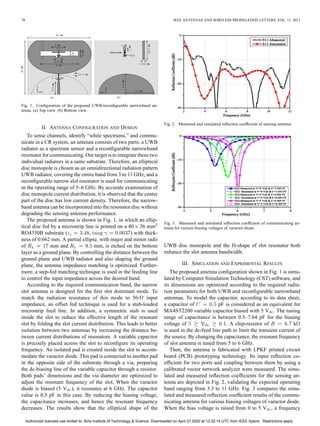
Fig. 1. Configuration of the proposed UWB/reconfigurable narrowband an-
tenna. (a) Top view. (b) Bottom view.
II. ANTENNA CONFIGURATION AND DESIGN
To sense channels, identify “white spectrums,” and commu-
nicate in a CR system, an antenna consists of two parts: a UWB
radiator as a spectrum sensor and a reconfigurable narrowband
resonator for communicating. Our target is to integrate these two
individual radiators in a same substrate. Therefore, an elliptical
disc monopole is chosen as an omnidirectional radiation pattern
UWB radiator, covering the entire band from 3 to 11 GHz, and a
reconfigurable narrow slot resonator is used for communicating
in the operating range of 5–6 GHz. By accurate examination of
disc monopole current distribution, it is observed that the center
part of the disc has low current density. Therefore, the narrow-
band antenna can be incorporated into the resonator disc without
degrading the sensing antenna performance.
The proposed antenna is shown in Fig. 1, in which an ellip-
tical disc fed by a microstrip line is printed on a 40 36 mm
RO4350B substrate ( , ) with thick-
ness of 0.662 mm. A partial ellipse, with major and minor radii
of mm and mm, is etched on the bottom
layer as a ground plane. By controlling the distance between the
ground plane and UWB radiator and also shaping the ground
plane, the antenna impedance matching is optimized. Further-
more, a step-fed matching technique is used in the feeding line
to control the input impedance across the desired band.
According to the required communication band, the narrow
slot antenna is designed for the first slot dominant mode. To
match the radiation resistance of this mode to 50- input
impedance, an offset fed technique is used for a stub-loaded
microstrip feed line. In addition, a symmetric stub is used
inside the slot to reduce the effective length of the resonant
slot by folding the slot current distribution. This leads to better
isolation between two antennas by increasing the distance be-
tween current distributions of resonators. A variable capacitor
is precisely placed across the slot to reconfigure its operating
frequency. An isolated pad is created inside the slot to accom-
modate the varactor diode. This pad is connected to another pad
in the opposite side of the substrate through a via, preparing
the dc-biasing line of the variable capacitor through a resistor.
Both pads’ dimensions and the via diameter are optimized to
adjust the resonant frequency of the slot. When the varactor
diode is biased (5 V ), it resonates at 6 GHz. The capacitor
value is 0.5 pF in this case. By reducing the biasing voltage,
the capacitance increases, and hence the resonant frequency
decreases. The results show that the elliptical shape of the
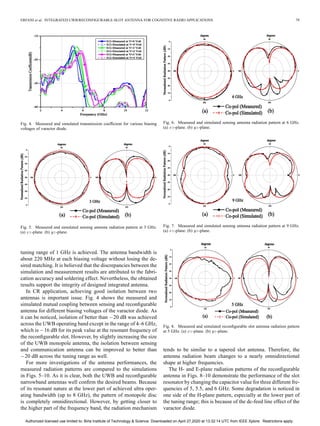
Fig. 2. Measured and simulated reflection coefficient of sensing antenna.
Fig. 3. Measured and simulated reflection coefficient of communicating an-
tenna for various biasing voltages of varactor diode.
UWB disc monopole and the H-shape of slot resonator both
enhance the slot antenna bandwidth.
III. SIMULATION AND EXPRIMENTAL RESULTS
The proposed antenna configuration shown in Fig. 1 is simu-
lated by Computer Simulation Technology (CST) software, and
its dimensions are optimized according to the required radia-
tion parameters for both UWB and reconfigurable narrowband
antennas. To model the capacitor, according to its data sheet,
a capacitor of pF is considered as an equivalent for
MA4ST2200 variable capacitor biased with 5 V . The tuning
range of capacitance is between 0.5–7.64 pF for the biasing
voltage of V . A chip-resistor of k
is used in the dc-feed line path to limit the transient current of
the source. By changing the capacitance, the resonant frequency
of slot antenna is tuned from 5 to 6 GHz.
Then, the antenna is fabricated with LPKF printed circuit
board (PCB) prototyping technology. Its input reflection co-
efficient for two ports and coupling between them by using a
calibrated vector network analyzer were measured. The simu-
lated and measured reflection coefficients for the sensing an-
tenna are depicted in Fig. 2, validating the expected operating
band ranging from 3.3 to 11 GHz. Fig. 3 compares the simu-
lated and measured reflection coefficient results of the commu-
nicating antenna for various biasing voltages of varactor diode.
When the bias voltage is raised from 0 to 5 V , a frequency
Authorized licensed use limited to: Birla Institute of Technology & Science. Downloaded on April 27,2020 at 13:32:14 UTC from IEEE Xplore. Restrictions apply.
ERFANI et al.: INTEGRATED UWB/RECONFIGURABLE-SLOT ANTENNA FOR COGNITIVE RADIO APPLICATIONS 79
Fig. 4. Measured and simulated transmission coefficient for various biasing
voltages of varactor diode.
Fig. 5. Measured and simulated sensing antenna radiation pattern at 3 GHz.
(a) -plane. (b) -plane.
tuning range of 1 GHz is achieved. The antenna bandwidth is
about 220 MHz at each biasing voltage without losing the de-
sired matching. It is believed that the discrepancies between the
simulation and measurement results are attributed to the fabri-
cation accuracy and soldering effect. Nevertheless, the obtained
results support the integrity of designed integrated antenna.
In CR application, achieving good isolation between two
antennas is important issue. Fig. 4 shows the measured and
simulated mutual coupling between sensing and reconfigurable
antenna for different biasing voltages of the varactor diode. As
it can be noticed, isolation of better than 20 dB was achieved
across the UWB operating band except in the range of 4–6 GHz,
which is 16 dB for its peak value at the resonant frequency of
the reconfigurable slot. However, by slightly increasing the size
of the UWB monopole antenna, the isolation between sensing
and communication antenna can be improved to better than
20 dB across the tuning range as well.
For more investigations of the antenna performances, the
measured radiation patterns are compared to the simulations
in Figs. 5–10. As it is clear, both the UWB and reconfigurable
narrowband antennas well confirm the desired beams. Because
of its resonant nature at the lower part of achieved ultra oper-
ating bandwidth (up to 8 GHz), the pattern of monopole disc
is completely omnidirectional. However, by getting closer to
the higher part of the frequency band, the radiation mechanism
Fig. 6. Measured and simulated sensing antenna radiation pattern at 6 GHz.
(a) -plane. (b) -plane.
Fig. 7. Measured and simulated sensing antenna radiation pattern at 9 GHz.
(a) -plane. (b) -plane.
Fig. 8. Measured and simulated reconfigurable slot antenna radiation pattern
at 5 GHz. (a) -plane. (b) -plane.
tends to be similar to a tapered slot antenna. Therefore, the
antenna radiation beam changes to a nearly omnidirectional
shape at higher frequencies.
The H- and E-plane radiation patterns of the reconfigurable
antenna in Figs. 8–10 demonstrate the performance of the slot
resonator by changing the capacitor value for three different fre-
quencies of 5, 5.5, and 6 GHz. Some degradation is noticed in
one side of the H-plane pattern, especially at the lower part of
the tuning range; this is because of the dc-feed line effect of the
varactor diode.
Authorized licensed use limited to: Birla Institute of Technology & Science. Downloaded on April 27,2020 at 13:32:14 UTC from IEEE Xplore. Restrictions apply.
80 IEEE ANTENNAS AND WIRELESS PROPAGATION LETTERS, VOL. 11, 2012
Fig. 9. Measured and simulated reconfigurable slot antenna radiation pattern
at 5.5 GHz. (a) -plane. (b) -plane.
Fig. 10. Measured and simulated reconfigurable slot antenna radiation pattern
at 6 GHz. (a) -plane. (b) -plane.
The measured and simulated gains of UWB antenna in the
-plane are shown in Fig. 11. For comparison, the simulated
peak gain of the antenna is depicted in this figure as well. The
antenna gain in the -plane is measured using comparison
method, confirming the predicted result. Since different parts
of the UWB antenna are radiated across the bandwidth, its ra-
diation pattern is changing, and therefore some gain reduction
is observed in the ranges of 5–6 and 9–12 GHz.
However, as it can be noticed in this figure, the calculated
peak gain of the antenna demonstrates smother response with
better gain compared to the ones obtained in -plane. The
measured peak gains of the reconfigurable antenna for the fre-
quencies of 5, 5.5, and 6 GHz are 1.87, 1.36, and 1.73 dB,
respectively.
Fig. 11. Measured and simulated peak gain of UWB antenna.
IV. CONCLUSION
In this letter, an integrated elliptical monopole antenna with
reconfigurable slot radiator on a same substrate has been suc-
cessfully introduced for cognitive radio applications. This an-
tenna can offer sensing and communicating functions with a rea-
sonable size. The achieved results have shown that the isolation
between the narrow and UWB antenna is reduced to better than
16 dB by folding the slot resonator current distribution using
a balanced stub inside the slot. Moreover, by an offset-fed con-
figuration, the first dominant mode of the slot can easily be ex-
cited, providing the desired wireless communication operating
frequency bandwidth.
REFERENCES
[1] J. Mitola, III, “Cognitive radio for flexible mobile multimedia commu-
nications,” in Proc. IEEE MoMuC, 1999, pp. 3–10.
[2] I. F. Akyildiz, W. Y. Lee, M. C. Vuran, and S. Mohanty, “A survey on
spectrum management in cognitive radio networks,” IEEE Commun.
Mag., vol. 46, no. 4, pp. 40–48, Apr. 2008.
[3] E. Ebrahimi, J. R. Kelly, and P. Hall, “Integrated wide-narrowband
antenna for multi-standard radio,” IEEE Trans. Antennas Propag., vol.
59, no. 7, pp. 2628–2635, Jul. 2011.
[4] Y. Tawk, J. Costantine, K. Avery, and C. G. Christodoulou, “Imple-
mentation of a cognitive radio front-end using rotatable controlled re-
configurable antennas,” IEEE Trans. Antennas Propag., vol. 59, no. 5,
pp. 1773–1778, May 2011.
[5] M. Zamudio, Y. Tawk, J. Kim, and C. G. Christodoulou, “Integrated
cognitive radio antenna using reconfigurable band pass filters,” in Proc.
5th Eur. Conf. Antennas Propag., 2011, pp. 2108–2112.
[6] M. R. Hamid, P. Gardner, P. S. Hall, and F. Ghanem, “Vivaldi antenna
with integrated switchable band pass resonator,” IEEE Trans. Antennas
Propag., vol. 59, no. 11, pp. 4008–4015, Nov. 2011.
[7] J. R. Kelly, P. S. Hall, and P. Song, “A reconfigurable wideband handset
antenna operating from 460 MHz to 12 GHz,” in Proc. IEEE Antennas
Propag. Soc. Int. Symp., 2009, pp. 1–4.
Authorized licensed use limited to: Birla Institute of Technology & Science. Downloaded on April 27,2020 at 13:32:14 UTC from IEEE Xplore. Restrictions apply.

06122485.pdf

  • 1.
    IEEE ANTENNAS ANDWIRELESS PROPAGATION LETTERS, VOL. 11, 2012 77 Design and Implementation of an Integrated UWB/Reconfigurable-Slot Antenna for Cognitive Radio Applications Elham Erfani, Javad Nourinia, Member, IEEE, Changiz Ghobadi, Mahmoud Niroo-Jazi, Student Member, IEEE, and Tayeb A. Denidni, Senior Member, IEEE Abstract—A new incorporated planar ultrawideband (UWB)/re- configurable-slot antenna is proposed for cognitive radio applica- tions. A slot resonator is precisely embedded in the disc monopole radiator to achieve an individual narrowband antenna. A varactor diode is also deliberately inserted across the slot, providing a re- configurable frequency function in the range of 5–6 GHz. The slot is fed by an off-centered microstrip line that creates the desired matching across the tunable frequency band. The measured an- tenna parameters are presented and discussed, confirming the sim- ulation results. Index Terms—Cognitive radio (CR), frequency-reconfigurable, slot antenna, ultrawideband (UWB) antenna, varactor diode. I. INTRODUCTION CURRENT communication networks operate by Fixed Spectrum Access (FSA) policy, in which some parts of the available spectrum have been assigned to one or more users, and other users do not have the permission to use the dedicated band. With developing wireless communications and increasing demands for operating frequency bands, the radio spectrum has become scarce and congested. However, licensed users act sporadically within their assigned band such that, most of the time, operating frequency region can be idle. To efficiently use the available spectrum band and hence address the spectrum congestion, cognitive radio networks (CRNs) based on Dynamic Spectrum Access (DSA) and spectrum management technique have been proposed [1]. CRNs have two types of users: 1) primary users with licenses to act in certain spectrum bands; 2) CR users (secondary users) that have no allocated bands. CR users are considered as vis- itors to use idle frequency region portions of primary users in real time [2]. Hence, they should have comprehensive aware- ness from licensed and unlicensed bands in its operating en- vironment. Through sensing and measurement of interference temperature and level of signal energy [2], CR can detect hole Manuscript received September 28, 2011; revised November 24, 2011; ac- cepted December 30, 2011. Date of publication January 04, 2012; date of cur- rent version March 19, 2012. E. Erfani, J. Nourinia, and C. Ghobadi are with the Department of Elec- trical Engineering, Urmia University, Urmia, Iran (e-mail: el.erfani@yahoo. com; j.nourinia@urmia.ac.ir; ch.ghobadi@urmia.ac.ir). M. Niroo-Jazi and T. A. Denidni are with INRS, Université de Québec, Mon- treal, QC H5A 1K6, Canada (e-mail: njazi@emt.inrs.ca; denidni@emt.inrs.ca). Color versions of one or more of the figures in this letter are available online at http://ieeexplore.ieee.org. Digital Object Identifier 10.1109/LAWP.2011.2182631 spectrums (white spectrums) in any time and select the best band region according to the quality-of-service (QoS) requirements. As soon as this portion of spectrum is requested to use by the pri- mary user, the CR user should vacant this frequency band and reconfigure its transmission parameters to achieve a new suit- able hole spectrum. In the aspect of hardware, CR needs a specialized antenna for monitoring and communicating. In the recent years, dif- ferent antenna designs for CR application have been reported in [3]–[7]. An ultrawideband (UWB) and a reconfigurable nar- rowband antenna can be chosen to handle sensing and com- munication functions, respectively. A technique based on in- tegrating these two antennas into a same substrate has been proposed in [3] and [4]. In [3], as a narrowband antenna, a planar inverted-F resonator is printed on the reverse side of a coplanar waveguide (CPW)-fed UWB monopole antenna, and it utilizes the radiator of UWB as its own ground plane. In this structure, a matching circuit has been used to tune this antenna for three operating regions centered around 4, 8, and 10 GHz, leading to increase the antenna complexity and size. In [4], a UWB egg-shaped monopole antenna and five different narrow- band patch radiators inside a circular section are printed on a same substrate. The operating frequency of this antenna can be adjusted by physically rotating the circular part via a stepper motor. At each rotation step, a certain frequency band is ob- tained by feeding an individual patch radiator. However, using a stepper motor requires more space and increases the complexity and cost of the antenna. In another technique, sensing and communicating antennas are realized by switching between a narrowband antenna and a UWB resonator [5]–[7]. The antenna structure is fed by a single terminal in this case. This method is achieved by two ways: 1) incorporating a bandpass filter inside a UWB antenna [5], [6]; 2) changing the structure of the antenna radiator or ground plane via switches [7]. A reconfigurable bandpass filter is integrated with a UWB antenna in [5]. The reconfigurability is based on in- corporating nine switches within the defected microstrip struc- ture (DMS) bandpass filter. Today, in mobile systems, a compact antenna with high per- formance features, low cost, and less complexity is demanded. In this letter, a new antenna configuration for CRNs is presented. This antenna is constructed by incorporating a reconfigurable slot resonator into an UWB antenna in a unique substrate, while the antenna size is kept small. Simulated and experimental re- sults of the fabricated prototype are presented and compared. 1536-1225/$31.00 © 2012 IEEE Authorized licensed use limited to: Birla Institute of Technology & Science. Downloaded on April 27,2020 at 13:32:14 UTC from IEEE Xplore. Restrictions apply.
  • 2.
    78 IEEE ANTENNASAND WIRELESS PROPAGATION LETTERS, VOL. 11, 2012 Fig. 1. Configuration of the proposed UWB/reconfigurable narrowband an- tenna. (a) Top view. (b) Bottom view. II. ANTENNA CONFIGURATION AND DESIGN To sense channels, identify “white spectrums,” and commu- nicate in a CR system, an antenna consists of two parts: a UWB radiator as a spectrum sensor and a reconfigurable narrowband resonator for communicating. Our target is to integrate these two individual radiators in a same substrate. Therefore, an elliptical disc monopole is chosen as an omnidirectional radiation pattern UWB radiator, covering the entire band from 3 to 11 GHz, and a reconfigurable narrow slot resonator is used for communicating in the operating range of 5–6 GHz. By accurate examination of disc monopole current distribution, it is observed that the center part of the disc has low current density. Therefore, the narrow- band antenna can be incorporated into the resonator disc without degrading the sensing antenna performance. The proposed antenna is shown in Fig. 1, in which an ellip- tical disc fed by a microstrip line is printed on a 40 36 mm RO4350B substrate ( , ) with thick- ness of 0.662 mm. A partial ellipse, with major and minor radii of mm and mm, is etched on the bottom layer as a ground plane. By controlling the distance between the ground plane and UWB radiator and also shaping the ground plane, the antenna impedance matching is optimized. Further- more, a step-fed matching technique is used in the feeding line to control the input impedance across the desired band. According to the required communication band, the narrow slot antenna is designed for the first slot dominant mode. To match the radiation resistance of this mode to 50- input impedance, an offset fed technique is used for a stub-loaded microstrip feed line. In addition, a symmetric stub is used inside the slot to reduce the effective length of the resonant slot by folding the slot current distribution. This leads to better isolation between two antennas by increasing the distance be- tween current distributions of resonators. A variable capacitor is precisely placed across the slot to reconfigure its operating frequency. An isolated pad is created inside the slot to accom- modate the varactor diode. This pad is connected to another pad in the opposite side of the substrate through a via, preparing the dc-biasing line of the variable capacitor through a resistor. Both pads’ dimensions and the via diameter are optimized to adjust the resonant frequency of the slot. When the varactor diode is biased (5 V ), it resonates at 6 GHz. The capacitor value is 0.5 pF in this case. By reducing the biasing voltage, the capacitance increases, and hence the resonant frequency decreases. The results show that the elliptical shape of the Fig. 2. Measured and simulated reflection coefficient of sensing antenna. Fig. 3. Measured and simulated reflection coefficient of communicating an- tenna for various biasing voltages of varactor diode. UWB disc monopole and the H-shape of slot resonator both enhance the slot antenna bandwidth. III. SIMULATION AND EXPRIMENTAL RESULTS The proposed antenna configuration shown in Fig. 1 is simu- lated by Computer Simulation Technology (CST) software, and its dimensions are optimized according to the required radia- tion parameters for both UWB and reconfigurable narrowband antennas. To model the capacitor, according to its data sheet, a capacitor of pF is considered as an equivalent for MA4ST2200 variable capacitor biased with 5 V . The tuning range of capacitance is between 0.5–7.64 pF for the biasing voltage of V . A chip-resistor of k is used in the dc-feed line path to limit the transient current of the source. By changing the capacitance, the resonant frequency of slot antenna is tuned from 5 to 6 GHz. Then, the antenna is fabricated with LPKF printed circuit board (PCB) prototyping technology. Its input reflection co- efficient for two ports and coupling between them by using a calibrated vector network analyzer were measured. The simu- lated and measured reflection coefficients for the sensing an- tenna are depicted in Fig. 2, validating the expected operating band ranging from 3.3 to 11 GHz. Fig. 3 compares the simu- lated and measured reflection coefficient results of the commu- nicating antenna for various biasing voltages of varactor diode. When the bias voltage is raised from 0 to 5 V , a frequency Authorized licensed use limited to: Birla Institute of Technology & Science. Downloaded on April 27,2020 at 13:32:14 UTC from IEEE Xplore. Restrictions apply.
  • 3.
    ERFANI et al.:INTEGRATED UWB/RECONFIGURABLE-SLOT ANTENNA FOR COGNITIVE RADIO APPLICATIONS 79 Fig. 4. Measured and simulated transmission coefficient for various biasing voltages of varactor diode. Fig. 5. Measured and simulated sensing antenna radiation pattern at 3 GHz. (a) -plane. (b) -plane. tuning range of 1 GHz is achieved. The antenna bandwidth is about 220 MHz at each biasing voltage without losing the de- sired matching. It is believed that the discrepancies between the simulation and measurement results are attributed to the fabri- cation accuracy and soldering effect. Nevertheless, the obtained results support the integrity of designed integrated antenna. In CR application, achieving good isolation between two antennas is important issue. Fig. 4 shows the measured and simulated mutual coupling between sensing and reconfigurable antenna for different biasing voltages of the varactor diode. As it can be noticed, isolation of better than 20 dB was achieved across the UWB operating band except in the range of 4–6 GHz, which is 16 dB for its peak value at the resonant frequency of the reconfigurable slot. However, by slightly increasing the size of the UWB monopole antenna, the isolation between sensing and communication antenna can be improved to better than 20 dB across the tuning range as well. For more investigations of the antenna performances, the measured radiation patterns are compared to the simulations in Figs. 5–10. As it is clear, both the UWB and reconfigurable narrowband antennas well confirm the desired beams. Because of its resonant nature at the lower part of achieved ultra oper- ating bandwidth (up to 8 GHz), the pattern of monopole disc is completely omnidirectional. However, by getting closer to the higher part of the frequency band, the radiation mechanism Fig. 6. Measured and simulated sensing antenna radiation pattern at 6 GHz. (a) -plane. (b) -plane. Fig. 7. Measured and simulated sensing antenna radiation pattern at 9 GHz. (a) -plane. (b) -plane. Fig. 8. Measured and simulated reconfigurable slot antenna radiation pattern at 5 GHz. (a) -plane. (b) -plane. tends to be similar to a tapered slot antenna. Therefore, the antenna radiation beam changes to a nearly omnidirectional shape at higher frequencies. The H- and E-plane radiation patterns of the reconfigurable antenna in Figs. 8–10 demonstrate the performance of the slot resonator by changing the capacitor value for three different fre- quencies of 5, 5.5, and 6 GHz. Some degradation is noticed in one side of the H-plane pattern, especially at the lower part of the tuning range; this is because of the dc-feed line effect of the varactor diode. Authorized licensed use limited to: Birla Institute of Technology & Science. Downloaded on April 27,2020 at 13:32:14 UTC from IEEE Xplore. Restrictions apply.
  • 4.
    80 IEEE ANTENNASAND WIRELESS PROPAGATION LETTERS, VOL. 11, 2012 Fig. 9. Measured and simulated reconfigurable slot antenna radiation pattern at 5.5 GHz. (a) -plane. (b) -plane. Fig. 10. Measured and simulated reconfigurable slot antenna radiation pattern at 6 GHz. (a) -plane. (b) -plane. The measured and simulated gains of UWB antenna in the -plane are shown in Fig. 11. For comparison, the simulated peak gain of the antenna is depicted in this figure as well. The antenna gain in the -plane is measured using comparison method, confirming the predicted result. Since different parts of the UWB antenna are radiated across the bandwidth, its ra- diation pattern is changing, and therefore some gain reduction is observed in the ranges of 5–6 and 9–12 GHz. However, as it can be noticed in this figure, the calculated peak gain of the antenna demonstrates smother response with better gain compared to the ones obtained in -plane. The measured peak gains of the reconfigurable antenna for the fre- quencies of 5, 5.5, and 6 GHz are 1.87, 1.36, and 1.73 dB, respectively. Fig. 11. Measured and simulated peak gain of UWB antenna. IV. CONCLUSION In this letter, an integrated elliptical monopole antenna with reconfigurable slot radiator on a same substrate has been suc- cessfully introduced for cognitive radio applications. This an- tenna can offer sensing and communicating functions with a rea- sonable size. The achieved results have shown that the isolation between the narrow and UWB antenna is reduced to better than 16 dB by folding the slot resonator current distribution using a balanced stub inside the slot. Moreover, by an offset-fed con- figuration, the first dominant mode of the slot can easily be ex- cited, providing the desired wireless communication operating frequency bandwidth. REFERENCES [1] J. Mitola, III, “Cognitive radio for flexible mobile multimedia commu- nications,” in Proc. IEEE MoMuC, 1999, pp. 3–10. [2] I. F. Akyildiz, W. Y. Lee, M. C. Vuran, and S. Mohanty, “A survey on spectrum management in cognitive radio networks,” IEEE Commun. Mag., vol. 46, no. 4, pp. 40–48, Apr. 2008. [3] E. Ebrahimi, J. R. Kelly, and P. Hall, “Integrated wide-narrowband antenna for multi-standard radio,” IEEE Trans. Antennas Propag., vol. 59, no. 7, pp. 2628–2635, Jul. 2011. [4] Y. Tawk, J. Costantine, K. Avery, and C. G. Christodoulou, “Imple- mentation of a cognitive radio front-end using rotatable controlled re- configurable antennas,” IEEE Trans. Antennas Propag., vol. 59, no. 5, pp. 1773–1778, May 2011. [5] M. Zamudio, Y. Tawk, J. Kim, and C. G. Christodoulou, “Integrated cognitive radio antenna using reconfigurable band pass filters,” in Proc. 5th Eur. Conf. Antennas Propag., 2011, pp. 2108–2112. [6] M. R. Hamid, P. Gardner, P. S. Hall, and F. Ghanem, “Vivaldi antenna with integrated switchable band pass resonator,” IEEE Trans. Antennas Propag., vol. 59, no. 11, pp. 4008–4015, Nov. 2011. [7] J. R. Kelly, P. S. Hall, and P. Song, “A reconfigurable wideband handset antenna operating from 460 MHz to 12 GHz,” in Proc. IEEE Antennas Propag. Soc. Int. Symp., 2009, pp. 1–4. Authorized licensed use limited to: Birla Institute of Technology & Science. Downloaded on April 27,2020 at 13:32:14 UTC from IEEE Xplore. Restrictions apply.