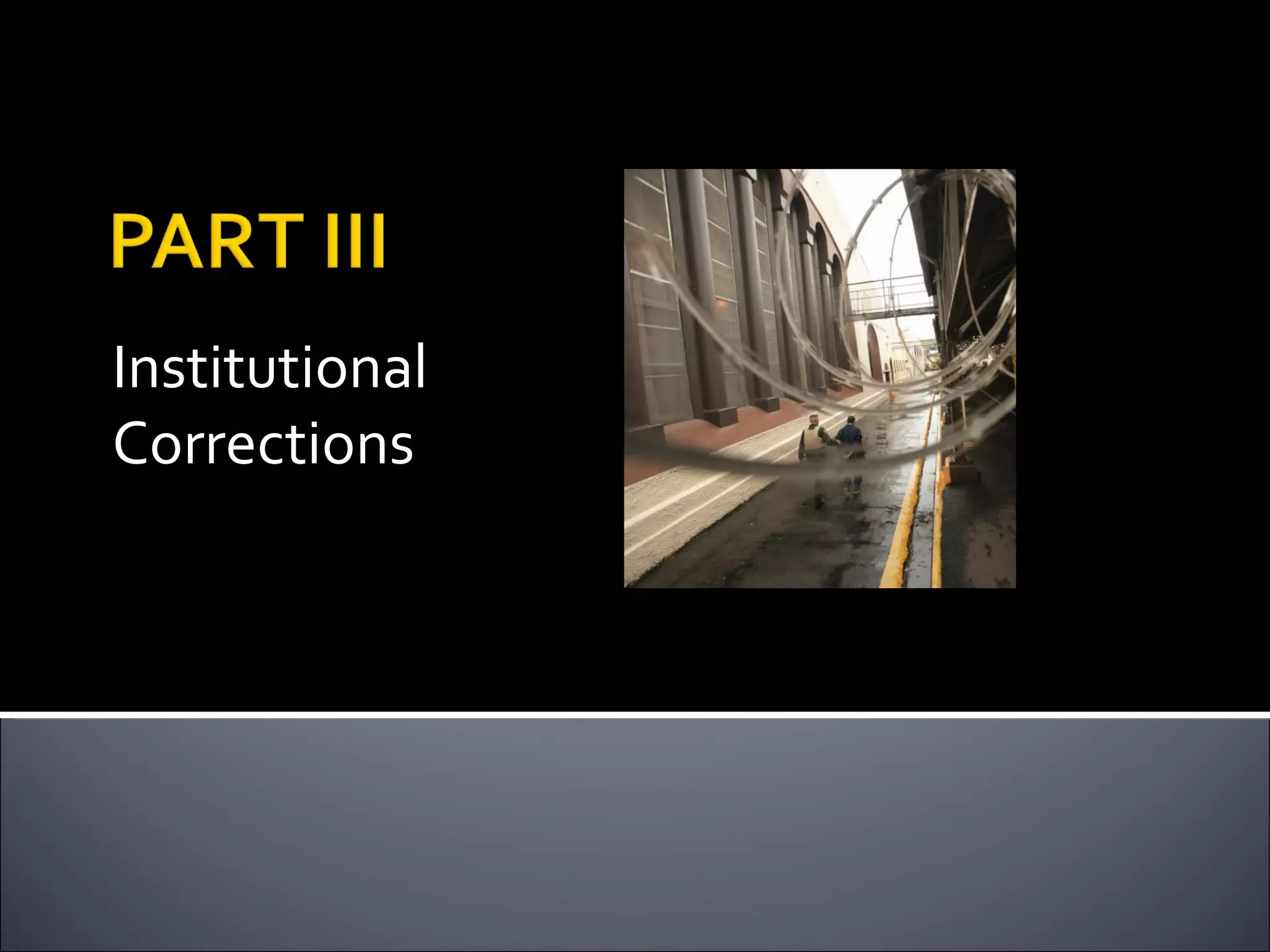
Institutional
Corrections
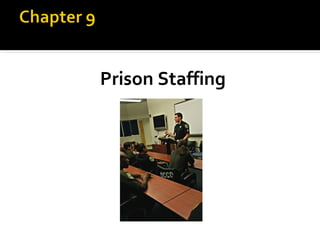
Prison Staffing
   Institutional Managers
     Warden

     ▪ Prison operations
     ▪ Main contact with the outside world
     ▪ Department of corrections
   Institutional Managers
     Deputy Warden for management
     Buying supplies
     Keeping up the buildings and grounds
     Providing food
     Maintaining financial records
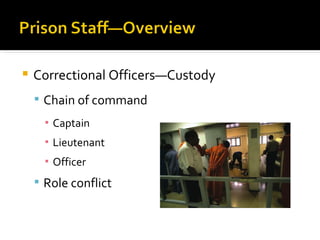
   Correctional Officers—Custody
     Chain of command
      ▪ Captain
      ▪ Lieutenant
      ▪ Officer
     Role conflict
   Program Personnel
     Educational, vocational, and treatment
     programs
   Agricultural and Industrial Supervisors
   Role Characteristics
     Custodial
     Human service providers
     ▪ Providing goods and services
     ▪ Referral agents or advocates
     ▪ Helping with institutional adjustment
     Contradictory role expectations
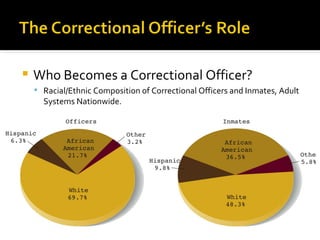
   Who Becomes a Correctional Officer?
     Racial/Ethnic Composition of Correctional Officers and Inmates, Adult
      Systems Nationwide.
   Recruitment
     Salary

     Overtime pay

     Minorities

     Women
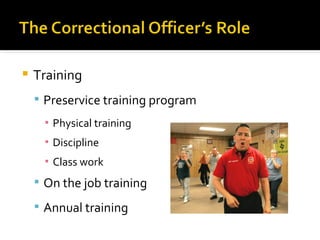
   Training
     Preservice training program
      ▪ Physical training
      ▪ Discipline
      ▪ Class work
     On the job training

     Annual training
   Block Officers
     Closest contact with prisoners
     Dangerous
     Inmate movement
     Unit maintenance
     Security
     Management and leadership skills
   Work Detail Supervisors
     More relaxed than cell block

     Work relationship with inmates

     Smaller social distance

     More informal relationships
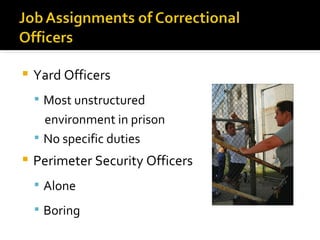
   Yard Officers
     Most unstructured
      environment in prison
     No specific duties
   Perimeter Security Officers
     Alone

     Boring
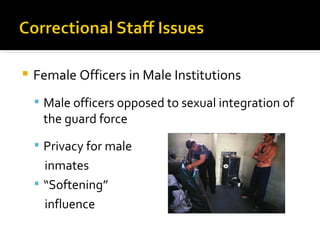
   Female Officers in Male Institutions
     Male officers opposed to sexual integration of
     the guard force
     Privacy for male
      inmates
     “Softening”
      influence
   Job Stress and Burnout
     High turnover

     Job stress
      ▪ Relationships with coworkers
      ▪ Departmental policies
      ▪ Time on the job
     Job burnout
   Job Stress and Burnout
     Positive outcomes of reducing stress
      ▪ Financial savings
      ▪ Safety levels
      ▪ Staff morale
     Organizational justice
     Procedural justice
     Distributive justice
   Boundary Violations
     General boundary violations

     Dual relationships

     Staff-inmate sexual contact
   Use of Force
     No corporal punishment or excessive force
     When may force be used?
      ▪ Self-defense
     ▪ Defense of third persons
     ▪ Upholding prison rules
     ▪ Prevention of a crime
     ▪ Prevention of escapes
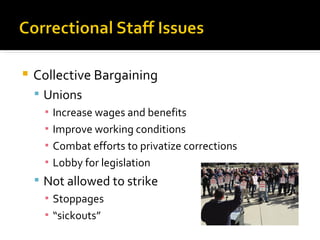
   Collective Bargaining
     Unions
      ▪ Increase wages and benefits
      ▪ Improve working conditions
      ▪ Combat efforts to privatize corrections
      ▪ Lobby for legislation
     Not allowed to strike
      ▪ Stoppages
      ▪ “sickouts”
   Civil Service Laws
     Most correctional personnel are public
      employees
     Govern the work environment
     Set procedures for
     ▪ Hiring, promoting, assigning, disciplining, and firing
       public employees
     Protect from discrimination
   Liability of Correctional Personnel
     Section 1983
      ▪ Means for prisoners, probationers, and parolees to
        bring suit against correctional officials
      ▪ Individual officers and agencies may be sued when
        “customs and usages” violate civil rights
      ▪ Private prisons
      ▪ Correctional employees may be sued as individuals
   How should correctional workers protect
    themselves from civil rights suits?
     Follow agency policies and the instructions of supervisors
     Obtain good training
     Become familiar with the law directly affecting the job
     Find a good mentor
     Keep good records

0495808652 282841

  • 1.
  • 2.
  • 3.
    Institutional Managers  Warden ▪ Prison operations ▪ Main contact with the outside world ▪ Department of corrections
  • 4.
    Institutional Managers  Deputy Warden for management  Buying supplies  Keeping up the buildings and grounds  Providing food  Maintaining financial records
  • 5.
    Correctional Officers—Custody  Chain of command ▪ Captain ▪ Lieutenant ▪ Officer  Role conflict
  • 6.
    Program Personnel  Educational, vocational, and treatment programs  Agricultural and Industrial Supervisors
  • 7.
    Role Characteristics  Custodial  Human service providers ▪ Providing goods and services ▪ Referral agents or advocates ▪ Helping with institutional adjustment  Contradictory role expectations
  • 8.
    Who Becomes a Correctional Officer?  Racial/Ethnic Composition of Correctional Officers and Inmates, Adult Systems Nationwide.
  • 9.
    Recruitment  Salary  Overtime pay  Minorities  Women
  • 10.
    Training  Preservice training program ▪ Physical training ▪ Discipline ▪ Class work  On the job training  Annual training
  • 11.
    Block Officers  Closest contact with prisoners  Dangerous  Inmate movement  Unit maintenance  Security  Management and leadership skills
  • 12.
    Work Detail Supervisors  More relaxed than cell block  Work relationship with inmates  Smaller social distance  More informal relationships
  • 13.
    Yard Officers  Most unstructured environment in prison  No specific duties  Perimeter Security Officers  Alone  Boring
  • 14.
    Female Officers in Male Institutions  Male officers opposed to sexual integration of the guard force  Privacy for male inmates  “Softening” influence
  • 15.
    Job Stress and Burnout  High turnover  Job stress ▪ Relationships with coworkers ▪ Departmental policies ▪ Time on the job  Job burnout
  • 16.
    Job Stress and Burnout  Positive outcomes of reducing stress ▪ Financial savings ▪ Safety levels ▪ Staff morale  Organizational justice  Procedural justice  Distributive justice
  • 17.
    Boundary Violations  General boundary violations  Dual relationships  Staff-inmate sexual contact
  • 18.
    Use of Force  No corporal punishment or excessive force  When may force be used? ▪ Self-defense ▪ Defense of third persons ▪ Upholding prison rules ▪ Prevention of a crime ▪ Prevention of escapes
  • 19.
    Collective Bargaining  Unions ▪ Increase wages and benefits ▪ Improve working conditions ▪ Combat efforts to privatize corrections ▪ Lobby for legislation  Not allowed to strike ▪ Stoppages ▪ “sickouts”
  • 20.
    Civil Service Laws  Most correctional personnel are public employees  Govern the work environment  Set procedures for ▪ Hiring, promoting, assigning, disciplining, and firing public employees  Protect from discrimination
  • 21.
    Liability of Correctional Personnel  Section 1983 ▪ Means for prisoners, probationers, and parolees to bring suit against correctional officials ▪ Individual officers and agencies may be sued when “customs and usages” violate civil rights ▪ Private prisons ▪ Correctional employees may be sued as individuals
  • 22.
    How should correctional workers protect themselves from civil rights suits?  Follow agency policies and the instructions of supervisors  Obtain good training  Become familiar with the law directly affecting the job  Find a good mentor  Keep good records

Editor's Notes

  • #4 Learning Objective One
  • #5 Learning Objective One
  • #6 Learning Objective One
  • #7 Learning Objective One
  • #8 Learning Objective Two
  • #9 Learning Objective One
  • #10 Learning Objective Two
  • #11 Learning Objective Two
  • #12 Learning Objective Three
  • #13 Learning Objective Three
  • #14 Learning Objective Three
  • #15 Learning Objective Four
  • #16 Learning Objective Four
  • #17 Learning Objective Four
  • #18 Learning Objective Four
  • #19 Learning Objective Four
  • #20 Learning Objective Four
  • #21 Learning Objective Five
  • #22 Learning Objective Five
  • #23 Learning Objective Five