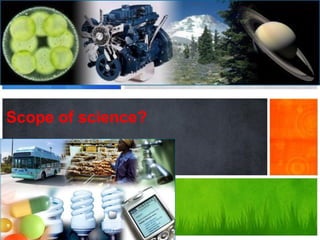
Scope of science?
What has science done for you?
➢ Science affects us all, every day of the year,
from the moment we wake up, all day long, and
through the night.
➢ your digital alarm clock
➢ the weather report
➢ the bus you ride in,
➢ your decision to eat a baked potato instead of
fries
➢ your cell phone
➢ the antibiotics that treat your sore throat
➢ the clean water that comes from your faucet
➢ the light that you turn off at the end of the day
have all been brought to you courtesy of science.
➢ The modern world would not be modern at all
without the understandings and technology enabled
by science.
What has science done for you?
Without modern science, there would be:
➢ no way to use electricity
➢ no plastic.
➢ no modern agriculture
➢ no modern medicine
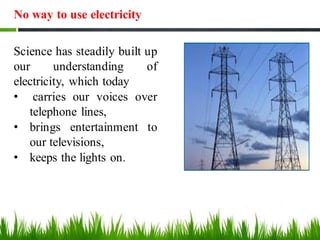
No way to use electricity
Science has steadily built up
our understanding of
electricity, which today
• carries our voices over
telephone lines,
• brings entertainment to
our televisions,
• keeps the lights on.
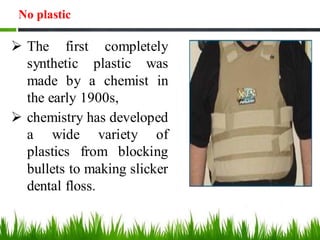
No plastic
➢ The first completely
synthetic plastic was
made by a chemist in
the early 1900s,
➢ chemistry has developed
a wide variety of
plastics from blocking
bullets to making slicker
dental floss.
No modern agriculture
➢ Science has transformed the way we eat today.
➢ In the 1940s, biologists began developing high
yield varieties of corn, wheat, and rice.
➢ New fertilizers and pesticides developed by
chemists, dramatically increased the amount of
food that could be harvested from a single field,
No modern agriculture
➢ Massively increasing the
amount of food available
to feed the world
➢ Transforming the
economic structure of
agricultural practices.
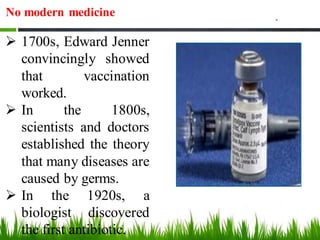
No modern medicine
➢ 1700s, Edward Jenner
convincingly showed
that vaccination
worked.
➢ In the 1800s,
scientists and doctors
established the theory
that many diseases are
caused by germs.
➢ In the 1920s, a
biologist discovered
the first antibiotic.
Discovery: The spark for science
➢ The eradication of smallpox
➢ The prevention of nutritional deficiencies
➢ Successful treatments for infections
➢ The impact of modern medicine on global health
has been powerful.
➢ In fact, without science, many people alive today
would have instead died of diseases that are now
easily treated.
Conclusion
➢ Scientific knowledge can improve the quality of
life at many different levels
➢ from the routine workings of our everyday lives
to global issues.
Science informs public policy and personal
decisions on
• energy,
• conservation
➢ transportation
➢ Communication
➢ Defense
➢ Economics
➢ health
➢ leisure, and exploration.
➢ It’s almost impossible to overstate how many
aspects of modern life are impacted by scientific
knowledge.
Conclusion

03- What-is-Science Lecture .............scope.pdf

  • 1.
  • 2.
    What has sciencedone for you? ➢ Science affects us all, every day of the year, from the moment we wake up, all day long, and through the night. ➢ your digital alarm clock ➢ the weather report ➢ the bus you ride in, ➢ your decision to eat a baked potato instead of fries ➢ your cell phone
  • 3.
    ➢ the antibioticsthat treat your sore throat ➢ the clean water that comes from your faucet ➢ the light that you turn off at the end of the day have all been brought to you courtesy of science. ➢ The modern world would not be modern at all without the understandings and technology enabled by science. What has science done for you?
  • 4.
    Without modern science,there would be: ➢ no way to use electricity ➢ no plastic. ➢ no modern agriculture ➢ no modern medicine
  • 5.
    No way touse electricity Science has steadily built up our understanding of electricity, which today • carries our voices over telephone lines, • brings entertainment to our televisions, • keeps the lights on.
  • 6.
    No plastic ➢ Thefirst completely synthetic plastic was made by a chemist in the early 1900s, ➢ chemistry has developed a wide variety of plastics from blocking bullets to making slicker dental floss.
  • 7.
    No modern agriculture ➢Science has transformed the way we eat today. ➢ In the 1940s, biologists began developing high yield varieties of corn, wheat, and rice. ➢ New fertilizers and pesticides developed by chemists, dramatically increased the amount of food that could be harvested from a single field,
  • 8.
    No modern agriculture ➢Massively increasing the amount of food available to feed the world ➢ Transforming the economic structure of agricultural practices.
  • 9.
    No modern medicine ➢1700s, Edward Jenner convincingly showed that vaccination worked. ➢ In the 1800s, scientists and doctors established the theory that many diseases are caused by germs. ➢ In the 1920s, a biologist discovered the first antibiotic.
  • 10.
    Discovery: The sparkfor science ➢ The eradication of smallpox ➢ The prevention of nutritional deficiencies ➢ Successful treatments for infections ➢ The impact of modern medicine on global health has been powerful. ➢ In fact, without science, many people alive today would have instead died of diseases that are now easily treated.
  • 11.
    Conclusion ➢ Scientific knowledgecan improve the quality of life at many different levels ➢ from the routine workings of our everyday lives to global issues. Science informs public policy and personal decisions on • energy, • conservation
  • 12.
    ➢ transportation ➢ Communication ➢Defense ➢ Economics ➢ health ➢ leisure, and exploration. ➢ It’s almost impossible to overstate how many aspects of modern life are impacted by scientific knowledge. Conclusion