Warm Up – Page 172

   What do you need to review for
 tomorrow’s test over the history of
exploration and the Sun-Earth-Moon
              System?
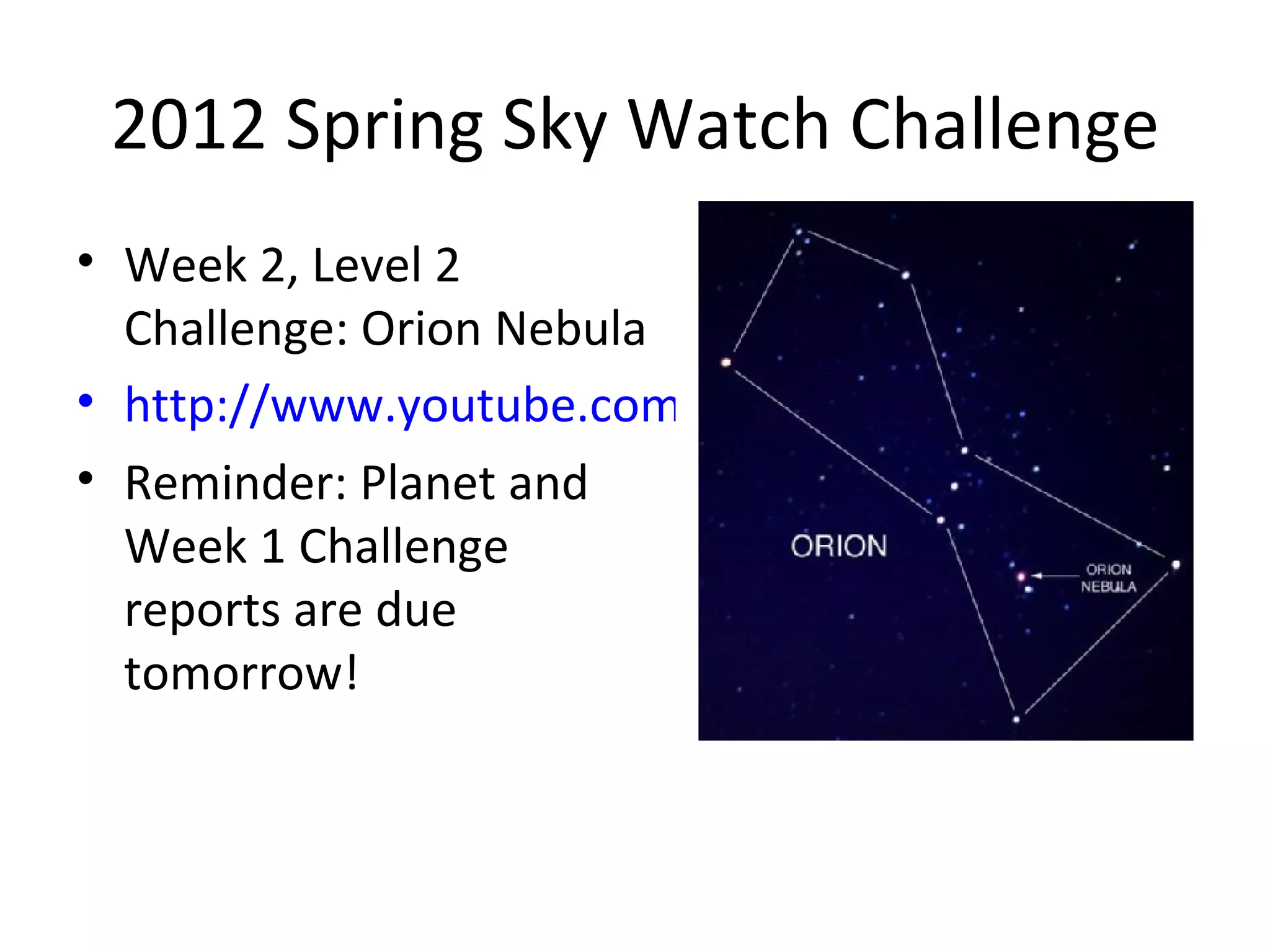
2012 Spring Sky Watch Challenge
• Week 2, Level 2
  Challenge: Orion Nebula
• http://www.youtube.com/watch?v=xy5bbw-wYJo
• Reminder: Planet and
  Week 1 Challenge
  reports are due
  tomorrow!
Test Info
• 30 questions
   –   5 multiple choice
   –   5 modified true/false – if false, make it true
   –   5 fill-in-the-blank
   –   5 short answer
   –   5 matching
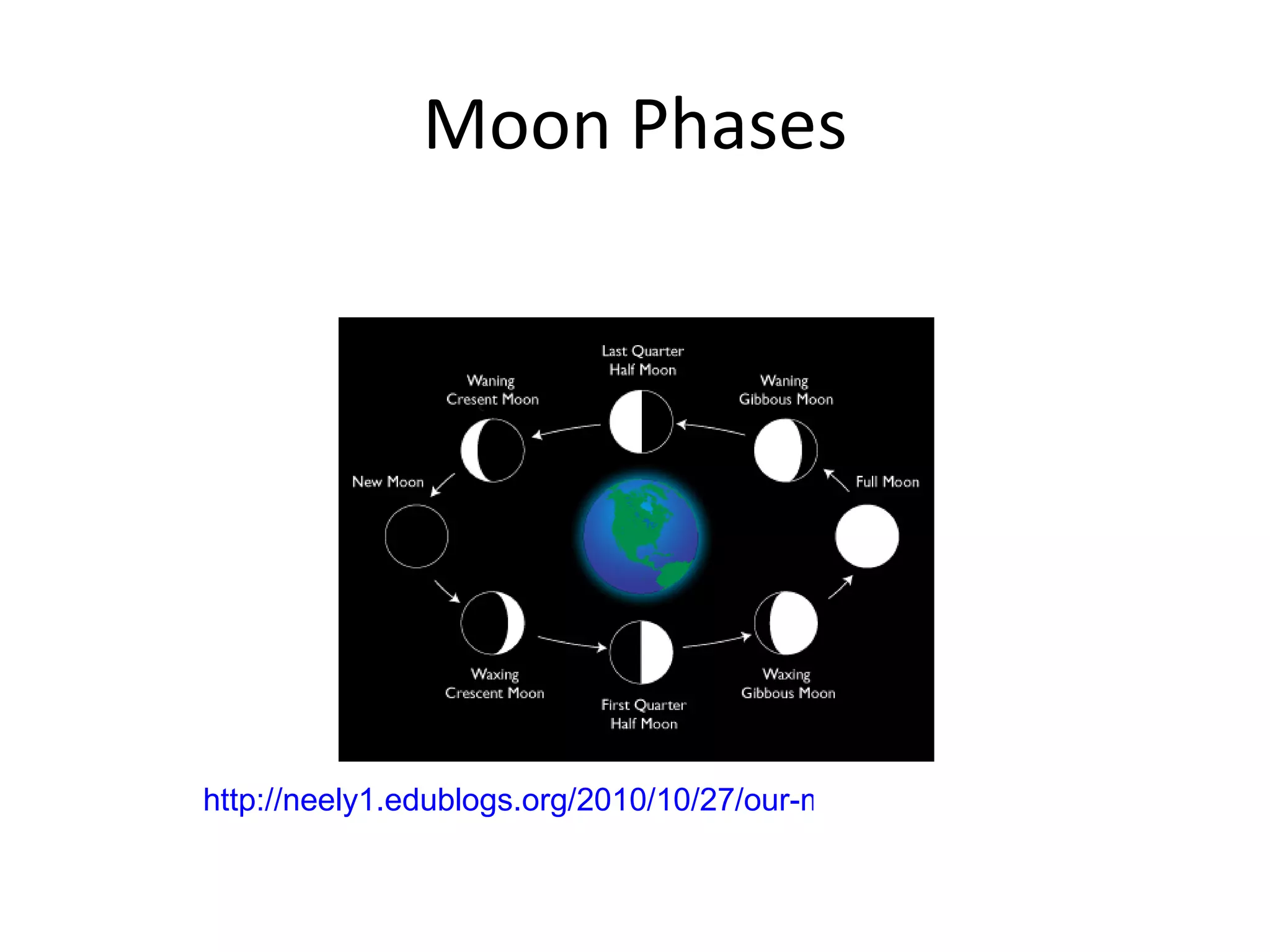
        • Describing moon phases/info
   – 5 drawing/labeling diagrams
        •   Moon Phases – drawing you need to label
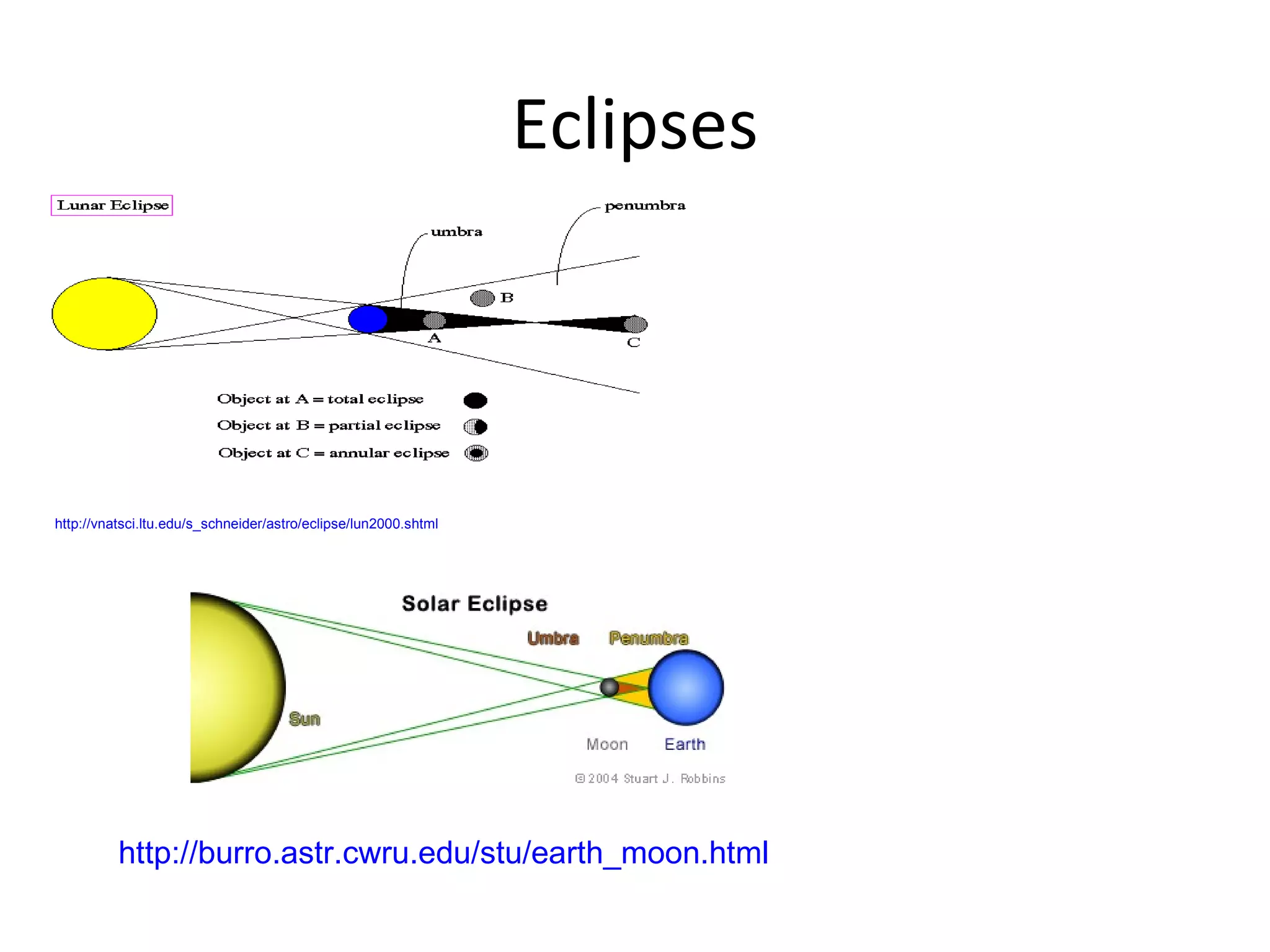
        •   Draw and label solar eclipse – inc. umbra/penumbra
        •   Draw and label a lunar eclipse – inc. umbra/penumbra
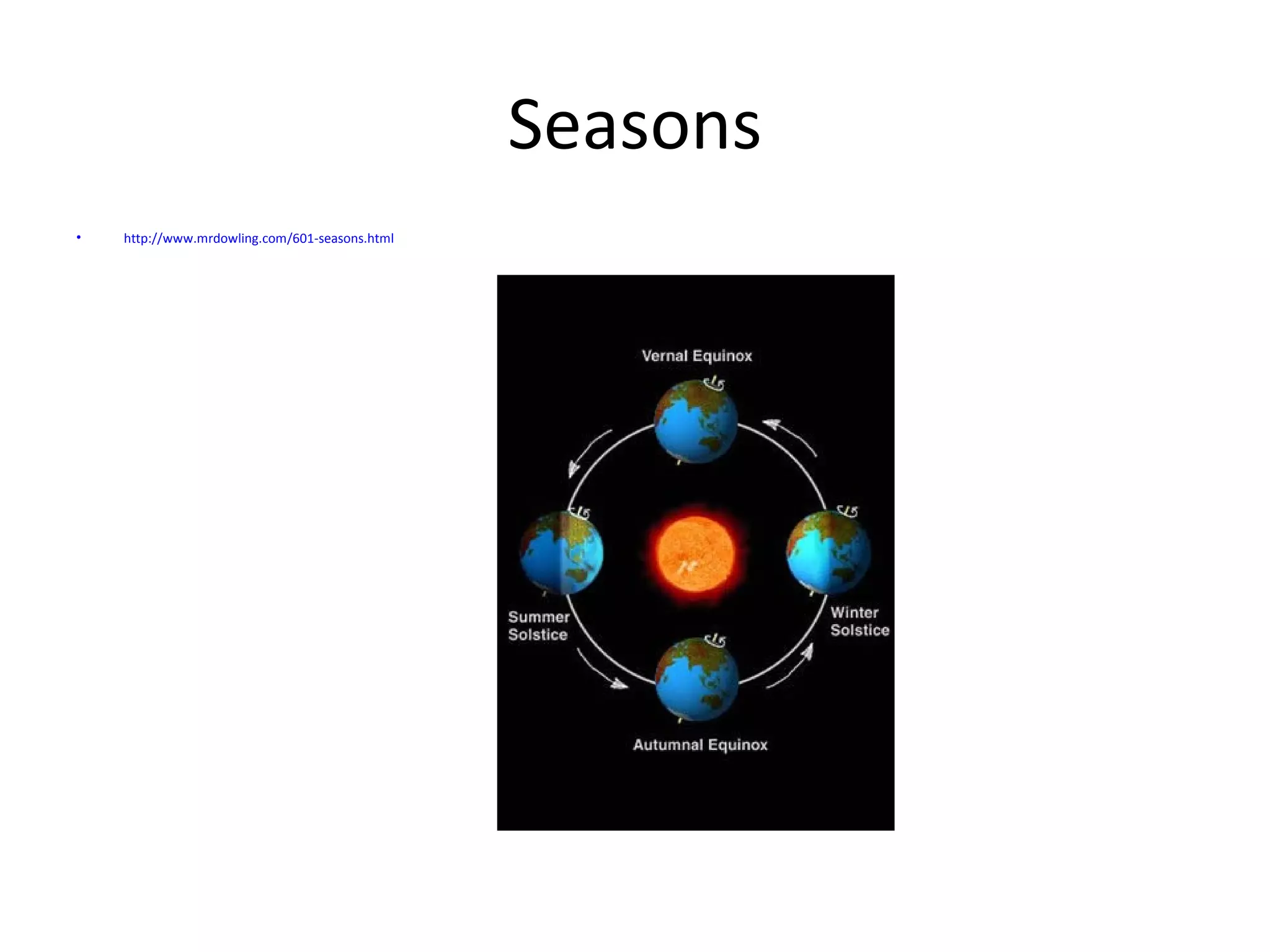
        •   Draw the sun and 4 earth’s labeling spring, summer, fall, winter
        •   Why are you more likely to see a lunar eclipse
History of Exploration
• Heliocentrism vs. geocentrism
• Contributions
  – Ptolemy
  – Kepler & Brahe
  – Copernicus
  – Galileo
  – Newton – what gravity & inertia are & do
Sun-Earth-Moon System
•   Rotation and revolution
•   Days
•   Years
•   Months
•   Weeks
Cram Review Guide – Page 173
• History
  – Ptolemy – geocentrism (Earth-centered)
  – Copernicus – heliocentrism (Sun- centered)
  – Kepler (Brahe –data) – orbit of planets are elliptical
  – Galileo – used telescope: evidence for helio: sunspots,
    Venus has phases & Jupiter has moons go around it
  – Newton – how planets stay in orbit- gravity and
    inertia
      • Gravity – pulls objects to the sun
      • Inertia – keeps them moving in a straight line
      • Together – they keep planets in orbit around the Sun
Sun-Earth-Moon
•   Rotation – spin on axis – day and night
•   Revolution – orbit – years
•   Month – moon’s revolution
•   Weeks – 5 planets, moon & sun
Seasons
•   http://www.mrdowling.com/601-seasons.html
Moon Phases


http://neely1.edublogs.org/2010/10/27/our-moons-phases/
Eclipses


http://vnatsci.ltu.edu/s_schneider/astro/eclipse/lun2000.shtml


          http://burro.astr.cwru.edu/stu/earth_moon.html

03 28-2012-warm up – page 172 wdiagrams

  • 1.
    Warm Up –Page 172 What do you need to review for tomorrow’s test over the history of exploration and the Sun-Earth-Moon System?
  • 2.
    2012 Spring SkyWatch Challenge • Week 2, Level 2 Challenge: Orion Nebula • http://www.youtube.com/watch?v=xy5bbw-wYJo • Reminder: Planet and Week 1 Challenge reports are due tomorrow!
  • 3.
    Test Info • 30questions – 5 multiple choice – 5 modified true/false – if false, make it true – 5 fill-in-the-blank – 5 short answer – 5 matching • Describing moon phases/info – 5 drawing/labeling diagrams • Moon Phases – drawing you need to label • Draw and label solar eclipse – inc. umbra/penumbra • Draw and label a lunar eclipse – inc. umbra/penumbra • Draw the sun and 4 earth’s labeling spring, summer, fall, winter • Why are you more likely to see a lunar eclipse
  • 4.
    History of Exploration •Heliocentrism vs. geocentrism • Contributions – Ptolemy – Kepler & Brahe – Copernicus – Galileo – Newton – what gravity & inertia are & do
  • 5.
    Sun-Earth-Moon System • Rotation and revolution • Days • Years • Months • Weeks
  • 6.
    Cram Review Guide– Page 173 • History – Ptolemy – geocentrism (Earth-centered) – Copernicus – heliocentrism (Sun- centered) – Kepler (Brahe –data) – orbit of planets are elliptical – Galileo – used telescope: evidence for helio: sunspots, Venus has phases & Jupiter has moons go around it – Newton – how planets stay in orbit- gravity and inertia • Gravity – pulls objects to the sun • Inertia – keeps them moving in a straight line • Together – they keep planets in orbit around the Sun
  • 7.
    Sun-Earth-Moon • Rotation – spin on axis – day and night • Revolution – orbit – years • Month – moon’s revolution • Weeks – 5 planets, moon & sun
  • 8.
    Seasons • http://www.mrdowling.com/601-seasons.html
  • 9.
  • 10.