Superhuman Computing Lab
University of Colorado Boulder
AssistiveWearables: EmergingTrends and
Design Considerations
Shaun Kane (@shaunkane), Halley Profita (@halleyprofita),
Michael Lightner, and Nikolaus Correll
Follow along with this talk
• http://bitly.com/csun2017
2
Last year’s talk
• Slides available at http://bitly.com/csun2016
• Examples of recent wearable assistive devices
• Wearables for sensory substitution, rehabilitation,
communication support, emotional and behavioral support
• Design considerations for assistive wearables
3
In this talk
• Update on recent trends in wearable assistive technology
• 2 studies on the social implications of assistive wearables
• Projects from our research lab
• Next steps, challenges, and opportunities
4
Why is this an exciting time?
• Wearables are a growing market
• Assistive-ish devices
• Wearables as fashion items
5
The wearables
market
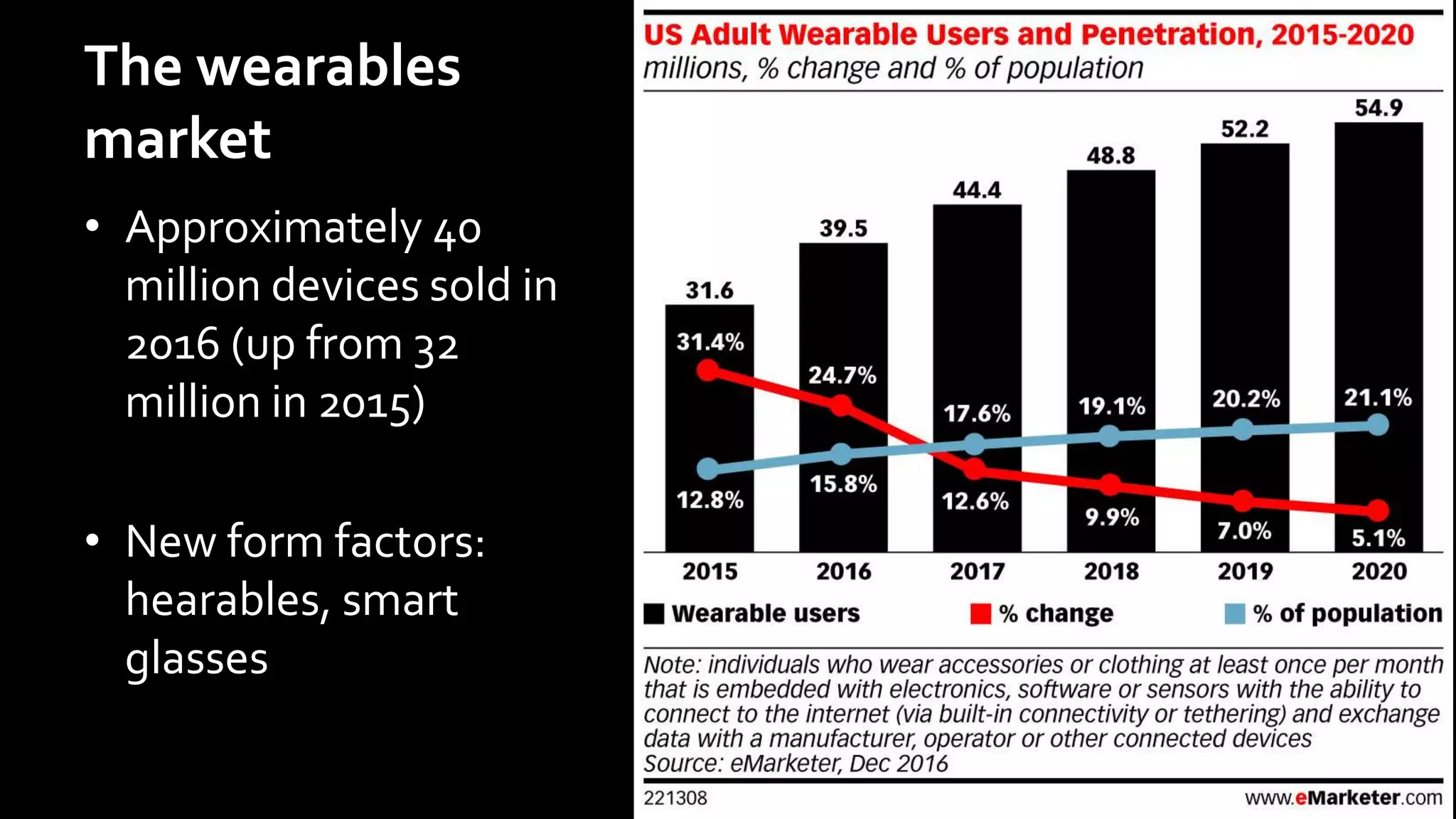
• Approximately 40
million devices sold in
2016 (up from 32
million in 2015)
• New form factors:
hearables, smart
glasses
6
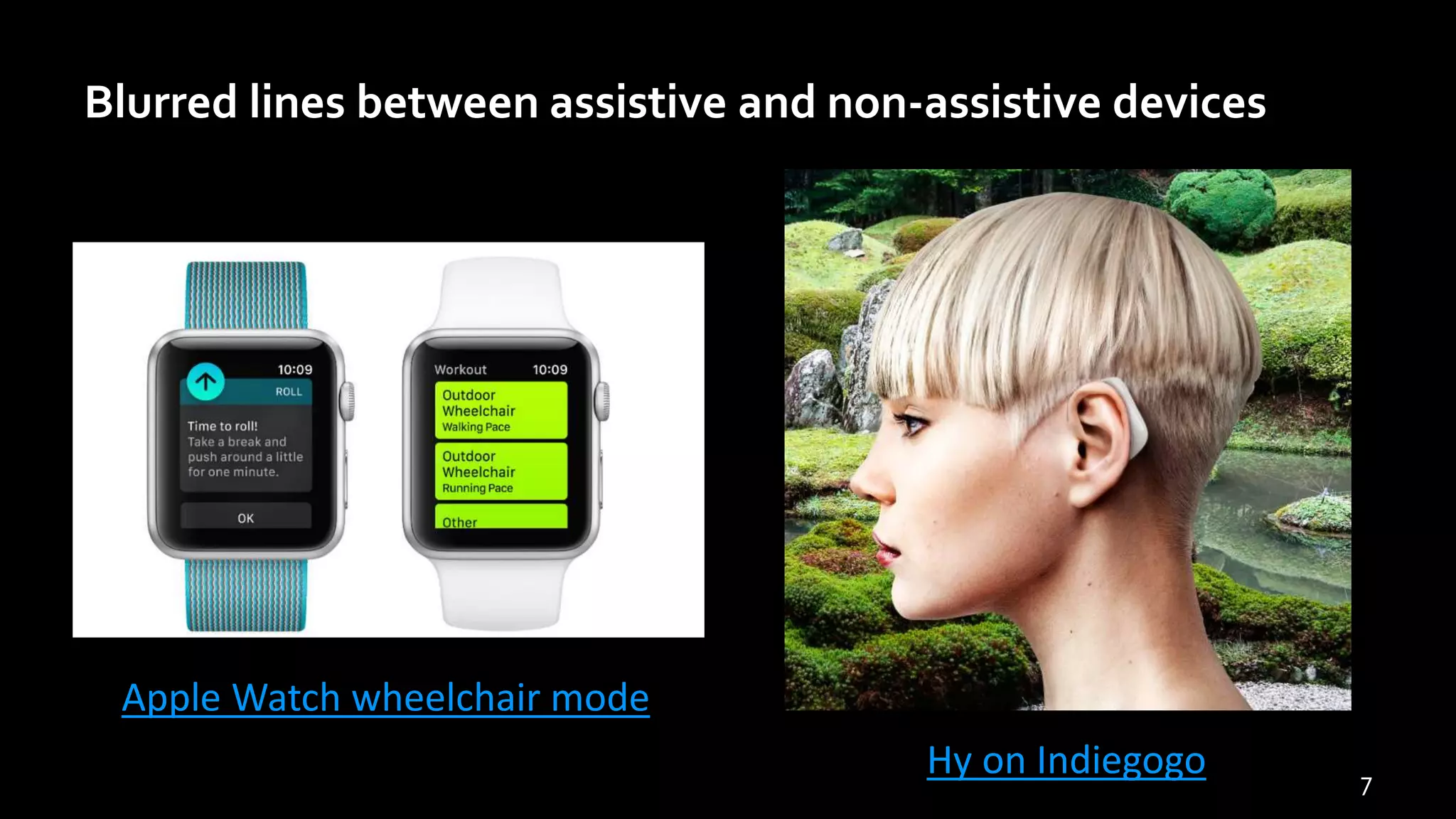
Blurred lines between assistive and non-assistive devices
7
Hy on Indiegogo
Apple Watch wheelchair mode
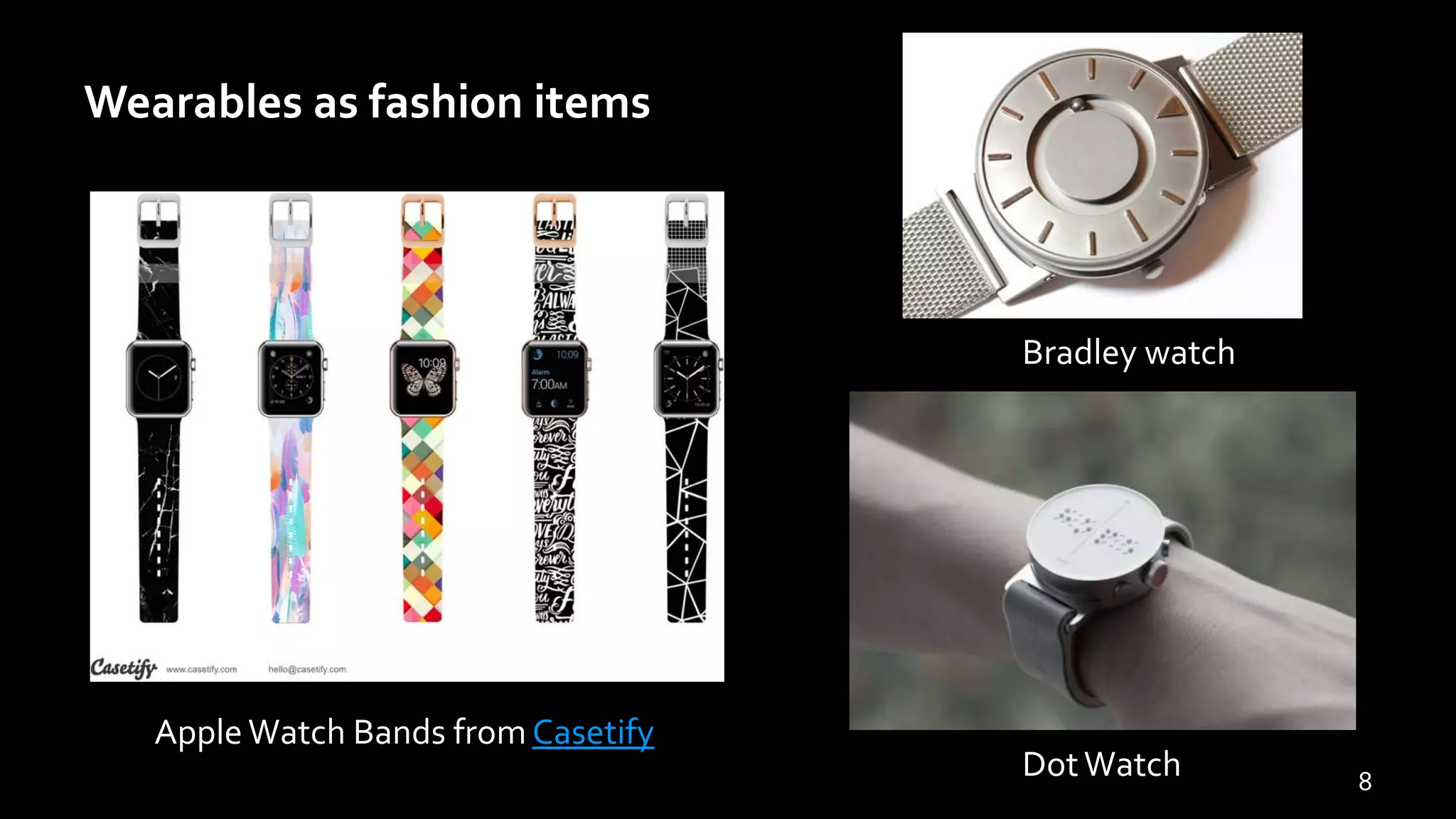
Wearables as fashion items
8
Apple Watch Bands from Casetify
DotWatch
Bradley watch
Advances in textile-based computing
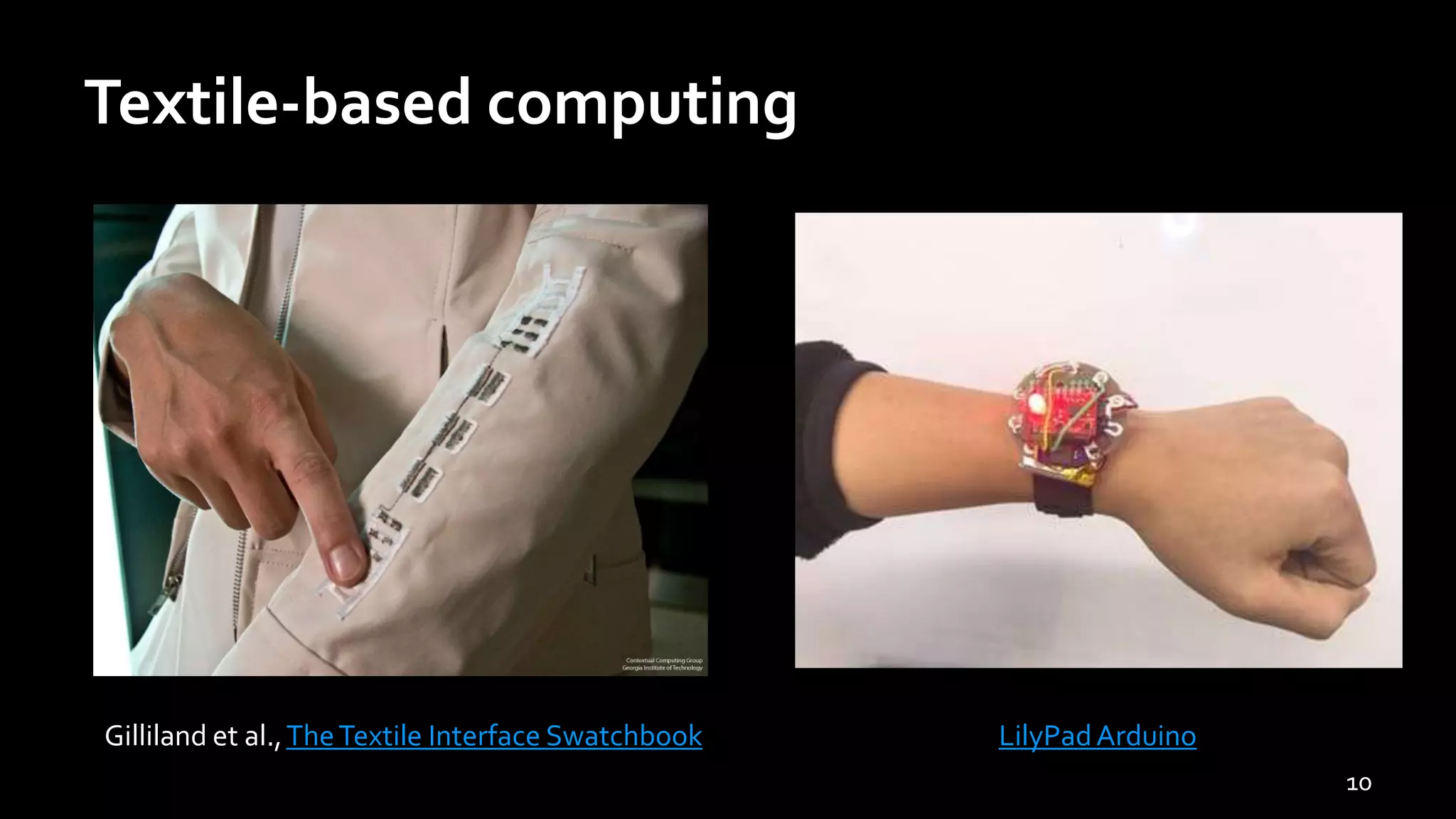
• Textile based computing components
• Flexible circuit boards, conductive thread, etc
• Modular tools for creating wearable devices
9
Textile-based computing
10
Gilliland et al.,TheTextile Interface Swatchbook LilyPadArduino
Do itYourself!
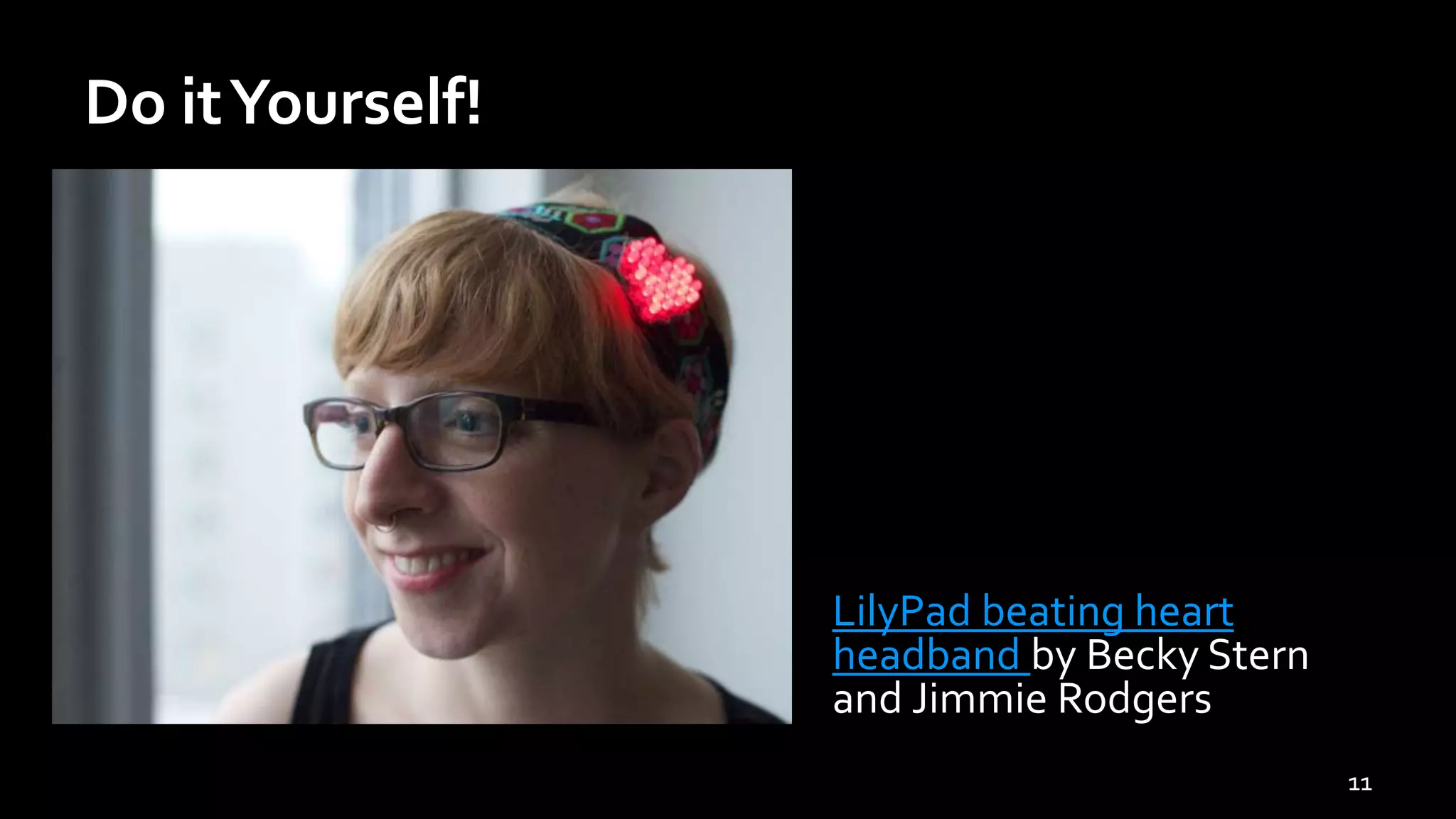
LilyPad beating heart
headband by Becky Stern
and Jimmie Rodgers
11
Studies from Our Lab
superhuman.cs.colorado.edu
(or shaunkane.com)
12
The big idea
• The growing availability of wearable technology can affect
perceptions of technology and the user
13
Understanding perceptions of wearable
technology in public
• Collected data from 1200 web
users about perceptions of a
wearable computing user
• Adjusted physical appearance of
user and description of video
(disability, assistive use)
• Is the user: cool, awkward, nerdy,
distracting
• Paper 14
Findings
• In general, participants reported that they felt more positively
about examples when the individual was identified as having a
disability
• More specificity about the use resulted in more positive reactions
• “I would be less likely to form a negative opinion of a disabled
person wearing such a device, because I would likely believe
that it was helpful or necessary for them. A non-disabled
person using such a device in public is more likely to seem
obnoxious.”
15
Takeaways
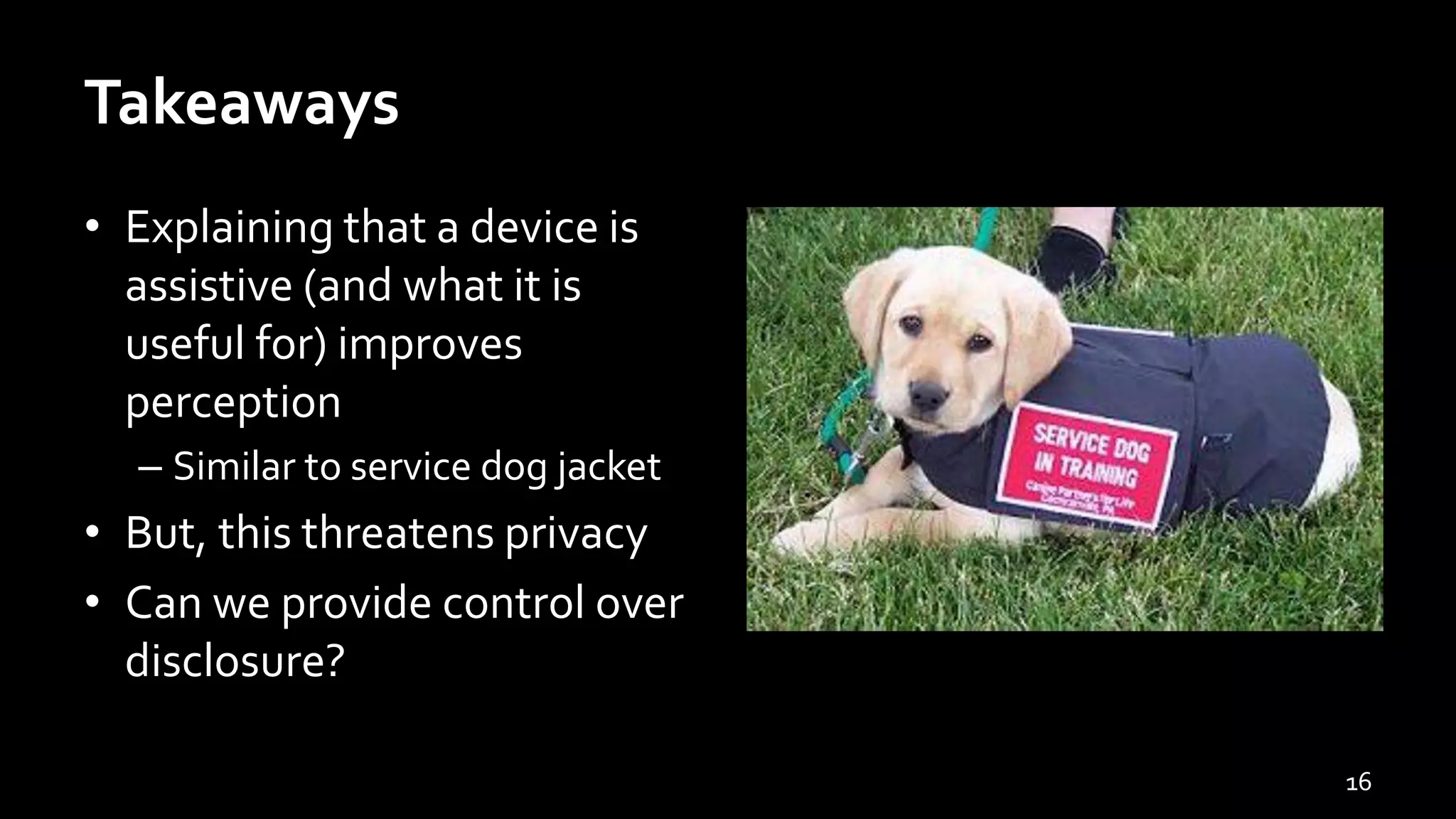
• Explaining that a device is
assistive (and what it is
useful for) improves
perception
– Similar to service dog jacket
• But, this threatens privacy
• Can we provide control over
disclosure?
16
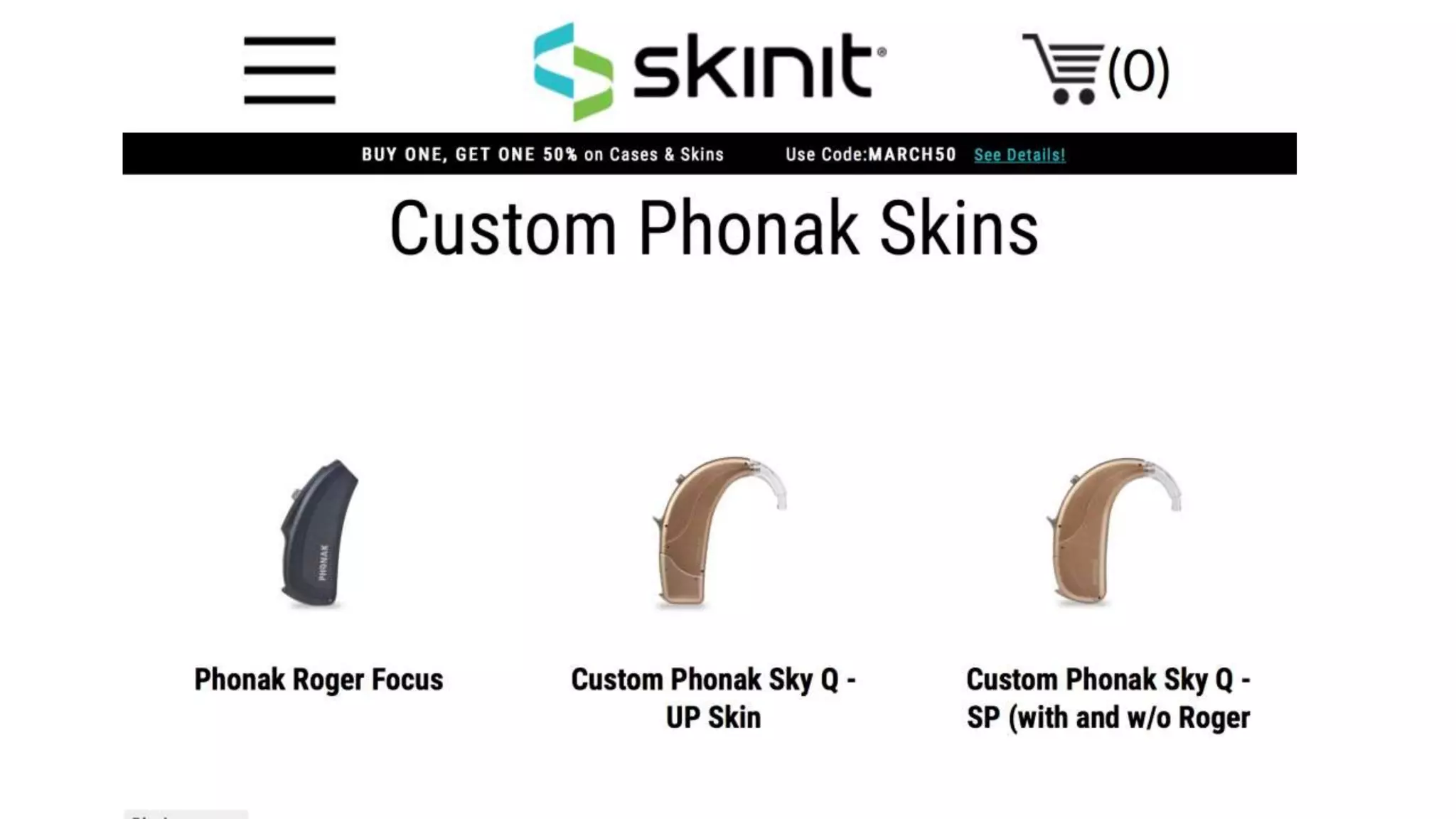
Understanding customization of on-body assistive devices
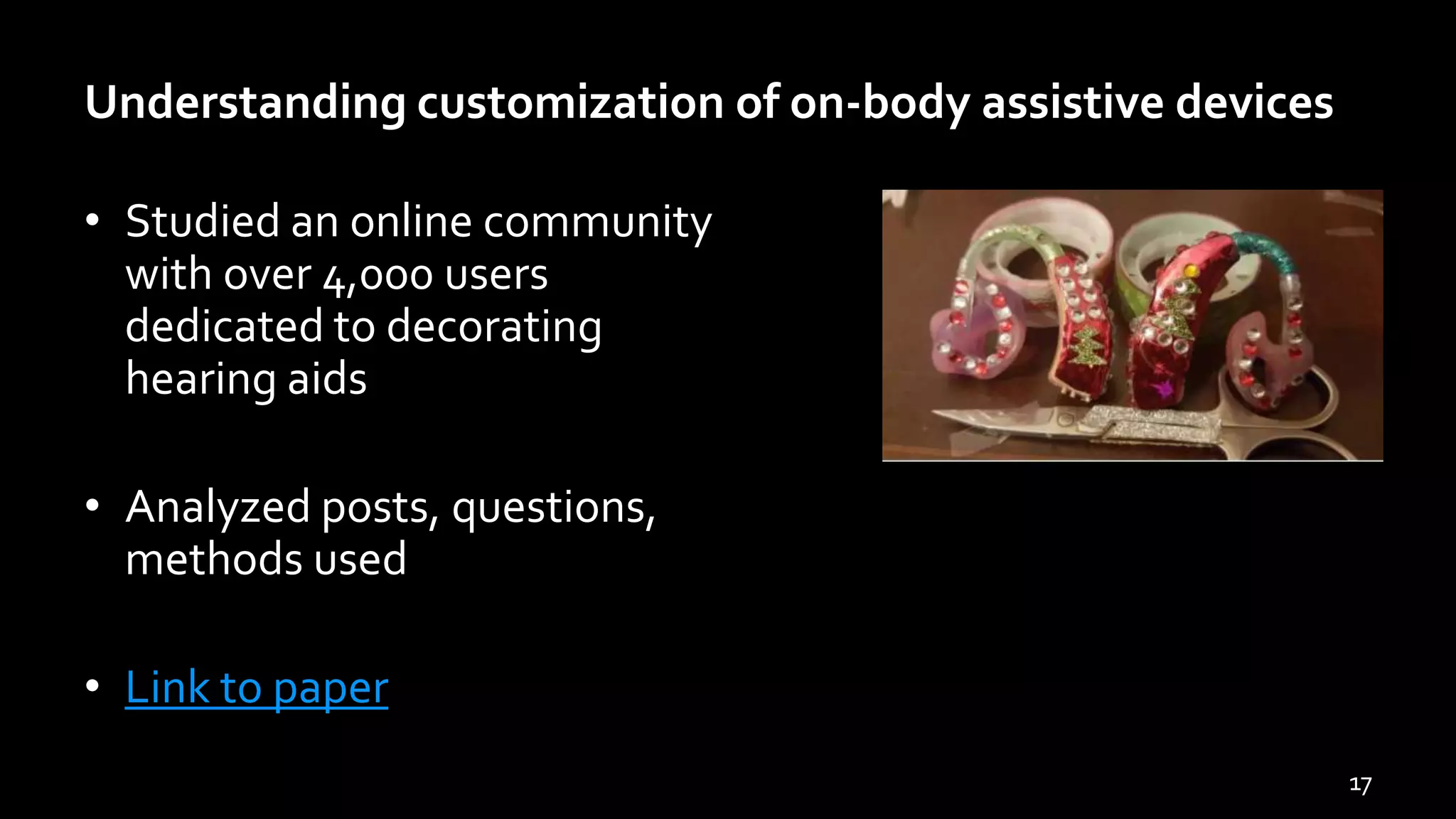
• Studied an online community
with over 4,000 users
dedicated to decorating
hearing aids
• Analyzed posts, questions,
methods used
• Link to paper
17
Findings
• Many people decorated their devices
using stickers, colored tape, etc.
• Shared techniques online
• Many examples involved parents
designing for their kids
• Decorations were contextual
• Decoration seemed to differ by gender
18
19
Follow-up interviews
• “…it means you have a certain power over something which is
attached to you that you wish rather wasn't attached to you.”
• “Where before it would be unwanted attention… it’s now
compliments.”
• “By drawing attention to them you're signaling to other
people that it's okay to talk about that. As it's an indicator for
something to ask about it.”
20
Takeaways
• Decoration reveals a
strong desire to
customize devices
• Suggests design trends
(coordination, using
favorite characters)
• Challenges to
supporting DIY
modification
21
22
Example Wearable Projects from Our Lab
23
Flutter dress
• Spatial Awareness of Sounds for Individuals with
Hearing Impairments
• Microphones and vibration motors embedded in
garment detect and relay sound direction
• Leveraging fashion to integrate hardware
• Profita et al., Flutter: An exploration of an
assistive garment using distributed sensing,
computation and actuation
5
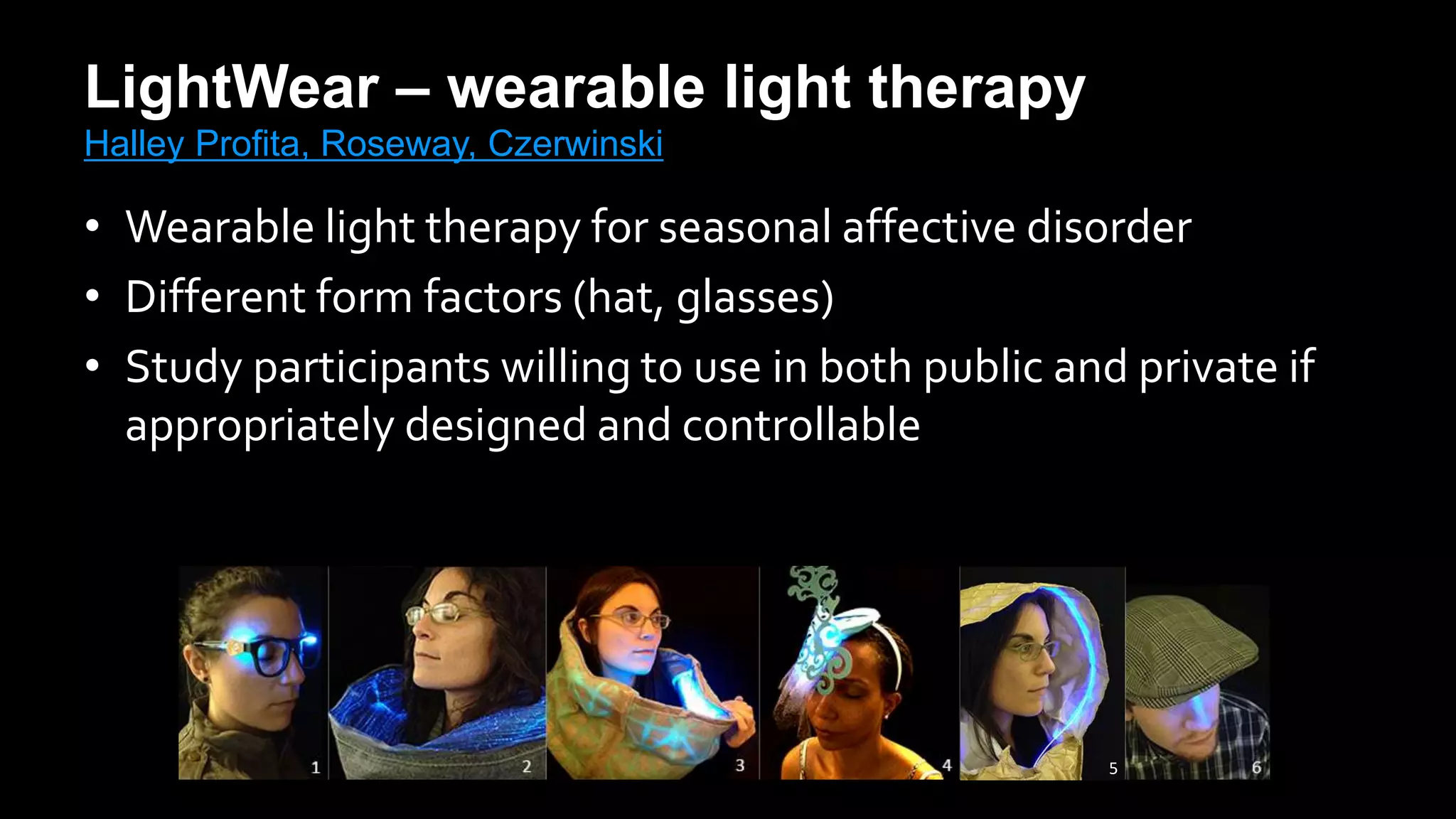
LightWear – wearable light therapy
Halley Profita, Roseway, Czerwinski
• Wearable light therapy for seasonal affective disorder
• Different form factors (hat, glasses)
• Study participants willing to use in both public and private if
appropriately designed and controllable
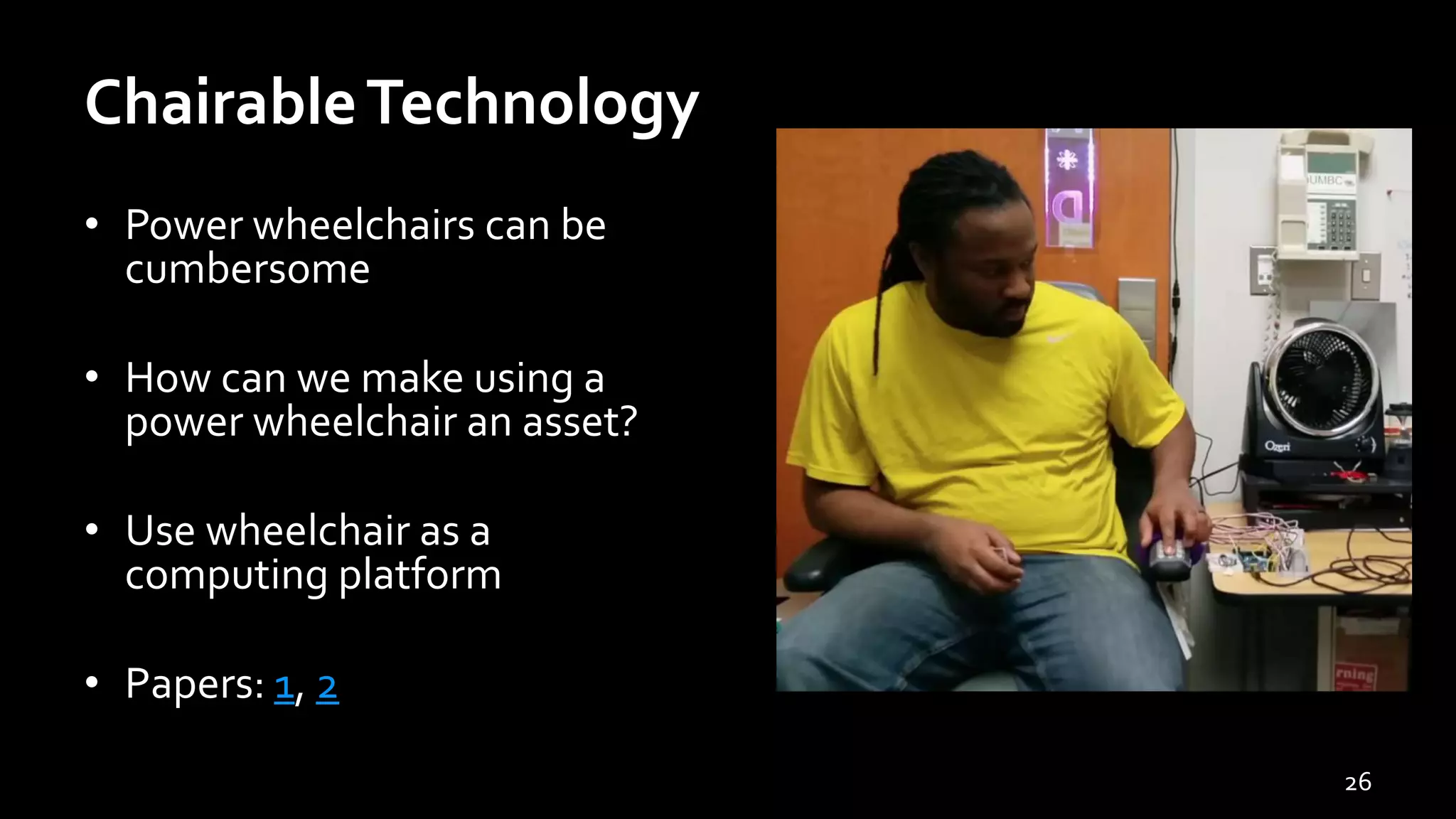
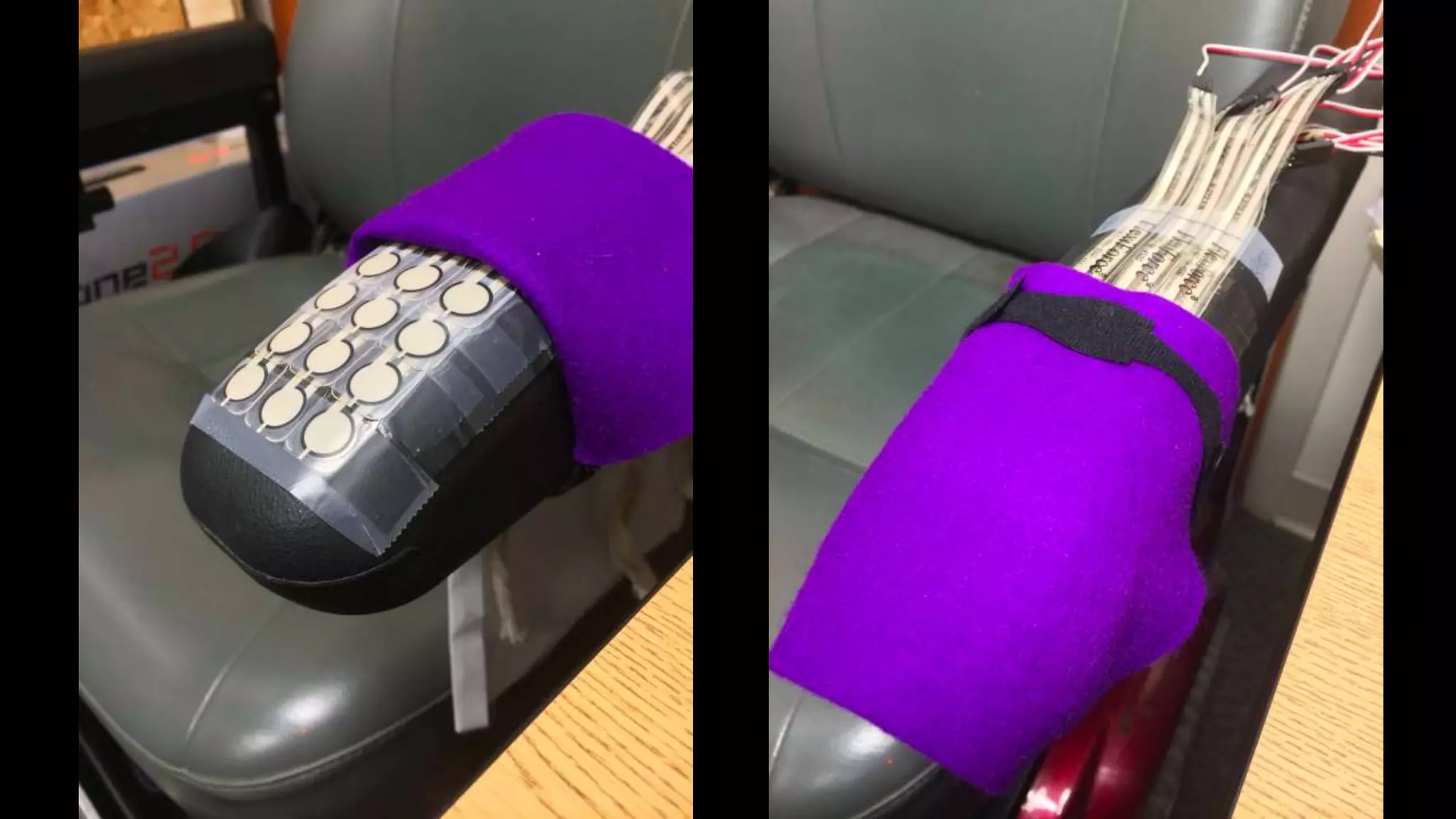
ChairableTechnology
• Power wheelchairs can be
cumbersome
• How can we make using a
power wheelchair an asset?
• Use wheelchair as a
computing platform
• Papers: 1, 2
26
27
28
H ardware
Supporting diverse gestures
29
Wearable AAC devices
• Textile-based wearable AAC device for sports
therapy (Halley Profita)
• Fabric-based user interface
– Flexible
– Can be worn during sports
– Very simple UI
– Not dynamic
– Family collaboration
30
Challenges and opportunities
• Technical
– Ensure assistive features are integrated into mainstream wearable
platforms
– Allow customization of on-body placement and input/output
– Support remote control from smartphone or PC
• Social
– Ensure policies allow (responsible) use of wearables in public spaces
– Support customization and concealment of devices
31
Conclusion
• Wearables are not one-size-fits-all solution
• Technology is enabling new kinds of support via wearable
devices
• Challenges to ensure appropriate features included in
emerging wearables platforms
• Assistive wearables: “separate but equal” vs. universal design
32
How you can get involved
• Talk to me about participating in research
• Graduate programs in computer science, design
• Start a do-it-yourself project
33
Thank you!
Shaun Kane , Halley Profita, Michael Lightner, and Nikolaus Correll
@shaunkane, @halleyprofita, @correlllab
Universirty of Colorado Boulder
superhuman.cs.colorado.edu
Talk with me for a
demo or about
participating in
research

Assistive Wearables: Emerging Trends and Design Considerations

  • 1.
    Superhuman Computing Lab Universityof Colorado Boulder AssistiveWearables: EmergingTrends and Design Considerations Shaun Kane (@shaunkane), Halley Profita (@halleyprofita), Michael Lightner, and Nikolaus Correll
  • 2.
    Follow along withthis talk • http://bitly.com/csun2017 2
  • 3.
    Last year’s talk •Slides available at http://bitly.com/csun2016 • Examples of recent wearable assistive devices • Wearables for sensory substitution, rehabilitation, communication support, emotional and behavioral support • Design considerations for assistive wearables 3
  • 4.
    In this talk •Update on recent trends in wearable assistive technology • 2 studies on the social implications of assistive wearables • Projects from our research lab • Next steps, challenges, and opportunities 4
  • 5.
    Why is thisan exciting time? • Wearables are a growing market • Assistive-ish devices • Wearables as fashion items 5
  • 6.
    The wearables market • Approximately40 million devices sold in 2016 (up from 32 million in 2015) • New form factors: hearables, smart glasses 6
  • 7.
    Blurred lines betweenassistive and non-assistive devices 7 Hy on Indiegogo Apple Watch wheelchair mode
  • 8.
    Wearables as fashionitems 8 Apple Watch Bands from Casetify DotWatch Bradley watch
  • 9.
    Advances in textile-basedcomputing • Textile based computing components • Flexible circuit boards, conductive thread, etc • Modular tools for creating wearable devices 9
  • 10.
    Textile-based computing 10 Gilliland etal.,TheTextile Interface Swatchbook LilyPadArduino
  • 11.
    Do itYourself! LilyPad beatingheart headband by Becky Stern and Jimmie Rodgers 11
  • 12.
    Studies from OurLab superhuman.cs.colorado.edu (or shaunkane.com) 12
  • 13.
    The big idea •The growing availability of wearable technology can affect perceptions of technology and the user 13
  • 14.
    Understanding perceptions ofwearable technology in public • Collected data from 1200 web users about perceptions of a wearable computing user • Adjusted physical appearance of user and description of video (disability, assistive use) • Is the user: cool, awkward, nerdy, distracting • Paper 14
  • 15.
    Findings • In general,participants reported that they felt more positively about examples when the individual was identified as having a disability • More specificity about the use resulted in more positive reactions • “I would be less likely to form a negative opinion of a disabled person wearing such a device, because I would likely believe that it was helpful or necessary for them. A non-disabled person using such a device in public is more likely to seem obnoxious.” 15
  • 16.
    Takeaways • Explaining thata device is assistive (and what it is useful for) improves perception – Similar to service dog jacket • But, this threatens privacy • Can we provide control over disclosure? 16
  • 17.
    Understanding customization ofon-body assistive devices • Studied an online community with over 4,000 users dedicated to decorating hearing aids • Analyzed posts, questions, methods used • Link to paper 17
  • 18.
    Findings • Many peopledecorated their devices using stickers, colored tape, etc. • Shared techniques online • Many examples involved parents designing for their kids • Decorations were contextual • Decoration seemed to differ by gender 18
  • 19.
  • 20.
    Follow-up interviews • “…itmeans you have a certain power over something which is attached to you that you wish rather wasn't attached to you.” • “Where before it would be unwanted attention… it’s now compliments.” • “By drawing attention to them you're signaling to other people that it's okay to talk about that. As it's an indicator for something to ask about it.” 20
  • 21.
    Takeaways • Decoration revealsa strong desire to customize devices • Suggests design trends (coordination, using favorite characters) • Challenges to supporting DIY modification 21
  • 22.
  • 23.
  • 24.
    Flutter dress • SpatialAwareness of Sounds for Individuals with Hearing Impairments • Microphones and vibration motors embedded in garment detect and relay sound direction • Leveraging fashion to integrate hardware • Profita et al., Flutter: An exploration of an assistive garment using distributed sensing, computation and actuation
  • 25.
    5 LightWear – wearablelight therapy Halley Profita, Roseway, Czerwinski • Wearable light therapy for seasonal affective disorder • Different form factors (hat, glasses) • Study participants willing to use in both public and private if appropriately designed and controllable
  • 26.
    ChairableTechnology • Power wheelchairscan be cumbersome • How can we make using a power wheelchair an asset? • Use wheelchair as a computing platform • Papers: 1, 2 26
  • 27.
  • 28.
  • 29.
  • 30.
    Wearable AAC devices •Textile-based wearable AAC device for sports therapy (Halley Profita) • Fabric-based user interface – Flexible – Can be worn during sports – Very simple UI – Not dynamic – Family collaboration 30
  • 31.
    Challenges and opportunities •Technical – Ensure assistive features are integrated into mainstream wearable platforms – Allow customization of on-body placement and input/output – Support remote control from smartphone or PC • Social – Ensure policies allow (responsible) use of wearables in public spaces – Support customization and concealment of devices 31
  • 32.
    Conclusion • Wearables arenot one-size-fits-all solution • Technology is enabling new kinds of support via wearable devices • Challenges to ensure appropriate features included in emerging wearables platforms • Assistive wearables: “separate but equal” vs. universal design 32
  • 33.
    How you canget involved • Talk to me about participating in research • Graduate programs in computer science, design • Start a do-it-yourself project 33
  • 34.
    Thank you! Shaun Kane, Halley Profita, Michael Lightner, and Nikolaus Correll @shaunkane, @halleyprofita, @correlllab Universirty of Colorado Boulder superhuman.cs.colorado.edu Talk with me for a demo or about participating in research

Editor's Notes

  • #7 Link: https://techcrunch.com/2016/12/21/u-s-wearable-market-is-doing-much-worse-than-expected/
  • #8 Assistive benefits from many mainstream devices (via inclusive design)
  • #11 Gilliland, S., Komor, N., Starner, T., & Zeagler, C. (2010, October). The Textile Interface Swatchbook: Creating graphical user interface-like widgets with conductive embroidery. In ISWC, 2010 (pp. 1-8). IEEE.
  • #15 H Profita, R Albaghli, L Findlater, P Jaeger, SK Kane
  • #17 Service dog image: http://coloradopolitics.com/wp-content/uploads/2016/12/service-dog.jpg
  • #21 “Oh that’s so cool!” –E1 “Aw they are lovely” –E2 “How did you do that[?]”-E2
  • #23 Phonak.com hearing aids
  • #27 Collaborators: Patrck A. Carrington, Amy Hurst
  • #32 Control apple watch
  • #35 Coauthors, participants, Microsoft