Louise Preston and Mark Clowes
Information Resources Group
Have we got reviews for you?
Today…
 Why might you want to look for evidence
reviews?
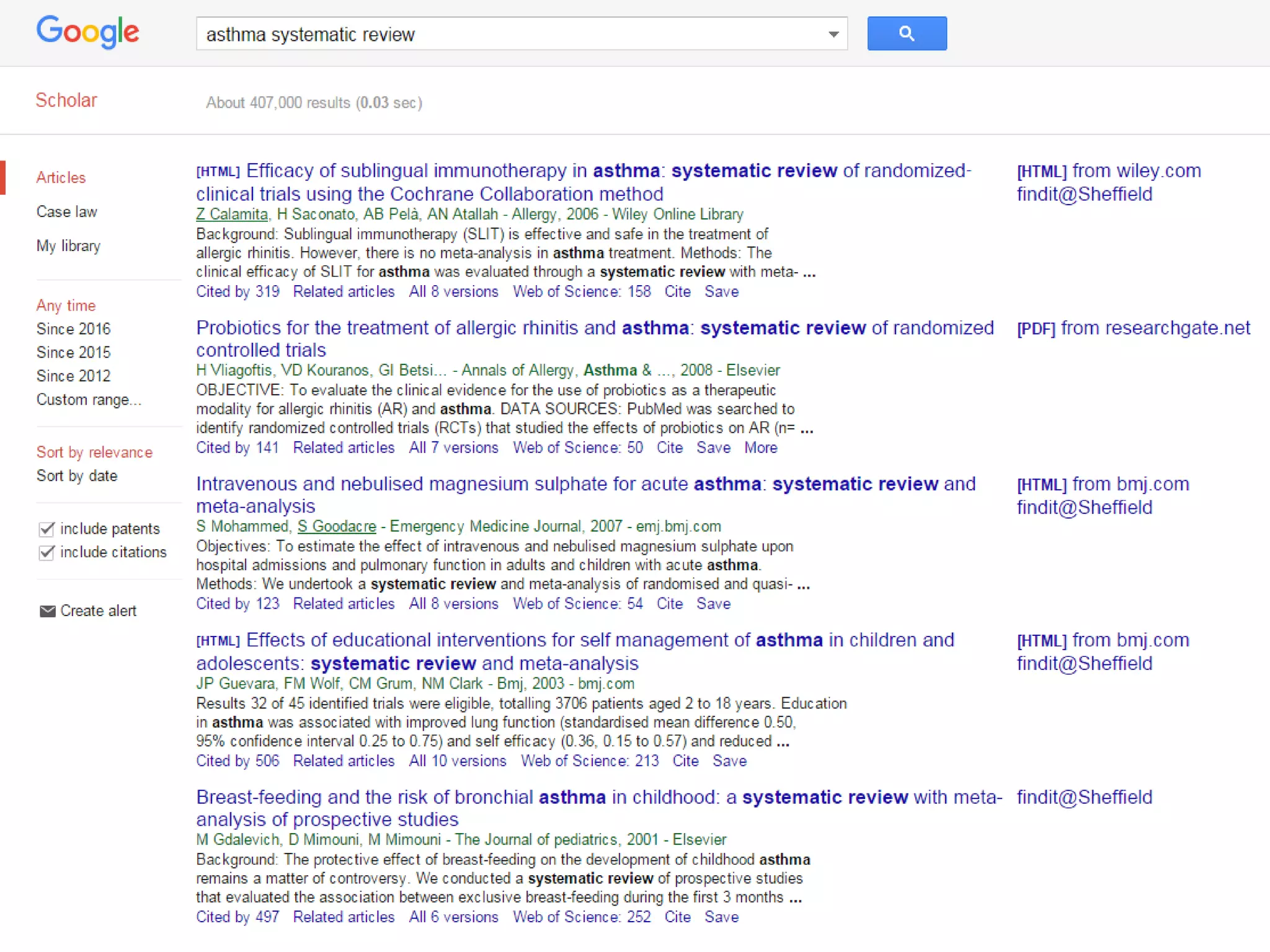
 What is a scoping search?
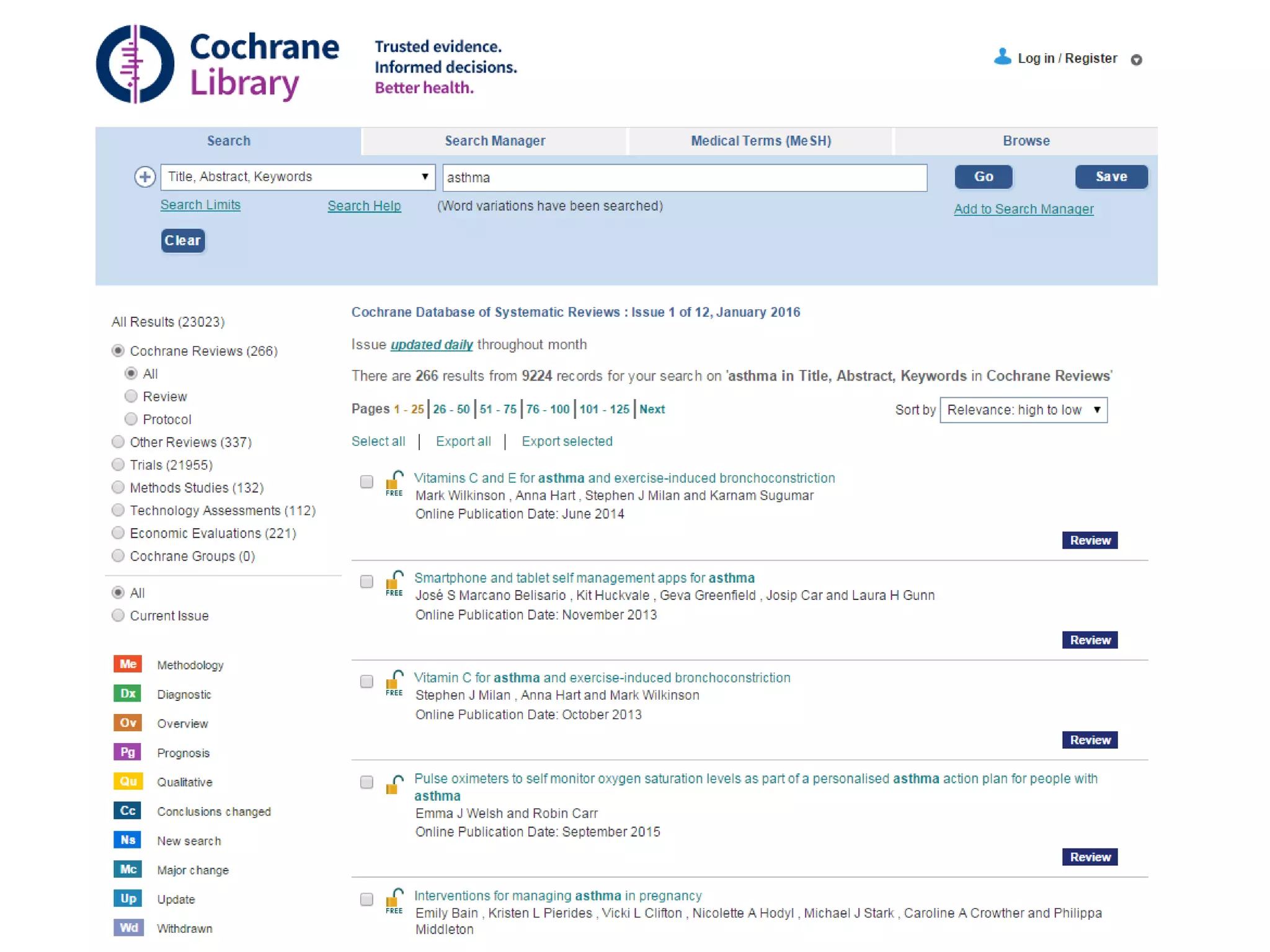
 Key sources for finding reviews
 Specific sources
 More general sources
 Support available from Information Resources
Why might you want to look for
evidence reviews?
 I’ve got a great idea for a primary research study
– I want to know what has already been done in
that area
 I’d like to do a systematic review and I want to
know if it has been done before
 I’ve got a rough idea for some research and I’d
like to know how to structure my research
question
What do we mean by a review?
 There are all sorts of reviews out there (Grant &
Booth 2009)
 Quantitative versus qualitative
 Systematic review – gold standard in clinical
topics, adhering to a predefined protocol etc.
 Many other types of review – different types are
more appropriate for different topics
 Scoping not systematic (although it is possible to
conduct specific, systematic searches for
reviews)
 Databases that contain (systematic) reviews
 Other sources of evidence
Key sources for finding existing
reviews
The Cochrane Library
Searching other sources to identify
reviews
 Not (yet) a replacement for traditional databases
 Lack of transparency re: sources covered
 Results vary according to your profile
 Can be useful for quick scoping searches
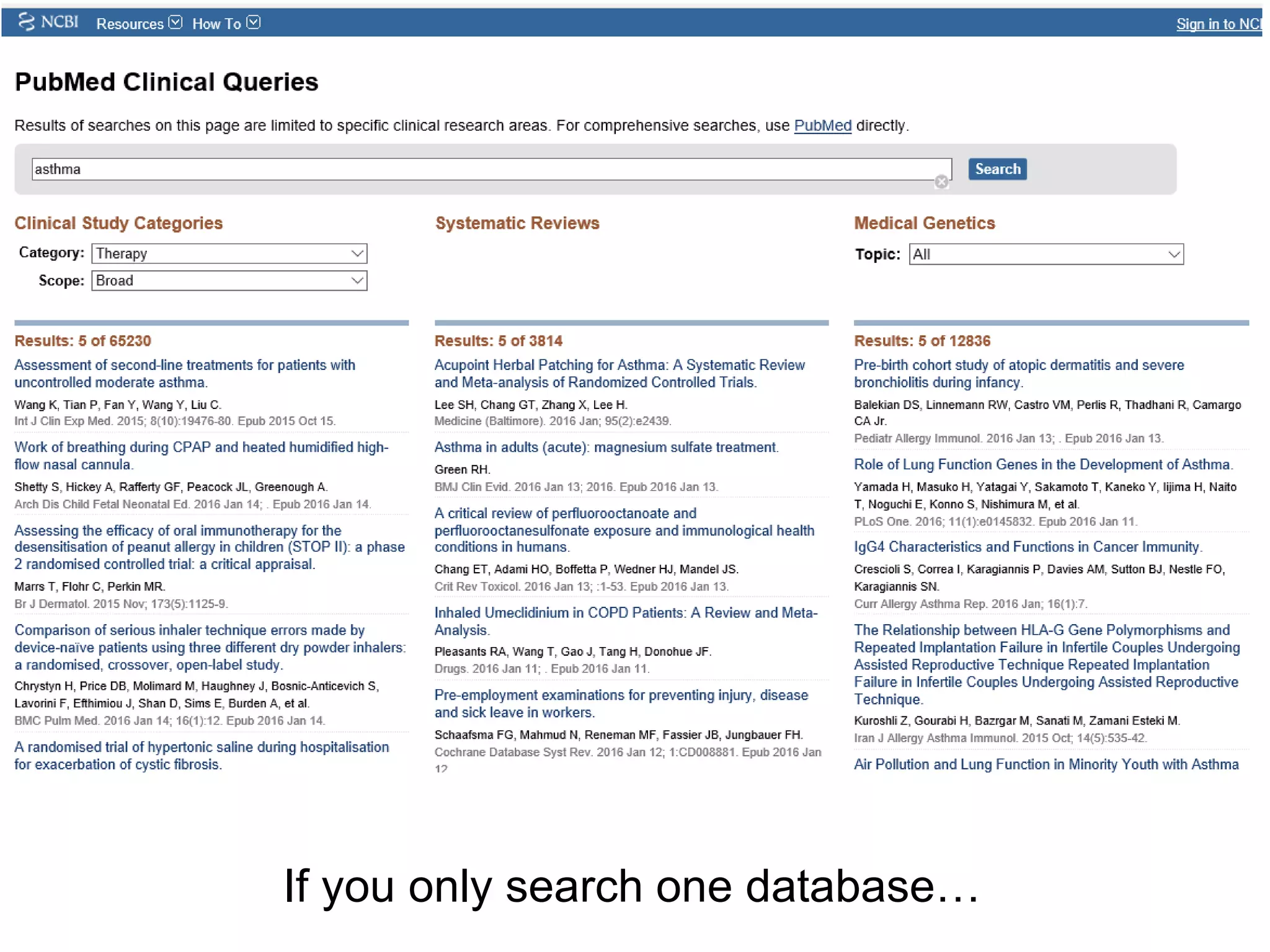
If you only search one database…
Support available from Information
Resources
 The Information Specialists in IR can…
 Work with you on bids for funding
 Primary research – to support your bid
 Evidence synthesis – as part of the research team
 Work with you on small research projects
 Give one to one training on searching
 Give advice/second opinion on your searches
 Email Anthea Sutton, Information Resources
Group Manager a.sutton@shef.ac.uk or call into
the ScHARR Library Enquiry Desk from 10-3.
Any questions?
Grant, M & Booth, A. 2009. A typology of reviews:
an analysis of 14 review types and associated
methodologies. Health Information & Libraries
Journal 26 (2), pp. 91-108

Have We Got Reviews For You? How to do a quick scoping search to find review articles.

  • 1.
    Louise Preston andMark Clowes Information Resources Group Have we got reviews for you?
  • 2.
    Today…  Why mightyou want to look for evidence reviews?  What is a scoping search?  Key sources for finding reviews  Specific sources  More general sources  Support available from Information Resources
  • 3.
    Why might youwant to look for evidence reviews?  I’ve got a great idea for a primary research study – I want to know what has already been done in that area  I’d like to do a systematic review and I want to know if it has been done before  I’ve got a rough idea for some research and I’d like to know how to structure my research question
  • 4.
    What do wemean by a review?  There are all sorts of reviews out there (Grant & Booth 2009)  Quantitative versus qualitative  Systematic review – gold standard in clinical topics, adhering to a predefined protocol etc.  Many other types of review – different types are more appropriate for different topics  Scoping not systematic (although it is possible to conduct specific, systematic searches for reviews)  Databases that contain (systematic) reviews  Other sources of evidence
  • 5.
    Key sources forfinding existing reviews
  • 6.
  • 13.
    Searching other sourcesto identify reviews  Not (yet) a replacement for traditional databases  Lack of transparency re: sources covered  Results vary according to your profile  Can be useful for quick scoping searches
  • 15.
    If you onlysearch one database…
  • 18.
    Support available fromInformation Resources  The Information Specialists in IR can…  Work with you on bids for funding  Primary research – to support your bid  Evidence synthesis – as part of the research team  Work with you on small research projects  Give one to one training on searching  Give advice/second opinion on your searches  Email Anthea Sutton, Information Resources Group Manager a.sutton@shef.ac.uk or call into the ScHARR Library Enquiry Desk from 10-3.
  • 19.
    Any questions? Grant, M& Booth, A. 2009. A typology of reviews: an analysis of 14 review types and associated methodologies. Health Information & Libraries Journal 26 (2), pp. 91-108

Editor's Notes

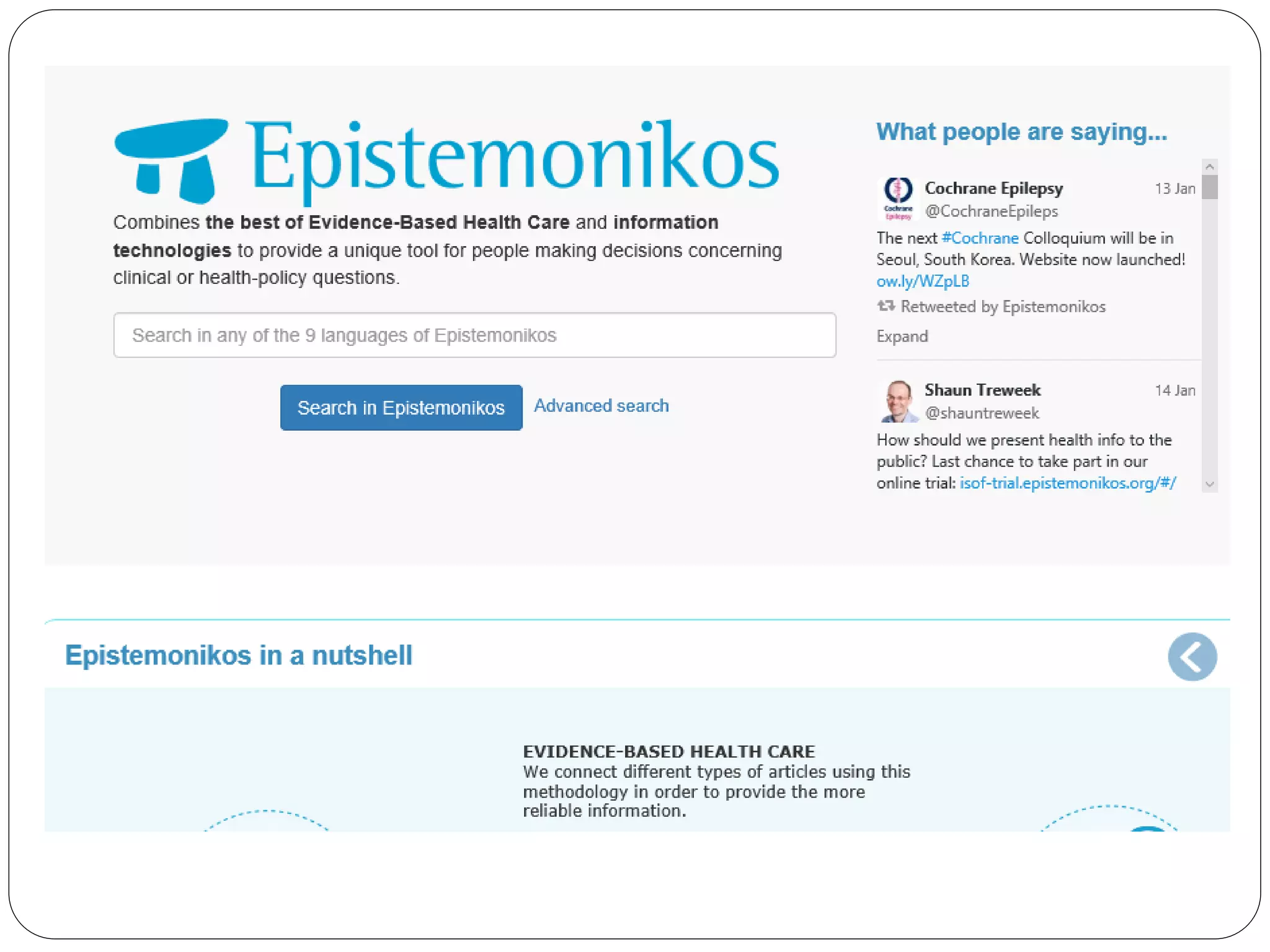
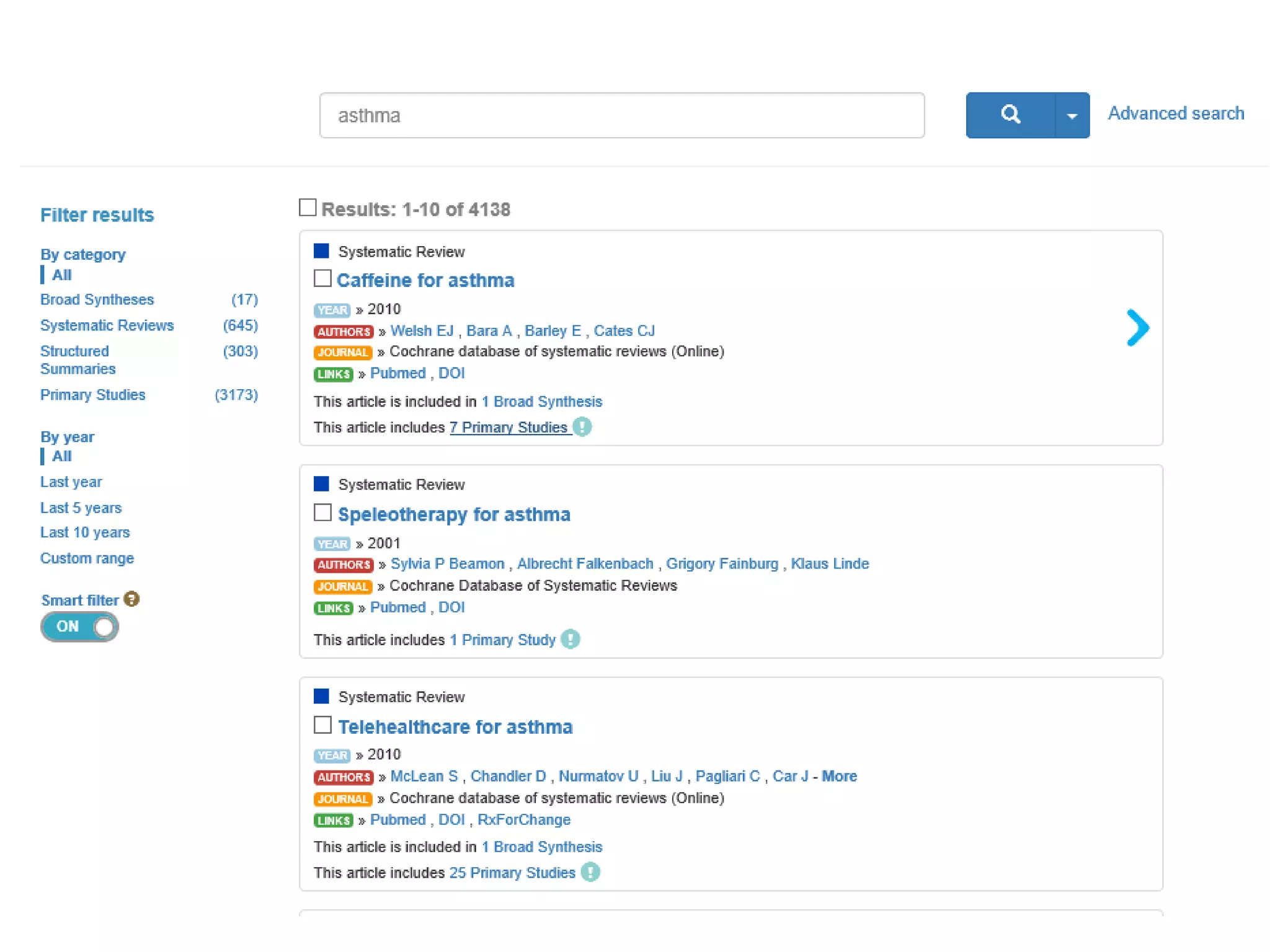
  • #8 A great decision tool for clinicians or policy makers. Links reviews to their included studies.
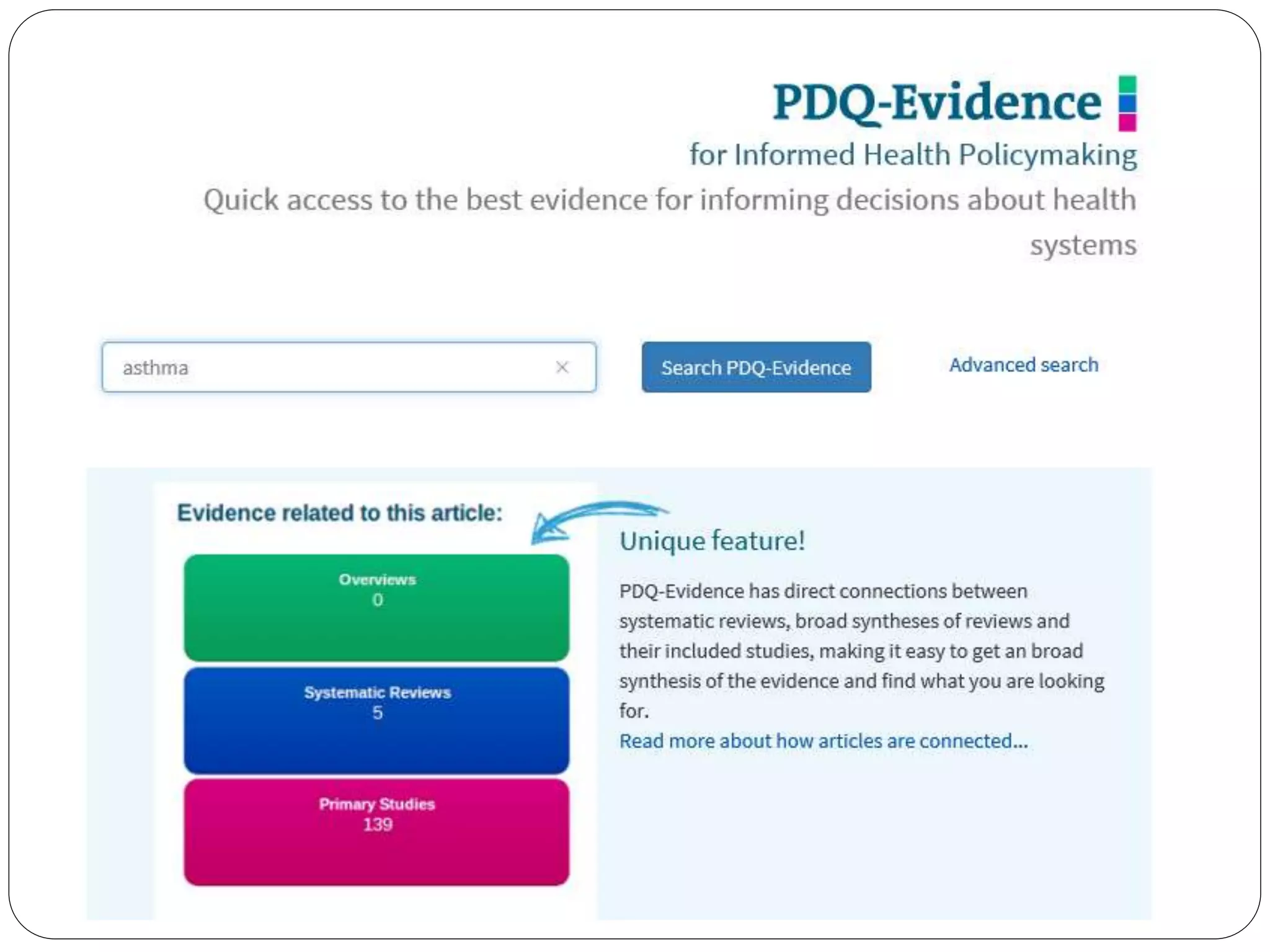
  • #10 Like Epistemonikos, PDQ evidence links reviews to their included studies. Particularly strong on policy making and expands coverage more into Health Service Delivery/Health Systems (relevant for a particular ScHARR audience).
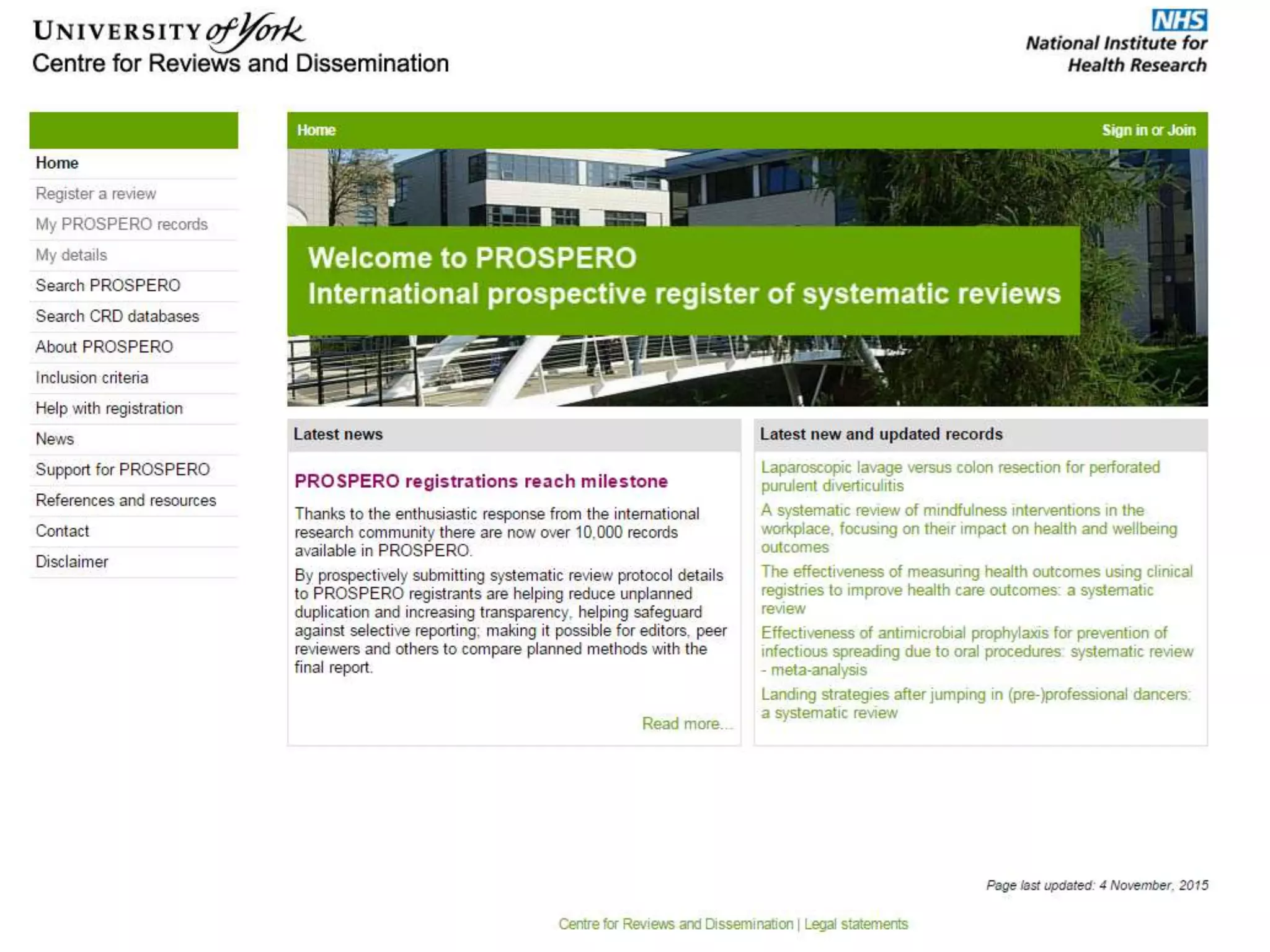
  • #11 Prospero – does what it says on the tin. Please register YOUR systematic review here.
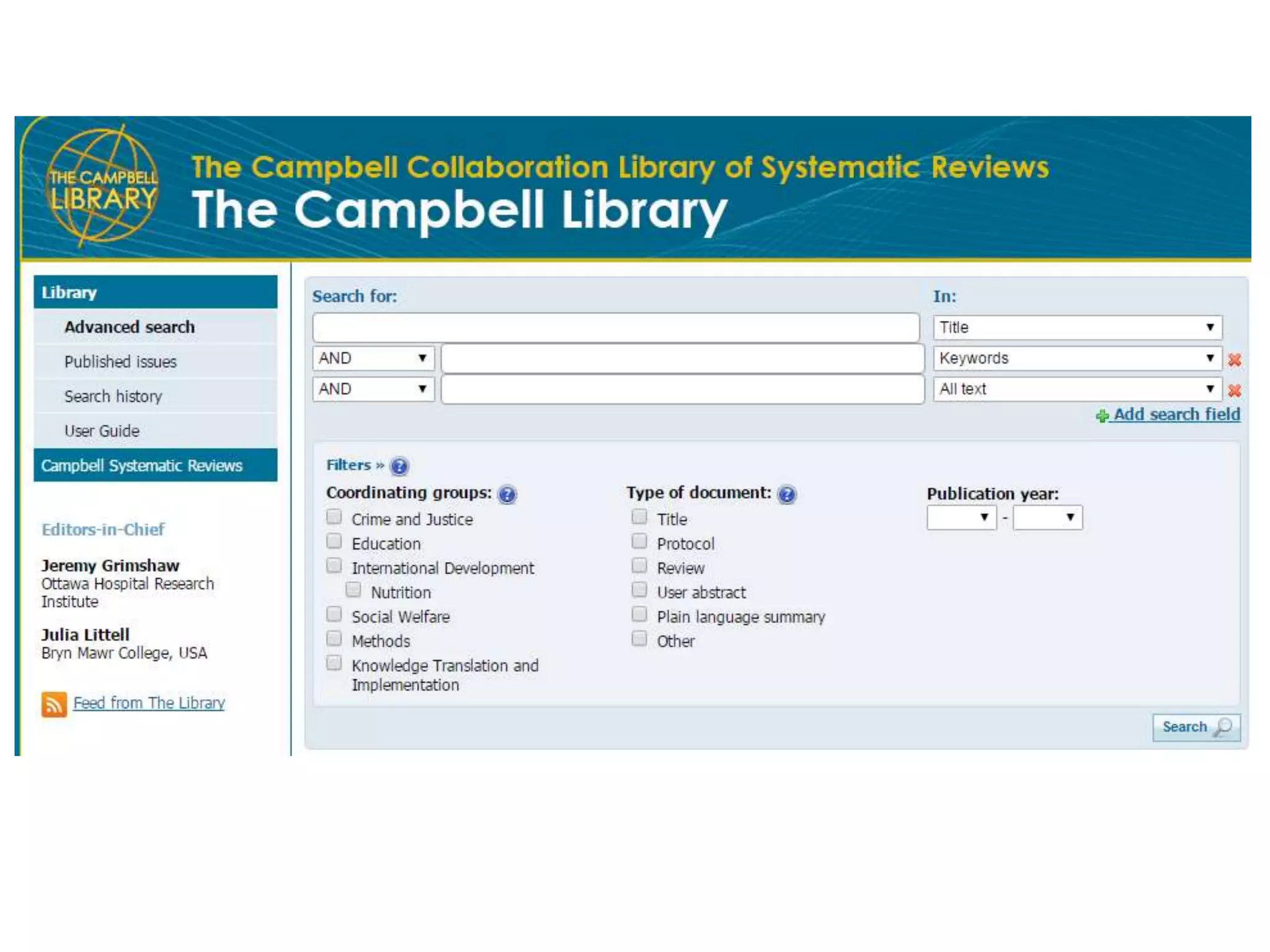
  • #12 Campbell Library – particularly strong on qualitative reviews and on social policy topics (crime; education; welfare)
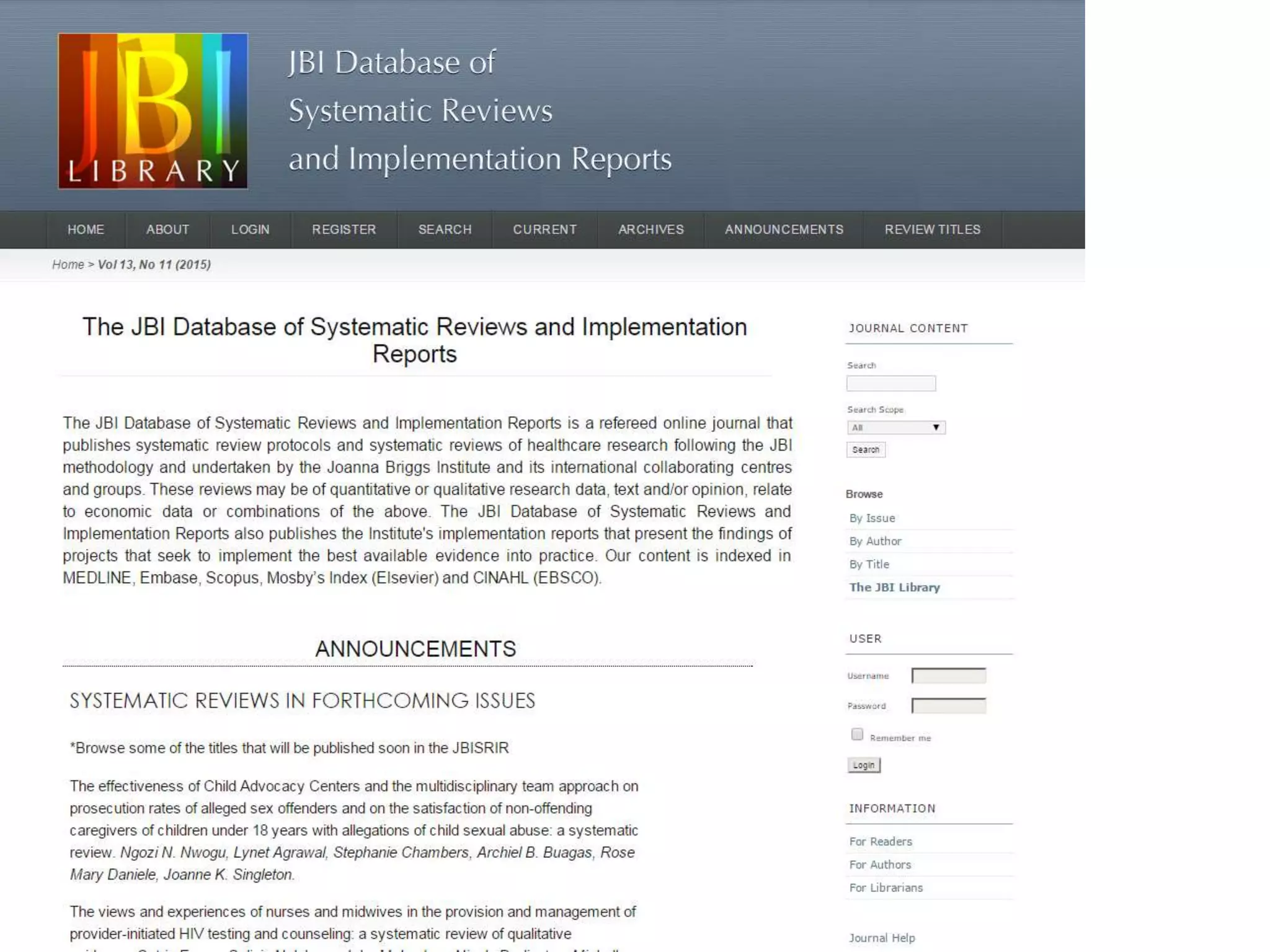
  • #13 Also good for qualitative topics, though full text is not currently available; but let us know if you need specific reviews, we might be able to obtain them via Document Supply.
  • #16 “If you only search one database…” Free to access, no login required Contains (some) publications ahead of print, before they are indexed for Medline ‘Clinical Queries’ interface – the quickest way to identify reviews
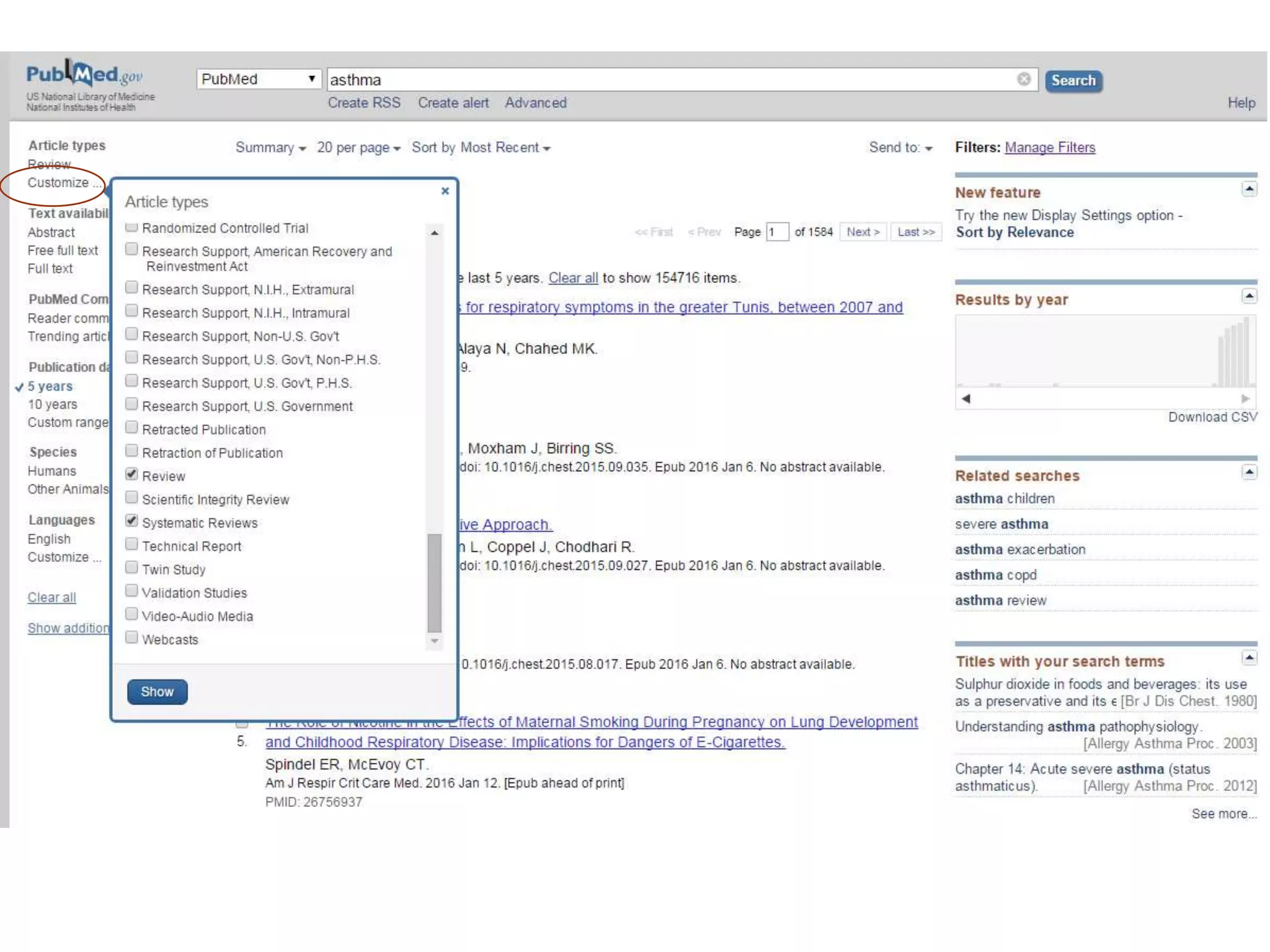
  • #17 If using the full interface, limits are a quick way of filtering results, but less reliable than validated search filters
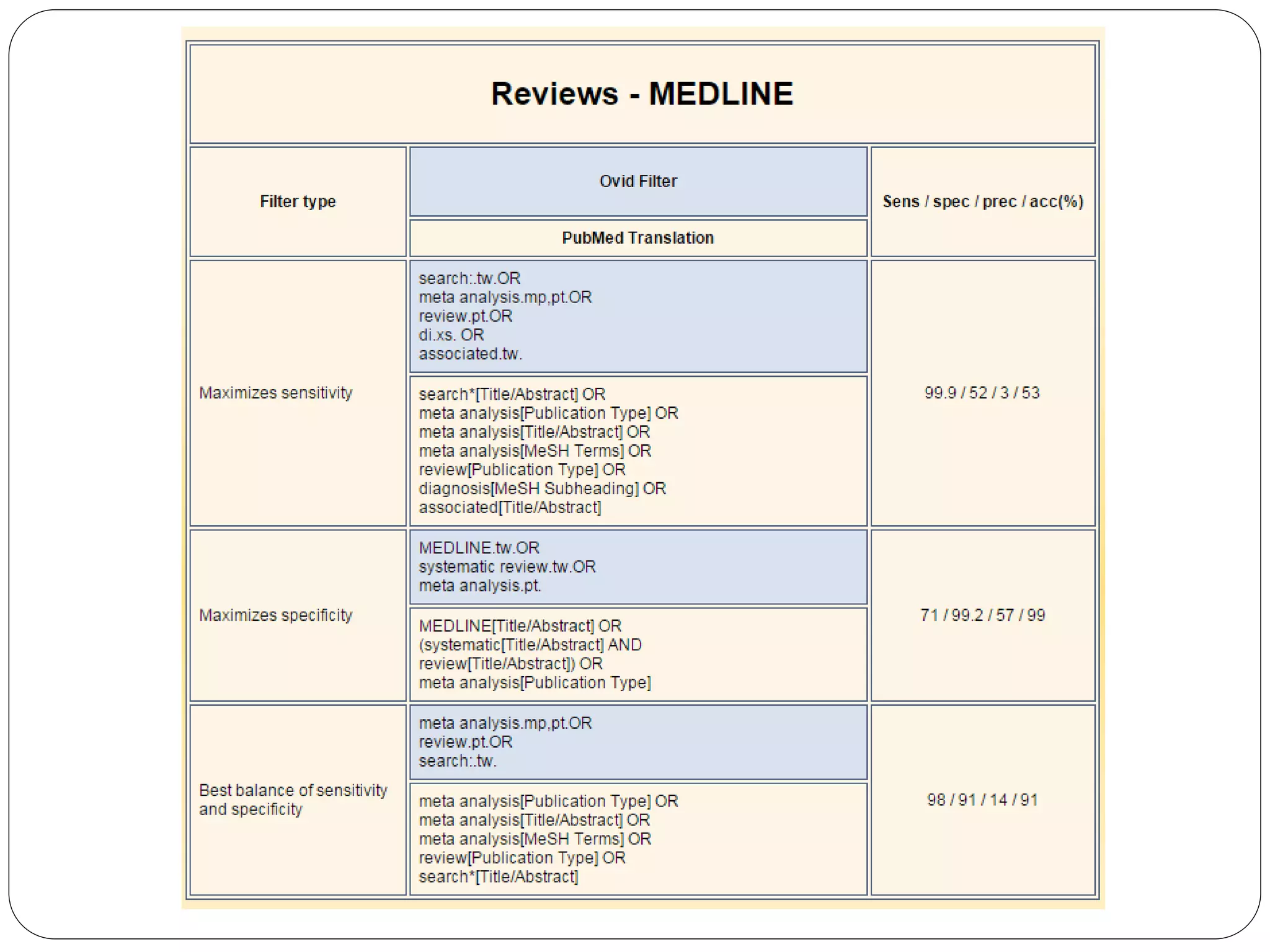
  • #18 This is a specially designed filter (from McMaster university) which is amore reliable way of identifying reviews within Medline than using limits alone.