IOT Platform
Design
Methodology
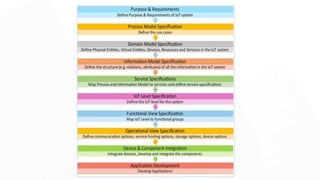
IOT Design Methodology Includes
 Purpose and Requirement Specification
 Process Specification
 Domain Model Specification
 Information Model Specification
 Service Specification
 IOT Level Specification
 Functional View Specification
 Operational View Specification
 Device and Component integration
 Application Development
Purpose and Requirement Specification
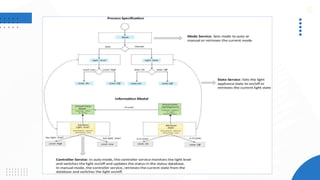
Process Specification
Purpose & Requirements Specification
The first step in IOT system design methodology is to define the
purpose and requirements of the system. In this step, the system
purpose, behavior and requirements (such as data collection
requirements, data analysis requirements, system management
requirements, data privacy and security requirements, user
interface requirements, ...) are captured.
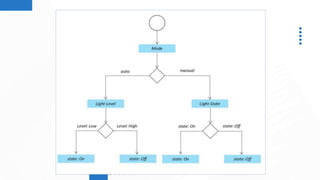
Process Specification
The second step in the IoT design methodology is to define the
process specification. In this step, the use cases of the IoT system
are formally described based on and derived fromthe purpose and
requirement specifications.
Domain model Specification
Information model specification
Domain model Specification
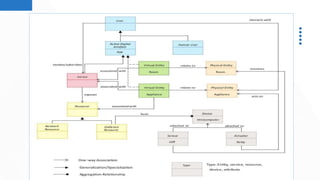
 The domain model describes the main concepts, entities and objects in the domain of
IoT system to be designed.
 Domain model defines the attributes of the objects and relationships between objects.
Domain model provides an abstract representation of the concepts, objects and
entities in the IoT domain, independent of any specific technology or platform. With
the domain model, the IoT system designers can get an understanding of the IoT
domain for which the system is to be designed.
Domain model Specification
The entities, objects and concepts defined in the domain model include:
 Physical Entity : Physical Entity is a discrete and identifiable entity in the
physical environment (e.g. a room, a light, an appliance, a car, etc.).
 Virtual Entity : Virtual Entity is a representation of the Physical Entity in
the digital world.
 Device :provides a medium for interactions between Physical Entities and
Virtual Entities. Devices are either attached to Physical Entities or placed
near Physical Entities.
Domain model Specification
 Resource : Resources are software components which can be either "on-
device" or "network-resources". On-device resources are hosted on the device
and include software components that either provide information on or
enable actuation upon the Physical Entity to which the device is attached.
 Service : Services provide an interface for interacting with the Physical
Entity. Services access the resources hosted on the device or the network
resources to obtain information about the Physical Entity or perform
actuation upon the Physical Entity.
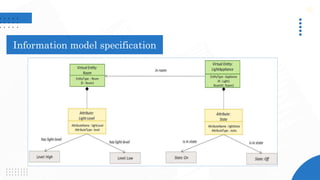
Information model specification
 Information Model defines the structure of all the information in the IoT
system, for example, attributes of Virtual Entities, relations, etc.
 Information model does not describe the specifics of how the information is
represented or stored. To define the information model, we first list the
Virtual Entities defined in the Domain Model.
 Information model adds more details to the Virtual Entities by defining
their attributes and relations.
Information model specification
Service Specifications
IOT Level Specification
Service Specifications
• The fifth step in the IoT design methodology is to define the service specifications.
Service specifications define the services in the IoT system, service types, service
inputs/output, service endpoints, service schedules, service preconditions and
service effects.
IOT Level Specification
 The sixth step in the IoT design methodology is to define the IoT level for the
system. In Chapter-1, we defined five IoT deployment levels
Functional viewSpecification
Operational viewSpecification
Functional viewSpecification
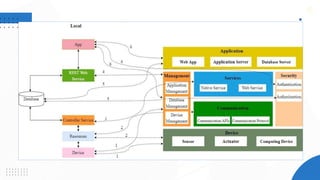
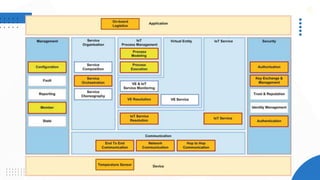
The Functional Groups (FG) included in a Functional View include:
 Device : The device FG contains devices for monitoring and control. In the home
automation example. the device FG includes a single board mini-computer, a light
sensor and relay switch(actuator).
 Communication : The communication FG handles the communication for the IoT
system. The communication FG includes the communication protocols that form
the backbone of IoT systems and enable network connectivity.
 The communication FG also includes the communication APis (such as REST and
WebSocket) that are used by the services and applications to exchange data over
the network.
Functional viewSpecification
 Services : The service FG includes various services involved in the IoT system
such as services for device monitoring , device control services, data publishing
services and services for device discovery.
 Management : The management FG includes all functionalities that are needed to
configure and manage the loT system .
 Security : The security FG includes security mechanisms for the loT system
such as authentication, authorization, data security, etc.
 Application : The application FG includes applications that provide an interface to
the users to control and monitor various aspects of the IoT system. Applications
also allow users to view the system status and the processed data.
Operational View Specification
Operation view address how an actual system can be realized by using devices and
technologies among many options and making them communicate and operate in an
efficient manner.
Devices options: Arduino, PIR Sensor, LED. Buzzer, Camera, Raspberry PI are
needed for further enhancement.
Communication options: network layer-IPV4, MQTT
Services options: Web Service.
Operational View Specification
Application options: It is out of scope for the project but as discussed earlier, Node-
red web application can be realized.
Security options: Two-phase authentication and authorization.
Device and Component Integration: This section is all about integrating the devices
and components. The devices and components used in are Arduino, PIR sensor, and
LED.
Device and Component
Integration
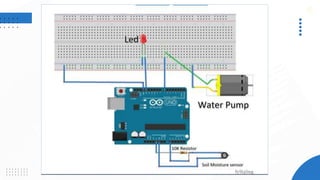
Device and Component Integration
The ninth step in the IoT design methodology is the integration of the
devices and components.
It integrates the devices and components and draws a schematic diagram
showing the same.
The following diagram shows the component & device integration.
Application Development
 The final step in the IoT design methodology is to develop the IoT
application.
 Application development is the process of designing, building, and
implementing software applications. It can be done by massive
organizations with large teams working on projects, or by a single
freelance developer. Application development defines the process of how
the application is made, and generally follows a standard methodology.
Examples of IoT in Real Life
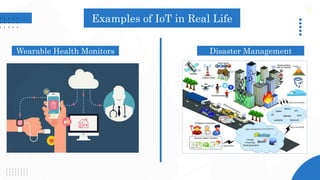
Wearable Health Monitors Disaster Management
Examples of IoT in Real Life
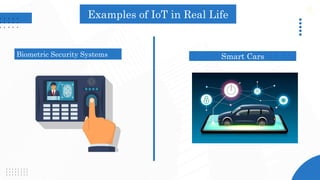
Biometric Security Systems Smart Cars
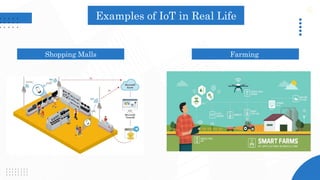
Examples of IoT in Real Life
Farming
Shopping Malls
IOT Platform Design Methodology

IOT Platform Design Methodology

  • 1.
  • 2.
    IOT Design MethodologyIncludes  Purpose and Requirement Specification  Process Specification  Domain Model Specification  Information Model Specification  Service Specification  IOT Level Specification  Functional View Specification  Operational View Specification  Device and Component integration  Application Development
  • 4.
    Purpose and RequirementSpecification Process Specification
  • 5.
    Purpose & RequirementsSpecification The first step in IOT system design methodology is to define the purpose and requirements of the system. In this step, the system purpose, behavior and requirements (such as data collection requirements, data analysis requirements, system management requirements, data privacy and security requirements, user interface requirements, ...) are captured.

  • 6.
    Process Specification The secondstep in the IoT design methodology is to define the process specification. In this step, the use cases of the IoT system are formally described based on and derived fromthe purpose and requirement specifications.
  • 8.
  • 9.
    Domain model Specification The domain model describes the main concepts, entities and objects in the domain of IoT system to be designed.  Domain model defines the attributes of the objects and relationships between objects. Domain model provides an abstract representation of the concepts, objects and entities in the IoT domain, independent of any specific technology or platform. With the domain model, the IoT system designers can get an understanding of the IoT domain for which the system is to be designed.
  • 10.
    Domain model Specification Theentities, objects and concepts defined in the domain model include:  Physical Entity : Physical Entity is a discrete and identifiable entity in the physical environment (e.g. a room, a light, an appliance, a car, etc.).  Virtual Entity : Virtual Entity is a representation of the Physical Entity in the digital world.  Device :provides a medium for interactions between Physical Entities and Virtual Entities. Devices are either attached to Physical Entities or placed near Physical Entities.
  • 11.
    Domain model Specification Resource : Resources are software components which can be either "on- device" or "network-resources". On-device resources are hosted on the device and include software components that either provide information on or enable actuation upon the Physical Entity to which the device is attached.  Service : Services provide an interface for interacting with the Physical Entity. Services access the resources hosted on the device or the network resources to obtain information about the Physical Entity or perform actuation upon the Physical Entity.
  • 13.
    Information model specification Information Model defines the structure of all the information in the IoT system, for example, attributes of Virtual Entities, relations, etc.  Information model does not describe the specifics of how the information is represented or stored. To define the information model, we first list the Virtual Entities defined in the Domain Model.  Information model adds more details to the Virtual Entities by defining their attributes and relations.
  • 14.
  • 15.
  • 16.
    Service Specifications • Thefifth step in the IoT design methodology is to define the service specifications. Service specifications define the services in the IoT system, service types, service inputs/output, service endpoints, service schedules, service preconditions and service effects.
  • 18.
    IOT Level Specification The sixth step in the IoT design methodology is to define the IoT level for the system. In Chapter-1, we defined five IoT deployment levels
  • 20.
  • 21.
    Functional viewSpecification The FunctionalGroups (FG) included in a Functional View include:  Device : The device FG contains devices for monitoring and control. In the home automation example. the device FG includes a single board mini-computer, a light sensor and relay switch(actuator).  Communication : The communication FG handles the communication for the IoT system. The communication FG includes the communication protocols that form the backbone of IoT systems and enable network connectivity.  The communication FG also includes the communication APis (such as REST and WebSocket) that are used by the services and applications to exchange data over the network.
  • 22.
    Functional viewSpecification  Services: The service FG includes various services involved in the IoT system such as services for device monitoring , device control services, data publishing services and services for device discovery.  Management : The management FG includes all functionalities that are needed to configure and manage the loT system .  Security : The security FG includes security mechanisms for the loT system such as authentication, authorization, data security, etc.  Application : The application FG includes applications that provide an interface to the users to control and monitor various aspects of the IoT system. Applications also allow users to view the system status and the processed data.
  • 25.
    Operational View Specification Operationview address how an actual system can be realized by using devices and technologies among many options and making them communicate and operate in an efficient manner. Devices options: Arduino, PIR Sensor, LED. Buzzer, Camera, Raspberry PI are needed for further enhancement. Communication options: network layer-IPV4, MQTT Services options: Web Service.
  • 26.
    Operational View Specification Applicationoptions: It is out of scope for the project but as discussed earlier, Node- red web application can be realized. Security options: Two-phase authentication and authorization. Device and Component Integration: This section is all about integrating the devices and components. The devices and components used in are Arduino, PIR sensor, and LED.
  • 27.
  • 28.
    Device and ComponentIntegration The ninth step in the IoT design methodology is the integration of the devices and components. It integrates the devices and components and draws a schematic diagram showing the same. The following diagram shows the component & device integration.
  • 30.
  • 31.
    Application Development  Thefinal step in the IoT design methodology is to develop the IoT application.  Application development is the process of designing, building, and implementing software applications. It can be done by massive organizations with large teams working on projects, or by a single freelance developer. Application development defines the process of how the application is made, and generally follows a standard methodology.
  • 32.
    Examples of IoTin Real Life Wearable Health Monitors Disaster Management
  • 33.
    Examples of IoTin Real Life Biometric Security Systems Smart Cars
  • 34.
    Examples of IoTin Real Life Farming Shopping Malls