IoT System Management
2
COVERAGE
 Need for IoT Systems Management
 SNMP
 Network Operator Requirements
 NETCONF
 YANG
 IoT Systems Management with NETCONF-YANG
3
 Automating Configuration
 Monitoring Operational & Statistical Data
 Improved Reliability
 System Wide Configurations
 Multiple System Configurations
 Retrieving & Reusing Configurations
Need for IoT Systems Management
4
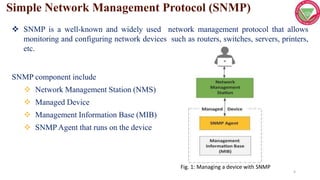
 SNMP is a well-known and widely used network management protocol that allows
monitoring and configuring network devices such as routers, switches, servers, printers,
etc.
SNMP component include
 Network Management Station (NMS)
 Managed Device
 Management Information Base (MIB)
 SNMP Agent that runs on the device
Simple Network Management Protocol (SNMP)
Fig. 1: Managing a device with SNMP
5
 SNMP is stateless in nature and each SNMP request contains all the information to
process the request. The application needs to be intelligent to manage the device.
 SNMP is a connectionless protocol which uses UDP as the transport protocol, making it
unreliable as there was no support for acknowledgement of requests.
 MIBs often lack writable objects without which device configuration is not possible
using SNMP.
 It is difficult to differentiate between configuration and state data in MIBs.
 Retrieving the current configuration from a device can be difficult with SNMP.
 Earlier versions of SNMP did not have strong security features.
Limitations of SNMP
6
1) Ease of use
2) Distinction between configuration and state data
3) Fetch configuration and state data separately
4) Configuration of the network as a whole
5) Configuration transactions across devices
6) Configuration deltas
7) Dump and restore configurations
8) Configuration validation
9) Configuration database schemas
10) Comparing configurations
Network Operator Requirements
7
11) Role-based access control
12) Consistency of access control lists:
13) Multiple configuration sets
14) Support for both data-oriented and task- oriented access control
Contd…
8
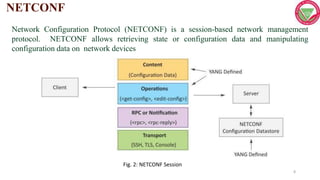
Network Configuration Protocol (NETCONF) is a session-based network management
protocol. NETCONF allows retrieving state or configuration data and manipulating
configuration data on network devices
NETCONF
Fig. 2: NETCONF Session
9
 NETCONF works on SSH transport protocol.
 Transport layer provides end-to-end connectivity and ensure reliable delivery of
messages.
 NETCONF uses XML-encoded Remote Procedure Calls (RPCs) for framing request and
response messages.
 The RPC layer provides mechanism for encoding of RPC calls and notifications.
 NETCONF provides various operations to retrieve and edit configuration data from
network devices.
Contd…
10
 The Content Layer consists of configuration and state data which is XML-encoded.
 The schema of the configuration and state data is defined in a data modeling language
called YANG.
 The Content Layer consists of configuration and state data which is XML-encoded.
 The schema of the configuration and state data is defined in a data modeling language
called YANG.
 NETCONF provides a clear separation of the configuration and state data.
 The configuration data resides within a NETCONF configuration datastore on the server.
Contd…
11
 YANG is a data modeling language used to model configuration and state data
manipulated by the NETCONF protocol
 YANG modules contain the definitions of the configuration data, state data, RPC
calls that can be issued and the format of the notifications.
 YANG modules defines the data exchanged between the NETCONF client and
server.
 A module comprises of a number of 'leaf' nodes which are organized into a
hierarchical tree structure.
YANG
12
 The 'leaf' nodes are specified using the 'leaf' or 'leaf-list' constructs.
 Leaf nodes are organized using 'container' or 'list' constructs.
 A YANG module can import definitions from other modules.
 Constraints can be defined on the data nodes, e.g. allowed values.
 YANG can model both configuration data and state data using the 'config' statement.
Contd…
13
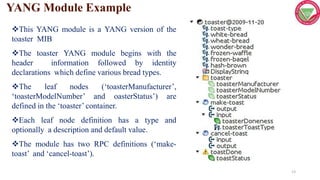
This YANG module is a YANG version of the
toaster MIB
The toaster YANG module begins with the
header information followed by identity
declarations which define various bread types.
The leaf nodes (‘toasterManufacturer’,
‘toasterModelNumber’ and oasterStatus’) are
defined in the ‘toaster’ container.
Each leaf node definition has a type and
optionally a description and default value.
The module has two RPC definitions (‘make-
toast’ and ‘cancel-toast’).
YANG Module Example
14
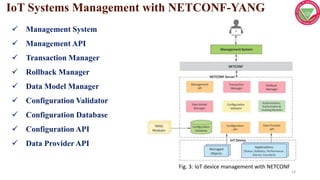
 Management System
 Management API
 Transaction Manager
 Rollback Manager
 Data Model Manager
 Configuration Validator
 Configuration Database
 Configuration API
 Data Provider API
IoT Systems Management with NETCONF-YANG
Fig. 3: IoT device management with NETCONF
1. Bahga, Arshdeep, and Vijay Madisetti. Internet of Things: A hands-on approach, Orient Blackswan Private
Limited, First Edition, 2015. ISBN-10 : 8173719543
2. Book website of Bahga, Arshdeep, and Vijay Madisetti. Internet of Things: A hands-on approach.
REFERENCES
15

IoT System Management.pptx

  • 1.
  • 2.
    2 COVERAGE  Need forIoT Systems Management  SNMP  Network Operator Requirements  NETCONF  YANG  IoT Systems Management with NETCONF-YANG
  • 3.
    3  Automating Configuration Monitoring Operational & Statistical Data  Improved Reliability  System Wide Configurations  Multiple System Configurations  Retrieving & Reusing Configurations Need for IoT Systems Management
  • 4.
    4  SNMP isa well-known and widely used network management protocol that allows monitoring and configuring network devices such as routers, switches, servers, printers, etc. SNMP component include  Network Management Station (NMS)  Managed Device  Management Information Base (MIB)  SNMP Agent that runs on the device Simple Network Management Protocol (SNMP) Fig. 1: Managing a device with SNMP
  • 5.
    5  SNMP isstateless in nature and each SNMP request contains all the information to process the request. The application needs to be intelligent to manage the device.  SNMP is a connectionless protocol which uses UDP as the transport protocol, making it unreliable as there was no support for acknowledgement of requests.  MIBs often lack writable objects without which device configuration is not possible using SNMP.  It is difficult to differentiate between configuration and state data in MIBs.  Retrieving the current configuration from a device can be difficult with SNMP.  Earlier versions of SNMP did not have strong security features. Limitations of SNMP
  • 6.
    6 1) Ease ofuse 2) Distinction between configuration and state data 3) Fetch configuration and state data separately 4) Configuration of the network as a whole 5) Configuration transactions across devices 6) Configuration deltas 7) Dump and restore configurations 8) Configuration validation 9) Configuration database schemas 10) Comparing configurations Network Operator Requirements
  • 7.
    7 11) Role-based accesscontrol 12) Consistency of access control lists: 13) Multiple configuration sets 14) Support for both data-oriented and task- oriented access control Contd…
  • 8.
    8 Network Configuration Protocol(NETCONF) is a session-based network management protocol. NETCONF allows retrieving state or configuration data and manipulating configuration data on network devices NETCONF Fig. 2: NETCONF Session
  • 9.
    9  NETCONF workson SSH transport protocol.  Transport layer provides end-to-end connectivity and ensure reliable delivery of messages.  NETCONF uses XML-encoded Remote Procedure Calls (RPCs) for framing request and response messages.  The RPC layer provides mechanism for encoding of RPC calls and notifications.  NETCONF provides various operations to retrieve and edit configuration data from network devices. Contd…
  • 10.
    10  The ContentLayer consists of configuration and state data which is XML-encoded.  The schema of the configuration and state data is defined in a data modeling language called YANG.  The Content Layer consists of configuration and state data which is XML-encoded.  The schema of the configuration and state data is defined in a data modeling language called YANG.  NETCONF provides a clear separation of the configuration and state data.  The configuration data resides within a NETCONF configuration datastore on the server. Contd…
  • 11.
    11  YANG isa data modeling language used to model configuration and state data manipulated by the NETCONF protocol  YANG modules contain the definitions of the configuration data, state data, RPC calls that can be issued and the format of the notifications.  YANG modules defines the data exchanged between the NETCONF client and server.  A module comprises of a number of 'leaf' nodes which are organized into a hierarchical tree structure. YANG
  • 12.
    12  The 'leaf'nodes are specified using the 'leaf' or 'leaf-list' constructs.  Leaf nodes are organized using 'container' or 'list' constructs.  A YANG module can import definitions from other modules.  Constraints can be defined on the data nodes, e.g. allowed values.  YANG can model both configuration data and state data using the 'config' statement. Contd…
  • 13.
    13 This YANG moduleis a YANG version of the toaster MIB The toaster YANG module begins with the header information followed by identity declarations which define various bread types. The leaf nodes (‘toasterManufacturer’, ‘toasterModelNumber’ and oasterStatus’) are defined in the ‘toaster’ container. Each leaf node definition has a type and optionally a description and default value. The module has two RPC definitions (‘make- toast’ and ‘cancel-toast’). YANG Module Example
  • 14.
    14  Management System Management API  Transaction Manager  Rollback Manager  Data Model Manager  Configuration Validator  Configuration Database  Configuration API  Data Provider API IoT Systems Management with NETCONF-YANG Fig. 3: IoT device management with NETCONF
  • 15.
    1. Bahga, Arshdeep,and Vijay Madisetti. Internet of Things: A hands-on approach, Orient Blackswan Private Limited, First Edition, 2015. ISBN-10 : 8173719543 2. Book website of Bahga, Arshdeep, and Vijay Madisetti. Internet of Things: A hands-on approach. REFERENCES 15