ANIMAL DIGESTIVE SYSTEM
MONOGASTRIC DIGESTIVE SYSTEM
• Has one simple stomach
• The stomach secretes acid, resulting in a low pH of 1.5 to 2.5. T
• The stomach secretes acid, resulting in a low pH of 1.5 to 2.5.
• Animals with this type of digestive system are better adapted to eat rations
high in concentrates.
MONOGASTRIC DIGESTIVE SYSTEM
• Common concentrates are cereal
grains and oil meals.
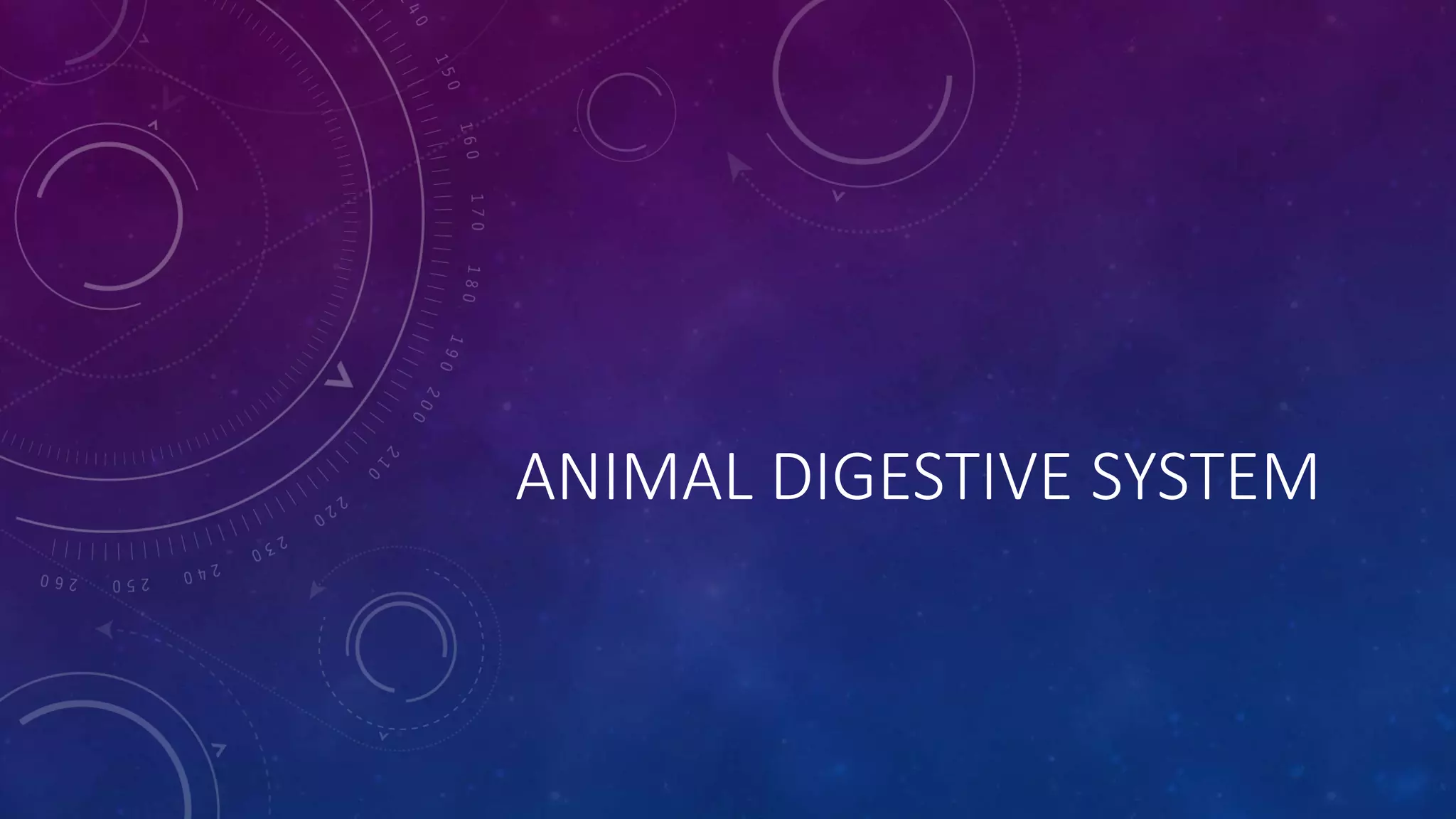
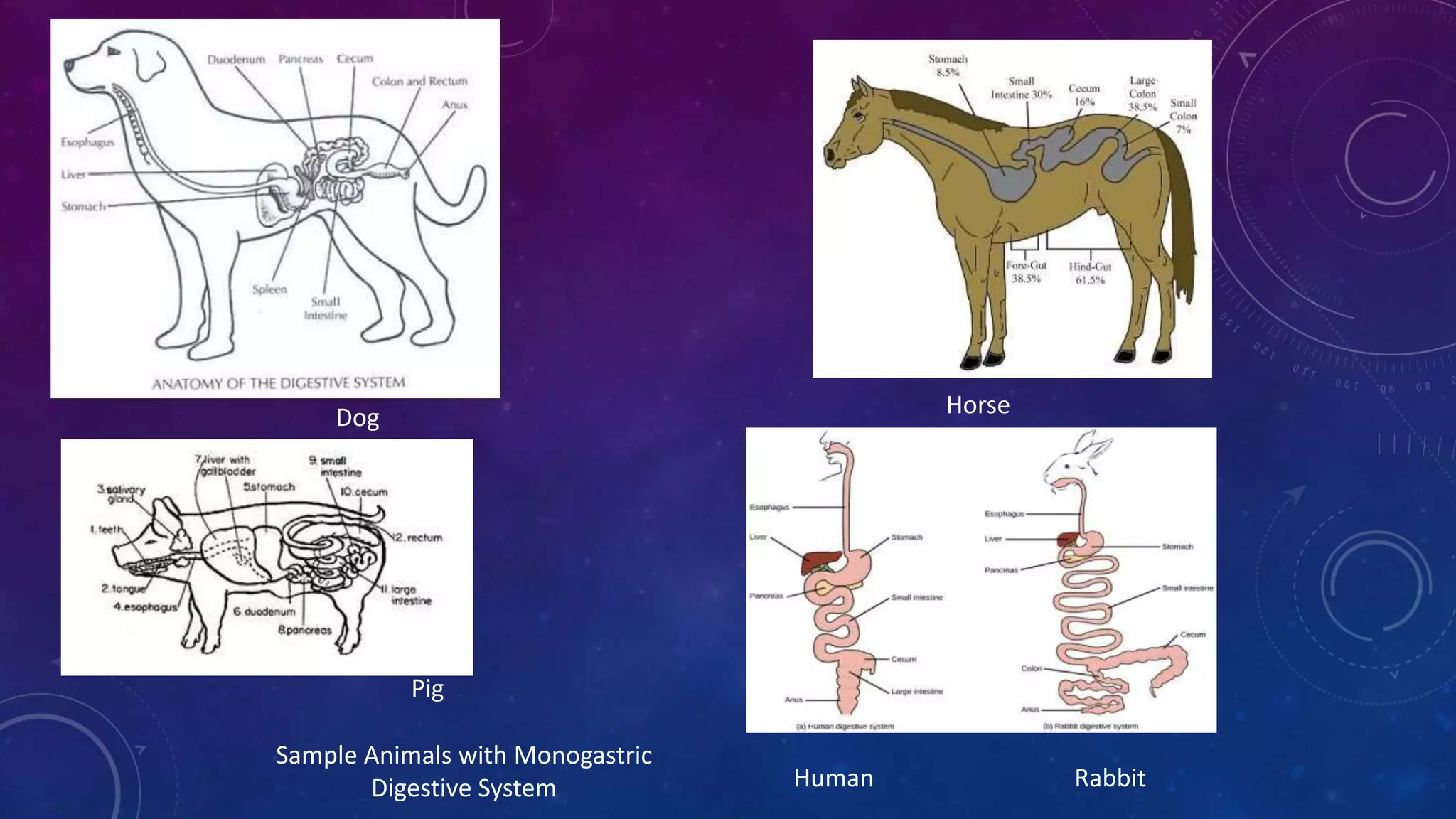
Dog Horse
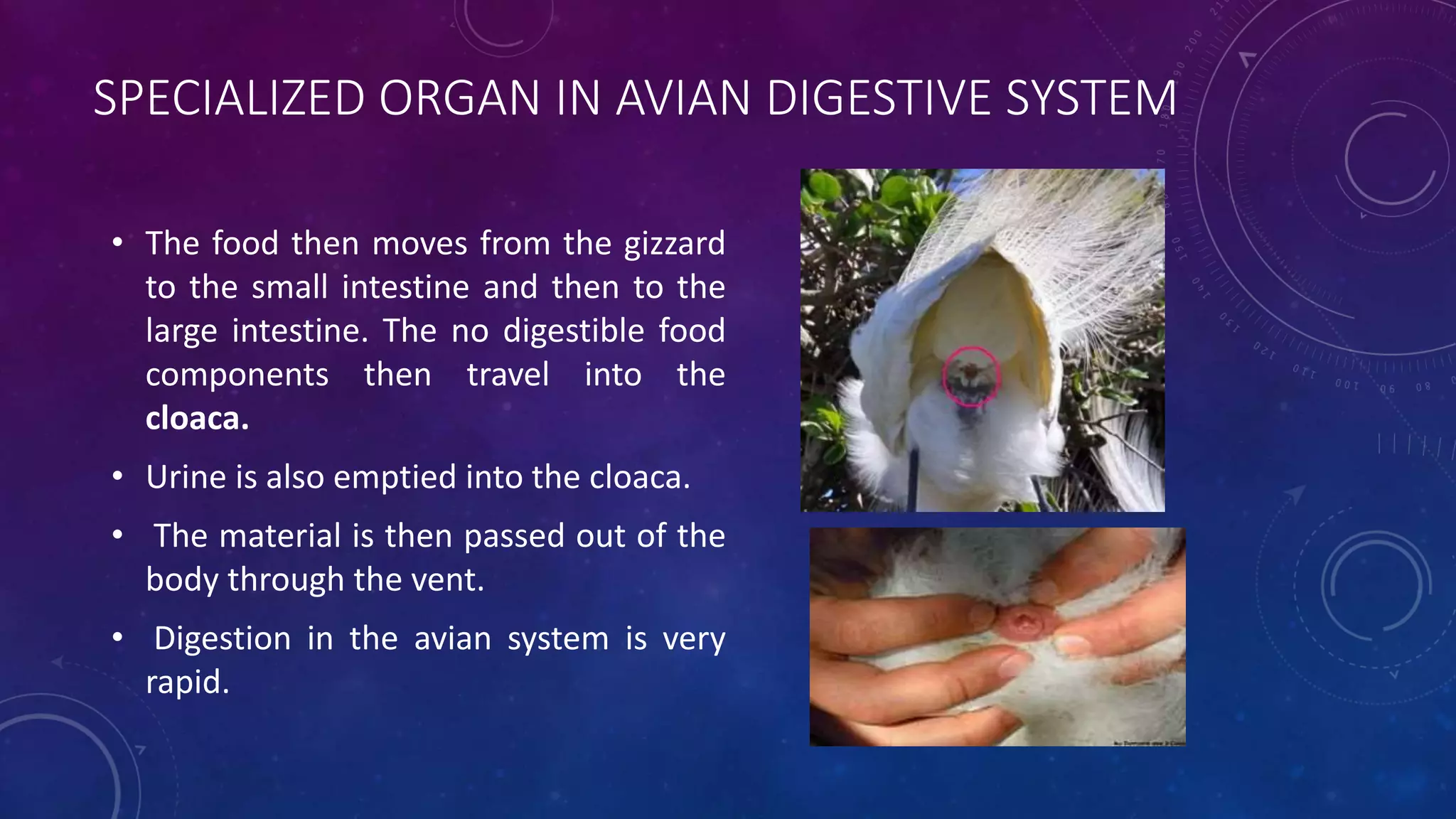
Pig
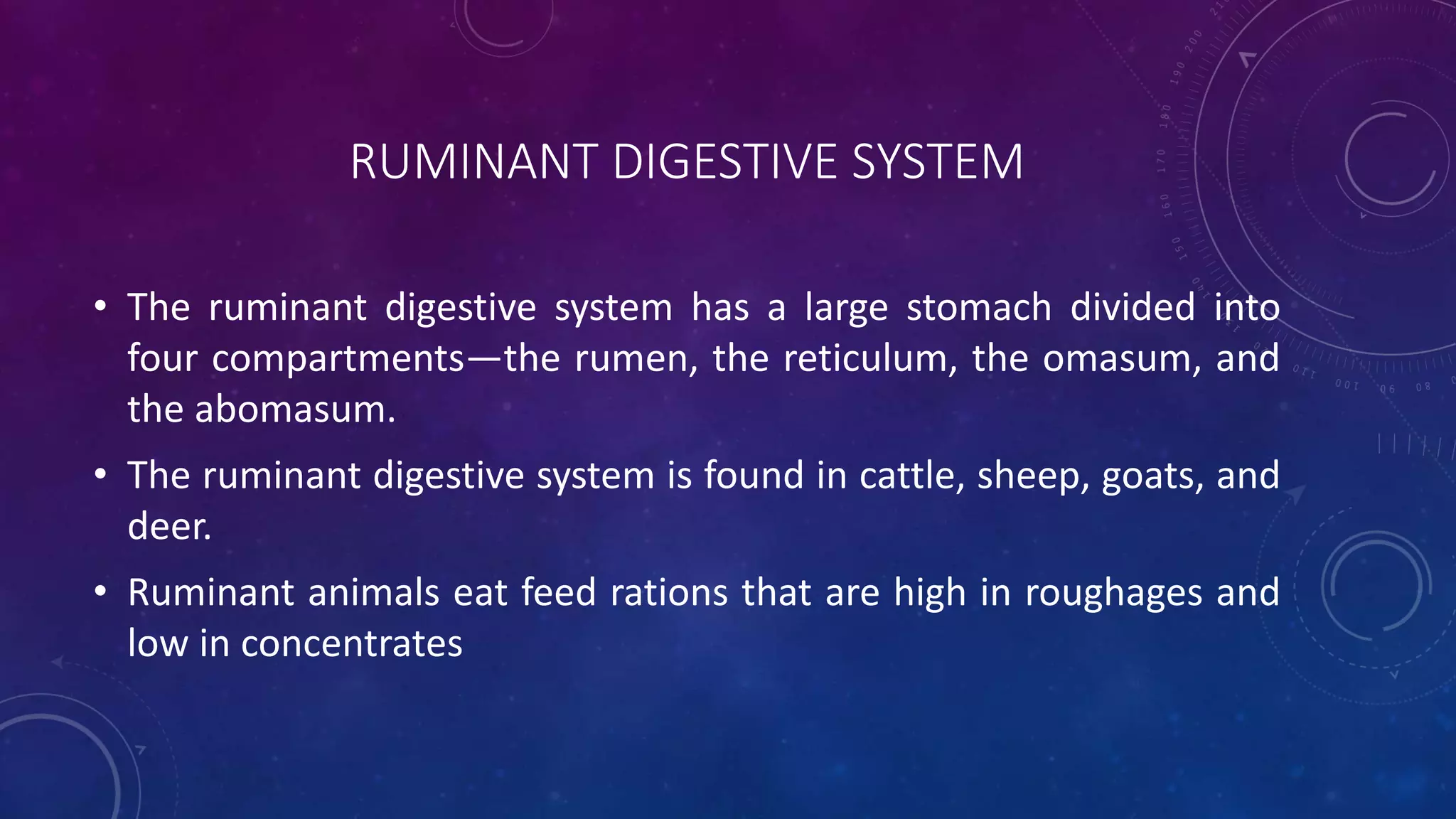
Human Rabbit
Sample Animals with Monogastric
Digestive System
AVIAN DIGESTIVE SYSTEM
• The avian digestive system is found in poultry.
• This system differs greatly from any other type. Since poultry do not have
teeth, there is no chewing.
• Poultry break their feed into pieces small enough to swallow by pecking with
their beaks or scratching with their feet.
• Feed enters the mouth, travels to the esophagus, and empties directly into
the crop.
SPECIALIZED ORGAN IN AVIAN DIGESTIVE SYSTEM
• The crop is where the food
is stored and soaked.
Food then moves from the
crop to the proventriculus.
SPECIALIZED ORGAN IN AVIAN DIGESTIVE SYSTEM
• The proventriculus is the
stomach in a bird, where
gastric enzymes and
hydrochloric acid are
secreted. From the
proventriculus, the food
makes its way to the
gizzard.
SPECIALIZED ORGAN IN AVIAN DIGESTIVE SYSTEM
The gizzard is a very muscular
organ, which normally
contains grit or stones that
function like teeth to grind
the food
SPECIALIZED ORGAN IN AVIAN DIGESTIVE SYSTEM
• The food then moves from the gizzard
to the small intestine and then to the
large intestine. The no digestible food
components then travel into the
cloaca.
• Urine is also emptied into the cloaca.
• The material is then passed out of the
body through the vent.
• Digestion in the avian system is very
rapid.
RUMINANT DIGESTIVE SYSTEM
• The ruminant digestive system has a large stomach divided into
four compartments—the rumen, the reticulum, the omasum, and
the abomasum.
• The ruminant digestive system is found in cattle, sheep, goats, and
deer.
• Ruminant animals eat feed rations that are high in roughages and
low in concentrates
• Roughages are feeds tuffs that are high in fiber, low in energy, and typically
only 50 to 65 percent digestible.
• Roughages include hay, straw, grazed forages, and silage.
• Ruminants are different from monogastric animals in that they swallow their
food in large quantities with little chewing
• Later they will ruminate, or belch up the feed, chew, and swallow it again.
• The regurgitated feed is called a cud.
• A cud is a ball-like mass of feed brought up from the stomach to be rechewed.
• On average, cattle chew their cuds about six to eight times per day.
SPECIALIZED ORGAN IN RUMINANT DIGESTIVE
SYSTEM
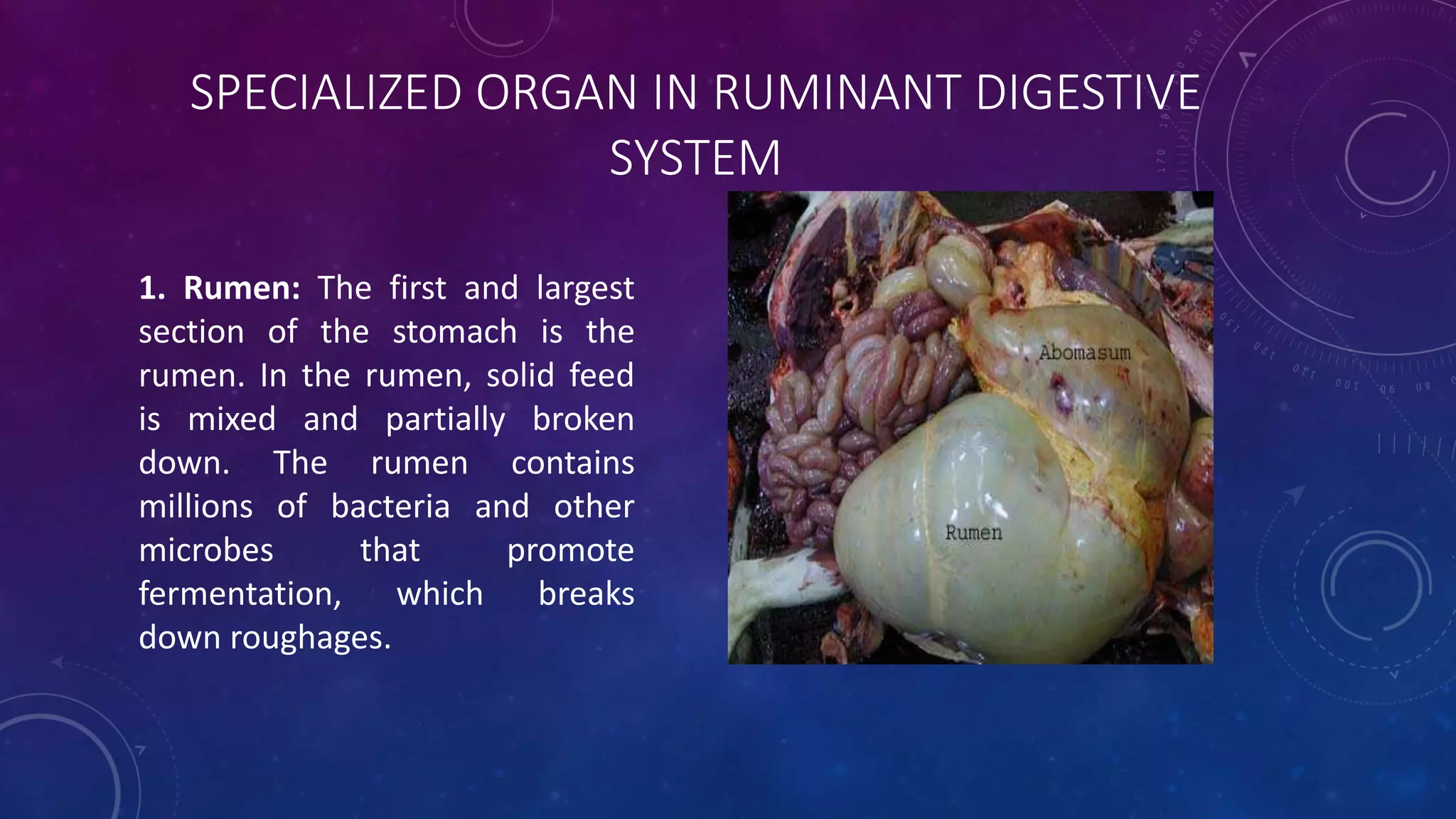
1. Rumen: The first and largest
section of the stomach is the
rumen. In the rumen, solid feed
is mixed and partially broken
down. The rumen contains
millions of bacteria and other
microbes that promote
fermentation, which breaks
down roughages.
SPECIALIZED ORGAN IN RUMINANT DIGESTIVE
SYSTEM
The rumen also contains microorganisms that synthesize amino
acids and B-complex vitamins. Amino acids are the building blocks of
proteins and are essential for the growth and maintenance of cells
SPECIALIZED ORGAN IN RUMINANT DIGESTIVE
SYSTEM
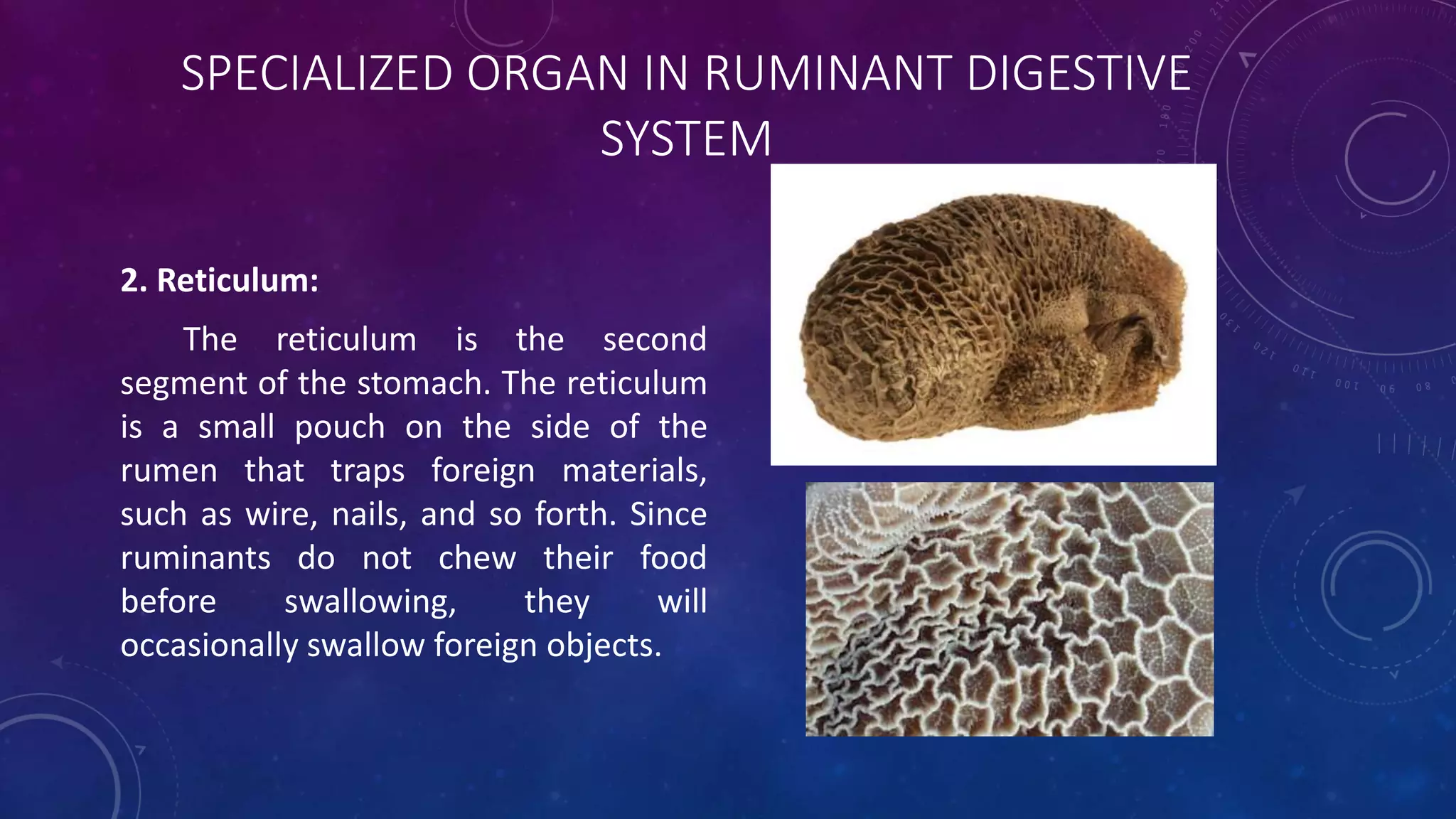
2. Reticulum:
The reticulum is the second
segment of the stomach. The reticulum
is a small pouch on the side of the
rumen that traps foreign materials,
such as wire, nails, and so forth. Since
ruminants do not chew their food
before swallowing, they will
occasionally swallow foreign objects.
Omasum
The omasum is the third
compartment of the
stomach. The omasum
produces a grinding action
on the feed and removes
some of the water from the
feed. Hydrochloric acid and
digestive enzymes are mixed
with feed in the omasum.
SPECIALIZED ORGAN IN RUMINANT DIGESTIVE
SYSTEM
Abomasum
The abomasum is the fourth
compartment of the stomach. The
abomasum is also referred to as the true
stomach because it is similar to the
stomach in monogastric animals
PSEUDO-RUMINANT DIGESTIVE SYSTEM
• A pseudo-ruminant is an animal that eats large amounts of roughage but does
not have a stomach with several compartments.
• The digestive system does some of the same functions as those of ruminants.
• An animal with a pseudo-ruminant digestive system can utilize large amounts
of roughages because of the greatly enlarged cecum and large intestine,
which provide areas for microbial digestion of fiber.
• Pseudo-ruminants often eat forages as well as grains and other concentrated feeds. Besides horses,
examples of pseudo-ruminants are rabbits, guinea pigs, and hamsters.

Animal Digestive System

  • 1.
  • 2.
    MONOGASTRIC DIGESTIVE SYSTEM •Has one simple stomach • The stomach secretes acid, resulting in a low pH of 1.5 to 2.5. T • The stomach secretes acid, resulting in a low pH of 1.5 to 2.5. • Animals with this type of digestive system are better adapted to eat rations high in concentrates.
  • 3.
    MONOGASTRIC DIGESTIVE SYSTEM •Common concentrates are cereal grains and oil meals.
  • 4.
    Dog Horse Pig Human Rabbit SampleAnimals with Monogastric Digestive System
  • 5.
    AVIAN DIGESTIVE SYSTEM •The avian digestive system is found in poultry. • This system differs greatly from any other type. Since poultry do not have teeth, there is no chewing. • Poultry break their feed into pieces small enough to swallow by pecking with their beaks or scratching with their feet. • Feed enters the mouth, travels to the esophagus, and empties directly into the crop.
  • 6.
    SPECIALIZED ORGAN INAVIAN DIGESTIVE SYSTEM • The crop is where the food is stored and soaked. Food then moves from the crop to the proventriculus.
  • 7.
    SPECIALIZED ORGAN INAVIAN DIGESTIVE SYSTEM • The proventriculus is the stomach in a bird, where gastric enzymes and hydrochloric acid are secreted. From the proventriculus, the food makes its way to the gizzard.
  • 8.
    SPECIALIZED ORGAN INAVIAN DIGESTIVE SYSTEM The gizzard is a very muscular organ, which normally contains grit or stones that function like teeth to grind the food
  • 9.
    SPECIALIZED ORGAN INAVIAN DIGESTIVE SYSTEM • The food then moves from the gizzard to the small intestine and then to the large intestine. The no digestible food components then travel into the cloaca. • Urine is also emptied into the cloaca. • The material is then passed out of the body through the vent. • Digestion in the avian system is very rapid.
  • 10.
    RUMINANT DIGESTIVE SYSTEM •The ruminant digestive system has a large stomach divided into four compartments—the rumen, the reticulum, the omasum, and the abomasum. • The ruminant digestive system is found in cattle, sheep, goats, and deer. • Ruminant animals eat feed rations that are high in roughages and low in concentrates
  • 11.
    • Roughages arefeeds tuffs that are high in fiber, low in energy, and typically only 50 to 65 percent digestible. • Roughages include hay, straw, grazed forages, and silage. • Ruminants are different from monogastric animals in that they swallow their food in large quantities with little chewing
  • 12.
    • Later theywill ruminate, or belch up the feed, chew, and swallow it again. • The regurgitated feed is called a cud. • A cud is a ball-like mass of feed brought up from the stomach to be rechewed. • On average, cattle chew their cuds about six to eight times per day.
  • 13.
    SPECIALIZED ORGAN INRUMINANT DIGESTIVE SYSTEM 1. Rumen: The first and largest section of the stomach is the rumen. In the rumen, solid feed is mixed and partially broken down. The rumen contains millions of bacteria and other microbes that promote fermentation, which breaks down roughages.
  • 14.
    SPECIALIZED ORGAN INRUMINANT DIGESTIVE SYSTEM The rumen also contains microorganisms that synthesize amino acids and B-complex vitamins. Amino acids are the building blocks of proteins and are essential for the growth and maintenance of cells
  • 15.
    SPECIALIZED ORGAN INRUMINANT DIGESTIVE SYSTEM 2. Reticulum: The reticulum is the second segment of the stomach. The reticulum is a small pouch on the side of the rumen that traps foreign materials, such as wire, nails, and so forth. Since ruminants do not chew their food before swallowing, they will occasionally swallow foreign objects.
  • 16.
    Omasum The omasum isthe third compartment of the stomach. The omasum produces a grinding action on the feed and removes some of the water from the feed. Hydrochloric acid and digestive enzymes are mixed with feed in the omasum.
  • 17.
    SPECIALIZED ORGAN INRUMINANT DIGESTIVE SYSTEM Abomasum The abomasum is the fourth compartment of the stomach. The abomasum is also referred to as the true stomach because it is similar to the stomach in monogastric animals
  • 18.
    PSEUDO-RUMINANT DIGESTIVE SYSTEM •A pseudo-ruminant is an animal that eats large amounts of roughage but does not have a stomach with several compartments. • The digestive system does some of the same functions as those of ruminants.
  • 19.
    • An animalwith a pseudo-ruminant digestive system can utilize large amounts of roughages because of the greatly enlarged cecum and large intestine, which provide areas for microbial digestion of fiber.
  • 20.
    • Pseudo-ruminants ofteneat forages as well as grains and other concentrated feeds. Besides horses, examples of pseudo-ruminants are rabbits, guinea pigs, and hamsters.