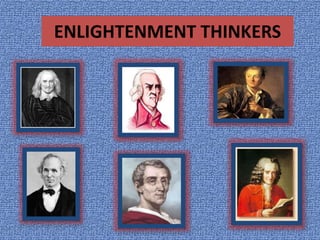
ENLIGHTENMENT THINKERS
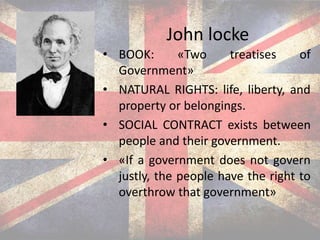
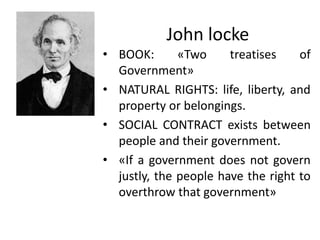
John locke
• BOOK: «Two treatises of
Government»
• NATURAL RIGHTS: life, liberty, and
property or belongings.
• SOCIAL CONTRACT exists between
people and their government.
• «If a government does not govern
justly, the people have the right to
overthrow that government»
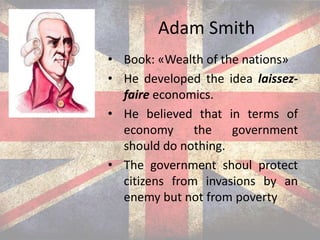
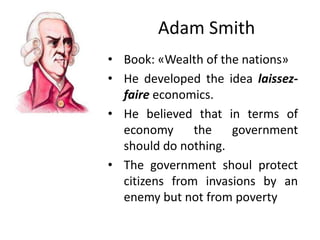
Adam Smith
• Book: «Wealth of the nations»
• He developed the idea laissez-
faire economics.
• He believed that in terms of
economy the government
should do nothing.
• The government shoul protect
citizens from invasions by an
enemy but not from poverty
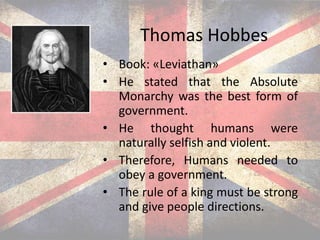
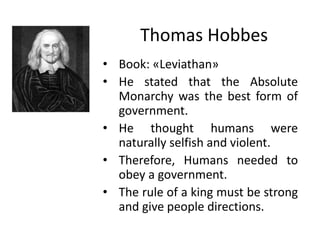
Thomas Hobbes
• Book: «Leviathan»
• He stated that the Absolute
Monarchy was the best form of
government.
• He thought humans were
naturally selfish and violent.
• Therefore, Humans needed to
obey a government.
• The rule of a king must be strong
and give people directions.
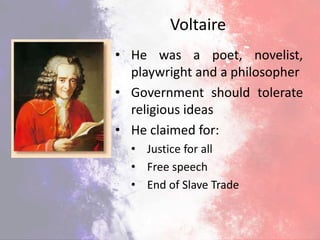
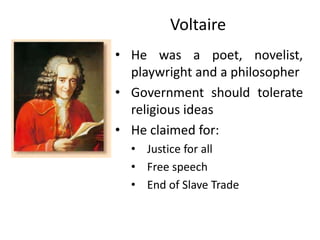
Voltaire
• He was a poet, novelist,
playwright and a philosopher
• Government should tolerate
religious ideas
• He claimed for:
• Justice for all
• Free speech
• End of Slave Trade
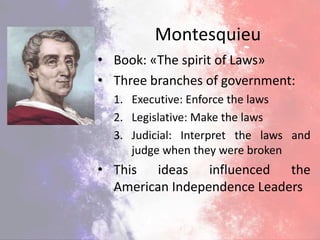
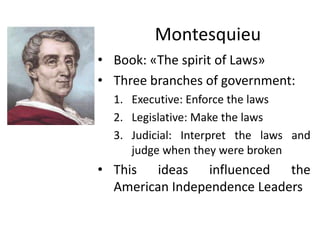
Montesquieu
• Book: «The spirit of Laws»
• Three branches of government:
1. Executive: Enforce the laws
2. Legislative: Make the laws
3. Judicial: Interpret the laws and
judge when they were broken
• This ideas influenced the
American Independence Leaders
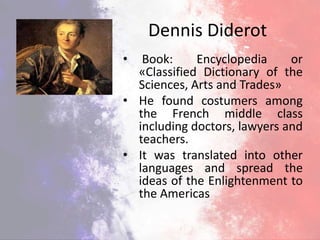
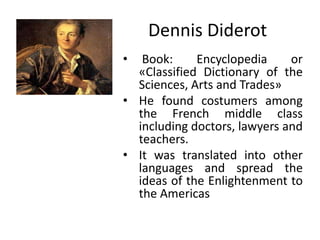
Dennis Diderot
• Book: Encyclopedia or
«Classified Dictionary of the
Sciences, Arts and Trades»
• He found costumers among
the French middle class
including doctors, lawyers and
teachers.
• It was translated into other
languages and spread the
ideas of the Enlightenment to
the Americas
John locke
• BOOK: «Two treatises of
Government»
• NATURAL RIGHTS: life, liberty, and
property or belongings.
• SOCIAL CONTRACT exists between
people and their government.
• «If a government does not govern
justly, the people have the right to
overthrow that government»
Adam Smith
• Book: «Wealth of the nations»
• He developed the idea laissez-
faire economics.
• He believed that in terms of
economy the government
should do nothing.
• The government shoul protect
citizens from invasions by an
enemy but not from poverty
Thomas Hobbes
• Book: «Leviathan»
• He stated that the Absolute
Monarchy was the best form of
government.
• He thought humans were
naturally selfish and violent.
• Therefore, Humans needed to
obey a government.
• The rule of a king must be strong
and give people directions.
Voltaire
• He was a poet, novelist,
playwright and a philosopher
• Government should tolerate
religious ideas
• He claimed for:
• Justice for all
• Free speech
• End of Slave Trade
Montesquieu
• Book: «The spirit of Laws»
• Three branches of government:
1. Executive: Enforce the laws
2. Legislative: Make the laws
3. Judicial: Interpret the laws and
judge when they were broken
• This ideas influenced the
American Independence Leaders
Dennis Diderot
• Book: Encyclopedia or
«Classified Dictionary of the
Sciences, Arts and Trades»
• He found costumers among
the French middle class
including doctors, lawyers and
teachers.
• It was translated into other
languages and spread the
ideas of the Enlightenment to
the Americas

Enlightenment thinkers

  • 1.
  • 2.
    John locke • BOOK:«Two treatises of Government» • NATURAL RIGHTS: life, liberty, and property or belongings. • SOCIAL CONTRACT exists between people and their government. • «If a government does not govern justly, the people have the right to overthrow that government»
  • 3.
    Adam Smith • Book:«Wealth of the nations» • He developed the idea laissez- faire economics. • He believed that in terms of economy the government should do nothing. • The government shoul protect citizens from invasions by an enemy but not from poverty
  • 4.
    Thomas Hobbes • Book:«Leviathan» • He stated that the Absolute Monarchy was the best form of government. • He thought humans were naturally selfish and violent. • Therefore, Humans needed to obey a government. • The rule of a king must be strong and give people directions.
  • 5.
    Voltaire • He wasa poet, novelist, playwright and a philosopher • Government should tolerate religious ideas • He claimed for: • Justice for all • Free speech • End of Slave Trade
  • 6.
    Montesquieu • Book: «Thespirit of Laws» • Three branches of government: 1. Executive: Enforce the laws 2. Legislative: Make the laws 3. Judicial: Interpret the laws and judge when they were broken • This ideas influenced the American Independence Leaders
  • 7.
    Dennis Diderot • Book:Encyclopedia or «Classified Dictionary of the Sciences, Arts and Trades» • He found costumers among the French middle class including doctors, lawyers and teachers. • It was translated into other languages and spread the ideas of the Enlightenment to the Americas
  • 8.
    John locke • BOOK:«Two treatises of Government» • NATURAL RIGHTS: life, liberty, and property or belongings. • SOCIAL CONTRACT exists between people and their government. • «If a government does not govern justly, the people have the right to overthrow that government»
  • 9.
    Adam Smith • Book:«Wealth of the nations» • He developed the idea laissez- faire economics. • He believed that in terms of economy the government should do nothing. • The government shoul protect citizens from invasions by an enemy but not from poverty
  • 10.
    Thomas Hobbes • Book:«Leviathan» • He stated that the Absolute Monarchy was the best form of government. • He thought humans were naturally selfish and violent. • Therefore, Humans needed to obey a government. • The rule of a king must be strong and give people directions.
  • 11.
    Voltaire • He wasa poet, novelist, playwright and a philosopher • Government should tolerate religious ideas • He claimed for: • Justice for all • Free speech • End of Slave Trade
  • 12.
    Montesquieu • Book: «Thespirit of Laws» • Three branches of government: 1. Executive: Enforce the laws 2. Legislative: Make the laws 3. Judicial: Interpret the laws and judge when they were broken • This ideas influenced the American Independence Leaders
  • 13.
    Dennis Diderot • Book:Encyclopedia or «Classified Dictionary of the Sciences, Arts and Trades» • He found costumers among the French middle class including doctors, lawyers and teachers. • It was translated into other languages and spread the ideas of the Enlightenment to the Americas