Loopback Testing
Testing Loopbacks Using OptoTest Equipment
www.optotest.com
Background
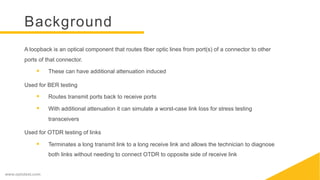
A loopback is an optical component that routes fiber optic lines from port(s) of a connector to other
ports of that connector.
§ These can have additional attenuation induced
Used for BER testing
§ Routes transmit ports back to receive ports
§ With additional attenuation it can simulate a worst-case link loss for stress testing
transceivers
Used for OTDR testing of links
§ Terminates a long transmit link to a long receive link and allows the technician to diagnose
both links without needing to connect OTDR to opposite side of receive link
www.optotest.com
Structure
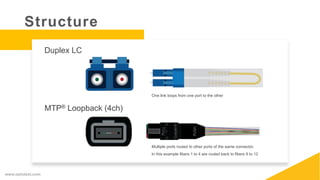
Duplex LC
MTP® Loopback (4ch)
One link loops from one port to the other
Multiple ports routed to other ports of the same connector.
In this example fibers 1 to 4 are routed back to fibers 9 to 12
www.optotest.com
Transceiver testing
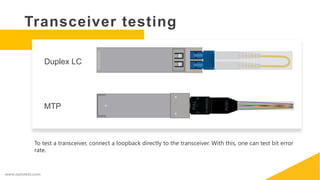
MTP
Duplex LC
To test a transceiver, connect a loopback directly to the transceiver. With this, one can test bit error
rate.
www.optotest.com
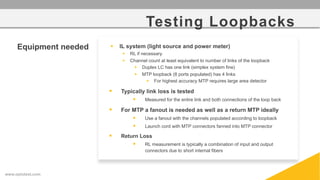
§ IL system (light source and power meter)
§ RL if necessary.
§ Channel count at least equivalent to number of links of the loopback
§ Duplex LC has one link (simplex system fine)
§ MTP loopback (8 ports populated) has 4 links
§ For highest accuracy MTP requires large area detector
§ Typically link loss is tested
§ Measured for the entire link and both connections of the loop back
§ For MTP a fanout is needed as well as a return MTP ideally
§ Use a fanout with the channels populated according to loopback
§ Launch cord with MTP connectors fanned into MTP connector
§ Return Loss
§ RL measurement is typically a combination of input and output
connectors due to short internal fibers
Testing Loopbacks
Equipment needed
www.optotest.com
Testing Loopbacks (LC)
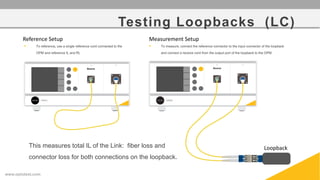
Reference Setup Measurement Setup
LoopbackThis measures total IL of the Link: fiber loss and
connector loss for both connections on the loopback.
§ To reference, use a single reference cord connected to the
OPM and reference IL and RL
§ To measure, connect the reference connector to the input connector of the loopback
and connect a receive cord from the output port of the loopback to the OPM.
www.optotest.com
Cable setup
• Equipment cord
• Connects from the source to the launch cord
Testing Loopbacks (MTP)
4 Fiber fanout (Only Ch1 to Ch4)
www.optotest.com
Cable Setup (Cont.)
• Launch/Return cord
Testing Loopbacks (MTP)
www.optotest.com
Equipment setup
Testing Loopbacks (MTP)
Type A Adapter
Key-up/Key-down
www.optotest.com
Referencing
Testing Loopbacks (MTP)
Type A Adapter
Key-up/Key-down
www.optotest.com
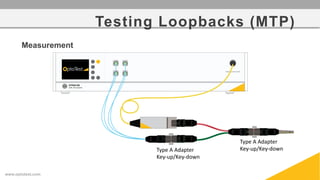
Measurement
Testing Loopbacks (MTP)
Type A Adapter
Key-up/Key-down
Type A Adapter
Key-up/Key-down
www.optotest.com
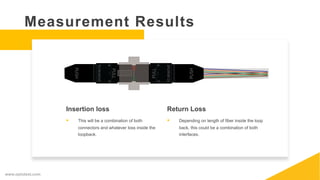
Measurement Results
Insertion loss
§ This will be a combination of both
connectors and whatever loss inside the
loopback.
Return Loss
§ Depending on length of fiber inside the loop
back, this could be a combination of both
interfaces.
www.OptoTest.com
1.805.987.1700

Loopback testing

  • 1.
    Loopback Testing Testing LoopbacksUsing OptoTest Equipment
  • 2.
    www.optotest.com Background A loopback isan optical component that routes fiber optic lines from port(s) of a connector to other ports of that connector. § These can have additional attenuation induced Used for BER testing § Routes transmit ports back to receive ports § With additional attenuation it can simulate a worst-case link loss for stress testing transceivers Used for OTDR testing of links § Terminates a long transmit link to a long receive link and allows the technician to diagnose both links without needing to connect OTDR to opposite side of receive link
  • 3.
    www.optotest.com Structure Duplex LC MTP® Loopback(4ch) One link loops from one port to the other Multiple ports routed to other ports of the same connector. In this example fibers 1 to 4 are routed back to fibers 9 to 12
  • 4.
    www.optotest.com Transceiver testing MTP Duplex LC Totest a transceiver, connect a loopback directly to the transceiver. With this, one can test bit error rate.
  • 5.
    www.optotest.com § IL system(light source and power meter) § RL if necessary. § Channel count at least equivalent to number of links of the loopback § Duplex LC has one link (simplex system fine) § MTP loopback (8 ports populated) has 4 links § For highest accuracy MTP requires large area detector § Typically link loss is tested § Measured for the entire link and both connections of the loop back § For MTP a fanout is needed as well as a return MTP ideally § Use a fanout with the channels populated according to loopback § Launch cord with MTP connectors fanned into MTP connector § Return Loss § RL measurement is typically a combination of input and output connectors due to short internal fibers Testing Loopbacks Equipment needed
  • 6.
    www.optotest.com Testing Loopbacks (LC) ReferenceSetup Measurement Setup LoopbackThis measures total IL of the Link: fiber loss and connector loss for both connections on the loopback. § To reference, use a single reference cord connected to the OPM and reference IL and RL § To measure, connect the reference connector to the input connector of the loopback and connect a receive cord from the output port of the loopback to the OPM.
  • 7.
    www.optotest.com Cable setup • Equipmentcord • Connects from the source to the launch cord Testing Loopbacks (MTP) 4 Fiber fanout (Only Ch1 to Ch4)
  • 8.
    www.optotest.com Cable Setup (Cont.) •Launch/Return cord Testing Loopbacks (MTP)
  • 9.
    www.optotest.com Equipment setup Testing Loopbacks(MTP) Type A Adapter Key-up/Key-down
  • 10.
  • 11.
    www.optotest.com Measurement Testing Loopbacks (MTP) TypeA Adapter Key-up/Key-down Type A Adapter Key-up/Key-down
  • 12.
    www.optotest.com Measurement Results Insertion loss §This will be a combination of both connectors and whatever loss inside the loopback. Return Loss § Depending on length of fiber inside the loop back, this could be a combination of both interfaces.
  • 13.