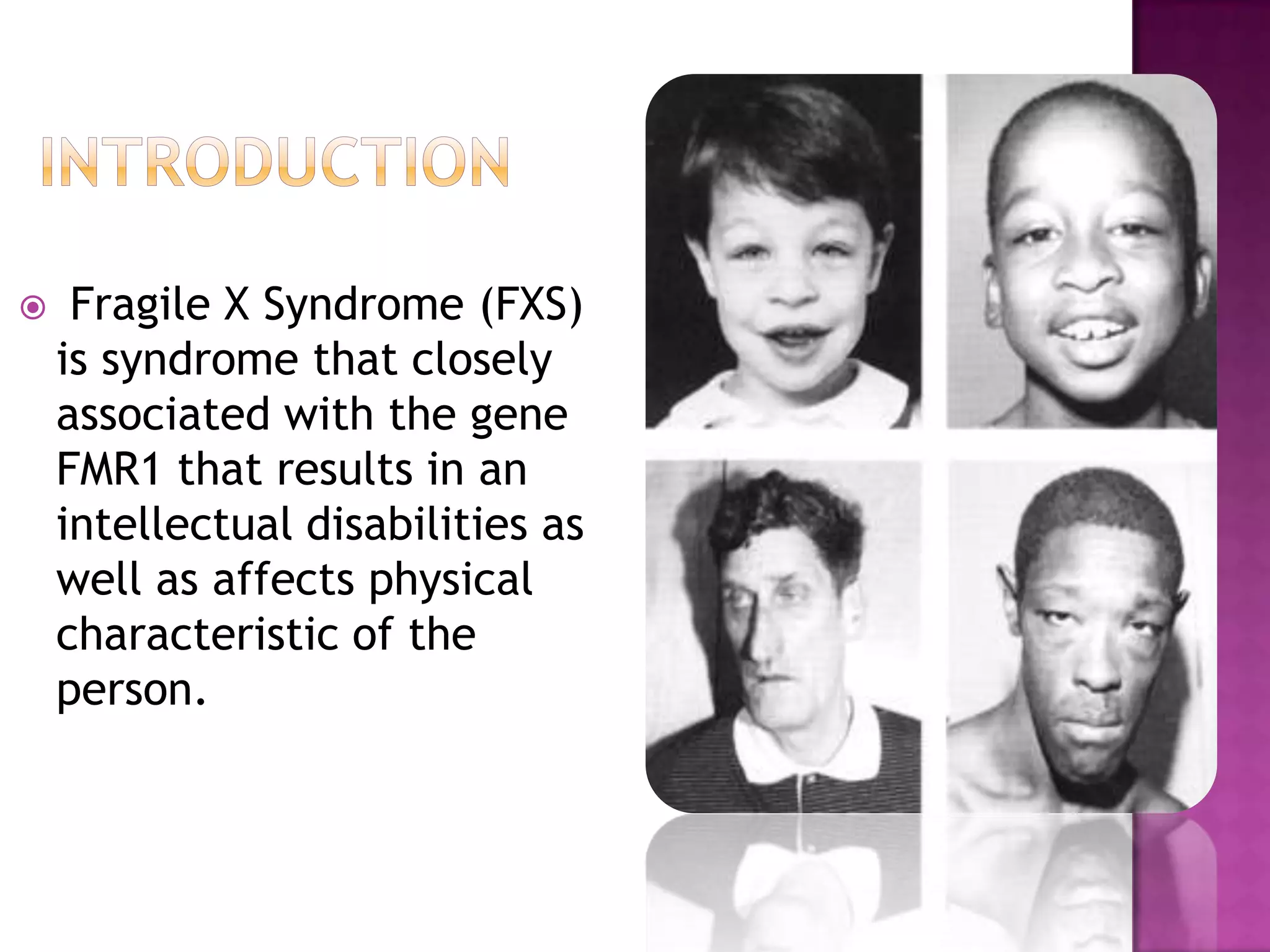
 Fragile X Syndrome (FXS)
is syndrome that closely
associated with the gene
FMR1 that results in an
intellectual disabilities as
well as affects physical
characteristic of the
person.
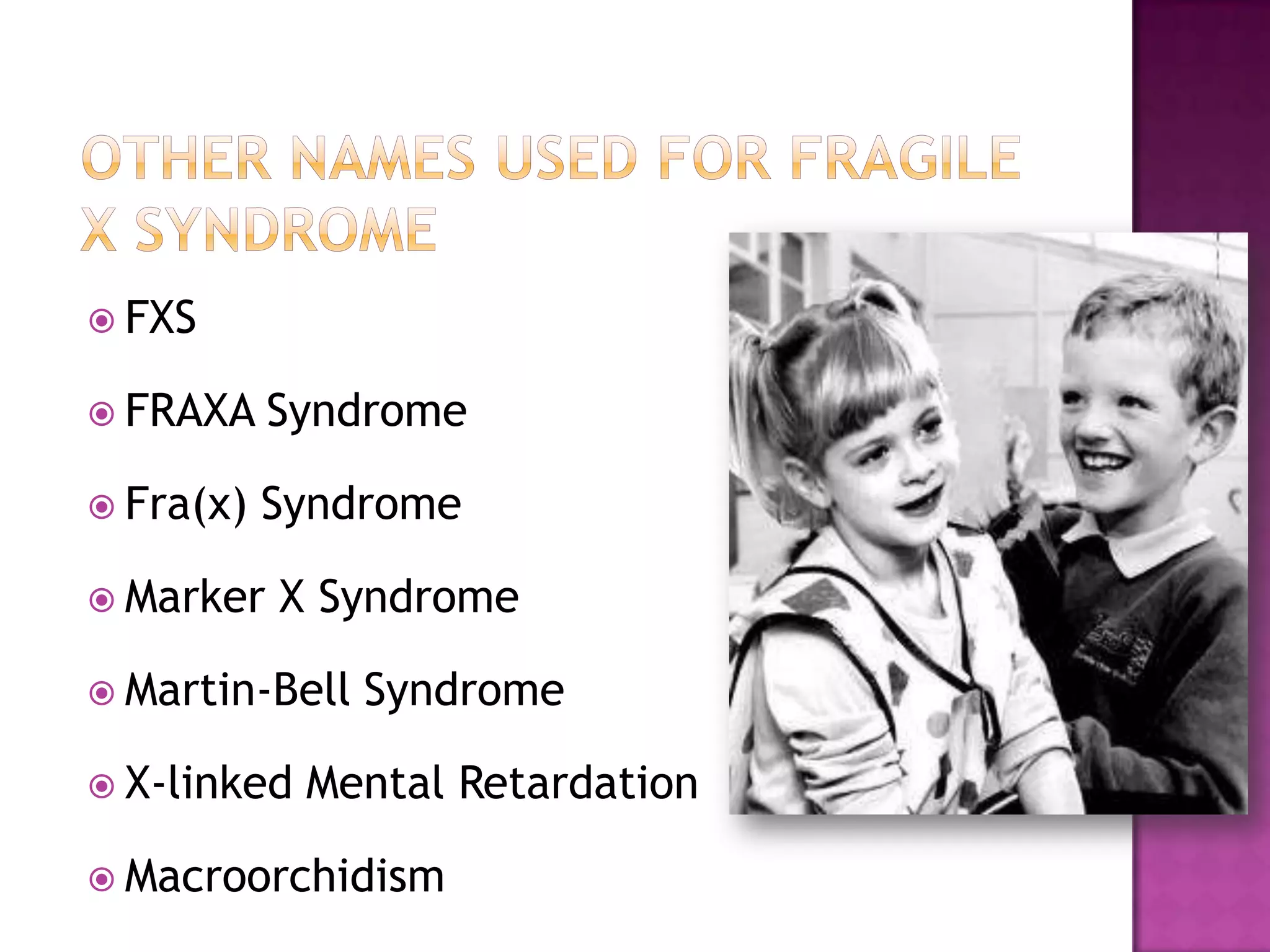
 FXS
 FRAXA Syndrome
 Fra(x) Syndrome
 Marker X Syndrome
 Martin-Bell Syndrome
 X-linked Mental Retardation
 Macroorchidism
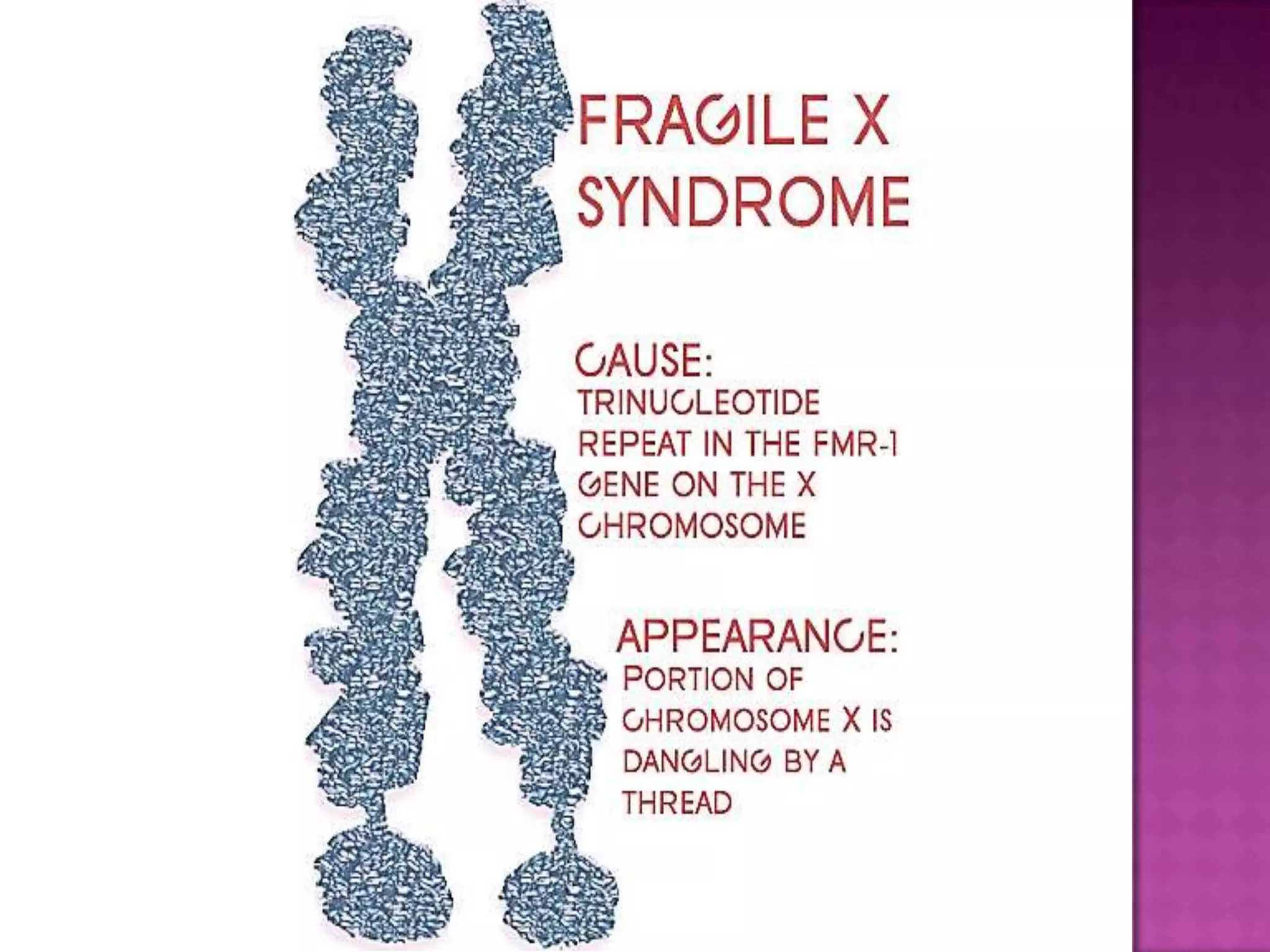
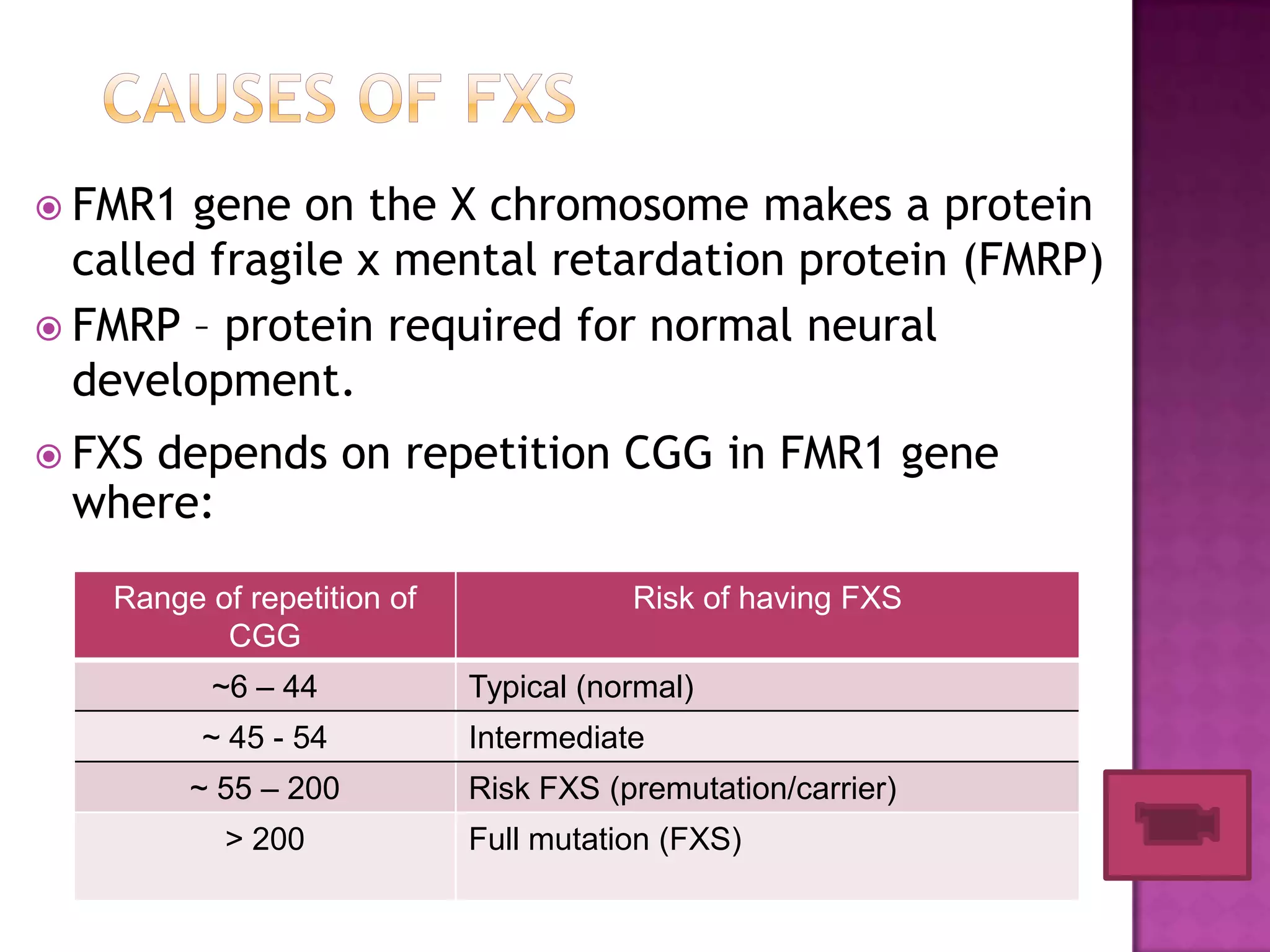
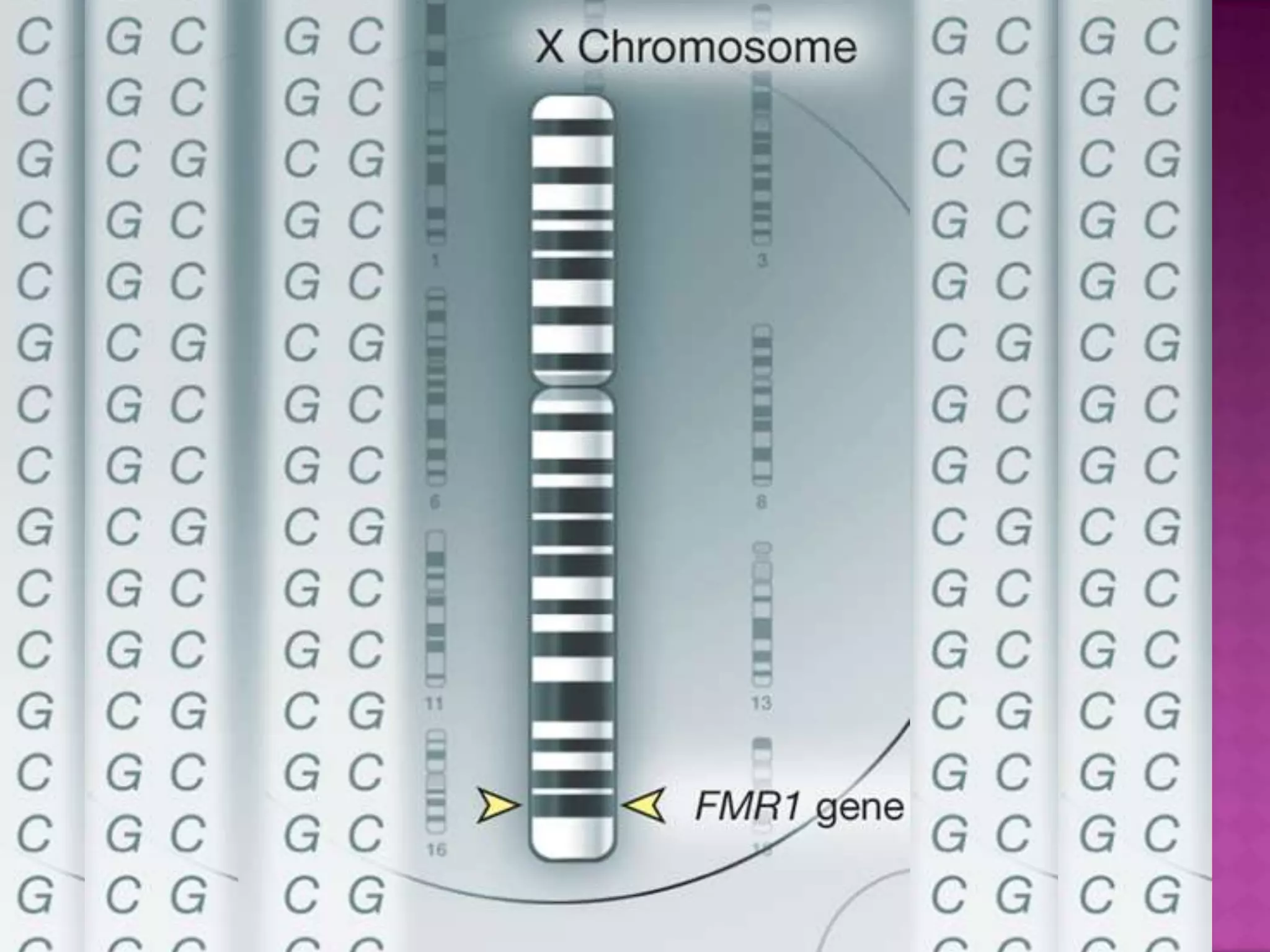
 FMR1 gene on the X chromosome makes a protein
called fragile x mental retardation protein (FMRP)
 FMRP – protein required for normal neural
development.
Range of repetition of
CGG
Risk of having FXS
~6 – 44 Typical (normal)
~ 45 - 54 Intermediate
~ 55 – 200 Risk FXS (premutation/carrier)
> 200 Full mutation (FXS)
 FXS depends on repetition CGG in FMR1 gene
where:
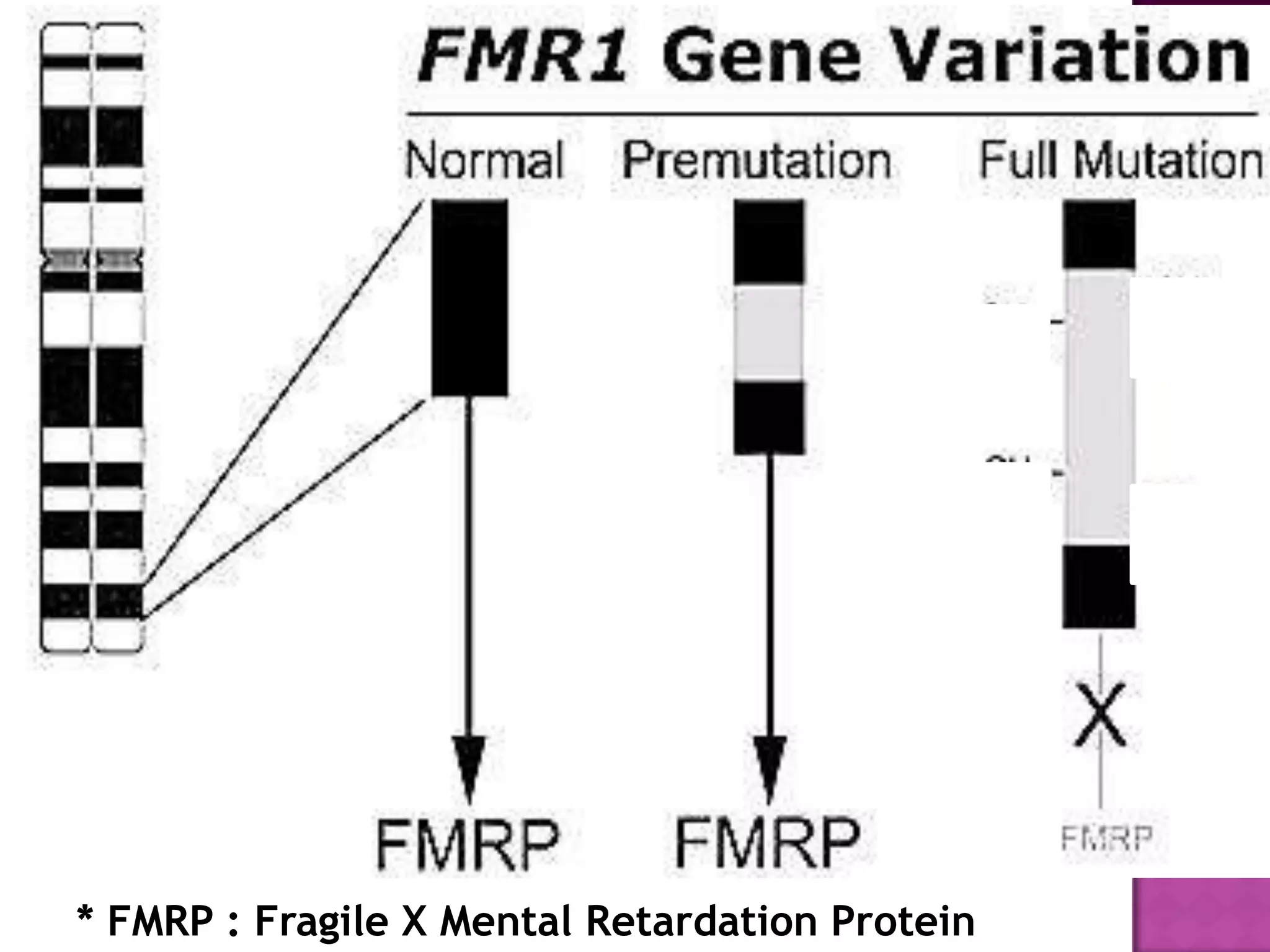
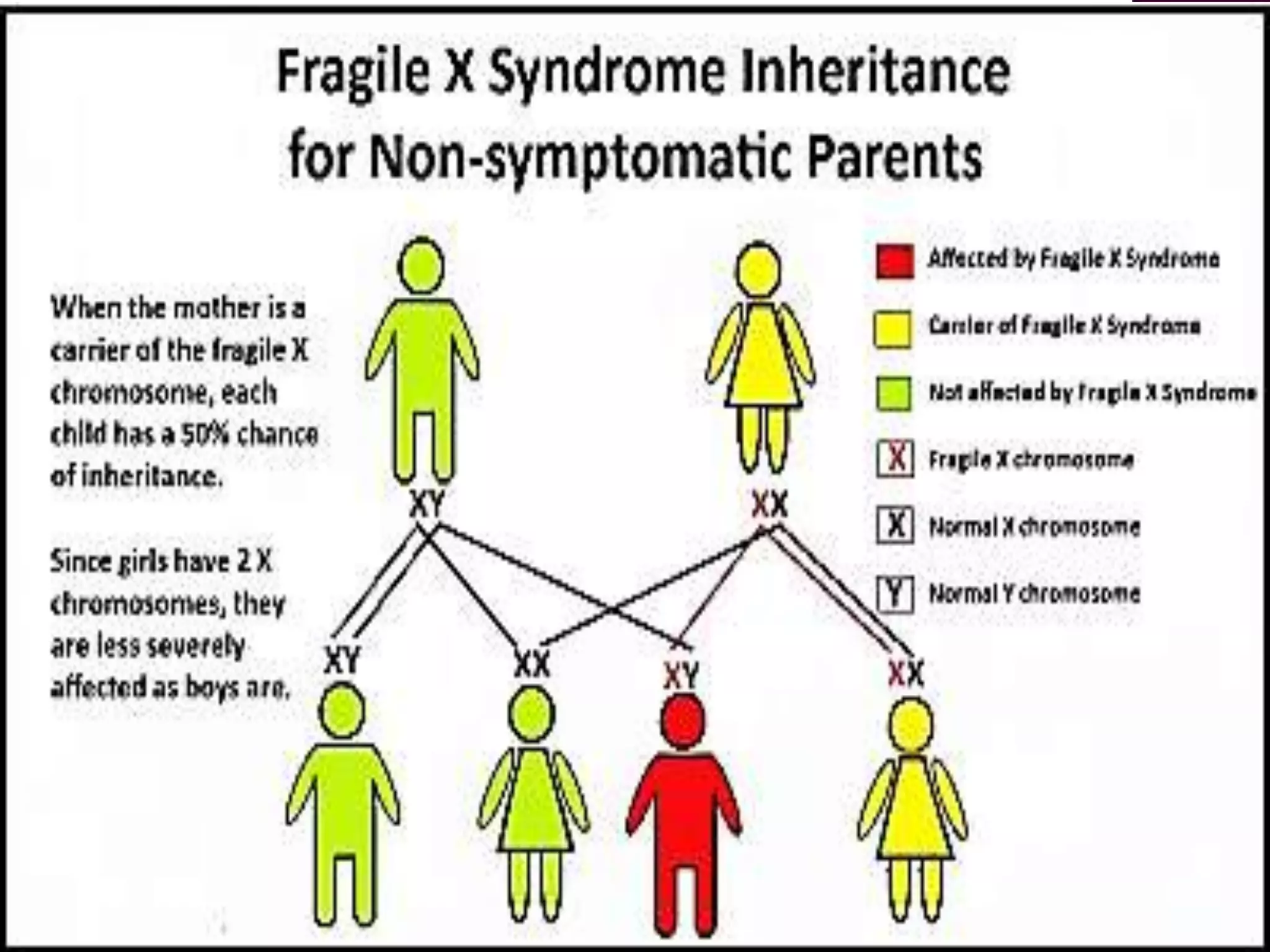
* FMRP : Fragile X Mental Retardation Protein
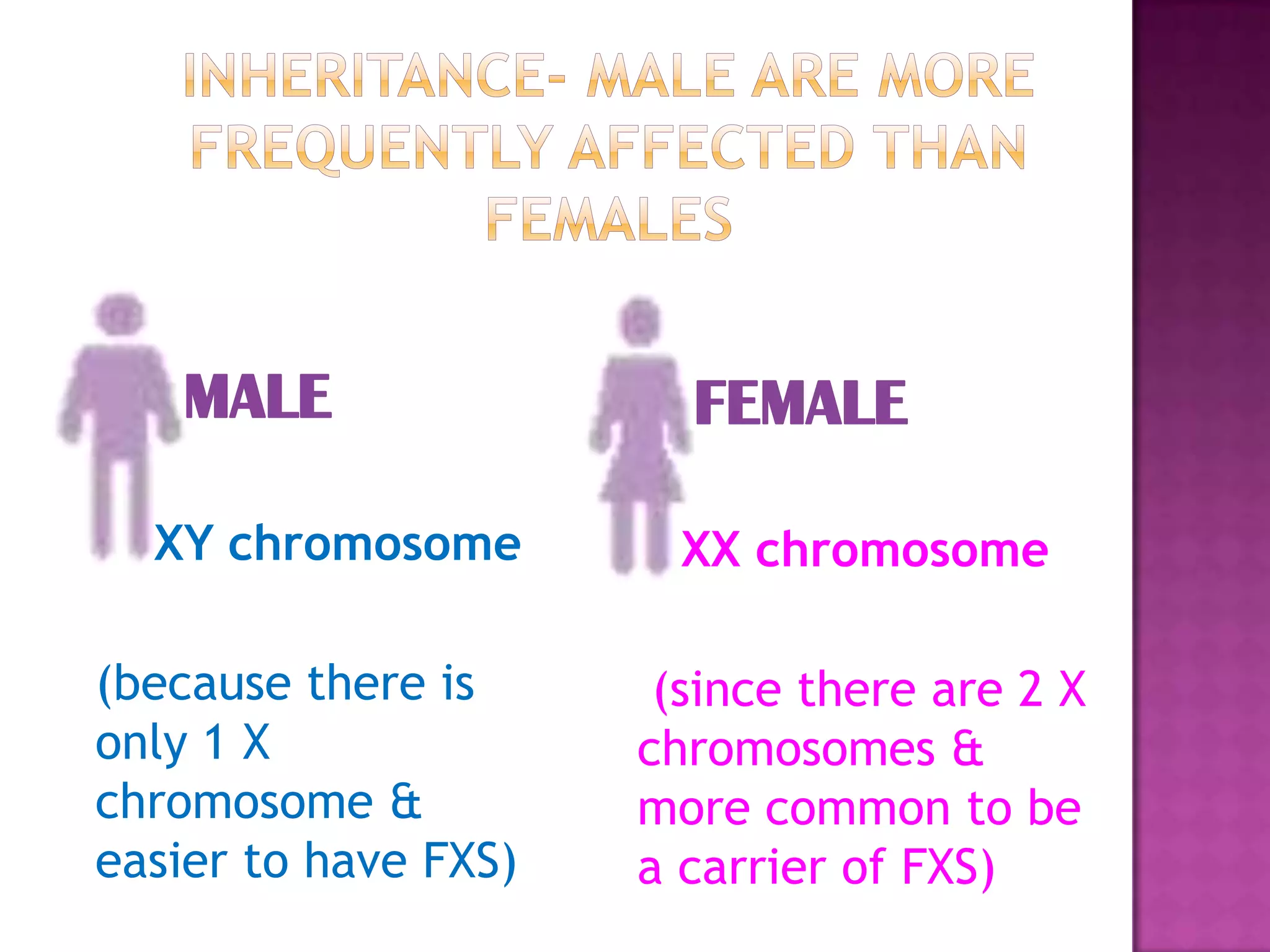
MALE
XY chromosome
(because there is
only 1 X
chromosome &
easier to have FXS)
FEMALE
XX chromosome
(since there are 2 X
chromosomes &
more common to be
a carrier of FXS)
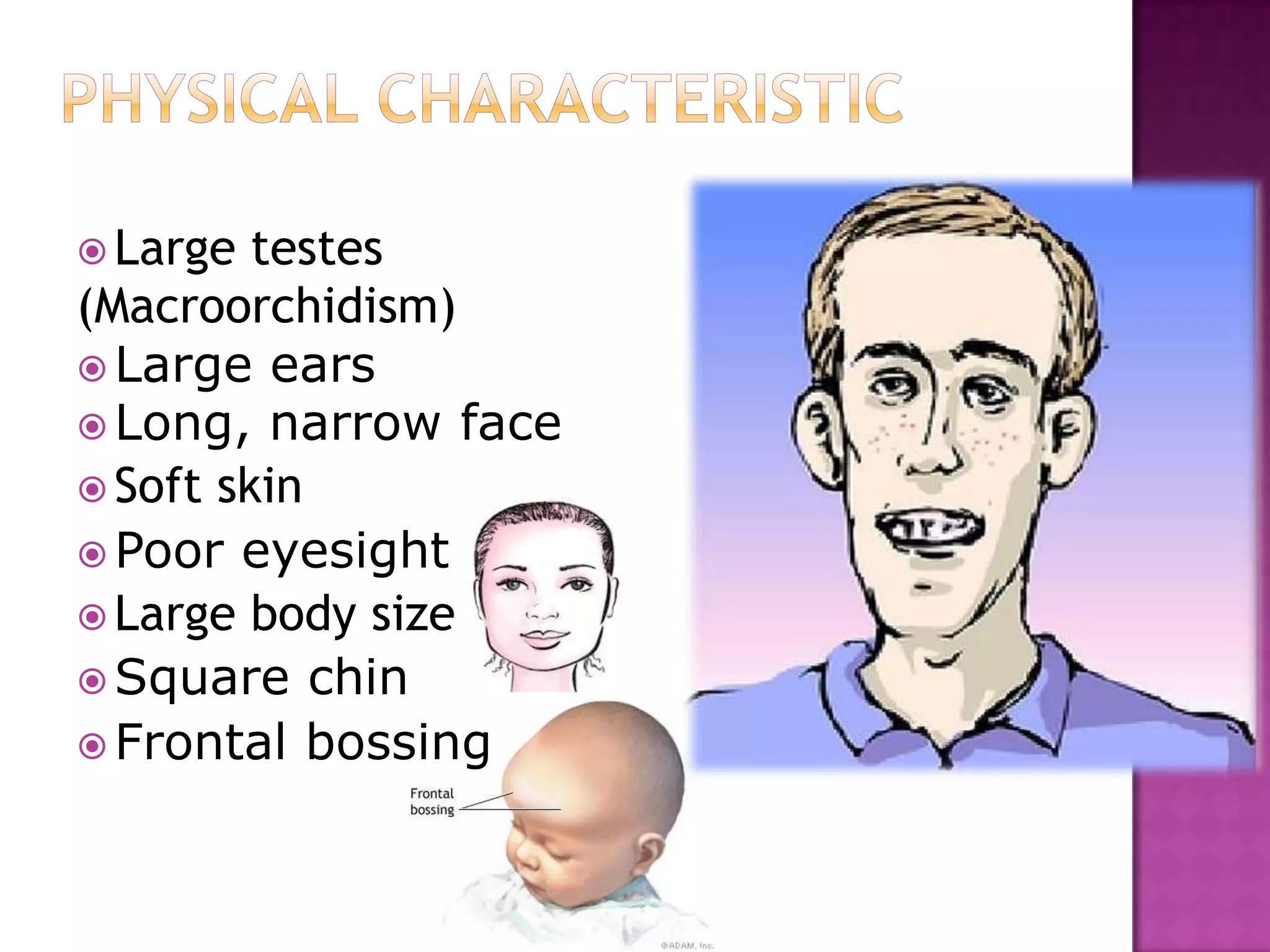
 Large testes
(Macroorchidism)
 Large ears
 Long, narrow face
 Soft skin
 Poor eyesight
 Large body size
 Square chin
 Frontal bossing
•Developmental delays
•Mental retarded
•Learning disabilities
 Delayed speech
 Rapid, repetitive speech
 Poor conversation skills
 Good verbal imitative skills
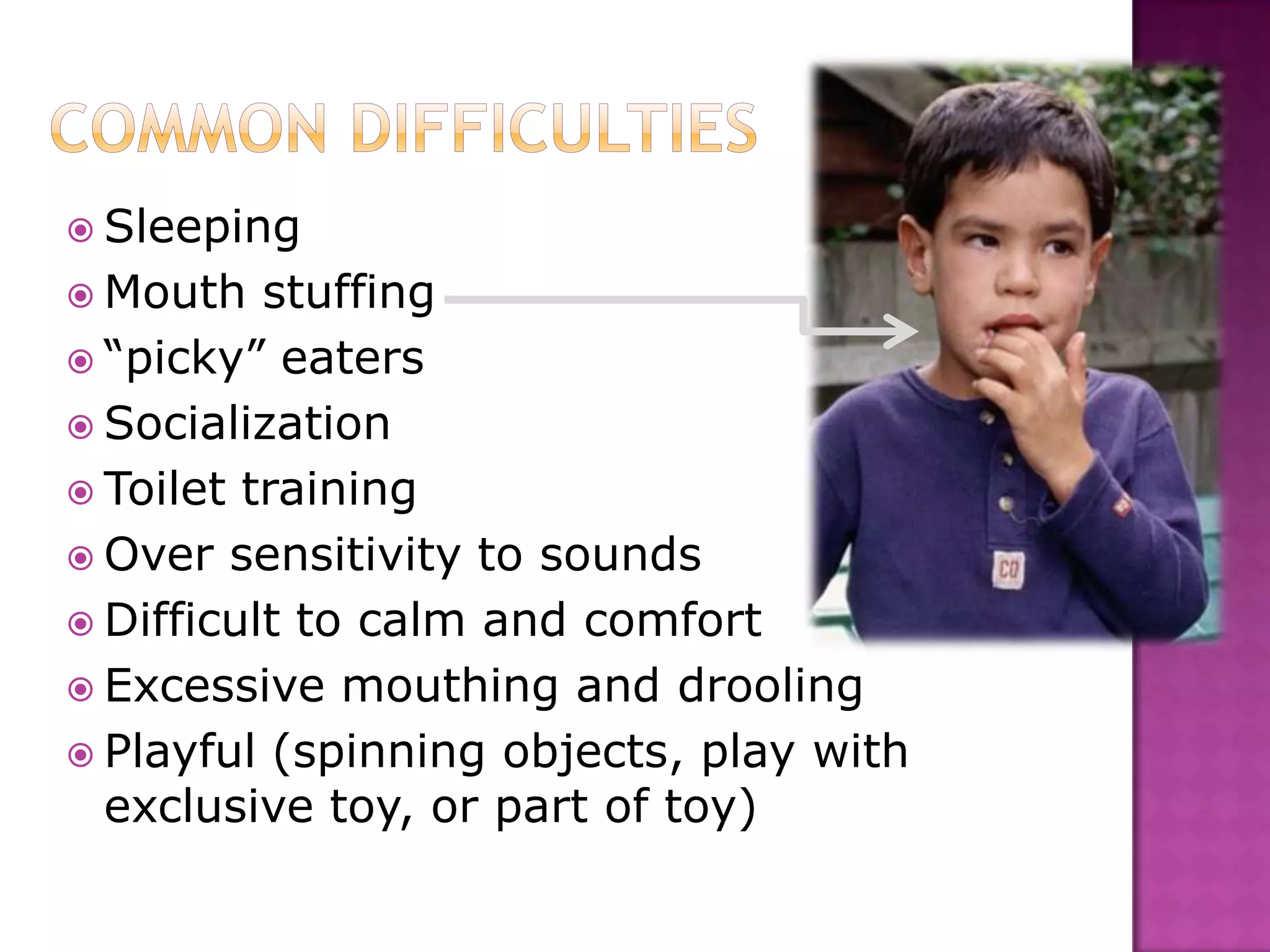
 Sleeping
 Mouth stuffing
 “picky” eaters
 Socialization
 Toilet training
 Over sensitivity to sounds
 Difficult to calm and comfort
 Excessive mouthing and drooling
 Playful (spinning objects, play with
exclusive toy, or part of toy)
 Ear infections
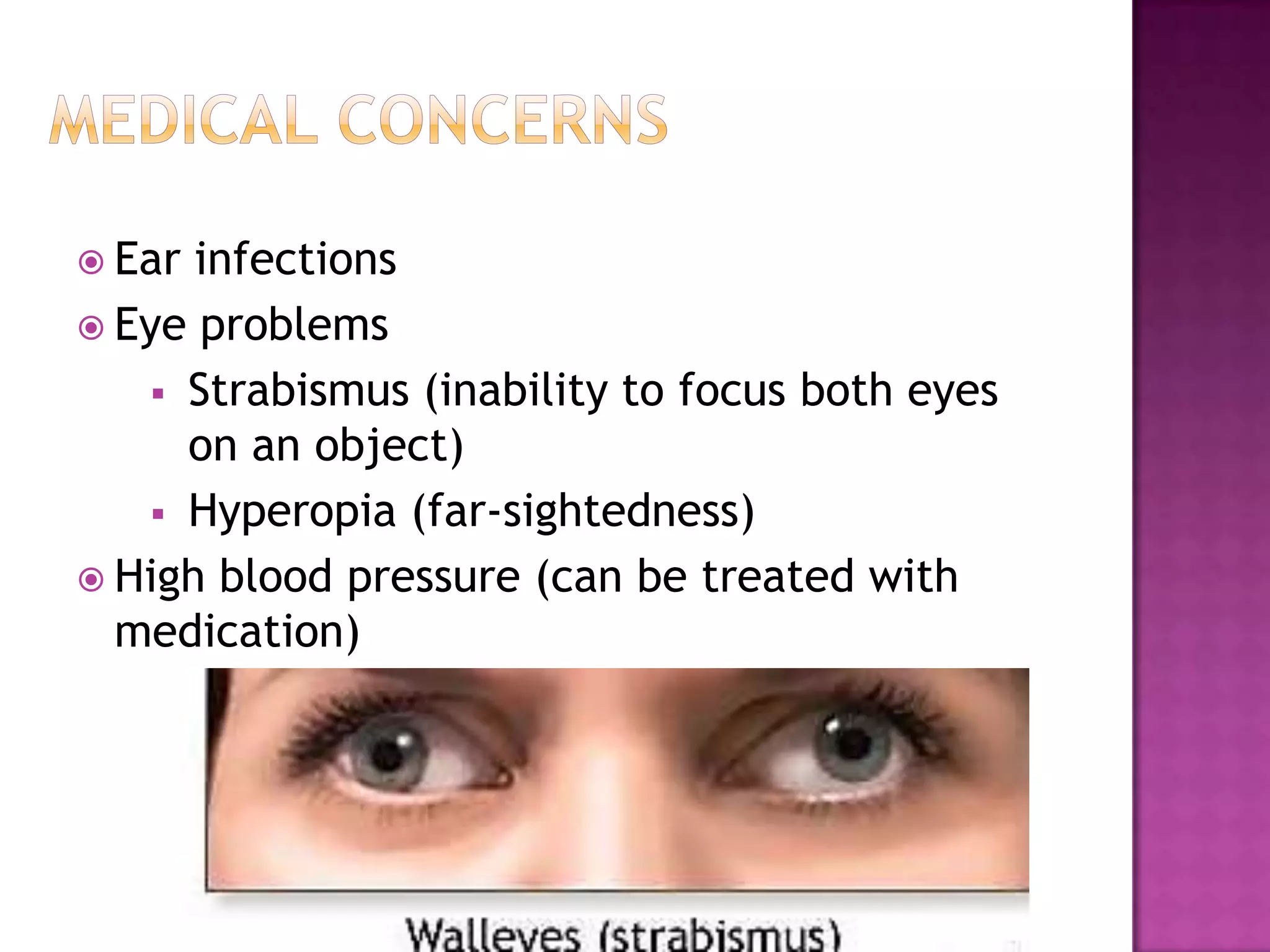
 Eye problems
 Strabismus (inability to focus both eyes
on an object)
 Hyperopia (far-sightedness)
 High blood pressure (can be treated with
medication)
 Diagnosis of FXS is made through genetic testing to
determine the number of CGG repeats in FMR1
(carrier testing)
*Carrier testing: Carrier testing is used to
identify who carry a copy of gene mutation
or in two copies, causes a genetic disorder.
This type of testing is offered to individuals
who have a family history of a genetic
disorder.
 There is NO SPECIFIC TREATMENT for FXS
 Therapy Treatments
 Speech-language therapists - improve their pronunciation of words
and sentences, slow down their speech, and use language more
effectively.
 Occupational therapists - help find ways to adjust tasks and
conditions to match a person’s needs and abilities.
 Physical therapists - design activities and exercises that help build
motor control and improve posture and balance.
 Behavioural therapists try to understand why someone with Fragile
X acts out, and they create ways and strategies for avoiding or
preventing these situations from occurring while also teaching
better or more positive ways to respond to situations.
 However they are some symptoms that can be controlled by a
medication such as attention deficit, hyperactivity, anxiety, and
aggression.
 Genetic counselling maybe helpful if a
couple have family background of this
syndrome and are planning to have a baby.
 http://www.docstoc.com/docs/105578229/Fragile-X-
Syndrome---PowerPoint
 http://www.fragilex.org/fragile-x-associated-
disorders/fragile-x-syndrome
 http://www.ncbi.nlm.nih.gov/pubmedhealth/PMH0002633
 http://www.en.wikipedia.org/wiki/Fragile_X_syndrome
 http://www.sciencemuseum.org.uk/WhoAmI/FindOutMore
/Yourgenes/Whatcausesgeneticconditions/WhatisX-
linkedinheritance/WhatisFragile-Xsyndrome.aspx
 http://www.childrenhospital.org/az/Site1788/mainpageS
1788P1.html
 http://simpsonfamilychallenge.blogspot.com/2012/09/th
e-fragilest-x-planation-of-journey.html
 http://www.whonamedit.com/synd.cfm/2071.html
 http://www.springerreference.com/docs/html/chapterdb
id/180078.html

Fragile x syndrome

  • 2.
     Fragile XSyndrome (FXS) is syndrome that closely associated with the gene FMR1 that results in an intellectual disabilities as well as affects physical characteristic of the person.
  • 3.
     FXS  FRAXASyndrome  Fra(x) Syndrome  Marker X Syndrome  Martin-Bell Syndrome  X-linked Mental Retardation  Macroorchidism
  • 5.
     FMR1 geneon the X chromosome makes a protein called fragile x mental retardation protein (FMRP)  FMRP – protein required for normal neural development. Range of repetition of CGG Risk of having FXS ~6 – 44 Typical (normal) ~ 45 - 54 Intermediate ~ 55 – 200 Risk FXS (premutation/carrier) > 200 Full mutation (FXS)  FXS depends on repetition CGG in FMR1 gene where:
  • 7.
    * FMRP :Fragile X Mental Retardation Protein
  • 8.
    MALE XY chromosome (because thereis only 1 X chromosome & easier to have FXS) FEMALE XX chromosome (since there are 2 X chromosomes & more common to be a carrier of FXS)
  • 10.
     Large testes (Macroorchidism) Large ears  Long, narrow face  Soft skin  Poor eyesight  Large body size  Square chin  Frontal bossing
  • 11.
    •Developmental delays •Mental retarded •Learningdisabilities  Delayed speech  Rapid, repetitive speech  Poor conversation skills  Good verbal imitative skills
  • 12.
     Sleeping  Mouthstuffing  “picky” eaters  Socialization  Toilet training  Over sensitivity to sounds  Difficult to calm and comfort  Excessive mouthing and drooling  Playful (spinning objects, play with exclusive toy, or part of toy)
  • 13.
     Ear infections Eye problems  Strabismus (inability to focus both eyes on an object)  Hyperopia (far-sightedness)  High blood pressure (can be treated with medication)
  • 14.
     Diagnosis ofFXS is made through genetic testing to determine the number of CGG repeats in FMR1 (carrier testing) *Carrier testing: Carrier testing is used to identify who carry a copy of gene mutation or in two copies, causes a genetic disorder. This type of testing is offered to individuals who have a family history of a genetic disorder.
  • 15.
     There isNO SPECIFIC TREATMENT for FXS  Therapy Treatments  Speech-language therapists - improve their pronunciation of words and sentences, slow down their speech, and use language more effectively.  Occupational therapists - help find ways to adjust tasks and conditions to match a person’s needs and abilities.  Physical therapists - design activities and exercises that help build motor control and improve posture and balance.  Behavioural therapists try to understand why someone with Fragile X acts out, and they create ways and strategies for avoiding or preventing these situations from occurring while also teaching better or more positive ways to respond to situations.  However they are some symptoms that can be controlled by a medication such as attention deficit, hyperactivity, anxiety, and aggression.
  • 16.
     Genetic counsellingmaybe helpful if a couple have family background of this syndrome and are planning to have a baby.
  • 17.
     http://www.docstoc.com/docs/105578229/Fragile-X- Syndrome---PowerPoint  http://www.fragilex.org/fragile-x-associated- disorders/fragile-x-syndrome http://www.ncbi.nlm.nih.gov/pubmedhealth/PMH0002633  http://www.en.wikipedia.org/wiki/Fragile_X_syndrome  http://www.sciencemuseum.org.uk/WhoAmI/FindOutMore /Yourgenes/Whatcausesgeneticconditions/WhatisX- linkedinheritance/WhatisFragile-Xsyndrome.aspx  http://www.childrenhospital.org/az/Site1788/mainpageS 1788P1.html  http://simpsonfamilychallenge.blogspot.com/2012/09/th e-fragilest-x-planation-of-journey.html  http://www.whonamedit.com/synd.cfm/2071.html  http://www.springerreference.com/docs/html/chapterdb id/180078.html