What are Fossil Fuels? 
 Fossil Fuels are natural fuels formed in 
the geological past from the remains of 
living organisms (decomposition). 
 There are 3 types of fossil fuels. 
 Coal 
 Oil 
 Gas.
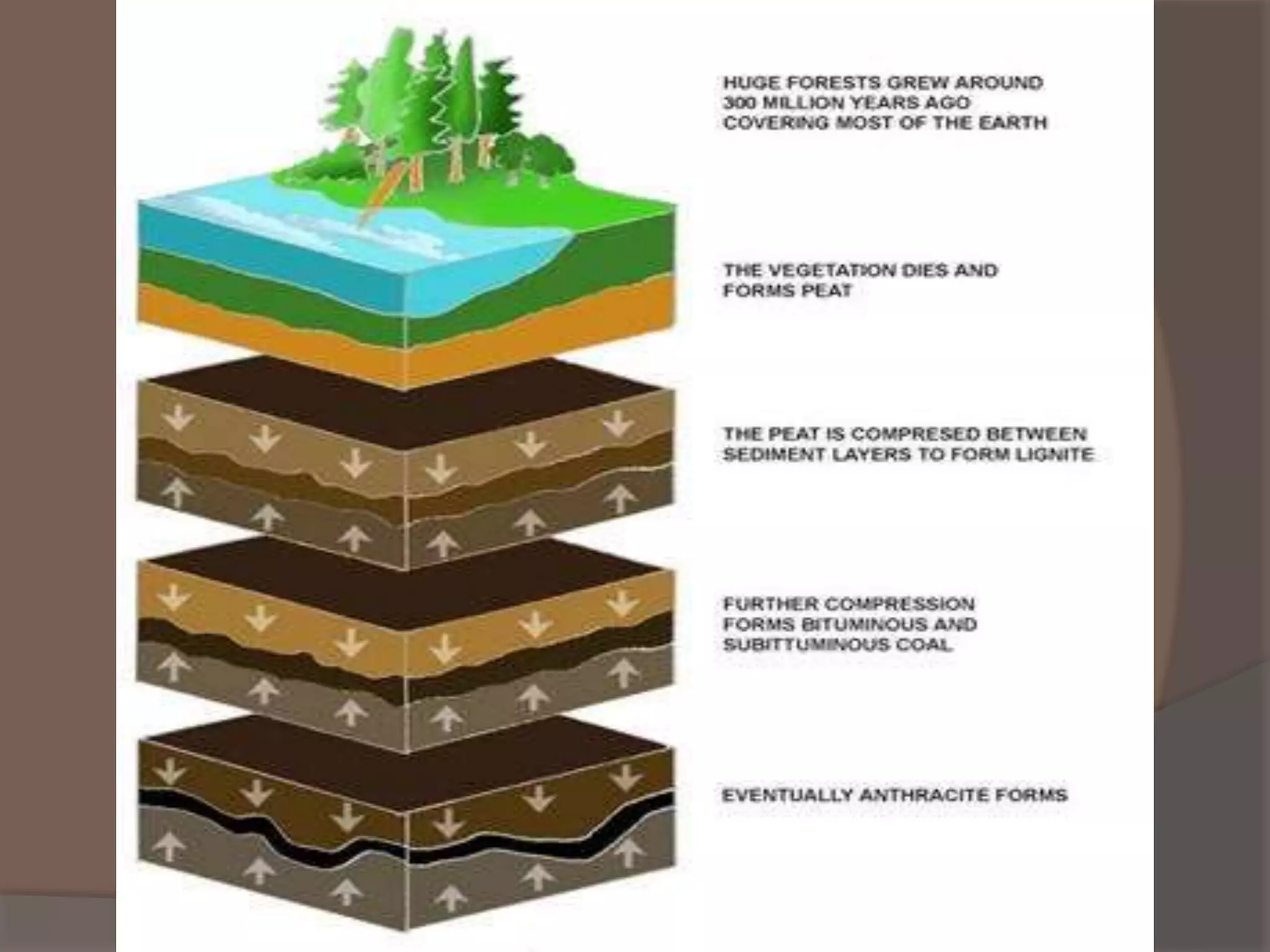
Formation of Coal 
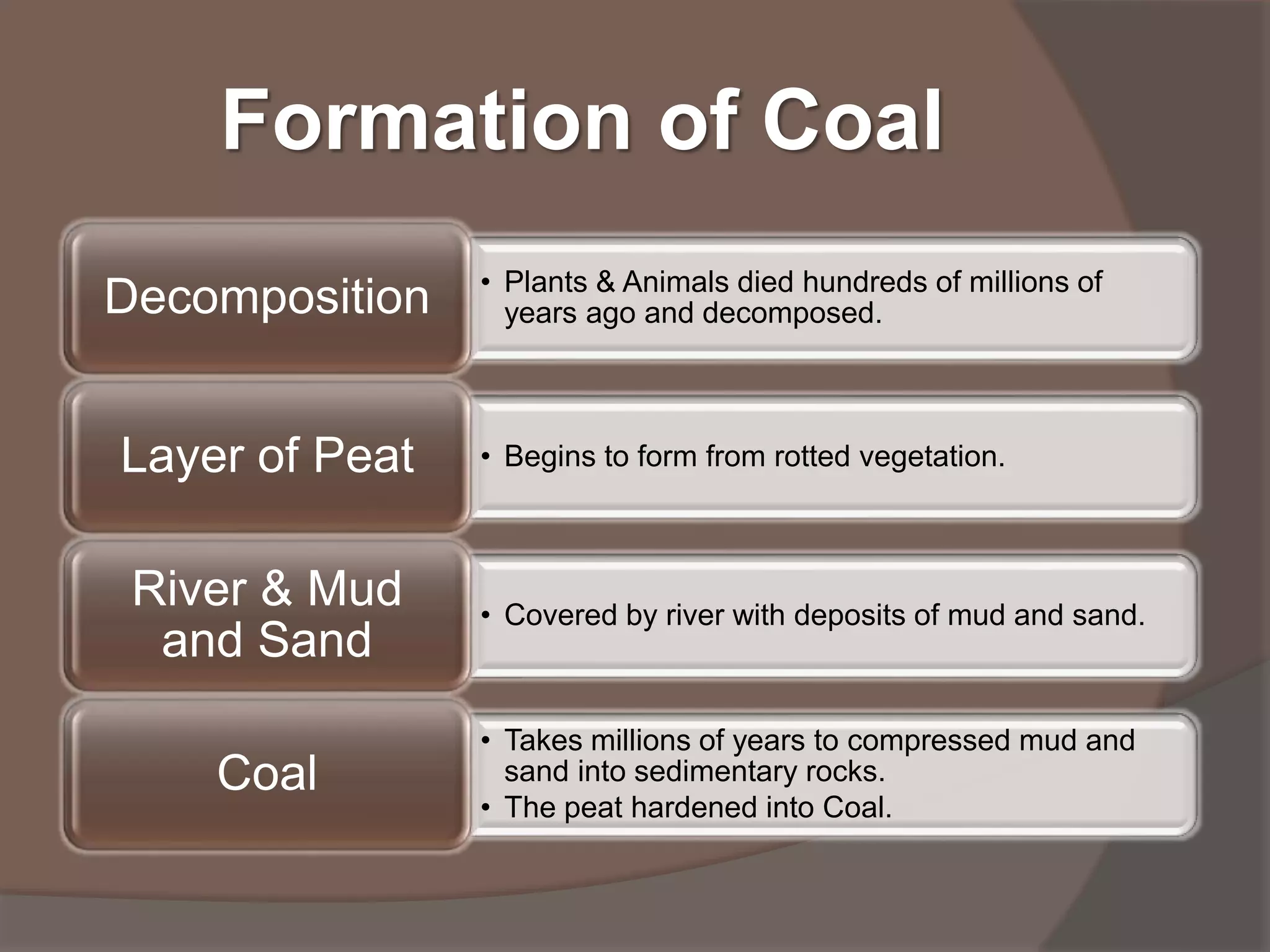
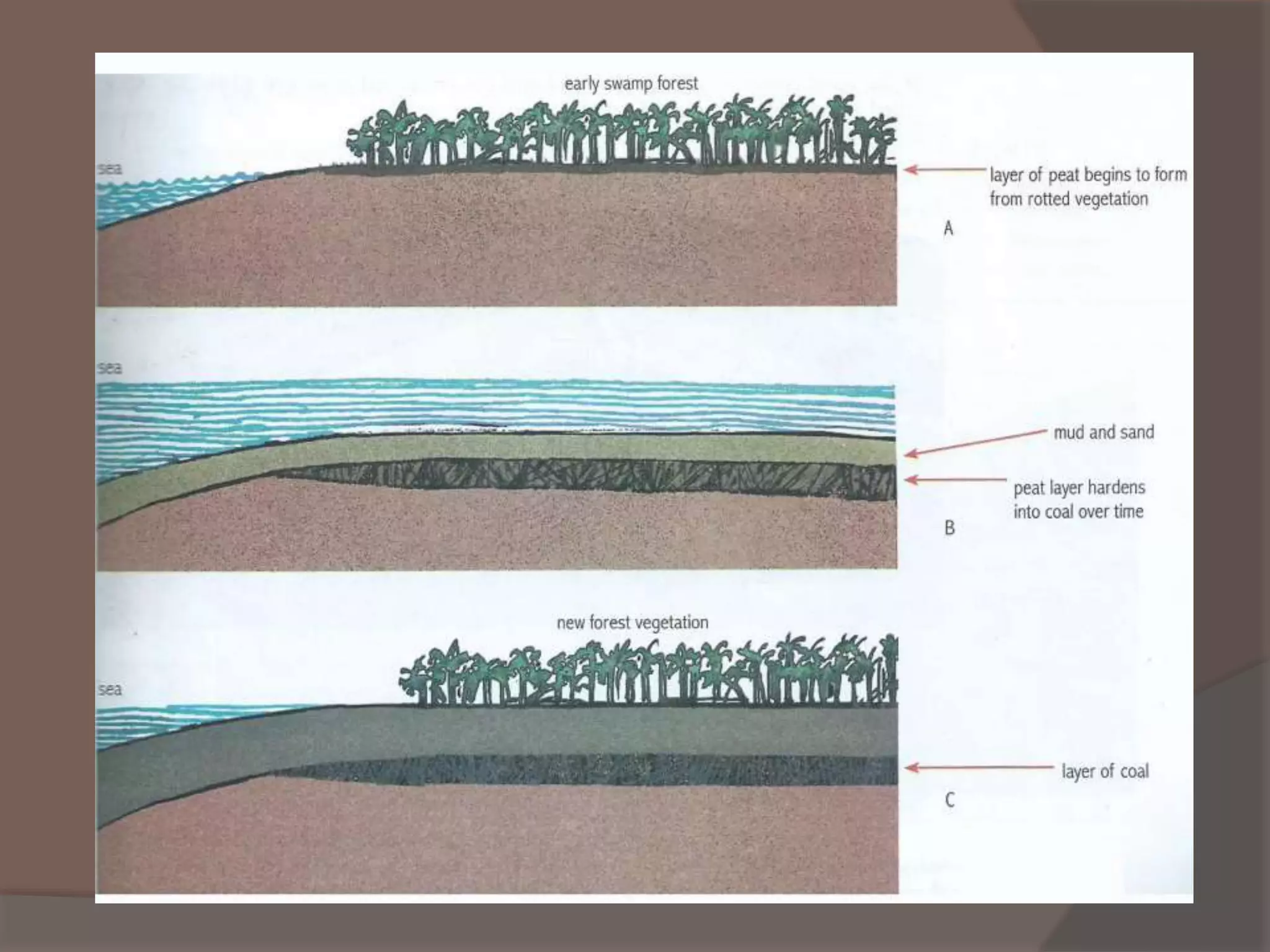
• Plants & Animals died hundreds of millions of 
years ago and decomposed. Decomposition 
Layer of Peat • Begins to form from rotted vegetation. 
• Covered by river with deposits of mud and sand. 
River & Mud 
and Sand 
• Takes millions of years to compressed mud and 
sand into sedimentary rocks. 
• The peat hardened into Coal. 
Coal
Formation of Oil & Gas 
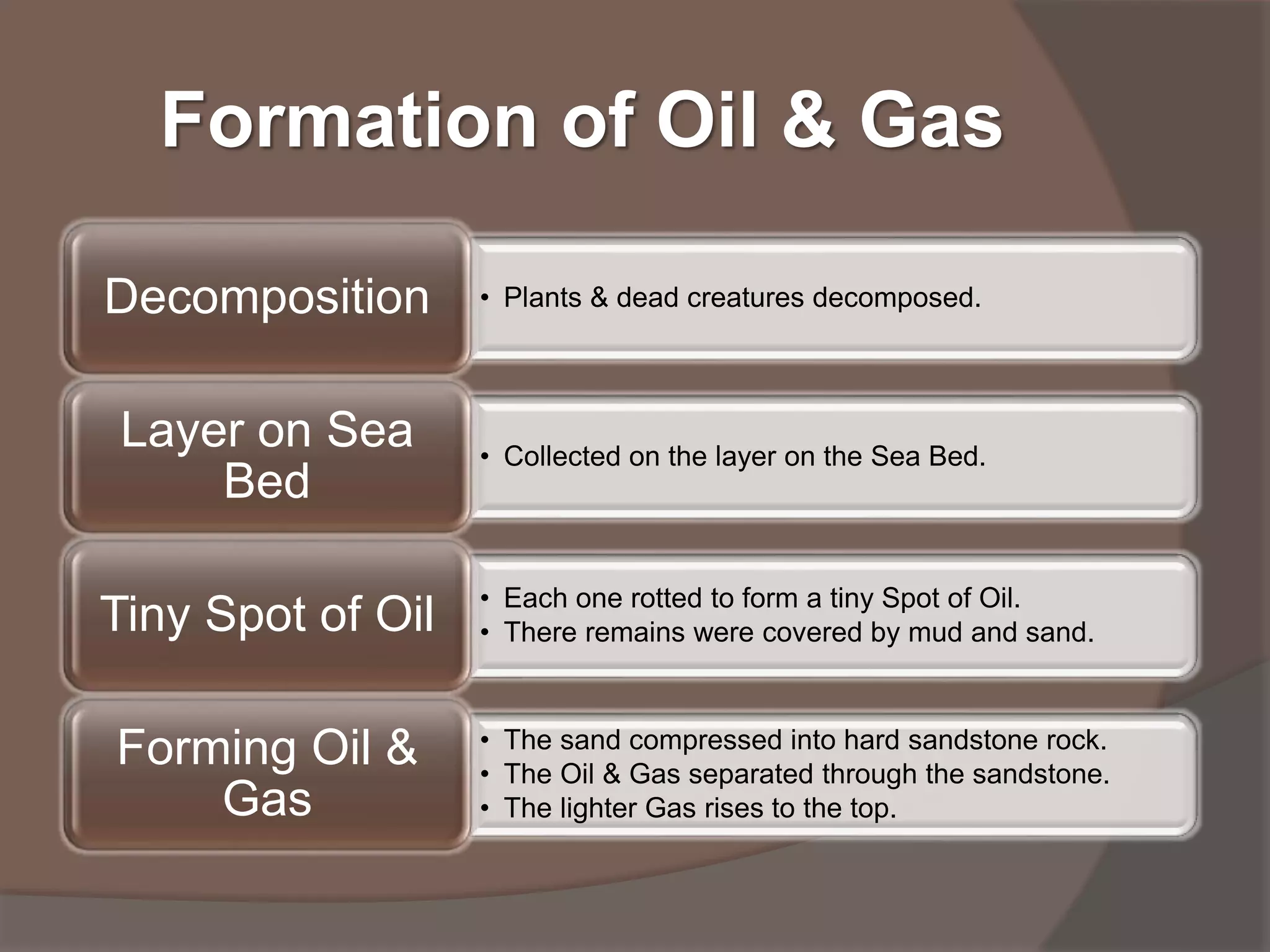
Decomposition • Plants & dead creatures decomposed. 
• Collected on the layer on the Sea Bed. 
Layer on Sea 
Bed 
• Each one rotted to form a tiny Spot of Oil. 
• There remains were covered by mud and sand. Tiny Spot of Oil 
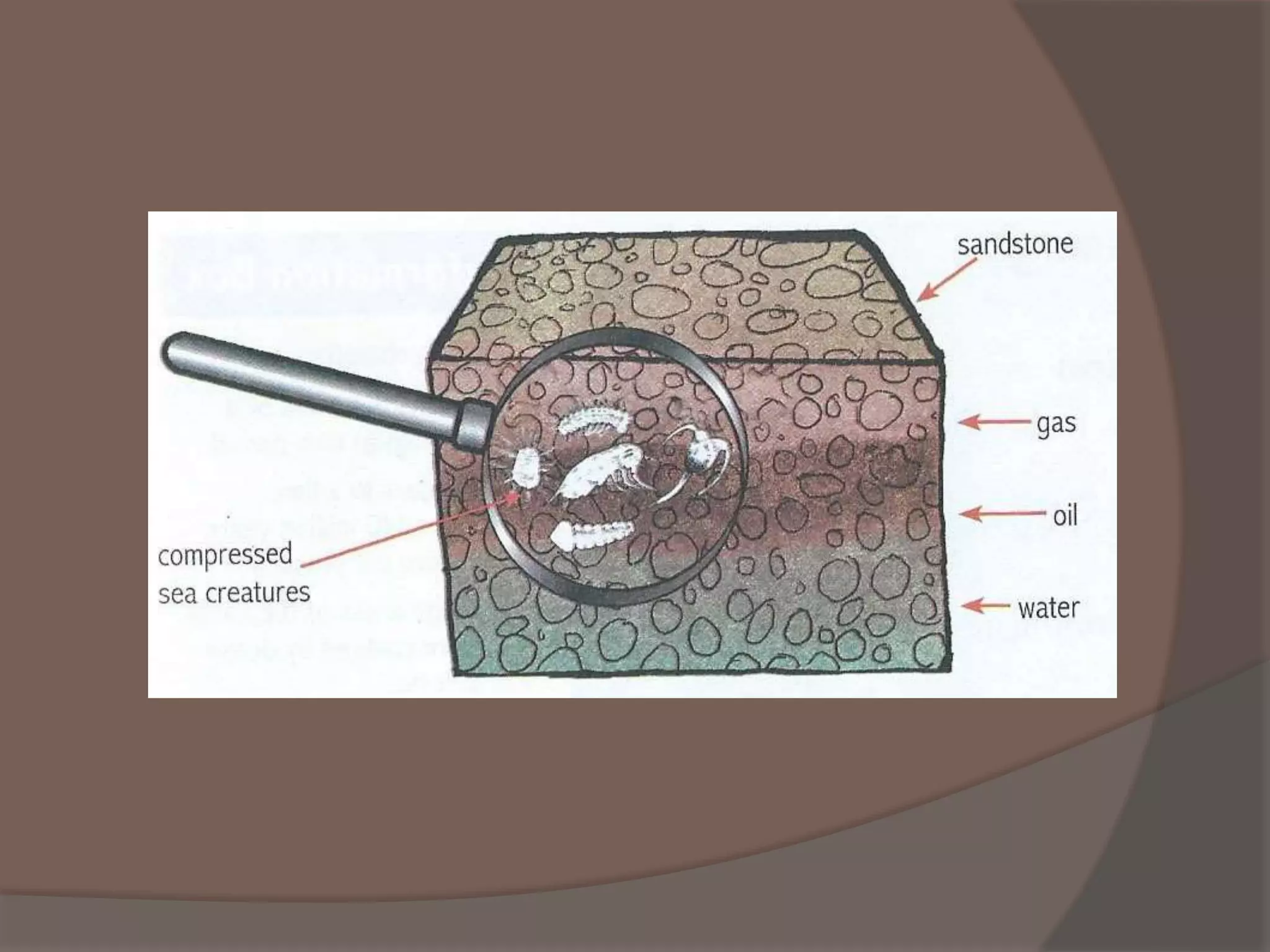
• The sand compressed into hard sandstone rock. 
• The Oil & Gas separated through the sandstone. 
• The lighter Gas rises to the top. 
Forming Oil & 
Gas
Fossil fuels Formation

Fossil fuels Formation

  • 2.
    What are FossilFuels?  Fossil Fuels are natural fuels formed in the geological past from the remains of living organisms (decomposition).  There are 3 types of fossil fuels.  Coal  Oil  Gas.
  • 3.
    Formation of Coal • Plants & Animals died hundreds of millions of years ago and decomposed. Decomposition Layer of Peat • Begins to form from rotted vegetation. • Covered by river with deposits of mud and sand. River & Mud and Sand • Takes millions of years to compressed mud and sand into sedimentary rocks. • The peat hardened into Coal. Coal
  • 6.
    Formation of Oil& Gas Decomposition • Plants & dead creatures decomposed. • Collected on the layer on the Sea Bed. Layer on Sea Bed • Each one rotted to form a tiny Spot of Oil. • There remains were covered by mud and sand. Tiny Spot of Oil • The sand compressed into hard sandstone rock. • The Oil & Gas separated through the sandstone. • The lighter Gas rises to the top. Forming Oil & Gas