AND ITS TYPES
BATCH 1
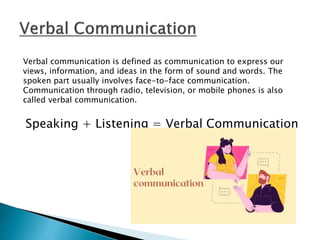
Verbal communication is defined as communication to express our
views, information, and ideas in the form of sound and words. The
spoken part usually involves face-to-face communication.
Communication through radio, television, or mobile phones is also
called verbal communication.
Speaking + Listening = Verbal Communication
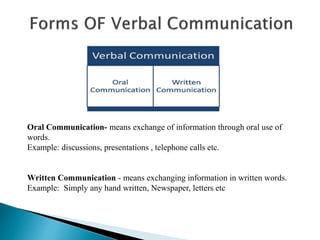
Oral Communication- means exchange of information through oral use of
words.
Example: discussions, presentations , telephone calls etc.
Written Communication - means exchanging information in written words.
Example: Simply any hand written, Newspaper, letters etc
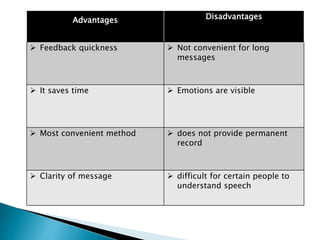
Advantages Disadvantages
 Feedback quickness  Not convenient for long
messages
 It saves time  Emotions are visible
 Most convenient method  does not provide permanent
record
 Clarity of message  difficult for certain people to
understand speech
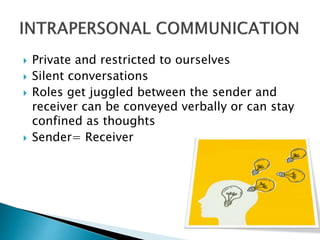
 Private and restricted to ourselves
 Silent conversations
 Roles get juggled between the sender and
receiver can be conveyed verbally or can stay
confined as thoughts
 Sender= Receiver
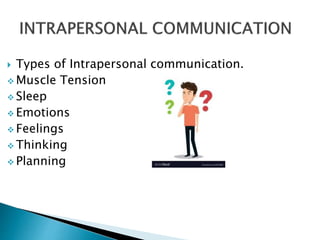
 Types of Intrapersonal communication.
 Muscle Tension
 Sleep
 Emotions
 Feelings
 Thinking
 Planning
 Visualization
 Decision making
 Self awareness
 Self Confidence
 Self management
 Self motivation
 Adaptability
 Introverted
 Wrong assumptions
 Incorrect decisions
 Over-thinking
 Arrogance
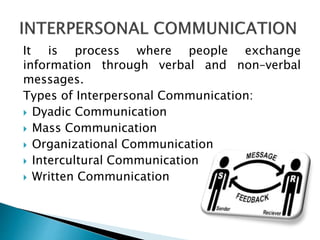
It is process where people exchange
information through verbal and non–verbal
messages.
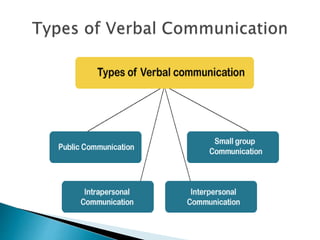
Types of Interpersonal Communication:
 Dyadic Communication
 Mass Communication
 Organizational Communication
 Intercultural Communication
 Written Communication
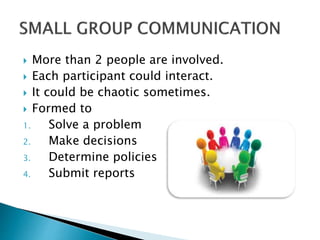
 More than 2 people are involved.
 Each participant could interact.
 It could be chaotic sometimes.
 Formed to
1. Solve a problem
2. Make decisions
3. Determine policies
4. Submit reports
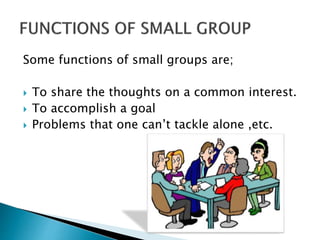
Some functions of small groups are;
 To share the thoughts on a common interest.
 To accomplish a goal
 Problems that one can’t tackle alone ,etc.
ADVANTAGES
•Creates more
valuable
knowledge pool.
•More
comprehensive
solutions.
DISADVANTAGES
•Some members
can dominate.
•Lack of focus
 This type of communication takes place when
one individual addresses a large gathering of
people. Eg, Election campaign.
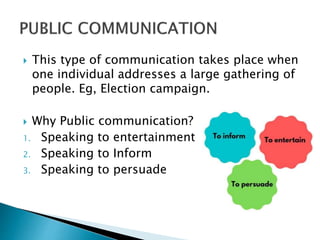
 Why Public communication?
1. Speaking to entertainment
2. Speaking to Inform
3. Speaking to persuade
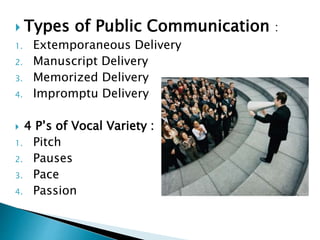
 Types of Public Communication :
1. Extemporaneous Delivery
2. Manuscript Delivery
3. Memorized Delivery
4. Impromptu Delivery
 4 P’s of Vocal Variety :
1. Pitch
2. Pauses
3. Pace
4. Passion

Verbal communication.pptx

  • 1.
  • 2.
    Verbal communication isdefined as communication to express our views, information, and ideas in the form of sound and words. The spoken part usually involves face-to-face communication. Communication through radio, television, or mobile phones is also called verbal communication. Speaking + Listening = Verbal Communication
  • 3.
    Oral Communication- meansexchange of information through oral use of words. Example: discussions, presentations , telephone calls etc. Written Communication - means exchanging information in written words. Example: Simply any hand written, Newspaper, letters etc
  • 5.
    Advantages Disadvantages  Feedbackquickness  Not convenient for long messages  It saves time  Emotions are visible  Most convenient method  does not provide permanent record  Clarity of message  difficult for certain people to understand speech
  • 7.
     Private andrestricted to ourselves  Silent conversations  Roles get juggled between the sender and receiver can be conveyed verbally or can stay confined as thoughts  Sender= Receiver
  • 8.
     Types ofIntrapersonal communication.  Muscle Tension  Sleep  Emotions  Feelings  Thinking  Planning
  • 9.
     Visualization  Decisionmaking  Self awareness  Self Confidence  Self management  Self motivation  Adaptability
  • 10.
     Introverted  Wrongassumptions  Incorrect decisions  Over-thinking  Arrogance
  • 11.
    It is processwhere people exchange information through verbal and non–verbal messages. Types of Interpersonal Communication:  Dyadic Communication  Mass Communication  Organizational Communication  Intercultural Communication  Written Communication
  • 12.
     More than2 people are involved.  Each participant could interact.  It could be chaotic sometimes.  Formed to 1. Solve a problem 2. Make decisions 3. Determine policies 4. Submit reports
  • 13.
    Some functions ofsmall groups are;  To share the thoughts on a common interest.  To accomplish a goal  Problems that one can’t tackle alone ,etc.
  • 14.
  • 15.
     This typeof communication takes place when one individual addresses a large gathering of people. Eg, Election campaign.  Why Public communication? 1. Speaking to entertainment 2. Speaking to Inform 3. Speaking to persuade
  • 16.
     Types ofPublic Communication : 1. Extemporaneous Delivery 2. Manuscript Delivery 3. Memorized Delivery 4. Impromptu Delivery  4 P’s of Vocal Variety : 1. Pitch 2. Pauses 3. Pace 4. Passion