Surgical site infection care bundle
Mathivathani M
Clinical instructor
KGMU College of Nursing
SURGICAL SITE INFECTION
• The CDC defines - SSI as an infection related to a surgical
procedure that occurs near the surgical site within 30 days
following surgery (or up to 90 days following surgery where an
implant is involved)
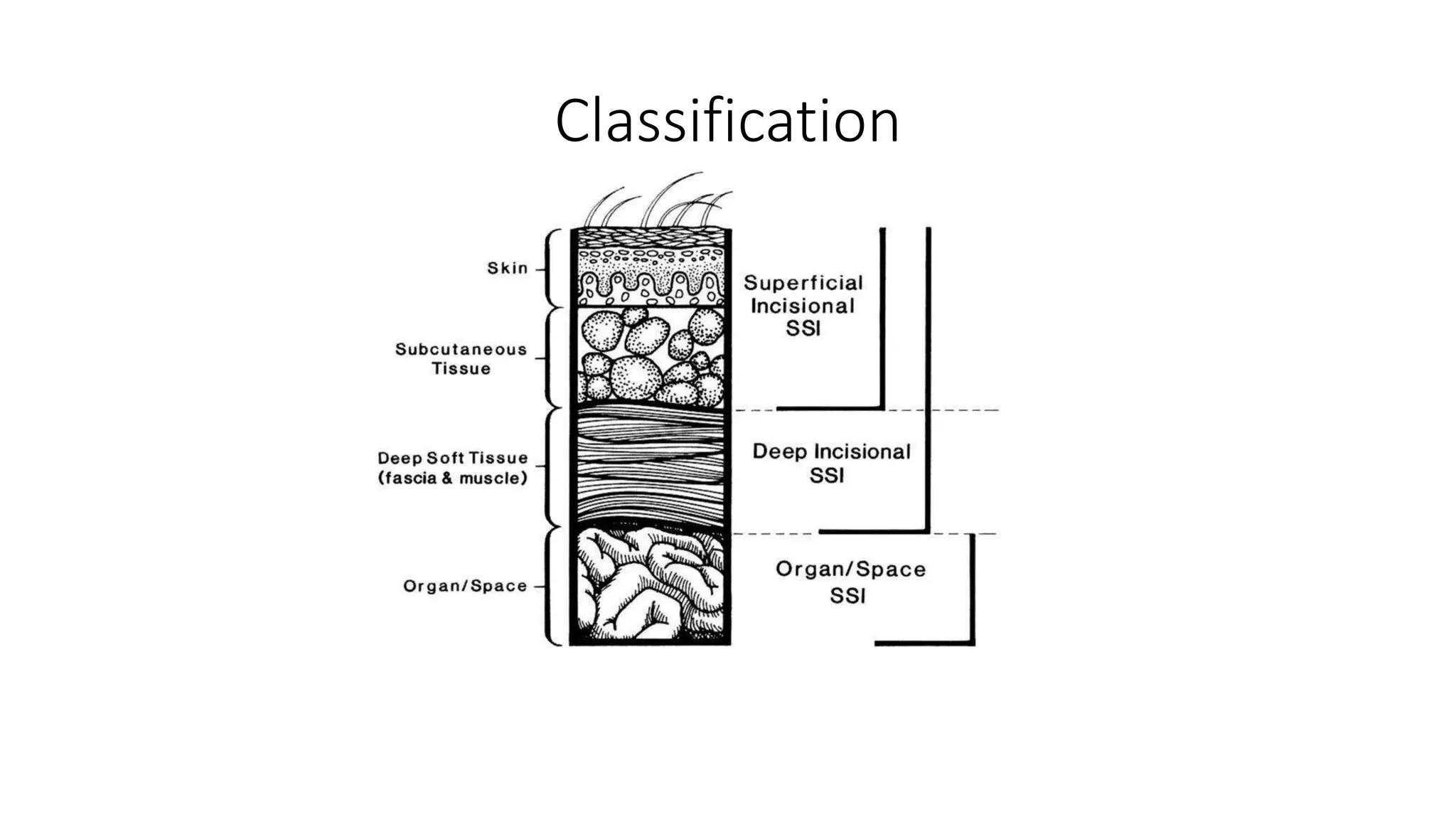
Classification
Conts…
 Event occurs within 30
days
 Purulent drainage from
wound.
 Positive wound
culture.
 Pain, redness,
swelling.
 Diagnosis by surgeon.
 Event occurs
within 30-90 days
 Purulent drainage
from deep aspect
of the wound
 Dehiscence
 Fever > 380 C
 Abscess on other
evidence
histopathology/Gr
oss anatomy/
imaging study
Superficial incisional SSI Deep incisional SSI
Organ/Space SSI
 Event occurs within 30-90
days
 Involved deeper
(cavity/organ)
 Purulent drainage from
deep aspect of the wound
 Dehiscence
 Fever > 380 C
 Abscess on other evidence
involvement of organ
histopathology/Gross
anatomy/ imaging study
What is care bundle?
A 'care bundle' is a collection of interventions/ Set of
evidence based practice
Core Prevention Strategies- Pre-Operative
Do NOT remove patient hair, or if absolutely
necessary, remove with a clipper, do not shave
1
2
• Do not use antibiotic prophylaxis routinely for
uncomplicated clean surgeries without
prosthetic implants.
• Administer surgical antibiotic prophylaxis in the
120 minutes preceding surgical incision
(depending on the type of operation and the half-
life of the antibiotic)
3
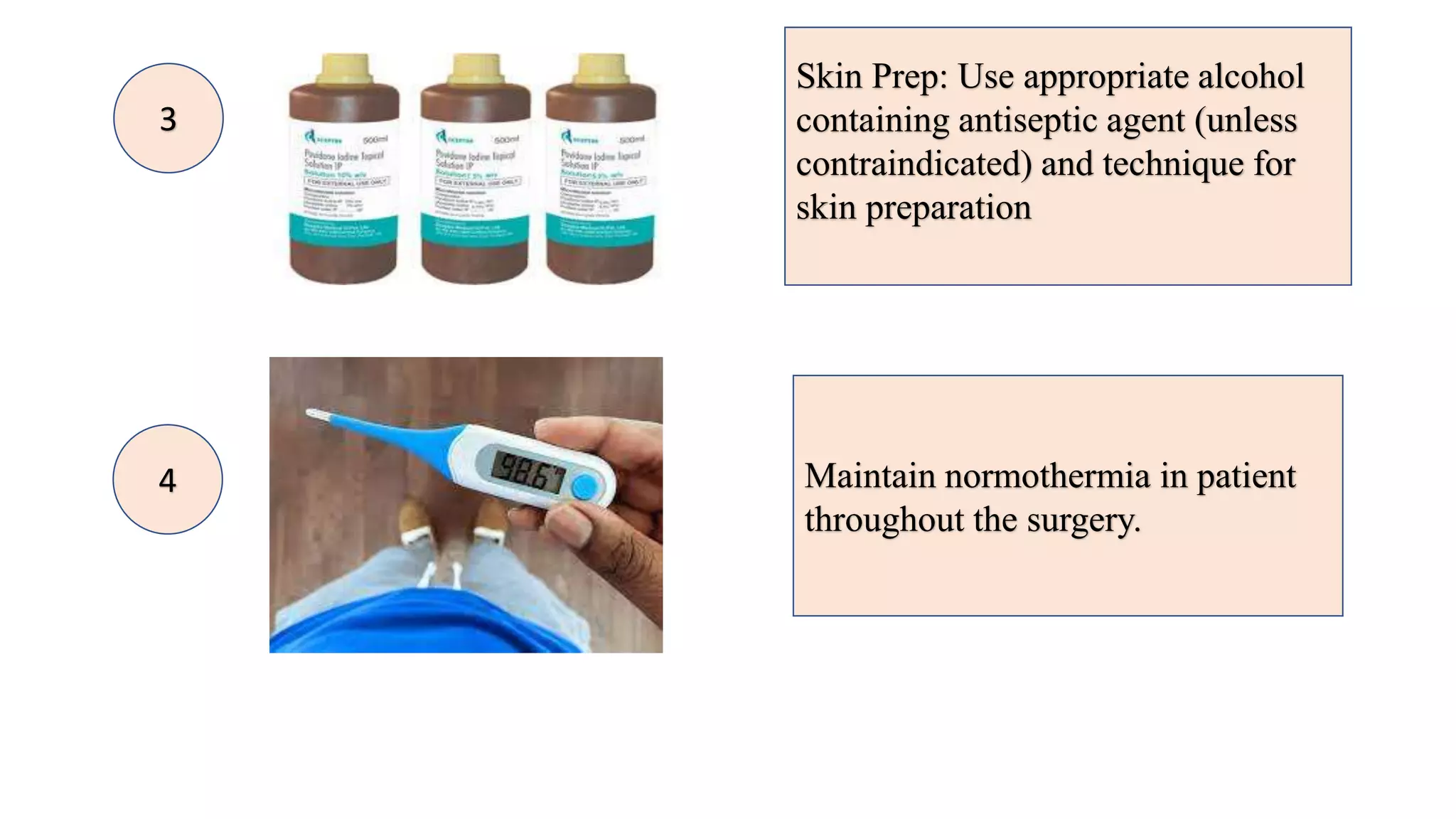
Skin Prep: Use appropriate alcohol
containing antiseptic agent (unless
contraindicated) and technique for
skin preparation
Maintain normothermia in patient
throughout the surgery.
4
Maintain normoglycaemia in patient
throughout the surgery. Screen
preoperative blood glucose levels and
maintain tight glucose control POD#1 and
POD#2 in patients undergoing select
elective procedures
Carry out mechanical bowel preparation
always combined with administering
preoperative oral antibiotics in adults
patients undergoing elective
colorectal surgery
5
6
Intra operative Measures
Operating Room (OR) Traffic
Keep OR doors closed during
surgery except as needed for
passage of equipment,
personnel, and the patient
1
2
Use sterile Surgical attire
Use sterile drapes and sterile
instruments
Surgical Wound Dressing
Protect primary closure incisions with
sterile dressing for 24-48 hrs post-op
Control blood glucose level during the
immediate post-operative period
(cardiac surgeries)
Maintain post-op blood glucose level
at <200mg/dL
Post operative Measures
9
10
Advise the Patient bathes or showers
prior to surgery with either plain or
antimicrobial soap / Antiseptic agent
Use 2% mupirocin decolonization in
known nasal carriers of Staphylococcus
aureus in cardiac and orthopedic
surgery
(consider for other surgeries)
1
2
Supplemental Prevention Strategies- Pre operative
• Redose antibiotic at the 3 hr interval in
procedures with duration >3hrs.
•Adjust antimicrobial prophylaxis dose
for obese patients (body mass index
>30)
3
Peri operative
•Use at least 80 % fraction of inspired
oxygen intraoperatively and
immediately postoperatively in select
procedure.
4
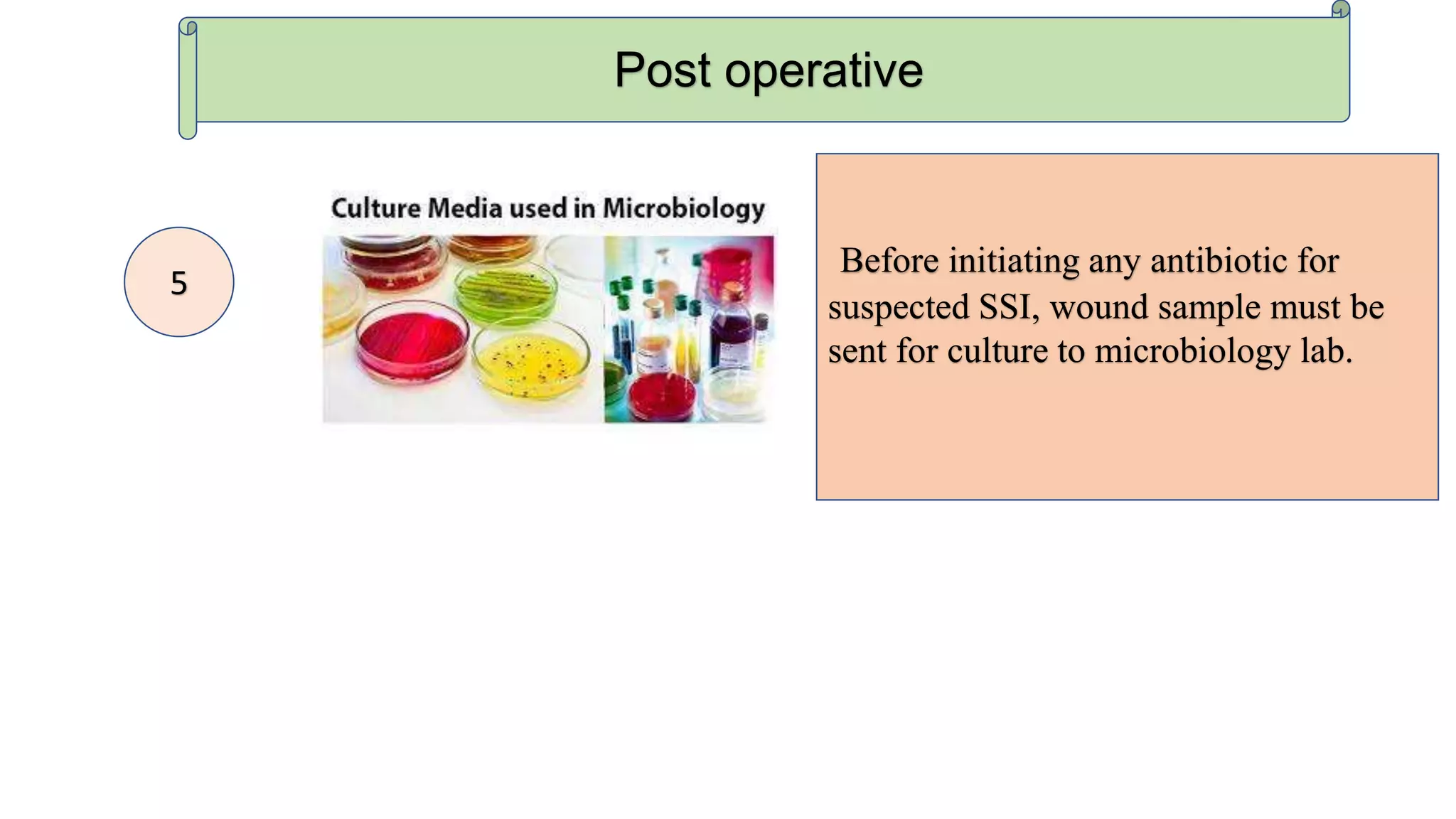
Before initiating any antibiotic for
suspected SSI, wound sample must be
sent for culture to microbiology lab.
5
Post operative

surgical site infection.pptx

  • 1.
    Surgical site infectioncare bundle Mathivathani M Clinical instructor KGMU College of Nursing
  • 2.
    SURGICAL SITE INFECTION •The CDC defines - SSI as an infection related to a surgical procedure that occurs near the surgical site within 30 days following surgery (or up to 90 days following surgery where an implant is involved)
  • 3.
  • 4.
    Conts…  Event occurswithin 30 days  Purulent drainage from wound.  Positive wound culture.  Pain, redness, swelling.  Diagnosis by surgeon.  Event occurs within 30-90 days  Purulent drainage from deep aspect of the wound  Dehiscence  Fever > 380 C  Abscess on other evidence histopathology/Gr oss anatomy/ imaging study Superficial incisional SSI Deep incisional SSI Organ/Space SSI  Event occurs within 30-90 days  Involved deeper (cavity/organ)  Purulent drainage from deep aspect of the wound  Dehiscence  Fever > 380 C  Abscess on other evidence involvement of organ histopathology/Gross anatomy/ imaging study
  • 5.
    What is carebundle? A 'care bundle' is a collection of interventions/ Set of evidence based practice
  • 6.
    Core Prevention Strategies-Pre-Operative Do NOT remove patient hair, or if absolutely necessary, remove with a clipper, do not shave 1 2 • Do not use antibiotic prophylaxis routinely for uncomplicated clean surgeries without prosthetic implants. • Administer surgical antibiotic prophylaxis in the 120 minutes preceding surgical incision (depending on the type of operation and the half- life of the antibiotic)
  • 7.
    3 Skin Prep: Useappropriate alcohol containing antiseptic agent (unless contraindicated) and technique for skin preparation Maintain normothermia in patient throughout the surgery. 4
  • 8.
    Maintain normoglycaemia inpatient throughout the surgery. Screen preoperative blood glucose levels and maintain tight glucose control POD#1 and POD#2 in patients undergoing select elective procedures Carry out mechanical bowel preparation always combined with administering preoperative oral antibiotics in adults patients undergoing elective colorectal surgery 5 6
  • 9.
    Intra operative Measures OperatingRoom (OR) Traffic Keep OR doors closed during surgery except as needed for passage of equipment, personnel, and the patient 1 2 Use sterile Surgical attire Use sterile drapes and sterile instruments
  • 10.
    Surgical Wound Dressing Protectprimary closure incisions with sterile dressing for 24-48 hrs post-op Control blood glucose level during the immediate post-operative period (cardiac surgeries) Maintain post-op blood glucose level at <200mg/dL Post operative Measures 9 10
  • 11.
    Advise the Patientbathes or showers prior to surgery with either plain or antimicrobial soap / Antiseptic agent Use 2% mupirocin decolonization in known nasal carriers of Staphylococcus aureus in cardiac and orthopedic surgery (consider for other surgeries) 1 2 Supplemental Prevention Strategies- Pre operative
  • 12.
    • Redose antibioticat the 3 hr interval in procedures with duration >3hrs. •Adjust antimicrobial prophylaxis dose for obese patients (body mass index >30) 3 Peri operative •Use at least 80 % fraction of inspired oxygen intraoperatively and immediately postoperatively in select procedure. 4
  • 13.
    Before initiating anyantibiotic for suspected SSI, wound sample must be sent for culture to microbiology lab. 5 Post operative