Executive Coaching
Luke Minshall
Director
Approach
 One-on-one development process.
 Contract between coach and a leadership
and/or professional level client.
 Set goals that help achieve enhanced
personal and organisational performance.
 Helps client become more self-aware
through use of ACTION learning methods.
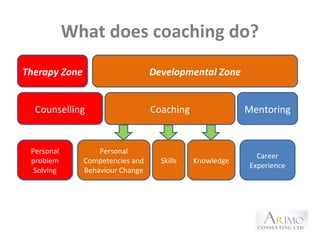
What does coaching do?
Therapy Zone Developmental Zone
Counselling Coaching Mentoring
Personal
problem
Solving
Personal
Competencies and
Behaviour Change
Skills Knowledge
Career
Experience
Aims
 Skill development: interpersonal or self
management skill
 Performance improvement: problematic
behavior and new challenges
 Career Development: competencies needed
for the future
When Coaching is Appropriate
 Steep learning curve
 Performance will make an important
difference to the employer
 Relevant learning issues in the “people
skills” area
 Part of formal succession planning
programs
 In conjunction with executive
development programs
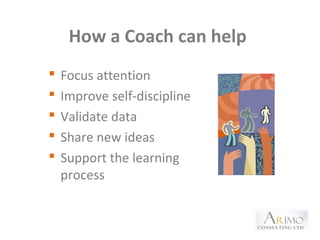
How a Coach can help
 Focus attention
 Improve self-discipline
 Validate data
 Share new ideas
 Support the learning
process
When Not to use a Coach
 By consensus: person
should leave organisation
 Person is in wrong job
 Success in position based
on business factors beyond
person’s control
 Poorly designed
organisational structure
 Significant personal
problems
 Career decision issue
best handled by career
counsellor
 Person doesn’t want
one
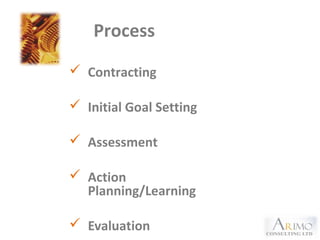
Process
 Contracting
 Initial Goal Setting
 Assessment
 Action
Planning/Learning
 Evaluation
HR Role
 Manage overall coaching programme
 Support start of new coaching
assignments
 Support coaching during and at the
end or at transition
Client’s Role
 Ground rules and trust
 Taking responsibility
 Business relationship
 Time commitments
 Responsibilities to boss and HR
Boss’s Role
 Creating case for change
 Defining success
 Authorising the coaching
 Identifying performance expectations
 Assessing how well changes are going
Coach’s Role
 Structuring coaching process
 Communicating with org sponsors
 Setting boundaries for coaching
assignment
 Evaluating impact of coaching
 Know when to discontinue coaching
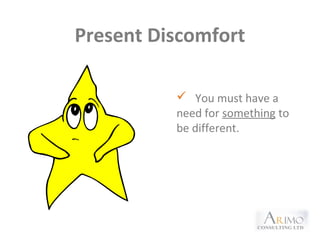
Present Discomfort
 You must have a
need for something to
be different.
Internalisation of Responsibility
 You must realise change is your
job, and not the work of others.
Emotional Security
 This can have different meanings
at different stages of development, but
generally includes safety, identity,
attachments, trust in others etc.
Efficacy
 You have the
power and ability to
influence outcomes.
Preferred Alternative Future
 You must hope for a
different future that is worth
working for.
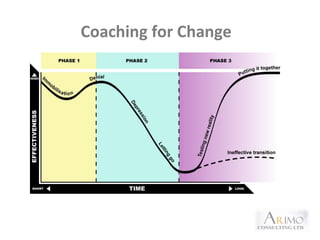
Coaching for Change
What outcomes
do you want
from your
coaching
programme?

Executive coaching approach and methods

  • 1.
  • 2.
    Approach  One-on-one developmentprocess.  Contract between coach and a leadership and/or professional level client.  Set goals that help achieve enhanced personal and organisational performance.  Helps client become more self-aware through use of ACTION learning methods.
  • 3.
    What does coachingdo? Therapy Zone Developmental Zone Counselling Coaching Mentoring Personal problem Solving Personal Competencies and Behaviour Change Skills Knowledge Career Experience
  • 4.
    Aims  Skill development:interpersonal or self management skill  Performance improvement: problematic behavior and new challenges  Career Development: competencies needed for the future
  • 5.
    When Coaching isAppropriate  Steep learning curve  Performance will make an important difference to the employer  Relevant learning issues in the “people skills” area  Part of formal succession planning programs  In conjunction with executive development programs
  • 6.
    How a Coachcan help  Focus attention  Improve self-discipline  Validate data  Share new ideas  Support the learning process
  • 7.
    When Not touse a Coach  By consensus: person should leave organisation  Person is in wrong job  Success in position based on business factors beyond person’s control  Poorly designed organisational structure  Significant personal problems  Career decision issue best handled by career counsellor  Person doesn’t want one
  • 8.
    Process  Contracting  InitialGoal Setting  Assessment  Action Planning/Learning  Evaluation
  • 9.
    HR Role  Manageoverall coaching programme  Support start of new coaching assignments  Support coaching during and at the end or at transition
  • 10.
    Client’s Role  Groundrules and trust  Taking responsibility  Business relationship  Time commitments  Responsibilities to boss and HR
  • 11.
    Boss’s Role  Creatingcase for change  Defining success  Authorising the coaching  Identifying performance expectations  Assessing how well changes are going
  • 12.
    Coach’s Role  Structuringcoaching process  Communicating with org sponsors  Setting boundaries for coaching assignment  Evaluating impact of coaching  Know when to discontinue coaching
  • 13.
    Present Discomfort  Youmust have a need for something to be different.
  • 14.
    Internalisation of Responsibility You must realise change is your job, and not the work of others.
  • 15.
    Emotional Security  Thiscan have different meanings at different stages of development, but generally includes safety, identity, attachments, trust in others etc.
  • 16.
    Efficacy  You havethe power and ability to influence outcomes.
  • 17.
    Preferred Alternative Future You must hope for a different future that is worth working for.
  • 18.
  • 19.
    What outcomes do youwant from your coaching programme?