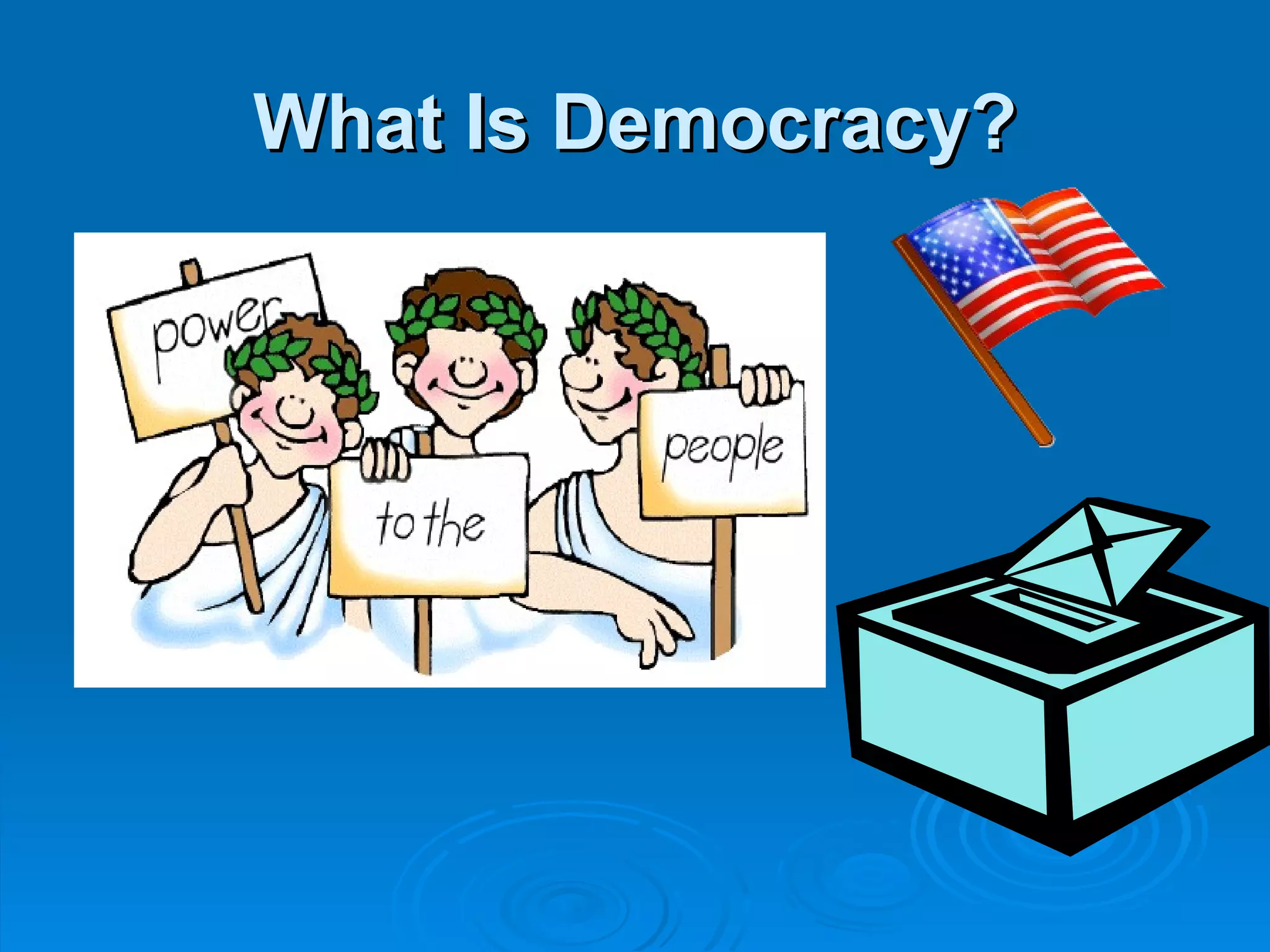
What Is Democracy?
Democracy
 Every fourth of July, People across the
  United States celebrate freedom and
  democracy. You probably know what
  freedom means. But what is Democracy?
  It is a form of government in which people
  share power. The United States is a
  democracy.
 Government by the people!
The Beginning of Democracy
 Democracy didn’t start in the United
  States. People in Athens, Greece had the
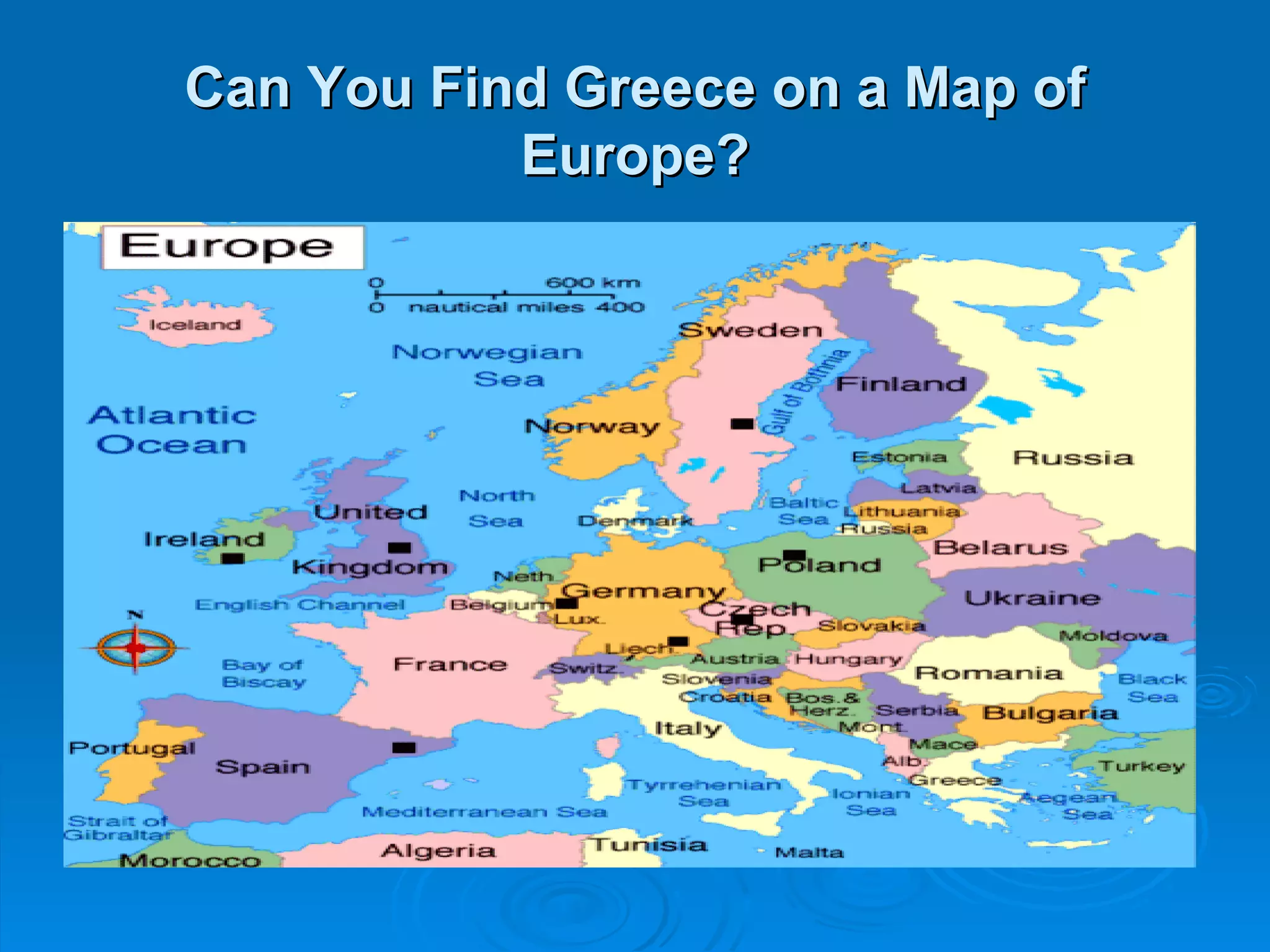
  idea. Greece is a country in Europe.
  Citizens in Athens were the first to take
  part in their Government.
 Democracy started in Athens more than
  2,500 years ago.
 Citizens of ancient Athens chose
  community leaders and voted on laws.
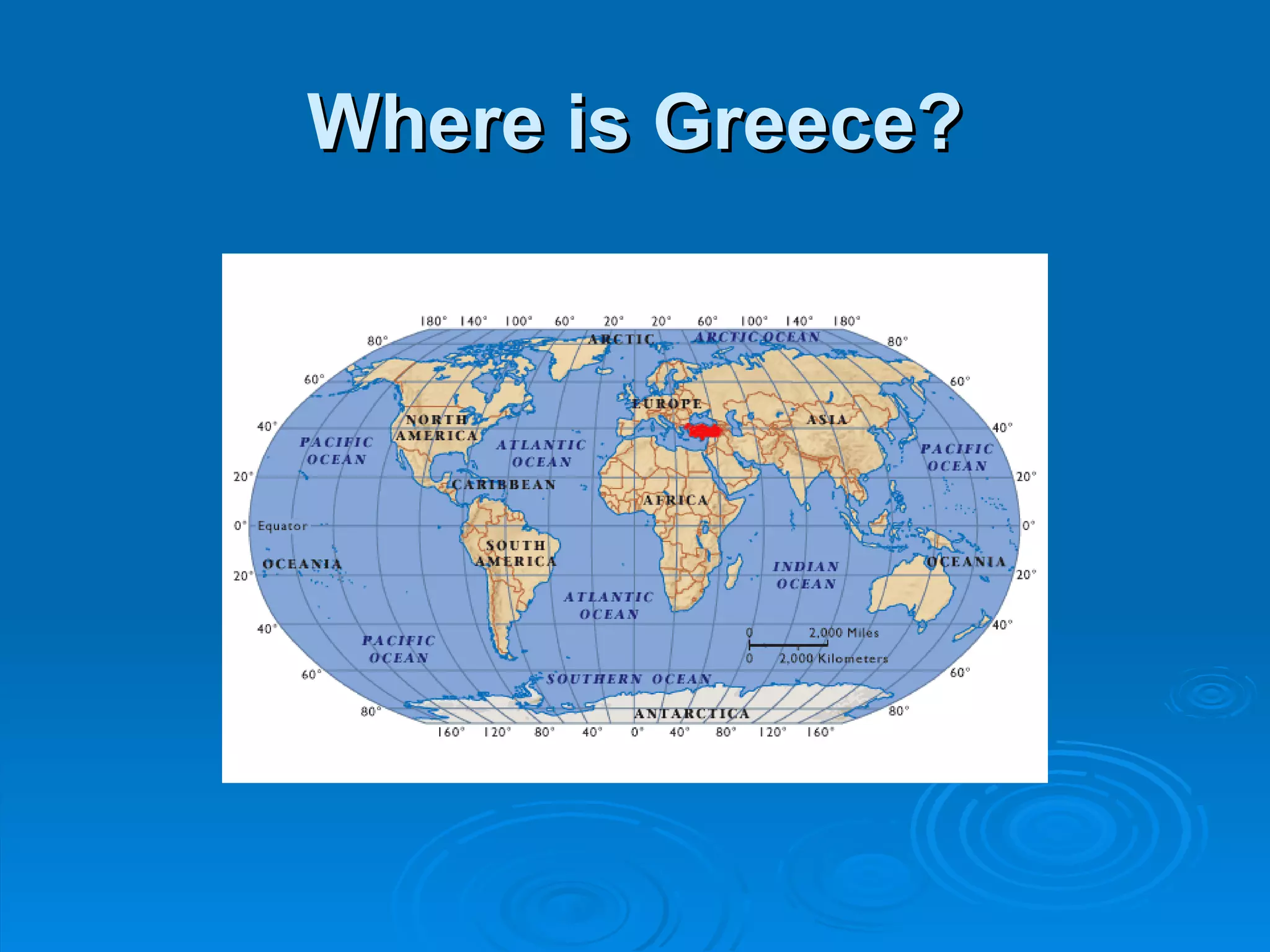
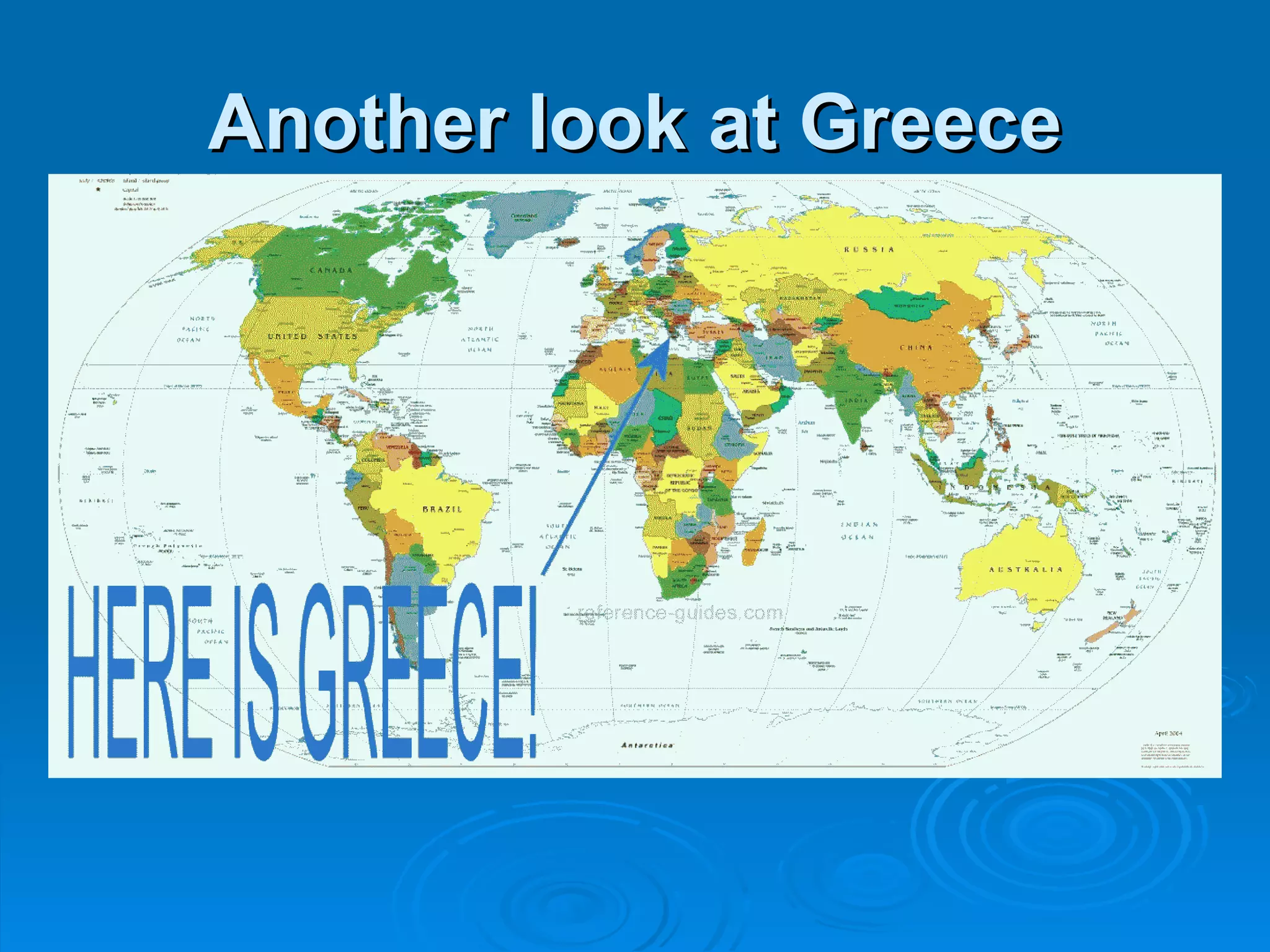
Where is Greece?
 Greece is in Europe
Another look at Greece
Can You Find Greece on a Map of
           Europe?
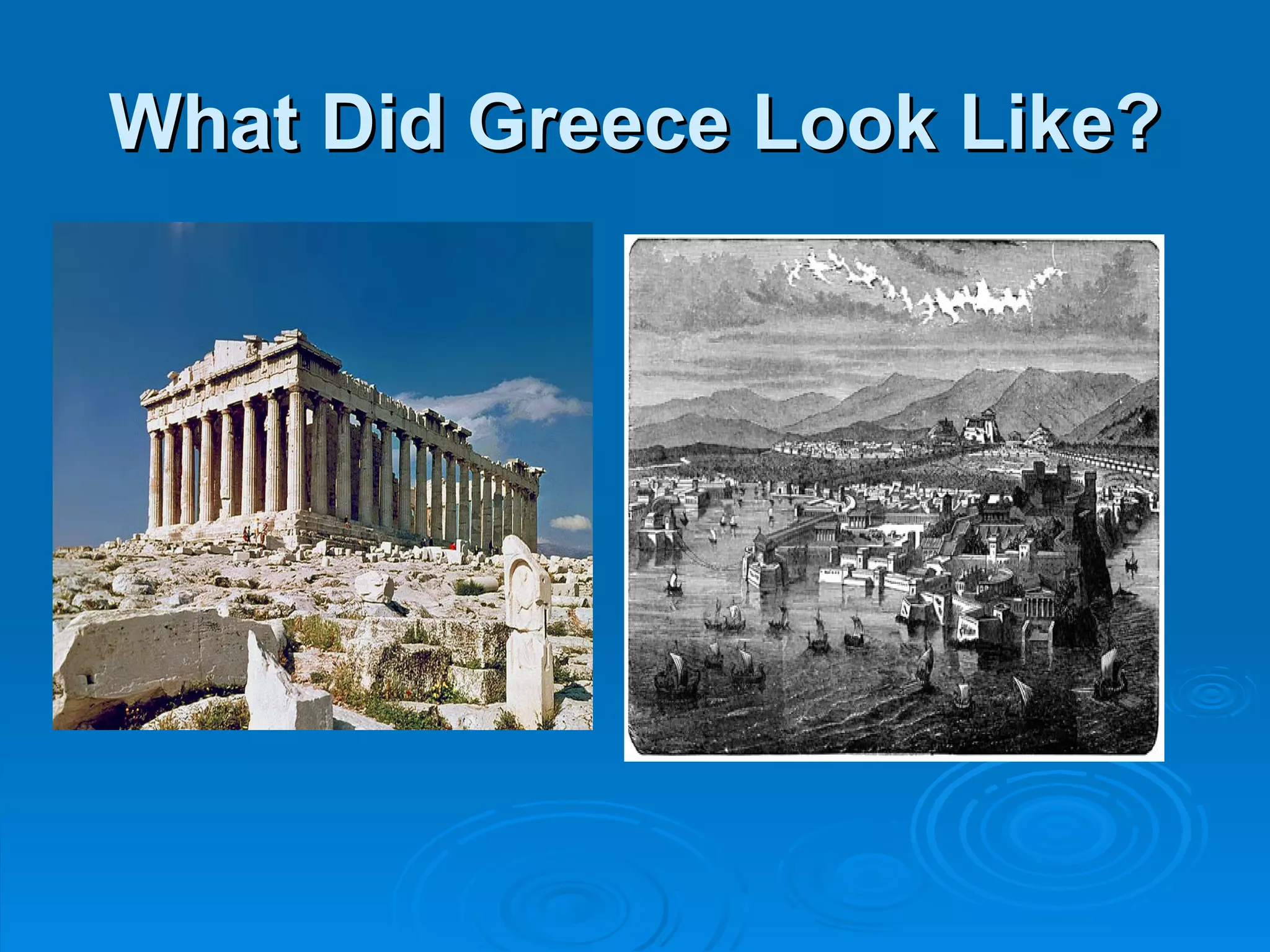
What Did Greece Look Like?
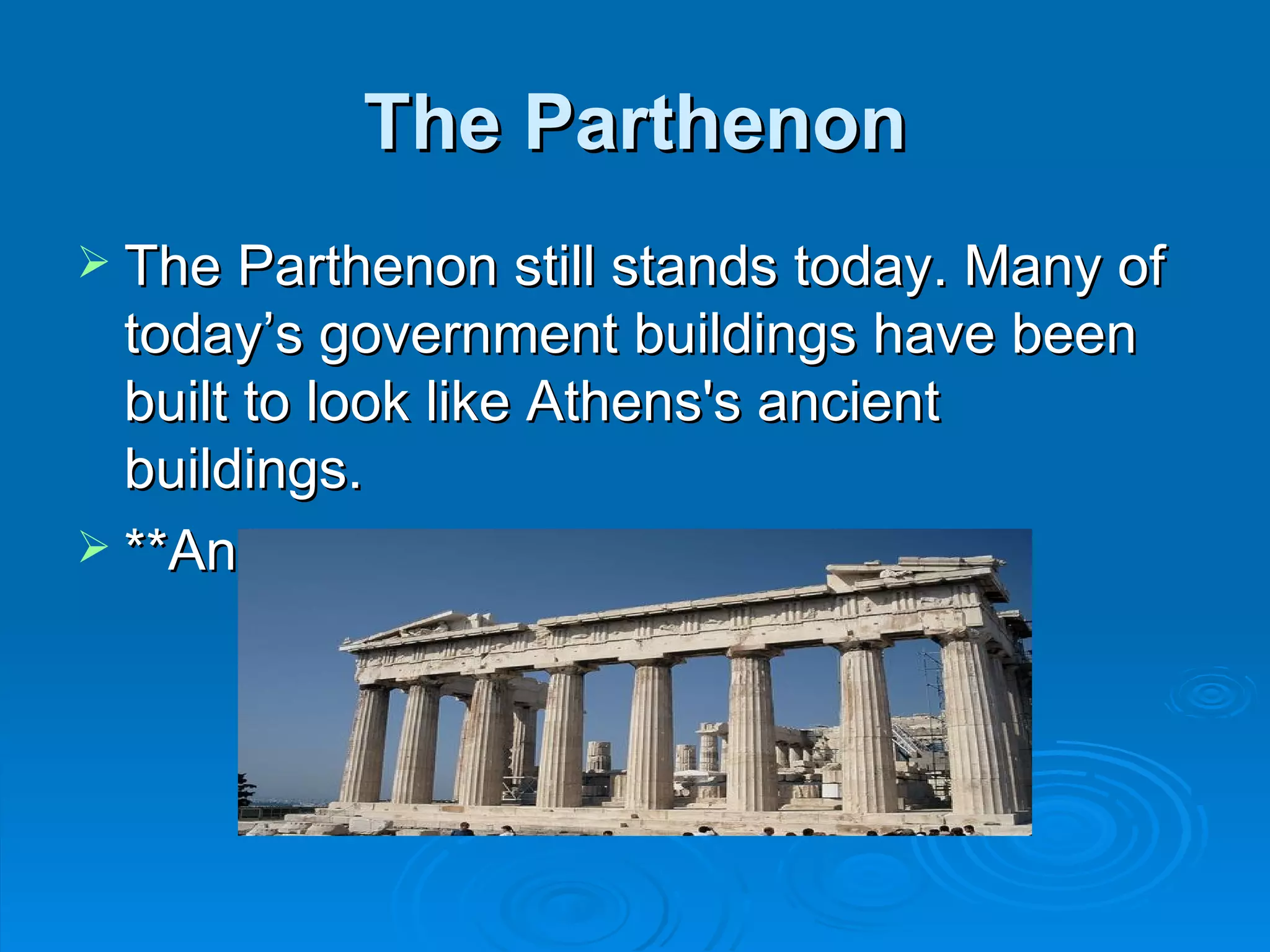
The Parthenon
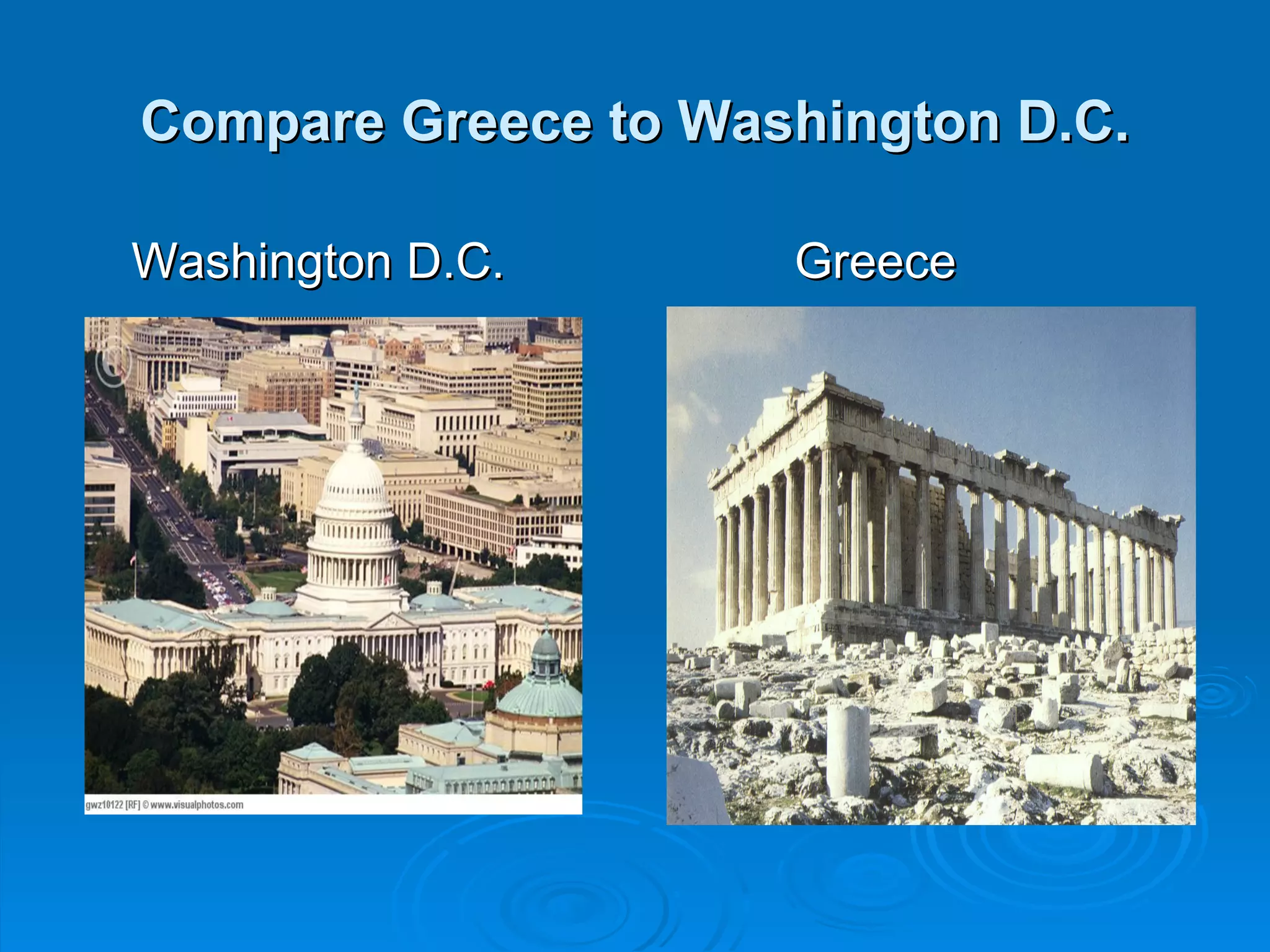
 The Parthenon still stands today. Many of
  today’s government buildings have been
  built to look like Athens's ancient
  buildings.
 **Ancient means old.
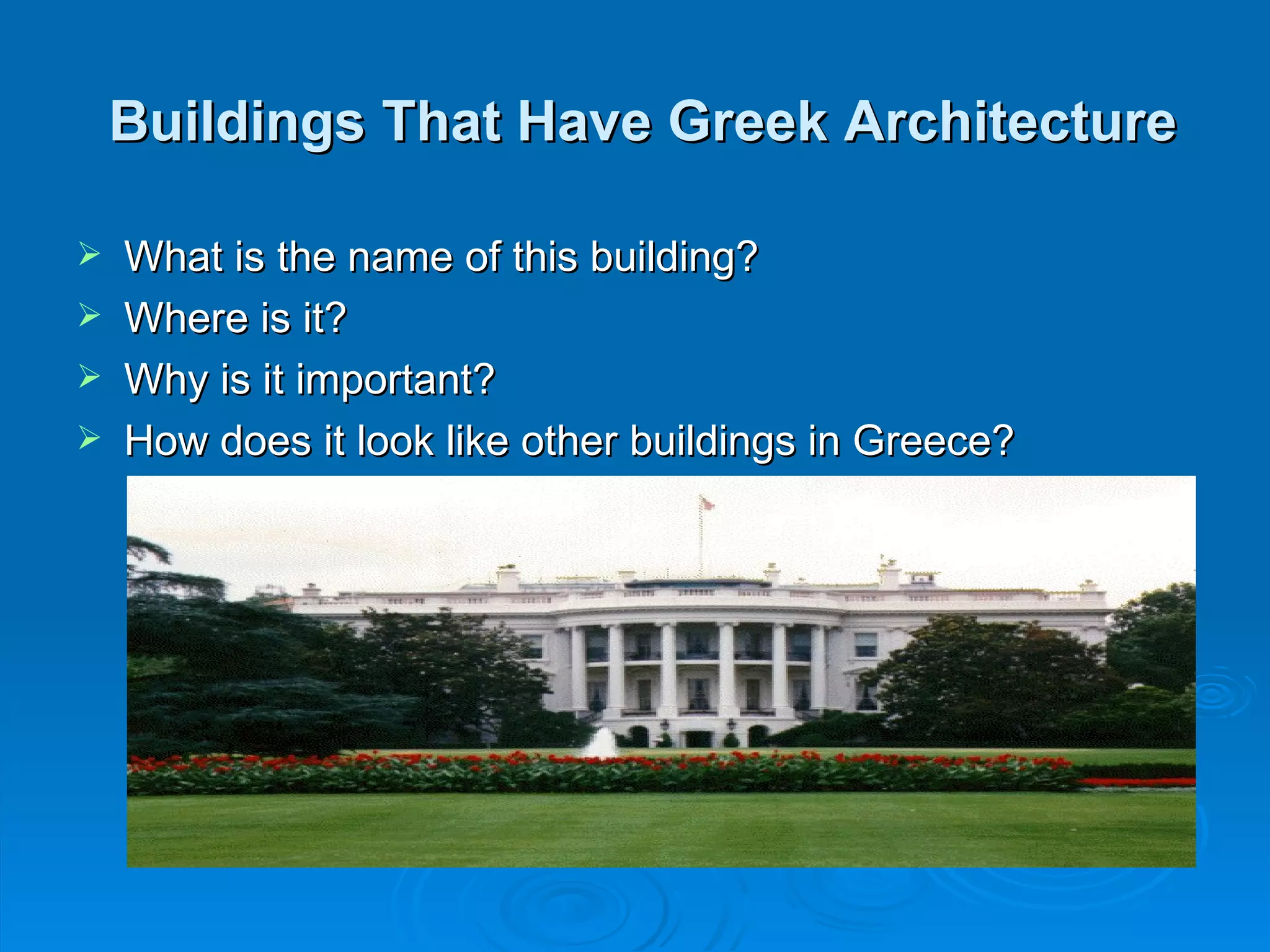
Buildings That Have Greek Architecture

   What is the name of this building?
   Where is it?
   Why is it important?
   How does it look like other buildings in Greece?
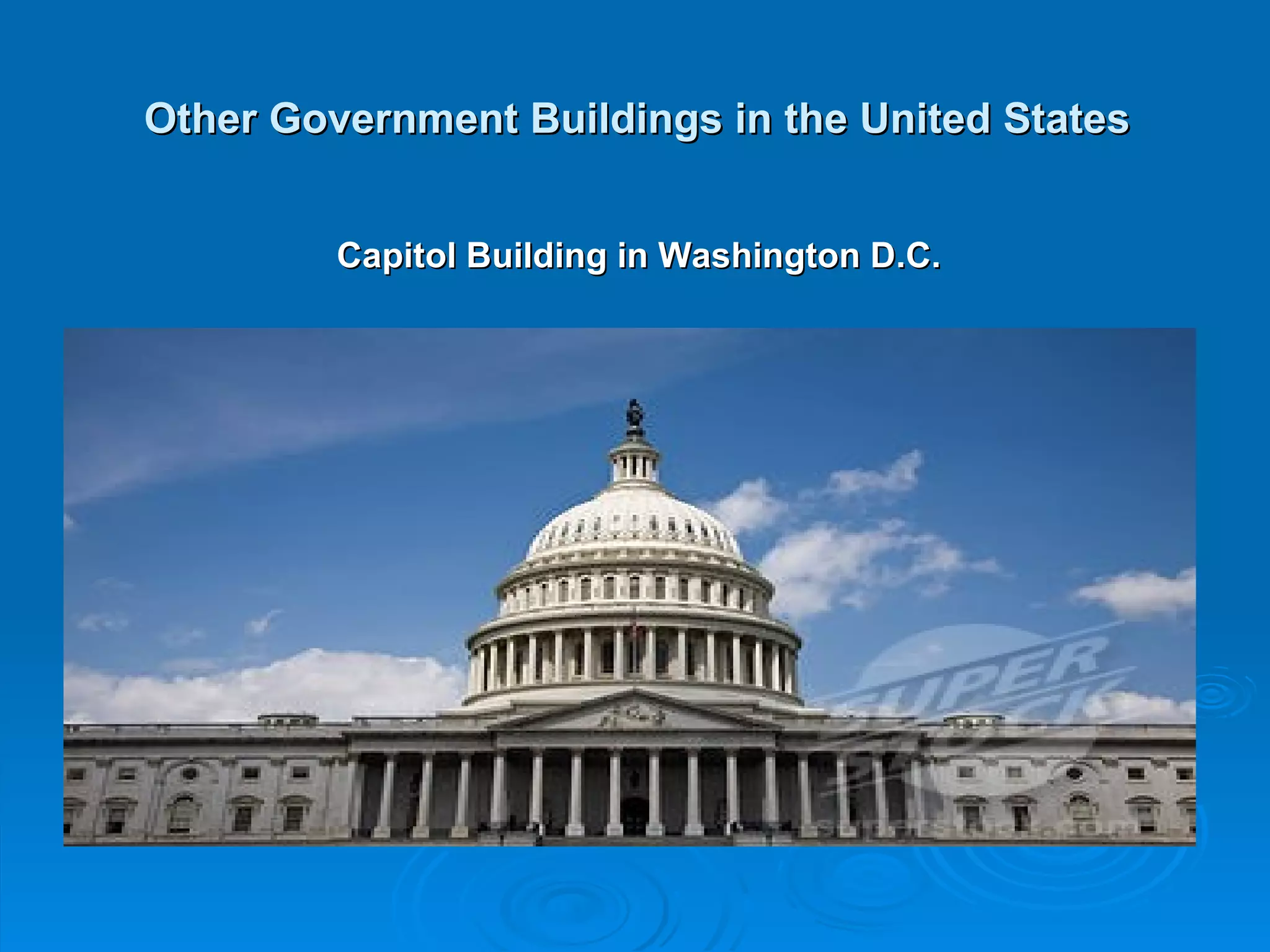
Other Government Buildings in the United States


         Capitol Building in Washington D.C.
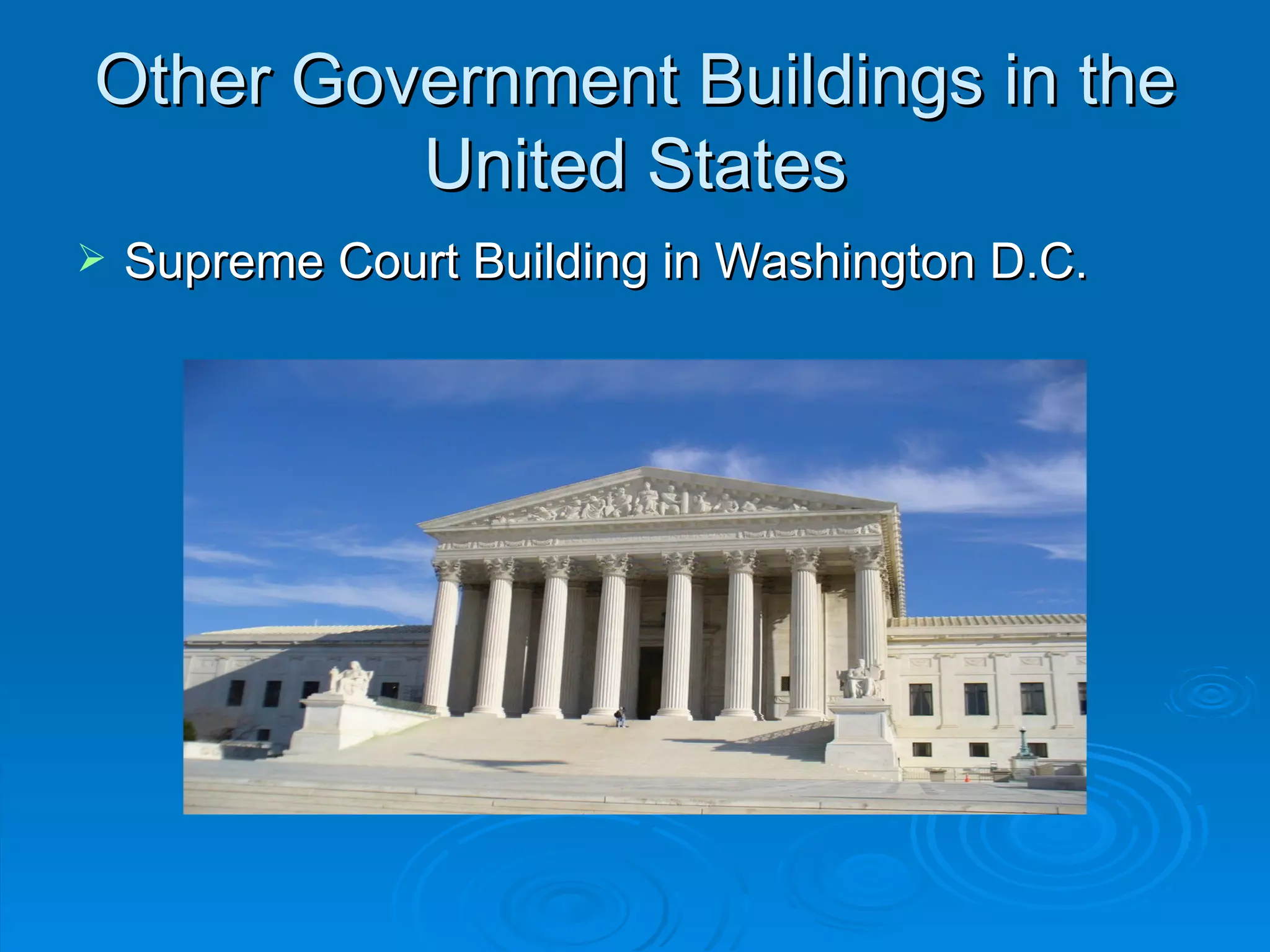
Other Government Buildings in the
         United States
   Supreme Court Building in Washington D.C.
Compare Greece to Washington D.C.

Washington D.C.      Greece
Citizens Decide
   Our country is a democracy. In democracies,
    citizens decide what the government will do. A
    citizen makes decisions about local, state, and
    national governments.
   In some communities, citizens go to a town
    meeting to make decisions. They take turns
    speaking. They listen to each other’s ideas.
    Then they vote on what to do.
Example
 I would like three students to volunteer.
 I would like each student to think about
 what we should for indoor recess if it rains.

 These three students will present their
  idea to the class.
 After we have heard all three options. We
  will take a vote!
 The majority wins!
Electing Representatives
   In other communities citizens choose people to
    represent , or speak for them. Citizens do this by voting
    in elections. An election is the process by which citizens
    vote for people to represent them.
   Before elections, citizens ask questions. How might a
    leader improve our local services? Would a leader spend
    more money on schools? People try to learn all they can
    before they vote.
   Then the election is held. Citizens vote. The votes are
    counted. The person with the most votes wins the
    election. He or she represents the people of that town or
    city in local government.
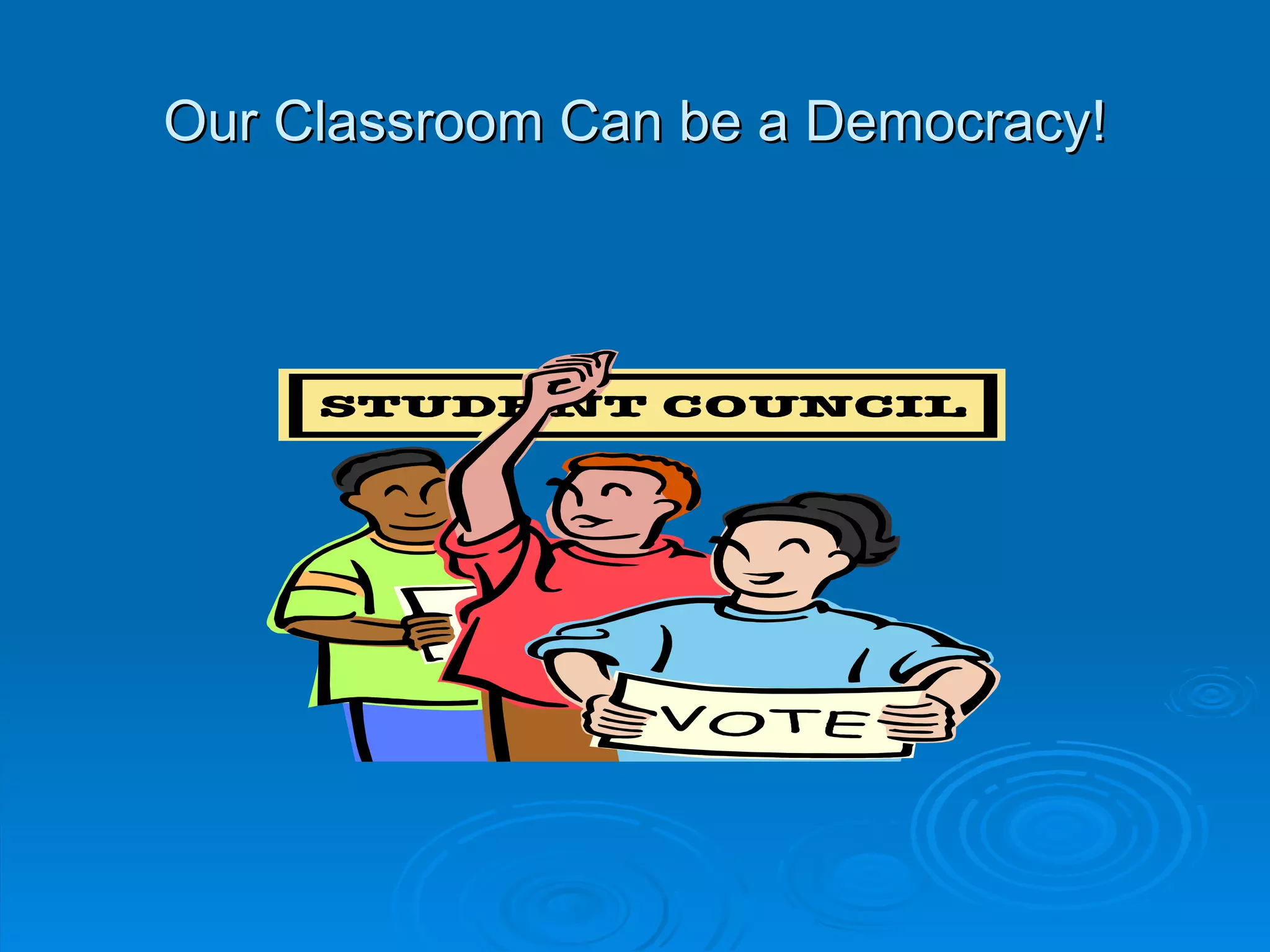
Our Classroom Can be a Democracy!
How to Vote
 Register
 Learn more about who is running for office
  and what the important issues are. Watch
  debates on television. Read newspaper
  articles and talk to neighbors about the
  election.
 Vote - go to the right voting location. Mark
  your on a ballot and make sure you didn’t
  make a mistake. Then turn in your vote.
Build a lego model that represents
            democracy
 Government by the people
 Greek architecture
 Ancient Greece
 Government buildings
 The Declaration of Independence
 Constitution
 Levels of government
 Branches of government
References
   Wikipedia: Parthenon, http://en.wikipedia.org/wiki/Parthenon 10 May 2012 (Retrieved 11 May 2012)
                                                                              Retrieved

   Wikipedia: Parthenon, http://en.wikipedia.org/wiki/White_House 9 May 2012 (Retrieved 11 May 2012)
                                                                               Retrieved


   Wikipedia: United States Capitol, http://en.wikipedia.org/wiki/United_States_Capitol 10 May 2012 (Retrieved 11 May
                                                                                                      Retrieved
    2012)

   Wikipedia: Supreme Court of the United States, http://en.wikipedia.org/wiki/Supreme_Court_of_the_United_States 6
    May 2012 (Retrieved 11 May 2012)
                Retrieved
   Clip Art Credit: Phillip Martin mrdonn.org - Ancient Greek Government, City-States, for Teachers
    http://greece.mrdonn.org/athensdemocracy.html

   Viola, Herman, and Carlos Cortes. Social Studies: Our Democracy Teachers Edition (Georgia. 1st. ed. 1. Boston,
    Massachusetts: Houghton-Mifflin, 2006. 47-59. Print.

   Blog. Maps of World http://blog.mapsofworld.com/tag/world-projection-maps/ 26, February 2010

What is democracy?

  • 1.
  • 2.
    Democracy  Every fourthof July, People across the United States celebrate freedom and democracy. You probably know what freedom means. But what is Democracy? It is a form of government in which people share power. The United States is a democracy.  Government by the people!
  • 3.
    The Beginning ofDemocracy  Democracy didn’t start in the United States. People in Athens, Greece had the idea. Greece is a country in Europe. Citizens in Athens were the first to take part in their Government.  Democracy started in Athens more than 2,500 years ago.  Citizens of ancient Athens chose community leaders and voted on laws.
  • 4.
    Where is Greece? Greece is in Europe
  • 5.
  • 6.
    Can You FindGreece on a Map of Europe?
  • 7.
    What Did GreeceLook Like?
  • 8.
    The Parthenon  TheParthenon still stands today. Many of today’s government buildings have been built to look like Athens's ancient buildings.  **Ancient means old.
  • 9.
    Buildings That HaveGreek Architecture  What is the name of this building?  Where is it?  Why is it important?  How does it look like other buildings in Greece?
  • 10.
    Other Government Buildingsin the United States Capitol Building in Washington D.C.
  • 11.
    Other Government Buildingsin the United States  Supreme Court Building in Washington D.C.
  • 12.
    Compare Greece toWashington D.C. Washington D.C. Greece
  • 13.
    Citizens Decide  Our country is a democracy. In democracies, citizens decide what the government will do. A citizen makes decisions about local, state, and national governments.  In some communities, citizens go to a town meeting to make decisions. They take turns speaking. They listen to each other’s ideas. Then they vote on what to do.
  • 14.
    Example  I wouldlike three students to volunteer.  I would like each student to think about what we should for indoor recess if it rains.  These three students will present their idea to the class.  After we have heard all three options. We will take a vote!  The majority wins!
  • 15.
    Electing Representatives  In other communities citizens choose people to represent , or speak for them. Citizens do this by voting in elections. An election is the process by which citizens vote for people to represent them.  Before elections, citizens ask questions. How might a leader improve our local services? Would a leader spend more money on schools? People try to learn all they can before they vote.  Then the election is held. Citizens vote. The votes are counted. The person with the most votes wins the election. He or she represents the people of that town or city in local government.
  • 16.
    Our Classroom Canbe a Democracy!
  • 17.
    How to Vote Register  Learn more about who is running for office and what the important issues are. Watch debates on television. Read newspaper articles and talk to neighbors about the election.  Vote - go to the right voting location. Mark your on a ballot and make sure you didn’t make a mistake. Then turn in your vote.
  • 18.
    Build a legomodel that represents democracy  Government by the people  Greek architecture  Ancient Greece  Government buildings  The Declaration of Independence  Constitution  Levels of government  Branches of government
  • 19.
    References  Wikipedia: Parthenon, http://en.wikipedia.org/wiki/Parthenon 10 May 2012 (Retrieved 11 May 2012) Retrieved  Wikipedia: Parthenon, http://en.wikipedia.org/wiki/White_House 9 May 2012 (Retrieved 11 May 2012) Retrieved  Wikipedia: United States Capitol, http://en.wikipedia.org/wiki/United_States_Capitol 10 May 2012 (Retrieved 11 May Retrieved 2012)  Wikipedia: Supreme Court of the United States, http://en.wikipedia.org/wiki/Supreme_Court_of_the_United_States 6 May 2012 (Retrieved 11 May 2012) Retrieved  Clip Art Credit: Phillip Martin mrdonn.org - Ancient Greek Government, City-States, for Teachers http://greece.mrdonn.org/athensdemocracy.html  Viola, Herman, and Carlos Cortes. Social Studies: Our Democracy Teachers Edition (Georgia. 1st. ed. 1. Boston, Massachusetts: Houghton-Mifflin, 2006. 47-59. Print.  Blog. Maps of World http://blog.mapsofworld.com/tag/world-projection-maps/ 26, February 2010