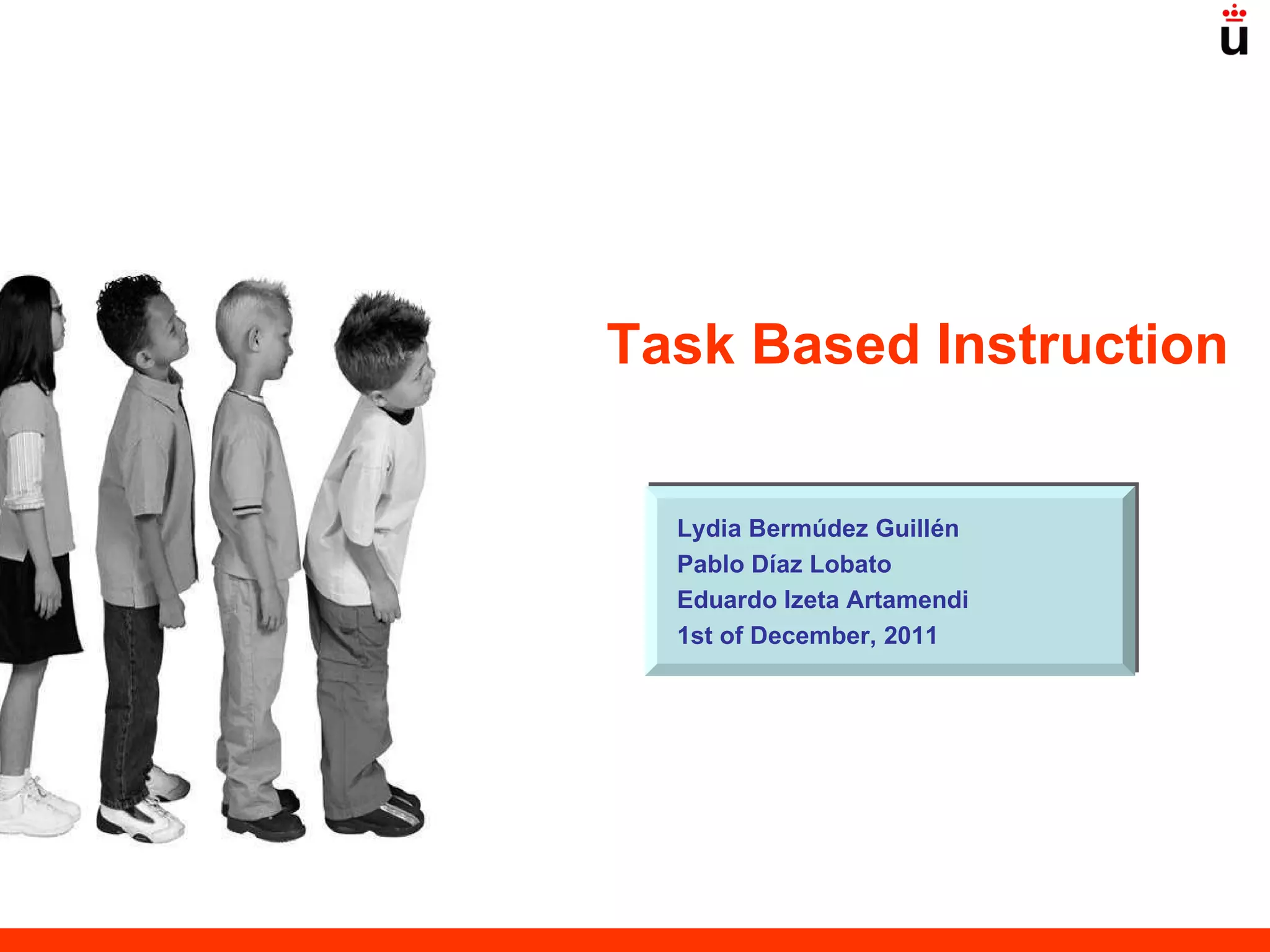
Task Based Instruction Lydia Bermúdez Guillén Pablo Díaz Lobato Eduardo Izeta Artamendi 1st of December, 2011
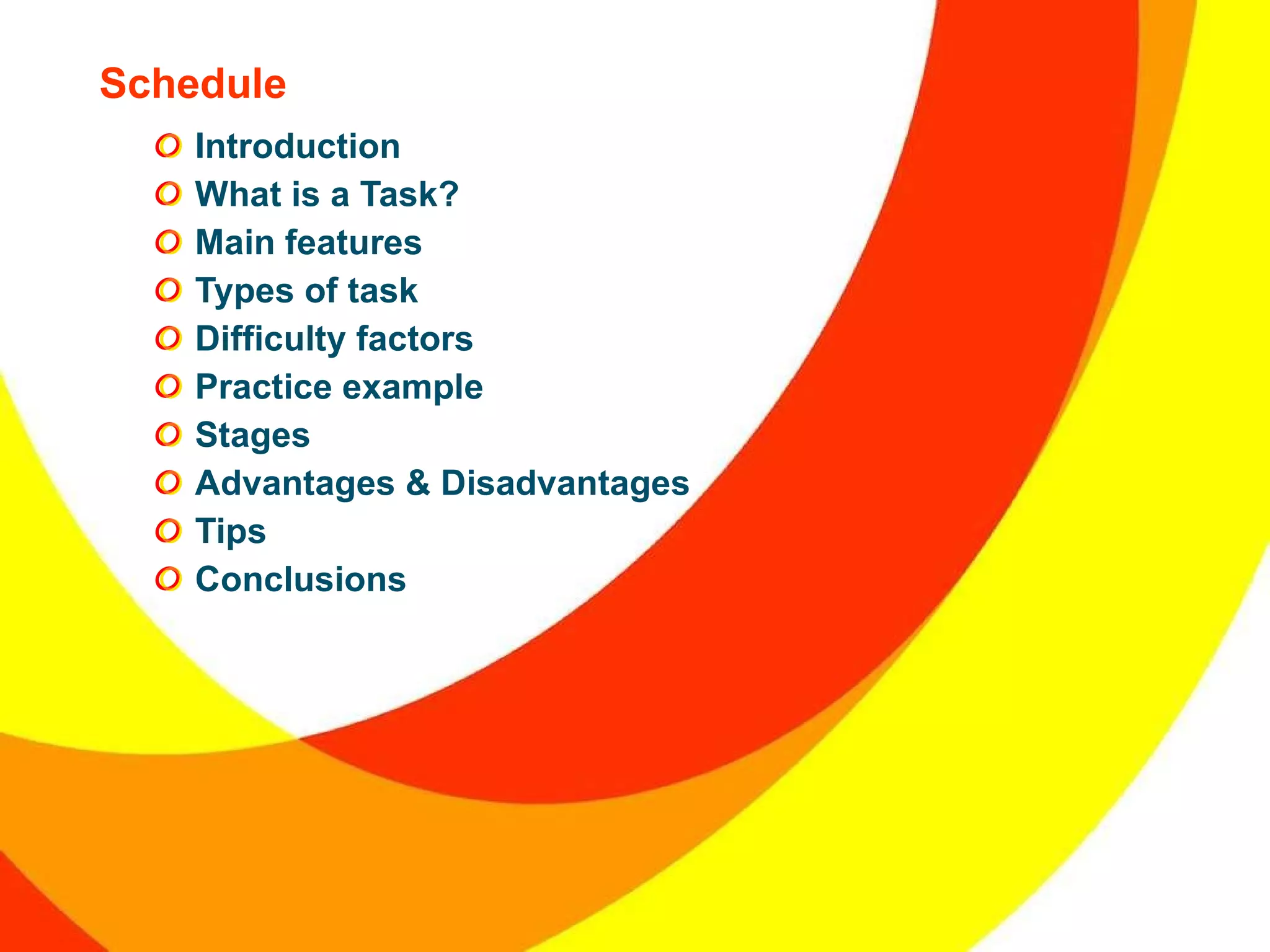
Introduction What is a Task? Main features Types of task Difficulty factors Practice example Stages Advantages & Disadvantages Tips  Conclusions  Schedule
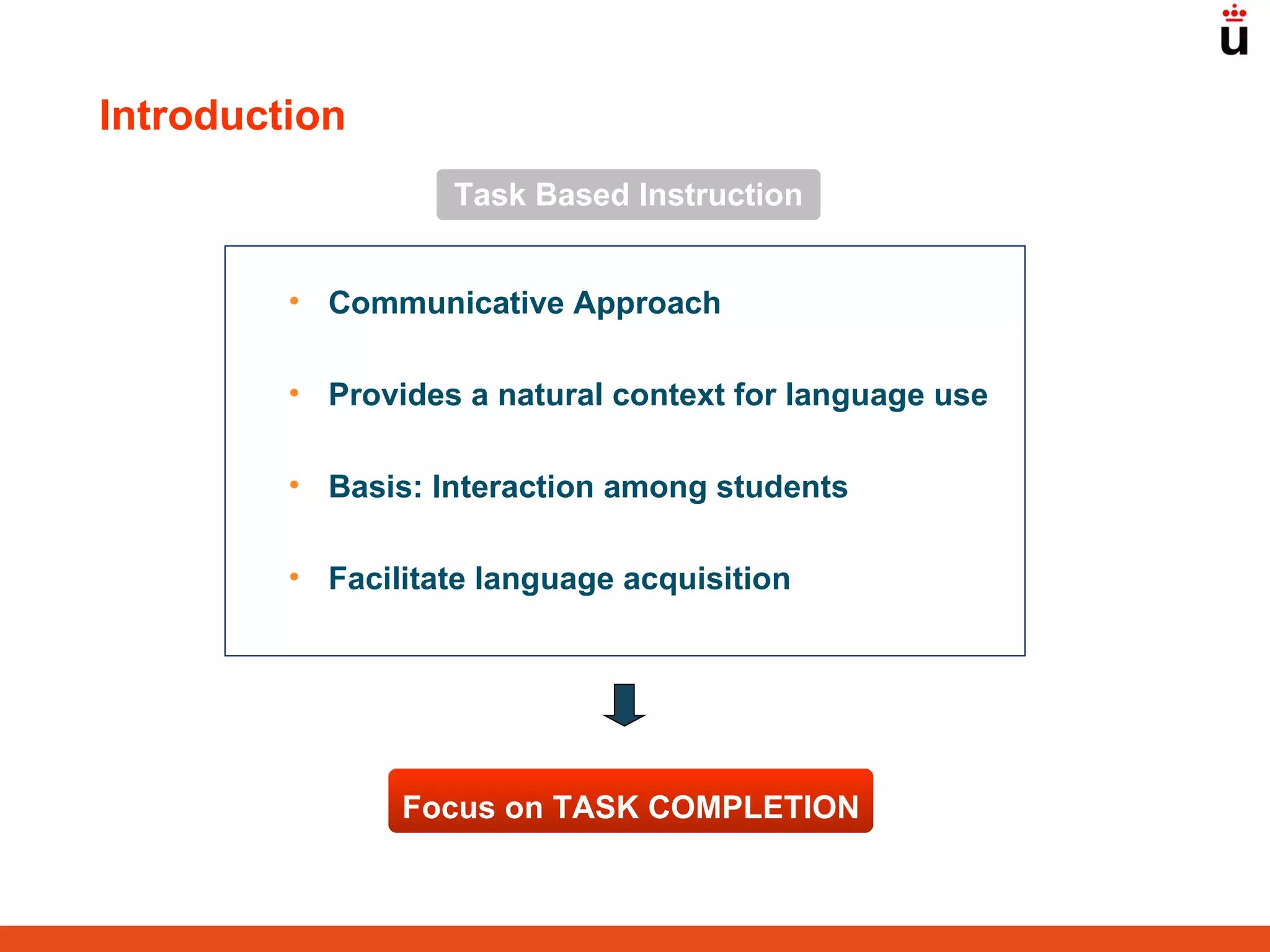
Task Based Instruction Communicative Approach  Provides a natural context for language use Basis: Interaction among students Facilitate language acquisition Introduction Focus on TASK COMPLETION
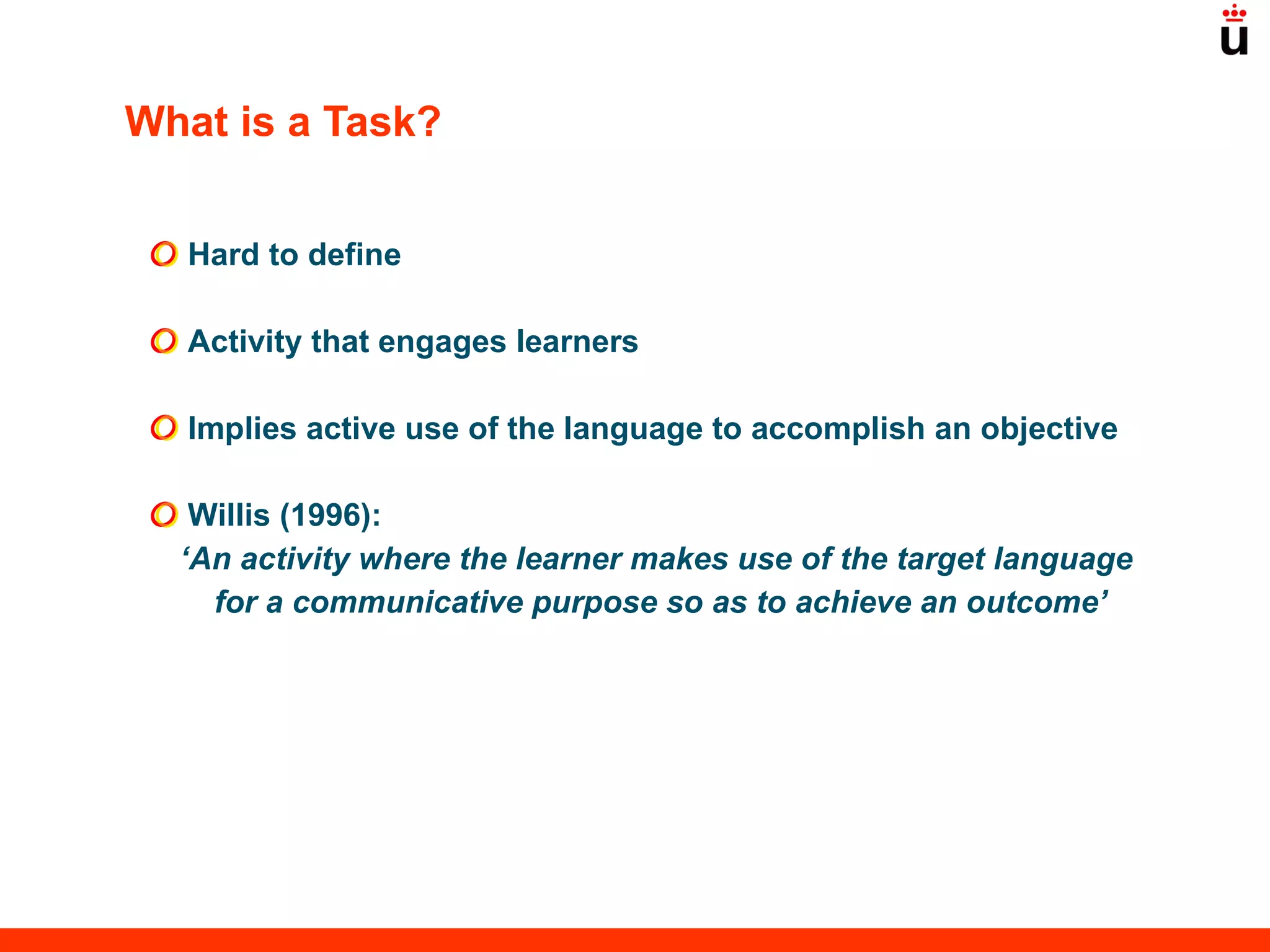
What is a Task? Hard to define Activity that engages learners Implies active use of the language to accomplish an objective Willis (1996):  ‘ An activity where the learner makes use of the target language for a communicative purpose so as to achieve an outcome’
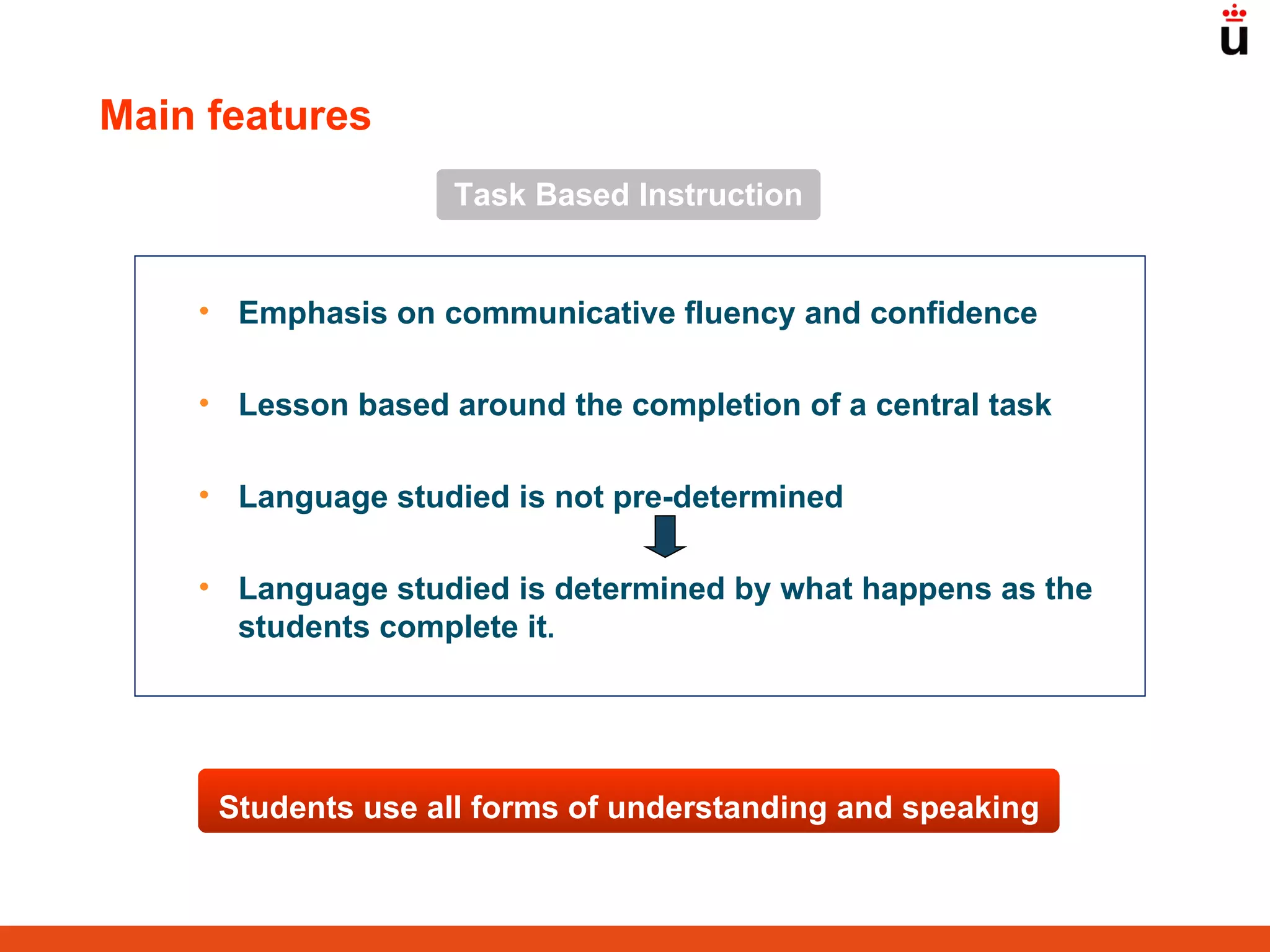
Task Based Instruction Emphasis on communicative fluency and confidence Lesson based around the completion of a central task Language studied is not pre-determined Language studied is determined by what happens as the students complete it .  Main features Students use all forms of understanding and speaking
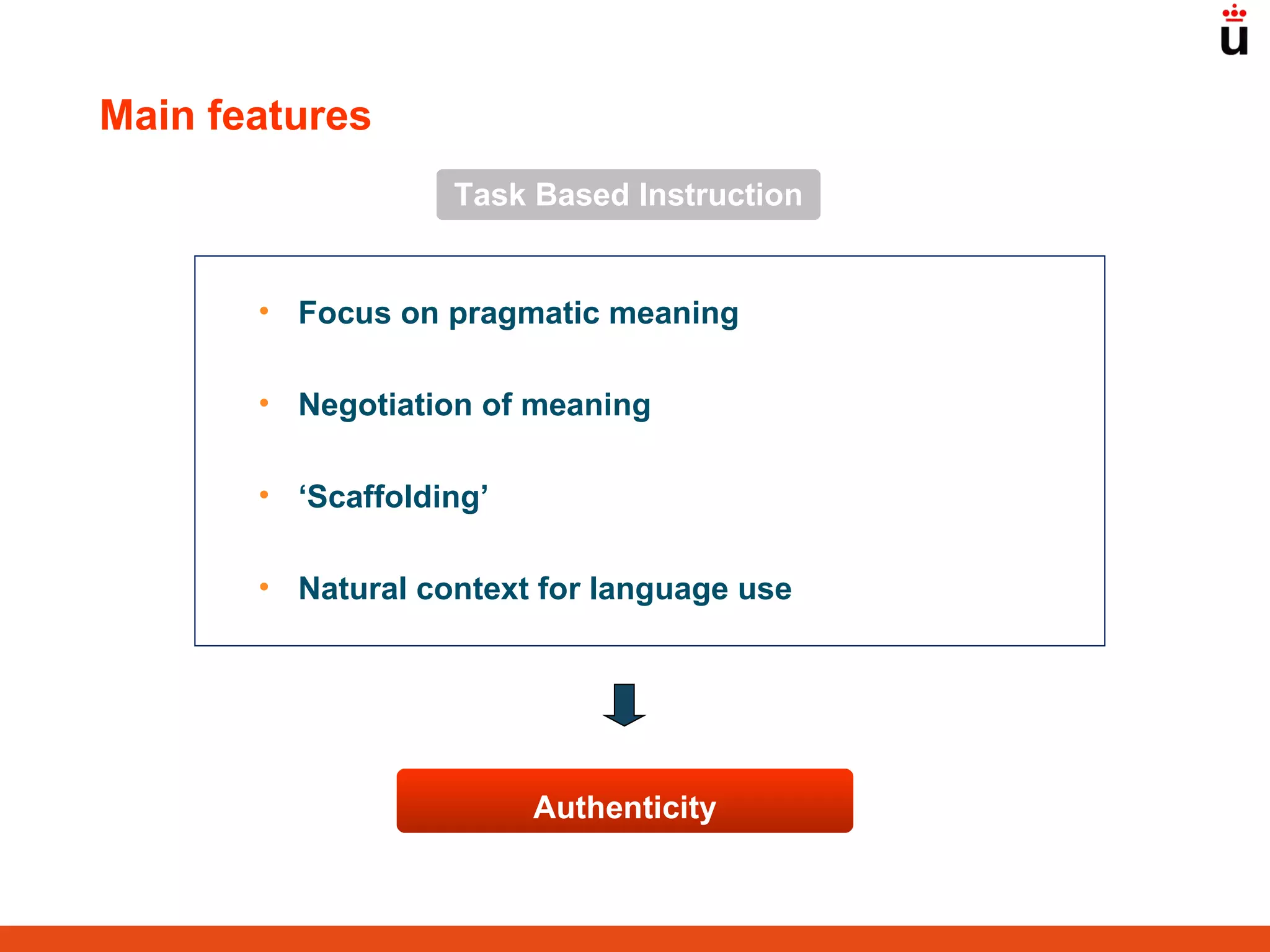
Task Based Instruction Focus on pragmatic meaning Negotiation of meaning ‘ Scaffolding’ Natural context for language use Main features Authenticity
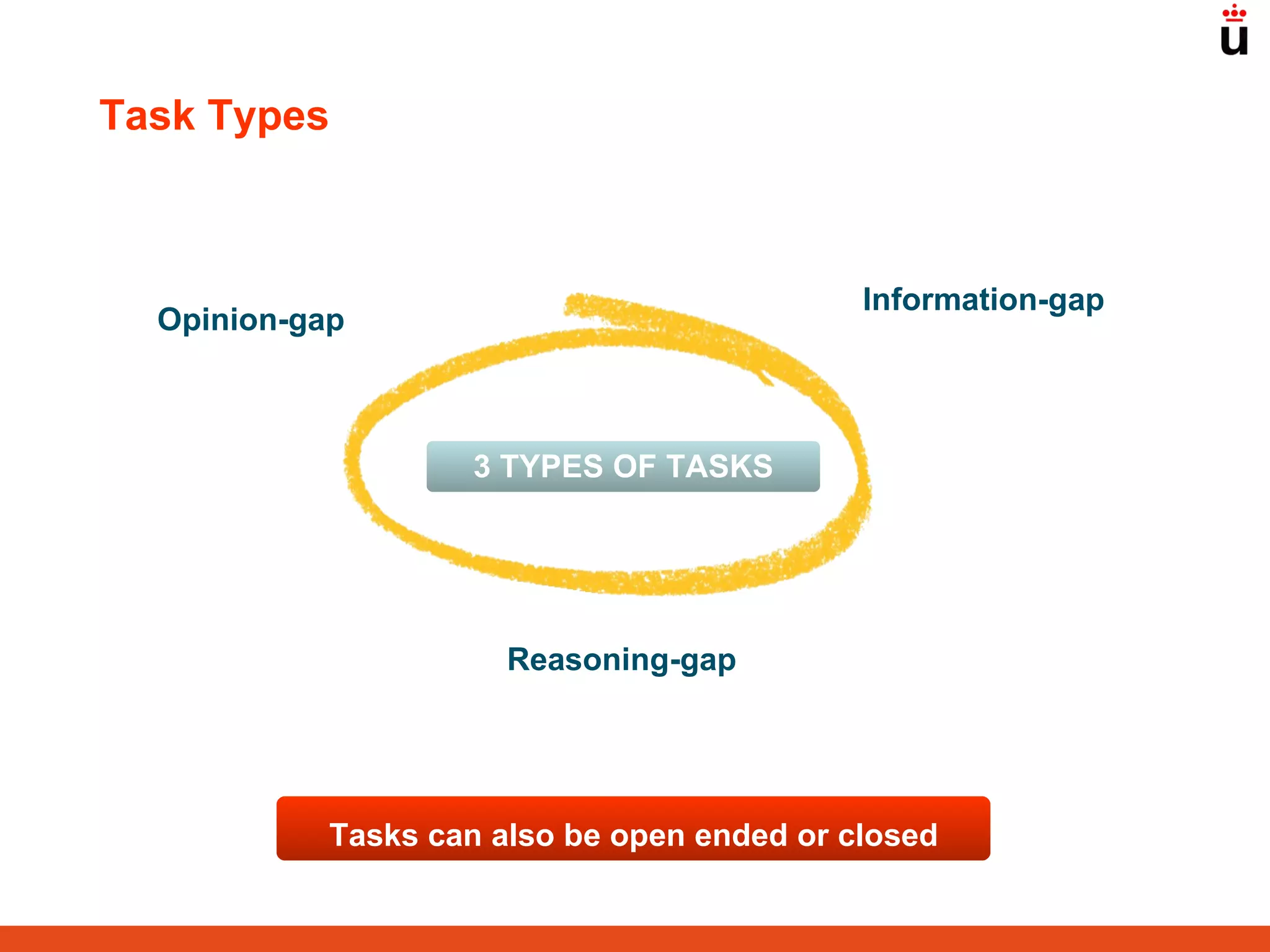
3 TYPES OF TASKS Information-gap Reasoning-gap Opinion-gap Tasks can also be open ended or closed Task Types
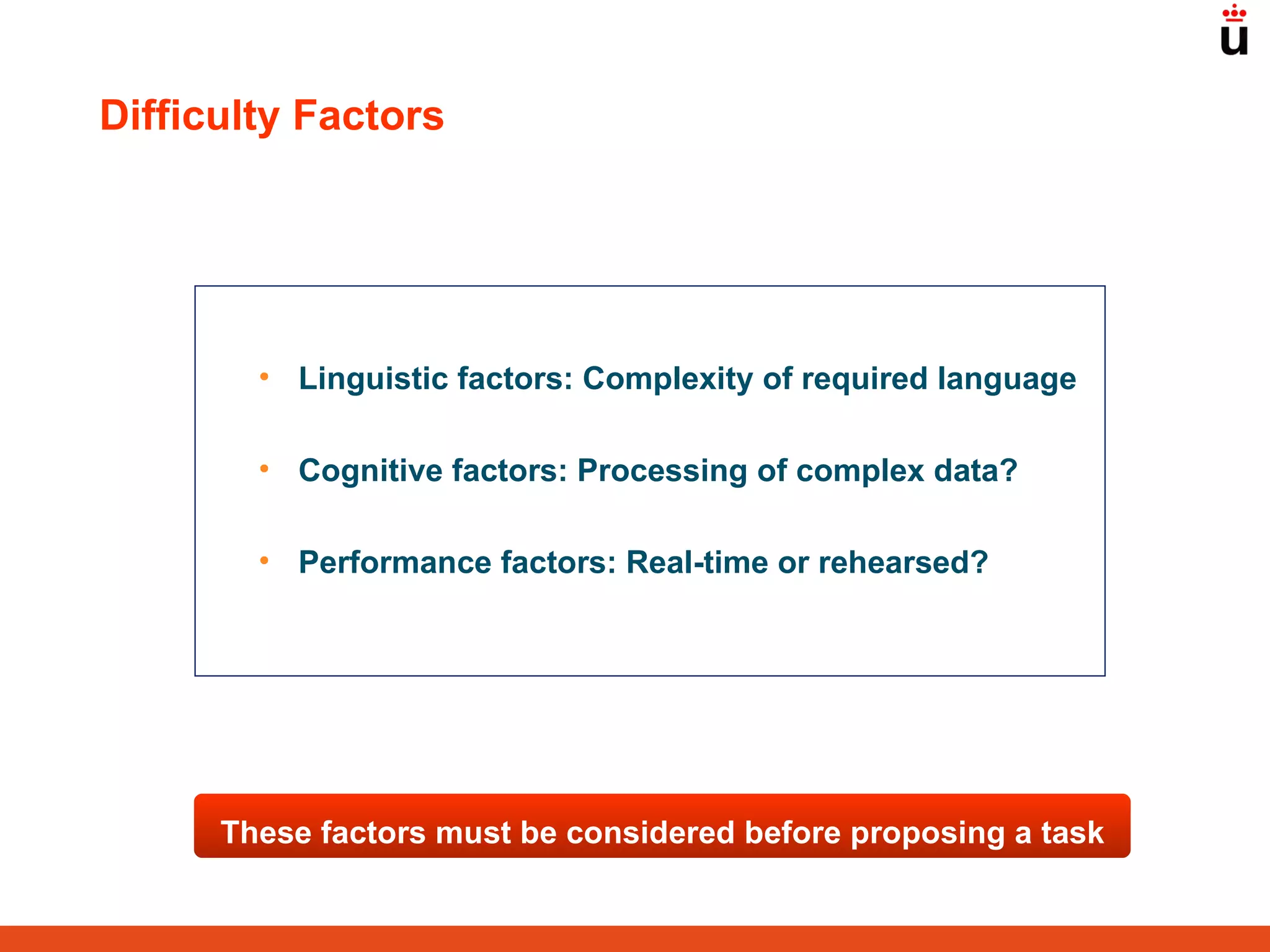
Linguistic factors: Complexity of required language Cognitive factors: Processing of complex data? Performance factors: Real-time or rehearsed? Difficulty Factors These factors must be considered before proposing a task
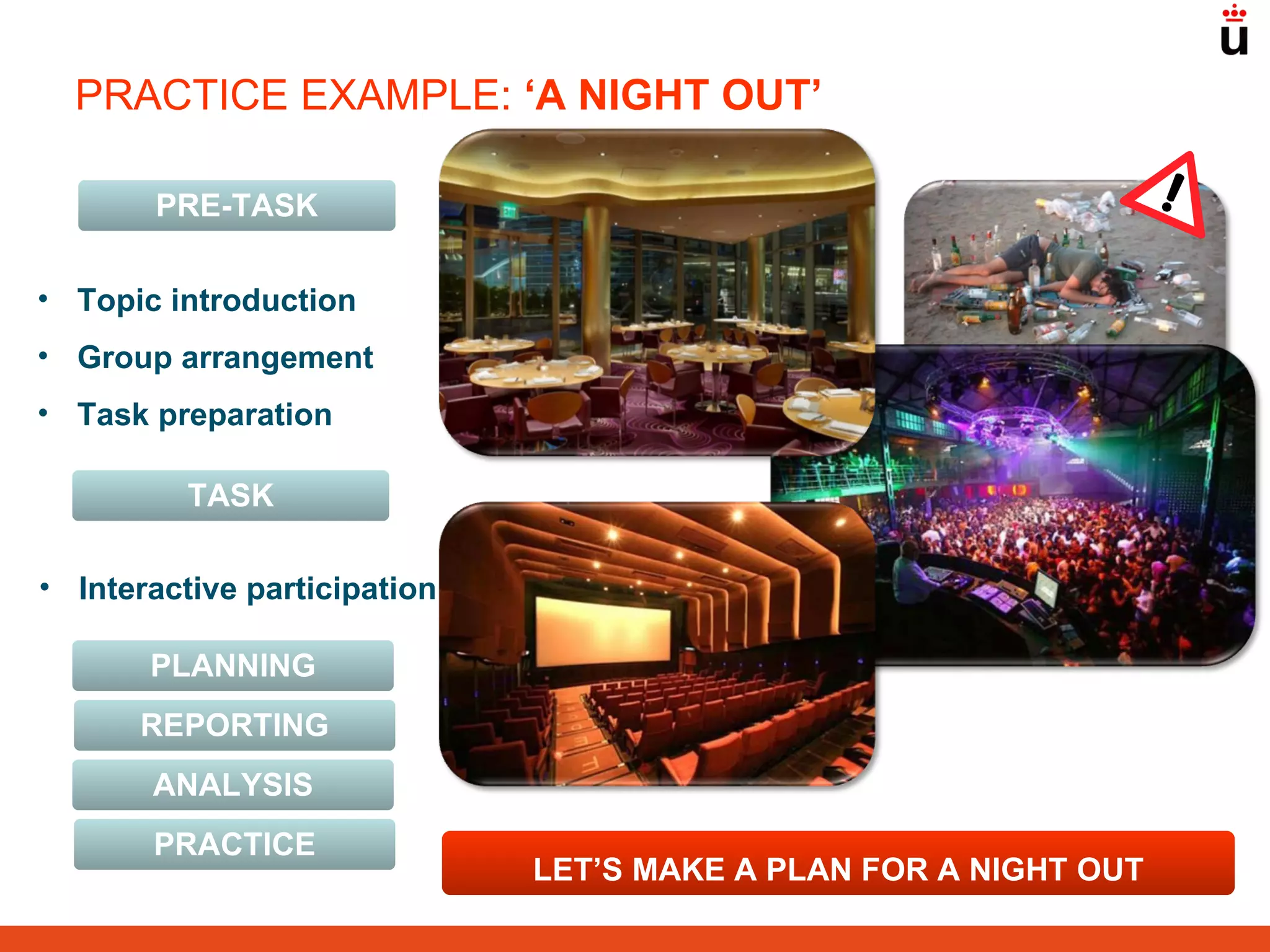
PRE-TASK Interactive participation LET’S MAKE A PLAN FOR A NIGHT OUT PRACTICE EXAMPLE:  ‘A NIGHT OUT’ TASK Topic introduction Group arrangement Task preparation PLANNING REPORTING ANALYSIS PRACTICE
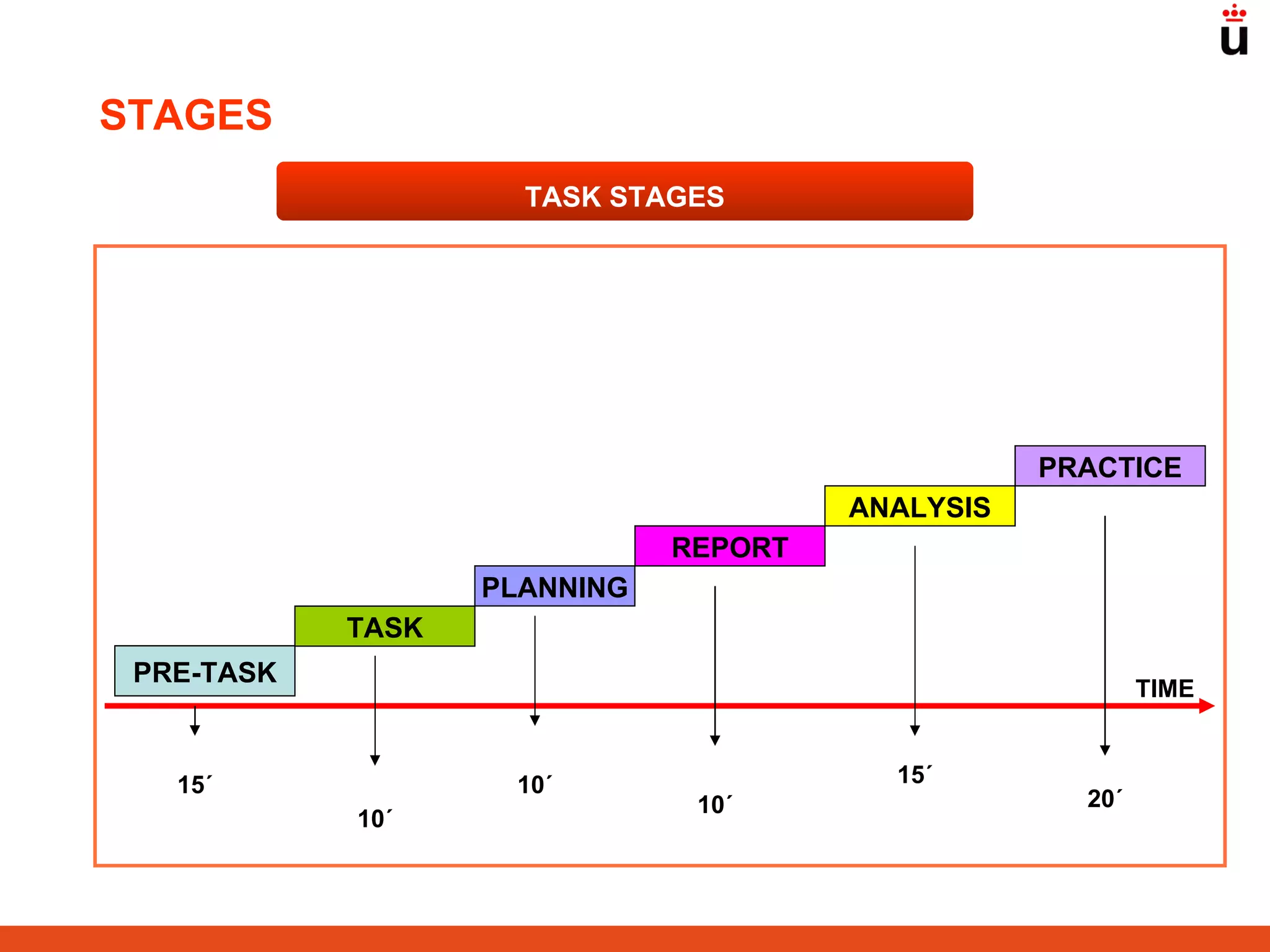
PRACTICE ANALYSIS REPORT PRE-TASK TASK PLANNING 15´ 10´ 15´ TIME TASK STAGES STAGES 10´ 20´ 10´
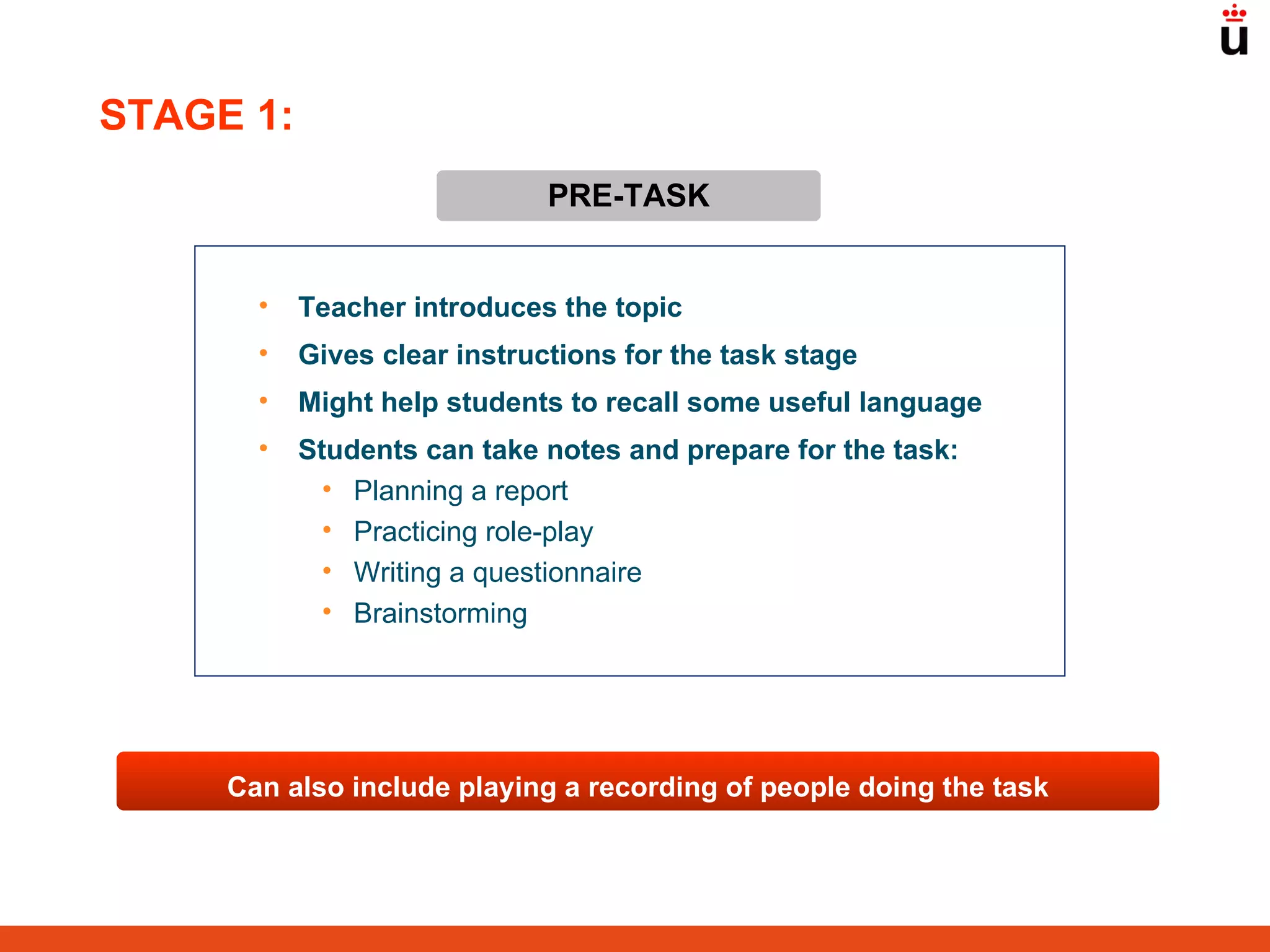
PRE-TASK Teacher introduces the topic  Gives clear instructions for the task stage Might help students to recall some useful language Students can take notes and prepare for the task: Planning a report Practicing role-play Writing a questionnaire Brainstorming Can also include playing a recording of people doing the task STAGE 1:
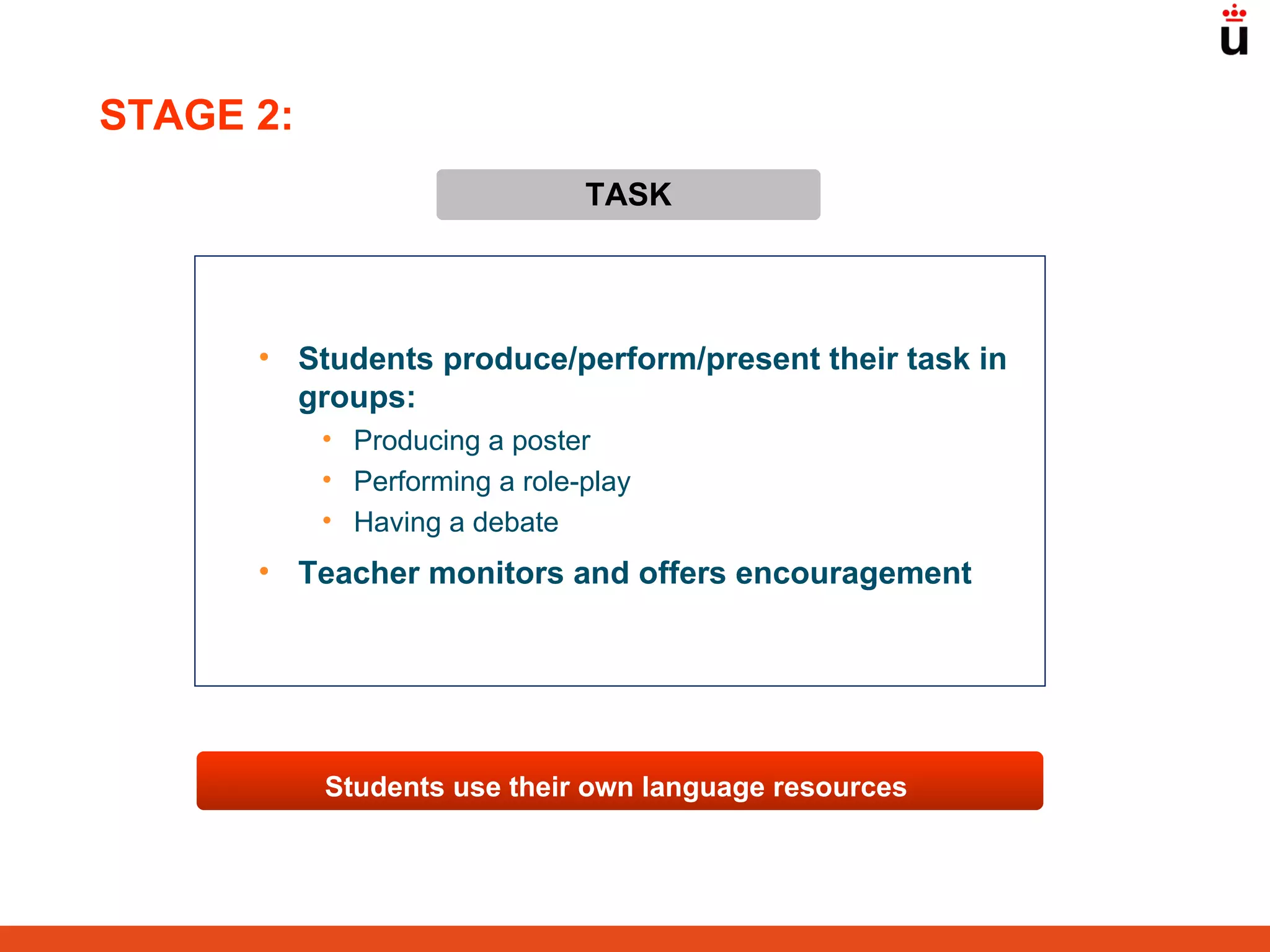
TASK Students produce/perform/present their task in groups: Producing a poster Performing a role-play Having a debate Teacher monitors and offers encouragement Students use their own language resources  STAGE 2:
PLANNING Students prepare a short oral or written report Students practice what they are going to say in their groups Teacher available for advice and clear up questions STAGE 3:
REPORT Students report back to the class orally or read the written report Teacher chooses order of presentation and gives some quick feedback May also play a recording of other people doing the same task STAGE 4:
ANALYSIS Reflection upon task realization: Was it useful? Was it enjoyable? Language reflection: Error correction Reflection by learners The teacher can also highlight the language used during the report phase for analysis STAGE 5:
PRACTICE Teacher selects language areas to practice based upon: Student needs Needs emerged from task reports Students do practice activities to increase their confidence. Students make a note of useful language STAGE 6:
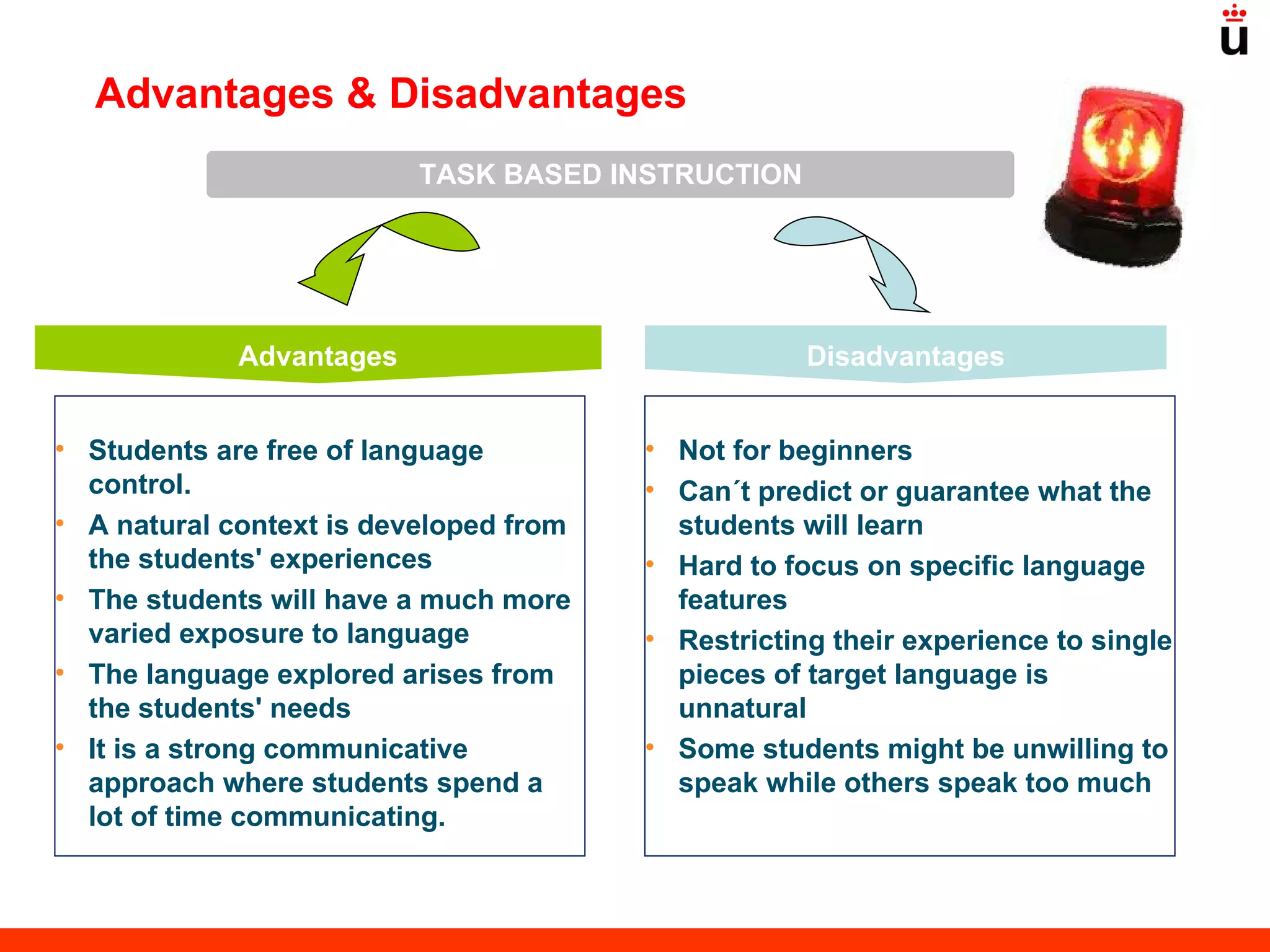
Advantages Disadvantages Advantages & Disadvantages TASK BASED INSTRUCTION Students are free of language control.  A natural context is developed from the students' experiences  The students will have a much more varied exposure to language  The language explored arises from the students' needs It is a strong communicative approach where students spend a lot of time communicating.  Not for beginners  Can´t predict or guarantee what the students will learn Hard to focus on specific language features Restricting their experience to single pieces of target language is unnatural Some students might be unwilling to speak while others speak too much
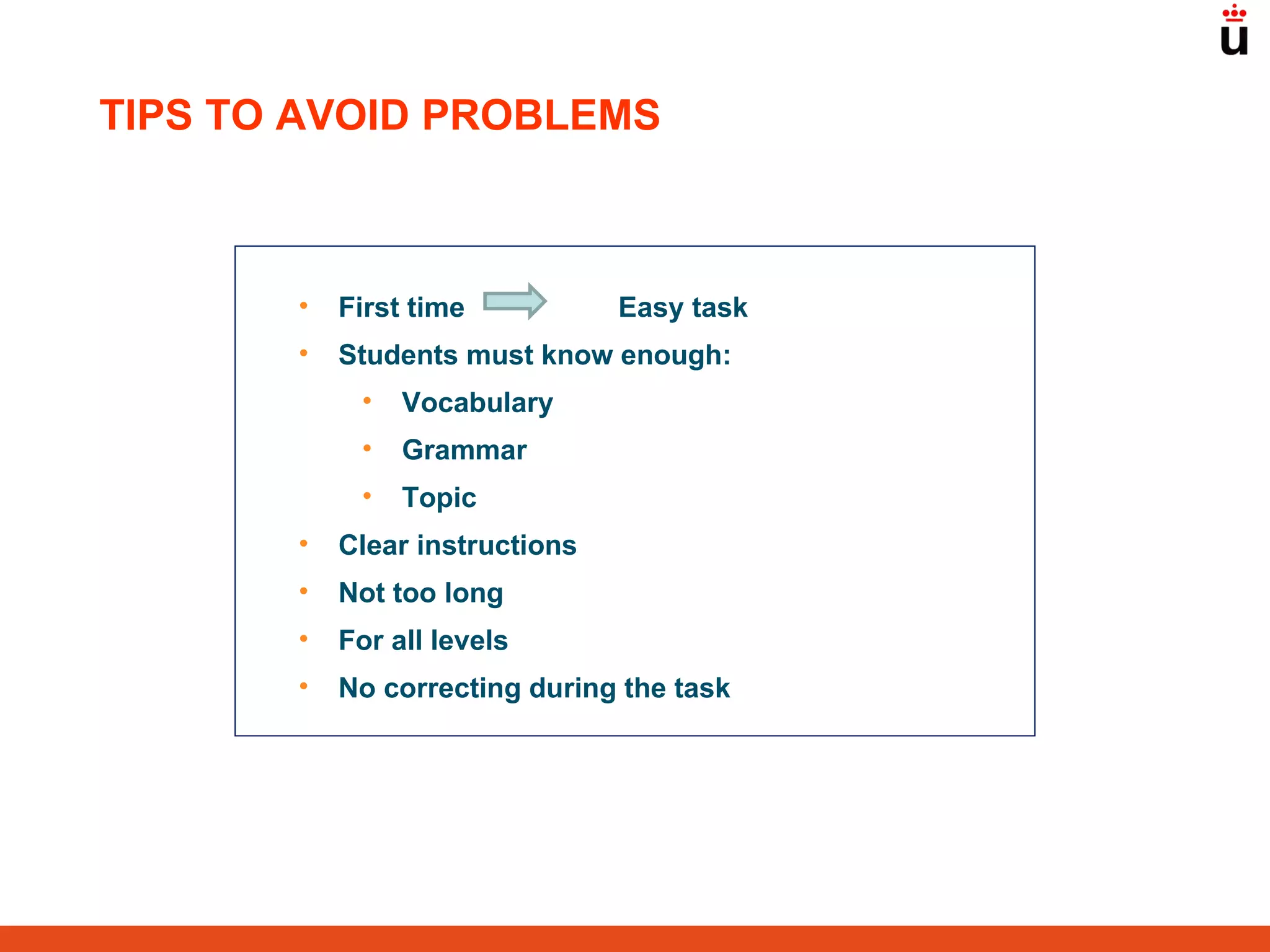
First time    Easy task Students must know enough: Vocabulary Grammar Topic Clear instructions Not too long For all levels No correcting during the task TIPS TO AVOID PROBLEMS
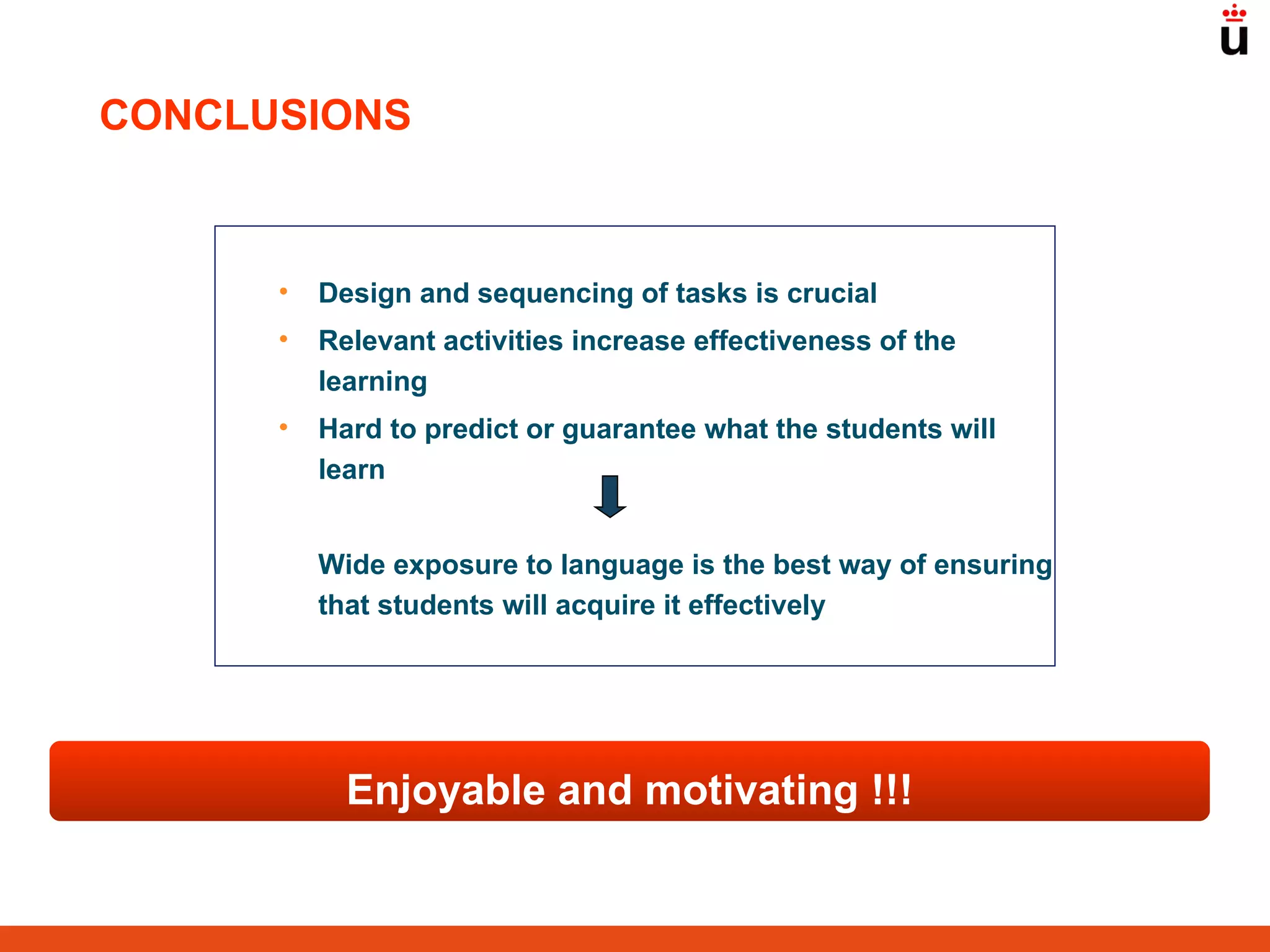
Design and sequencing of tasks is crucial Relevant activities increase effectiveness of the learning Hard to predict or guarantee what the students will learn Wide exposure to language is the best way of ensuring that students will acquire it effectively CONCLUSIONS Enjoyable and motivating !!!
QUESTIONS & FAREWELL  Thank you for your attention!

Task based learning v3

  • 1.
    Task Based InstructionLydia Bermúdez Guillén Pablo Díaz Lobato Eduardo Izeta Artamendi 1st of December, 2011
  • 2.
    Introduction What isa Task? Main features Types of task Difficulty factors Practice example Stages Advantages & Disadvantages Tips Conclusions Schedule
  • 3.
    Task Based InstructionCommunicative Approach Provides a natural context for language use Basis: Interaction among students Facilitate language acquisition Introduction Focus on TASK COMPLETION
  • 4.
    What is aTask? Hard to define Activity that engages learners Implies active use of the language to accomplish an objective Willis (1996): ‘ An activity where the learner makes use of the target language for a communicative purpose so as to achieve an outcome’
  • 5.
    Task Based InstructionEmphasis on communicative fluency and confidence Lesson based around the completion of a central task Language studied is not pre-determined Language studied is determined by what happens as the students complete it . Main features Students use all forms of understanding and speaking
  • 6.
    Task Based InstructionFocus on pragmatic meaning Negotiation of meaning ‘ Scaffolding’ Natural context for language use Main features Authenticity
  • 7.
    3 TYPES OFTASKS Information-gap Reasoning-gap Opinion-gap Tasks can also be open ended or closed Task Types
  • 8.
    Linguistic factors: Complexityof required language Cognitive factors: Processing of complex data? Performance factors: Real-time or rehearsed? Difficulty Factors These factors must be considered before proposing a task
  • 9.
    PRE-TASK Interactive participationLET’S MAKE A PLAN FOR A NIGHT OUT PRACTICE EXAMPLE: ‘A NIGHT OUT’ TASK Topic introduction Group arrangement Task preparation PLANNING REPORTING ANALYSIS PRACTICE
  • 10.
    PRACTICE ANALYSIS REPORTPRE-TASK TASK PLANNING 15´ 10´ 15´ TIME TASK STAGES STAGES 10´ 20´ 10´
  • 11.
    PRE-TASK Teacher introducesthe topic Gives clear instructions for the task stage Might help students to recall some useful language Students can take notes and prepare for the task: Planning a report Practicing role-play Writing a questionnaire Brainstorming Can also include playing a recording of people doing the task STAGE 1:
  • 12.
    TASK Students produce/perform/presenttheir task in groups: Producing a poster Performing a role-play Having a debate Teacher monitors and offers encouragement Students use their own language resources STAGE 2:
  • 13.
    PLANNING Students preparea short oral or written report Students practice what they are going to say in their groups Teacher available for advice and clear up questions STAGE 3:
  • 14.
    REPORT Students reportback to the class orally or read the written report Teacher chooses order of presentation and gives some quick feedback May also play a recording of other people doing the same task STAGE 4:
  • 15.
    ANALYSIS Reflection upontask realization: Was it useful? Was it enjoyable? Language reflection: Error correction Reflection by learners The teacher can also highlight the language used during the report phase for analysis STAGE 5:
  • 16.
    PRACTICE Teacher selectslanguage areas to practice based upon: Student needs Needs emerged from task reports Students do practice activities to increase their confidence. Students make a note of useful language STAGE 6:
  • 17.
    Advantages Disadvantages Advantages& Disadvantages TASK BASED INSTRUCTION Students are free of language control. A natural context is developed from the students' experiences The students will have a much more varied exposure to language The language explored arises from the students' needs It is a strong communicative approach where students spend a lot of time communicating. Not for beginners Can´t predict or guarantee what the students will learn Hard to focus on specific language features Restricting their experience to single pieces of target language is unnatural Some students might be unwilling to speak while others speak too much
  • 18.
    First time Easy task Students must know enough: Vocabulary Grammar Topic Clear instructions Not too long For all levels No correcting during the task TIPS TO AVOID PROBLEMS
  • 19.
    Design and sequencingof tasks is crucial Relevant activities increase effectiveness of the learning Hard to predict or guarantee what the students will learn Wide exposure to language is the best way of ensuring that students will acquire it effectively CONCLUSIONS Enjoyable and motivating !!!
  • 20.
    QUESTIONS & FAREWELL Thank you for your attention!

Editor's Notes

  • #7 Pragmatic meaning: meaning in context, as opposed to semantic meaning (more associated with exercises) Negotiation of meaning: process that speakers go through to reach a clear understanding of each other (Asking for clarification, rephrasing, and confirming) Scaffolding: Eckerth (2008): The dialogic process by which one speaker assists another in performing a function he or she cannot perform alone.
  • #8 Opinion-gap: unemployment solutions Information-gap: descriptions Reasoning-gap: best train route Open ended: debate or planning with no solution Closed: discover a solution to a problem