KULINTANG 
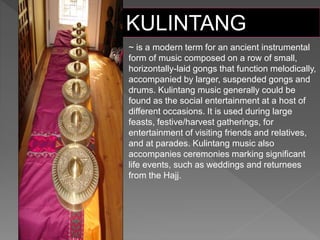
~ is a modern term for an ancient instrumental 
form of music composed on a row of small, 
horizontally-laid gongs that function melodically, 
accompanied by larger, suspended gongs and 
drums. Kulintang music generally could be 
found as the social entertainment at a host of 
different occasions. It is used during large 
feasts, festive/harvest gatherings, for 
entertainment of visiting friends and relatives, 
and at parades. Kulintang music also 
accompanies ceremonies marking significant 
life events, such as weddings and returnees 
from the Hajj.
DABAKAN 
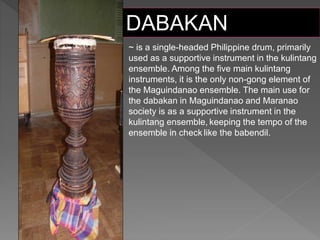
~ is a single-headed Philippine drum, primarily 
used as a supportive instrument in the kulintang 
ensemble. Among the five main kulintang 
instruments, it is the only non-gong element of 
the Maguindanao ensemble. The main use for 
the dabakan in Maguindanao and Maranao 
society is as a supportive instrument in the 
kulintang ensemble, keeping the tempo of the 
ensemble in check like the babendil.
GABBANG 
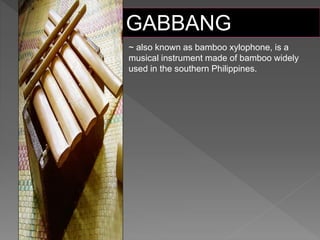
~ also known as bamboo xylophone, is a 
musical instrument made of bamboo widely 
used in the southern Philippines.
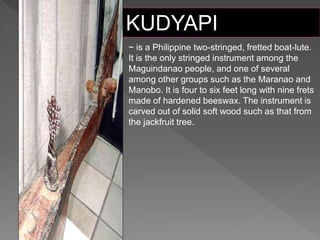
KUDYAPI 
~ is a Philippine two-stringed, fretted boat-lute. 
It is the only stringed instrument among the 
Maguindanao people, and one of several 
among other groups such as the Maranao and 
Manobo. It is four to six feet long with nine frets 
made of hardened beeswax. The instrument is 
carved out of solid soft wood such as that from 
the jackfruit tree.
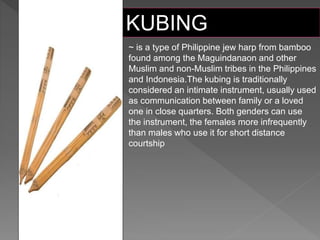
KUBING 
~ is a type of Philippine jew harp from bamboo 
found among the Maguindanaon and other 
Muslim and non-Muslim tribes in the Philippines 
and Indonesia.The kubing is traditionally 
considered an intimate instrument, usually used 
as communication between family or a loved 
one in close quarters. Both genders can use 
the instrument, the females more infrequently 
than males who use it for short distance 
courtship
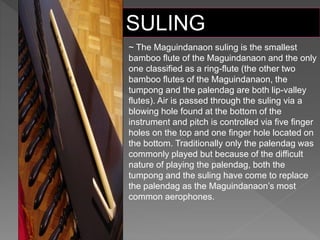
SULING 
~ The Maguindanaon suling is the smallest 
bamboo flute of the Maguindanaon and the only 
one classified as a ring-flute (the other two 
bamboo flutes of the Maguindanaon, the 
tumpong and the palendag are both lip-valley 
flutes). Air is passed through the suling via a 
blowing hole found at the bottom of the 
instrument and pitch is controlled via five finger 
holes on the top and one finger hole located on 
the bottom. Traditionally only the palendag was 
commonly played but because of the difficult 
nature of playing the palendag, both the 
tumpong and the suling have come to replace 
the palendag as the Maguindanaon’s most 
common aerophones.
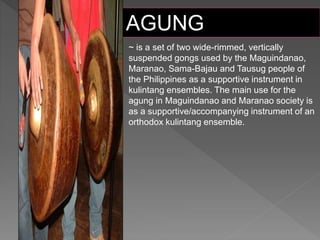
AGUNG 
~ is a set of two wide-rimmed, vertically 
suspended gongs used by the Maguindanao, 
Maranao, Sama-Bajau and Tausug people of 
the Philippines as a supportive instrument in 
kulintang ensembles. The main use for the 
agung in Maguindanao and Maranao society is 
as a supportive/accompanying instrument of an 
orthodox kulintang ensemble.

Muslim Mindanao Instruments

  • 3.
    KULINTANG ~ isa modern term for an ancient instrumental form of music composed on a row of small, horizontally-laid gongs that function melodically, accompanied by larger, suspended gongs and drums. Kulintang music generally could be found as the social entertainment at a host of different occasions. It is used during large feasts, festive/harvest gatherings, for entertainment of visiting friends and relatives, and at parades. Kulintang music also accompanies ceremonies marking significant life events, such as weddings and returnees from the Hajj.
  • 4.
    DABAKAN ~ isa single-headed Philippine drum, primarily used as a supportive instrument in the kulintang ensemble. Among the five main kulintang instruments, it is the only non-gong element of the Maguindanao ensemble. The main use for the dabakan in Maguindanao and Maranao society is as a supportive instrument in the kulintang ensemble, keeping the tempo of the ensemble in check like the babendil.
  • 5.
    GABBANG ~ alsoknown as bamboo xylophone, is a musical instrument made of bamboo widely used in the southern Philippines.
  • 6.
    KUDYAPI ~ isa Philippine two-stringed, fretted boat-lute. It is the only stringed instrument among the Maguindanao people, and one of several among other groups such as the Maranao and Manobo. It is four to six feet long with nine frets made of hardened beeswax. The instrument is carved out of solid soft wood such as that from the jackfruit tree.
  • 7.
    KUBING ~ isa type of Philippine jew harp from bamboo found among the Maguindanaon and other Muslim and non-Muslim tribes in the Philippines and Indonesia.The kubing is traditionally considered an intimate instrument, usually used as communication between family or a loved one in close quarters. Both genders can use the instrument, the females more infrequently than males who use it for short distance courtship
  • 8.
    SULING ~ TheMaguindanaon suling is the smallest bamboo flute of the Maguindanaon and the only one classified as a ring-flute (the other two bamboo flutes of the Maguindanaon, the tumpong and the palendag are both lip-valley flutes). Air is passed through the suling via a blowing hole found at the bottom of the instrument and pitch is controlled via five finger holes on the top and one finger hole located on the bottom. Traditionally only the palendag was commonly played but because of the difficult nature of playing the palendag, both the tumpong and the suling have come to replace the palendag as the Maguindanaon’s most common aerophones.
  • 9.
    AGUNG ~ isa set of two wide-rimmed, vertically suspended gongs used by the Maguindanao, Maranao, Sama-Bajau and Tausug people of the Philippines as a supportive instrument in kulintang ensembles. The main use for the agung in Maguindanao and Maranao society is as a supportive/accompanying instrument of an orthodox kulintang ensemble.