Learning About Pedigrees
2. A chart used to follow
                genetic traits in a family
              2. Can be used to determine
                who a trait is inherited from
              2. Can be used to determine if
                a trait is dominant,
1. Pedigree     recessive, X linked or some
                other mode of inheritance.
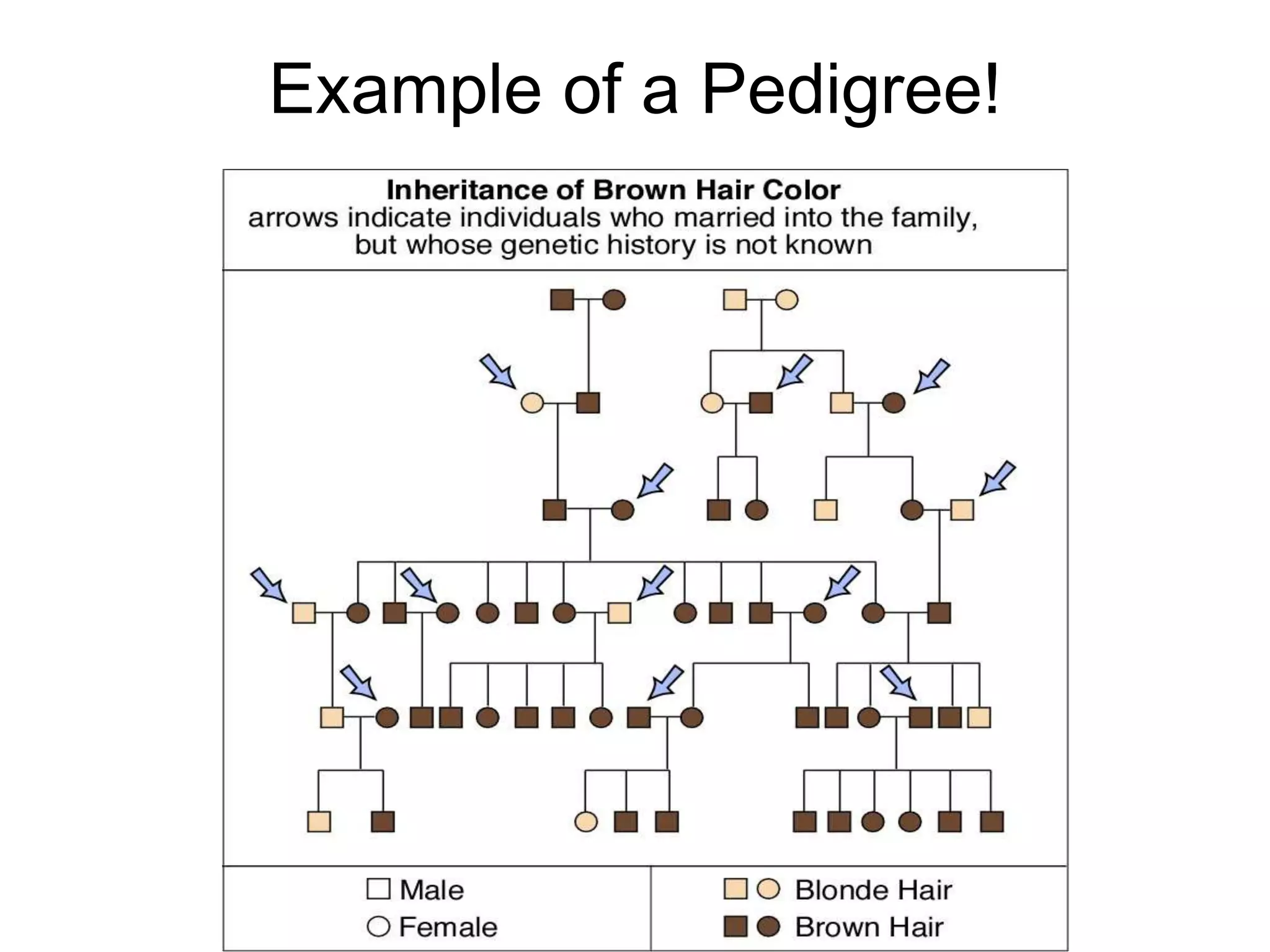
Example of a Pedigree!
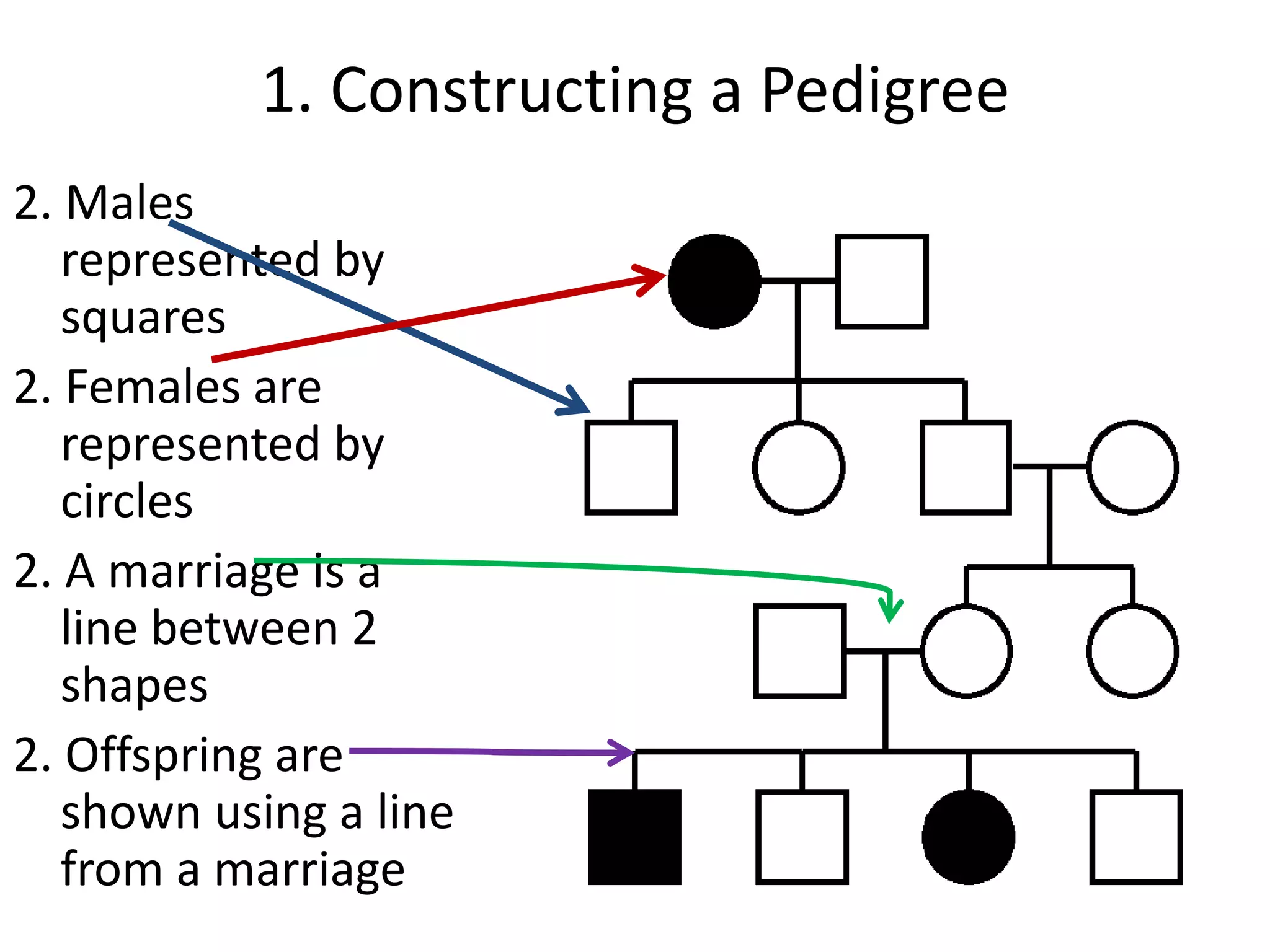
1. Constructing a Pedigree
2. Males
   represented by
   squares
2. Females are
   represented by
   circles
2. A marriage is a
   line between 2
   shapes
2. Offspring are
   shown using a line
   from a marriage
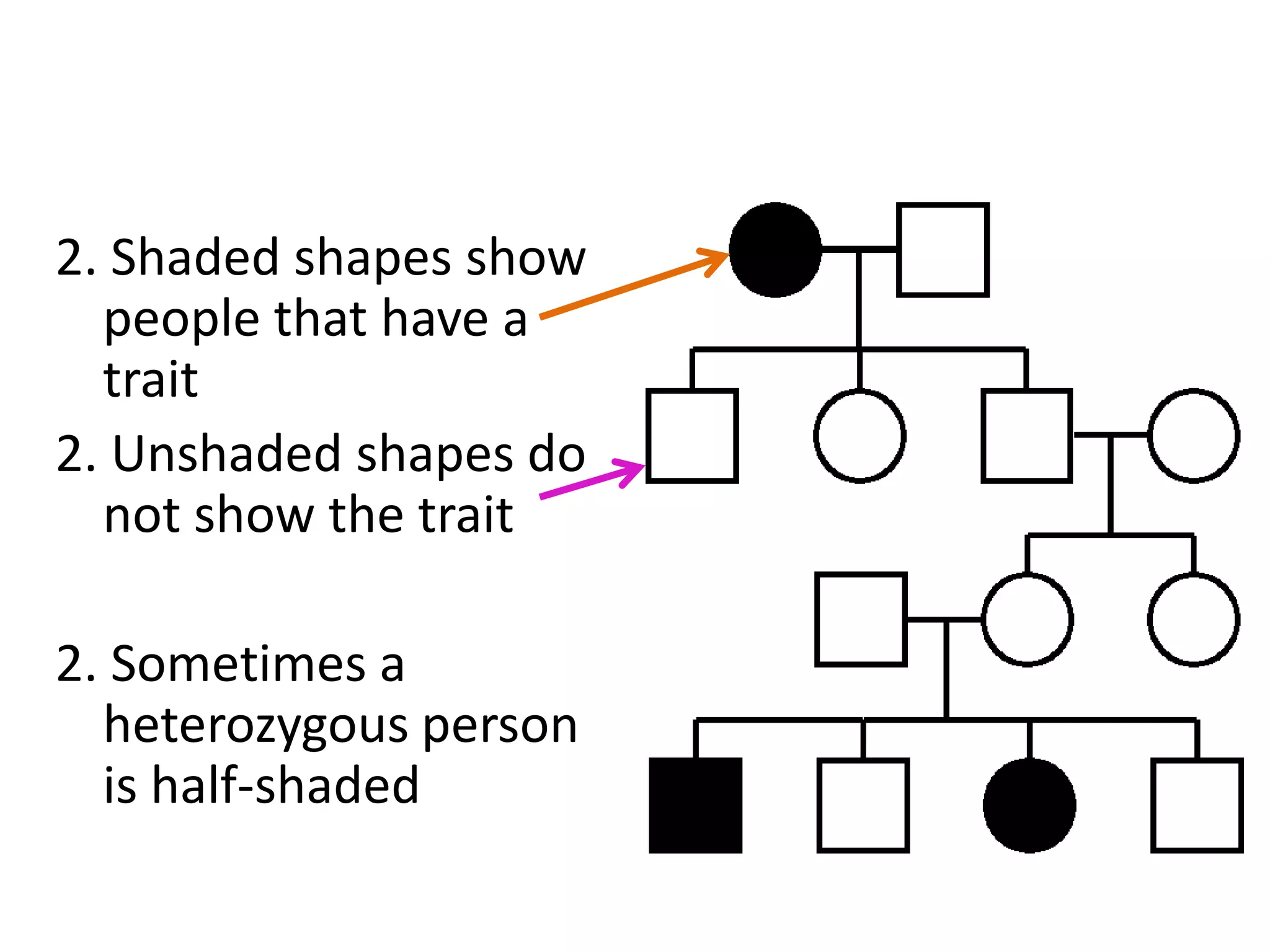
2. Shaded shapes show
  people that have a
  trait
2. Unshaded shapes do
  not show the trait

2. Sometimes a
  heterozygous person
  is half-shaded
Practice – Write the answers to these
         questions on a piece of paper.
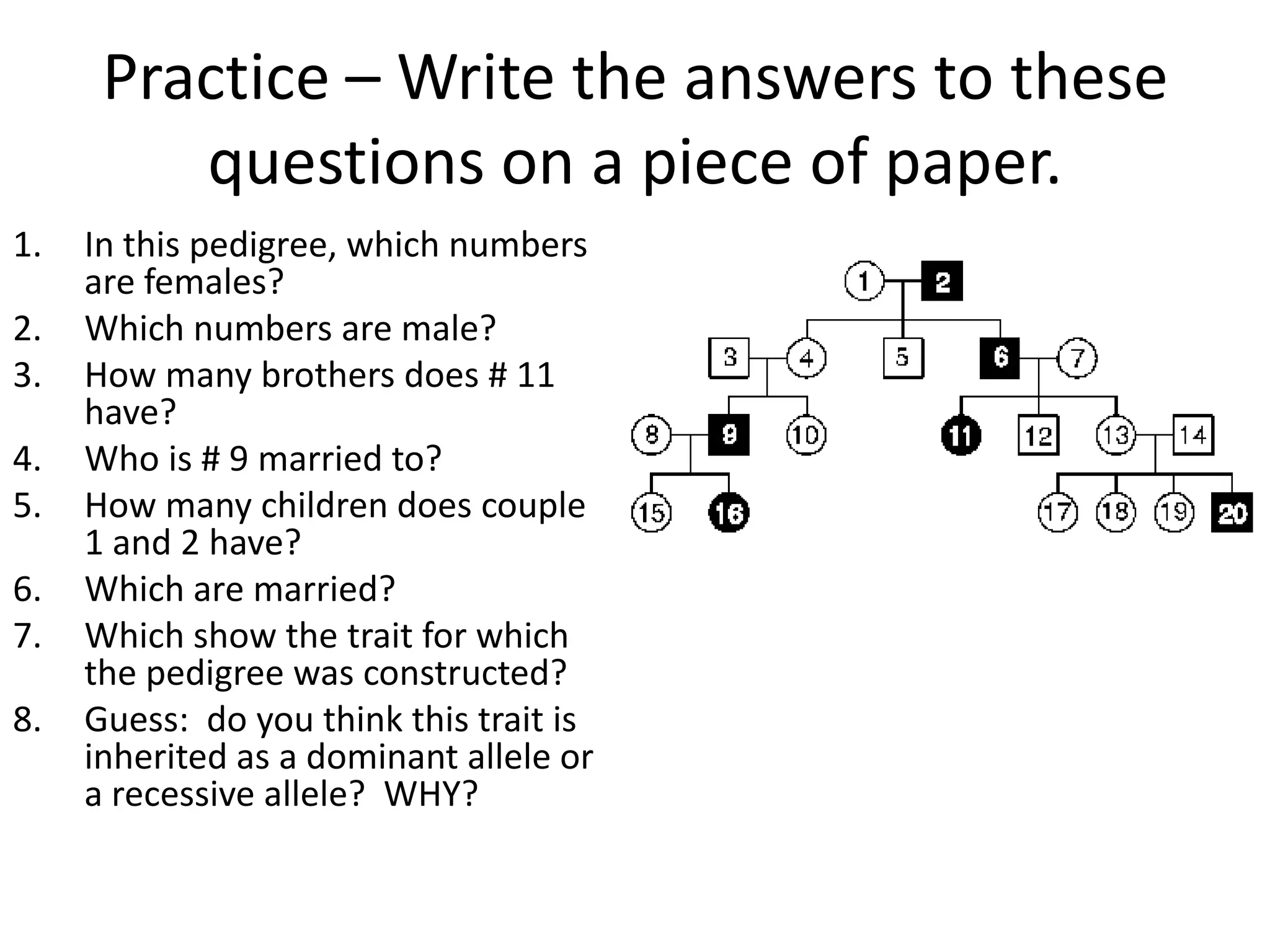
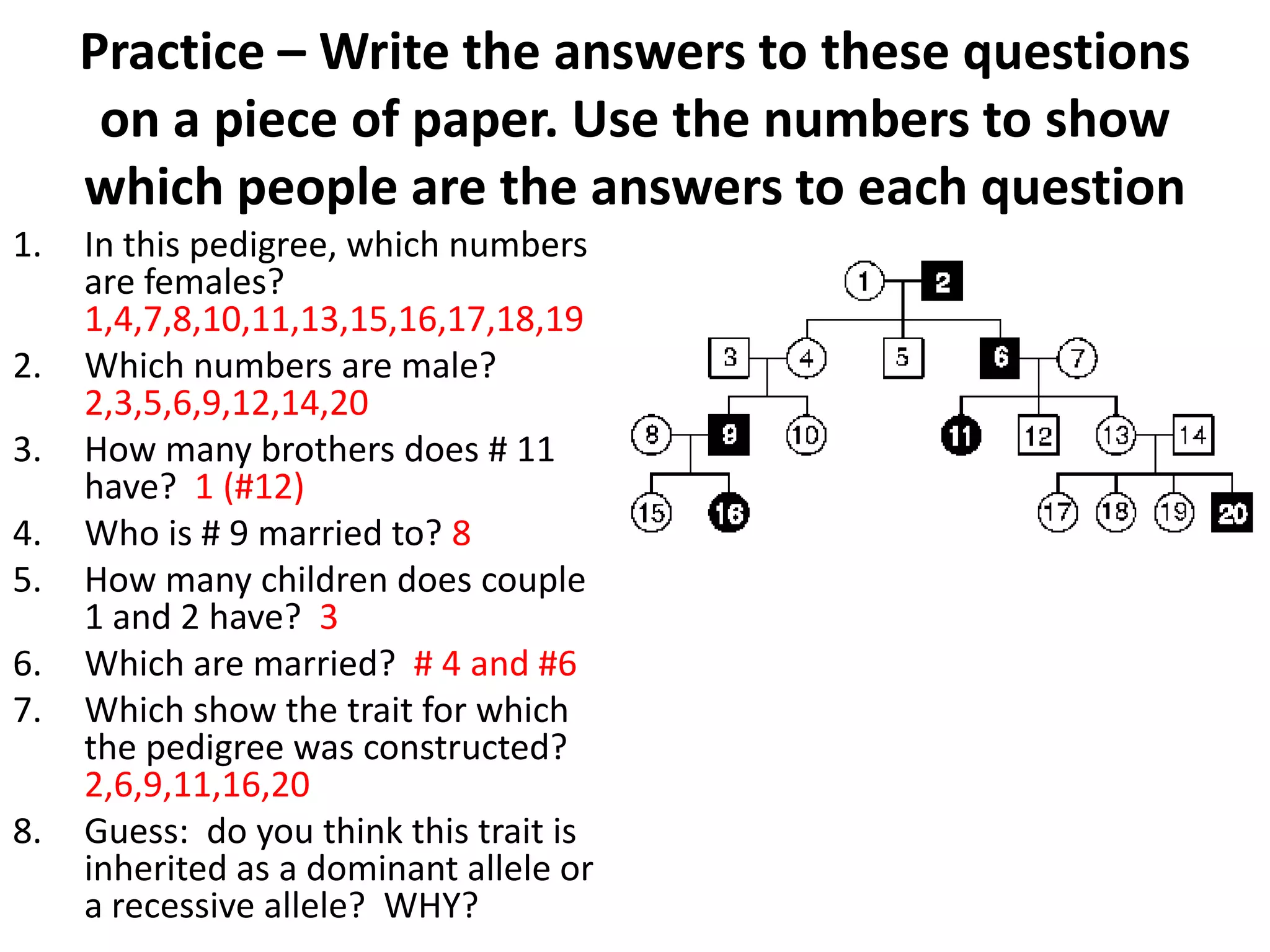
1.   In this pedigree, which numbers
     are females?
2.   Which numbers are male?
3.   How many brothers does # 11
     have?
4.   Who is # 9 married to?
5.   How many children does couple
     1 and 2 have?
6.   Which are married?
7.   Which show the trait for which
     the pedigree was constructed?
8.   Guess: do you think this trait is
     inherited as a dominant allele or
     a recessive allele? WHY?
Practice – Write the answers to these questions
      on a piece of paper. Use the numbers to show
     which people are the answers to each question
1.   In this pedigree, which numbers
     are females?
     1,4,7,8,10,11,13,15,16,17,18,19
2.   Which numbers are male?
     2,3,5,6,9,12,14,20
3.   How many brothers does # 11
     have? 1 (#12)
4.   Who is # 9 married to? 8
5.   How many children does couple
     1 and 2 have? 3
6.   Which are married? # 4 and #6
7.   Which show the trait for which
     the pedigree was constructed?
     2,6,9,11,16,20
8.   Guess: do you think this trait is
     inherited as a dominant allele or
     a recessive allele? WHY?
Try using a pedigree to determine
              genotypes…..
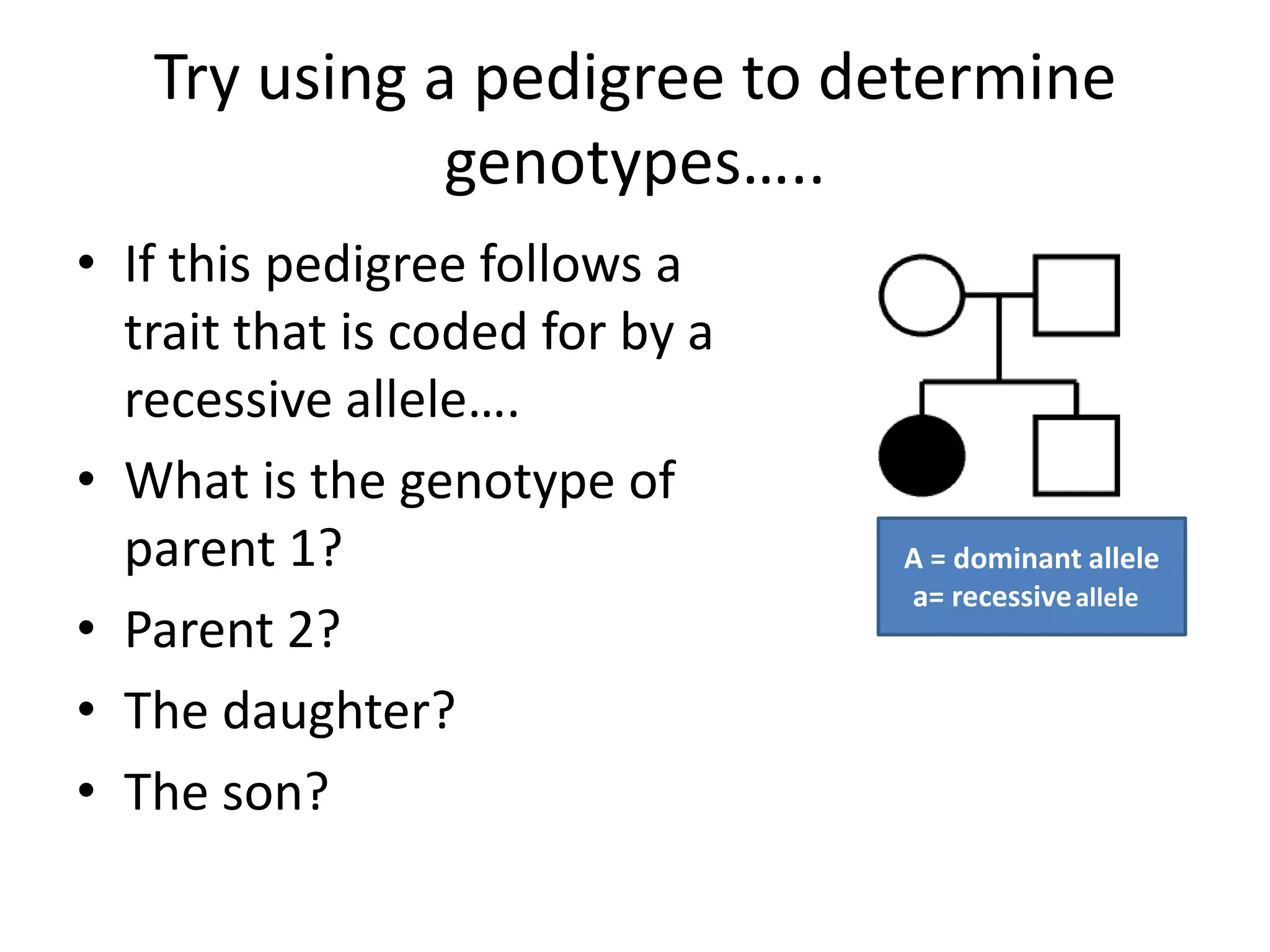
• If this pedigree follows a
  trait that is coded for by a
  recessive allele….
• What is the genotype of
  parent 1?                      A = dominant allele
                                 a= recessive allele
• Parent 2?
• The daughter?
• The son?
Try using a pedigree to determine
              genotypes…..
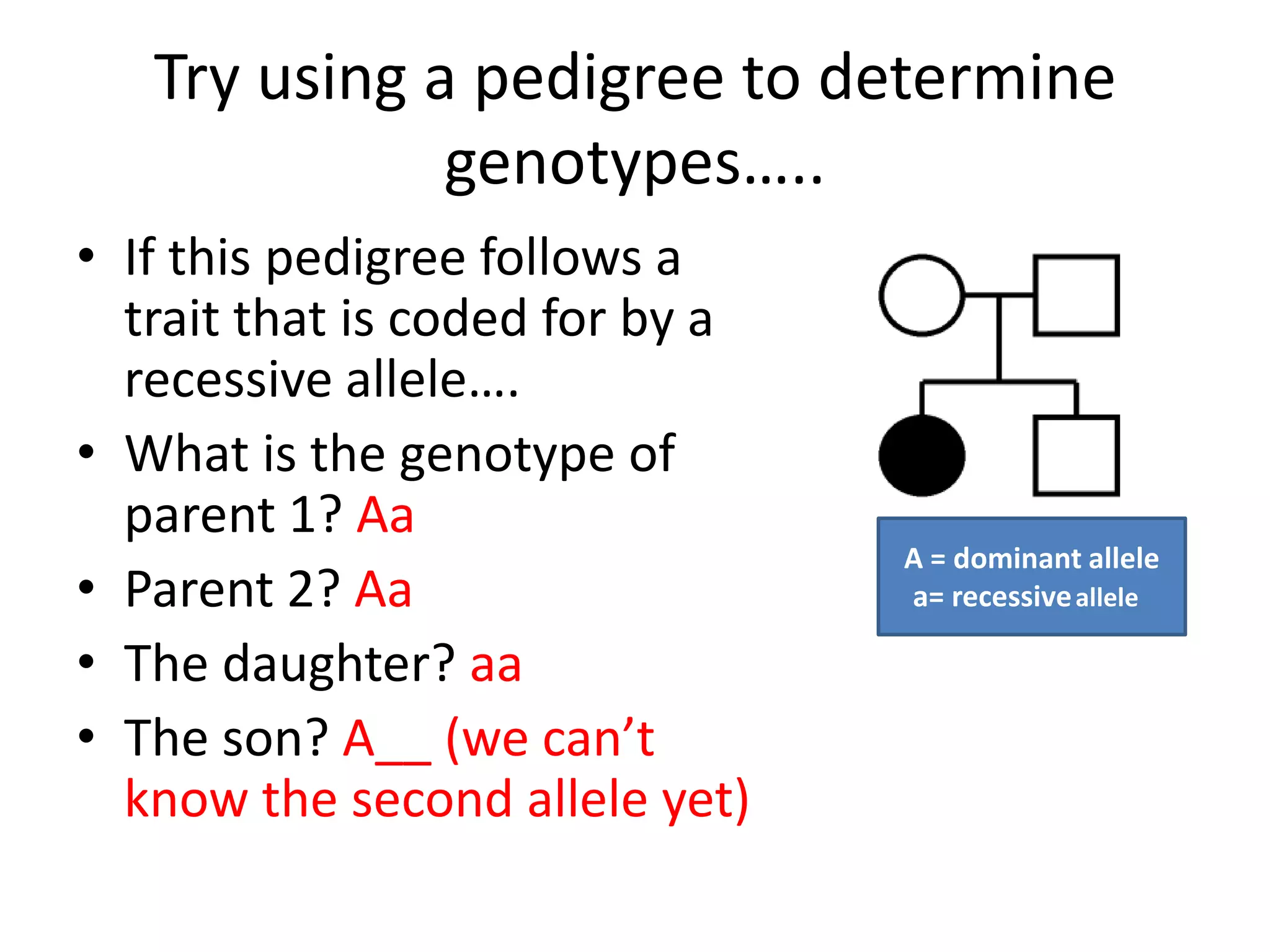
• If this pedigree follows a
  trait that is coded for by a
  recessive allele….
• What is the genotype of
  parent 1? Aa
                                 A = dominant allele
• Parent 2? Aa                   a= recessive allele

• The daughter? aa
• The son? A__ (we can’t
  know the second allele yet)
Figure out if the trait is
        dominant or recessive……
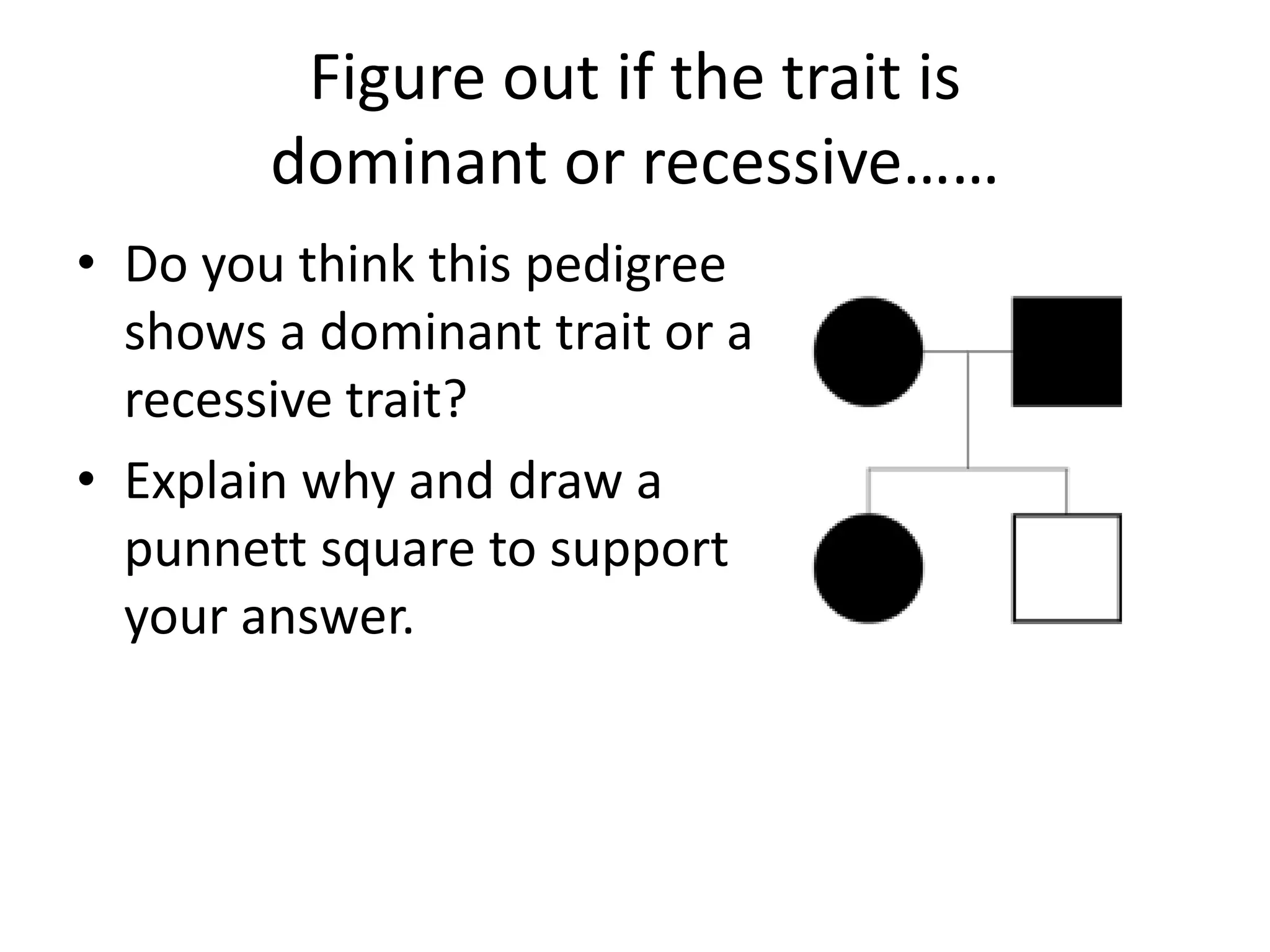
• Do you think this pedigree
  shows a dominant trait or a
  recessive trait?
• Explain why and draw a
  punnett square to support
  your answer.
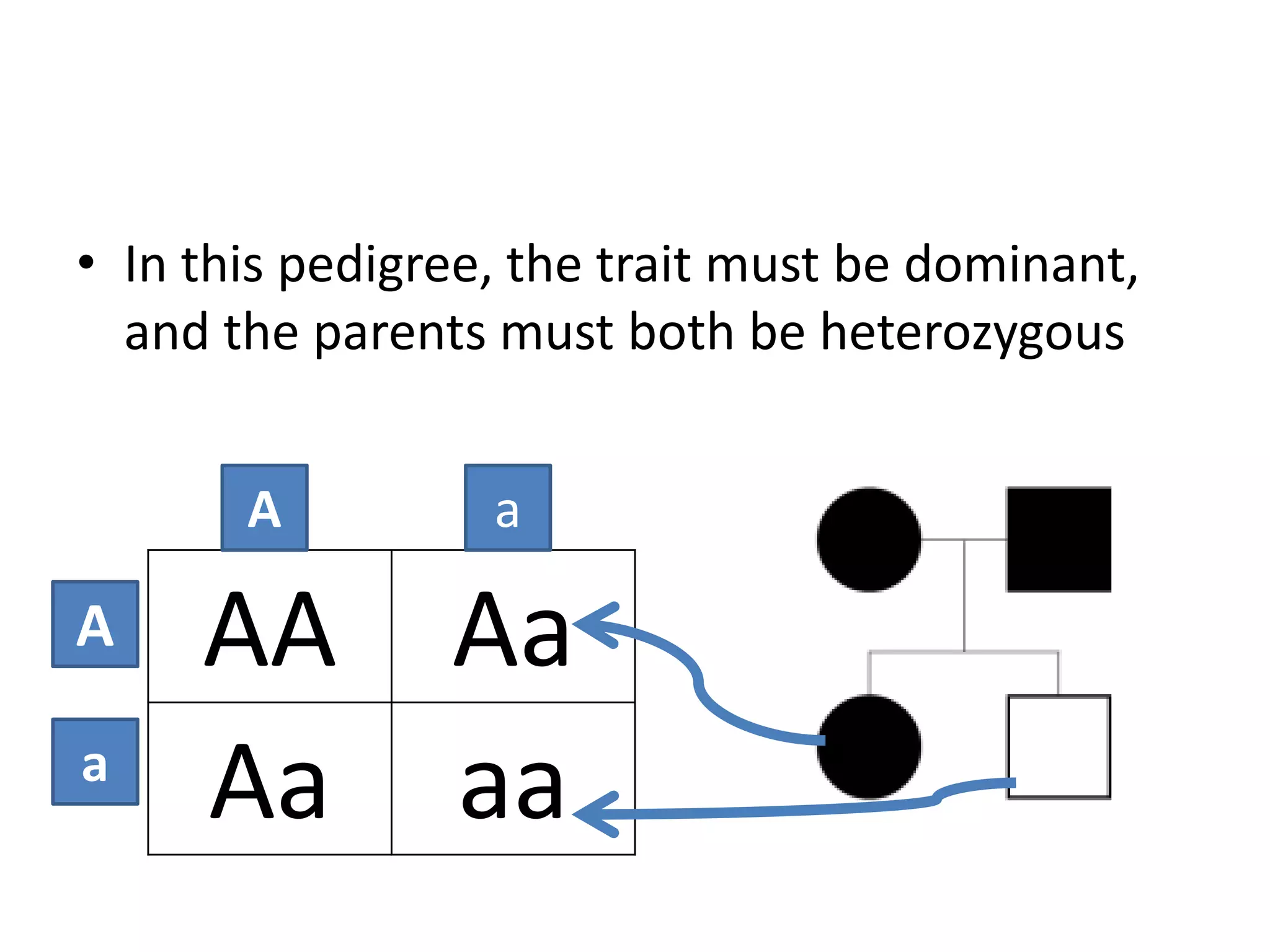
• In this pedigree, the trait must be dominant,
  and the parents must both be heterozygous


       A          a

A    AA Aa
a
     Aa aa
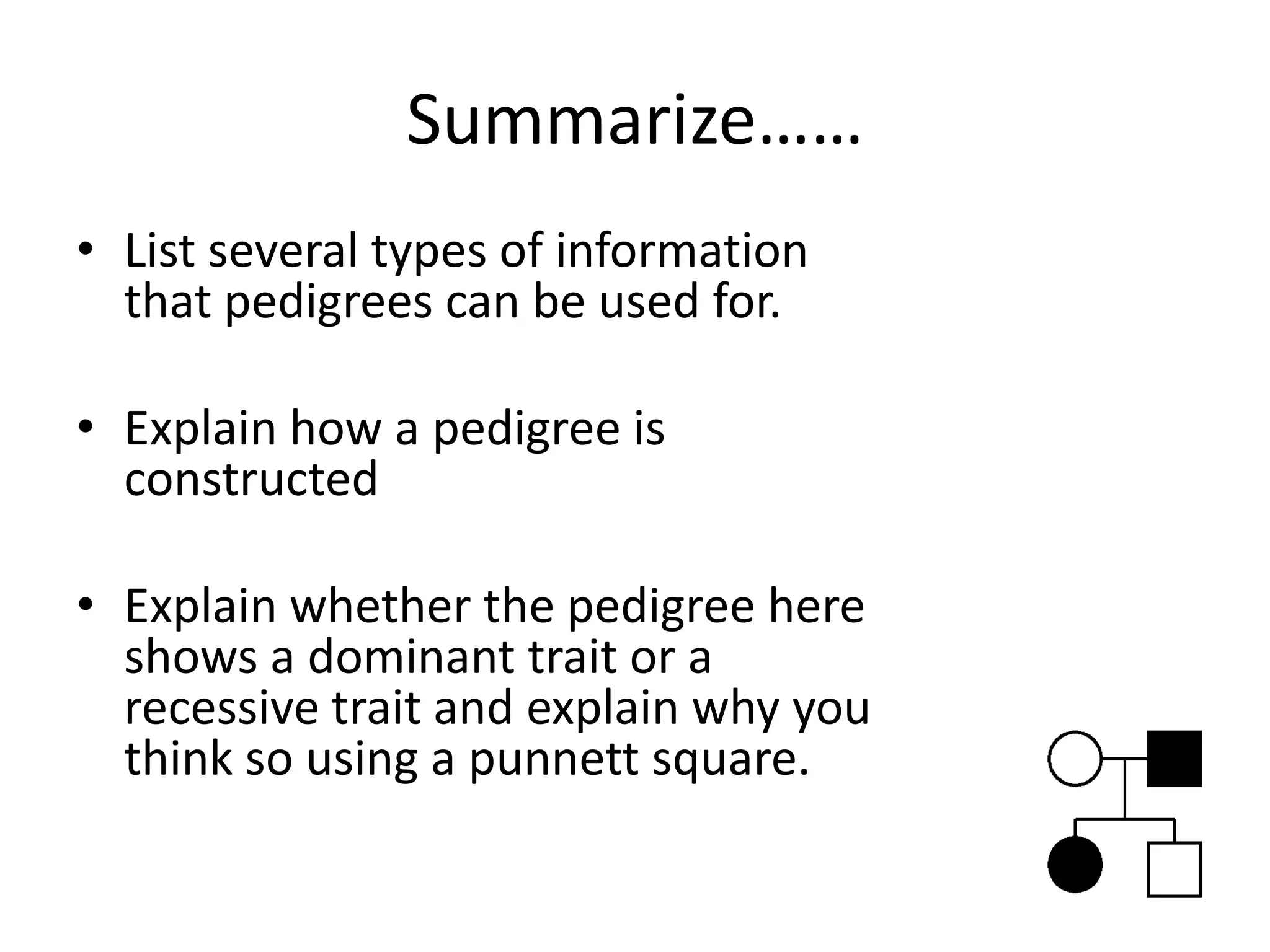
Summarize……
• List several types of information
  that pedigrees can be used for.

• Explain how a pedigree is
  constructed

• Explain whether the pedigree here
  shows a dominant trait or a
  recessive trait and explain why you
  think so using a punnett square.
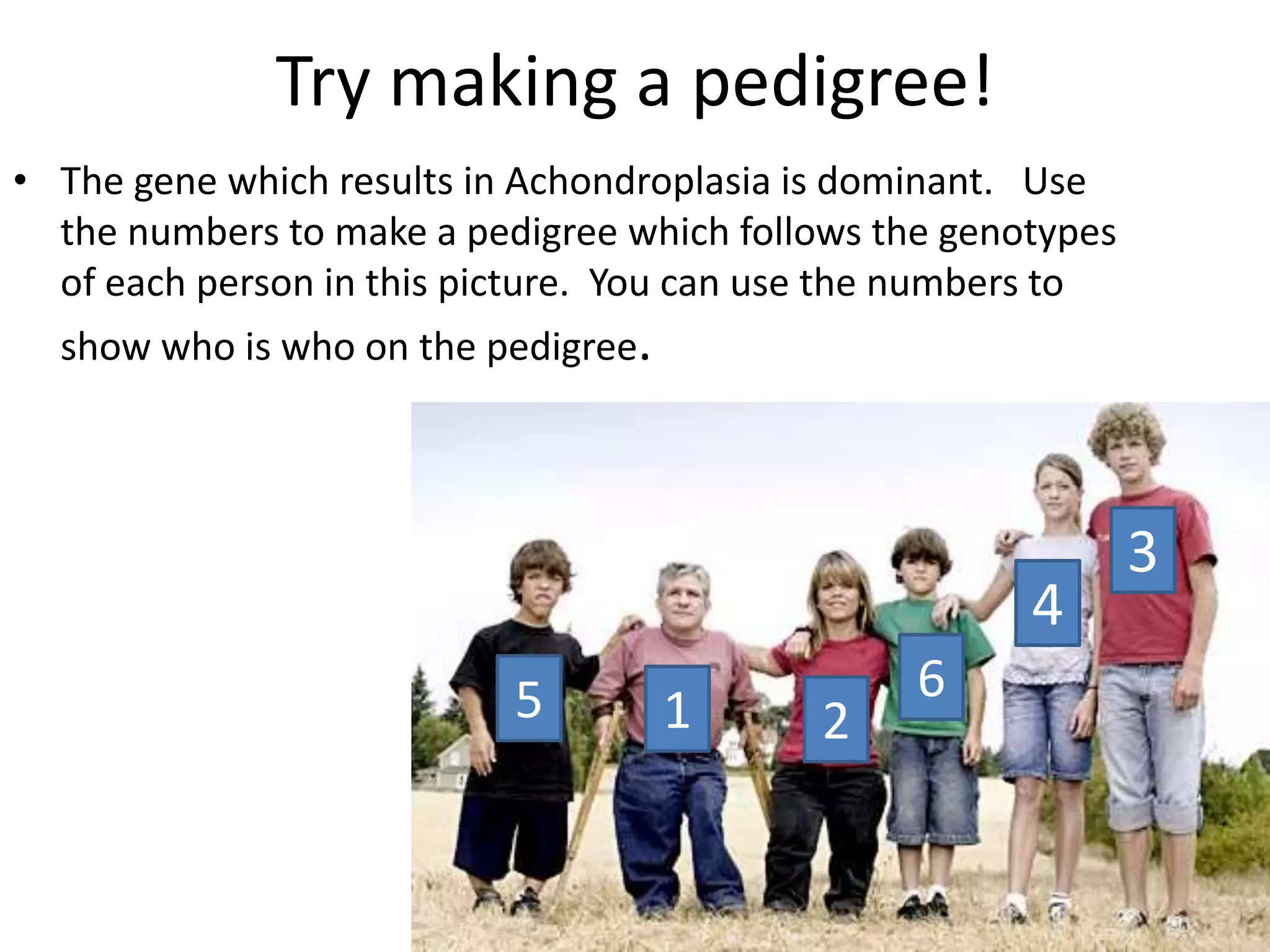
Try making a pedigree!
• The gene which results in Achondroplasia is dominant. Use
  the numbers to make a pedigree which follows the genotypes
  of each person in this picture. You can use the numbers to
  show who is who on the pedigree.


                                                               3
                                                       4
                           5                     6
                                     1     2
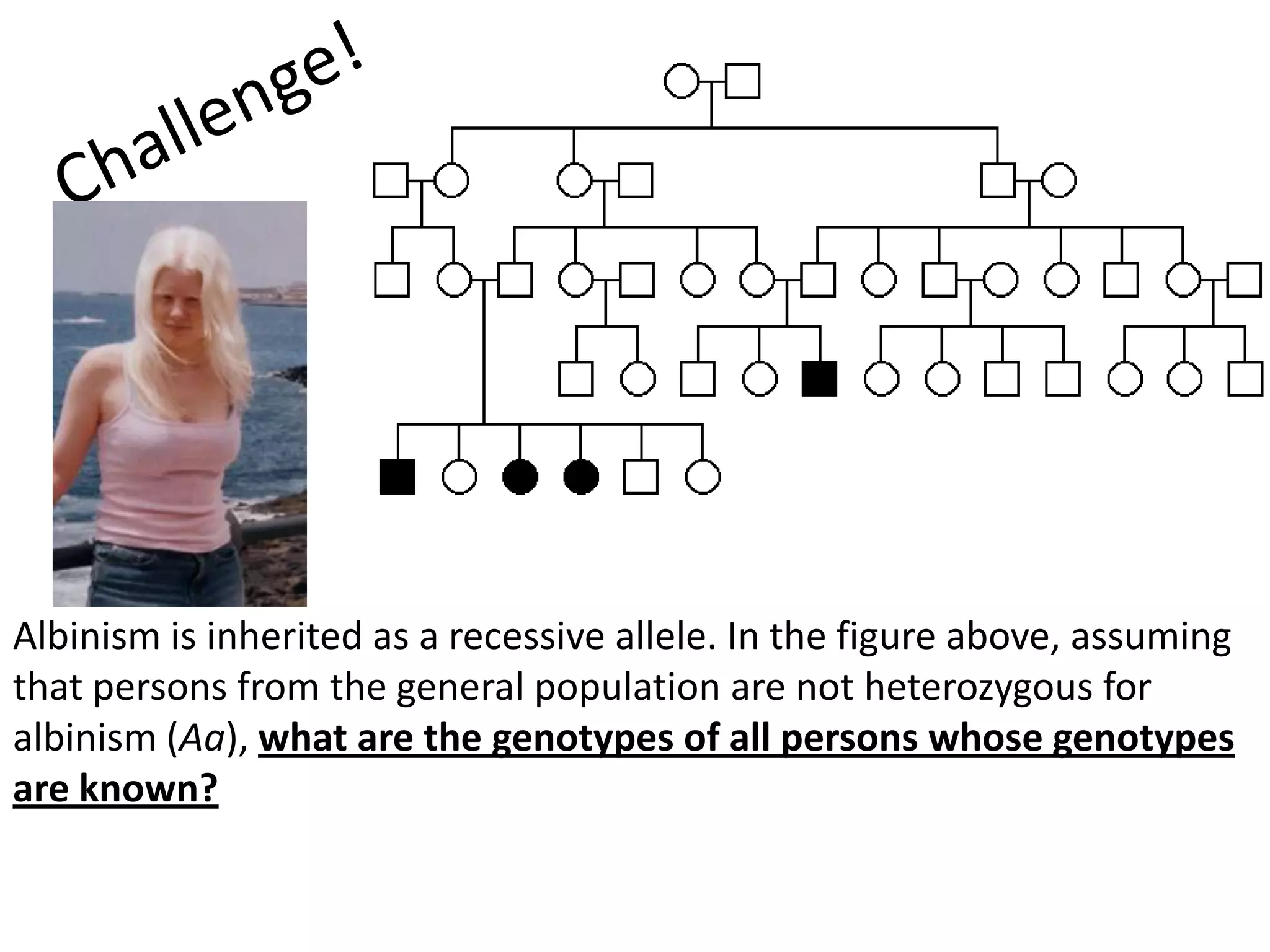
Albinism is inherited as a recessive allele. In the figure above, assuming
that persons from the general population are not heterozygous for
albinism (Aa), what are the genotypes of all persons whose genotypes
are known?
Case Study
• Learn about a disorder called Alcaptonuria (click here).
• Read the fact sheet and determine the following :
• What are the SYMPTOMS of alcaptonuria?
• What are the CAUSES of alcaptonuria?
• What test determines whether a patient has
  alcaptonuria?
• What are some effective treatments for
  alcaptonuria?
The Story
A new baby is born into the family!! Baby Jenna appears
   health and strong, but nurses notice that her diaper has
   turned a disturbing brown/black color.
After testing, the doctor diagnoses the child with
   alcaptonuria.
The family now needs to know more about the disease, so you
   are called in to help.
Your goals:
   1. Determine who in the family has the disease
   2. Design a pedigree to help the family see how the trait
   has moved through the family.
   3. Explain how the trait is inherited in a way that the family
   understands.
Start your research
• 1. Test the urine of the family.
       Request urine samples of family members
       Add the test solution to the tube
       Record the results.
• 2. Design a pedigree and indicate who is
  affected and who is not (hint: you may benefit from designing
  the pedigree before the test and then shading in the affected family members
  later. )

• 3. Fill in the genotypes of each of the family
  members on the pedigree.
• The family: John and Lucy are the parents of
  baby Jenna
• John has 1 sister named Suzanne
• John’s parents are Steven and Martha
• Lucy’s parents are David and Ann
• Lucy has a brother, Randy and a sister Lynne

Learning about pedigrees

  • 1.
  • 2.
    2. A chartused to follow genetic traits in a family 2. Can be used to determine who a trait is inherited from 2. Can be used to determine if a trait is dominant, 1. Pedigree recessive, X linked or some other mode of inheritance.
  • 3.
    Example of aPedigree!
  • 4.
    1. Constructing aPedigree 2. Males represented by squares 2. Females are represented by circles 2. A marriage is a line between 2 shapes 2. Offspring are shown using a line from a marriage
  • 5.
    2. Shaded shapesshow people that have a trait 2. Unshaded shapes do not show the trait 2. Sometimes a heterozygous person is half-shaded
  • 6.
    Practice – Writethe answers to these questions on a piece of paper. 1. In this pedigree, which numbers are females? 2. Which numbers are male? 3. How many brothers does # 11 have? 4. Who is # 9 married to? 5. How many children does couple 1 and 2 have? 6. Which are married? 7. Which show the trait for which the pedigree was constructed? 8. Guess: do you think this trait is inherited as a dominant allele or a recessive allele? WHY?
  • 7.
    Practice – Writethe answers to these questions on a piece of paper. Use the numbers to show which people are the answers to each question 1. In this pedigree, which numbers are females? 1,4,7,8,10,11,13,15,16,17,18,19 2. Which numbers are male? 2,3,5,6,9,12,14,20 3. How many brothers does # 11 have? 1 (#12) 4. Who is # 9 married to? 8 5. How many children does couple 1 and 2 have? 3 6. Which are married? # 4 and #6 7. Which show the trait for which the pedigree was constructed? 2,6,9,11,16,20 8. Guess: do you think this trait is inherited as a dominant allele or a recessive allele? WHY?
  • 8.
    Try using apedigree to determine genotypes….. • If this pedigree follows a trait that is coded for by a recessive allele…. • What is the genotype of parent 1? A = dominant allele a= recessive allele • Parent 2? • The daughter? • The son?
  • 9.
    Try using apedigree to determine genotypes….. • If this pedigree follows a trait that is coded for by a recessive allele…. • What is the genotype of parent 1? Aa A = dominant allele • Parent 2? Aa a= recessive allele • The daughter? aa • The son? A__ (we can’t know the second allele yet)
  • 10.
    Figure out ifthe trait is dominant or recessive…… • Do you think this pedigree shows a dominant trait or a recessive trait? • Explain why and draw a punnett square to support your answer.
  • 11.
    • In thispedigree, the trait must be dominant, and the parents must both be heterozygous A a A AA Aa a Aa aa
  • 12.
    Summarize…… • List severaltypes of information that pedigrees can be used for. • Explain how a pedigree is constructed • Explain whether the pedigree here shows a dominant trait or a recessive trait and explain why you think so using a punnett square.
  • 13.
    Try making apedigree! • The gene which results in Achondroplasia is dominant. Use the numbers to make a pedigree which follows the genotypes of each person in this picture. You can use the numbers to show who is who on the pedigree. 3 4 5 6 1 2
  • 14.
    Albinism is inheritedas a recessive allele. In the figure above, assuming that persons from the general population are not heterozygous for albinism (Aa), what are the genotypes of all persons whose genotypes are known?
  • 15.
    Case Study • Learnabout a disorder called Alcaptonuria (click here). • Read the fact sheet and determine the following : • What are the SYMPTOMS of alcaptonuria? • What are the CAUSES of alcaptonuria? • What test determines whether a patient has alcaptonuria? • What are some effective treatments for alcaptonuria?
  • 16.
    The Story A newbaby is born into the family!! Baby Jenna appears health and strong, but nurses notice that her diaper has turned a disturbing brown/black color. After testing, the doctor diagnoses the child with alcaptonuria. The family now needs to know more about the disease, so you are called in to help. Your goals: 1. Determine who in the family has the disease 2. Design a pedigree to help the family see how the trait has moved through the family. 3. Explain how the trait is inherited in a way that the family understands.
  • 17.
    Start your research •1. Test the urine of the family.  Request urine samples of family members  Add the test solution to the tube  Record the results. • 2. Design a pedigree and indicate who is affected and who is not (hint: you may benefit from designing the pedigree before the test and then shading in the affected family members later. ) • 3. Fill in the genotypes of each of the family members on the pedigree.
  • 18.
    • The family:John and Lucy are the parents of baby Jenna • John has 1 sister named Suzanne • John’s parents are Steven and Martha • Lucy’s parents are David and Ann • Lucy has a brother, Randy and a sister Lynne