Presentation
on
By
Kareena Bhatia
Id no-GB054
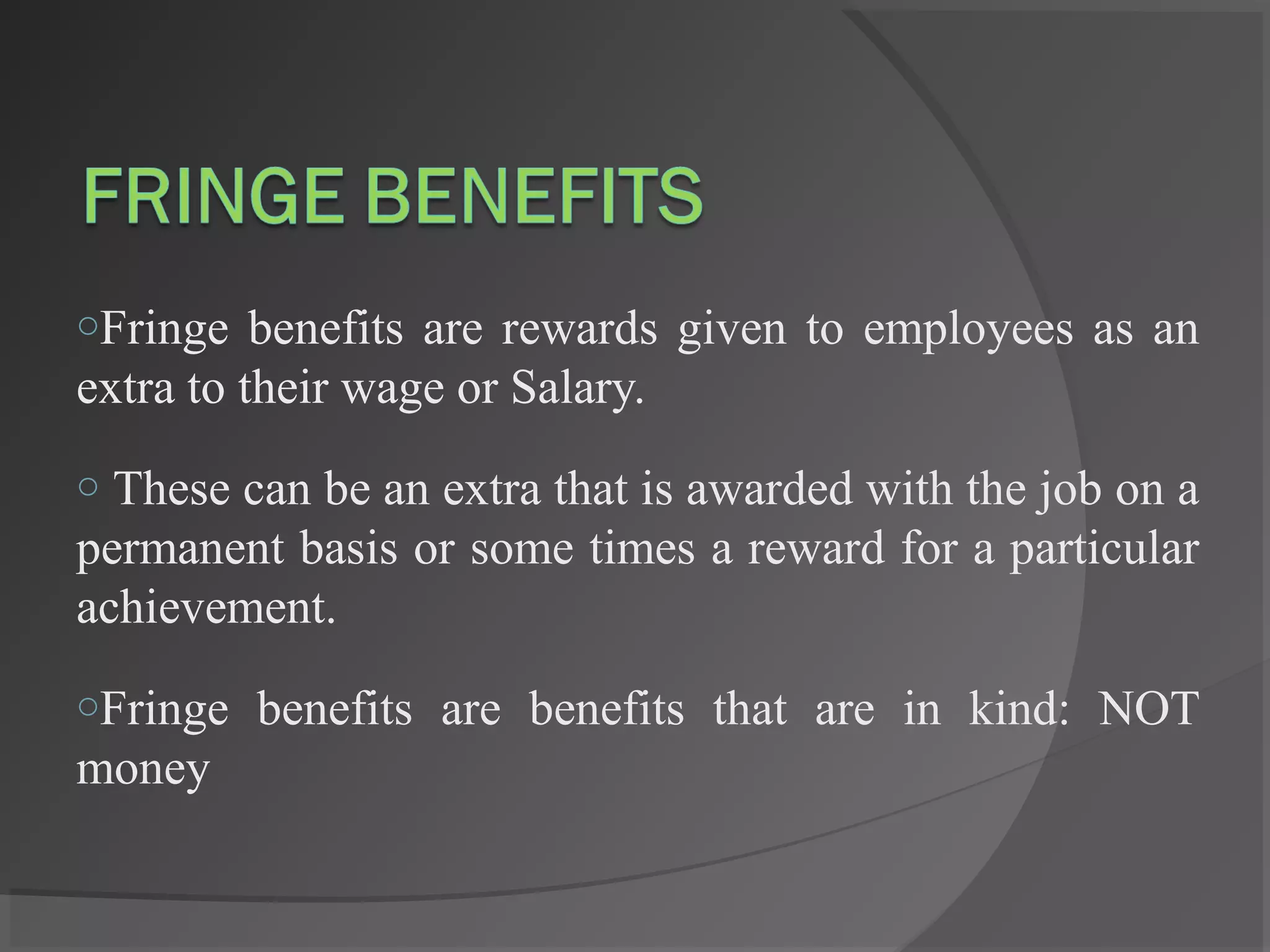
oFringe benefits are rewards given to employees as an
extra to their wage or Salary.
o These can be an extra that is awarded with the job on a
permanent basis or some times a reward for a particular
achievement.
oFringe benefits are benefits that are in kind: NOT
money
Definition: Fringe benefits are those monetary and
non monetary benefits given to the employee during and post
employment period which are connected with employment but
not to the employees contribution to the organization.
For Example, You could receive a benefit when you:
 Use a work car for private purposes
 Are provided with a cheap loan
 Are provided with free private health insurance
 Are provided with cleaning services for your private residence
Benefits in Kind
1.These are extras which are
awarded in the form of an
item or service.
2.These can be car, health
care, discount,
accommodation, cheaper
food and drink
Objectives of Fringe Benefits
 To create and Improve sound Industrial
Relations
 To boost up employee morale
 To motivate the employees by identifying
and satisfying their unsatisfied need
 To provide qualitative work environment
and work life
 To provide security to the employees
against social risks like old age benefits
and maternity benefits.
Need and Importance of F.B
 To retain the employees
 Employee demands
 To motivate performance
 As a social security
 Trade union demand
 Skill shortage
 Hazards of Industrial Life
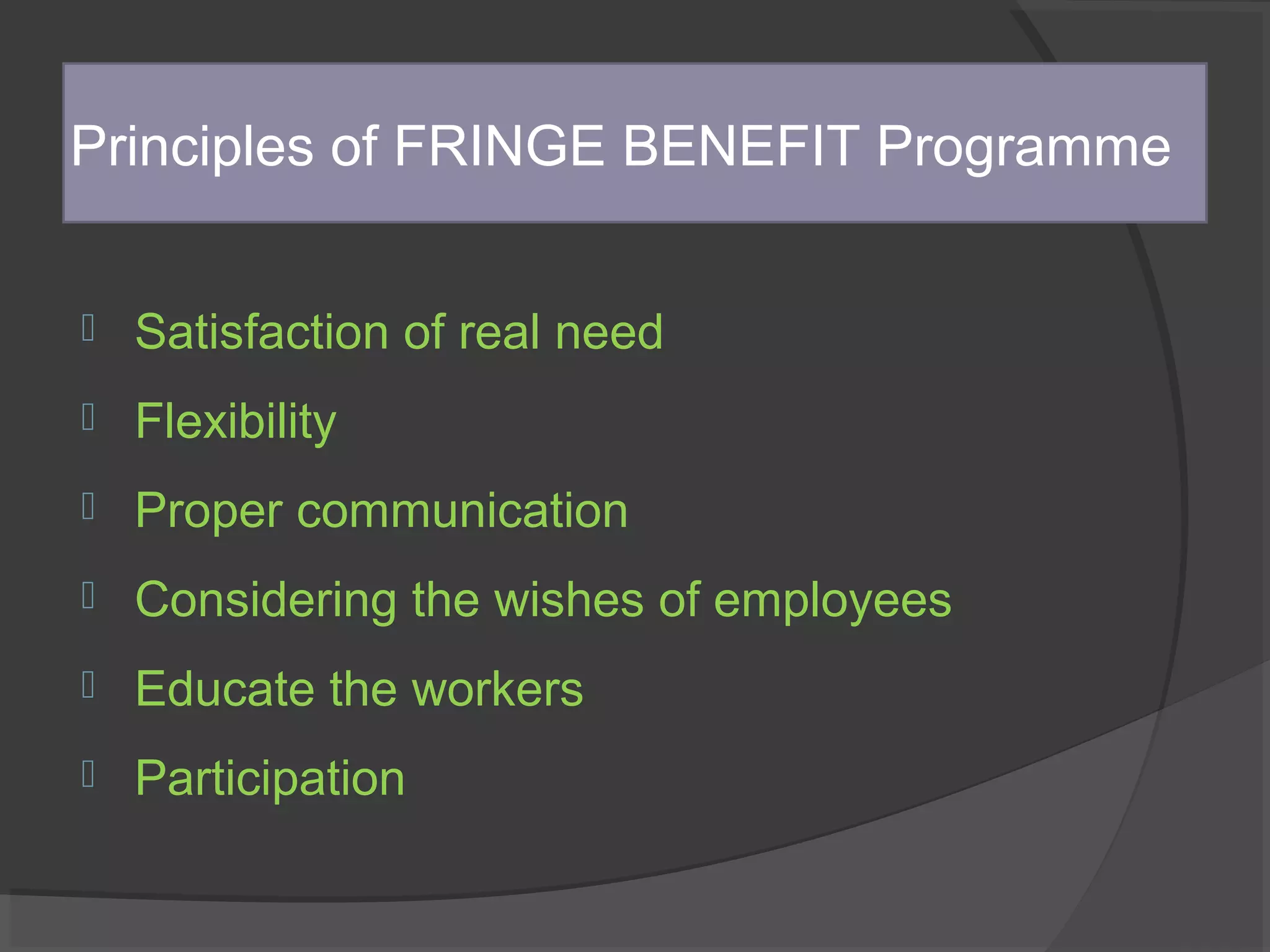
 Satisfaction of real need
 Flexibility
 Proper communication
 Considering the wishes of employees
 Educate the workers
 Participation
Principles of FRINGE BENEFIT Programme
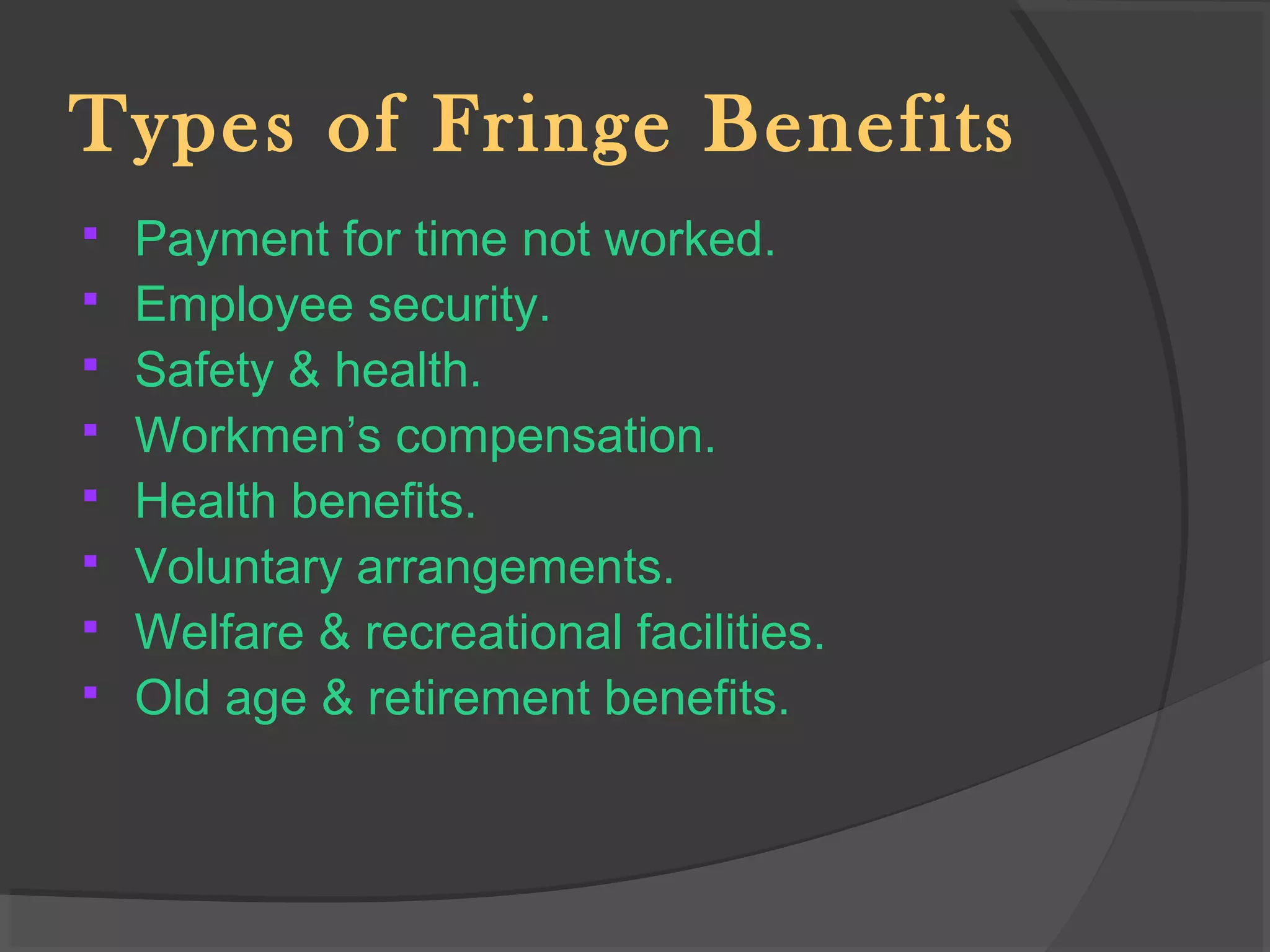
Types of Fringe Benefits
 Payment for time not worked.
 Employee security.
 Safety & health.
 Workmen’s compensation.
 Health benefits.
 Voluntary arrangements.
 Welfare & recreational facilities.
 Old age & retirement benefits.
AdvAntAges
 No additional tax is paid on fringe benefits as they do not
involve money.
 They can be used to encourage the employee to work harder.
DisaDvantages
 The employee has no choice on how they
are spent.
 Benefits are lost when an employee leaves
the job, some times causing hardship.
Conclusion
 Basically a fringe benefit provided to an employee
or an associate (Ex: Family, Spouse & Children)
because of his employment
 Fringe benefits provide output in terms of
employee loyalty and cooperation, employee
welfare and create organizational image.
fringe benefit

fringe benefit

  • 1.
  • 2.
    oFringe benefits arerewards given to employees as an extra to their wage or Salary. o These can be an extra that is awarded with the job on a permanent basis or some times a reward for a particular achievement. oFringe benefits are benefits that are in kind: NOT money
  • 3.
    Definition: Fringe benefitsare those monetary and non monetary benefits given to the employee during and post employment period which are connected with employment but not to the employees contribution to the organization. For Example, You could receive a benefit when you:  Use a work car for private purposes  Are provided with a cheap loan  Are provided with free private health insurance  Are provided with cleaning services for your private residence
  • 4.
    Benefits in Kind 1.Theseare extras which are awarded in the form of an item or service. 2.These can be car, health care, discount, accommodation, cheaper food and drink
  • 5.
    Objectives of FringeBenefits  To create and Improve sound Industrial Relations  To boost up employee morale  To motivate the employees by identifying and satisfying their unsatisfied need  To provide qualitative work environment and work life  To provide security to the employees against social risks like old age benefits and maternity benefits.
  • 6.
    Need and Importanceof F.B  To retain the employees  Employee demands  To motivate performance  As a social security  Trade union demand  Skill shortage  Hazards of Industrial Life
  • 7.
     Satisfaction ofreal need  Flexibility  Proper communication  Considering the wishes of employees  Educate the workers  Participation Principles of FRINGE BENEFIT Programme
  • 8.
    Types of FringeBenefits  Payment for time not worked.  Employee security.  Safety & health.  Workmen’s compensation.  Health benefits.  Voluntary arrangements.  Welfare & recreational facilities.  Old age & retirement benefits.
  • 9.
    AdvAntAges  No additionaltax is paid on fringe benefits as they do not involve money.  They can be used to encourage the employee to work harder.
  • 10.
    DisaDvantages  The employeehas no choice on how they are spent.  Benefits are lost when an employee leaves the job, some times causing hardship.
  • 11.
    Conclusion  Basically afringe benefit provided to an employee or an associate (Ex: Family, Spouse & Children) because of his employment  Fringe benefits provide output in terms of employee loyalty and cooperation, employee welfare and create organizational image.