Why Push for a
School-based Hearing
Guideline?
Local Health Board
Davao City
22 July 2015
1
June 12, 2009
Republic Act 9709
> Universal Newborn Hearing Screening and Intervention Act
> Establishes Universal Hearing Screening Program (UNHSP)
- Prevention
- Early Diagnosis
- Early Intervention of Hearing Loss
- Requiring all newborns to have access to hearing screening
2
Background:
R.A. 9709
3
- detection of hearing loss in children should occur as early
in life as possible
- infants born with hearing loss should be identified by three
months of age so that rehabilitation programs can be
initiated
- The first three years of life are critical to speech and
language development
- Unfortunately, while some children’s hearing losses are
detected within the first year of life, many more children
with hearing loss are not detected until they enter school
(five to six years of age)
- For this reason, it is now recommended that all infants be
screened for hearing loss
EVALUATION OF THE CHILD’S
HEARING LOSS
Why should newborn babies
be screened for hearing
loss?
• 1 or 2 : 1000 livebirths have a level hearing loss in
one or both ears
• affects their understanding and development of
spoken language
• about half will have severe or profound loss of
hearing
• early detection with early intervention means best
possible chance to develop language and
communication skills
4
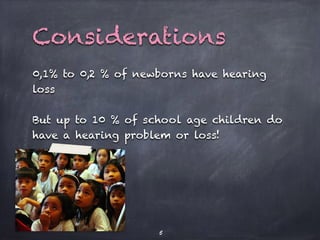
0,1% to 0,2 % of newborns have hearing
loss
But up to 10 % of school age children do
have a hearing problem or loss!
5
Considerations
What is Known?
Speech and language delay is associated with
reading, writing, attention and association
for the lack of high-quality standards and
stringency, NBHS may not be as effective in
identifying babies with hearing impairment
2/3 of preschoolers have at least 1 episode of
ear problems and 16% have at 6 or more
episodes. 1/2 of these will go undetected even
with good medical follow-up
6
7
8
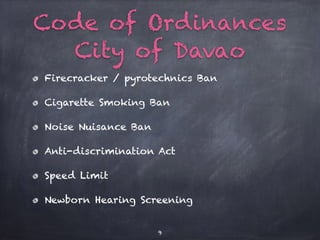
Code of Ordinances
City of Davao
Firecracker / pyrotechnics Ban
Cigarette Smoking Ban
Noise Nuisance Ban
Anti-discrimination Act
Speed Limit
Newborn Hearing Screening
9
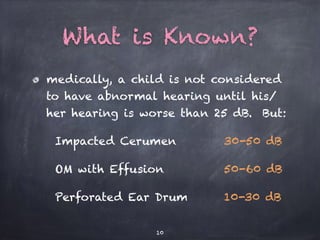
What is Known?
medically, a child is not considered
to have abnormal hearing until his/
her hearing is worse than 25 dB. But:
Impacted Cerumen 30-50 dB
OM with Effusion 50-60 dB
Perforated Ear Drum 10-30 dB
10
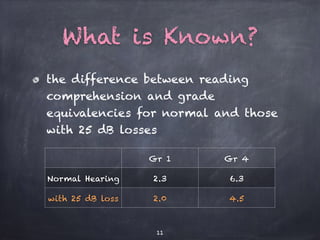
What is Known?
the difference between reading
comprehension and grade
equivalencies for normal and those
with 25 dB losses
Gr 1 Gr 4
Normal Hearing 2.3 6.3
with 25 dB loss 2.0 4.5
11
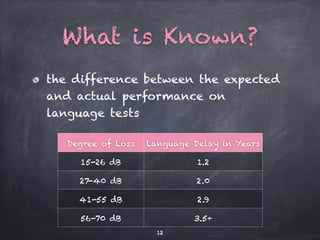
What is Known?
the difference between the expected
and actual performance on
language tests
Degree of Loss Language Delay in Years
15-26 dB 1.2
27-40 dB 2.0
41-55 dB 2.9
56-70 dB 3.5+
12
What is Known?
of the learning disabled population,
20-25% have histories of, or on-
going ear problems related to,
hearing loss. As many as 38% have
been found to have abnormal
13
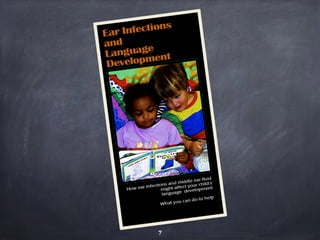
Sufficient data is available to
suggest that children with early
and recurrent ear problems are
at risk for developing delays in
auditory, language and
academic skills.
14
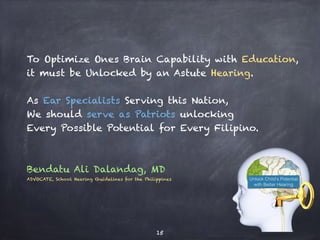
To Optimize Ones Brain Capability with Education,
it must be Unlocked by an Astute Hearing.
As Ear Specialists Serving this Nation,
We should serve as Patriots unlocking
Every Possible Potential for Every Filipino.
Bendatu Ali Dalandag, MD
ADVOCATE, School Hearing Guidelines for the Philippines
15
Love this Nation,
Invest on the Future,
Value our Education,
Endear our Ears.
16
Knowledge is Power.
Information is Liberating.
Education is the Premise of Progress,
in every Society, in every Family.
by Kofi Annan
17
18

Why Push for a School-Based Hearing Guideline

  • 1.
    Why Push fora School-based Hearing Guideline? Local Health Board Davao City 22 July 2015 1
  • 2.
    June 12, 2009 RepublicAct 9709 > Universal Newborn Hearing Screening and Intervention Act > Establishes Universal Hearing Screening Program (UNHSP) - Prevention - Early Diagnosis - Early Intervention of Hearing Loss - Requiring all newborns to have access to hearing screening 2 Background: R.A. 9709
  • 3.
    3 - detection ofhearing loss in children should occur as early in life as possible - infants born with hearing loss should be identified by three months of age so that rehabilitation programs can be initiated - The first three years of life are critical to speech and language development - Unfortunately, while some children’s hearing losses are detected within the first year of life, many more children with hearing loss are not detected until they enter school (five to six years of age) - For this reason, it is now recommended that all infants be screened for hearing loss EVALUATION OF THE CHILD’S HEARING LOSS
  • 4.
    Why should newbornbabies be screened for hearing loss? • 1 or 2 : 1000 livebirths have a level hearing loss in one or both ears • affects their understanding and development of spoken language • about half will have severe or profound loss of hearing • early detection with early intervention means best possible chance to develop language and communication skills 4
  • 5.
    0,1% to 0,2% of newborns have hearing loss But up to 10 % of school age children do have a hearing problem or loss! 5 Considerations
  • 6.
    What is Known? Speechand language delay is associated with reading, writing, attention and association for the lack of high-quality standards and stringency, NBHS may not be as effective in identifying babies with hearing impairment 2/3 of preschoolers have at least 1 episode of ear problems and 16% have at 6 or more episodes. 1/2 of these will go undetected even with good medical follow-up 6
  • 7.
  • 8.
  • 9.
    Code of Ordinances Cityof Davao Firecracker / pyrotechnics Ban Cigarette Smoking Ban Noise Nuisance Ban Anti-discrimination Act Speed Limit Newborn Hearing Screening 9
  • 10.
    What is Known? medically,a child is not considered to have abnormal hearing until his/ her hearing is worse than 25 dB. But: Impacted Cerumen 30-50 dB OM with Effusion 50-60 dB Perforated Ear Drum 10-30 dB 10
  • 11.
    What is Known? thedifference between reading comprehension and grade equivalencies for normal and those with 25 dB losses Gr 1 Gr 4 Normal Hearing 2.3 6.3 with 25 dB loss 2.0 4.5 11
  • 12.
    What is Known? thedifference between the expected and actual performance on language tests Degree of Loss Language Delay in Years 15-26 dB 1.2 27-40 dB 2.0 41-55 dB 2.9 56-70 dB 3.5+ 12
  • 13.
    What is Known? ofthe learning disabled population, 20-25% have histories of, or on- going ear problems related to, hearing loss. As many as 38% have been found to have abnormal 13
  • 14.
    Sufficient data isavailable to suggest that children with early and recurrent ear problems are at risk for developing delays in auditory, language and academic skills. 14
  • 15.
    To Optimize OnesBrain Capability with Education, it must be Unlocked by an Astute Hearing. As Ear Specialists Serving this Nation, We should serve as Patriots unlocking Every Possible Potential for Every Filipino. Bendatu Ali Dalandag, MD ADVOCATE, School Hearing Guidelines for the Philippines 15
  • 16.
    Love this Nation, Investon the Future, Value our Education, Endear our Ears. 16
  • 17.
    Knowledge is Power. Informationis Liberating. Education is the Premise of Progress, in every Society, in every Family. by Kofi Annan 17
  • 18.