Controversial issues in
Photography
Jo Lowes
Controversial Issues In Photography
•Photography is a diverse profession/hobby, and as
such there will always be debates around some of
its more controversial topics. The important thing is
that there is no right or wrong answer, just
differences of opinion and ways of working. There
have been numerous debates over the years and
some of the most famous photographers have taken
criticism for their decisions over a photo.
Most Controversial Photographs Ever Taken
1968 Black Power at the Olympics
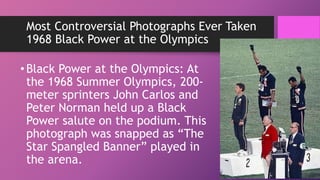
•Black Power at the Olympics: At
the 1968 Summer Olympics, 200-
meter sprinters John Carlos and
Peter Norman held up a Black
Power salute on the podium. This
photograph was snapped as “The
Star Spangled Banner” played in
the arena.
UFO Photograph
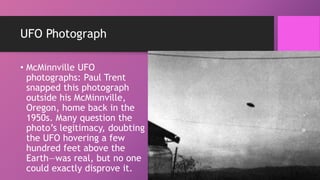
• McMinnville UFO
photographs: Paul Trent
snapped this photograph
outside his McMinnville,
Oregon, home back in the
1950s. Many question the
photo’s legitimacy, doubting
the UFO hovering a few
hundred feet above the
Earth—was real, but no one
could exactly disprove it.
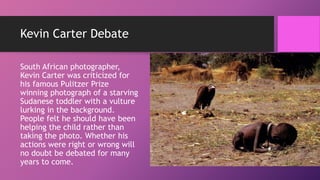
Kevin Carter Debate
South African photographer,
Kevin Carter was criticized for
his famous Pulitzer Prize
winning photograph of a starving
Sudanese toddler with a vulture
lurking in the background.
People felt he should have been
helping the child rather than
taking the photo. Whether his
actions were right or wrong will
no doubt be debated for many
years to come.
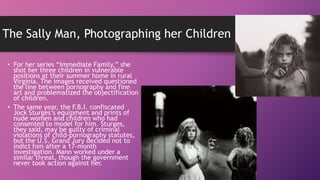
The Sally Man, Photographing her Children
• For her series “Immediate Family,” she
shot her three children in vulnerable
positions at their summer home in rural
Virginia. The images received questioned
the line between pornography and fine
art and problematized the objectification
of children.
• The same year, the F.B.I. confiscated
Jock Sturges’s equipment and prints of
nude women and children who had
consented to model for him. Sturges,
they said, may be guilty of criminal
violations of child-pornography statutes,
but the U.S. Grand Jury decided not to
indict him after a 17-month
investigation. Mann worked under a
similar threat, though the government
never took action against her.
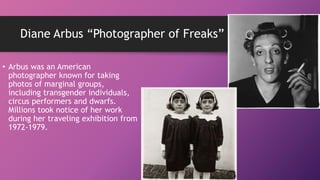
Diane Arbus “Photographer of Freaks”
• Arbus was an American
photographer known for taking
photos of marginal groups,
including transgender individuals,
circus performers and dwarfs.
Millions took notice of her work
during her traveling exhibition from
1972-1979.
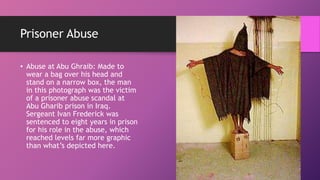
Prisoner Abuse
• Abuse at Abu Ghraib: Made to
wear a bag over his head and
stand on a narrow box, the man
in this photograph was the victim
of a prisoner abuse scandal at
Abu Gharib prison in Iraq.
Sergeant Ivan Frederick was
sentenced to eight years in prison
for his role in the abuse, which
reached levels far more graphic
than what’s depicted here.
Sir Winston Churchill
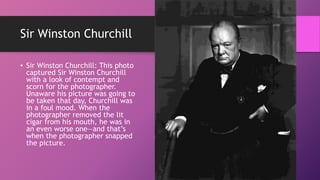
• Sir Winston Churchill: This photo
captured Sir Winston Churchill
with a look of contempt and
scorn for the photographer.
Unaware his picture was going to
be taken that day, Churchill was
in a foul mood. When the
photographer removed the lit
cigar from his mouth, he was in
an even worse one—and that’s
when the photographer snapped
the picture.
Salvador Dali
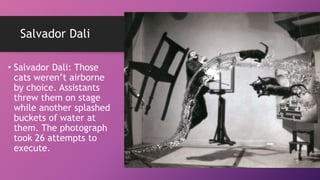
• Salvador Dali: Those
cats weren’t airborne
by choice. Assistants
threw them on stage
while another splashed
buckets of water at
them. The photograph
took 26 attempts to
execute.
Dying Polar Bear
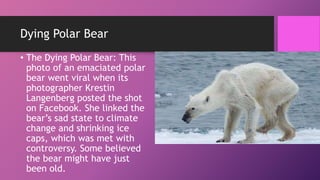
• The Dying Polar Bear: This
photo of an emaciated polar
bear went viral when its
photographer Krestin
Langenberg posted the shot
on Facebook. She linked the
bear’s sad state to climate
change and shrinking ice
caps, which was met with
controversy. Some believed
the bear might have just
been old.
The Monkey Sellfie
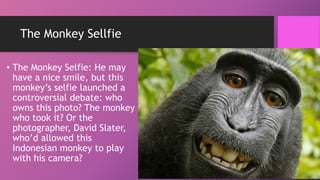
• The Monkey Selfie: He may
have a nice smile, but this
monkey’s selfie launched a
controversial debate: who
owns this photo? The monkey
who took it? Or the
photographer, David Slater,
who’d allowed this
Indonesian monkey to play
with his camera?
7 Photography Debates
Which Side Are You On?
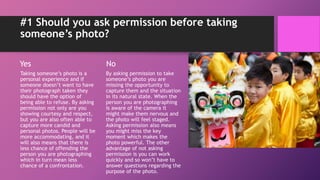
#1 Should you ask permission before taking
someone’s photo?
Yes
Taking someone’s photo is a
personal experience and if
someone doesn’t want to have
their photograph taken they
should have the option of
being able to refuse. By asking
permission not only are you
showing courtesy and respect,
but you are also often able to
capture more candid and
personal photos. People will be
more accommodating, and it
will also means that there is
less chance of offending the
person you are photographing
which in turn mean less
chance of a confrontation.
No
By asking permission to take
someone’s photo you are
missing the opportunity to
capture them and the situation
in its natural state. When the
person you are photographing
is aware of the camera it
might make them nervous and
the photo will feel staged.
Asking permission also means
you might miss the key
moment which makes the
photo powerful. The other
advantage of not asking
permission is you can work
quickly and so won’t have to
answer questions regarding the
purpose of the photo.
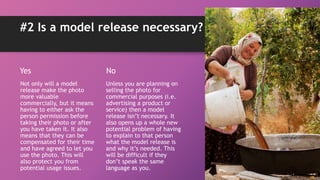
#2 Is a model release necessary?
Yes
Not only will a model
release make the photo
more valuable
commercially, but it means
having to either ask the
person permission before
taking their photo or after
you have taken it. It also
means that they can be
compensated for their time
and have agreed to let you
use the photo. This will
also protect you from
potential usage issues.
No
Unless you are planning on
selling the photo for
commercial purposes (i.e.
advertising a product or
service) then a model
release isn’t necessary. It
also opens up a whole new
potential problem of having
to explain to that person
what the model release is
and why it’s needed. This
will be difficult if they
don’t speak the same
language as you.
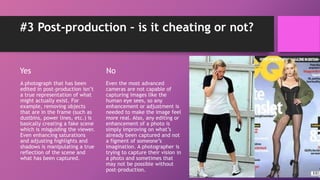
#3 Post-production – is it cheating or not?
Yes
A photograph that has been
edited in post-production isn’t
a true representation of what
might actually exist. For
example, removing objects
that are in the frame (such as
dustbins, power lines, etc.) is
basically creating a fake scene
which is misguiding the viewer.
Even enhancing saturations
and adjusting highlights and
shadows is manipulating a true
reflection of the scene and
what has been captured.
No
Even the most advanced
cameras are not capable of
capturing images like the
human eye sees, so any
enhancement or adjustment is
needed to make the image feel
more real. Also, any editing or
enhancement of a photo is
simply improving on what’s
already been captured and not
a figment of someone’s
imagination. A photographer is
trying to capture their vision in
a photo and sometimes that
may not be possible without
post-production.

Controversial issues in photography

  • 1.
  • 2.
    Controversial Issues InPhotography •Photography is a diverse profession/hobby, and as such there will always be debates around some of its more controversial topics. The important thing is that there is no right or wrong answer, just differences of opinion and ways of working. There have been numerous debates over the years and some of the most famous photographers have taken criticism for their decisions over a photo.
  • 3.
    Most Controversial PhotographsEver Taken 1968 Black Power at the Olympics •Black Power at the Olympics: At the 1968 Summer Olympics, 200- meter sprinters John Carlos and Peter Norman held up a Black Power salute on the podium. This photograph was snapped as “The Star Spangled Banner” played in the arena.
  • 4.
    UFO Photograph • McMinnvilleUFO photographs: Paul Trent snapped this photograph outside his McMinnville, Oregon, home back in the 1950s. Many question the photo’s legitimacy, doubting the UFO hovering a few hundred feet above the Earth—was real, but no one could exactly disprove it.
  • 5.
    Kevin Carter Debate SouthAfrican photographer, Kevin Carter was criticized for his famous Pulitzer Prize winning photograph of a starving Sudanese toddler with a vulture lurking in the background. People felt he should have been helping the child rather than taking the photo. Whether his actions were right or wrong will no doubt be debated for many years to come.
  • 6.
    The Sally Man,Photographing her Children • For her series “Immediate Family,” she shot her three children in vulnerable positions at their summer home in rural Virginia. The images received questioned the line between pornography and fine art and problematized the objectification of children. • The same year, the F.B.I. confiscated Jock Sturges’s equipment and prints of nude women and children who had consented to model for him. Sturges, they said, may be guilty of criminal violations of child-pornography statutes, but the U.S. Grand Jury decided not to indict him after a 17-month investigation. Mann worked under a similar threat, though the government never took action against her.
  • 7.
    Diane Arbus “Photographerof Freaks” • Arbus was an American photographer known for taking photos of marginal groups, including transgender individuals, circus performers and dwarfs. Millions took notice of her work during her traveling exhibition from 1972-1979.
  • 8.
    Prisoner Abuse • Abuseat Abu Ghraib: Made to wear a bag over his head and stand on a narrow box, the man in this photograph was the victim of a prisoner abuse scandal at Abu Gharib prison in Iraq. Sergeant Ivan Frederick was sentenced to eight years in prison for his role in the abuse, which reached levels far more graphic than what’s depicted here.
  • 9.
    Sir Winston Churchill •Sir Winston Churchill: This photo captured Sir Winston Churchill with a look of contempt and scorn for the photographer. Unaware his picture was going to be taken that day, Churchill was in a foul mood. When the photographer removed the lit cigar from his mouth, he was in an even worse one—and that’s when the photographer snapped the picture.
  • 10.
    Salvador Dali • SalvadorDali: Those cats weren’t airborne by choice. Assistants threw them on stage while another splashed buckets of water at them. The photograph took 26 attempts to execute.
  • 11.
    Dying Polar Bear •The Dying Polar Bear: This photo of an emaciated polar bear went viral when its photographer Krestin Langenberg posted the shot on Facebook. She linked the bear’s sad state to climate change and shrinking ice caps, which was met with controversy. Some believed the bear might have just been old.
  • 12.
    The Monkey Sellfie •The Monkey Selfie: He may have a nice smile, but this monkey’s selfie launched a controversial debate: who owns this photo? The monkey who took it? Or the photographer, David Slater, who’d allowed this Indonesian monkey to play with his camera?
  • 13.
  • 14.
    #1 Should youask permission before taking someone’s photo? Yes Taking someone’s photo is a personal experience and if someone doesn’t want to have their photograph taken they should have the option of being able to refuse. By asking permission not only are you showing courtesy and respect, but you are also often able to capture more candid and personal photos. People will be more accommodating, and it will also means that there is less chance of offending the person you are photographing which in turn mean less chance of a confrontation. No By asking permission to take someone’s photo you are missing the opportunity to capture them and the situation in its natural state. When the person you are photographing is aware of the camera it might make them nervous and the photo will feel staged. Asking permission also means you might miss the key moment which makes the photo powerful. The other advantage of not asking permission is you can work quickly and so won’t have to answer questions regarding the purpose of the photo.
  • 15.
    #2 Is amodel release necessary? Yes Not only will a model release make the photo more valuable commercially, but it means having to either ask the person permission before taking their photo or after you have taken it. It also means that they can be compensated for their time and have agreed to let you use the photo. This will also protect you from potential usage issues. No Unless you are planning on selling the photo for commercial purposes (i.e. advertising a product or service) then a model release isn’t necessary. It also opens up a whole new potential problem of having to explain to that person what the model release is and why it’s needed. This will be difficult if they don’t speak the same language as you.
  • 16.
    #3 Post-production –is it cheating or not? Yes A photograph that has been edited in post-production isn’t a true representation of what might actually exist. For example, removing objects that are in the frame (such as dustbins, power lines, etc.) is basically creating a fake scene which is misguiding the viewer. Even enhancing saturations and adjusting highlights and shadows is manipulating a true reflection of the scene and what has been captured. No Even the most advanced cameras are not capable of capturing images like the human eye sees, so any enhancement or adjustment is needed to make the image feel more real. Also, any editing or enhancement of a photo is simply improving on what’s already been captured and not a figment of someone’s imagination. A photographer is trying to capture their vision in a photo and sometimes that may not be possible without post-production.