

“TO STUDY
THE PERCEPTION OF DOCTOR’S
TOWARDS
SAFETY PORT NEEDLE”
Presented by:
Jinal Patel
Contents
Introduction
Research methodology
Data analysis
Result
Conclusion
IntroductIon
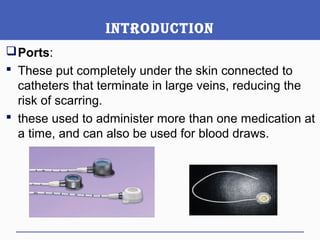
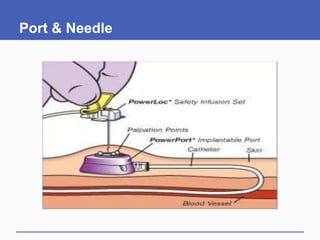
Ports:
 These put completely under the skin connected to
catheters that terminate in large veins, reducing the
risk of scarring.
 these used to administer more than one medication at
a time, and can also be used for blood draws.
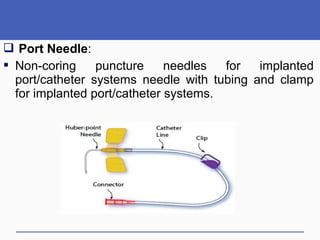
 Port Needle:
 Non-coring puncture needles for implanted
port/catheter systems needle with tubing and clamp
for implanted port/catheter systems.
Port & Needle
Indications:
 Continuous or intermittent administration of pharmaceuticals,
infusions, blood transfusions, blood samples, parenteral nutrition etc.
 pain therapy
 central venous access preoperatively, CVP-monitoring
Contraindication:
 inflammation or infection at portal site
 coagulation disorders
 portal system leakage
Puncture:
•Have patient in a supine position
•Carefully disinfect the skin
•The use of sterile gloves is recommended but not mandatory
•Remove the needle from the peel packaging
•Connect the Luer connector to syringe or infusion
•Remove air from the tubing by flushing with 0.9% NaCl
•Fold wings of the fixation plate upwards to be used as a grip for
advancement of the needle
•Remove the needle protection sleeve
•Gently hold the port and fixation between two fingers
•Advance the needle quickly through the port membrane perpendicular
to the base of the port (no danger of bending of the needle due to special
bevel of the tip)
•Fix the needle with the tape
PROCEDURE
Interruption of infusion
If not in use for longer periods the system should be filled with
physiologic saline
Clamp tubing with closure mechanism
Connect appropriately sized Luer Lock to the connection site
Removal of the needle
The needle should be removed only when clamp is closed to
prevent blood flow into the system.
Do not use syringes less than 10ml volume to prevent excessive
pressures.
Warning:
 Blood deposits in the system generally indicate faulty
handling, leakage, or a defective septum inside the port.
 If a thrombus in the port is suspected, the use of fibrinolysis
agents such as streptokinase or urokinase is possible.
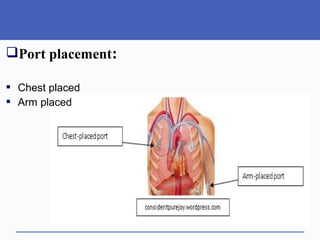
Port placement:
 Chest placed
 Arm placed
After care precaution:
 Clean at all time
 Covered with dressing
 Avoid strenuous activity involving chest or arm at least for 10 days
Risk:
 Infection
 Forming clots
 Air outside lungs
 Catheter dislocation
Use and maintenance instruction
Site preparation
Equipment
Procedure
1.Explain procedures to patient. Warn of needle prick sensation. Sensation of
needle insertion decreases over time. Use of a topical anesthetic may be
appropriate.
2. Wash hands thoroughly.
3. Put on sterile gloves.
4. Paint area with alcohol wipe starting at the port and working outward in a
spiral motion over an area10-13 cm in diameter.
5. Repeat step 4 with antiseptic swabs three times.
Advantage:
Positioned completely under the skin body so image is
protected.
Does not required care and dressing only flushing is
required once a month.
Chances of infection are decreased.
Can be used for long term 6 months to 2 years.
No restriction of activities such as sports, swimming etc.
Available in single and double lumen.
Disadvantage:
Major surgical procedures.
Need for OT and anesthesia.
Removal of port is minor surgical procedures.
Very expensive.
Requires a core needle at the time of infusion.
Core needles are costly and can be kept in the port for one
week.
ReseaRch Methodology
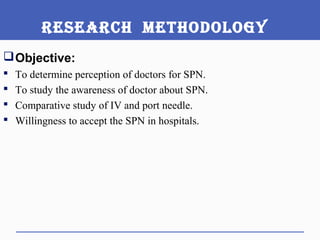
Objective:
 To determine perception of doctors for SPN.
 To study the awareness of doctor about SPN.
 Comparative study of IV and port needle.
 Willingness to accept the SPN in hospitals.
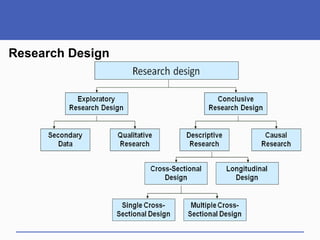
Research Design
Survey Method
Research type:- (quantitative +conclusive) research
Conclusive research:-Descriptive research
Descriptive research:- cross sectional
Cross-sectional:- single cross-sectional
Define the target population:-
Target population: All Doctors working in cancer hospitals.
Elements: A Doctor working in cancer hospitals.
Sampling unit: 50 doctors.
Sampling frame: not available.
Extent: Ahmedabad
Time: 25 Feb to 25 March
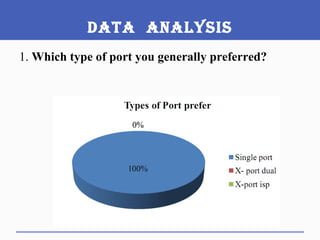
1. Which type of port you generally preferred?
data analysis
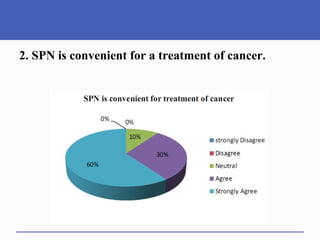
2. SPN is convenient for a treatment of cancer.
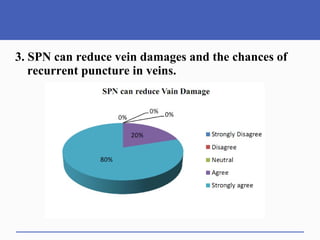
3. SPN can reduce vein damages and the chances of
recurrent puncture in veins.
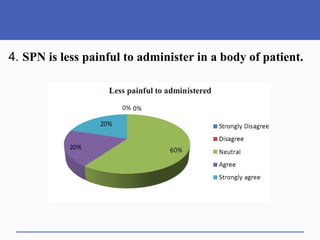
4. SPN is less painful to administer in a body of patient.
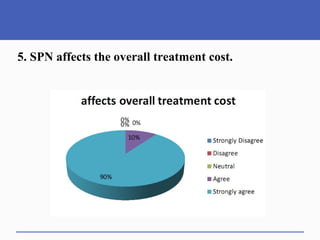
5. SPN affects the overall treatment cost.
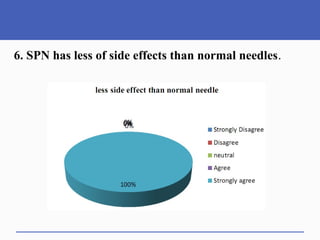
6. SPN has less of side effects than normal needles.
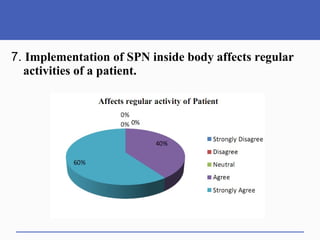
7. Implementation of SPN inside body affects regular
activities of a patient.
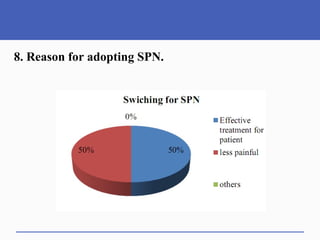
8. Reason for adopting SPN.
Finding and suggestions
 All the cancer hospitals in India prefer SPN for the
treatment of cancer, doctors accept this new technology
after lot experimentation, but are not ready to take risks on
patient by quickly adapting any new technology.
 Also SPN was accepted after it was started used by USA.
For treating long term disease like cancer SPN is most
suitable and convenient tool compared to other needle and
tools.
Conclusion:
 Mostly the docs prefer single port needle that reduces vein
damages and recurrent punctures in vein.
 Also implementing SPN is not so convenient inside the
body. It would also affect a patient’s regular activities to a
certain extent.
 SPN has fewer side effects than normal needle, but
increases cost to a great extent.
 The reason behind using SPN is that it is very effective tool
for treating long term disease like cancer.
Port needle

Port needle

  • 1.
    “TO STUDY THE PERCEPTIONOF DOCTOR’S TOWARDS SAFETY PORT NEEDLE” Presented by: Jinal Patel
  • 2.
  • 3.
    IntroductIon Ports:  These putcompletely under the skin connected to catheters that terminate in large veins, reducing the risk of scarring.  these used to administer more than one medication at a time, and can also be used for blood draws.
  • 4.
     Port Needle: Non-coring puncture needles for implanted port/catheter systems needle with tubing and clamp for implanted port/catheter systems.
  • 5.
  • 6.
    Indications:  Continuous orintermittent administration of pharmaceuticals, infusions, blood transfusions, blood samples, parenteral nutrition etc.  pain therapy  central venous access preoperatively, CVP-monitoring Contraindication:  inflammation or infection at portal site  coagulation disorders  portal system leakage
  • 7.
    Puncture: •Have patient ina supine position •Carefully disinfect the skin •The use of sterile gloves is recommended but not mandatory •Remove the needle from the peel packaging •Connect the Luer connector to syringe or infusion •Remove air from the tubing by flushing with 0.9% NaCl •Fold wings of the fixation plate upwards to be used as a grip for advancement of the needle •Remove the needle protection sleeve •Gently hold the port and fixation between two fingers •Advance the needle quickly through the port membrane perpendicular to the base of the port (no danger of bending of the needle due to special bevel of the tip) •Fix the needle with the tape PROCEDURE
  • 8.
    Interruption of infusion Ifnot in use for longer periods the system should be filled with physiologic saline Clamp tubing with closure mechanism Connect appropriately sized Luer Lock to the connection site Removal of the needle The needle should be removed only when clamp is closed to prevent blood flow into the system. Do not use syringes less than 10ml volume to prevent excessive pressures.
  • 9.
    Warning:  Blood depositsin the system generally indicate faulty handling, leakage, or a defective septum inside the port.  If a thrombus in the port is suspected, the use of fibrinolysis agents such as streptokinase or urokinase is possible.
  • 10.
    Port placement:  Chestplaced  Arm placed
  • 11.
    After care precaution: Clean at all time  Covered with dressing  Avoid strenuous activity involving chest or arm at least for 10 days Risk:  Infection  Forming clots  Air outside lungs  Catheter dislocation
  • 12.
    Use and maintenanceinstruction Site preparation Equipment Procedure 1.Explain procedures to patient. Warn of needle prick sensation. Sensation of needle insertion decreases over time. Use of a topical anesthetic may be appropriate. 2. Wash hands thoroughly. 3. Put on sterile gloves. 4. Paint area with alcohol wipe starting at the port and working outward in a spiral motion over an area10-13 cm in diameter. 5. Repeat step 4 with antiseptic swabs three times.
  • 13.
    Advantage: Positioned completely underthe skin body so image is protected. Does not required care and dressing only flushing is required once a month. Chances of infection are decreased. Can be used for long term 6 months to 2 years. No restriction of activities such as sports, swimming etc. Available in single and double lumen.
  • 14.
    Disadvantage: Major surgical procedures. Needfor OT and anesthesia. Removal of port is minor surgical procedures. Very expensive. Requires a core needle at the time of infusion. Core needles are costly and can be kept in the port for one week.
  • 15.
    ReseaRch Methodology Objective:  Todetermine perception of doctors for SPN.  To study the awareness of doctor about SPN.  Comparative study of IV and port needle.  Willingness to accept the SPN in hospitals.
  • 16.
  • 17.
    Survey Method Research type:-(quantitative +conclusive) research Conclusive research:-Descriptive research Descriptive research:- cross sectional Cross-sectional:- single cross-sectional Define the target population:- Target population: All Doctors working in cancer hospitals. Elements: A Doctor working in cancer hospitals. Sampling unit: 50 doctors. Sampling frame: not available. Extent: Ahmedabad Time: 25 Feb to 25 March
  • 18.
    1. Which typeof port you generally preferred? data analysis
  • 19.
    2. SPN isconvenient for a treatment of cancer.
  • 20.
    3. SPN canreduce vein damages and the chances of recurrent puncture in veins.
  • 21.
    4. SPN isless painful to administer in a body of patient.
  • 22.
    5. SPN affectsthe overall treatment cost.
  • 23.
    6. SPN hasless of side effects than normal needles.
  • 24.
    7. Implementation ofSPN inside body affects regular activities of a patient.
  • 25.
    8. Reason foradopting SPN.
  • 26.
    Finding and suggestions All the cancer hospitals in India prefer SPN for the treatment of cancer, doctors accept this new technology after lot experimentation, but are not ready to take risks on patient by quickly adapting any new technology.  Also SPN was accepted after it was started used by USA. For treating long term disease like cancer SPN is most suitable and convenient tool compared to other needle and tools.
  • 27.
    Conclusion:  Mostly thedocs prefer single port needle that reduces vein damages and recurrent punctures in vein.  Also implementing SPN is not so convenient inside the body. It would also affect a patient’s regular activities to a certain extent.  SPN has fewer side effects than normal needle, but increases cost to a great extent.  The reason behind using SPN is that it is very effective tool for treating long term disease like cancer.