Annotated Portfolios
Rung-Huei Liang
Taiwan Tech
2018
Related papers
• William Gaver. 2012. What should we expect from research through
design?. In Proceedings of the SIGCHI Conference on Human Factors in
Computing Systems (CHI '12).
• Bill Gaver and John Bowers. 2012. Annotated portfolios. interactions 19, 4
(July 2012), 40-49.
• Jonas Löwgren. 2013. Annotated portfolios and other forms of
intermediate-level knowledge. interactions 20, 1 (January 2013), 30-34.
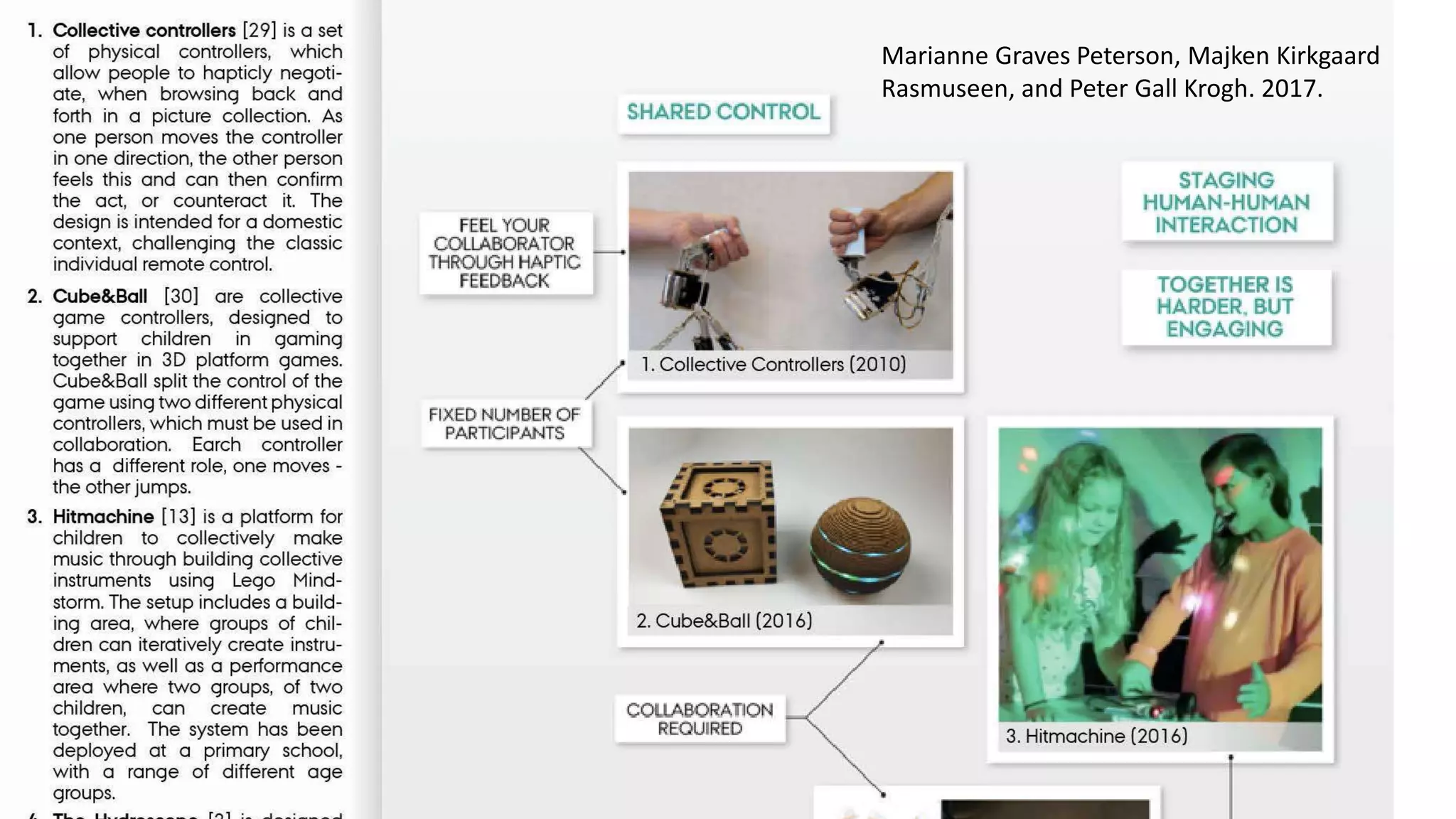
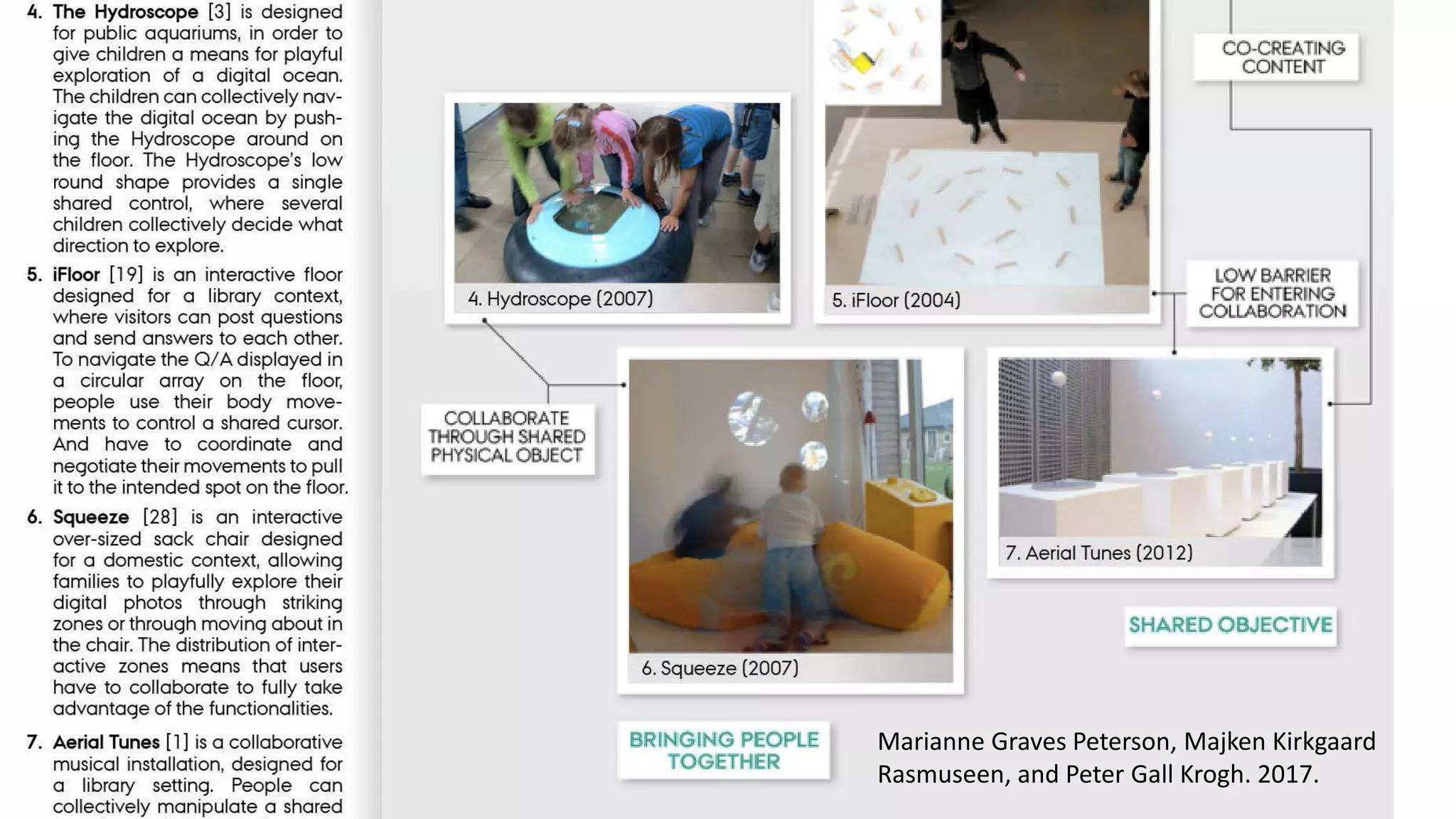
• Marianne Graves Peterson, Majken Kirkgaard Rasmuseen, and Peter Gall
Krogh. 2017. Collective interaction: a designerly visual analysis of seven
research prototypes. In Proceedings of the 29th Australian Conference on
Computer-Human Interaction (OZCHI '17)
Figure 1. Sketch design for an annotated portfolio of Dieter Rams' designs for Braun and Vitsoe
(note that annotated portfolios are not defined by their graphic presentation) (William Gaver. 2012)
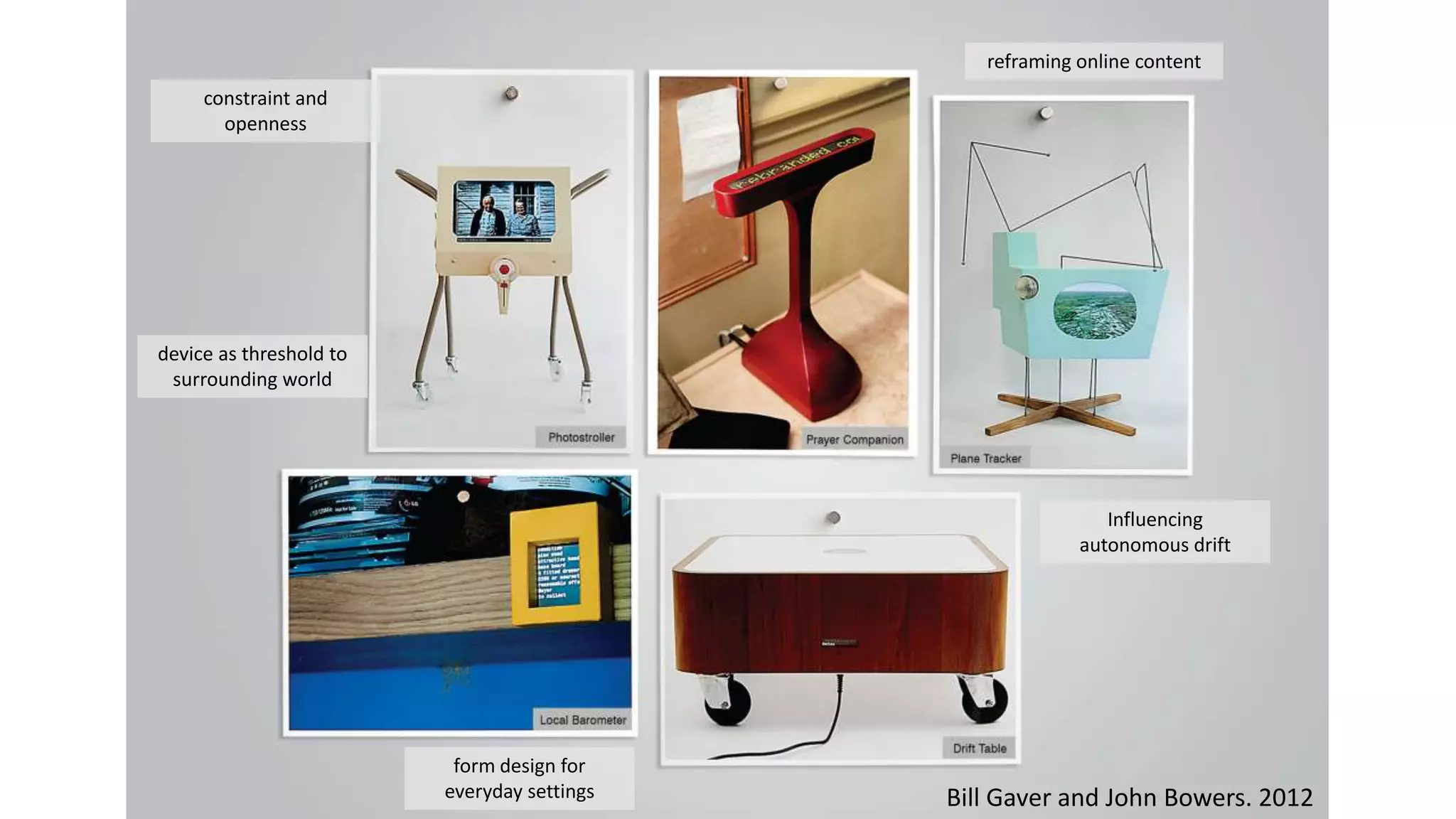
Bill Gaver and John Bowers. 2012
Influencing
autonomous drift
device as threshold to
surrounding world
reframing online
content
framing older people as
curious and engaged
constraint and
openness
form design for
everyday settings
interaction techniques
for variably abled
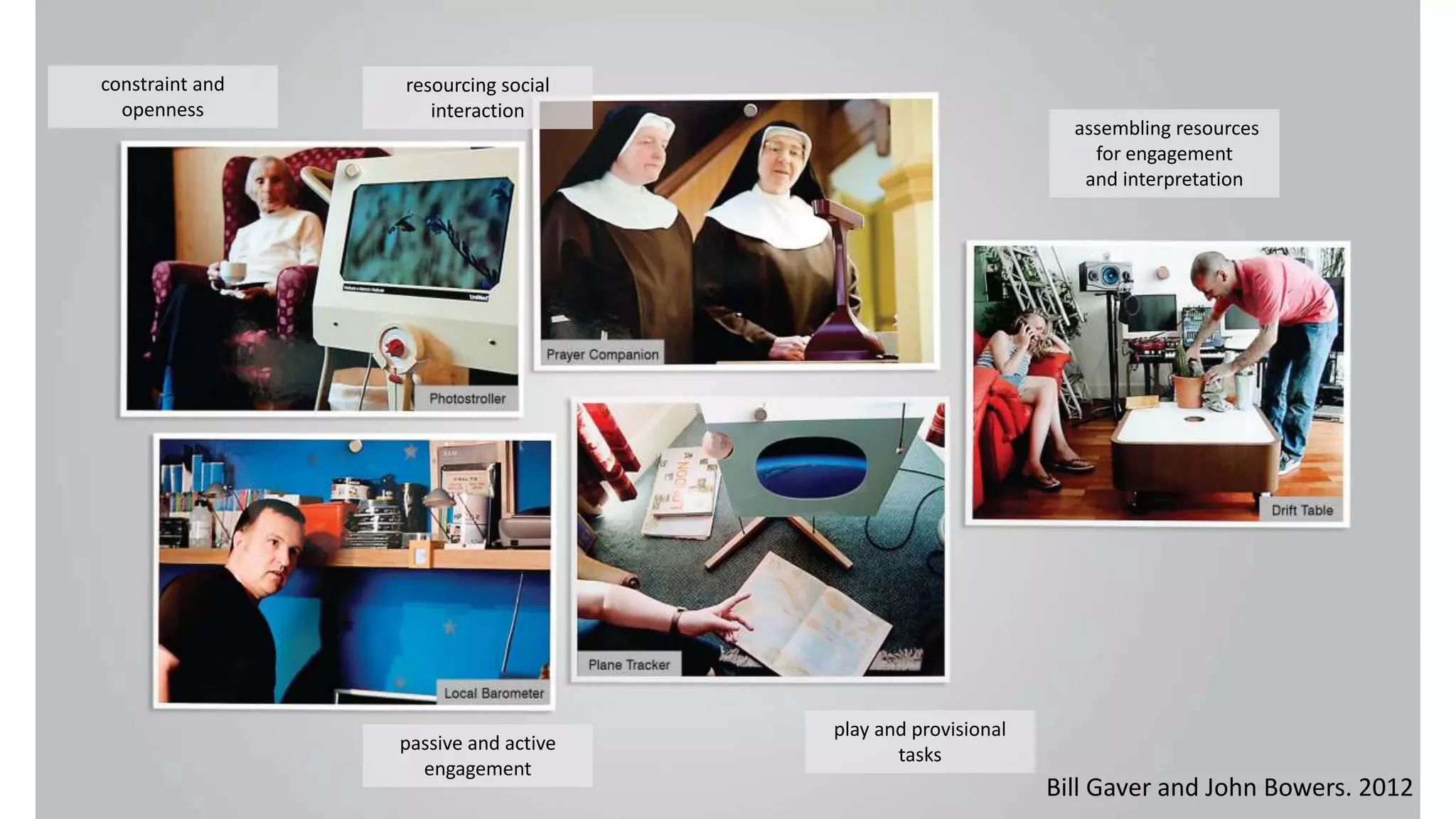
Bill Gaver and John Bowers. 2012
constraint and
openness
device as threshold to
surrounding world
reframing online content
Influencing
autonomous drift
form design for
everyday settings Bill Gaver and John Bowers. 2012
constraint and
openness
resourcing social
interaction
passive and active
engagement
play and provisional
tasks
assembling resources
for engagement
and interpretation
Bill Gaver and John Bowers. 2012
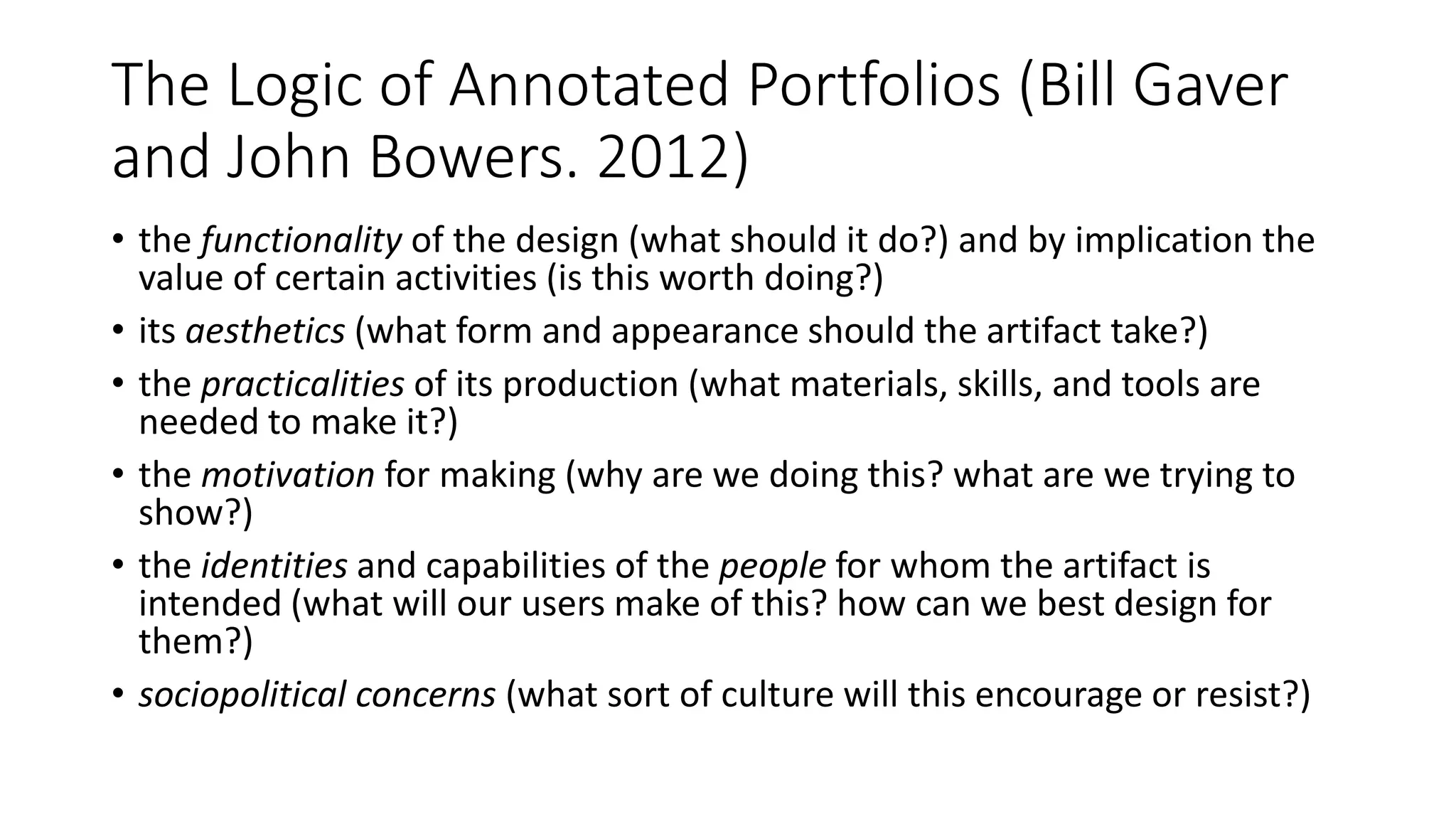
The Logic of Annotated Portfolios (Bill Gaver
and John Bowers. 2012)
• the functionality of the design (what should it do?) and by implication the
value of certain activities (is this worth doing?)
• its aesthetics (what form and appearance should the artifact take?)
• the practicalities of its production (what materials, skills, and tools are
needed to make it?)
• the motivation for making (why are we doing this? what are we trying to
show?)
• the identities and capabilities of the people for whom the artifact is
intended (what will our users make of this? how can we best design for
them?)
• sociopolitical concerns (what sort of culture will this encourage or resist?)
Annotation patterns (Liang’s suggestions)
• Ving + adj. + N. (functionality, practicalities…)
• N. and N. (functionality, aesthetics,…)
• N. as N. (metaphor, expression, function…)
• N. for N. (motivation, identity, sociopolitical concerns…)
Jonas Löwgren. 2013
Jonas Löwgren. 2013
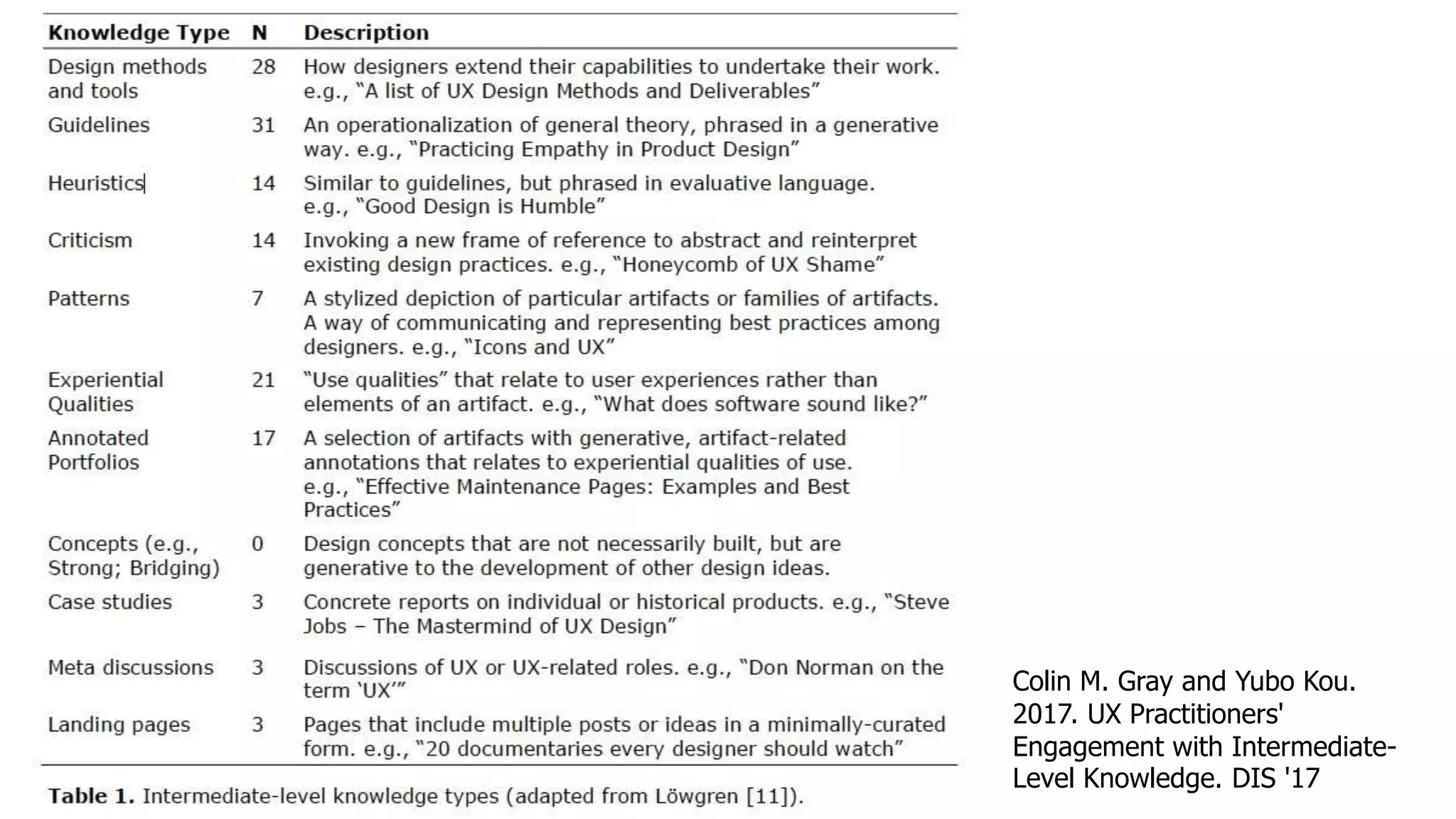
Colin M. Gray and Yubo Kou.
2017. UX Practitioners'
Engagement with Intermediate-
Level Knowledge. DIS '17
Annotation Practice
• Identify several strong concepts (SC) and experiential qualities (EQ)
• Compose annotation from (SC) and (EQ) with annotation patterns
• Reframing new strong concepts
• Modify annotations to generate new expression
Marianne Graves Peterson, Majken Kirkgaard
Rasmuseen, and Peter Gall Krogh. 2017.
Marianne Graves Peterson, Majken Kirkgaard
Rasmuseen, and Peter Gall Krogh. 2017.
Annotated portfolios

Annotated portfolios

  • 1.
  • 2.
    Related papers • WilliamGaver. 2012. What should we expect from research through design?. In Proceedings of the SIGCHI Conference on Human Factors in Computing Systems (CHI '12). • Bill Gaver and John Bowers. 2012. Annotated portfolios. interactions 19, 4 (July 2012), 40-49. • Jonas Löwgren. 2013. Annotated portfolios and other forms of intermediate-level knowledge. interactions 20, 1 (January 2013), 30-34. • Marianne Graves Peterson, Majken Kirkgaard Rasmuseen, and Peter Gall Krogh. 2017. Collective interaction: a designerly visual analysis of seven research prototypes. In Proceedings of the 29th Australian Conference on Computer-Human Interaction (OZCHI '17)
  • 3.
    Figure 1. Sketchdesign for an annotated portfolio of Dieter Rams' designs for Braun and Vitsoe (note that annotated portfolios are not defined by their graphic presentation) (William Gaver. 2012)
  • 4.
    Bill Gaver andJohn Bowers. 2012
  • 5.
    Influencing autonomous drift device asthreshold to surrounding world reframing online content framing older people as curious and engaged constraint and openness form design for everyday settings interaction techniques for variably abled Bill Gaver and John Bowers. 2012
  • 6.
    constraint and openness device asthreshold to surrounding world reframing online content Influencing autonomous drift form design for everyday settings Bill Gaver and John Bowers. 2012
  • 7.
    constraint and openness resourcing social interaction passiveand active engagement play and provisional tasks assembling resources for engagement and interpretation Bill Gaver and John Bowers. 2012
  • 8.
    The Logic ofAnnotated Portfolios (Bill Gaver and John Bowers. 2012) • the functionality of the design (what should it do?) and by implication the value of certain activities (is this worth doing?) • its aesthetics (what form and appearance should the artifact take?) • the practicalities of its production (what materials, skills, and tools are needed to make it?) • the motivation for making (why are we doing this? what are we trying to show?) • the identities and capabilities of the people for whom the artifact is intended (what will our users make of this? how can we best design for them?) • sociopolitical concerns (what sort of culture will this encourage or resist?)
  • 9.
    Annotation patterns (Liang’ssuggestions) • Ving + adj. + N. (functionality, practicalities…) • N. and N. (functionality, aesthetics,…) • N. as N. (metaphor, expression, function…) • N. for N. (motivation, identity, sociopolitical concerns…)
  • 10.
  • 11.
  • 12.
    Colin M. Grayand Yubo Kou. 2017. UX Practitioners' Engagement with Intermediate- Level Knowledge. DIS '17
  • 13.
    Annotation Practice • Identifyseveral strong concepts (SC) and experiential qualities (EQ) • Compose annotation from (SC) and (EQ) with annotation patterns • Reframing new strong concepts • Modify annotations to generate new expression
  • 14.
    Marianne Graves Peterson,Majken Kirkgaard Rasmuseen, and Peter Gall Krogh. 2017.
  • 15.
    Marianne Graves Peterson,Majken Kirkgaard Rasmuseen, and Peter Gall Krogh. 2017.