Iris Palomares Margarit
Ivet Sentañes Gabarroca
Mònica Ros Ortega
“Style”

 The term “style” refers to each person who learns in a
 different way, using different strategies even though
 they have the same motivations as the other learning
 styles.
LEARNING STYLES
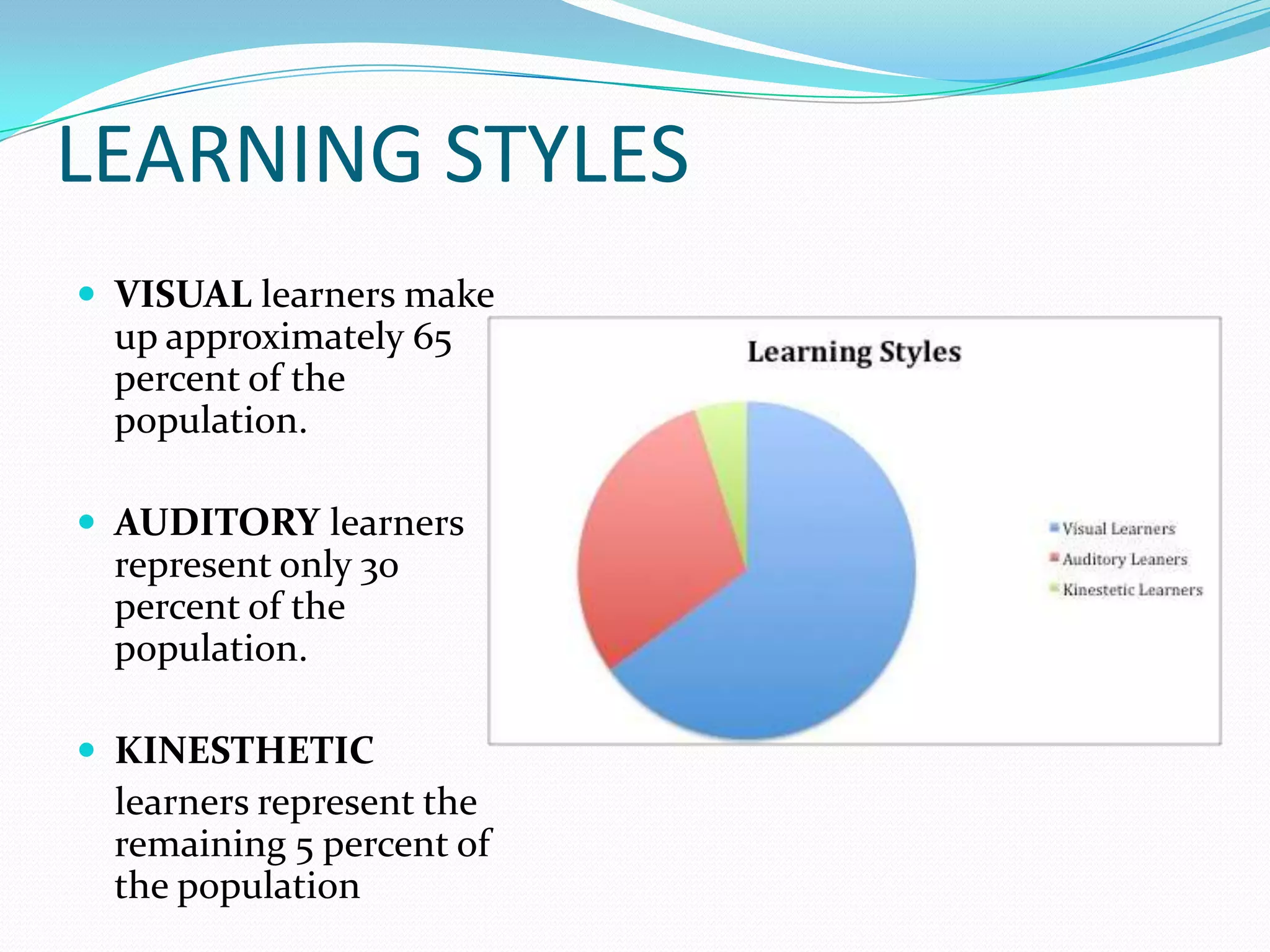
 VISUAL learners make
  up approximately 65
  percent of the
  population.

 AUDITORY learners
  represent only 30
  percent of the
  population.

 KINESTHETIC
  learners represent the
  remaining 5 percent of
  the population
VISUAL LEARNERS

 “AN IMAGE IS BETTER THAN
THOUSAND WORDS! “
Characteristics
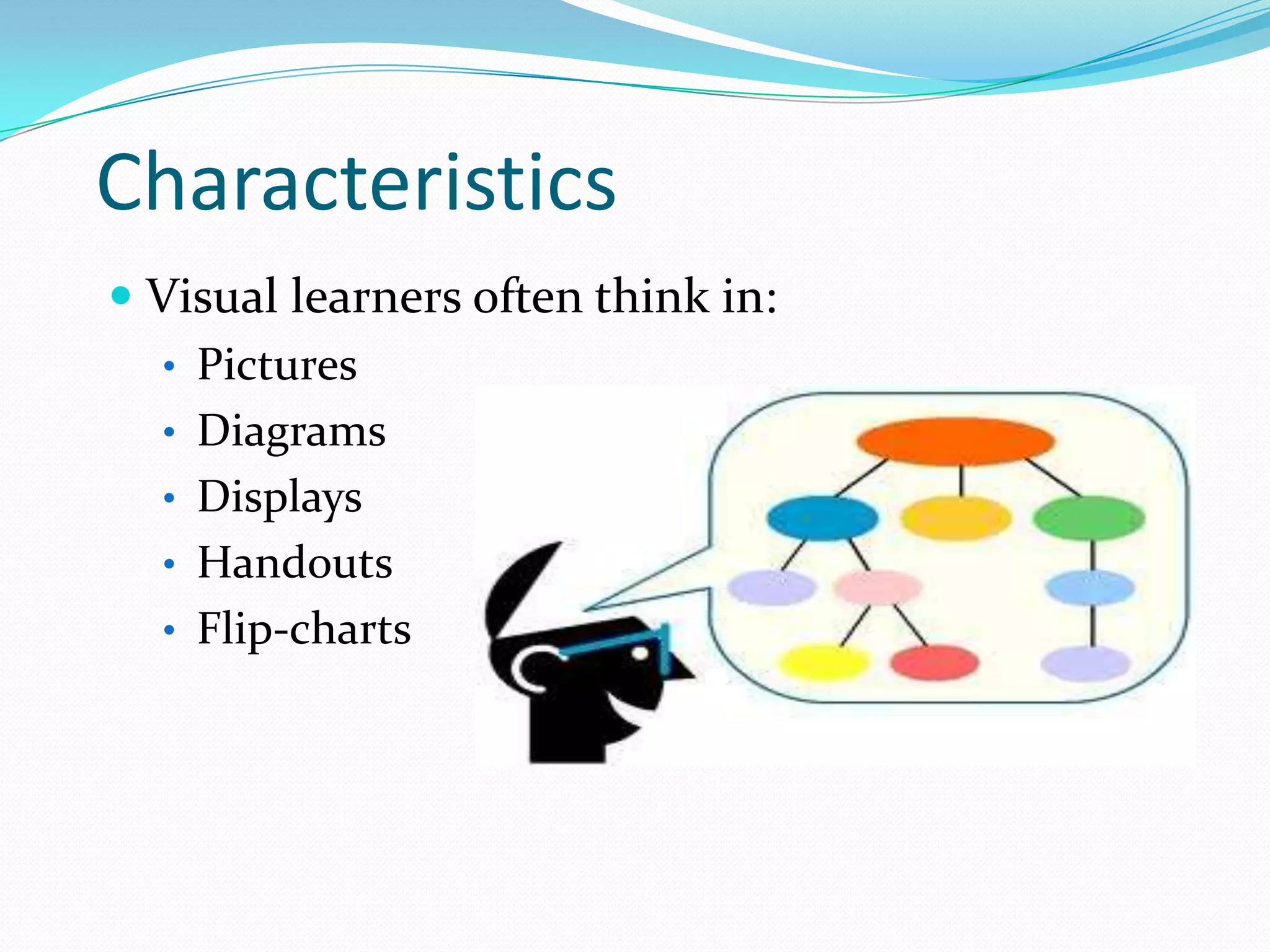
 Visual learners often think in:
  • Pictures
  • Diagrams
  • Displays
  • Handouts
  • Flip-charts
Visual Students
 They learn much better when they read or seen the
  information.
 For an instance: In a conference they have preference
  to read the photocopies or other kind of guide before
  an oral explanation.
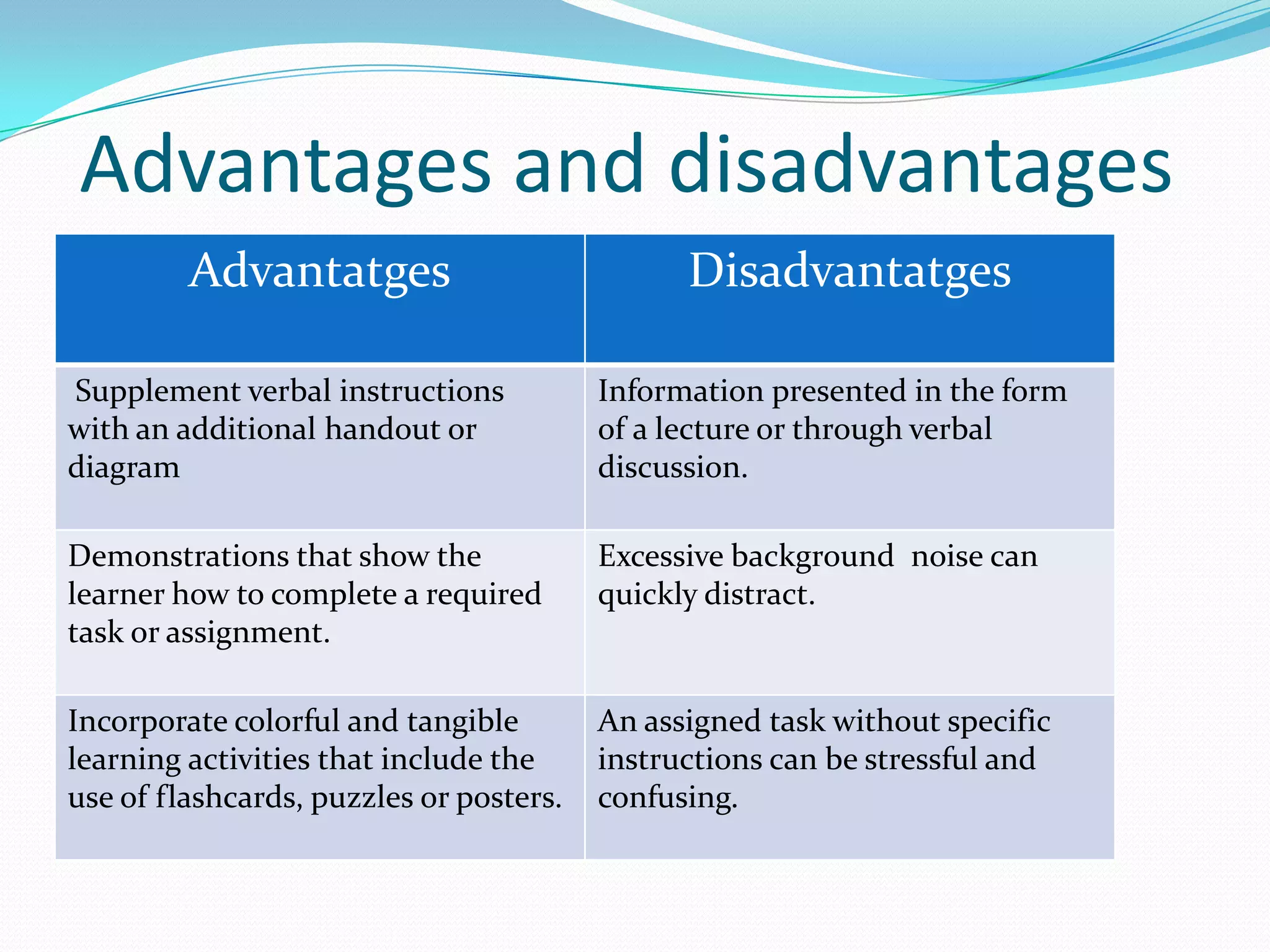
Advantages and disadvantages
         Advantatges                           Disadvantatges

Supplement verbal instructions           Information presented in the form
with an additional handout or            of a lecture or through verbal
diagram                                  discussion.

Demonstrations that show the             Excessive background noise can
learner how to complete a required       quickly distract.
task or assignment.

Incorporate colorful and tangible        An assigned task without specific
learning activities that include the     instructions can be stressful and
use of flashcards, puzzles or posters.   confusing.
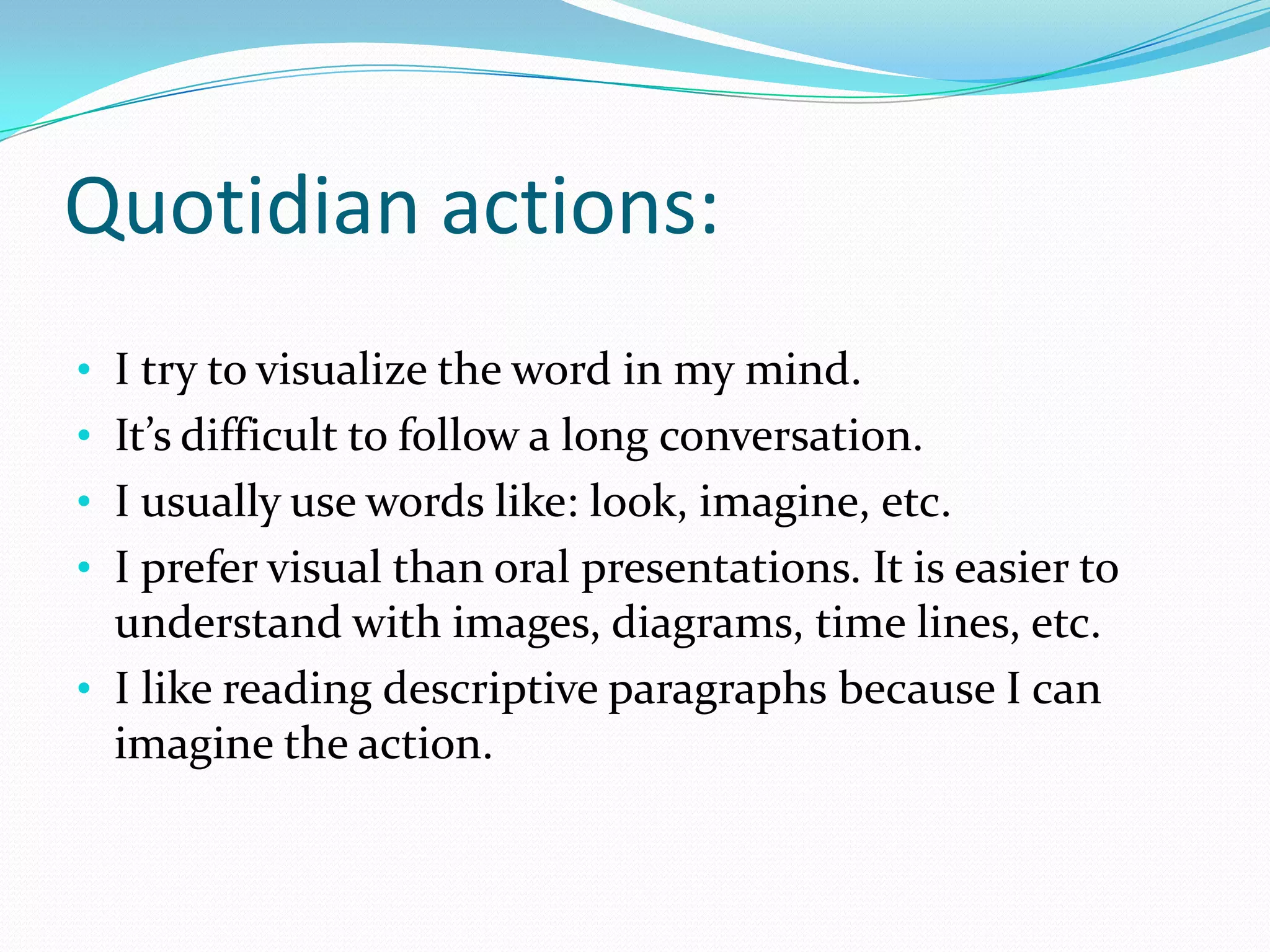
Quotidian actions:
• I try to visualize the word in my mind.
• It’s difficult to follow a long conversation.
• I usually use words like: look, imagine, etc.
• I prefer visual than oral presentations. It is easier to
  understand with images, diagrams, time lines, etc.
• I like reading descriptive paragraphs because I can
  imagine the action.
How can visual learners help
themselves?
 Try to find diagrams, schematics, photographs or any
  other visual representation.
 Ask to your lecture, consult reference books, and see
  if any CD-ROM or video of the course material are
  available.
 Prepare a concept map by listing key points, enclosing
  them in boxes or circles, and drawing lines with arrows
  between concepts to show connections.
 Color your notes with a highlighter.
PERSONAL OPINION
Do this power point, search information and
select the most important points has become a
nice way to know what kind of learners we are and
what can do to improve our skills while we are
studying.

Visual learners

  • 1.
    Iris Palomares Margarit IvetSentañes Gabarroca Mònica Ros Ortega
  • 2.
    “Style”  The term“style” refers to each person who learns in a different way, using different strategies even though they have the same motivations as the other learning styles.
  • 3.
    LEARNING STYLES  VISUALlearners make up approximately 65 percent of the population.  AUDITORY learners represent only 30 percent of the population.  KINESTHETIC learners represent the remaining 5 percent of the population
  • 4.
    VISUAL LEARNERS  “ANIMAGE IS BETTER THAN THOUSAND WORDS! “
  • 5.
    Characteristics  Visual learnersoften think in: • Pictures • Diagrams • Displays • Handouts • Flip-charts
  • 6.
    Visual Students  Theylearn much better when they read or seen the information.  For an instance: In a conference they have preference to read the photocopies or other kind of guide before an oral explanation.
  • 7.
    Advantages and disadvantages Advantatges Disadvantatges Supplement verbal instructions Information presented in the form with an additional handout or of a lecture or through verbal diagram discussion. Demonstrations that show the Excessive background noise can learner how to complete a required quickly distract. task or assignment. Incorporate colorful and tangible An assigned task without specific learning activities that include the instructions can be stressful and use of flashcards, puzzles or posters. confusing.
  • 8.
    Quotidian actions: • Itry to visualize the word in my mind. • It’s difficult to follow a long conversation. • I usually use words like: look, imagine, etc. • I prefer visual than oral presentations. It is easier to understand with images, diagrams, time lines, etc. • I like reading descriptive paragraphs because I can imagine the action.
  • 9.
    How can visuallearners help themselves?  Try to find diagrams, schematics, photographs or any other visual representation.  Ask to your lecture, consult reference books, and see if any CD-ROM or video of the course material are available.  Prepare a concept map by listing key points, enclosing them in boxes or circles, and drawing lines with arrows between concepts to show connections.  Color your notes with a highlighter.
  • 10.
    PERSONAL OPINION Do thispower point, search information and select the most important points has become a nice way to know what kind of learners we are and what can do to improve our skills while we are studying.