“Make sure your content must be fully optimize for
readers, search crawlers, and your marketing goals.”
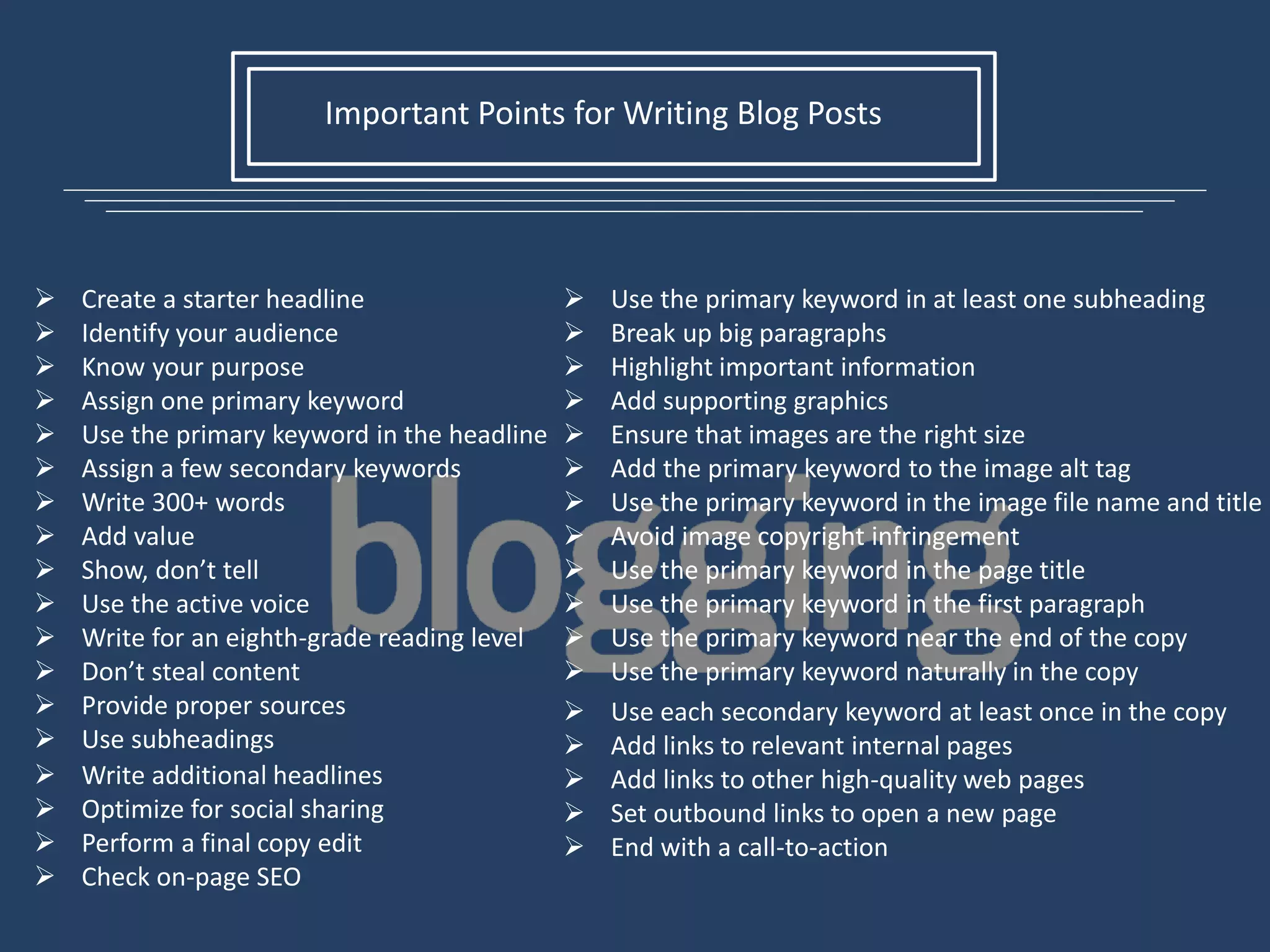
Important Points for Writing Blog Posts
 Create a starter headline
 Identify your audience
 Know your purpose
 Assign one primary keyword
 Use the primary keyword in the headline
 Assign a few secondary keywords
 Write 300+ words
 Add value
 Show, don’t tell
 Use the active voice
 Write for an eighth-grade reading level
 Don’t steal content
 Provide proper sources
 Use subheadings
 Use the primary keyword in at least one subheading
 Break up big paragraphs
 Highlight important information
 Add supporting graphics
 Ensure that images are the right size
 Add the primary keyword to the image alt tag
 Use the primary keyword in the image file name and title
 Avoid image copyright infringement
 Use the primary keyword in the page title
 Use the primary keyword in the first paragraph
 Use the primary keyword near the end of the copy
 Use the primary keyword naturally in the copy
 Use each secondary keyword at least once in the copy
 Add links to relevant internal pages
 Add links to other high-quality web pages
 Set outbound links to open a new page
 End with a call-to-action
 Write additional headlines
 Optimize for social sharing
 Perform a final copy edit
 Check on-page SEO
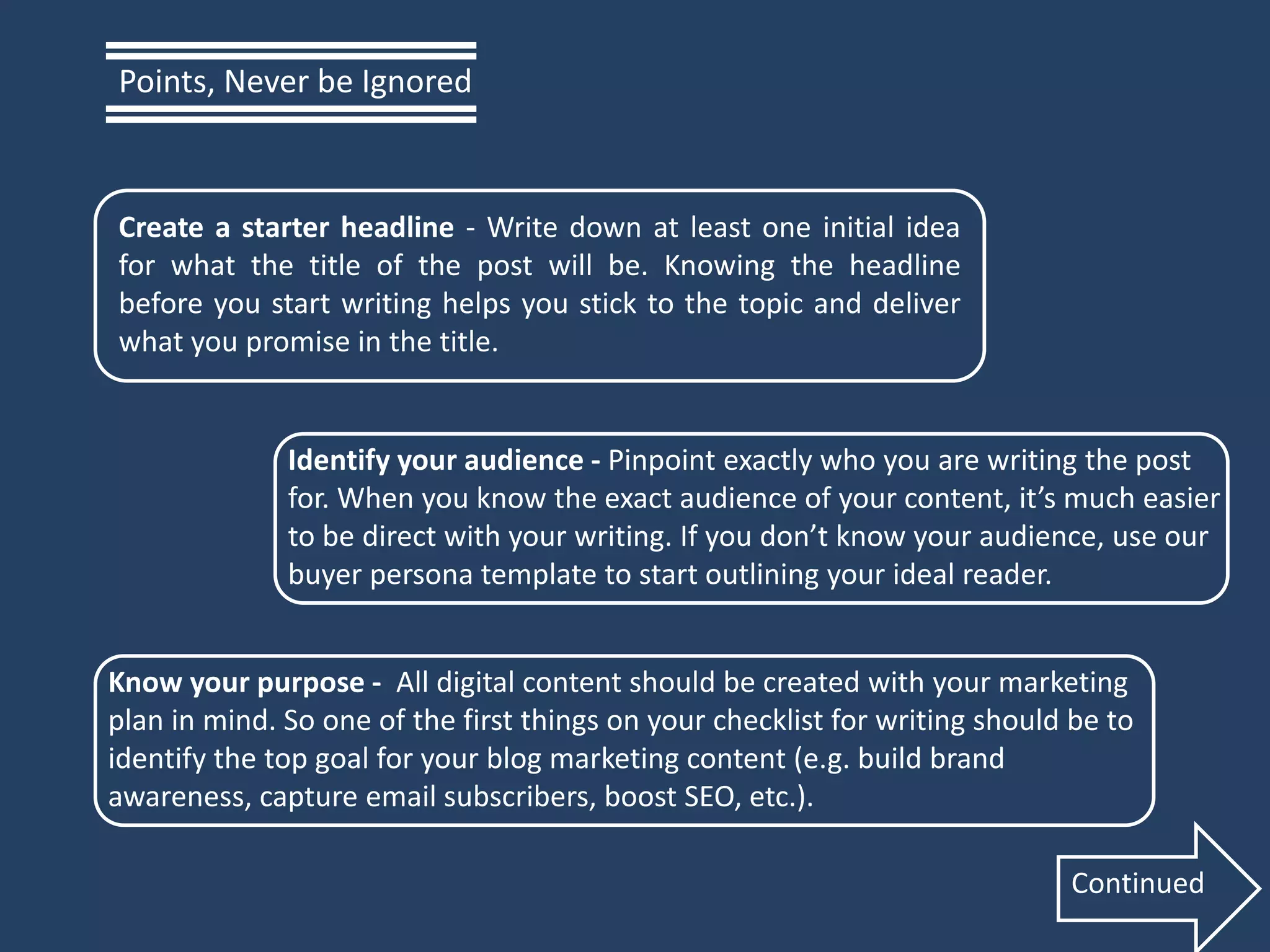
Create a starter headline - Write down at least one initial idea
for what the title of the post will be. Knowing the headline
before you start writing helps you stick to the topic and deliver
what you promise in the title.
Identify your audience - Pinpoint exactly who you are writing the post
for. When you know the exact audience of your content, it’s much easier
to be direct with your writing. If you don’t know your audience, use our
buyer persona template to start outlining your ideal reader.
Know your purpose - All digital content should be created with your marketing
plan in mind. So one of the first things on your checklist for writing should be to
identify the top goal for your blog marketing content (e.g. build brand
awareness, capture email subscribers, boost SEO, etc.).
Points, Never be Ignored
Continued
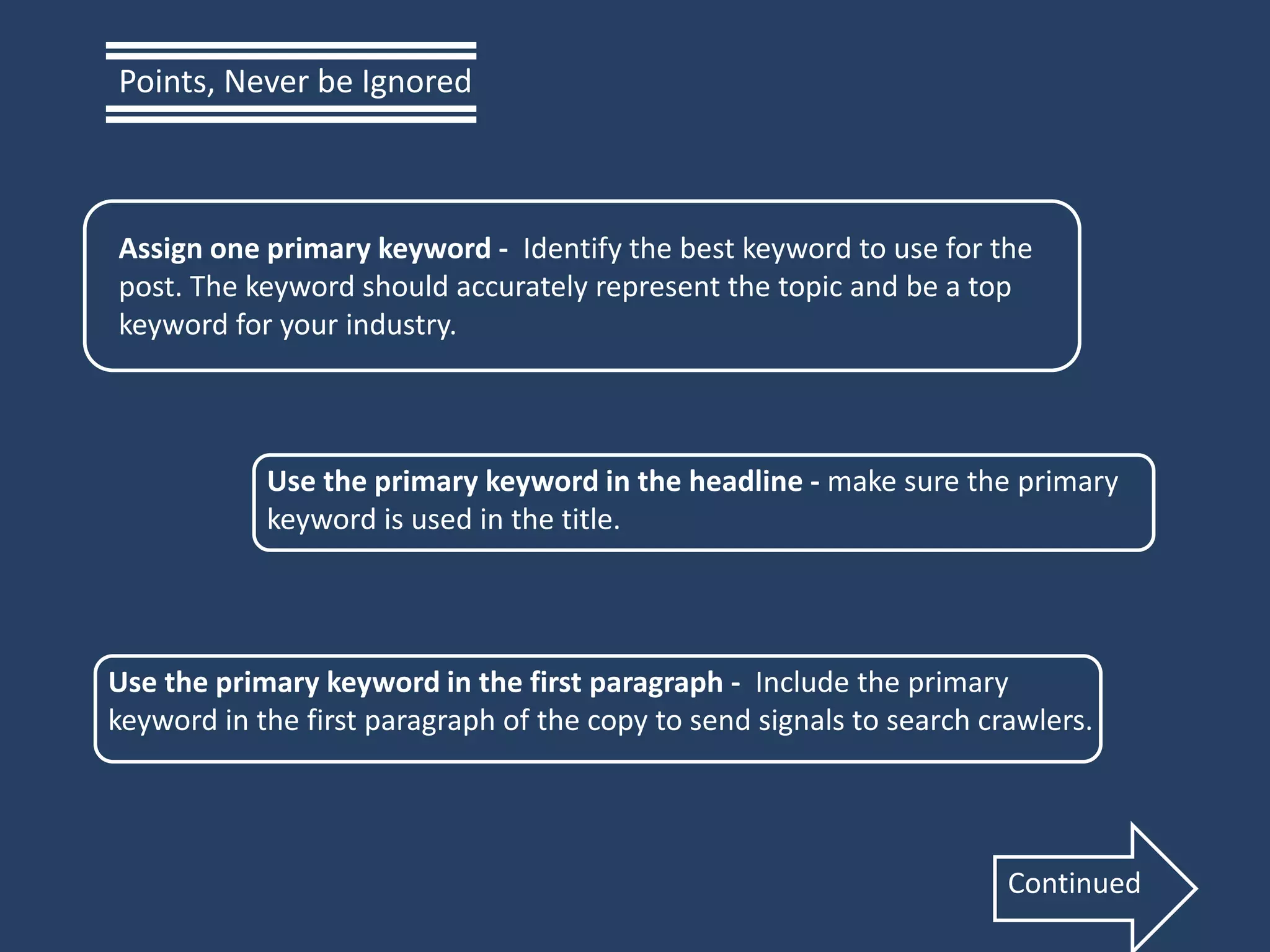
Assign one primary keyword - Identify the best keyword to use for the
post. The keyword should accurately represent the topic and be a top
keyword for your industry.
Use the primary keyword in the headline - make sure the primary
keyword is used in the title.
Use the primary keyword in the first paragraph - Include the primary
keyword in the first paragraph of the copy to send signals to search crawlers.
Points, Never be Ignored
Continued
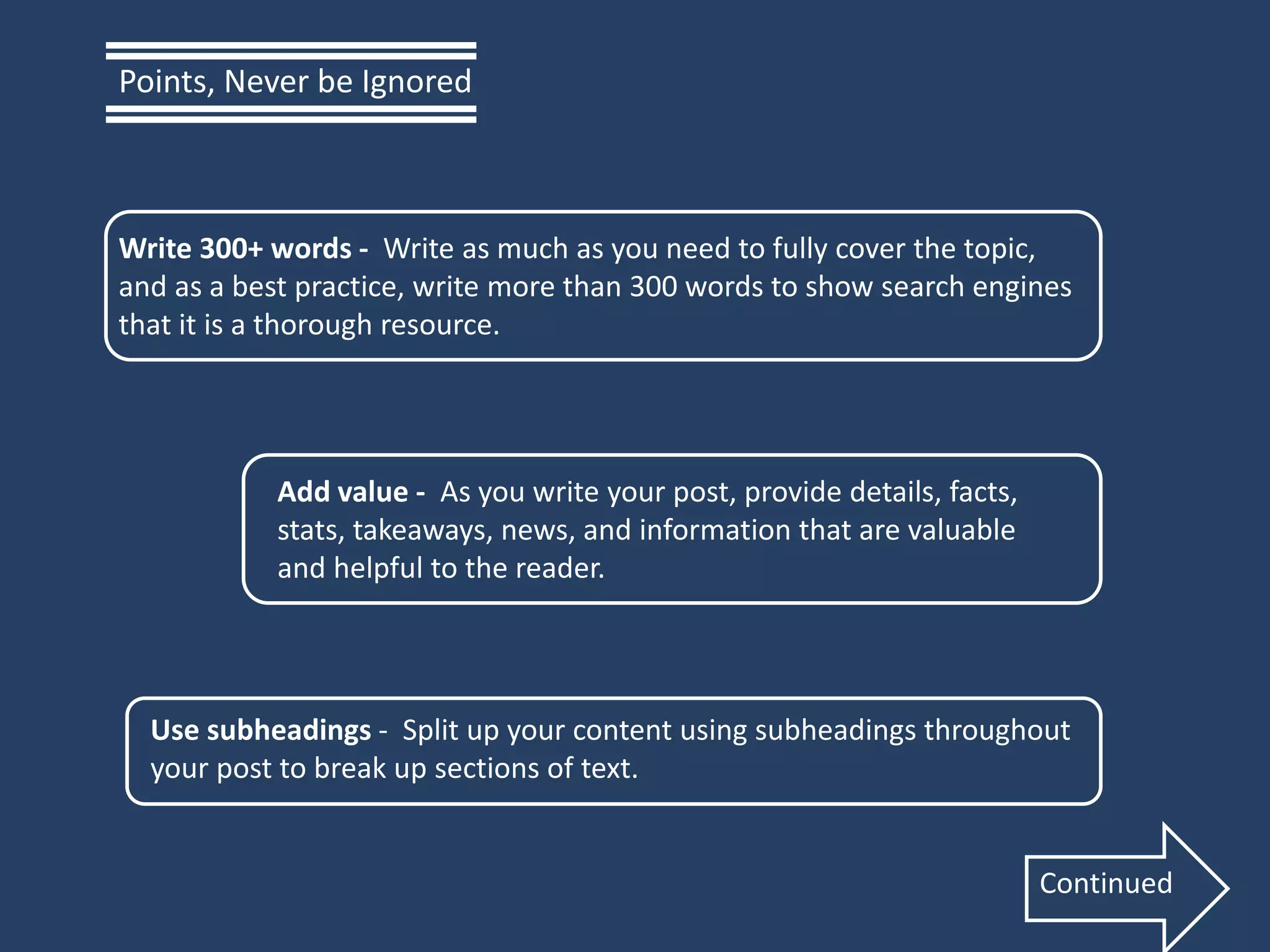
Write 300+ words - Write as much as you need to fully cover the topic,
and as a best practice, write more than 300 words to show search engines
that it is a thorough resource.
Add value - As you write your post, provide details, facts,
stats, takeaways, news, and information that are valuable
and helpful to the reader.
Use subheadings - Split up your content using subheadings throughout
your post to break up sections of text.
Points, Never be Ignored
Continued
Break up big paragraphs - Break up big blocks of text and paragraphs by
adding paragraphs and white space.
Highlight important information - One of the most important content writing tips is
using formatting features that make posts easier to skim. Bold, italicize, or
otherwise highlight important information.
Add supporting graphics - Your blog content checklist should also include adding
images, videos, embedded social posts, etc., that make the post more engaging
or interesting.
Points, Never be Ignored
Ensure that every post you publish has a purpose, and plan to
advance your marketing objectives. Use all important points for
writing and SEO content optimization tips to never miss a step.
Conclusion
Keep Touch With US
Ivan InfoTech
sales@ivaninfotech.com
hr@ivaninfotech.com
Subscribe On
YouTube
@Copyright Ivan Infotech Pvt Ltd 2017-18

How To Write Fully Optimized Content for Blogging

  • 1.
    “Make sure yourcontent must be fully optimize for readers, search crawlers, and your marketing goals.”
  • 2.
    Important Points forWriting Blog Posts  Create a starter headline  Identify your audience  Know your purpose  Assign one primary keyword  Use the primary keyword in the headline  Assign a few secondary keywords  Write 300+ words  Add value  Show, don’t tell  Use the active voice  Write for an eighth-grade reading level  Don’t steal content  Provide proper sources  Use subheadings  Use the primary keyword in at least one subheading  Break up big paragraphs  Highlight important information  Add supporting graphics  Ensure that images are the right size  Add the primary keyword to the image alt tag  Use the primary keyword in the image file name and title  Avoid image copyright infringement  Use the primary keyword in the page title  Use the primary keyword in the first paragraph  Use the primary keyword near the end of the copy  Use the primary keyword naturally in the copy  Use each secondary keyword at least once in the copy  Add links to relevant internal pages  Add links to other high-quality web pages  Set outbound links to open a new page  End with a call-to-action  Write additional headlines  Optimize for social sharing  Perform a final copy edit  Check on-page SEO
  • 3.
    Create a starterheadline - Write down at least one initial idea for what the title of the post will be. Knowing the headline before you start writing helps you stick to the topic and deliver what you promise in the title. Identify your audience - Pinpoint exactly who you are writing the post for. When you know the exact audience of your content, it’s much easier to be direct with your writing. If you don’t know your audience, use our buyer persona template to start outlining your ideal reader. Know your purpose - All digital content should be created with your marketing plan in mind. So one of the first things on your checklist for writing should be to identify the top goal for your blog marketing content (e.g. build brand awareness, capture email subscribers, boost SEO, etc.). Points, Never be Ignored Continued
  • 4.
    Assign one primarykeyword - Identify the best keyword to use for the post. The keyword should accurately represent the topic and be a top keyword for your industry. Use the primary keyword in the headline - make sure the primary keyword is used in the title. Use the primary keyword in the first paragraph - Include the primary keyword in the first paragraph of the copy to send signals to search crawlers. Points, Never be Ignored Continued
  • 5.
    Write 300+ words- Write as much as you need to fully cover the topic, and as a best practice, write more than 300 words to show search engines that it is a thorough resource. Add value - As you write your post, provide details, facts, stats, takeaways, news, and information that are valuable and helpful to the reader. Use subheadings - Split up your content using subheadings throughout your post to break up sections of text. Points, Never be Ignored Continued
  • 6.
    Break up bigparagraphs - Break up big blocks of text and paragraphs by adding paragraphs and white space. Highlight important information - One of the most important content writing tips is using formatting features that make posts easier to skim. Bold, italicize, or otherwise highlight important information. Add supporting graphics - Your blog content checklist should also include adding images, videos, embedded social posts, etc., that make the post more engaging or interesting. Points, Never be Ignored
  • 7.
    Ensure that everypost you publish has a purpose, and plan to advance your marketing objectives. Use all important points for writing and SEO content optimization tips to never miss a step. Conclusion
  • 8.
    Keep Touch WithUS Ivan InfoTech sales@ivaninfotech.com hr@ivaninfotech.com Subscribe On YouTube @Copyright Ivan Infotech Pvt Ltd 2017-18