IP and the Biopharma Startup 
Craig Kenesky, Ph.D. 
Wilson Sonsini Goodrich & Rosati, PC 
October 29, 2014
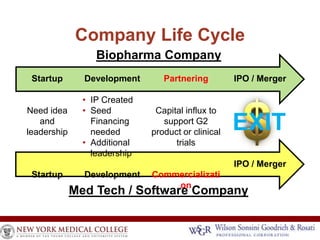
Company Life Cycle 
Development 
• IP Created 
• Seed 
Financing 
needed 
• Additional 
leadership 
Development 
Startup 
Need idea 
and 
leadership 
Startup 
Partnering 
Capital influx to 
support G2 
product or clinical 
trials 
Commercializati 
on 
IPO / Merger 
EXIT 
IPO / Merger 
Biopharma Company 
Med Tech / Software Company
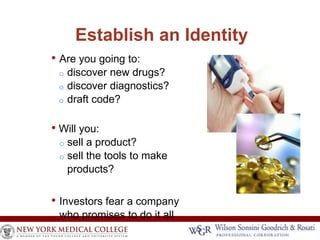
Establish an Identity 
• Are you going to: 
o discover new drugs? 
o discover diagnostics? 
o draft code? 
• Will you: 
o sell a product? 
o sell the tools to make 
products? 
• Investors fear a company 
who promises to do it all
IP in an Innovator Company 
• IP provides most, or all, the value of a bio 
start up 
• Major investors examine your IP closely 
• Poor IP can make an innovation 
unattractive 
• Patent or publish? 
o You can do both if you take patent 
steps first
IP – Initial Steps / Diligence 
• First Generation Patents: 
o Often licensed from a university 
o Protect the key, novel 
innovation 
o What is the state of the art? 
o When do they expire? (20 year 
term) 
• Third Party (Competitor) Patents: 
o Can we license that too? 
o Can we avoid competitor IP? 
• Need a pitch deck and business 
plan
University IP Licensing Terms 
ECONOMIC 
• Equity in Company 
• Upfront Payment 
• Royalty on Sales 
• University Patent 
Costs 
• Milestone Payments 
• Sublicensing 
Revenue 
NON-ECONOMIC 
• Which, how many, 
patents 
• Field of use 
• Territory 
• Term 
• Diligence 
• Sublicensing 
Restrictions
Know Your Regulatory 
Exclusivity 
United States 
• New Chemical Entity 5 Years 
• Combination Drugs with a NCE 5 Years 
• New Formulation of Old Drug 3 Years 
• New Use for Old Drug 3 Years 
• Orphan Indication 7 Years 
• Biosimilar (i.e., antibody) 12 Years 
• Pediatric 6 Month Extension 
Can often postpone generic entry by 2.5 Years 
Europe 
• Data Exclusivity 10 Years 
• Market Exclusivity +1 Year 
• Second Indication +1 Year
Later Generation Patents 
• Can extend (double?) lifetime of portfolio 
• Must provide protection beyond FDA 
exclusivity 
• Sometimes created / owned by the 
company 
o Especially important for university 
spinouts 
o Company should start generating its own 
IP ASAP 
o Protect improvements made by the 
company 
•
Know Your Competitor IP 
• Search for competitor IP 
• Identify Freedom to Operate risks 
• Keep your IP and publications a step 
ahead of competitors 
• In-license competitor IP when 
possible 
• Know the weaknesses in competitor 
IP 
• Patent competitor products 
aggressively
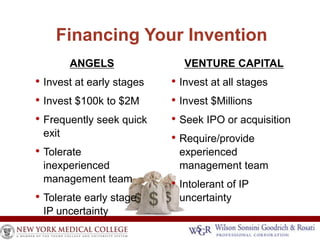
Financing Your Invention 
ANGELS 
• Invest at early stages 
• Invest $100k to $2M 
• Frequently seek quick 
exit 
• Tolerate 
inexperienced 
management team 
• Tolerate early stage 
IP uncertainty 
VENTURE CAPITAL 
• Invest at all stages 
• Invest $Millions 
• Seek IPO or acquisition 
• Require/provide 
experienced 
management team 
• Intolerant of IP 
uncertainty
Financing Strategies 
• Convertible Debt (up to $2M) 
o Good for early investment 
o Fast and simple to negotiate 
o Postpones the need for valuation 
o Frequently used by angels 
• Stock ($Millions) 
o Attractive to large investors 
o Must agree on valuation of the company 
o Normally used by venture funds 
• Partnerships ($$ based on the project) 
o Larger company finances research 
o Possibility of shared ownership and 
patent rights
BEST OF LUCK 
IN YOUR 
BIOPHARMA START UP

IP and the Biopharma Startup

  • 1.
    IP and theBiopharma Startup Craig Kenesky, Ph.D. Wilson Sonsini Goodrich & Rosati, PC October 29, 2014
  • 2.
    Company Life Cycle Development • IP Created • Seed Financing needed • Additional leadership Development Startup Need idea and leadership Startup Partnering Capital influx to support G2 product or clinical trials Commercializati on IPO / Merger EXIT IPO / Merger Biopharma Company Med Tech / Software Company
  • 3.
    Establish an Identity • Are you going to: o discover new drugs? o discover diagnostics? o draft code? • Will you: o sell a product? o sell the tools to make products? • Investors fear a company who promises to do it all
  • 4.
    IP in anInnovator Company • IP provides most, or all, the value of a bio start up • Major investors examine your IP closely • Poor IP can make an innovation unattractive • Patent or publish? o You can do both if you take patent steps first
  • 5.
    IP – InitialSteps / Diligence • First Generation Patents: o Often licensed from a university o Protect the key, novel innovation o What is the state of the art? o When do they expire? (20 year term) • Third Party (Competitor) Patents: o Can we license that too? o Can we avoid competitor IP? • Need a pitch deck and business plan
  • 6.
    University IP LicensingTerms ECONOMIC • Equity in Company • Upfront Payment • Royalty on Sales • University Patent Costs • Milestone Payments • Sublicensing Revenue NON-ECONOMIC • Which, how many, patents • Field of use • Territory • Term • Diligence • Sublicensing Restrictions
  • 7.
    Know Your Regulatory Exclusivity United States • New Chemical Entity 5 Years • Combination Drugs with a NCE 5 Years • New Formulation of Old Drug 3 Years • New Use for Old Drug 3 Years • Orphan Indication 7 Years • Biosimilar (i.e., antibody) 12 Years • Pediatric 6 Month Extension Can often postpone generic entry by 2.5 Years Europe • Data Exclusivity 10 Years • Market Exclusivity +1 Year • Second Indication +1 Year
  • 8.
    Later Generation Patents • Can extend (double?) lifetime of portfolio • Must provide protection beyond FDA exclusivity • Sometimes created / owned by the company o Especially important for university spinouts o Company should start generating its own IP ASAP o Protect improvements made by the company •
  • 9.
    Know Your CompetitorIP • Search for competitor IP • Identify Freedom to Operate risks • Keep your IP and publications a step ahead of competitors • In-license competitor IP when possible • Know the weaknesses in competitor IP • Patent competitor products aggressively
  • 10.
    Financing Your Invention ANGELS • Invest at early stages • Invest $100k to $2M • Frequently seek quick exit • Tolerate inexperienced management team • Tolerate early stage IP uncertainty VENTURE CAPITAL • Invest at all stages • Invest $Millions • Seek IPO or acquisition • Require/provide experienced management team • Intolerant of IP uncertainty
  • 11.
    Financing Strategies •Convertible Debt (up to $2M) o Good for early investment o Fast and simple to negotiate o Postpones the need for valuation o Frequently used by angels • Stock ($Millions) o Attractive to large investors o Must agree on valuation of the company o Normally used by venture funds • Partnerships ($$ based on the project) o Larger company finances research o Possibility of shared ownership and patent rights
  • 12.
    BEST OF LUCK IN YOUR BIOPHARMA START UP