Timeline Of A Startup: The Role
Of Intellectual Property From
Idea To Commercialization
    By John Storella
    BioWest 2005 – Denver
    November 2005
Key Points
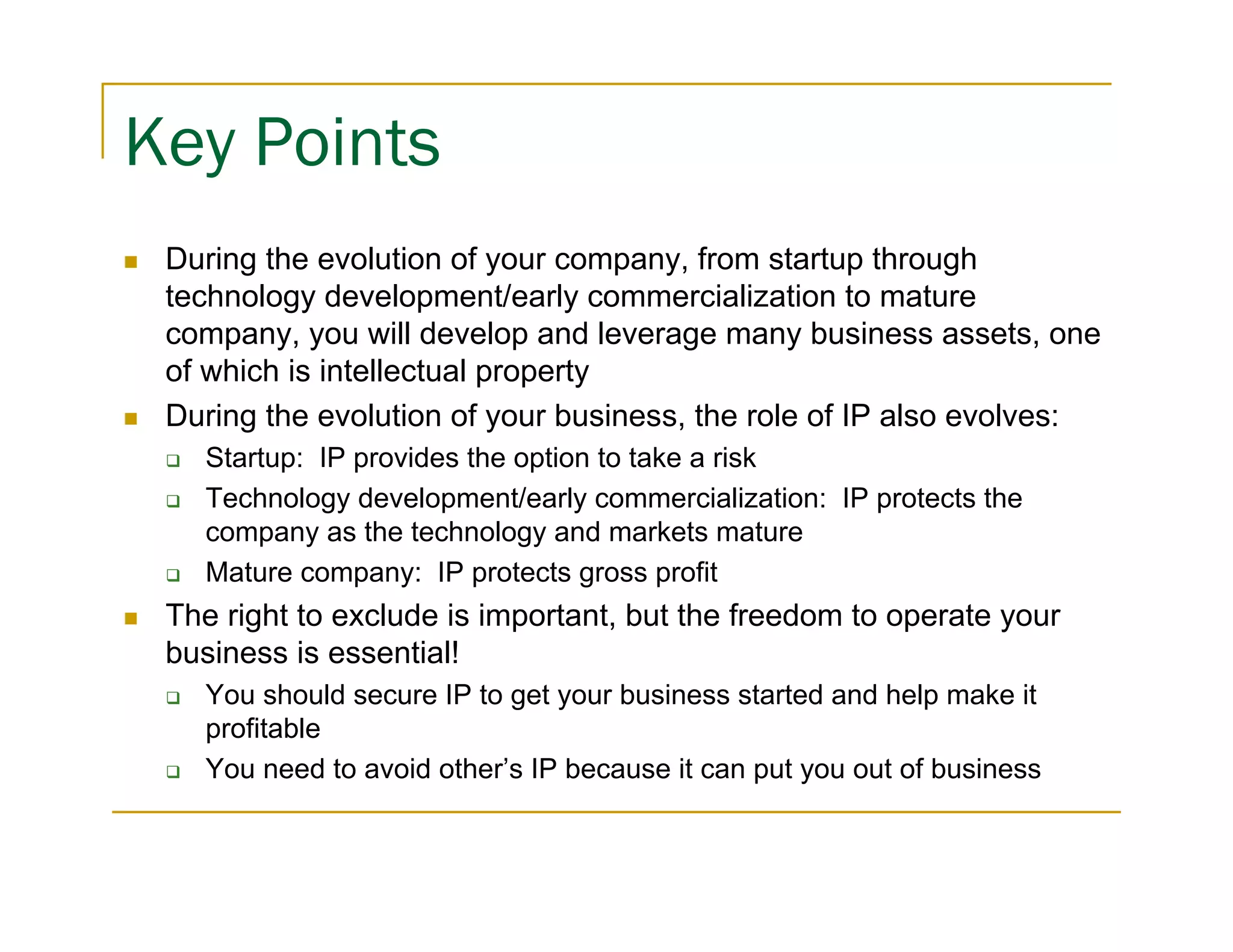
 During the evolution of your company, from startup through
 technology development/early commercialization to mature
 company, you will develop and leverage many business assets, one
 of which is intellectual property
 During the evolution of your business, the role of IP also evolves:
   Startup: IP provides the option to take a risk
   Technology development/early commercialization: IP protects the
   company as the technology and markets mature
   Mature company: IP protects gross profit
 The right to exclude is important, but the freedom to operate your
 business is essential!
   You should secure IP to get your business started and help make it
   profitable
   You need to avoid other’s IP because it can put you out of business
In the evolution of your company
from startup through technology
        development/early
  commercialization to mature
company, you will be developing
    and leveraging a variety of
business assets, one of which is
       intellectual property.
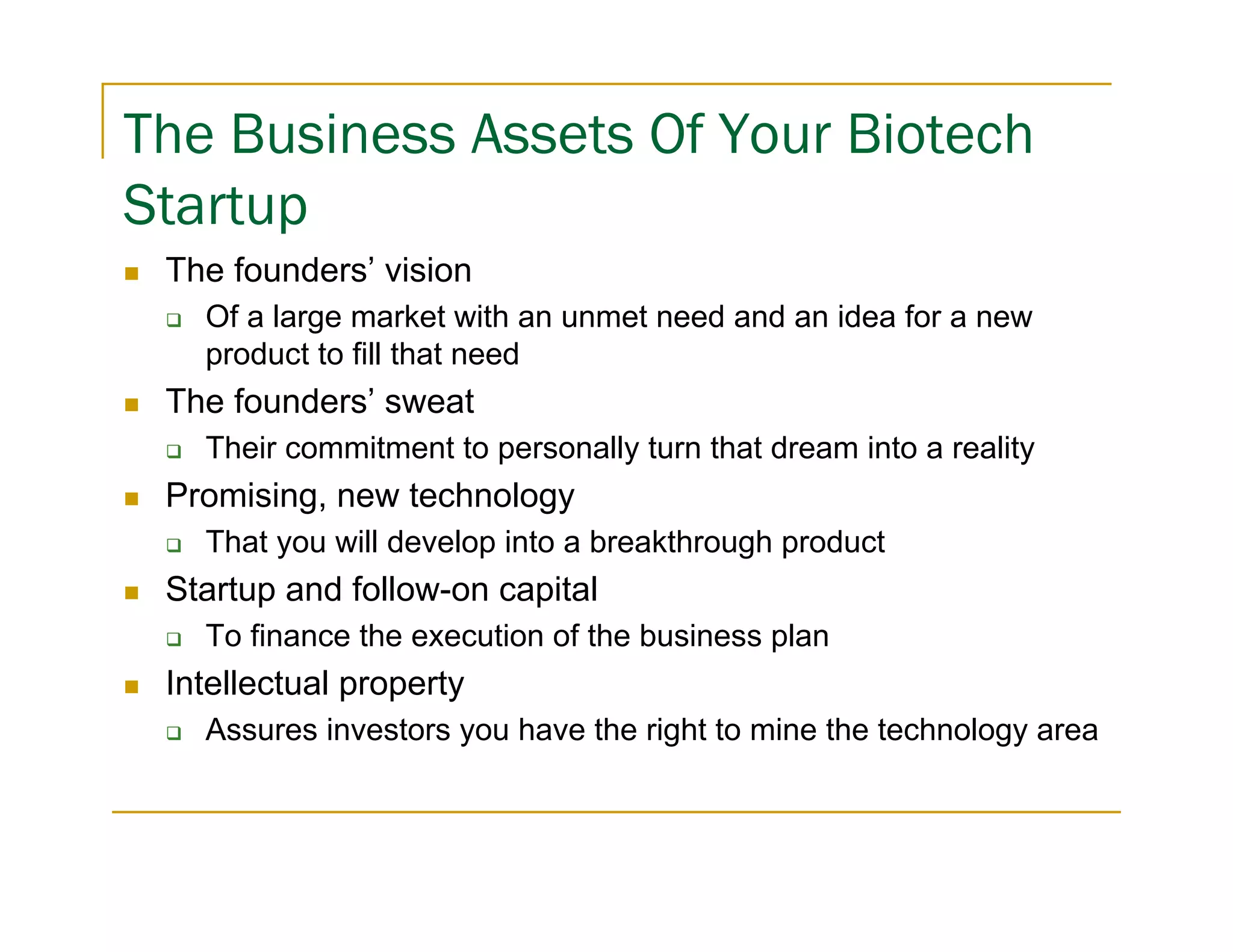
The Business Assets Of Your Biotech
Startup
 The founders’ vision
   Of a large market with an unmet need and an idea for a new
   product to fill that need
 The founders’ sweat
   Their commitment to personally turn that dream into a reality
 Promising, new technology
   That you will develop into a breakthrough product
 Startup and follow-on capital
   To finance the execution of the business plan
 Intellectual property
   Assures investors you have the right to mine the technology area
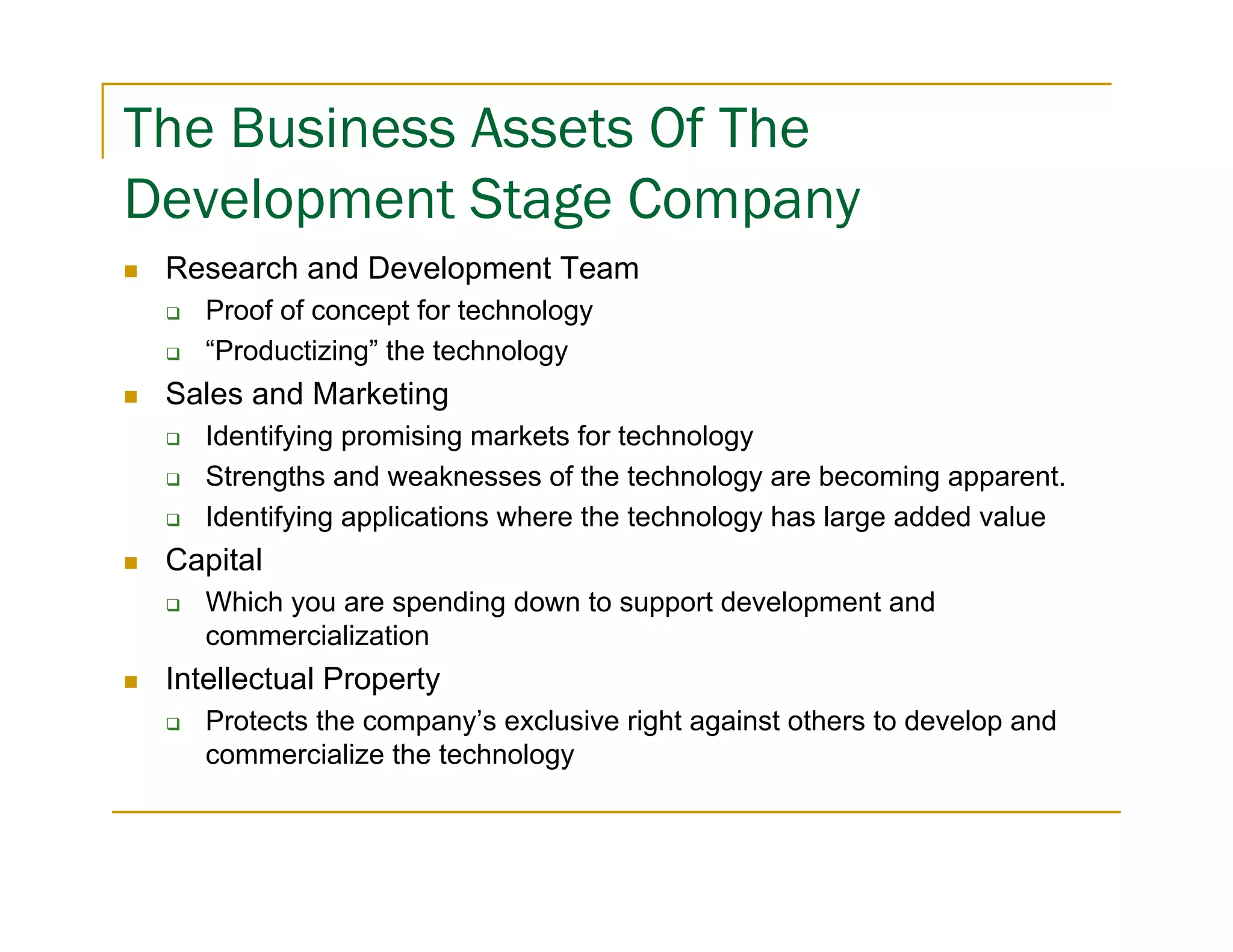
The Business Assets Of The
Development Stage Company
 Research and Development Team
    Proof of concept for technology
    “Productizing” the technology
 Sales and Marketing
    Identifying promising markets for technology
    Strengths and weaknesses of the technology are becoming apparent.
    Identifying applications where the technology has large added value
 Capital
    Which you are spending down to support development and
    commercialization
 Intellectual Property
    Protects the company’s exclusive right against others to develop and
    commercialize the technology
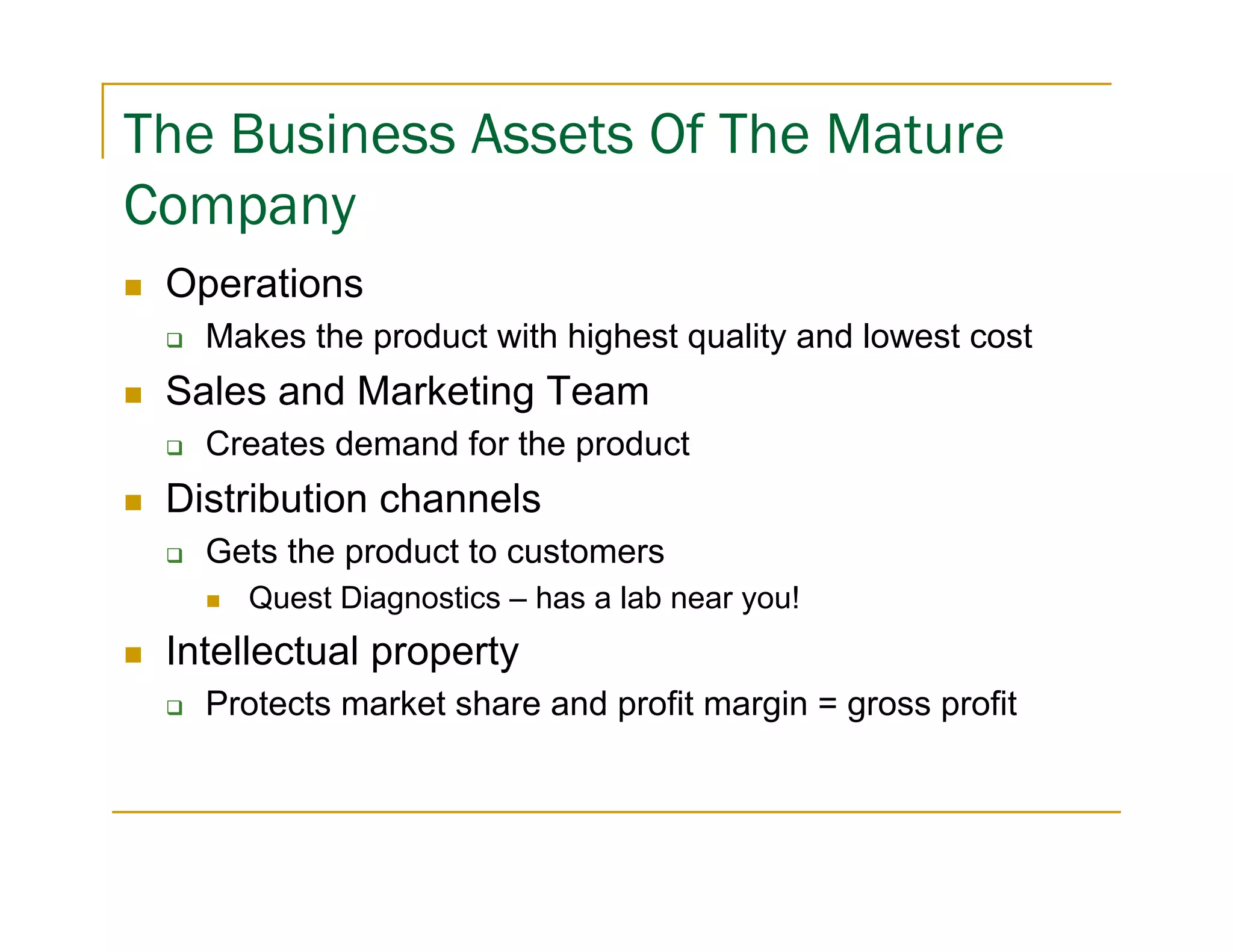
The Business Assets Of The Mature
Company
 Operations
   Makes the product with highest quality and lowest cost
 Sales and Marketing Team
   Creates demand for the product
 Distribution channels
   Gets the product to customers
     Quest Diagnostics – has a lab near you!
 Intellectual property
   Protects market share and profit margin = gross profit
The Role Of Intellectual Property
Changes As The Company Evolves
From Startup Through Technology
  Validation To Mature Company
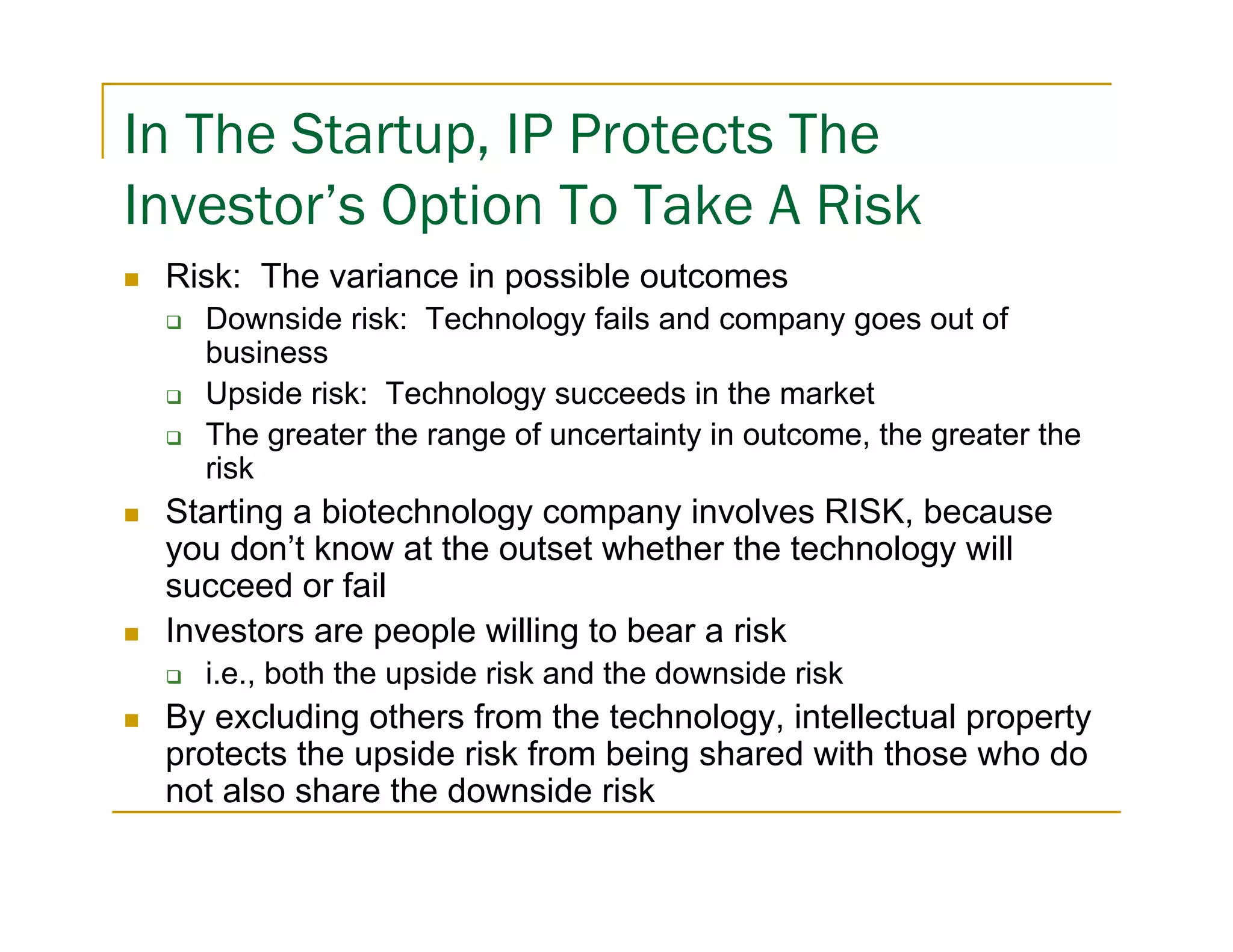
In The Startup, IP Protects The
Investor’s Option To Take A Risk
 Risk: The variance in possible outcomes
   Downside risk: Technology fails and company goes out of
   business
   Upside risk: Technology succeeds in the market
   The greater the range of uncertainty in outcome, the greater the
   risk
 Starting a biotechnology company involves RISK, because
 you don’t know at the outset whether the technology will
 succeed or fail
 Investors are people willing to bear a risk
   i.e., both the upside risk and the downside risk
 By excluding others from the technology, intellectual property
 protects the upside risk from being shared with those who do
 not also share the downside risk
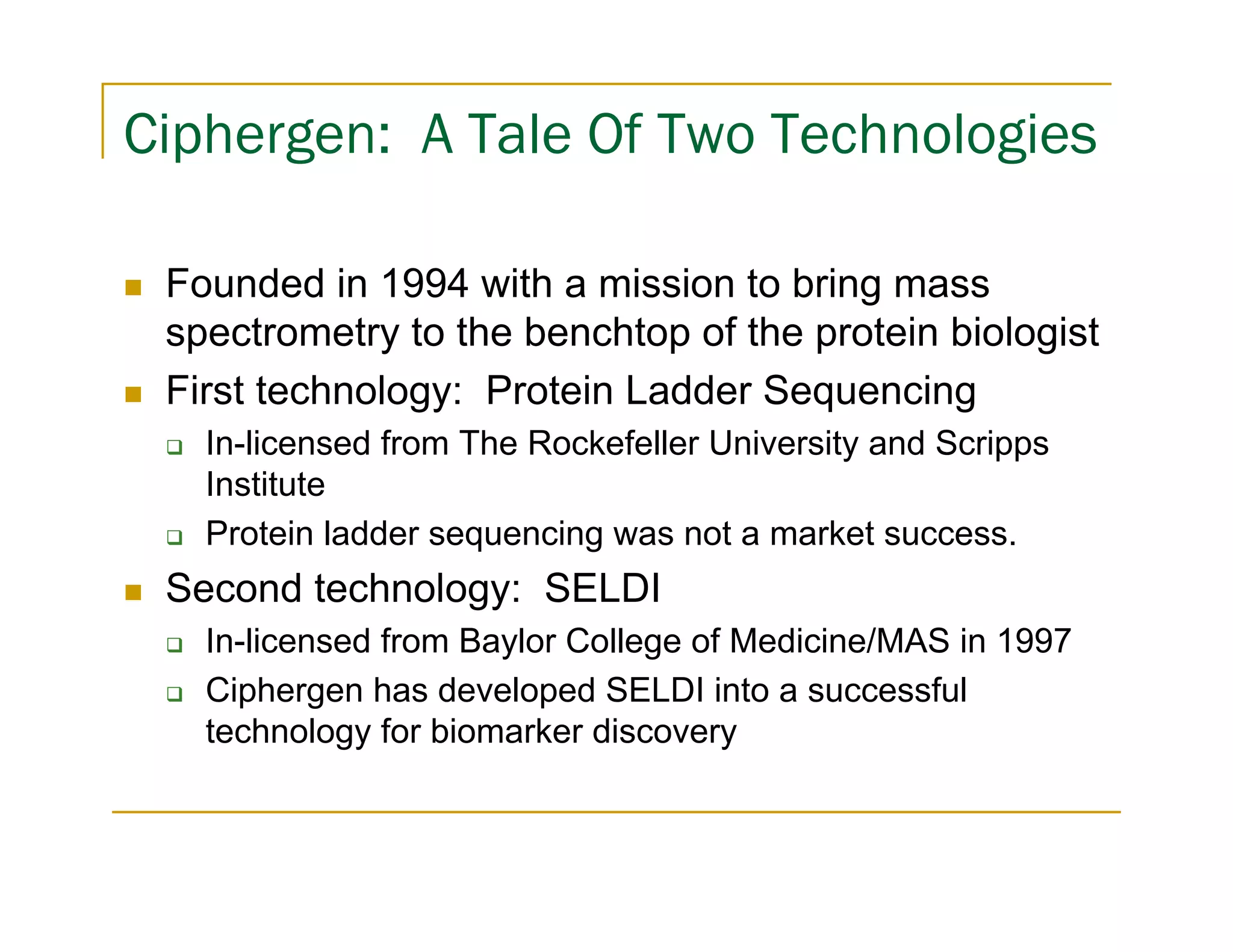
Ciphergen: A Tale Of Two Technologies

 Founded in 1994 with a mission to bring mass
 spectrometry to the benchtop of the protein biologist
 First technology: Protein Ladder Sequencing
   In-licensed from The Rockefeller University and Scripps
   Institute
   Protein ladder sequencing was not a market success.
 Second technology: SELDI
   In-licensed from Baylor College of Medicine/MAS in 1997
   Ciphergen has developed SELDI into a successful
   technology for biomarker discovery
In The Technology
      Development/Early
  Commercialization Phase, IP
  Protects The Company From
Competition While The Company
   Develops Markets For The
           Technology
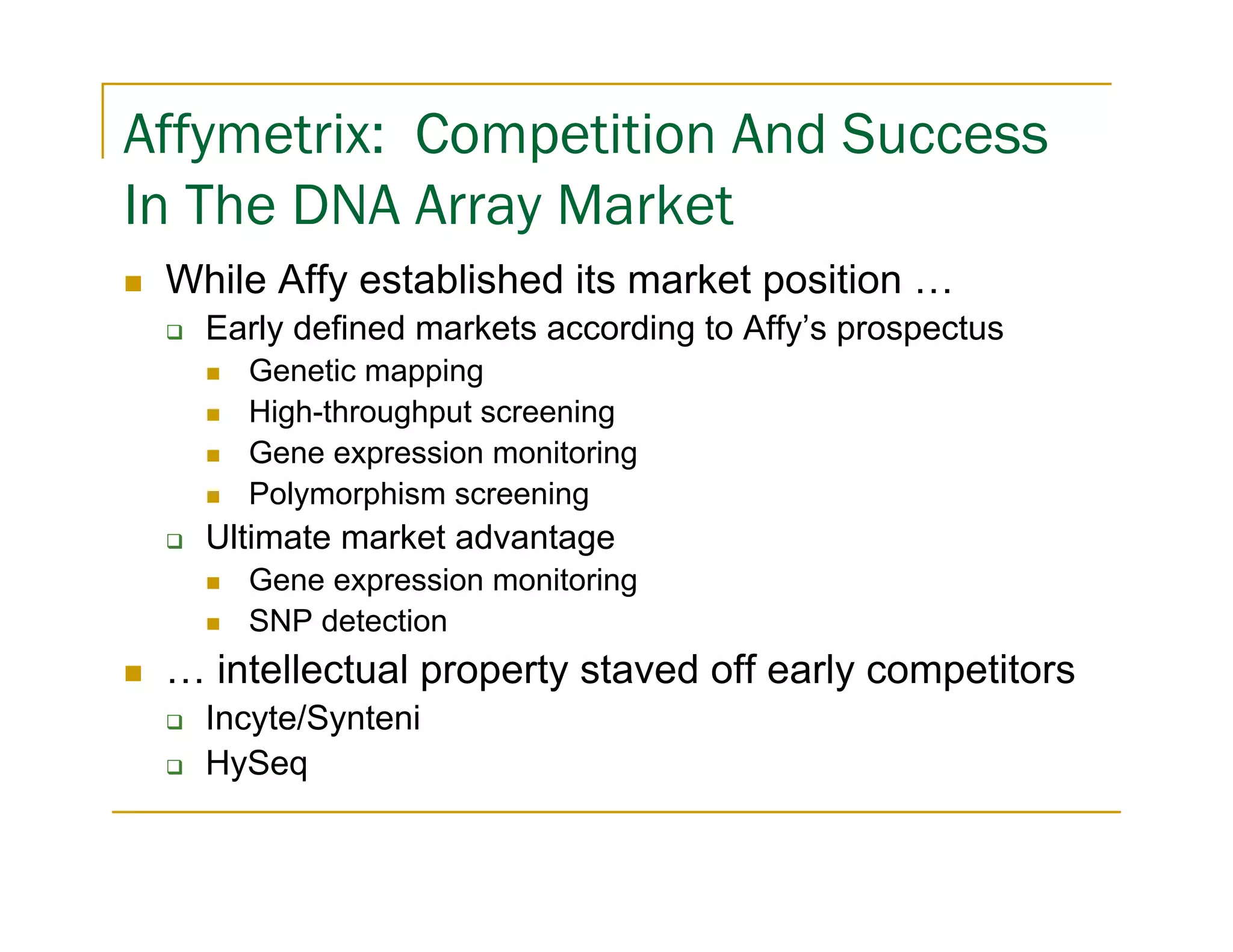
Affymetrix: Competition And Success
In The DNA Array Market
 While Affy established its market position …
   Early defined markets according to Affy’s prospectus
     Genetic mapping
     High-throughput screening
     Gene expression monitoring
     Polymorphism screening
   Ultimate market advantage
     Gene expression monitoring
     SNP detection
 … intellectual property staved off early competitors
   Incyte/Synteni
   HySeq
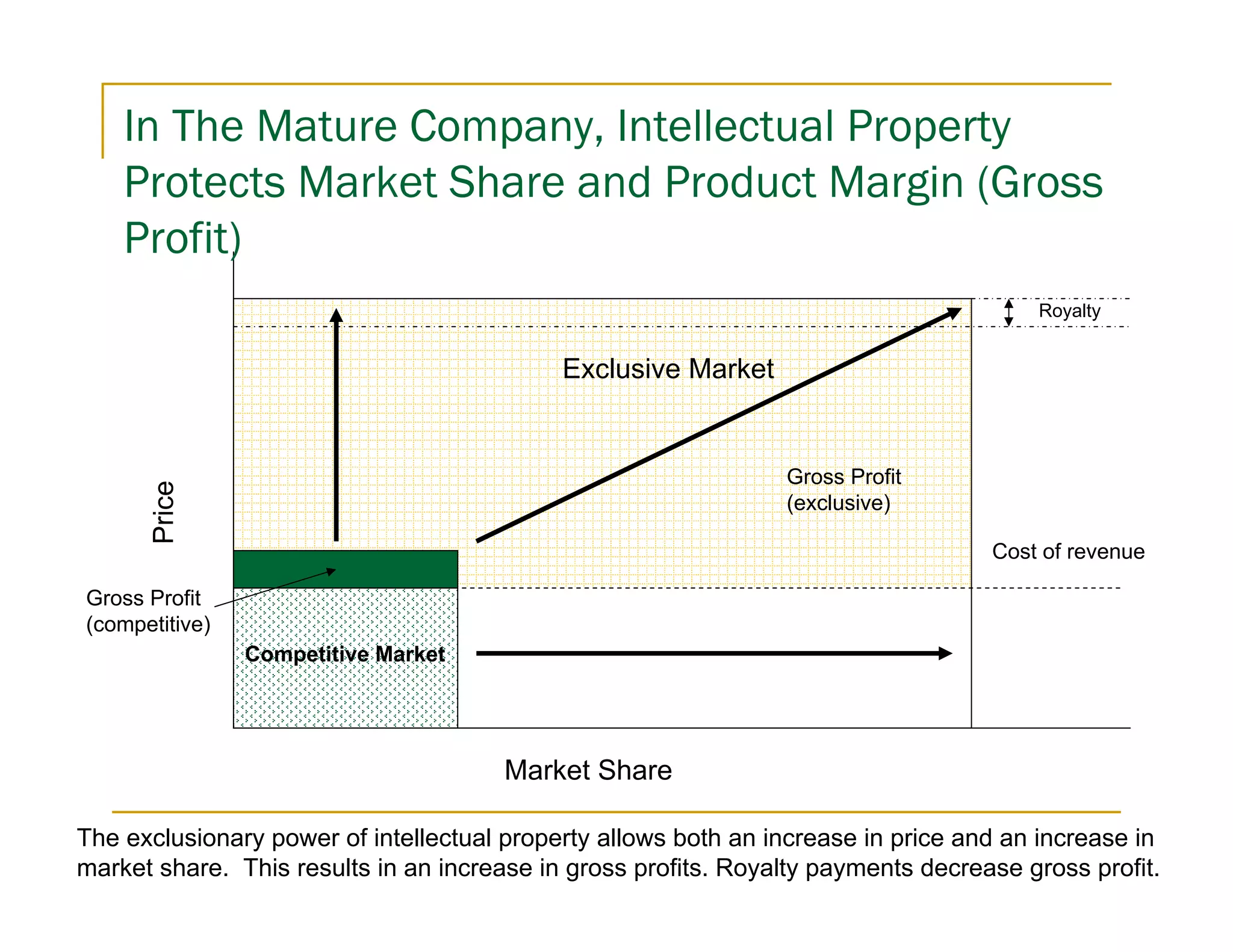
In The Mature Company, Intellectual Property
    Protects Market Share and Product Margin (Gross
    Profit)
                                                                                       Royalty


                                            Exclusive Market


                                                                Gross Profit
      Price


                                                                (exclusive)

                                                                                   Cost of revenue

Gross Profit
(competitive)
                Competitive Market


                                       Market Share

The exclusionary power of intellectual property allows both an increase in price and an increase in
market share. This results in an increase in gross profits. Royalty payments decrease gross profit.
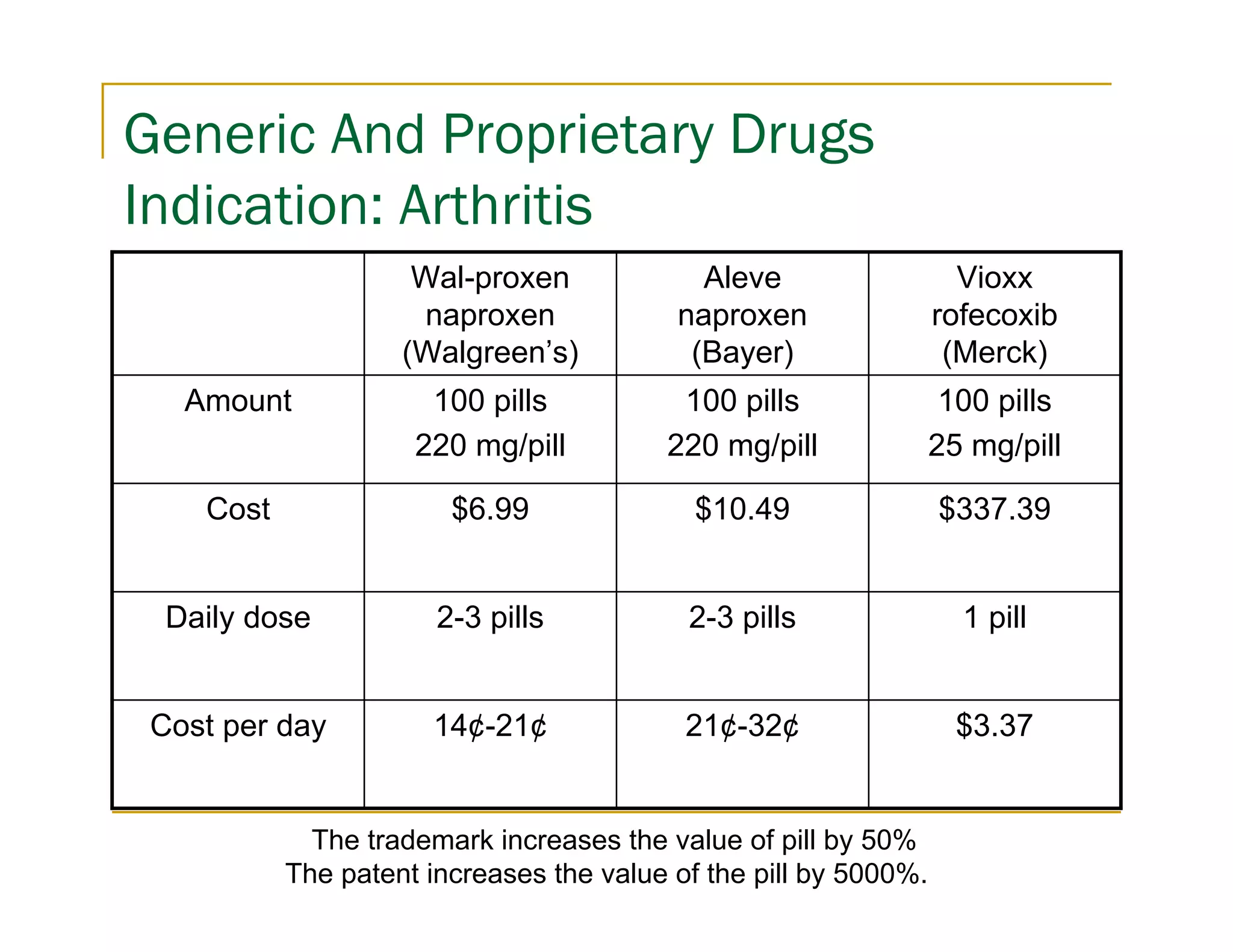
Generic And Proprietary Drugs
Indication: Arthritis
                     Wal-proxen             Aleve                   Vioxx
                     naproxen             naproxen                rofecoxib
                    (Walgreen’s)           (Bayer)                 (Merck)
   Amount             100 pills           100 pills                100 pills
                     220 mg/pill         220 mg/pill              25 mg/pill

    Cost                $6.99               $10.49                $337.39


  Daily dose           2-3 pills           2-3 pills                1 pill


 Cost per day         14¢-21¢              21¢-32¢                  $3.37


             The trademark increases the value of pill by 50%
           The patent increases the value of the pill by 5000%.
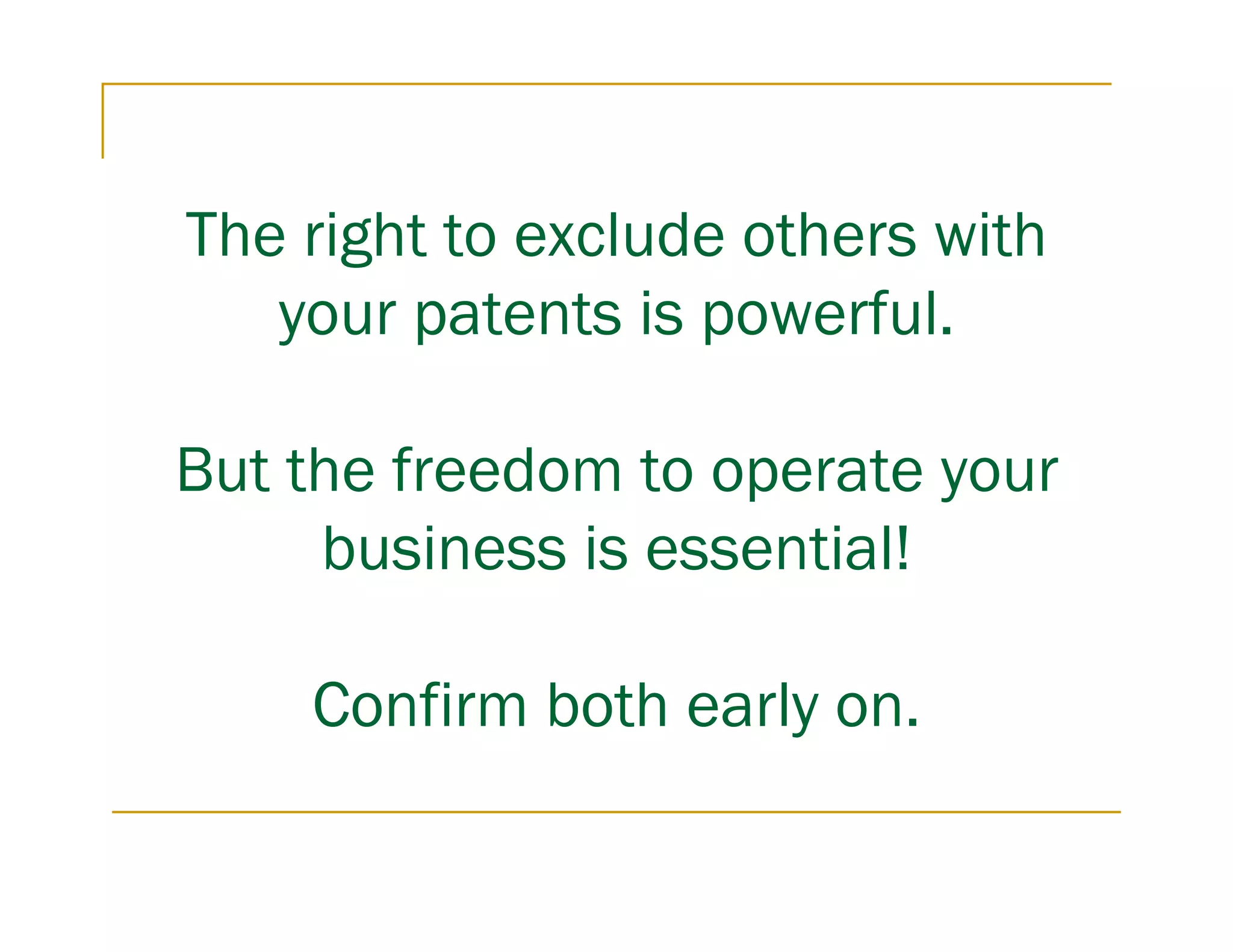
The right to exclude others with
   your patents is powerful.

But the freedom to operate your
     business is essential!

    Confirm both early on.
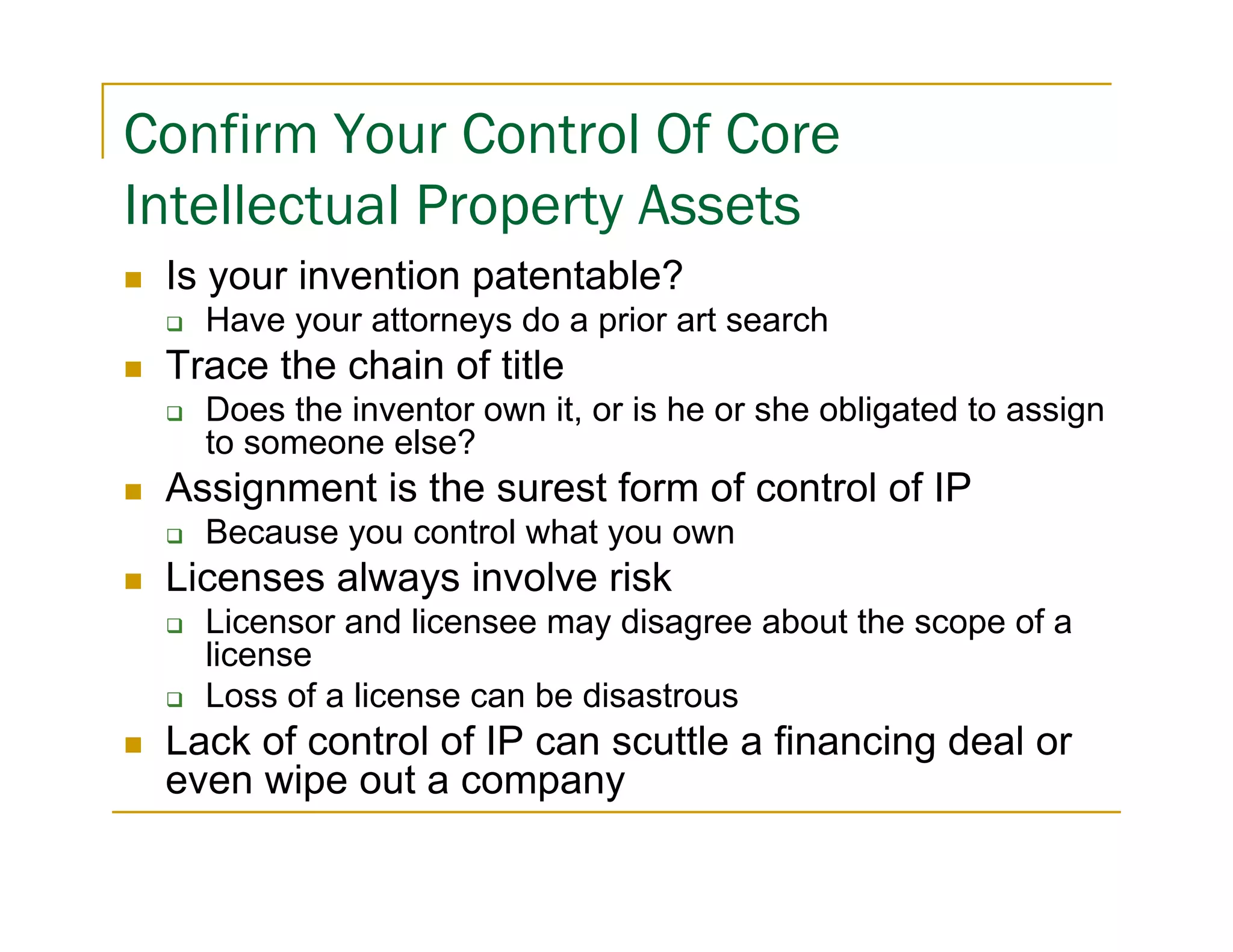
Confirm Your Control Of Core
Intellectual Property Assets
 Is your invention patentable?
   Have your attorneys do a prior art search
 Trace the chain of title
   Does the inventor own it, or is he or she obligated to assign
   to someone else?
 Assignment is the surest form of control of IP
   Because you control what you own
 Licenses always involve risk
   Licensor and licensee may disagree about the scope of a
   license
   Loss of a license can be disastrous
 Lack of control of IP can scuttle a financing deal or
 even wipe out a company
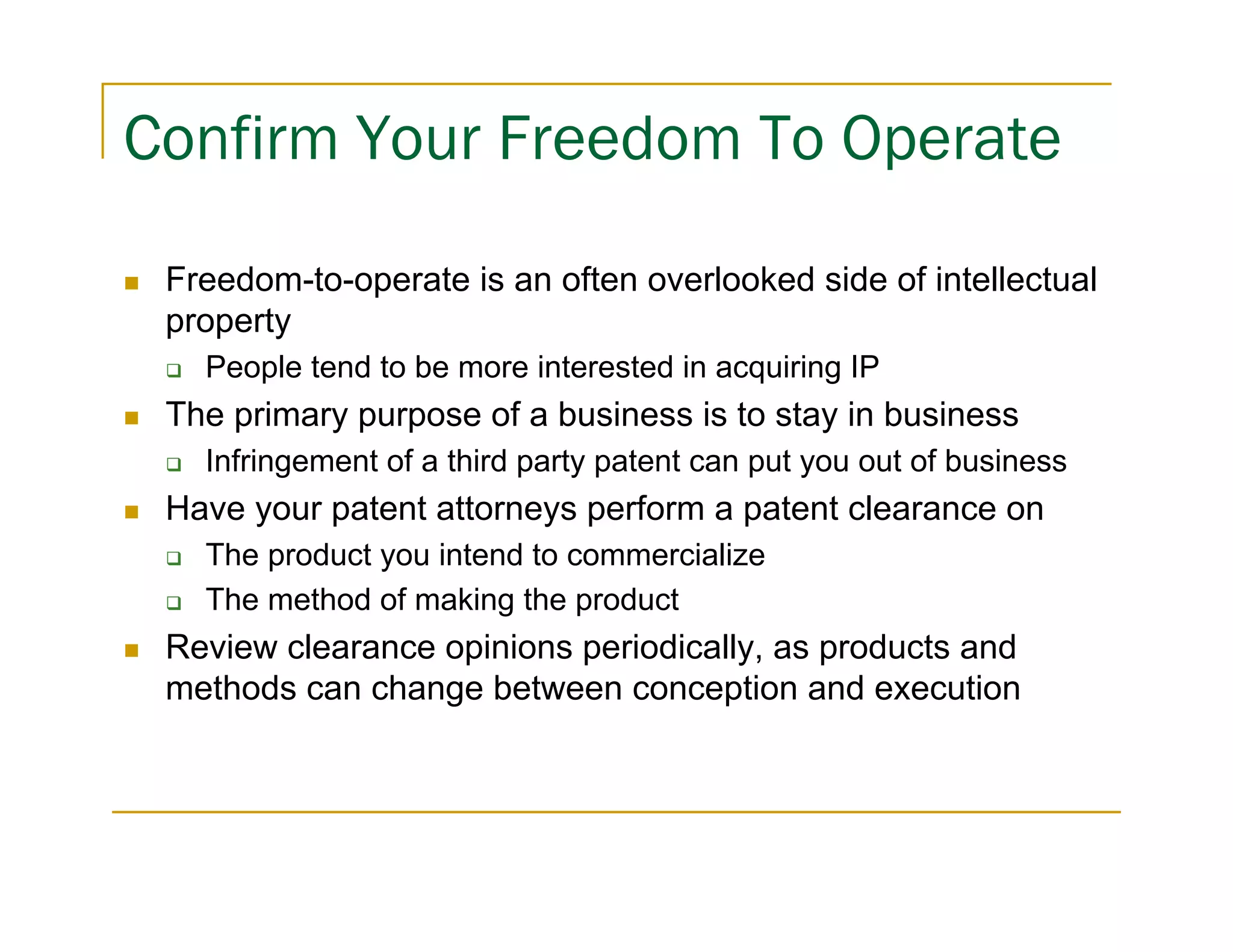
Confirm Your Freedom To Operate

 Freedom-to-operate is an often overlooked side of intellectual
 property
   People tend to be more interested in acquiring IP
 The primary purpose of a business is to stay in business
   Infringement of a third party patent can put you out of business
 Have your patent attorneys perform a patent clearance on
   The product you intend to commercialize
   The method of making the product
 Review clearance opinions periodically, as products and
 methods can change between conception and execution
John Storella
Special Counsel
Wilson Sonsini Goodrich & Rosati
650-849-3245
jstorella@wsgr.com

Timeline Of A Startup Storella

  • 1.
    Timeline Of AStartup: The Role Of Intellectual Property From Idea To Commercialization By John Storella BioWest 2005 – Denver November 2005
  • 2.
    Key Points Duringthe evolution of your company, from startup through technology development/early commercialization to mature company, you will develop and leverage many business assets, one of which is intellectual property During the evolution of your business, the role of IP also evolves: Startup: IP provides the option to take a risk Technology development/early commercialization: IP protects the company as the technology and markets mature Mature company: IP protects gross profit The right to exclude is important, but the freedom to operate your business is essential! You should secure IP to get your business started and help make it profitable You need to avoid other’s IP because it can put you out of business
  • 3.
    In the evolutionof your company from startup through technology development/early commercialization to mature company, you will be developing and leveraging a variety of business assets, one of which is intellectual property.
  • 4.
    The Business AssetsOf Your Biotech Startup The founders’ vision Of a large market with an unmet need and an idea for a new product to fill that need The founders’ sweat Their commitment to personally turn that dream into a reality Promising, new technology That you will develop into a breakthrough product Startup and follow-on capital To finance the execution of the business plan Intellectual property Assures investors you have the right to mine the technology area
  • 5.
    The Business AssetsOf The Development Stage Company Research and Development Team Proof of concept for technology “Productizing” the technology Sales and Marketing Identifying promising markets for technology Strengths and weaknesses of the technology are becoming apparent. Identifying applications where the technology has large added value Capital Which you are spending down to support development and commercialization Intellectual Property Protects the company’s exclusive right against others to develop and commercialize the technology
  • 6.
    The Business AssetsOf The Mature Company Operations Makes the product with highest quality and lowest cost Sales and Marketing Team Creates demand for the product Distribution channels Gets the product to customers Quest Diagnostics – has a lab near you! Intellectual property Protects market share and profit margin = gross profit
  • 7.
    The Role OfIntellectual Property Changes As The Company Evolves From Startup Through Technology Validation To Mature Company
  • 8.
    In The Startup,IP Protects The Investor’s Option To Take A Risk Risk: The variance in possible outcomes Downside risk: Technology fails and company goes out of business Upside risk: Technology succeeds in the market The greater the range of uncertainty in outcome, the greater the risk Starting a biotechnology company involves RISK, because you don’t know at the outset whether the technology will succeed or fail Investors are people willing to bear a risk i.e., both the upside risk and the downside risk By excluding others from the technology, intellectual property protects the upside risk from being shared with those who do not also share the downside risk
  • 9.
    Ciphergen: A TaleOf Two Technologies Founded in 1994 with a mission to bring mass spectrometry to the benchtop of the protein biologist First technology: Protein Ladder Sequencing In-licensed from The Rockefeller University and Scripps Institute Protein ladder sequencing was not a market success. Second technology: SELDI In-licensed from Baylor College of Medicine/MAS in 1997 Ciphergen has developed SELDI into a successful technology for biomarker discovery
  • 10.
    In The Technology Development/Early Commercialization Phase, IP Protects The Company From Competition While The Company Develops Markets For The Technology
  • 11.
    Affymetrix: Competition AndSuccess In The DNA Array Market While Affy established its market position … Early defined markets according to Affy’s prospectus Genetic mapping High-throughput screening Gene expression monitoring Polymorphism screening Ultimate market advantage Gene expression monitoring SNP detection … intellectual property staved off early competitors Incyte/Synteni HySeq
  • 12.
    In The MatureCompany, Intellectual Property Protects Market Share and Product Margin (Gross Profit) Royalty Exclusive Market Gross Profit Price (exclusive) Cost of revenue Gross Profit (competitive) Competitive Market Market Share The exclusionary power of intellectual property allows both an increase in price and an increase in market share. This results in an increase in gross profits. Royalty payments decrease gross profit.
  • 13.
    Generic And ProprietaryDrugs Indication: Arthritis Wal-proxen Aleve Vioxx naproxen naproxen rofecoxib (Walgreen’s) (Bayer) (Merck) Amount 100 pills 100 pills 100 pills 220 mg/pill 220 mg/pill 25 mg/pill Cost $6.99 $10.49 $337.39 Daily dose 2-3 pills 2-3 pills 1 pill Cost per day 14¢-21¢ 21¢-32¢ $3.37 The trademark increases the value of pill by 50% The patent increases the value of the pill by 5000%.
  • 14.
    The right toexclude others with your patents is powerful. But the freedom to operate your business is essential! Confirm both early on.
  • 15.
    Confirm Your ControlOf Core Intellectual Property Assets Is your invention patentable? Have your attorneys do a prior art search Trace the chain of title Does the inventor own it, or is he or she obligated to assign to someone else? Assignment is the surest form of control of IP Because you control what you own Licenses always involve risk Licensor and licensee may disagree about the scope of a license Loss of a license can be disastrous Lack of control of IP can scuttle a financing deal or even wipe out a company
  • 16.
    Confirm Your FreedomTo Operate Freedom-to-operate is an often overlooked side of intellectual property People tend to be more interested in acquiring IP The primary purpose of a business is to stay in business Infringement of a third party patent can put you out of business Have your patent attorneys perform a patent clearance on The product you intend to commercialize The method of making the product Review clearance opinions periodically, as products and methods can change between conception and execution
  • 17.
    John Storella Special Counsel WilsonSonsini Goodrich & Rosati 650-849-3245 jstorella@wsgr.com