Air	
  Quality	
  in	
  Europe	
   1	
  
	
  This is a summary of the EEA report “Air quality
in Europe — 2013 report”
	
  
Air quality in Europe
Introduction
This	
   report	
   presents	
   an	
   overview	
   and	
   analysis	
   of	
   air	
  
quality	
  in	
  Europe,	
  from	
  around	
  2002	
  to	
  2011.	
  Air	
  quality	
  
remains	
   an	
   important	
   issue	
   for	
   public	
   health,	
   the	
  
economy	
  and	
  the	
  environment.	
  Exposure	
  to	
  air	
  pollution	
  
is	
   largely	
   a	
   multi-­‐pollutant	
   process	
   and	
   poor	
   air	
   quality	
  
has	
   a	
   significant	
   impact	
   on	
   health,	
   as	
   it	
   contributes	
   to	
  
respiratory	
  and	
  cardiovascular	
  diseases.	
  It	
  has	
  an	
  impact	
  
on	
   the	
   economy	
   through	
   medical	
   costs	
   and	
   lost	
  
productivity,	
  and	
  it	
  has	
  an	
  impact	
  on	
  the	
  environment	
  as	
  
well,	
   affecting	
   directly	
   the	
   health	
   of	
   the	
   ecosystems,	
   or	
  
through	
  impact	
  on	
  the	
  quality	
  of	
  water	
  and	
  soil.	
  European	
  
policies	
  of	
  air	
  quality	
  have	
  had	
  considerable	
  success	
  in	
  the	
  
past	
  in	
  reducing	
  air	
  pollution.
What are the main effects of air pollution?
	
  
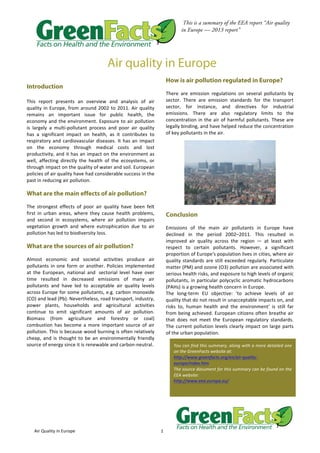
The	
   strongest	
   effects	
   of	
   poor	
   air	
   quality	
   have	
   been	
   felt	
  
first	
   in	
   urban	
   areas,	
   where	
   they	
   cause	
   health	
   problems,	
  
and	
   second	
   in	
   ecosystems,	
   where	
   air	
   pollution	
   impairs	
  
vegetation	
   growth	
   and	
   where	
   eutrophication	
   due	
   to	
   air	
  
pollution	
  has	
  led	
  to	
  biodiversity	
  loss.	
  	
  
What are the sources of air pollution?
	
  
Almost	
   economic	
   and	
   societal	
   activities	
   produce	
   air	
  
pollutants	
  in	
  one	
  form	
  or	
  another.	
  Policies	
  implemented	
  
at	
   the	
   European,	
   national	
   and	
  	
   sectorial	
   level	
   have	
   over	
  
time	
   resulted	
   in	
   decreased	
   emissions	
   of	
   many	
   air	
  
pollutants	
   and	
   have	
   led	
   to	
   acceptable	
   air	
   quality	
   levels	
  
across	
  Europe	
  for	
  some	
  pollutants,	
  e.g.	
  carbon	
  monoxide	
  
(CO)	
  and	
  lead	
  (Pb).	
  Nevertheless,	
  road	
  transport,	
  industry,	
  
power	
   plants,	
   households	
   and	
   agricultural	
   activities	
  
continue	
   to	
   emit	
   significant	
   amounts	
   of	
   air	
   pollution.	
  
Biomass	
   (from	
   agriculture	
   and	
   forestry	
   or	
   coal)	
  
combustion	
  has	
  become	
  a	
  more	
  important	
  source	
  of	
  air	
  
pollution.	
  This	
  is	
  because	
  wood	
  burning	
  is	
  often	
  relatively	
  
cheap,	
   and	
   is	
   thought	
   to	
   be	
   an	
   environmentally	
   friendly	
  
source	
  of	
  energy	
  since	
  it	
  is	
  renewable	
  and	
  carbon-­‐neutral.	
  	
  
How is air pollution regulated in Europe?
	
  
There	
   are	
   emission	
   regulations	
   on	
   several	
   pollutants	
   by	
  
sector.	
   There	
   are	
   emission	
   standards	
   for	
   the	
   transport	
  
sector,	
   for	
   instance,	
   and	
   directives	
   for	
   industrial	
  
emissions.	
   There	
   are	
   also	
   regulatory	
   limits	
   to	
   the	
  
concentration	
  in	
  the	
  air	
  of	
  harmful	
  pollutants.	
  These	
  are	
  
legally	
  binding,	
  and	
  have	
  helped	
  reduce	
  the	
  concentration	
  
of	
  key	
  pollutants	
  in	
  the	
  air.	


Conclusion
	
  
Emissions	
   of	
   the	
   main	
   air	
   pollutants	
   in	
   Europe	
   have	
  
declined	
   in	
   the	
   period	
   2002–2011.	
   This	
   resulted	
   in	
  
improved	
   air	
   quality	
   across	
   the	
   region	
   —	
   at	
   least	
   with	
  
respect	
   to	
   certain	
   pollutants.	
   However,	
   a	
   significant	
  
proportion	
  of	
  Europe's	
  population	
  lives	
  in	
  cities,	
  where	
  air	
  
quality	
  standards	
  are	
  still	
  exceeded	
  regularly.	
  Particulate	
  
matter	
  (PM)	
  and	
  ozone	
  (O3)	
  pollution	
  are	
  associated	
  with	
  
serious	
  health	
  risks,	
  and	
  exposure	
  to	
  high	
  levels	
  of	
  organic	
  
pollutants,	
  in	
  particular	
  polycyclic	
  aromatic	
  hydrocarbons	
  
(PAHs)	
  is	
  a	
  growing	
  health	
  concern	
  in	
  Europe.	
  	
  
The	
   long-­‐term	
   EU	
   objective:	
   'to	
   achieve	
   levels	
   of	
   air	
  
quality	
  that	
  do	
  not	
  result	
  in	
  unacceptable	
  impacts	
  on,	
  and	
  
risks	
   to,	
   human	
   health	
   and	
   the	
   environment'	
   is	
   still	
   far	
  
from	
  being	
  achieved.	
  European	
  citizens	
  often	
  breathe	
  air	
  
that	
   does	
   not	
   meet	
   the	
   European	
   regulatory	
   standards.	
  
The	
  current	
  pollution	
  levels	
  clearly	
  impact	
  on	
  large	
  parts	
  
of	
  the	
  urban	
  population.	


You	
  can	
  find	
  this	
  summary,	
  along	
  with	
  a	
  more	
  detailed	
  one	
  
on	
  the	
  GreenFacts	
  website	
  at:	
  
http://www.greenfacts.org/en/air-­‐quality-­‐
europe/index.htm	
  
The	
  source	
  document	
  for	
  this	
  summary	
  can	
  be	
  found	
  on	
  the	
  
EEA	
  website:	
  	
  
http://www.eea.europa.eu/	


Air quality in Europe

  • 1.
    Air  Quality  in  Europe   1    This is a summary of the EEA report “Air quality in Europe — 2013 report”   Air quality in Europe Introduction This   report   presents   an   overview   and   analysis   of   air   quality  in  Europe,  from  around  2002  to  2011.  Air  quality   remains   an   important   issue   for   public   health,   the   economy  and  the  environment.  Exposure  to  air  pollution   is   largely   a   multi-­‐pollutant   process   and   poor   air   quality   has   a   significant   impact   on   health,   as   it   contributes   to   respiratory  and  cardiovascular  diseases.  It  has  an  impact   on   the   economy   through   medical   costs   and   lost   productivity,  and  it  has  an  impact  on  the  environment  as   well,   affecting   directly   the   health   of   the   ecosystems,   or   through  impact  on  the  quality  of  water  and  soil.  European   policies  of  air  quality  have  had  considerable  success  in  the   past  in  reducing  air  pollution. What are the main effects of air pollution?   The   strongest   effects   of   poor   air   quality   have   been   felt   first   in   urban   areas,   where   they   cause   health   problems,   and   second   in   ecosystems,   where   air   pollution   impairs   vegetation   growth   and   where   eutrophication   due   to   air   pollution  has  led  to  biodiversity  loss.     What are the sources of air pollution?   Almost   economic   and   societal   activities   produce   air   pollutants  in  one  form  or  another.  Policies  implemented   at   the   European,   national   and     sectorial   level   have   over   time   resulted   in   decreased   emissions   of   many   air   pollutants   and   have   led   to   acceptable   air   quality   levels   across  Europe  for  some  pollutants,  e.g.  carbon  monoxide   (CO)  and  lead  (Pb).  Nevertheless,  road  transport,  industry,   power   plants,   households   and   agricultural   activities   continue   to   emit   significant   amounts   of   air   pollution.   Biomass   (from   agriculture   and   forestry   or   coal)   combustion  has  become  a  more  important  source  of  air   pollution.  This  is  because  wood  burning  is  often  relatively   cheap,   and   is   thought   to   be   an   environmentally   friendly   source  of  energy  since  it  is  renewable  and  carbon-­‐neutral.     How is air pollution regulated in Europe?   There   are   emission   regulations   on   several   pollutants   by   sector.   There   are   emission   standards   for   the   transport   sector,   for   instance,   and   directives   for   industrial   emissions.   There   are   also   regulatory   limits   to   the   concentration  in  the  air  of  harmful  pollutants.  These  are   legally  binding,  and  have  helped  reduce  the  concentration   of  key  pollutants  in  the  air.     Conclusion   Emissions   of   the   main   air   pollutants   in   Europe   have   declined   in   the   period   2002–2011.   This   resulted   in   improved   air   quality   across   the   region   —   at   least   with   respect   to   certain   pollutants.   However,   a   significant   proportion  of  Europe's  population  lives  in  cities,  where  air   quality  standards  are  still  exceeded  regularly.  Particulate   matter  (PM)  and  ozone  (O3)  pollution  are  associated  with   serious  health  risks,  and  exposure  to  high  levels  of  organic   pollutants,  in  particular  polycyclic  aromatic  hydrocarbons   (PAHs)  is  a  growing  health  concern  in  Europe.     The   long-­‐term   EU   objective:   'to   achieve   levels   of   air   quality  that  do  not  result  in  unacceptable  impacts  on,  and   risks   to,   human   health   and   the   environment'   is   still   far   from  being  achieved.  European  citizens  often  breathe  air   that   does   not   meet   the   European   regulatory   standards.   The  current  pollution  levels  clearly  impact  on  large  parts   of  the  urban  population.     You  can  find  this  summary,  along  with  a  more  detailed  one   on  the  GreenFacts  website  at:   http://www.greenfacts.org/en/air-­‐quality-­‐ europe/index.htm   The  source  document  for  this  summary  can  be  found  on  the   EEA  website:     http://www.eea.europa.eu/