Before MM
 Scope of MM.
 Process of MM.
 Why MM is Necessary?
 Focus of MM.
 Objectives of MM
 Main depts. Of MM.
 Functions of MM.
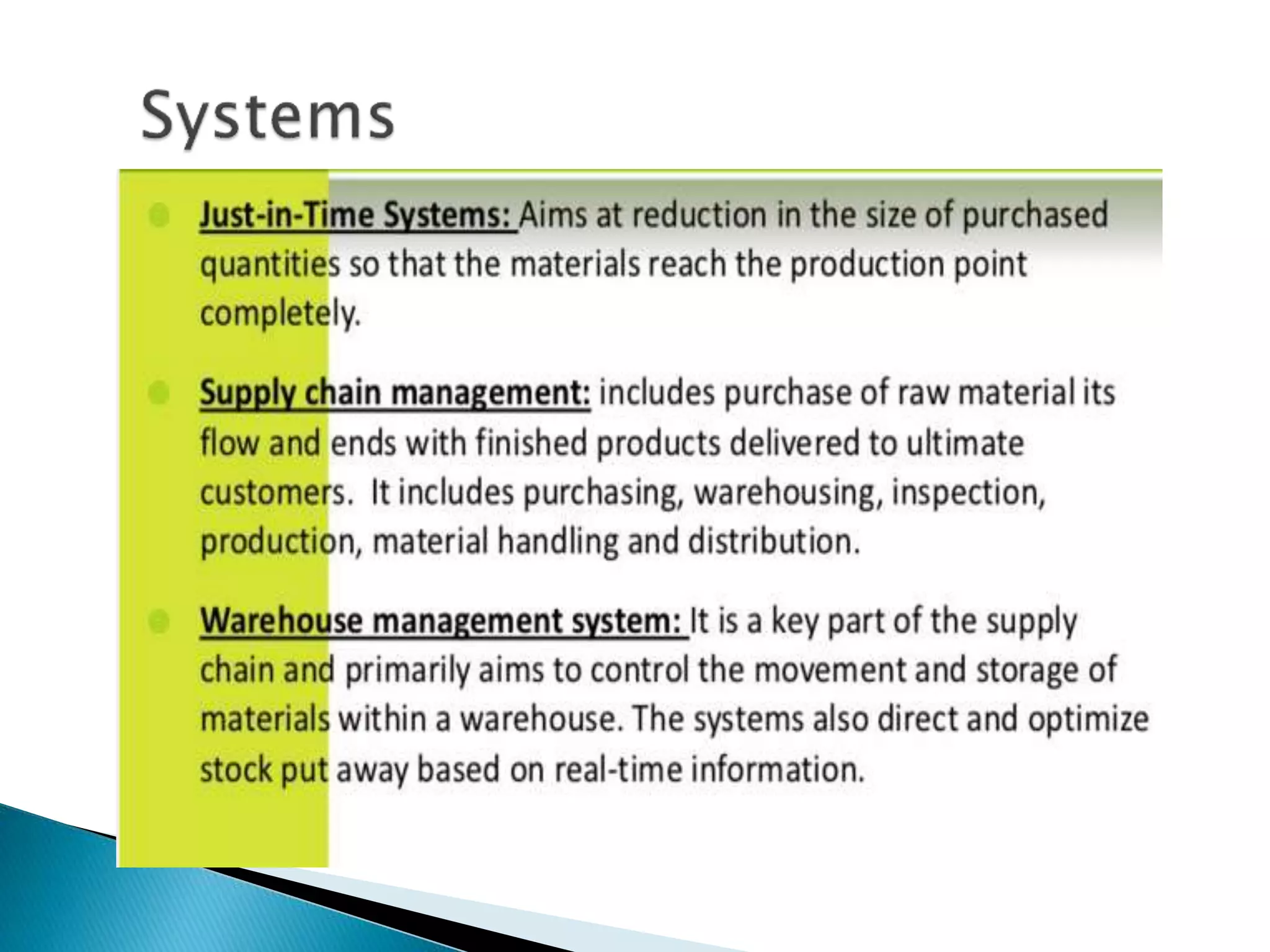
 Systems
 Challenges for MM implementation.
The scope of material management varies from
company to company include material planning
and control, production planning, purchasing,
inventory control and stores, in-plant.
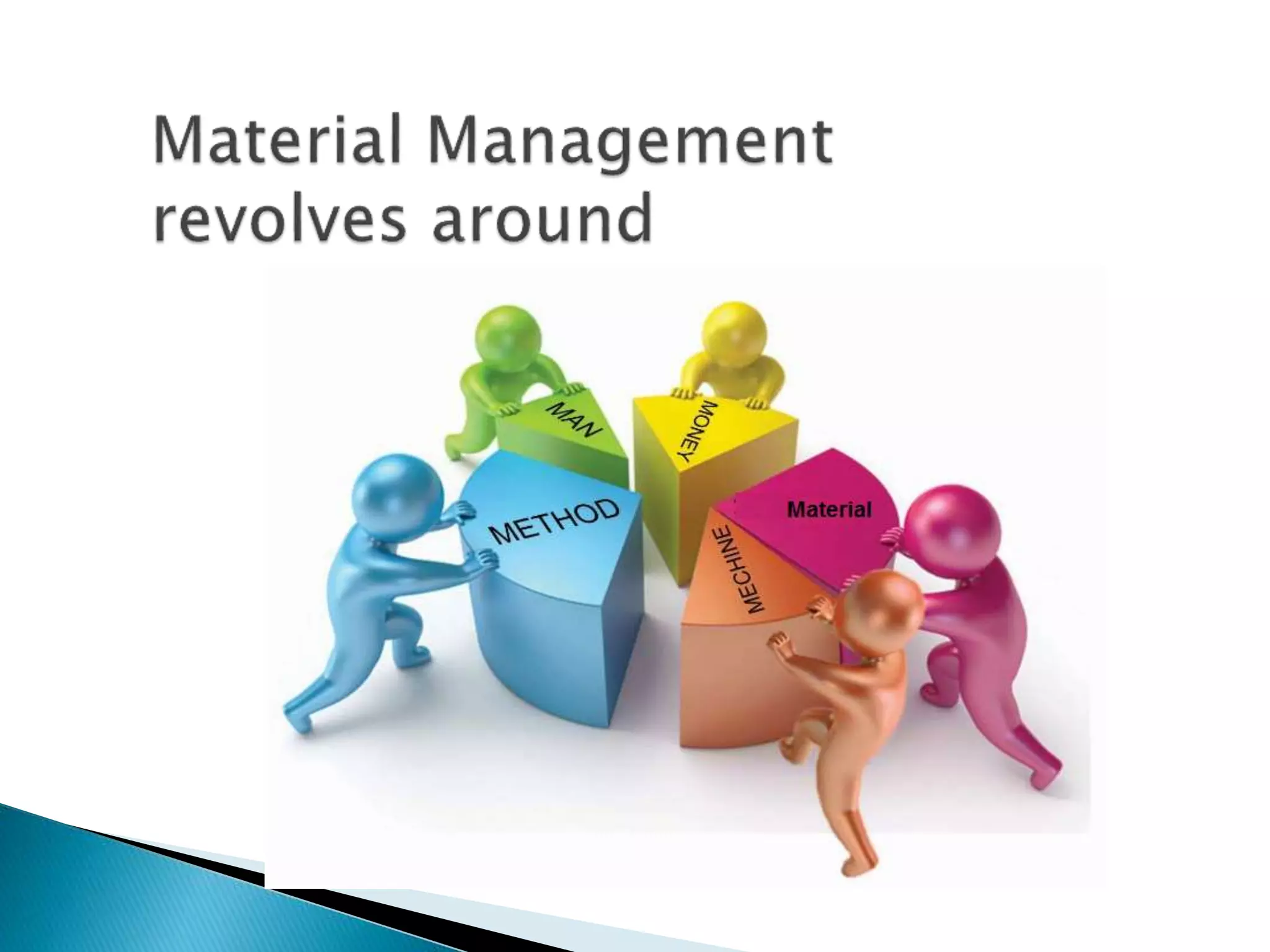
ManagementMaterial +
Planning
ControllingOrganizing
Management
Internal
Operations
Distribution on
Service Points
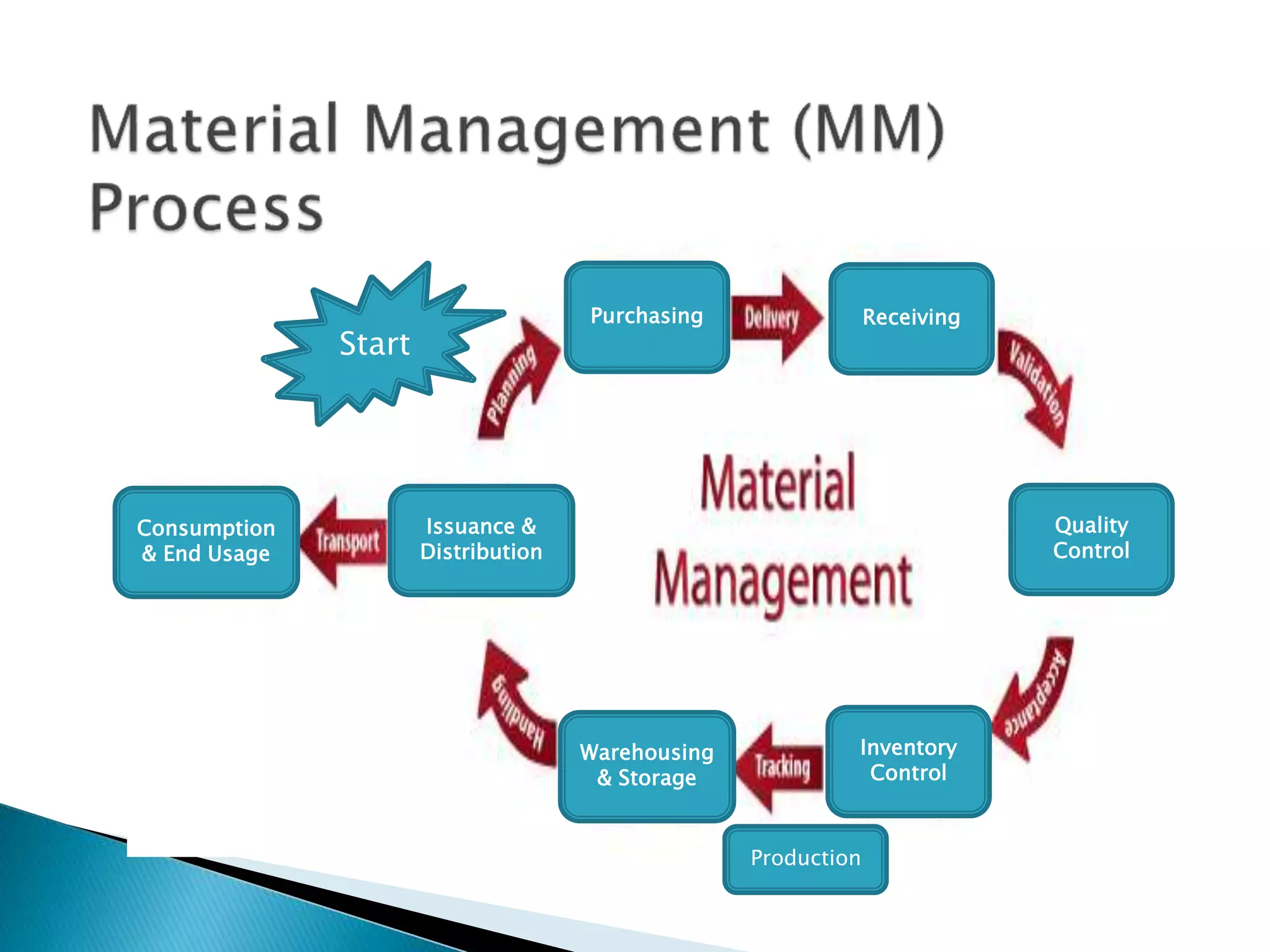
Purchasing
Consumption
& End Usage
Issuance &
Distribution
Purchasing Receiving
Quality
Control
Warehousing
& Storage
Inventory
Control
Production
Start
 To stabilize the production.
 To take advantage of price discounts.
 To meet the demand during the
replenishment period.
 To prevent the loses of orders.
 To keep pace with changing market
conditions.
In-Right Quantity
Of-Right Quality
At-Right Time
From-Right Source
At-Right Price
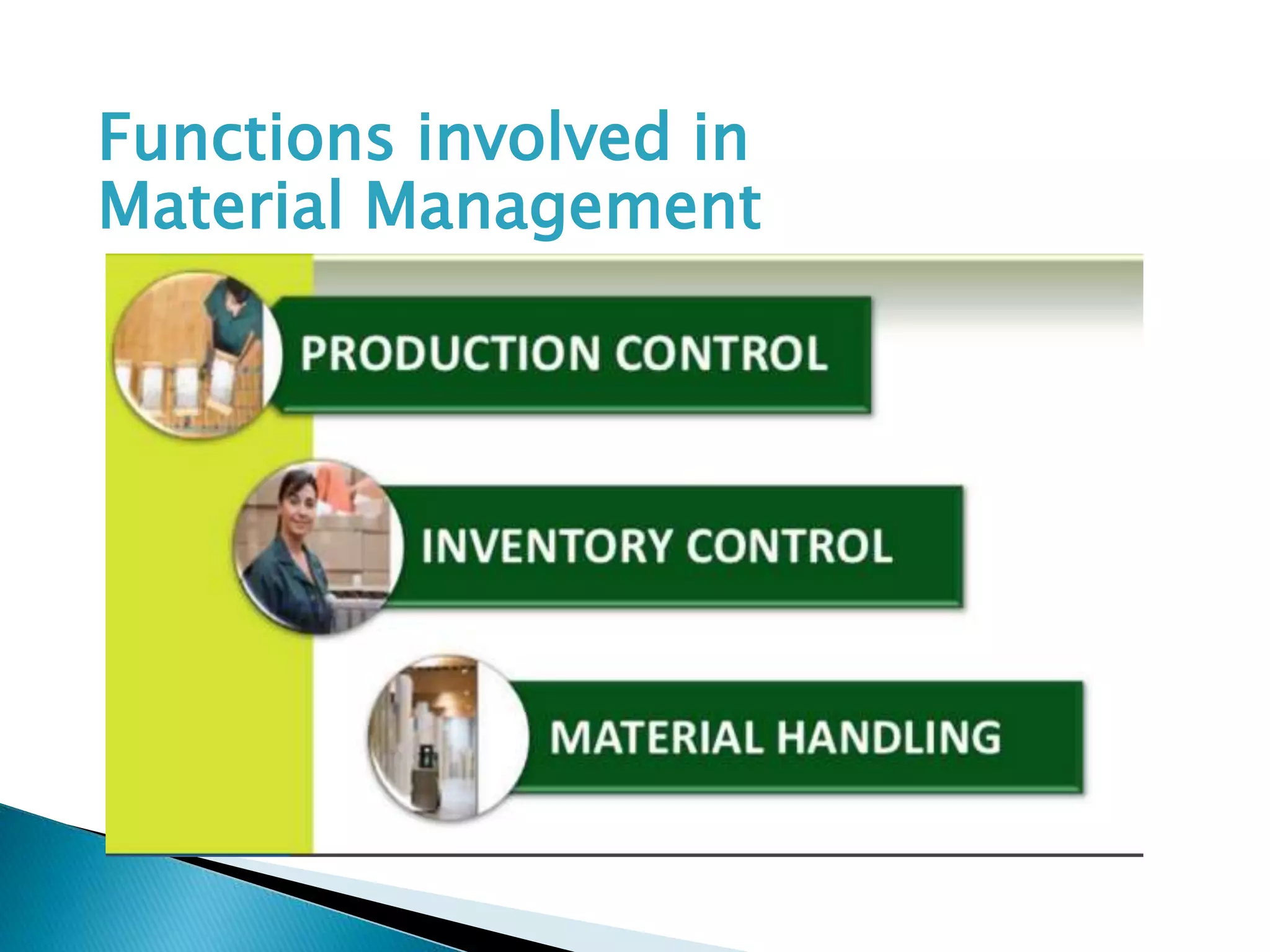
 Material Planning.
 Purchase
 Inventory Control
 Store/Warehouse
Functions involved in
Material Management
Functions involved in
Material Management
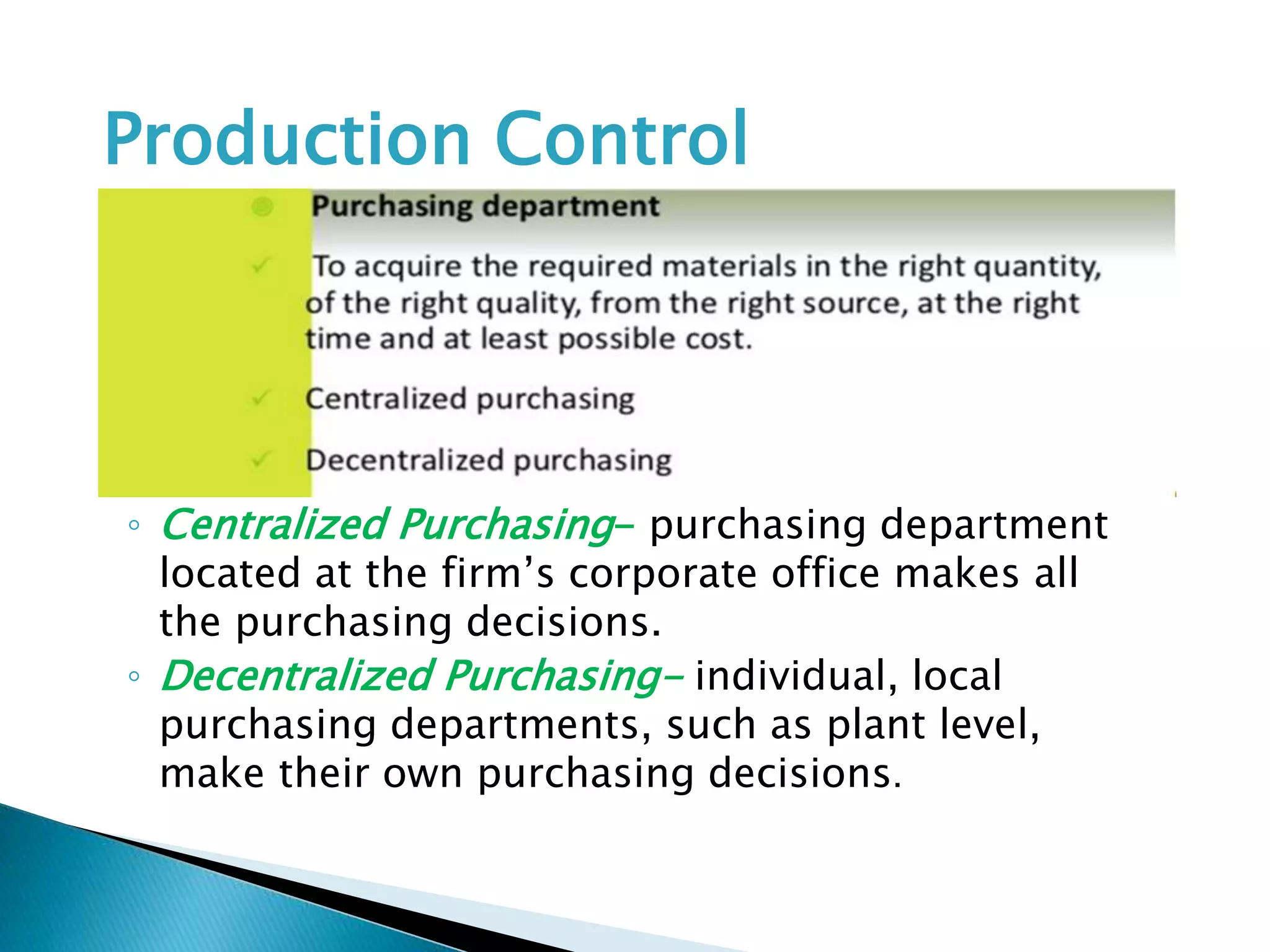
◦ Centralized Purchasing- purchasing department
located at the firm’s corporate office makes all
the purchasing decisions.
◦ Decentralized Purchasing- individual, local
purchasing departments, such as plant level,
make their own purchasing decisions.
Production Control
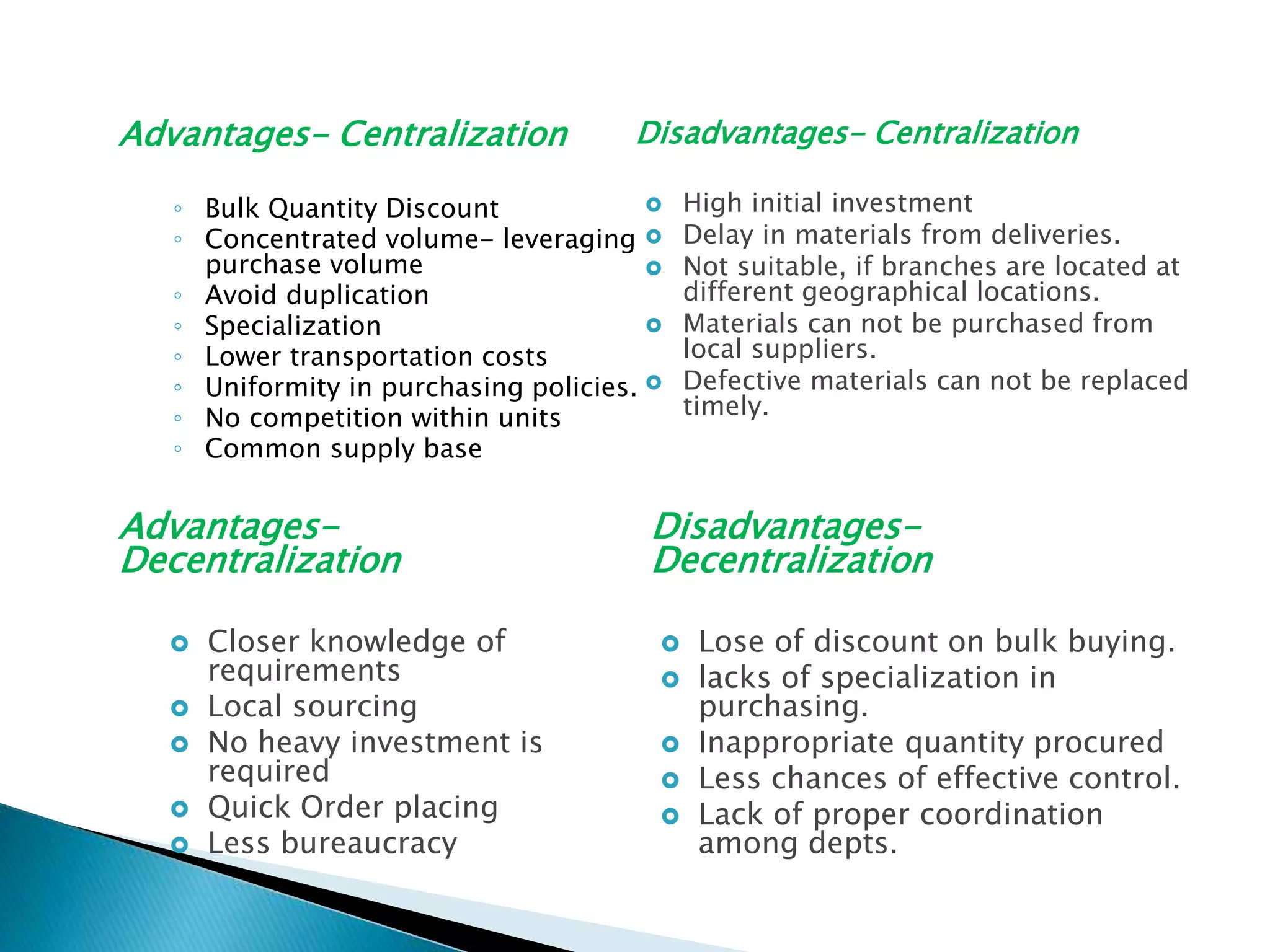
Advantages- Centralization
◦ Bulk Quantity Discount
◦ Concentrated volume- leveraging
purchase volume
◦ Avoid duplication
◦ Specialization
◦ Lower transportation costs
◦ Uniformity in purchasing policies.
◦ No competition within units
◦ Common supply base
Advantages-
Decentralization
 Closer knowledge of
requirements
 Local sourcing
 No heavy investment is
required
 Quick Order placing
 Less bureaucracy
Disadvantages- Centralization
 High initial investment
 Delay in materials from deliveries.
 Not suitable, if branches are located at
different geographical locations.
 Materials can not be purchased from
local suppliers.
 Defective materials can not be replaced
timely.
Disadvantages-
Decentralization
 Lose of discount on bulk buying.
 lacks of specialization in
purchasing.
 Inappropriate quantity procured
 Less chances of effective control.
 Lack of proper coordination
among depts.
Selection of
appropriate
vendors.
Difficulty in
forecasting
demand
accurately.
Diversification
of product
lines.
Optimizing
time and
quantity for
the products
Land and
storage cost
increases.
Management of
information.
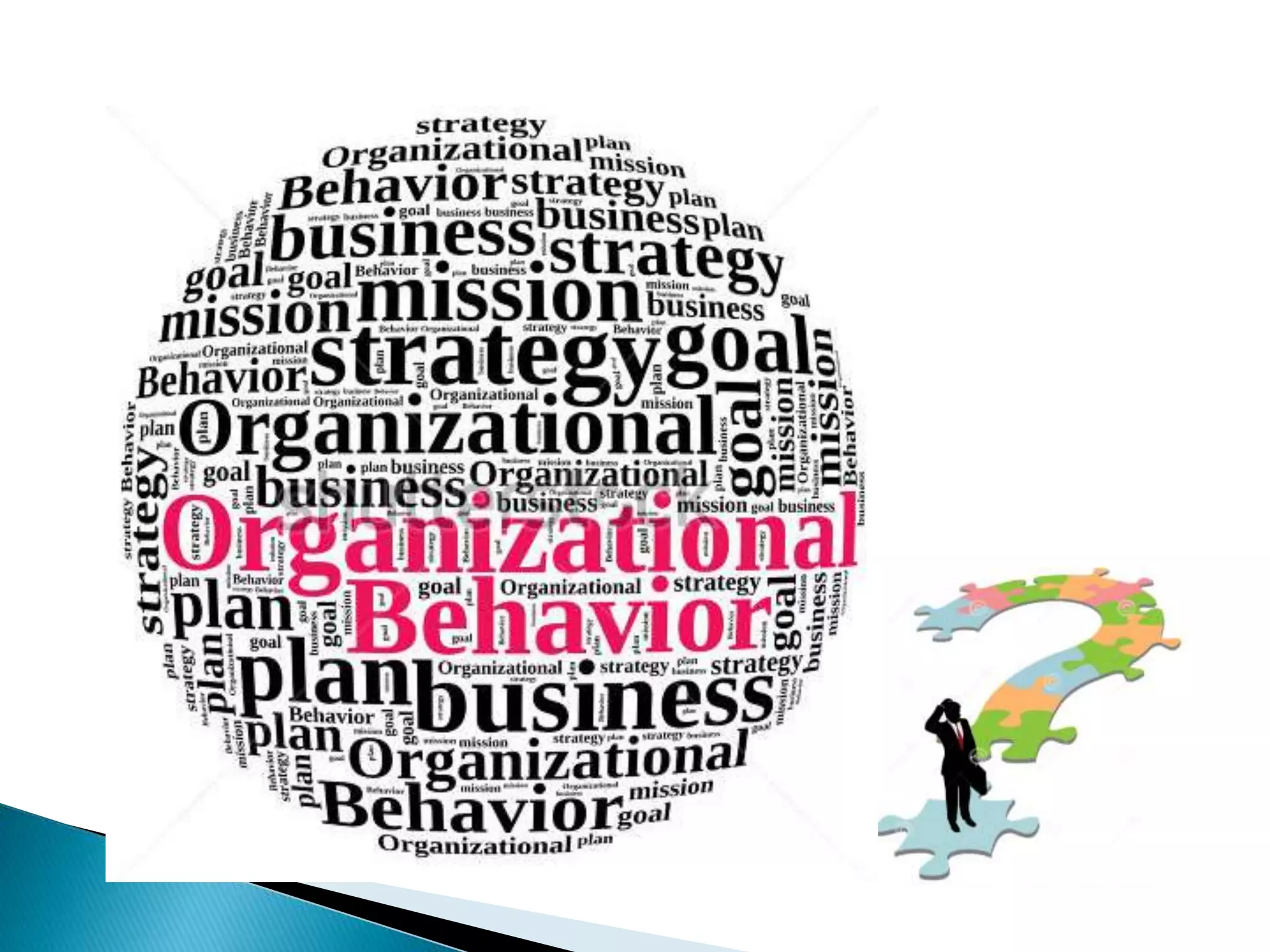
O + B = OB
 Organization + Behavior = Organization
Behavior
 Organizational Behavior is the study of the
factors that affect how individual and group
act and behave in the organization and how
organization manage their environment.
 The study of human attitude, behavior and
performance in the organization.
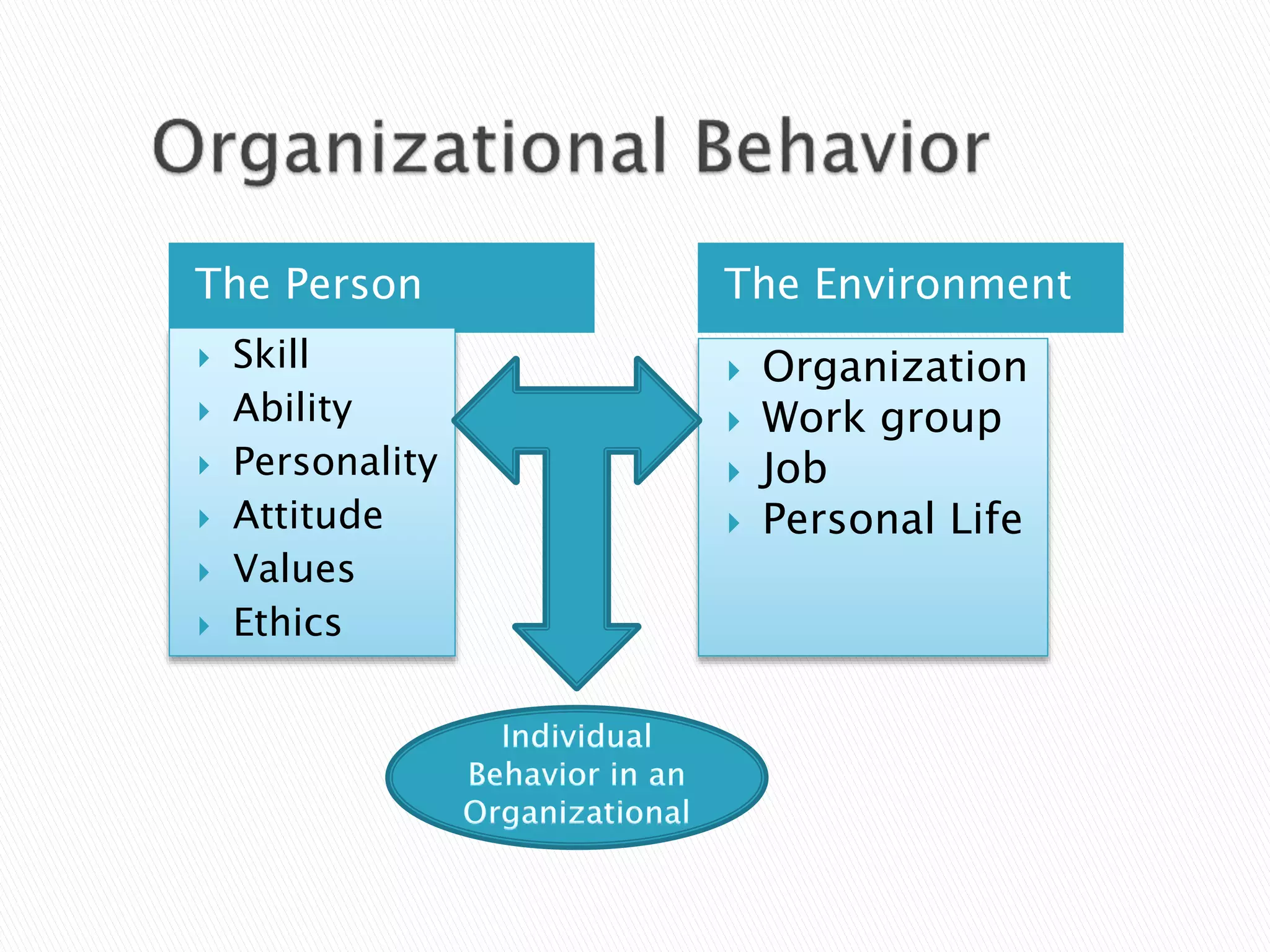
The Person The Environment
 Skill
 Ability
 Personality
 Attitude
 Values
 Ethics
 Organization
 Work group
 Job
 Personal Life
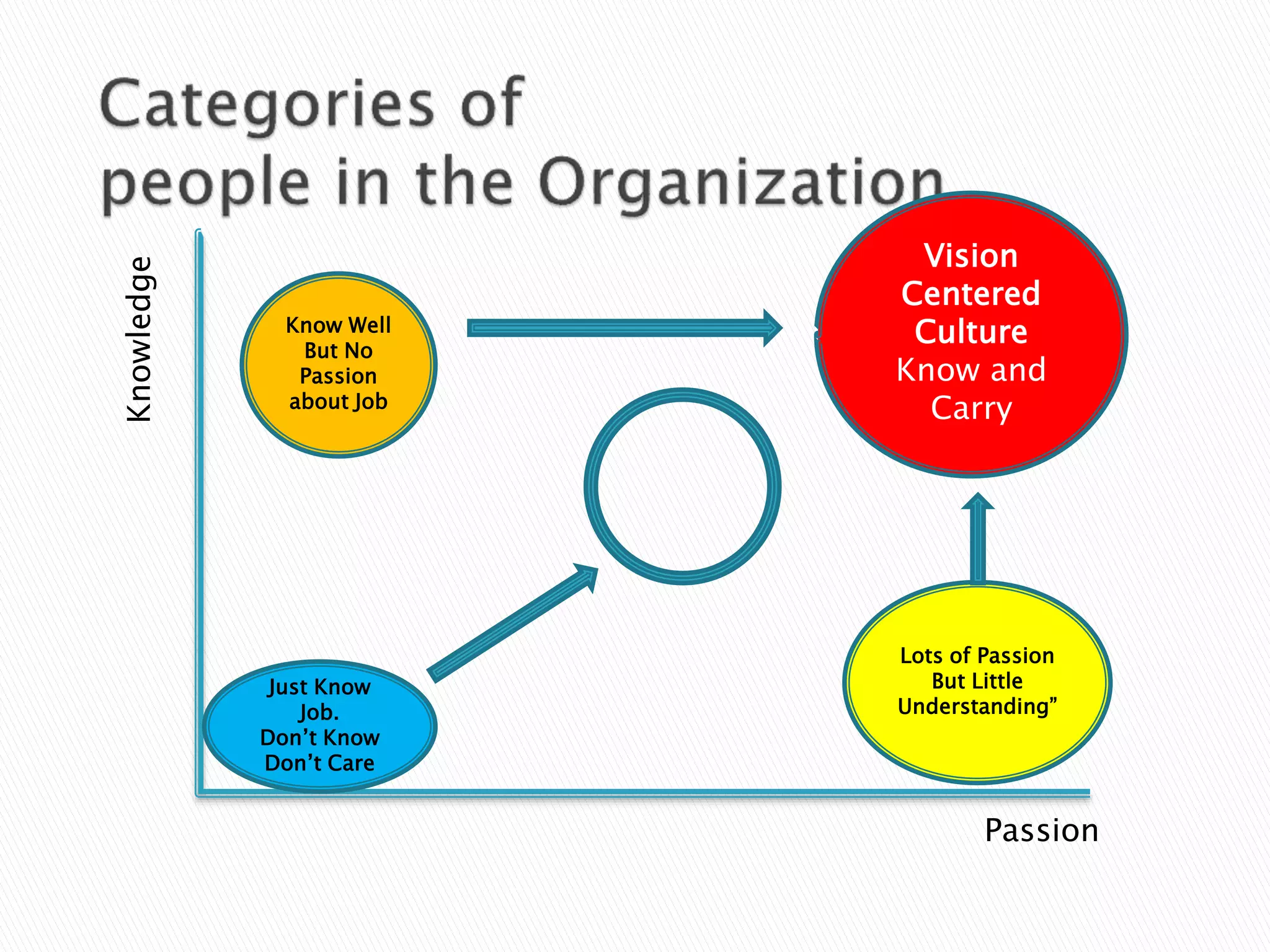
Passion
Knowledge
Just Know
Job.
Don’t Know
Don’t Care
Know Well
But No
Passion
about Job
Lots of Passion
But Little
Understanding”
Vision
Centered
Culture
Know and
Carry
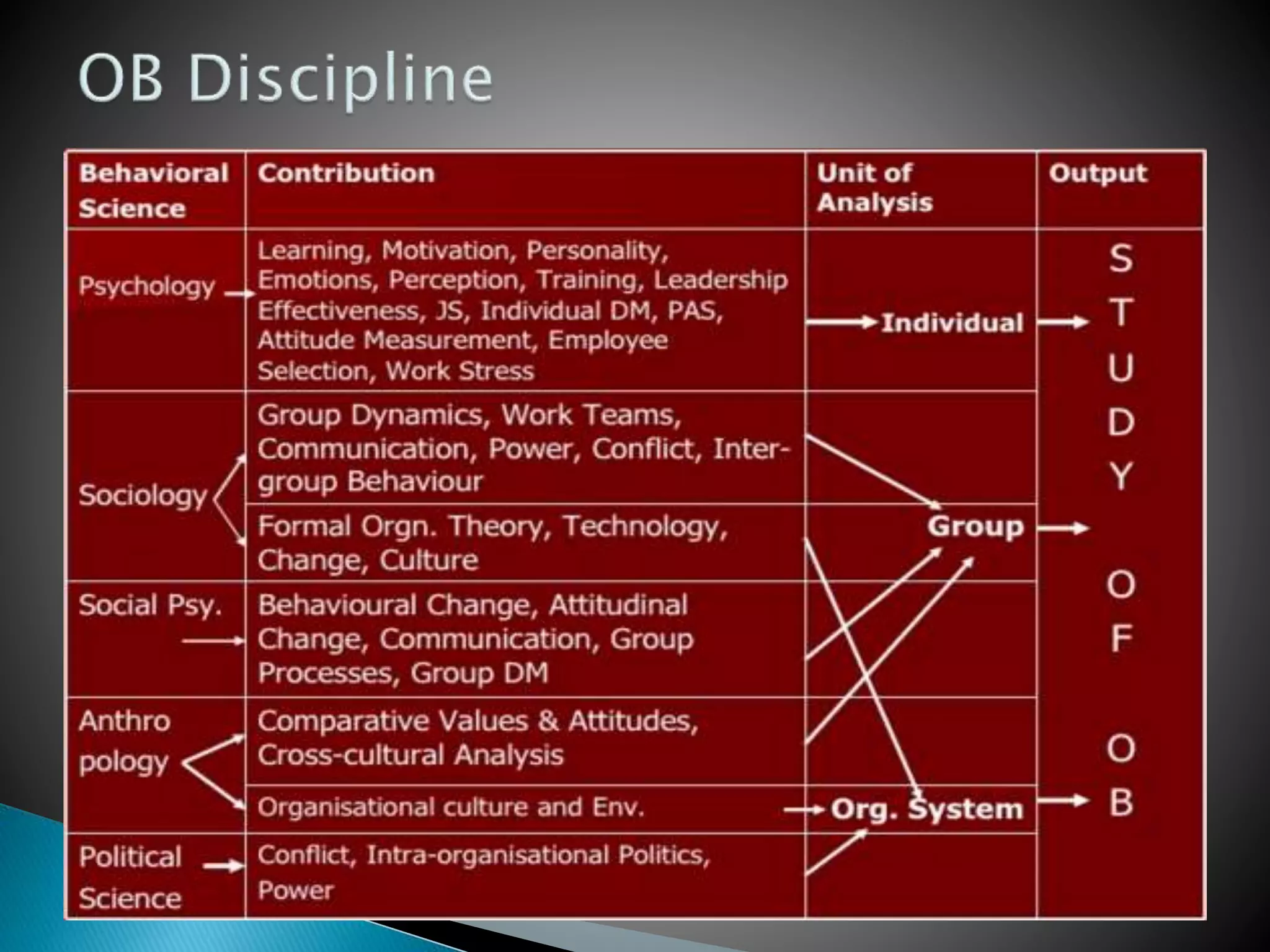
Forces of OB
Conflict Process
Individual
Level
* Job Satisfaction
* Empowerment
* Behaving Ethics
Group Level
* Working with other
* Workforce Diversity
Organization
System Level
* Productivity
* Developing effective
employees
* Global Competencies
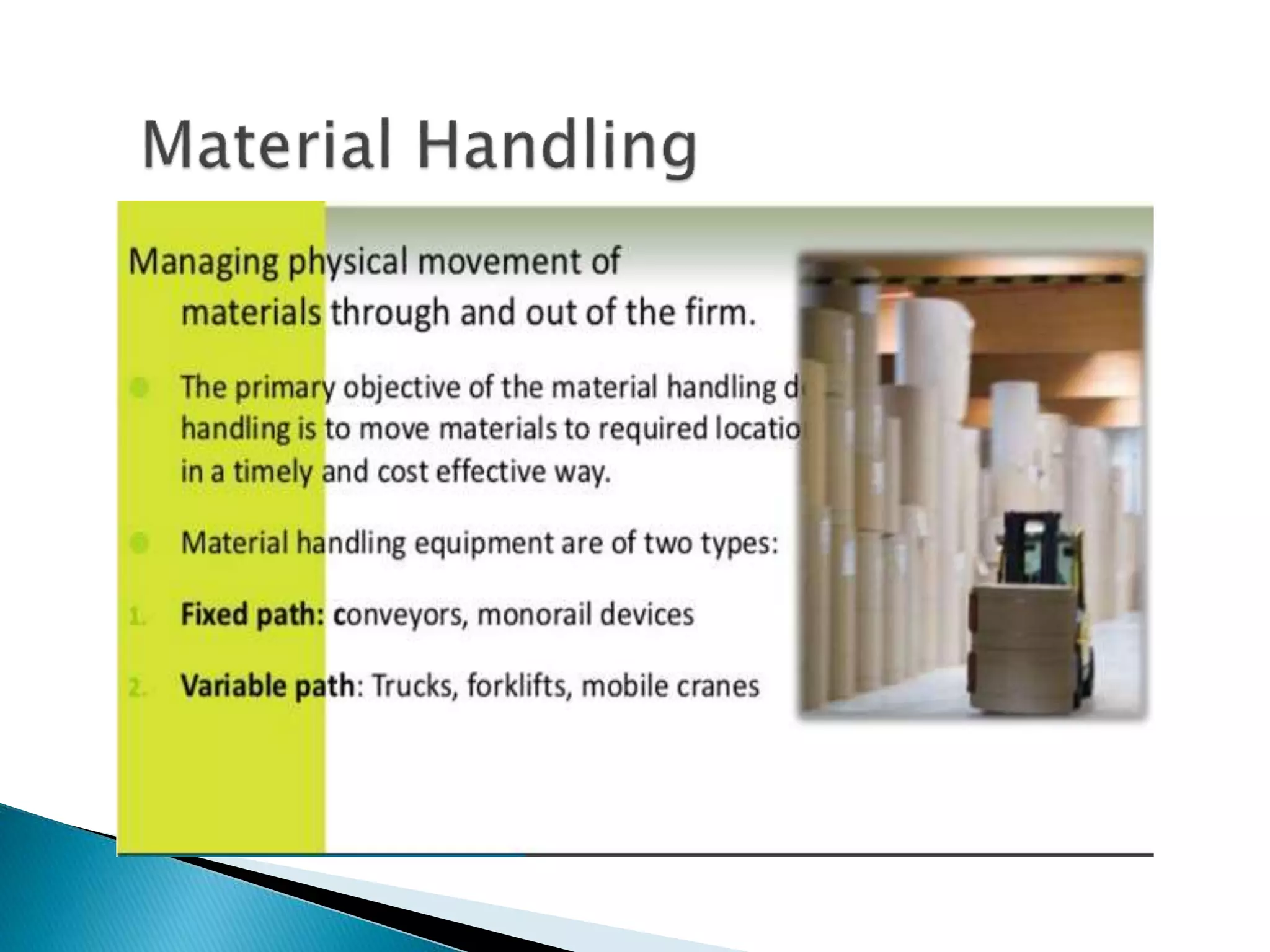
Material management
Material management
Material management
Material management
Material management
Material management

Material management

  • 2.
  • 3.
     Scope ofMM.  Process of MM.  Why MM is Necessary?  Focus of MM.  Objectives of MM  Main depts. Of MM.  Functions of MM.  Systems  Challenges for MM implementation.
  • 4.
    The scope ofmaterial management varies from company to company include material planning and control, production planning, purchasing, inventory control and stores, in-plant. ManagementMaterial + Planning ControllingOrganizing Management Internal Operations Distribution on Service Points Purchasing
  • 5.
    Consumption & End Usage Issuance& Distribution Purchasing Receiving Quality Control Warehousing & Storage Inventory Control Production Start
  • 7.
     To stabilizethe production.  To take advantage of price discounts.  To meet the demand during the replenishment period.  To prevent the loses of orders.  To keep pace with changing market conditions.
  • 8.
    In-Right Quantity Of-Right Quality At-RightTime From-Right Source At-Right Price
  • 10.
     Material Planning. Purchase  Inventory Control  Store/Warehouse
  • 11.
  • 13.
  • 14.
    ◦ Centralized Purchasing-purchasing department located at the firm’s corporate office makes all the purchasing decisions. ◦ Decentralized Purchasing- individual, local purchasing departments, such as plant level, make their own purchasing decisions. Production Control
  • 15.
    Advantages- Centralization ◦ BulkQuantity Discount ◦ Concentrated volume- leveraging purchase volume ◦ Avoid duplication ◦ Specialization ◦ Lower transportation costs ◦ Uniformity in purchasing policies. ◦ No competition within units ◦ Common supply base Advantages- Decentralization  Closer knowledge of requirements  Local sourcing  No heavy investment is required  Quick Order placing  Less bureaucracy Disadvantages- Centralization  High initial investment  Delay in materials from deliveries.  Not suitable, if branches are located at different geographical locations.  Materials can not be purchased from local suppliers.  Defective materials can not be replaced timely. Disadvantages- Decentralization  Lose of discount on bulk buying.  lacks of specialization in purchasing.  Inappropriate quantity procured  Less chances of effective control.  Lack of proper coordination among depts.
  • 24.
    Selection of appropriate vendors. Difficulty in forecasting demand accurately. Diversification ofproduct lines. Optimizing time and quantity for the products Land and storage cost increases. Management of information.
  • 26.
    O + B= OB  Organization + Behavior = Organization Behavior  Organizational Behavior is the study of the factors that affect how individual and group act and behave in the organization and how organization manage their environment.  The study of human attitude, behavior and performance in the organization.
  • 27.
    The Person TheEnvironment  Skill  Ability  Personality  Attitude  Values  Ethics  Organization  Work group  Job  Personal Life
  • 29.
    Passion Knowledge Just Know Job. Don’t Know Don’tCare Know Well But No Passion about Job Lots of Passion But Little Understanding” Vision Centered Culture Know and Carry
  • 30.
  • 31.
    Individual Level * Job Satisfaction *Empowerment * Behaving Ethics Group Level * Working with other * Workforce Diversity Organization System Level * Productivity * Developing effective employees * Global Competencies