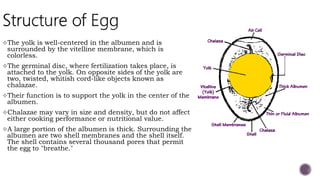
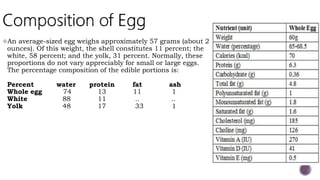
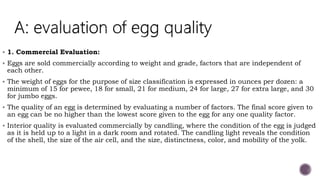
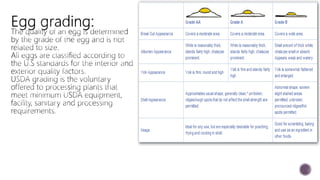
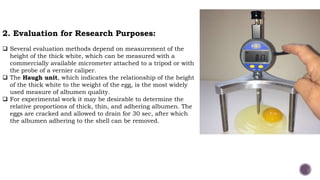
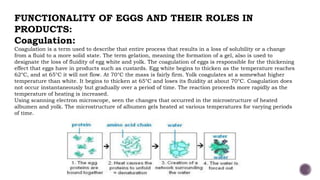
The document discusses the structure and composition of eggs. It describes the commercial evaluation of eggs based on weight, grade, and interior quality assessed by candling. Methods for research evaluation include measuring albumen height using a micrometer or caliper. During storage, egg quality decreases as the air cell increases in size, yolk enlarges, white thins, and odor/flavor deteriorates. Proper storage temperature and humidity can help maintain quality. Eggs function as coagulants, emulsifiers, and foaming agents in foods. Processed eggs are marketed in refrigerated, dried, and frozen forms to extend shelf life.