9-1 DEFINING
What are political parties?
http://www.brainpop.com/socialstudies/usgovern
   mentandlaw/politicalparties/


Associations of voters with common interests
  who want to influence decision making in
  government by electing their candidates to
  public office.
9-1 EXPLAINING
Why did George Washington not want political
 parties to form?
http://www.brainpop.com/socialstudies/ushistory/
   politicalpartyorigins/


He believed parties would be a source of conflict
  that could tear the nation apart.
9-1 DESCRIBING
Why do single-issue parties form?


To promote a social, economic, or moral issue.
9-1 EXPLAINING
What is the goal of ideological parties?


To change society in major ways.
9-1 EXPLAINING
Why do the two major parties seem so similar?


Because they take moderate positions to attract
  large numbers of voters.
9-1 COMPARING
What is the difference between a platform and a
 plank?


A platform tells voters what the party will do if
  voters elect them into office. A plank is each
  individual part of the platform.
9-2 SUMMARIZING
What does a political party’s national committee
 do?


It helps raise funds for presidential elections and
   organizes the party’s national convention.
9-2 DESCRIBING
How has the nomination of presidential candidates
  changed over the years?

In the past, delegates decided on the candidate. Now,
   primary elections are used to narrow down the
   candidates and the nomination is already
   determined by the time of the convention.

http://www.brainpop.com/socialstudies/usgovernment
   andlaw/primariesandcaucuses/
9-2 EXPLAINING
What is the job of a precinct captain?


To organize party volunteers during campaigns
  and encourage voters on election day.
9-2 EVALUATING
Why does the county chairperson have so much
 political influence in the county?


Because they build grassroots support and the
  governor or senator may consult them for
  advice on the appointment of public officials.
9-2 CONCLUDING
Why is it important to build grassroots support for
 a party?


Grassroots support is at the community level and
  lets local party leaders see what issues are
  important to voters so they can affect voters.
9-2 EXPLAINING
How are political machines generally viewed
  today?


Today they are considered harmful and
  unresponsive to the community’s needs when
  in power too long. Political leaders might
  become less concerned with the voters when
  they do not have to worry about reelection.
9-3 IDENTIFYING
Who selects the candidates for public office?


Political parties
9-3 DESCRIBING
What happens during direct primaries?


Voters choose candidates to represent each party
  in a general election.
9-3 CONTRASTING
What is the difference between an open and
 closed primary?


Only declared members of a party may vote in a
  closed primary. Anyone may vote in an open
  primary.
9-3 EXPLAINING
What is the purpose of a runoff primary?


To select a candidate when none of the candidates
  receive the majority of the vote. When this
  happens, the top two candidates run again in a
  runoff.
9-3 EVALUATING
How are party ties instrumental in helping
  different levels and branches of government
  cooperate?


Because the public officials are from the same
  party they are likely to have similar goals and
  ideas and may join forces to fight a common
  problem.
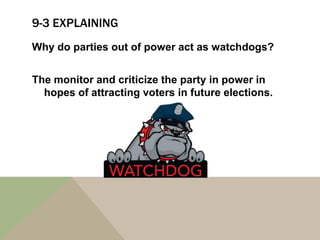
9-3 EXPLAINING
Why do parties out of power act as watchdogs?


The monitor and criticize the party in power in
  hopes of attracting voters in future elections.
POLITICAL BELIEFS – WHERE DO YOU STAND?
http://www.brainpop.com/socialstudies/usgovern
   mentandlaw/politicalbeliefs/

Ch9.guided reading

  • 2.
    9-1 DEFINING What arepolitical parties? http://www.brainpop.com/socialstudies/usgovern mentandlaw/politicalparties/ Associations of voters with common interests who want to influence decision making in government by electing their candidates to public office.
  • 3.
    9-1 EXPLAINING Why didGeorge Washington not want political parties to form? http://www.brainpop.com/socialstudies/ushistory/ politicalpartyorigins/ He believed parties would be a source of conflict that could tear the nation apart.
  • 4.
    9-1 DESCRIBING Why dosingle-issue parties form? To promote a social, economic, or moral issue.
  • 5.
    9-1 EXPLAINING What isthe goal of ideological parties? To change society in major ways.
  • 6.
    9-1 EXPLAINING Why dothe two major parties seem so similar? Because they take moderate positions to attract large numbers of voters.
  • 7.
    9-1 COMPARING What isthe difference between a platform and a plank? A platform tells voters what the party will do if voters elect them into office. A plank is each individual part of the platform.
  • 8.
    9-2 SUMMARIZING What doesa political party’s national committee do? It helps raise funds for presidential elections and organizes the party’s national convention.
  • 9.
    9-2 DESCRIBING How hasthe nomination of presidential candidates changed over the years? In the past, delegates decided on the candidate. Now, primary elections are used to narrow down the candidates and the nomination is already determined by the time of the convention. http://www.brainpop.com/socialstudies/usgovernment andlaw/primariesandcaucuses/
  • 10.
    9-2 EXPLAINING What isthe job of a precinct captain? To organize party volunteers during campaigns and encourage voters on election day.
  • 11.
    9-2 EVALUATING Why doesthe county chairperson have so much political influence in the county? Because they build grassroots support and the governor or senator may consult them for advice on the appointment of public officials.
  • 12.
    9-2 CONCLUDING Why isit important to build grassroots support for a party? Grassroots support is at the community level and lets local party leaders see what issues are important to voters so they can affect voters.
  • 13.
    9-2 EXPLAINING How arepolitical machines generally viewed today? Today they are considered harmful and unresponsive to the community’s needs when in power too long. Political leaders might become less concerned with the voters when they do not have to worry about reelection.
  • 14.
    9-3 IDENTIFYING Who selectsthe candidates for public office? Political parties
  • 15.
    9-3 DESCRIBING What happensduring direct primaries? Voters choose candidates to represent each party in a general election.
  • 16.
    9-3 CONTRASTING What isthe difference between an open and closed primary? Only declared members of a party may vote in a closed primary. Anyone may vote in an open primary.
  • 17.
    9-3 EXPLAINING What isthe purpose of a runoff primary? To select a candidate when none of the candidates receive the majority of the vote. When this happens, the top two candidates run again in a runoff.
  • 18.
    9-3 EVALUATING How areparty ties instrumental in helping different levels and branches of government cooperate? Because the public officials are from the same party they are likely to have similar goals and ideas and may join forces to fight a common problem.
  • 19.
    9-3 EXPLAINING Why doparties out of power act as watchdogs? The monitor and criticize the party in power in hopes of attracting voters in future elections.
  • 20.
    POLITICAL BELIEFS –WHERE DO YOU STAND? http://www.brainpop.com/socialstudies/usgovern mentandlaw/politicalbeliefs/