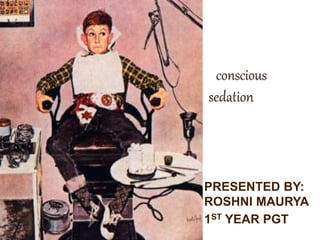
conscious
sedation
PRESENTED BY:
ROSHNI MAURYA
1ST YEAR PGT
INTRODUCTION
 In the past decade, the use of sedatives and analgesics
to relieve pain and anxiety associated with invasive
diagnostic and therapeutic/painful procedures on
pediatric patients in
non-traditional settings (i.e., Emergency Department,
Radiology, EEG lab, etc.) has substantially increased.
 Further complicating matters, there is very little existing
conformity in providers’ choice of technique,
medication(s)
and depth of sedation/anesthesia to accomplish the
same procedure.
 Consequently, adhering to a systematic approach of
appropriate assessment, monitoring, and rescue skills
has become critically important in promoting safe and
effective procedural sedation and analgesia.
Purpose:
 To familiarize with principles and
standards
underlying safe and effective pediatric
moderate sedation,
 review optimal presedation patient
evaluation,
 review commonly used
sedative/analgesic
drugs,
 review potential patient complications,
provide resources to improve patient
safety and outcomes.
Procedural Sedation in
ChildrenChildren receive sedation more frequently than
adults (largely due to diagnostic procedures
that require controlled/no movement).
To meet necessary goals, sedation/analgesia
usually must be deeper than given to
adults.
Due to physiologic differences, children are at
higher risk for respiratory depression and
life-threatening hypoxia.
Technically, providers with the intent to practice
“moderate sedation” may be closer to the
definition of “general anesthesia” because
children can easily slip from one level to
another.
Procedural
Sedation/Analgesia
Continuum
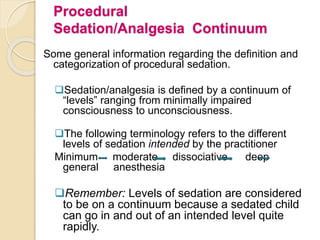
Procedural
Sedation/Analgesia Continuum
Some general information regarding the definition and
categorization of procedural sedation.
Sedation/analgesia is defined by a continuum of
“levels” ranging from minimally impaired
consciousness to unconsciousness.
The following terminology refers to the different
levels of sedation intended by the practitioner
Minimum moderate dissociative deep
general anesthesia
Remember: Levels of sedation are considered
to be on a continuum because a sedated child
can go in and out of an intended level quite
rapidly.
Continuum – Minimal
Sedation
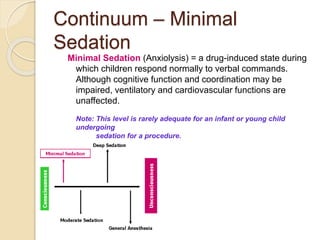
Minimal Sedation (Anxiolysis) = a drug-induced state during
which children respond normally to verbal commands.
Although cognitive function and coordination may be
impaired, ventilatory and cardiovascular functions are
unaffected.
Note: This level is rarely adequate for an infant or young child
undergoing
sedation for a procedure.
Continuum – Moderate
Sedation
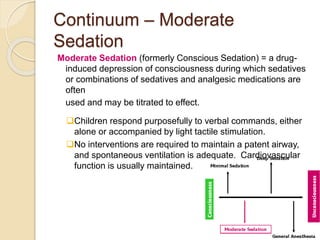
Moderate Sedation (formerly Conscious Sedation) = a drug-
induced depression of consciousness during which sedatives
or combinations of sedatives and analgesic medications are
often
used and may be titrated to effect.
Children respond purposefully to verbal commands, either
alone or accompanied by light tactile stimulation.
No interventions are required to maintain a patent airway,
and spontaneous ventilation is adequate. Cardiovascular
function is usually maintained.
Continuum – Dissociative
Sedation
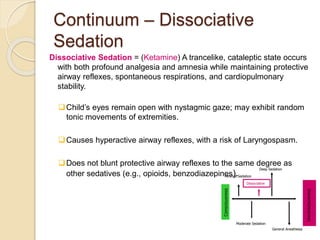
Dissociative Sedation = (Ketamine) A trancelike, cataleptic state occurs
with both profound analgesia and amnesia while maintaining protective
airway reflexes, spontaneous respirations, and cardiopulmonary
stability.
Child’s eyes remain open with nystagmic gaze; may exhibit random
tonic movements of extremities.
Causes hyperactive airway reflexes, with a risk of Laryngospasm.
Does not blunt protective airway reflexes to the same degree as
other sedatives (e.g., opioids, benzodiazepines).
Consciousness
Unconsciousness
Moderate Sedation
Deep Sedation
General Anesthesia
Minimal Sedation
Dissociative
Continuum – Deep Sedation
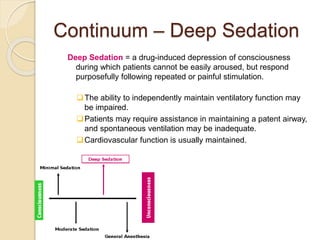
Deep Sedation = a drug-induced depression of consciousness
during which patients cannot be easily aroused, but respond
purposefully following repeated or painful stimulation.
The ability to independently maintain ventilatory function may
be impaired.
Patients may require assistance in maintaining a patent airway,
and spontaneous ventilation may be inadequate.
Cardiovascular function is usually maintained.
Continuum – General
Anesthesia
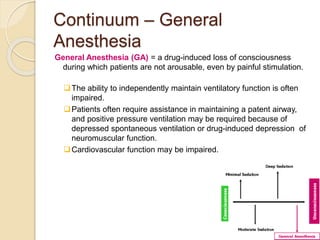
General Anesthesia (GA) = a drug-induced loss of consciousness
during which patients are not arousable, even by painful stimulation.
The ability to independently maintain ventilatory function is often
impaired.
Patients often require assistance in maintaining a patent airway,
and positive pressure ventilation may be required because of
depressed spontaneous ventilation or drug-induced depression of
neuromuscular function.
Cardiovascular function may be impaired.
Preparation
Goals of Effective Sedation
Guard the patient’s safety & welfare
Minimize physical discomfort & pain
Control anxiety, minimize psychological
trauma, and maximize the potential for
amnesia
Control behavior and/or movement to allow the
safe completion of the procedure
Return the patient to a state in which safe
discharge from medical supervision (as
determined by recognized criteria) is possible
Strike a Balance

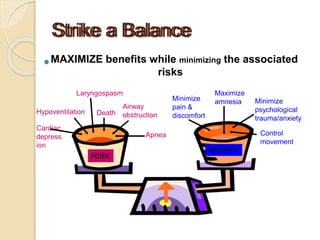
Strike a Balance
MAXIMIZE benefits while minimizing the associated
risks
RISK
BENEFIT
Hypoventilation
Apnea
Airway
obstruction
Laryngospasm
Cardiac
depress
ion
Death
Minimize
pain &
discomfort
Control
movement
Minimize
psychological
trauma/anxiety
Maximize
amnesia
Before We Begin…
 Each sedation should be tailored to the
individual child considering the following factors:
 Select the lowest drug dose with the highest
therapeutic
index for the procedure - consider if agent(s) can be
reversed
 Consider whether the procedure could be
accomplished
without sedation by engaging alternative modalities
 Alternatively, do not undertreat the child when
sedation/analgesia is appropriate & necessary
Implications
 No matter the level of sedation you intend to produce,
you should be able to rescue patients one level of
sedation “deeper” than that which was intended.
– Joint Commission
For example: You must be prepared/skilled to manage
and rescue a “moderately sedated” child who slips
into an unintentional state of “deep sedation.”
This highlights the fact that different levels of sedation
require different levels of expertise in airway &
physiological function management of the patient.
Principles
for
Safe & Effective
Sedation/Analgesia
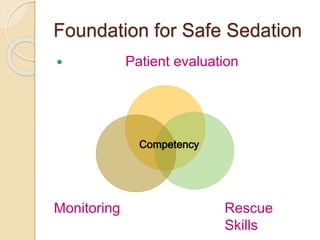
Foundation for Safe Sedation
 Patient evaluation
Monitoring Rescue
Skills
Guiding Principles – Supervision &
Training
The following action items are necessary to ensure safe
sedation1
Supervision & Training
Children should not receive sedative or anxiolytic
medications without supervision by medical
personnel appropriately trained & skilled in
both airway management and
cardiopulmonary resuscitation.
 Do not prescribe (or encourage) any sedating
medications to be administered by the parent before
arriving at the hospital.
Formulate a reasonable plan of
sedation/analgesia.
Understand the pharmacokinetics/dynamics
and interactions of sedating medications.
Guiding Principles – Staffing
Staffing
Ensure that an adequate number or
trained/credentialed/competent staff are
present for procedure and monitoring
(minimum of two experienced
providers).
Specifically assign a staff member
whose main responsibility it is to
constantly monitor the child’s
cardiorespiratory status during & after
the procedure, and assist in supportive
or resuscitation measures (as required).
Ensure a properly equipped & staffed
recovery area (note: parents/caregivers
should not be considered as part of the
staff).
Guiding Principles – Evaluation
Evaluation
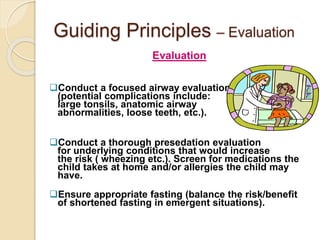
Conduct a focused airway evaluation
(potential complications include:
large tonsils, anatomic airway
abnormalities, loose teeth, etc.).
Conduct a thorough presedation evaluation
for underlying conditions that would increase
the risk ( wheezing etc.). Screen for medications the
child takes at home and/or allergies the child may
have.
Ensure appropriate fasting (balance the risk/benefit
of shortened fasting in emergent situations).
Guiding Principles – Equipment &
Disposition
Equipment
Have access to all appropriate medications and reversal
agents.
Use age/size-appropriate and functioning
equipment for airway management
& venous access.
Disposition
Ensure patient is recovered to baseline
status before discharge. Appropriately
manage pain.
Provide appropriate discharge instructions to
parent/caregiver.
Personnel & Training
Primary Practitioner:
Be qualified and institutionally credentialed to
administer drugs to predictably achieve and
maintain the desired level of sedation
Recognize and manage complications of one
level deeper than intended sedation
Be trained/capable of providing (at minimum)
bag mask ventilation and, ultimately,
endotracheal intubation
Understand pharmacology of sedating
medications, as well as role of reversal agents
for opioids and benzodiazepines
Maintain advanced pediatric airway skills
Support personnel:
At least 1 person dedicated to constantly
monitor appropriate physiologic
parameters and assist in any supportive or
resuscitation measures
Be trained in, and capable of providing,
pediatric basic life support
Know how to use resuscitation
equipment & supplies in the event of an
emergency
THIS PERSON SHOULD HAVE NO OTHER SIGNIFICANT
RESPONSIBILITIES
Sedation/Analgesia
Specifics
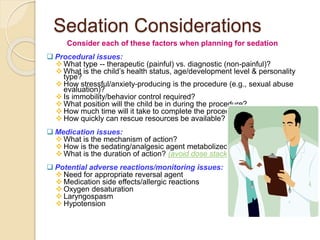
Sedation Considerations
Consider each of these factors when planning for sedation
 Procedural issues:
 What type -- therapeutic (painful) vs. diagnostic (non-painful)?
 What is the child’s health status, age/development level & personality
type?
 How stressful/anxiety-producing is the procedure (e.g., sexual abuse
evaluation)?
 Is immobility/behavior control required?
 What position will the child be in during the procedure?
 How much time will it take to complete the procedure?
 How quickly can rescue resources be available?
 Medication issues:
 What is the mechanism of action?
 How is the sedating/analgesic agent metabolized?
 What is the duration of action? (avoid dose stacking)
 Potential adverse reactions/monitoring issues:
 Need for appropriate reversal agent
 Medication side effects/allergic reactions
 Oxygen desaturation
 Laryngospasm
 Hypotension
Equipment & Supplies
To ensure systematic & thorough preparation
for every sedation, the AAP1 recommends S O A P M E
 Suction – age/size-appropriate suction catheters and suction
apparatus (Yankauer-type)
 Oxygen – adequate O2 supply, working flow/delivery
devices
 Airway – age/size-appropriate airway equipment (e.g., ET
tubes, LMAs,
oral and nasal airways, laryngoscope blades, stylets, bag
mask)
 Pharmacy – all basic life-saving drugs, including reversal
agents (Naloxone, Flumazenil)
 Monitors – pulse oximeter, BP monitor, ECG, stethoscope,
thermometer, cardiac monitor, end-tidal carbon dioxide
(EtCO2) monitor/detector
 Equipment – special equipment/drugs for particular child
(e.g., defibrillator, respiratory box, IV access equipment)
should be readily available
 MOST IMPORTANT PERSONNEL SKILLED
IN ADVANCED LIFE SUPPORT!
Presedation Evaluation
 Evaluate every child in need of procedural sedation prior to sedation
& perform universal procedures (i.e., “time out”) immediately prior to
sedation.
Age, weight, height
Health history
Allergies and previous allergic
or adverse drug reactions
Medication history, herbal or
illicit drugs (dosage, time, route,
and site)
Relevant diseases, physical
abnormalities, and pregnancy
status
Relevant hospitalizations
Prior sedations & surgeries,
and any complications (esp.
airway issues)
Relevant family history
NPO status
Systems review
Vital signs (BP, heart rate,
respiratory rate, temperature,
SpO2)
Pulmonary, Cardiac, Renal,
GI, Hematological, CNS,
Endocrine
Physical exam with focused
airway evaluation (include:
body habitus, head/ neck,
teeth/mouth, and jaw)
Physical status
Review of objective
diagnostic data (e.g. labs,
ECG, x-ray, etc.)
Level of child’s anxiety, pain,
consciousness
Name and telephone
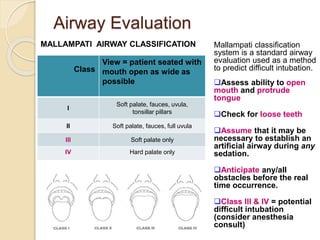
Airway Evaluation
Class
View = patient seated with
mouth open as wide as
possible
I
Soft palate, fauces, uvula,
tonsillar pillars
II Soft palate, fauces, full uvula
III Soft palate only
IV Hard palate only
MALLAMPATI AIRWAY CLASSIFICATION Mallampati classification
system is a standard airway
evaluation used as a method
to predict difficult intubation.
Assess ability to open
mouth and protrude
tongue
Check for loose teeth
Assume that it may be
necessary to establish an
artificial airway during any
sedation.
Anticipate any/all
obstacles before the real
time occurrence.
Class III & IV = potential
difficult intubation
(consider anesthesia
consult)
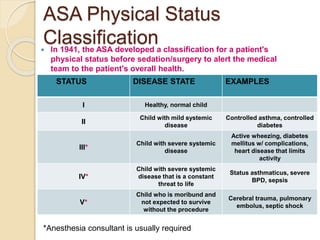
ASA Physical Status
Classification In 1941, the ASA developed a classification for a patient's
physical status before sedation/surgery to alert the medical
team to the patient's overall health.
STATUS DISEASE STATE EXAMPLES
I Healthy, normal child
II
Child with mild systemic
disease
Controlled asthma, controlled
diabetes
III*
Child with severe systemic
disease
Active wheezing, diabetes
mellitus w/ complications,
heart disease that limits
activity
IV*
Child with severe systemic
disease that is a constant
threat to life
Status asthmaticus, severe
BPD, sepsis
V*
Child who is moribund and
not expected to survive
without the procedure
Cerebral trauma, pulmonary
embolus, septic shock
*Anesthesia consultant is usually required
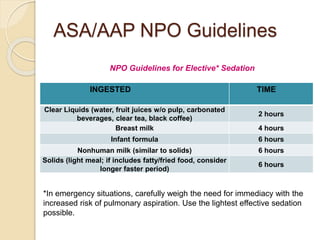
ASA/AAP NPO Guidelines
INGESTED TIME
Clear Liquids (water, fruit juices w/o pulp, carbonated
beverages, clear tea, black coffee)
2 hours
Breast milk 4 hours
Infant formula 6 hours
Nonhuman milk (similar to solids) 6 hours
Solids (light meal; if includes fatty/fried food, consider
longer faster period)
6 hours
NPO Guidelines for Elective* Sedation
*In emergency situations, carefully weigh the need for immediacy with the
increased risk of pulmonary aspiration. Use the lightest effective sedation
possible.
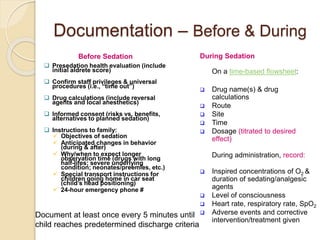
Documentation – Before & During
Before Sedation
 Presedation health evaluation (include
initial aldrete score)
 Confirm staff privileges & universal
procedures (i.e., “time out”)
 Drug calculations (include reversal
agents and local anesthetics)
 Informed consent (risks vs. benefits,
alternatives to planned sedation)
 Instructions to family:
 Objectives of sedation
 Anticipated changes in behavior
(during & after)
 Why/when to expect longer
observation time (drugs with long
half-lifes; severe underlying
condition; neonates/preemies, etc.)
 Special transport instructions for
children going home in car seat
(child’s head positioning)
 24-hour emergency phone #
During Sedation
On a time-based flowsheet:
 Drug name(s) & drug
calculations
 Route
 Site
 Time
 Dosage (titrated to desired
effect)
During administration, record:
 Inspired concentrations of O2 &
duration of sedating/analgesic
agents
 Level of consciousness
 Heart rate, respiratory rate, SpO2
 Adverse events and corrective
intervention/treatment given
Document at least once every 5 minutes until
child reaches predetermined discharge criteria
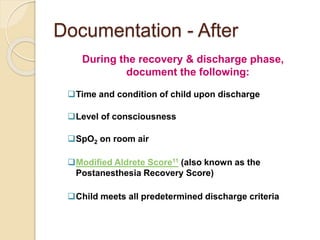
Documentation - After
During the recovery & discharge phase,
document the following:
Time and condition of child upon discharge
Level of consciousness
SpO2 on room air
Modified Aldrete Score11 (also known as the
Postanesthesia Recovery Score)
Child meets all predetermined discharge criteria
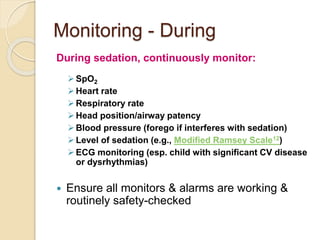
Monitoring - During
During sedation, continuously monitor:
SpO2
Heart rate
Respiratory rate
Head position/airway patency
Blood pressure (forego if interferes with sedation)
Level of sedation (e.g., Modified Ramsey Scale12)
ECG monitoring (esp. child with significant CV disease
or dysrhythmias)
 Ensure all monitors & alarms are working &
routinely safety-checked
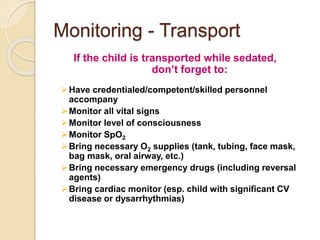
Monitoring - Transport
If the child is transported while sedated,
don’t forget to:
Have credentialed/competent/skilled personnel
accompany
Monitor all vital signs
Monitor level of consciousness
Monitor SpO2
Bring necessary O2 supplies (tank, tubing, face mask,
bag mask, oral airway, etc.)
Bring necessary emergency drugs (including reversal
agents)
Bring cardiac monitor (esp. child with significant CV
disease or dysarrhythmias)
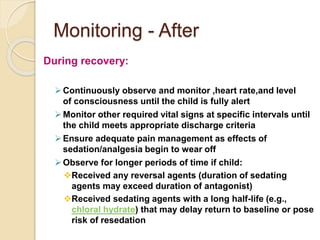
Monitoring - After
During recovery:
Continuously observe and monitor ,heart rate,and level
of consciousness until the child is fully alert
Monitor other required vital signs at specific intervals until
the child meets appropriate discharge criteria
Ensure adequate pain management as effects of
sedation/analgesia begin to wear off
Observe for longer periods of time if child:
Received any reversal agents (duration of sedating
agents may exceed duration of antagonist)
Received sedating agents with a long half-life (e.g.,
chloral hydrate) that may delay return to baseline or pose
risk of resedation
Discharge Criteria
Every hospital must develop discharge criteria based on
objective measures suitable to their patient population.
Consider, at minimum, the following measures:
 Return to pre-sedation (age/developmentally-appropriate)
activity/ambulation & cognitive level
 Child is easily arousable, alert and oriented
 Protective airway reflexes are intact
 Stable vital signs, pain level, O2 and respiratory effort (e.g. Modified Aldrete
Score ≥ 9)
 If reversal agent is given, allow sufficient time (up to 2 hours) after last
dose to observe for risk of resedation
 Child/caregiver is able to understand written instructions (include
emergency contact #)
 Child has safe transportation home with responsible adult (for infants
going home in a car seat, adjust head position to ensure a patent airway if
infant falls asleep)
PRE ANESTHETIC
MEDICATION
Refers to the use of drugs before
anesthesia to make it more pleasant &
safe.
AIMS & OBJECTIVES
 Relief of anxiety , apprehension preoperatively , to
facilitate smooth induction
 Amnesia for pre & postoperative events.
 Supplement analgesic action of anesthetics.
 Decrease secretions, vagal stimulation caused by
anesthetics
 Anti –emetic effect extending to postoperative
period.
 Decrease acidity , volume of gastric juice so less
damaging if aspirated.
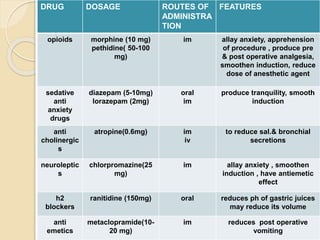
DRUG DOSAGE ROUTES OF
ADMINISTRA
TION
FEATURES
opioids morphine (10 mg)
pethidine( 50-100
mg)
im allay anxiety, apprehension
of procedure , produce pre
& post operative analgesia,
smoothen induction, reduce
dose of anesthetic agent
sedative
anti
anxiety
drugs
diazepam (5-10mg)
lorazepam (2mg)
oral
im
produce tranquility, smooth
induction
anti
cholinergic
s
atropine(0.6mg) im
iv
to reduce sal.& bronchial
secretions
neuroleptic
s
chlorpromazine(25
mg)
im allay anxiety , smoothen
induction , have antiemetic
effect
h2
blockers
ranitidine (150mg) oral reduces ph of gastric juices
may reduce its volume
anti
emetics
metaclopramide(10-
20 mg)
im reduces post operative
vomiting
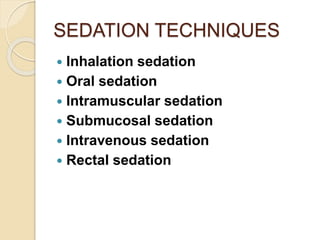
SEDATION TECHNIQUES
 Inhalation sedation
 Oral sedation
 Intramuscular sedation
 Submucosal sedation
 Intravenous sedation
 Rectal sedation
NITROUS OXIDE SEDATION
 Nitrous oxide/oxygen inhalation
sedation is the most commonly
used technique in dentistry.
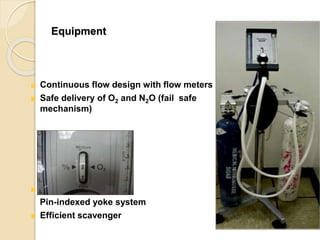
Equipment
Continuous flow design with flow meters
Safe delivery of O2 and N2O (fail safe
mechanism)
Pin-indexed yoke system
Efficient scavenger
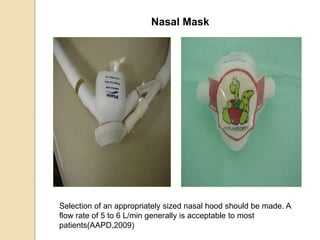
Nasal Mask
Selection of an appropriately sized nasal hood should be made. A
flow rate of 5 to 6 L/min generally is acceptable to most
patients(AAPD,2009)
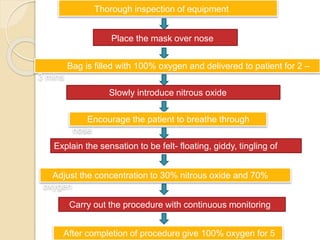
Thorough inspection of equipment
Place the mask over nose
Bag is filled with 100% oxygen and delivered to patient for 2 –
3 mins
Slowly introduce nitrous oxide
Encourage the patient to breathe through
nose
Explain the sensation to be felt- floating, giddy, tingling of
digits
Adjust the concentration to 30% nitrous oxide and 70%
oxygen
Carry out the procedure with continuous monitoring
After completion of procedure give 100% oxygen for 5
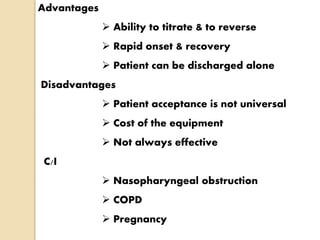
Advantages
 Ability to titrate & to reverse
 Rapid onset & recovery
 Patient can be discharged alone
Disadvantages
 Patient acceptance is not universal
 Cost of the equipment
 Not always effective
C/I
 Nasopharyngeal obstruction
 COPD
 Pregnancy
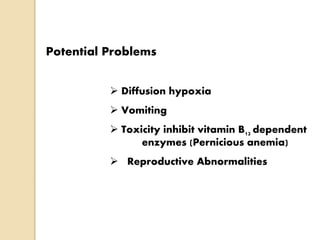
Potential Problems
 Diffusion hypoxia
 Vomiting
 Toxicity inhibit vitamin B12 dependent
enzymes (Pernicious anemia)
 Reproductive Abnormalities
Commonly Used Agents
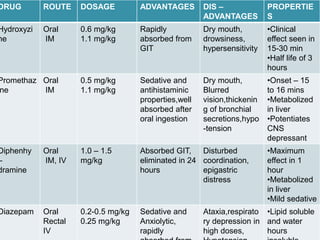
DRUG ROUTE DOSAGE ADVANTAGES DIS –
ADVANTAGES
PROPERTIE
S
Hydroxyzi
ne
Oral
IM
0.6 mg/kg
1.1 mg/kg
Rapidly
absorbed from
GIT
Dry mouth,
drowsiness,
hypersensitivity
•Clinical
effect seen in
15-30 min
•Half life of 3
hours
Promethaz
ne
Oral
IM
0.5 mg/kg
1.1 mg/kg
Sedative and
antihistaminic
properties,well
absorbed after
oral ingestion
Dry mouth,
Blurred
vision,thickenin
g of bronchial
secretions,hypo
-tension
•Onset – 15
to 16 mins
•Metabolized
in liver
•Potentiates
CNS
depressant
Diphenhy
–
dramine
Oral
IM, IV
1.0 – 1.5
mg/kg
Absorbed GIT,
eliminated in 24
hours
Disturbed
coordination,
epigastric
distress
•Maximum
effect in 1
hour
•Metabolized
in liver
•Mild sedative
Diazepam Oral
Rectal
IV
0.2-0.5 mg/kg
0.25 mg/kg
Sedative and
Anxiolytic,
rapidly
Ataxia,respirato
ry depression in
high doses,
•Lipid soluble
and water
hours
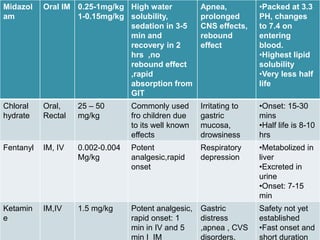
Midazol
am
Oral IM 0.25-1mg/kg
1-0.15mg/kg
High water
solubility,
sedation in 3-5
min and
recovery in 2
hrs ,no
rebound effect
,rapid
absorption from
GIT
Apnea,
prolonged
CNS effects,
rebound
effect
•Packed at 3.3
PH, changes
to 7.4 on
entering
blood.
•Highest lipid
solubility
•Very less half
life
Chloral
hydrate
Oral,
Rectal
25 – 50
mg/kg
Commonly used
fro children due
to its well known
effects
Irritating to
gastric
mucosa,
drowsiness
•Onset: 15-30
mins
•Half life is 8-10
hrs
Fentanyl IM, IV 0.002-0.004
Mg/kg
Potent
analgesic,rapid
onset
Respiratory
depression
•Metabolized in
liver
•Excreted in
urine
•Onset: 7-15
min
Ketamin
e
IM,IV 1.5 mg/kg Potent analgesic,
rapid onset: 1
min in IV and 5
min I IM
Gastric
distress
,apnea , CVS
disorders,
Safety not yet
established
•Fast onset and
short duration
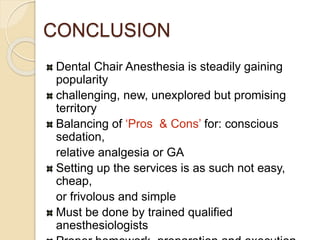
CONCLUSION
Dental Chair Anesthesia is steadily gaining
popularity
challenging, new, unexplored but promising
territory
Balancing of ‘Pros & Cons’ for: conscious
sedation,
relative analgesia or GA
Setting up the services is as such not easy,
cheap,
or frivolous and simple
Must be done by trained qualified
anesthesiologists
THANK U!

Conscious sedation

  • 1.
  • 2.
    INTRODUCTION  In thepast decade, the use of sedatives and analgesics to relieve pain and anxiety associated with invasive diagnostic and therapeutic/painful procedures on pediatric patients in non-traditional settings (i.e., Emergency Department, Radiology, EEG lab, etc.) has substantially increased.  Further complicating matters, there is very little existing conformity in providers’ choice of technique, medication(s) and depth of sedation/anesthesia to accomplish the same procedure.  Consequently, adhering to a systematic approach of appropriate assessment, monitoring, and rescue skills has become critically important in promoting safe and effective procedural sedation and analgesia.
  • 3.
    Purpose:  To familiarizewith principles and standards underlying safe and effective pediatric moderate sedation,  review optimal presedation patient evaluation,  review commonly used sedative/analgesic drugs,  review potential patient complications, provide resources to improve patient safety and outcomes.
  • 4.
    Procedural Sedation in ChildrenChildrenreceive sedation more frequently than adults (largely due to diagnostic procedures that require controlled/no movement). To meet necessary goals, sedation/analgesia usually must be deeper than given to adults. Due to physiologic differences, children are at higher risk for respiratory depression and life-threatening hypoxia. Technically, providers with the intent to practice “moderate sedation” may be closer to the definition of “general anesthesia” because children can easily slip from one level to another.
  • 5.
  • 6.
    Procedural Sedation/Analgesia Continuum Some generalinformation regarding the definition and categorization of procedural sedation. Sedation/analgesia is defined by a continuum of “levels” ranging from minimally impaired consciousness to unconsciousness. The following terminology refers to the different levels of sedation intended by the practitioner Minimum moderate dissociative deep general anesthesia Remember: Levels of sedation are considered to be on a continuum because a sedated child can go in and out of an intended level quite rapidly.
  • 7.
    Continuum – Minimal Sedation MinimalSedation (Anxiolysis) = a drug-induced state during which children respond normally to verbal commands. Although cognitive function and coordination may be impaired, ventilatory and cardiovascular functions are unaffected. Note: This level is rarely adequate for an infant or young child undergoing sedation for a procedure.
  • 8.
    Continuum – Moderate Sedation ModerateSedation (formerly Conscious Sedation) = a drug- induced depression of consciousness during which sedatives or combinations of sedatives and analgesic medications are often used and may be titrated to effect. Children respond purposefully to verbal commands, either alone or accompanied by light tactile stimulation. No interventions are required to maintain a patent airway, and spontaneous ventilation is adequate. Cardiovascular function is usually maintained.
  • 9.
    Continuum – Dissociative Sedation DissociativeSedation = (Ketamine) A trancelike, cataleptic state occurs with both profound analgesia and amnesia while maintaining protective airway reflexes, spontaneous respirations, and cardiopulmonary stability. Child’s eyes remain open with nystagmic gaze; may exhibit random tonic movements of extremities. Causes hyperactive airway reflexes, with a risk of Laryngospasm. Does not blunt protective airway reflexes to the same degree as other sedatives (e.g., opioids, benzodiazepines). Consciousness Unconsciousness Moderate Sedation Deep Sedation General Anesthesia Minimal Sedation Dissociative
  • 10.
    Continuum – DeepSedation Deep Sedation = a drug-induced depression of consciousness during which patients cannot be easily aroused, but respond purposefully following repeated or painful stimulation. The ability to independently maintain ventilatory function may be impaired. Patients may require assistance in maintaining a patent airway, and spontaneous ventilation may be inadequate. Cardiovascular function is usually maintained.
  • 11.
    Continuum – General Anesthesia GeneralAnesthesia (GA) = a drug-induced loss of consciousness during which patients are not arousable, even by painful stimulation. The ability to independently maintain ventilatory function is often impaired. Patients often require assistance in maintaining a patent airway, and positive pressure ventilation may be required because of depressed spontaneous ventilation or drug-induced depression of neuromuscular function. Cardiovascular function may be impaired.
  • 12.
  • 13.
    Goals of EffectiveSedation Guard the patient’s safety & welfare Minimize physical discomfort & pain Control anxiety, minimize psychological trauma, and maximize the potential for amnesia Control behavior and/or movement to allow the safe completion of the procedure Return the patient to a state in which safe discharge from medical supervision (as determined by recognized criteria) is possible
  • 14.
    Strike a Balance  Strikea Balance MAXIMIZE benefits while minimizing the associated risks RISK BENEFIT Hypoventilation Apnea Airway obstruction Laryngospasm Cardiac depress ion Death Minimize pain & discomfort Control movement Minimize psychological trauma/anxiety Maximize amnesia
  • 15.
    Before We Begin… Each sedation should be tailored to the individual child considering the following factors:  Select the lowest drug dose with the highest therapeutic index for the procedure - consider if agent(s) can be reversed  Consider whether the procedure could be accomplished without sedation by engaging alternative modalities  Alternatively, do not undertreat the child when sedation/analgesia is appropriate & necessary
  • 16.
    Implications  No matterthe level of sedation you intend to produce, you should be able to rescue patients one level of sedation “deeper” than that which was intended. – Joint Commission For example: You must be prepared/skilled to manage and rescue a “moderately sedated” child who slips into an unintentional state of “deep sedation.” This highlights the fact that different levels of sedation require different levels of expertise in airway & physiological function management of the patient.
  • 17.
  • 18.
    Foundation for SafeSedation  Patient evaluation Monitoring Rescue Skills
  • 19.
    Guiding Principles –Supervision & Training The following action items are necessary to ensure safe sedation1 Supervision & Training Children should not receive sedative or anxiolytic medications without supervision by medical personnel appropriately trained & skilled in both airway management and cardiopulmonary resuscitation.  Do not prescribe (or encourage) any sedating medications to be administered by the parent before arriving at the hospital. Formulate a reasonable plan of sedation/analgesia. Understand the pharmacokinetics/dynamics and interactions of sedating medications.
  • 20.
    Guiding Principles –Staffing Staffing Ensure that an adequate number or trained/credentialed/competent staff are present for procedure and monitoring (minimum of two experienced providers). Specifically assign a staff member whose main responsibility it is to constantly monitor the child’s cardiorespiratory status during & after the procedure, and assist in supportive or resuscitation measures (as required). Ensure a properly equipped & staffed recovery area (note: parents/caregivers should not be considered as part of the staff).
  • 21.
    Guiding Principles –Evaluation Evaluation Conduct a focused airway evaluation (potential complications include: large tonsils, anatomic airway abnormalities, loose teeth, etc.). Conduct a thorough presedation evaluation for underlying conditions that would increase the risk ( wheezing etc.). Screen for medications the child takes at home and/or allergies the child may have. Ensure appropriate fasting (balance the risk/benefit of shortened fasting in emergent situations).
  • 22.
    Guiding Principles –Equipment & Disposition Equipment Have access to all appropriate medications and reversal agents. Use age/size-appropriate and functioning equipment for airway management & venous access. Disposition Ensure patient is recovered to baseline status before discharge. Appropriately manage pain. Provide appropriate discharge instructions to parent/caregiver.
  • 23.
    Personnel & Training PrimaryPractitioner: Be qualified and institutionally credentialed to administer drugs to predictably achieve and maintain the desired level of sedation Recognize and manage complications of one level deeper than intended sedation Be trained/capable of providing (at minimum) bag mask ventilation and, ultimately, endotracheal intubation Understand pharmacology of sedating medications, as well as role of reversal agents for opioids and benzodiazepines Maintain advanced pediatric airway skills
  • 24.
    Support personnel: At least1 person dedicated to constantly monitor appropriate physiologic parameters and assist in any supportive or resuscitation measures Be trained in, and capable of providing, pediatric basic life support Know how to use resuscitation equipment & supplies in the event of an emergency THIS PERSON SHOULD HAVE NO OTHER SIGNIFICANT RESPONSIBILITIES
  • 25.
  • 26.
    Sedation Considerations Consider eachof these factors when planning for sedation  Procedural issues:  What type -- therapeutic (painful) vs. diagnostic (non-painful)?  What is the child’s health status, age/development level & personality type?  How stressful/anxiety-producing is the procedure (e.g., sexual abuse evaluation)?  Is immobility/behavior control required?  What position will the child be in during the procedure?  How much time will it take to complete the procedure?  How quickly can rescue resources be available?  Medication issues:  What is the mechanism of action?  How is the sedating/analgesic agent metabolized?  What is the duration of action? (avoid dose stacking)  Potential adverse reactions/monitoring issues:  Need for appropriate reversal agent  Medication side effects/allergic reactions  Oxygen desaturation  Laryngospasm  Hypotension
  • 27.
    Equipment & Supplies Toensure systematic & thorough preparation for every sedation, the AAP1 recommends S O A P M E  Suction – age/size-appropriate suction catheters and suction apparatus (Yankauer-type)  Oxygen – adequate O2 supply, working flow/delivery devices  Airway – age/size-appropriate airway equipment (e.g., ET tubes, LMAs, oral and nasal airways, laryngoscope blades, stylets, bag mask)  Pharmacy – all basic life-saving drugs, including reversal agents (Naloxone, Flumazenil)  Monitors – pulse oximeter, BP monitor, ECG, stethoscope, thermometer, cardiac monitor, end-tidal carbon dioxide (EtCO2) monitor/detector  Equipment – special equipment/drugs for particular child (e.g., defibrillator, respiratory box, IV access equipment) should be readily available  MOST IMPORTANT PERSONNEL SKILLED IN ADVANCED LIFE SUPPORT!
  • 28.
    Presedation Evaluation  Evaluateevery child in need of procedural sedation prior to sedation & perform universal procedures (i.e., “time out”) immediately prior to sedation. Age, weight, height Health history Allergies and previous allergic or adverse drug reactions Medication history, herbal or illicit drugs (dosage, time, route, and site) Relevant diseases, physical abnormalities, and pregnancy status Relevant hospitalizations Prior sedations & surgeries, and any complications (esp. airway issues) Relevant family history NPO status Systems review Vital signs (BP, heart rate, respiratory rate, temperature, SpO2) Pulmonary, Cardiac, Renal, GI, Hematological, CNS, Endocrine Physical exam with focused airway evaluation (include: body habitus, head/ neck, teeth/mouth, and jaw) Physical status Review of objective diagnostic data (e.g. labs, ECG, x-ray, etc.) Level of child’s anxiety, pain, consciousness Name and telephone
  • 29.
    Airway Evaluation Class View =patient seated with mouth open as wide as possible I Soft palate, fauces, uvula, tonsillar pillars II Soft palate, fauces, full uvula III Soft palate only IV Hard palate only MALLAMPATI AIRWAY CLASSIFICATION Mallampati classification system is a standard airway evaluation used as a method to predict difficult intubation. Assess ability to open mouth and protrude tongue Check for loose teeth Assume that it may be necessary to establish an artificial airway during any sedation. Anticipate any/all obstacles before the real time occurrence. Class III & IV = potential difficult intubation (consider anesthesia consult)
  • 30.
    ASA Physical Status ClassificationIn 1941, the ASA developed a classification for a patient's physical status before sedation/surgery to alert the medical team to the patient's overall health. STATUS DISEASE STATE EXAMPLES I Healthy, normal child II Child with mild systemic disease Controlled asthma, controlled diabetes III* Child with severe systemic disease Active wheezing, diabetes mellitus w/ complications, heart disease that limits activity IV* Child with severe systemic disease that is a constant threat to life Status asthmaticus, severe BPD, sepsis V* Child who is moribund and not expected to survive without the procedure Cerebral trauma, pulmonary embolus, septic shock *Anesthesia consultant is usually required
  • 31.
    ASA/AAP NPO Guidelines INGESTEDTIME Clear Liquids (water, fruit juices w/o pulp, carbonated beverages, clear tea, black coffee) 2 hours Breast milk 4 hours Infant formula 6 hours Nonhuman milk (similar to solids) 6 hours Solids (light meal; if includes fatty/fried food, consider longer faster period) 6 hours NPO Guidelines for Elective* Sedation *In emergency situations, carefully weigh the need for immediacy with the increased risk of pulmonary aspiration. Use the lightest effective sedation possible.
  • 32.
    Documentation – Before& During Before Sedation  Presedation health evaluation (include initial aldrete score)  Confirm staff privileges & universal procedures (i.e., “time out”)  Drug calculations (include reversal agents and local anesthetics)  Informed consent (risks vs. benefits, alternatives to planned sedation)  Instructions to family:  Objectives of sedation  Anticipated changes in behavior (during & after)  Why/when to expect longer observation time (drugs with long half-lifes; severe underlying condition; neonates/preemies, etc.)  Special transport instructions for children going home in car seat (child’s head positioning)  24-hour emergency phone # During Sedation On a time-based flowsheet:  Drug name(s) & drug calculations  Route  Site  Time  Dosage (titrated to desired effect) During administration, record:  Inspired concentrations of O2 & duration of sedating/analgesic agents  Level of consciousness  Heart rate, respiratory rate, SpO2  Adverse events and corrective intervention/treatment given Document at least once every 5 minutes until child reaches predetermined discharge criteria
  • 33.
    Documentation - After Duringthe recovery & discharge phase, document the following: Time and condition of child upon discharge Level of consciousness SpO2 on room air Modified Aldrete Score11 (also known as the Postanesthesia Recovery Score) Child meets all predetermined discharge criteria
  • 34.
    Monitoring - During Duringsedation, continuously monitor: SpO2 Heart rate Respiratory rate Head position/airway patency Blood pressure (forego if interferes with sedation) Level of sedation (e.g., Modified Ramsey Scale12) ECG monitoring (esp. child with significant CV disease or dysrhythmias)  Ensure all monitors & alarms are working & routinely safety-checked
  • 35.
    Monitoring - Transport Ifthe child is transported while sedated, don’t forget to: Have credentialed/competent/skilled personnel accompany Monitor all vital signs Monitor level of consciousness Monitor SpO2 Bring necessary O2 supplies (tank, tubing, face mask, bag mask, oral airway, etc.) Bring necessary emergency drugs (including reversal agents) Bring cardiac monitor (esp. child with significant CV disease or dysarrhythmias)
  • 36.
    Monitoring - After Duringrecovery: Continuously observe and monitor ,heart rate,and level of consciousness until the child is fully alert Monitor other required vital signs at specific intervals until the child meets appropriate discharge criteria Ensure adequate pain management as effects of sedation/analgesia begin to wear off Observe for longer periods of time if child: Received any reversal agents (duration of sedating agents may exceed duration of antagonist) Received sedating agents with a long half-life (e.g., chloral hydrate) that may delay return to baseline or pose risk of resedation
  • 37.
    Discharge Criteria Every hospitalmust develop discharge criteria based on objective measures suitable to their patient population. Consider, at minimum, the following measures:  Return to pre-sedation (age/developmentally-appropriate) activity/ambulation & cognitive level  Child is easily arousable, alert and oriented  Protective airway reflexes are intact  Stable vital signs, pain level, O2 and respiratory effort (e.g. Modified Aldrete Score ≥ 9)  If reversal agent is given, allow sufficient time (up to 2 hours) after last dose to observe for risk of resedation  Child/caregiver is able to understand written instructions (include emergency contact #)  Child has safe transportation home with responsible adult (for infants going home in a car seat, adjust head position to ensure a patent airway if infant falls asleep)
  • 38.
    PRE ANESTHETIC MEDICATION Refers tothe use of drugs before anesthesia to make it more pleasant & safe.
  • 39.
    AIMS & OBJECTIVES Relief of anxiety , apprehension preoperatively , to facilitate smooth induction  Amnesia for pre & postoperative events.  Supplement analgesic action of anesthetics.  Decrease secretions, vagal stimulation caused by anesthetics  Anti –emetic effect extending to postoperative period.  Decrease acidity , volume of gastric juice so less damaging if aspirated.
  • 40.
    DRUG DOSAGE ROUTESOF ADMINISTRA TION FEATURES opioids morphine (10 mg) pethidine( 50-100 mg) im allay anxiety, apprehension of procedure , produce pre & post operative analgesia, smoothen induction, reduce dose of anesthetic agent sedative anti anxiety drugs diazepam (5-10mg) lorazepam (2mg) oral im produce tranquility, smooth induction anti cholinergic s atropine(0.6mg) im iv to reduce sal.& bronchial secretions neuroleptic s chlorpromazine(25 mg) im allay anxiety , smoothen induction , have antiemetic effect h2 blockers ranitidine (150mg) oral reduces ph of gastric juices may reduce its volume anti emetics metaclopramide(10- 20 mg) im reduces post operative vomiting
  • 41.
    SEDATION TECHNIQUES  Inhalationsedation  Oral sedation  Intramuscular sedation  Submucosal sedation  Intravenous sedation  Rectal sedation
  • 42.
    NITROUS OXIDE SEDATION Nitrous oxide/oxygen inhalation sedation is the most commonly used technique in dentistry.
  • 43.
    Equipment Continuous flow designwith flow meters Safe delivery of O2 and N2O (fail safe mechanism) Pin-indexed yoke system Efficient scavenger
  • 44.
    Nasal Mask Selection ofan appropriately sized nasal hood should be made. A flow rate of 5 to 6 L/min generally is acceptable to most patients(AAPD,2009)
  • 45.
    Thorough inspection ofequipment Place the mask over nose Bag is filled with 100% oxygen and delivered to patient for 2 – 3 mins Slowly introduce nitrous oxide Encourage the patient to breathe through nose Explain the sensation to be felt- floating, giddy, tingling of digits Adjust the concentration to 30% nitrous oxide and 70% oxygen Carry out the procedure with continuous monitoring After completion of procedure give 100% oxygen for 5
  • 46.
    Advantages  Ability totitrate & to reverse  Rapid onset & recovery  Patient can be discharged alone Disadvantages  Patient acceptance is not universal  Cost of the equipment  Not always effective C/I  Nasopharyngeal obstruction  COPD  Pregnancy
  • 47.
    Potential Problems  Diffusionhypoxia  Vomiting  Toxicity inhibit vitamin B12 dependent enzymes (Pernicious anemia)  Reproductive Abnormalities
  • 48.
  • 49.
    DRUG ROUTE DOSAGEADVANTAGES DIS – ADVANTAGES PROPERTIE S Hydroxyzi ne Oral IM 0.6 mg/kg 1.1 mg/kg Rapidly absorbed from GIT Dry mouth, drowsiness, hypersensitivity •Clinical effect seen in 15-30 min •Half life of 3 hours Promethaz ne Oral IM 0.5 mg/kg 1.1 mg/kg Sedative and antihistaminic properties,well absorbed after oral ingestion Dry mouth, Blurred vision,thickenin g of bronchial secretions,hypo -tension •Onset – 15 to 16 mins •Metabolized in liver •Potentiates CNS depressant Diphenhy – dramine Oral IM, IV 1.0 – 1.5 mg/kg Absorbed GIT, eliminated in 24 hours Disturbed coordination, epigastric distress •Maximum effect in 1 hour •Metabolized in liver •Mild sedative Diazepam Oral Rectal IV 0.2-0.5 mg/kg 0.25 mg/kg Sedative and Anxiolytic, rapidly Ataxia,respirato ry depression in high doses, •Lipid soluble and water hours
  • 50.
    Midazol am Oral IM 0.25-1mg/kg 1-0.15mg/kg Highwater solubility, sedation in 3-5 min and recovery in 2 hrs ,no rebound effect ,rapid absorption from GIT Apnea, prolonged CNS effects, rebound effect •Packed at 3.3 PH, changes to 7.4 on entering blood. •Highest lipid solubility •Very less half life Chloral hydrate Oral, Rectal 25 – 50 mg/kg Commonly used fro children due to its well known effects Irritating to gastric mucosa, drowsiness •Onset: 15-30 mins •Half life is 8-10 hrs Fentanyl IM, IV 0.002-0.004 Mg/kg Potent analgesic,rapid onset Respiratory depression •Metabolized in liver •Excreted in urine •Onset: 7-15 min Ketamin e IM,IV 1.5 mg/kg Potent analgesic, rapid onset: 1 min in IV and 5 min I IM Gastric distress ,apnea , CVS disorders, Safety not yet established •Fast onset and short duration
  • 51.
    CONCLUSION Dental Chair Anesthesiais steadily gaining popularity challenging, new, unexplored but promising territory Balancing of ‘Pros & Cons’ for: conscious sedation, relative analgesia or GA Setting up the services is as such not easy, cheap, or frivolous and simple Must be done by trained qualified anesthesiologists
  • 52.