Data-Driven Personas
– the book
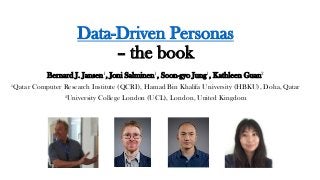
Bernard J. Jansen1, Joni Salminen1, Soon-gyo Jung1, Kathleen Guan2
1Qatar Computer Research Institute (QCRI), Hamad Bin Khalifa University (HBKU), Doha, Qatar
2University College London (UCL), London, United Kingdom
How it began …
In November 2015, a chance meeting between Dr. Jim Jansen and
representatives of AJ+, an Al Jazeera social media channel, led to a
discussion of the difficulties of using the many analytics platforms.
It was at that meeting the concept of Automatic Persona Generation
(APG) emerged.
That impactful meeting led to a set of algorithmic approaches to
improve user understanding by presenting analytics and numbers in
a form that most people can relate to — another person!
Actionable insights in this book are the result of more than 5 years
of persona analytics research!
The driver for APG and the related persona research is
inspired by Papa John’s slogan —
Better Personas! Better Decisions! Better Results!
What it’s about …
This book is not about personas in the traditional sense of the term “personas.”
• It is also not about data.
• It is also not about analytics.
This book is about data-driven personas, a revolutionary step forward customer-
centric focus during the planning, creation, development, and implementation in
endeavors where actionable decisions about people need to be made, and those
decisions need to be made on actual data about real people.
With their integration of the empathy of personas and the rationality of analytics,
data-driven personas can shift actionable focus to where it should be — people!
By “actionable people focus,” we mean attention that is implementable.
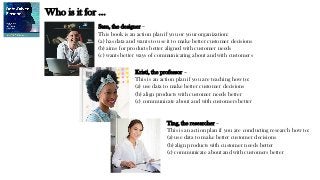
Sam, the designer –
This book is an action plan if you or your organization:
(a) has data and wants to use it to make better customer decisions
(b) aims for products better aligned with customer needs
(c) wants better ways of communicating about and with customers
Kristi, the professor –
This is an action plan if you are teaching how to:
(a) use data to make better customer decisions
(b) align products with customer needs better
(c) communicate about and with customers better
Ting, the researcher –
This is an action plan if you are conducting research how to:
(a) use data to make better customer decisions
(b) align products with customer needs better
(c) communicate about and with customers better
Who is it for …
What’s in it …
The book is divided into six parts, which are:
Part 1: Setting the Stage
Part 2: Getting Ready
Part 3 Developing Data-Driven Personas
Part 4: Using Data-Driven Personas
Part 5: Evaluating Data-Driven Personas and Appropriate Persona Methods
Part 6: Data-Driven Personas and the Road Ahead.
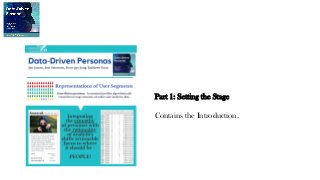
Part 1: Setting the Stage
Contains the Introduction.
Part 2: Getting Ready contains two chapters.
Chapter 1 provides the foundational element of
personas and data-driven personas.
Chapter 2 discusses getting your organization ready for
personas, including techniques for stakeholder buy-in.
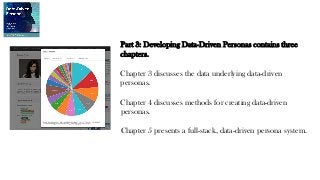
Part 3: Developing Data-Driven Personas contains three
chapters.
Chapter 3 discusses the data underlying data-driven
personas.
Chapter 4 discusses methods for creating data-driven
personas.
Chapter 5 presents a full-stack, data-driven persona system.
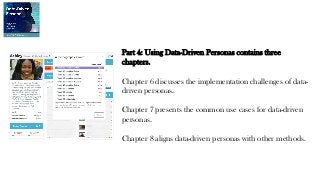
Part 4: Using Data-Driven Personas contains three
chapters.
Chapter 6 discusses the implementation challenges of data-
driven personas.
Chapter 7 presents the common use cases for data-driven
personas.
Chapter 8 aligns data-driven personas with other methods.
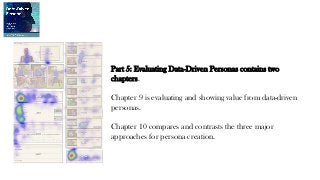
Part 5: Evaluating Data-Driven Personas contains two
chapters.
Chapter 9 is evaluating and showing value from data-driven
personas.
Chapter 10 compares and contrasts the three major
approaches for persona creation.
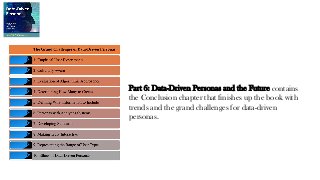
Part 6: Data-Driven Personas and the Future contains
the Conclusion chapter that finishes up the book with
trends and the grand challenges for data-driven
personas.
Along with specific topical content,
each chapter includes about a half dozen or so questions for further
discussion, assignment, or contemplation concerning the chapter’s content.
Along with afterward,
we present a glossary of persona terminology that benefit the amateur or expert alike.
The book ends with three appendices
helpful for
the practitioner, the teacher, or the researcher.
Appendix A: Survey Questions for Persona Perception Scale
is a data collection instrument for evaluating data-driven personas.
Appendix B: User Interview Questions
contains typical questions useful for customer insight and data-driven persona development.
Appendix C: Evaluation of Elements in a Variety of Persona Tools
presents the elements that are common or not in a variety of persona development approaches.
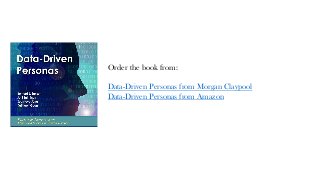
Order the book from:
Data-Driven Personas from Morgan Claypool
Data-Driven Personas from Amazon
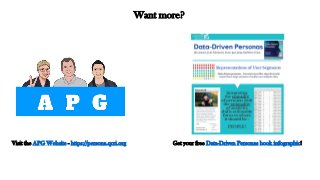
Want more?
Visit the APG Website - https://persona.qcri.org Get your free Data-Driven Personas book infographic!
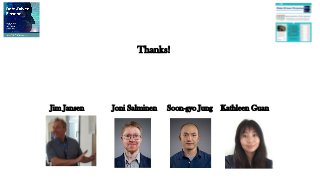
Thanks!
Jim Jansen Joni Salminen Soon-gyo Jung Kathleen Guan

Data Driven Personas Book

  • 1.
    Data-Driven Personas – thebook Bernard J. Jansen1, Joni Salminen1, Soon-gyo Jung1, Kathleen Guan2 1Qatar Computer Research Institute (QCRI), Hamad Bin Khalifa University (HBKU), Doha, Qatar 2University College London (UCL), London, United Kingdom
  • 2.
    How it began… In November 2015, a chance meeting between Dr. Jim Jansen and representatives of AJ+, an Al Jazeera social media channel, led to a discussion of the difficulties of using the many analytics platforms. It was at that meeting the concept of Automatic Persona Generation (APG) emerged. That impactful meeting led to a set of algorithmic approaches to improve user understanding by presenting analytics and numbers in a form that most people can relate to — another person! Actionable insights in this book are the result of more than 5 years of persona analytics research!
  • 3.
    The driver forAPG and the related persona research is inspired by Papa John’s slogan — Better Personas! Better Decisions! Better Results!
  • 4.
    What it’s about… This book is not about personas in the traditional sense of the term “personas.” • It is also not about data. • It is also not about analytics. This book is about data-driven personas, a revolutionary step forward customer- centric focus during the planning, creation, development, and implementation in endeavors where actionable decisions about people need to be made, and those decisions need to be made on actual data about real people. With their integration of the empathy of personas and the rationality of analytics, data-driven personas can shift actionable focus to where it should be — people! By “actionable people focus,” we mean attention that is implementable.
  • 5.
    Sam, the designer– This book is an action plan if you or your organization: (a) has data and wants to use it to make better customer decisions (b) aims for products better aligned with customer needs (c) wants better ways of communicating about and with customers Kristi, the professor – This is an action plan if you are teaching how to: (a) use data to make better customer decisions (b) align products with customer needs better (c) communicate about and with customers better Ting, the researcher – This is an action plan if you are conducting research how to: (a) use data to make better customer decisions (b) align products with customer needs better (c) communicate about and with customers better Who is it for …
  • 6.
    What’s in it… The book is divided into six parts, which are: Part 1: Setting the Stage Part 2: Getting Ready Part 3 Developing Data-Driven Personas Part 4: Using Data-Driven Personas Part 5: Evaluating Data-Driven Personas and Appropriate Persona Methods Part 6: Data-Driven Personas and the Road Ahead.
  • 7.
    Part 1: Settingthe Stage Contains the Introduction.
  • 8.
    Part 2: GettingReady contains two chapters. Chapter 1 provides the foundational element of personas and data-driven personas. Chapter 2 discusses getting your organization ready for personas, including techniques for stakeholder buy-in.
  • 9.
    Part 3: DevelopingData-Driven Personas contains three chapters. Chapter 3 discusses the data underlying data-driven personas. Chapter 4 discusses methods for creating data-driven personas. Chapter 5 presents a full-stack, data-driven persona system.
  • 10.
    Part 4: UsingData-Driven Personas contains three chapters. Chapter 6 discusses the implementation challenges of data- driven personas. Chapter 7 presents the common use cases for data-driven personas. Chapter 8 aligns data-driven personas with other methods.
  • 11.
    Part 5: EvaluatingData-Driven Personas contains two chapters. Chapter 9 is evaluating and showing value from data-driven personas. Chapter 10 compares and contrasts the three major approaches for persona creation.
  • 12.
    Part 6: Data-DrivenPersonas and the Future contains the Conclusion chapter that finishes up the book with trends and the grand challenges for data-driven personas.
  • 13.
    Along with specifictopical content, each chapter includes about a half dozen or so questions for further discussion, assignment, or contemplation concerning the chapter’s content.
  • 14.
    Along with afterward, wepresent a glossary of persona terminology that benefit the amateur or expert alike.
  • 15.
    The book endswith three appendices helpful for the practitioner, the teacher, or the researcher.
  • 16.
    Appendix A: SurveyQuestions for Persona Perception Scale is a data collection instrument for evaluating data-driven personas.
  • 17.
    Appendix B: UserInterview Questions contains typical questions useful for customer insight and data-driven persona development.
  • 18.
    Appendix C: Evaluationof Elements in a Variety of Persona Tools presents the elements that are common or not in a variety of persona development approaches.
  • 19.
    Order the bookfrom: Data-Driven Personas from Morgan Claypool Data-Driven Personas from Amazon
  • 20.
    Want more? Visit theAPG Website - https://persona.qcri.org Get your free Data-Driven Personas book infographic!
  • 21.
    Thanks! Jim Jansen JoniSalminen Soon-gyo Jung Kathleen Guan