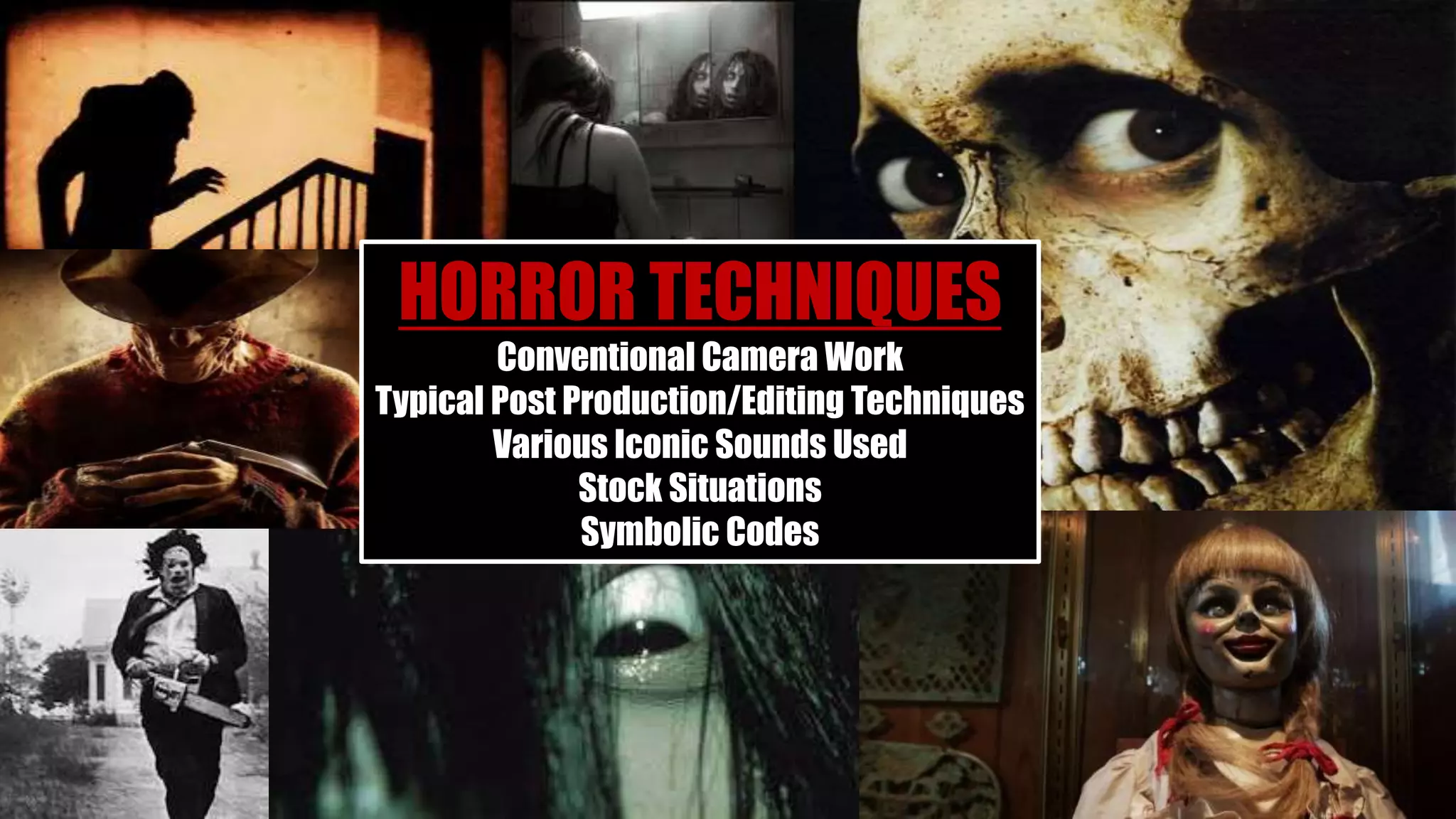
HORROR TECHNIQUES
Conventional Camera Work
Typical Post Production/Editing Techniques
Various Iconic Sounds Used
Stock Situations
Symbolic Codes
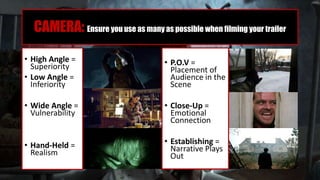
CAMERA: Ensure you use as many as possible when filming your trailer
• High Angle =
Superiority
• Low Angle =
Inferiority
• Wide Angle =
Vulnerability
• Hand-Held =
Realism
• P.O.V =
Placement of
Audience in the
Scene
• Close-Up =
Emotional
Connection
• Establishing =
Narrative Plays
Out
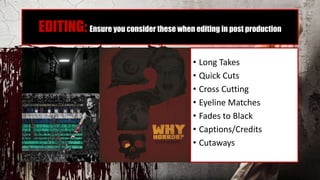
EDITING: Ensure you consider these when editing in post production
• Long Takes
• Quick Cuts
• Cross Cutting
• Eyeline Matches
• Fades to Black
• Captions/Credits
• Cutaways
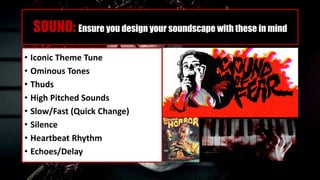
SOUND: Ensure you design your soundscape with these in mind
• Iconic Theme Tune
• Ominous Tones
• Thuds
• High Pitched Sounds
• Slow/Fast (Quick Change)
• Silence
• Heartbeat Rhythm
• Echoes/Delay
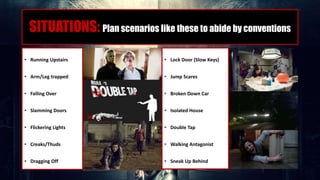
SITUATIONS: Plan scenarios like these to abide by conventions
• Lock Door (Slow Keys)
• Jump Scares
• Broken Down Car
• Isolated House
• Double Tap
• Walking Antagonist
• Sneak Up Behind
• Running Upstairs
• Arm/Leg trapped
• Falling Over
• Slamming Doors
• Flickering Lights
• Creaks/Thuds
• Dragging Off
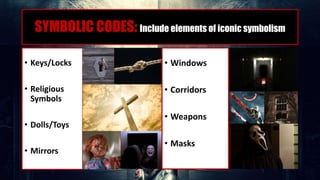
SYMBOLIC CODES: Include elements of iconic symbolism
• Keys/Locks
• Religious
Symbols
• Dolls/Toys
• Mirrors
• Windows
• Corridors
• Weapons
• Masks

Horror techniques

  • 1.
    HORROR TECHNIQUES Conventional CameraWork Typical Post Production/Editing Techniques Various Iconic Sounds Used Stock Situations Symbolic Codes
  • 2.
    CAMERA: Ensure youuse as many as possible when filming your trailer • High Angle = Superiority • Low Angle = Inferiority • Wide Angle = Vulnerability • Hand-Held = Realism • P.O.V = Placement of Audience in the Scene • Close-Up = Emotional Connection • Establishing = Narrative Plays Out
  • 3.
    EDITING: Ensure youconsider these when editing in post production • Long Takes • Quick Cuts • Cross Cutting • Eyeline Matches • Fades to Black • Captions/Credits • Cutaways
  • 4.
    SOUND: Ensure youdesign your soundscape with these in mind • Iconic Theme Tune • Ominous Tones • Thuds • High Pitched Sounds • Slow/Fast (Quick Change) • Silence • Heartbeat Rhythm • Echoes/Delay
  • 5.
    SITUATIONS: Plan scenarioslike these to abide by conventions • Lock Door (Slow Keys) • Jump Scares • Broken Down Car • Isolated House • Double Tap • Walking Antagonist • Sneak Up Behind • Running Upstairs • Arm/Leg trapped • Falling Over • Slamming Doors • Flickering Lights • Creaks/Thuds • Dragging Off
  • 6.
    SYMBOLIC CODES: Includeelements of iconic symbolism • Keys/Locks • Religious Symbols • Dolls/Toys • Mirrors • Windows • Corridors • Weapons • Masks