
Kuliah 4 Etika Profesi dan Bisnis
                             Oleh Coky Fauzi Alfi
                   cokyfauzialfi.wordpress.com


Ethical Decision-Making
Process
Topics

• Ethical Dilemmas
• Define: Ethical Decision Making
• Framework for Understanding Ethical Decision
  Making
• Ethical Decision-Making Process
• Three Ethics Theories
Ethical Dilemmas
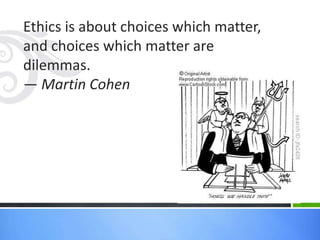
Ethics is about choices which matter,
and choices which matter are
dilemmas.
― Martin Cohen
An Ethical dilemma is a complex situation where
ethical principles or values are in conflict.
Examples:
• To whom do I have a duty—self, family,
   friends, workers, investors, consumers, future
   generation, and so on?
• What is a fair or justice resolution—is fairness
   or justice based on everyone receiving equal
   shares, or more to those who merit or have
   earned it.
When faced with a difficult ethical
dilemma, we need ethical decision making
ability for resolve it.

It helps one determine the right course of
action or the right thing to do and also
enables one to analyze whether another’s
decisions or actions are right or good.
Define: Ethical Decision Making
In the context of decision making, your
ethics are your personal standards of
right and wrong.

They are your basis for making ethically
sensitive decisions.
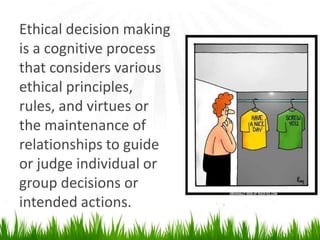
Ethical decision making
is a cognitive process
that considers various
ethical principles,
rules, and virtues or
the maintenance of
relationships to guide
or judge individual or
group decisions or
intended actions.
Framework for Understanding
Ethical Decision Making
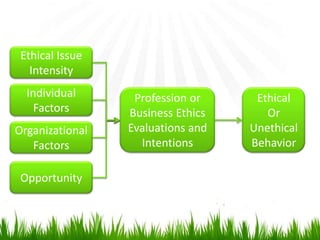
Ethical Issue
   Intensity
  Individual      Profession or     Ethical
    Factors      Business Ethics      Or
Organizational   Evaluations and   Unethical
   Factors         Intentions      Behavior

 Opportunity
Ethical Issue Intensity
Ethical issue intensity can be defined as the
relevance or importance of an ethical issue in
the eyes of the individual, work group, and/or
organization.

Ethical issue intensity reflects the ethical
sensitivity of the individual or work group that
faces the ethical decision making process.
Individual Factors
• Gender―women are generally “more ethical”
  than men.
• Education or work experience―the more
  education or work experience that one has,
  the better he or she is at ethical decision
  making.
• Nationality―cultural appears to be significant
  in affect of ethical decision making.
Individual Factors
• Age―the older you are, the more ethical you
  are.
• Locus of control― external control vs. Internal
  control.
  – external control, see themselves as going with the
    flow because that’s all they can do.
  – internal control, believe that they control the
    events in their lives by their own effort and skill
Organizational Factors
• The organization’s values often have
  greater influence on decisions than a
  person’s own values.
• The more ethical employees perceive an
  organization’s culture to be, the less
  likely they are to make unethical
  decisions.
Opportunity
Opportunity describes the conditions in an
organization that limit or permit ethical or
unethical behavior.

Opportunity results from conditions that either
provide rewards, whether internal or external,
or fail to erect barriers against unethical
behavior.
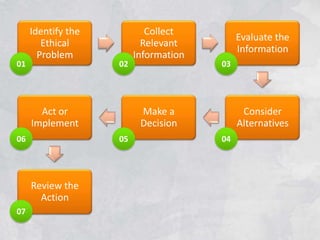
Ethical Decision-Making Process
Identify the           Collect
                                            Evaluate the
        Ethical            Relevant
                                            Information
       Problem           Information
01                  02                 03


       Act or             Make a             Consider
     Implement            Decision          Alternatives
06                  05                 04


     Review the
       Action
07
01 Identify the Ethical Problem
The decision maker must be able to determine:
• if there is a possible violation of an important
  ethical principle, societal law, or
  organizational standard or policy
• if there are potential consequences that
  should be sought or avoided that emanate
  from an action being considered to resolve
  the problem.
02 Collect Relevant Information
• The decision maker should seek to gather as
  much information as possible about which
  rights are being forsaken and to what degree.
• A consequential focus would prompt the
  decision maker to attempt to measure the
  type, degree, and amount of harm being
  inflicted or that will be inflicted on others.
03 Evaluate the Information
• Once the information has been collected, the
  decision maker must apply some type of
  standard or assessment criterion to evaluate
  the situation.
• The decision maker might use one of the
  predominant ethics theories—utilitarianism,
  rights, or justice.
04 Consider Alternatives
The decision maker needs to generate a set of
possible action alternatives, such as:
• confronting another person’s actions,
• seeking a higher authority, or
• stepping in and changing the direction of what
  is happening.
05 Make a Decision
• The decision maker should seek the action
  alternative that is supported by the evaluation
  criteria used in Step 3.
• A decision maker selects a course of action
  that is supported by all the ethics theories or
  other evaluation criteria used in the decision-
  making process.
06 Act or Implement
• The decision maker, if truly seeking to resolve
  the problem being considered, must take
  action.
• Once the action alternatives have been
  identified in Step 4 and the optimal response
  is selected in Step 5, the action is taken in Step
  6.
07 Review the Action
• Once the action has been taken and the
  results are known, the decision maker should
  review the consequences of the action.
• If the optimal resolution to the problem is not
  achieved, the decision maker may need to
  modify the actions being taken or return to
  the beginning of the decision-making process
Three Ethics Theories
The ethical decision-making process that
applies three predominant ethics theories:
1. Utilitarian perspective
2. Rights perspective
3. Justice perspective
Utilitarian Perspective
A utilitarian perspective:
Where the decision maker considers the
consequences or out-comes of an action
and seeks to maximize the greatest good
for the greatest number of those affected
by the decision.
Rights perspective
A decision maker who considers a rights
perspective would consider the
entitlements of those affected by the
decision.
Justice perspective
A justice perspective may focus on either
the equitable distribution of the benefits
and costs resulting from the plant closing
and employee layoffs (distributive justice)
or the maintenance of rules and standards
(procedural justice).
© 2011
cokyfauzialfi.wordpress.com
What’s Your Message?

Ethical Decision Making Process

  • 1.
    Kuliah 4 EtikaProfesi dan Bisnis Oleh Coky Fauzi Alfi cokyfauzialfi.wordpress.com Ethical Decision-Making Process
  • 2.
    Topics • Ethical Dilemmas •Define: Ethical Decision Making • Framework for Understanding Ethical Decision Making • Ethical Decision-Making Process • Three Ethics Theories
  • 3.
  • 4.
    Ethics is aboutchoices which matter, and choices which matter are dilemmas. ― Martin Cohen
  • 5.
    An Ethical dilemmais a complex situation where ethical principles or values are in conflict. Examples: • To whom do I have a duty—self, family, friends, workers, investors, consumers, future generation, and so on? • What is a fair or justice resolution—is fairness or justice based on everyone receiving equal shares, or more to those who merit or have earned it.
  • 6.
    When faced witha difficult ethical dilemma, we need ethical decision making ability for resolve it. It helps one determine the right course of action or the right thing to do and also enables one to analyze whether another’s decisions or actions are right or good.
  • 7.
  • 8.
    In the contextof decision making, your ethics are your personal standards of right and wrong. They are your basis for making ethically sensitive decisions.
  • 9.
    Ethical decision making isa cognitive process that considers various ethical principles, rules, and virtues or the maintenance of relationships to guide or judge individual or group decisions or intended actions.
  • 10.
  • 11.
    Ethical Issue Intensity Individual Profession or Ethical Factors Business Ethics Or Organizational Evaluations and Unethical Factors Intentions Behavior Opportunity
  • 12.
    Ethical Issue Intensity Ethicalissue intensity can be defined as the relevance or importance of an ethical issue in the eyes of the individual, work group, and/or organization. Ethical issue intensity reflects the ethical sensitivity of the individual or work group that faces the ethical decision making process.
  • 13.
    Individual Factors • Gender―womenare generally “more ethical” than men. • Education or work experience―the more education or work experience that one has, the better he or she is at ethical decision making. • Nationality―cultural appears to be significant in affect of ethical decision making.
  • 14.
    Individual Factors • Age―theolder you are, the more ethical you are. • Locus of control― external control vs. Internal control. – external control, see themselves as going with the flow because that’s all they can do. – internal control, believe that they control the events in their lives by their own effort and skill
  • 15.
    Organizational Factors • Theorganization’s values often have greater influence on decisions than a person’s own values. • The more ethical employees perceive an organization’s culture to be, the less likely they are to make unethical decisions.
  • 16.
    Opportunity Opportunity describes theconditions in an organization that limit or permit ethical or unethical behavior. Opportunity results from conditions that either provide rewards, whether internal or external, or fail to erect barriers against unethical behavior.
  • 17.
  • 18.
    Identify the Collect Evaluate the Ethical Relevant Information Problem Information 01 02 03 Act or Make a Consider Implement Decision Alternatives 06 05 04 Review the Action 07
  • 19.
    01 Identify theEthical Problem The decision maker must be able to determine: • if there is a possible violation of an important ethical principle, societal law, or organizational standard or policy • if there are potential consequences that should be sought or avoided that emanate from an action being considered to resolve the problem.
  • 20.
    02 Collect RelevantInformation • The decision maker should seek to gather as much information as possible about which rights are being forsaken and to what degree. • A consequential focus would prompt the decision maker to attempt to measure the type, degree, and amount of harm being inflicted or that will be inflicted on others.
  • 21.
    03 Evaluate theInformation • Once the information has been collected, the decision maker must apply some type of standard or assessment criterion to evaluate the situation. • The decision maker might use one of the predominant ethics theories—utilitarianism, rights, or justice.
  • 22.
    04 Consider Alternatives Thedecision maker needs to generate a set of possible action alternatives, such as: • confronting another person’s actions, • seeking a higher authority, or • stepping in and changing the direction of what is happening.
  • 23.
    05 Make aDecision • The decision maker should seek the action alternative that is supported by the evaluation criteria used in Step 3. • A decision maker selects a course of action that is supported by all the ethics theories or other evaluation criteria used in the decision- making process.
  • 24.
    06 Act orImplement • The decision maker, if truly seeking to resolve the problem being considered, must take action. • Once the action alternatives have been identified in Step 4 and the optimal response is selected in Step 5, the action is taken in Step 6.
  • 25.
    07 Review theAction • Once the action has been taken and the results are known, the decision maker should review the consequences of the action. • If the optimal resolution to the problem is not achieved, the decision maker may need to modify the actions being taken or return to the beginning of the decision-making process
  • 26.
  • 27.
    The ethical decision-makingprocess that applies three predominant ethics theories: 1. Utilitarian perspective 2. Rights perspective 3. Justice perspective
  • 28.
    Utilitarian Perspective A utilitarianperspective: Where the decision maker considers the consequences or out-comes of an action and seeks to maximize the greatest good for the greatest number of those affected by the decision.
  • 29.
    Rights perspective A decisionmaker who considers a rights perspective would consider the entitlements of those affected by the decision.
  • 30.
    Justice perspective A justiceperspective may focus on either the equitable distribution of the benefits and costs resulting from the plant closing and employee layoffs (distributive justice) or the maintenance of rules and standards (procedural justice).
  • 31.