Chapter 8Chapter 8
The Teachings of IslamThe Teachings of Islam
8.2 ~ Background on8.2 ~ Background on
IslamIslam
1. What does Ummah1. What does Ummah
mean?mean?
Muslims belonged to a single Islamic community calledMuslims belonged to a single Islamic community called
an ummah.an ummah.
This consisted of many peoples and cultures.This consisted of many peoples and cultures.
2. What is the fraction of the amount2. What is the fraction of the amount
of Muslims living in the world?of Muslims living in the world?
It is the second largest religion in the world afterIt is the second largest religion in the world after
Christianity.Christianity.
1 out of 5 people in the world are Muslim. (1/5)1 out of 5 people in the world are Muslim. (1/5)
3. Islam, Christianity and Judaism all3. Islam, Christianity and Judaism all
trace their origins to which prophet?trace their origins to which prophet?
These three religions all trace their origins back toThese three religions all trace their origins back to
ABRAHAM.ABRAHAM.
4. How is the Qur’an different from4. How is the Qur’an different from
the Bible of Torah?the Bible of Torah?
Muslims believe that the Bible and the Torah areMuslims believe that the Bible and the Torah are
used as a source of guidance for people.used as a source of guidance for people.
Muslims believe that the Qur’an was the FINALMuslims believe that the Qur’an was the FINAL
book from God and how he wants his followers to actbook from God and how he wants his followers to act
and worship.and worship.
8.3~The Qur’an and8.3~The Qur’an and
the Sunnahthe Sunnah
What is the differenceWhat is the difference
between the Qur’an & thebetween the Qur’an & the
Sunnah?Sunnah?
The Qur’an is Islam’s sacred book andThe Qur’an is Islam’s sacred book and
considered to be the words of Godconsidered to be the words of God
(Allah).(Allah).
The Sunnah is the example set byThe Sunnah is the example set by
Muhammad...think of it as Muhammad’sMuhammad...think of it as Muhammad’s
words.words.
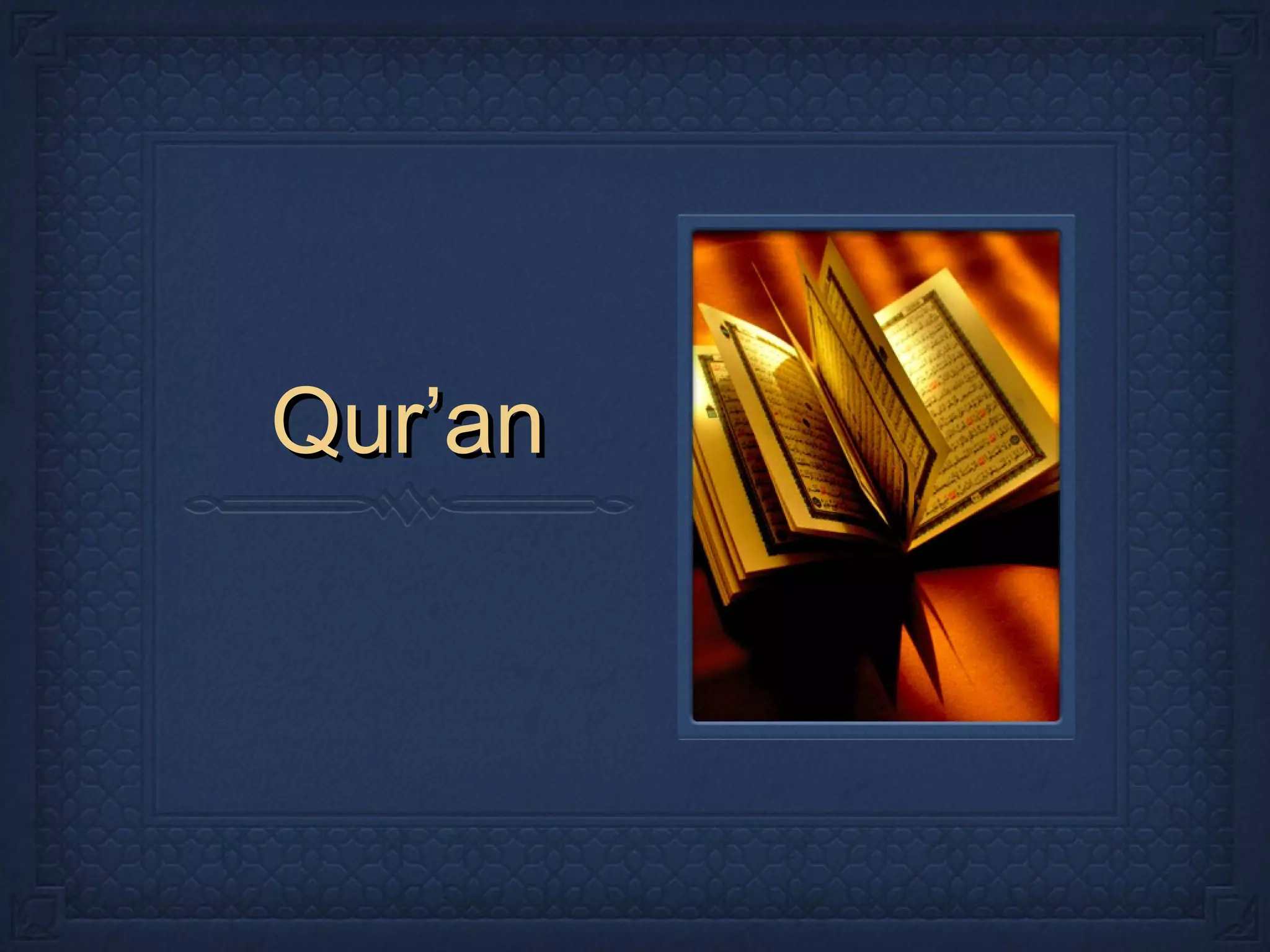
Qur’anQur’an
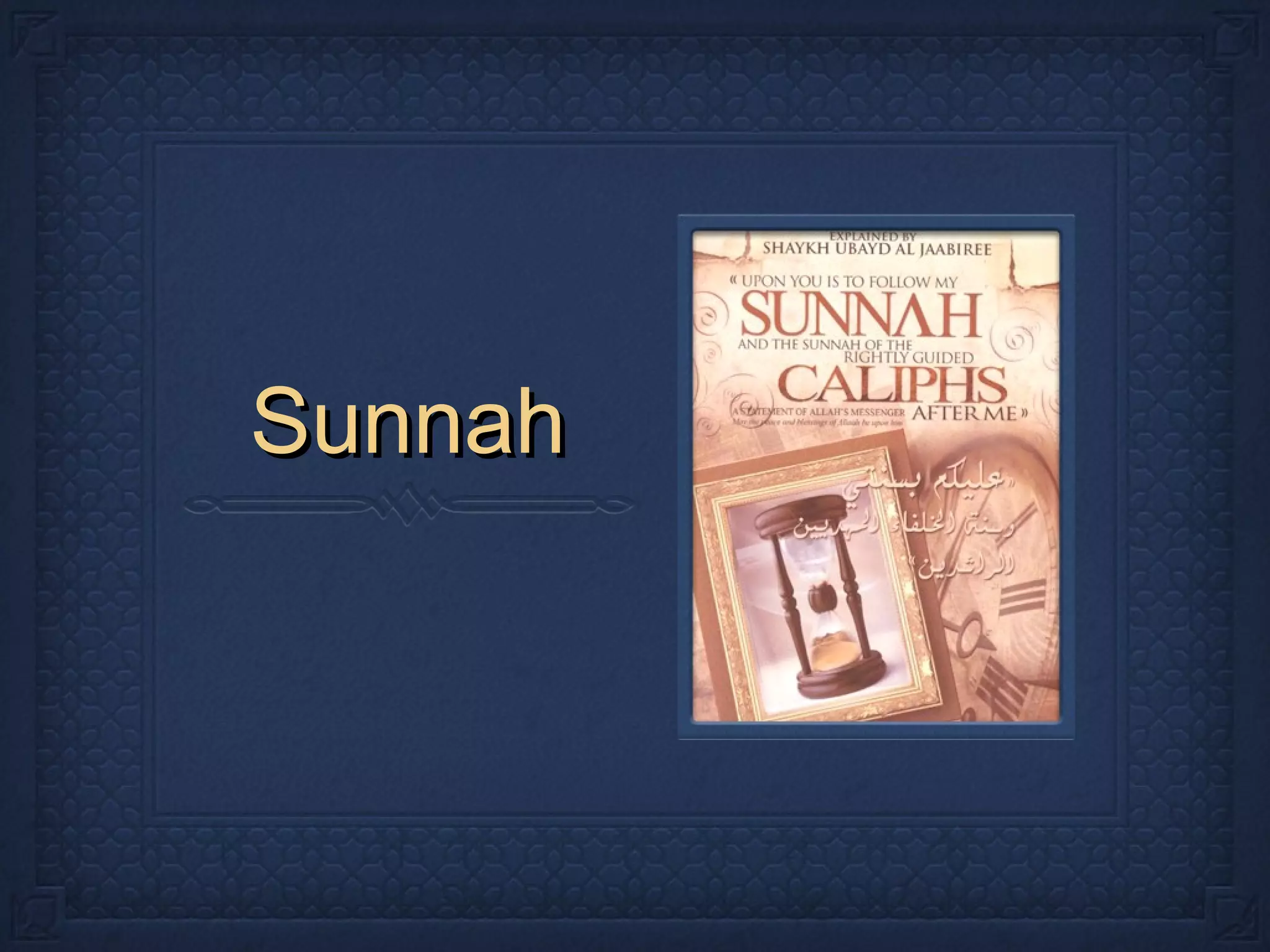
SunnahSunnah
2. How do Muslims show their2. How do Muslims show their
respect for the Qur’an?respect for the Qur’an?
They do not let the book touch the groundThey do not let the book touch the ground
or get dirty. Most Muslims memorize allor get dirty. Most Muslims memorize all
or part of the Qur’an.or part of the Qur’an.
3. How are hadith related to the3. How are hadith related to the
Sunnah?Sunnah?
The Sunnah are Muhammad’s actualThe Sunnah are Muhammad’s actual
words and deeds.words and deeds.
The Hadith are examples (reports) ofThe Hadith are examples (reports) of
what people have witnessed Muhammadwhat people have witnessed Muhammad
doing.doing.
First Pillar:First Pillar:
ShahadahShahadah
(Profession of Faith)(Profession of Faith)
Three Characteristics of ShahadahThree Characteristics of Shahadah
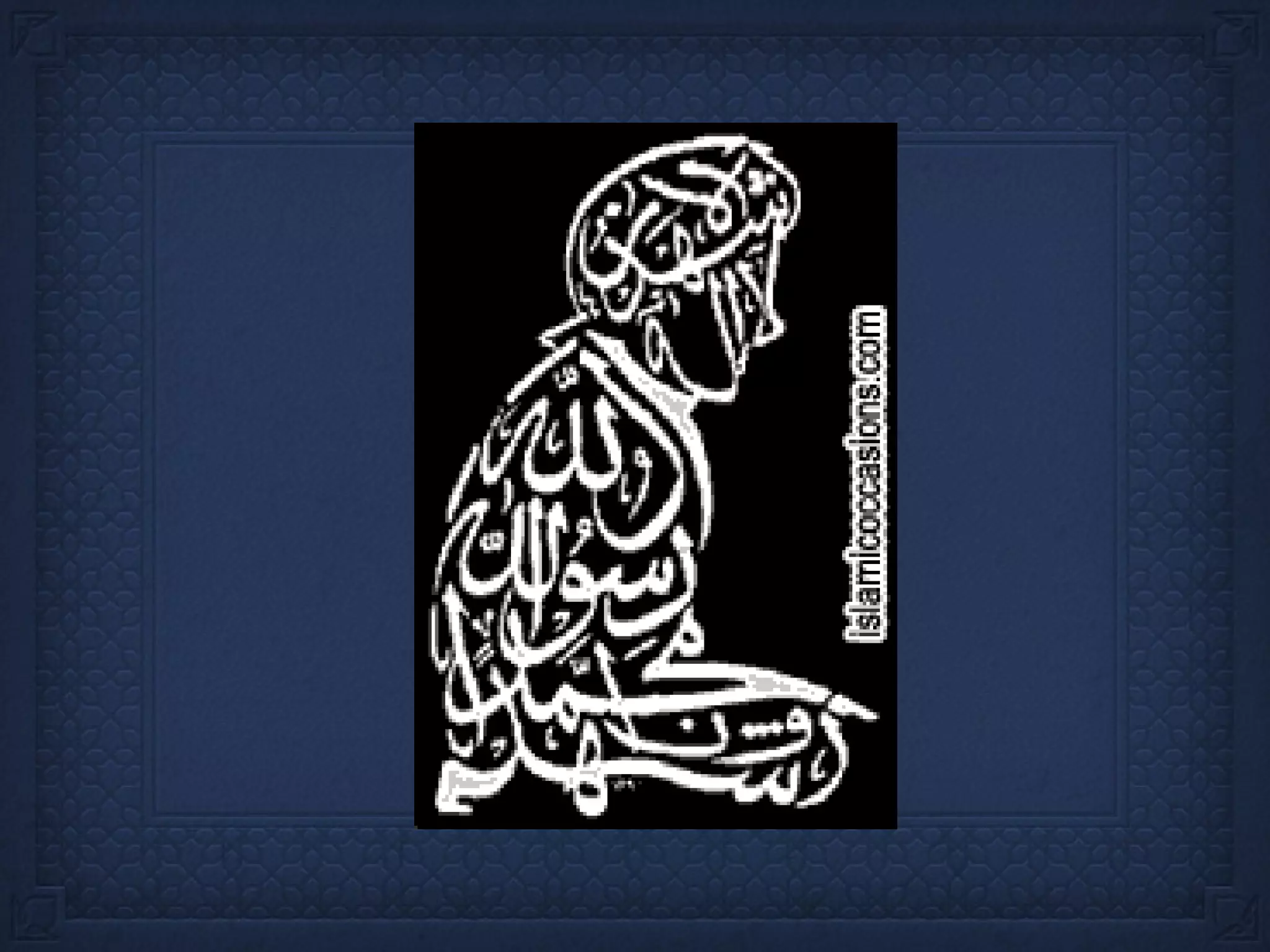
““There is no god but God, and MuhammadThere is no god but God, and Muhammad
is the messenger of God.”is the messenger of God.”
Allah is one, all-powerful God whoAllah is one, all-powerful God who
created the universe.created the universe.
Muslims believe that all three of theseMuslims believe that all three of these
religions worship the same God.religions worship the same God.
The Second Pillar:The Second Pillar:
Salat (DailySalat (Daily
Worship)Worship)
Three Characteristics of SalatThree Characteristics of Salat
Muslims pray five times a day, whereverMuslims pray five times a day, wherever
they are.they are.
Muslims pray toward Makkah (Mecca).Muslims pray toward Makkah (Mecca).
They must perform ritual washings ofThey must perform ritual washings of
their hands, face, arms and feet.their hands, face, arms and feet.
What do beads, rugs,What do beads, rugs,
mosques, the qibla,mosques, the qibla,
muezzins, and imamsmuezzins, and imams
have to do withhave to do with
worship?worship?
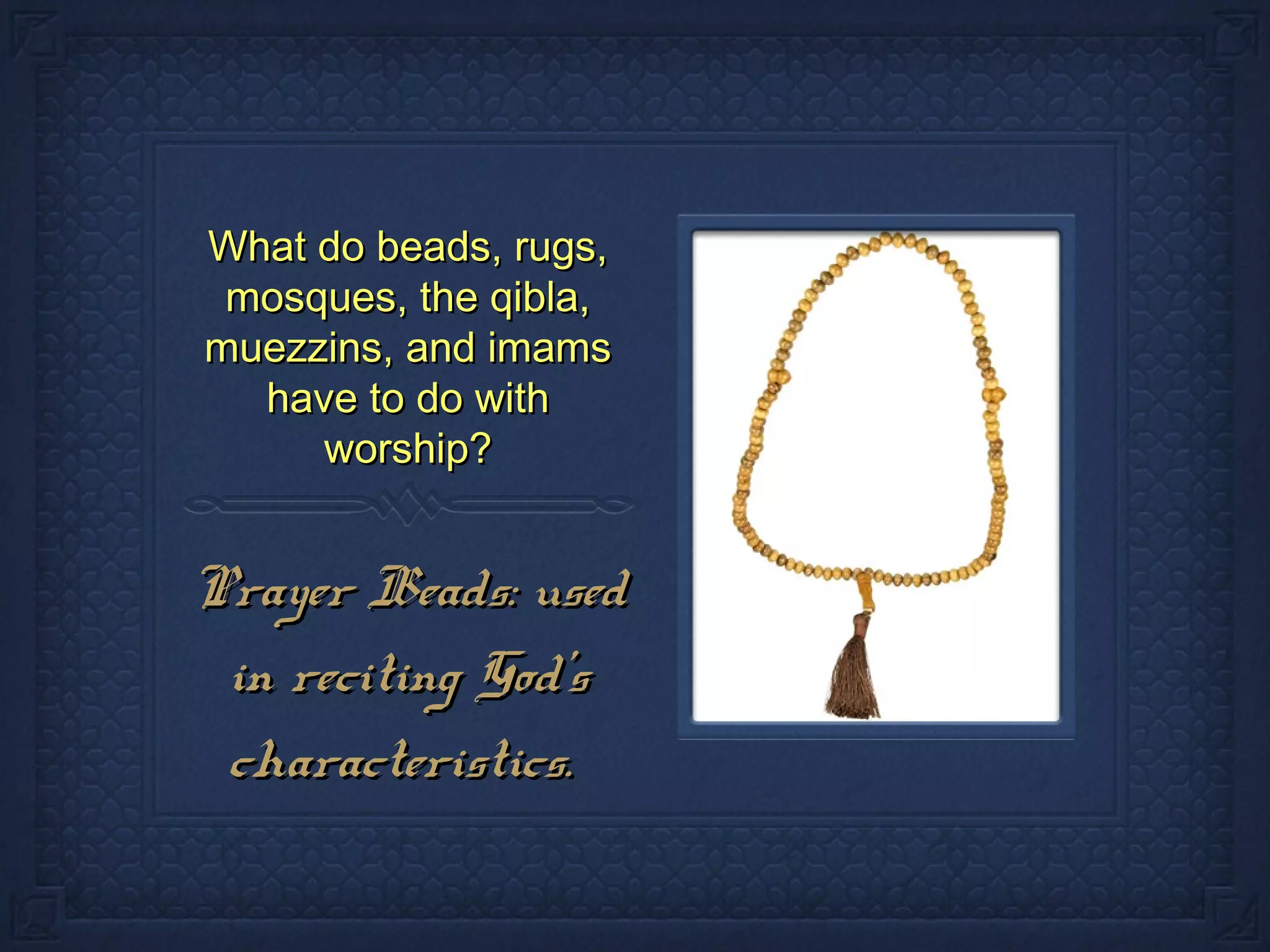
Prayer Beads: usedPrayer Beads: used
in reciting God’sin reciting God’s
characteristics.characteristics.
What do beads, rugs,What do beads, rugs,
mosques, the qibla,mosques, the qibla,
muezzins, and imamsmuezzins, and imams
have to do withhave to do with
worship?worship?
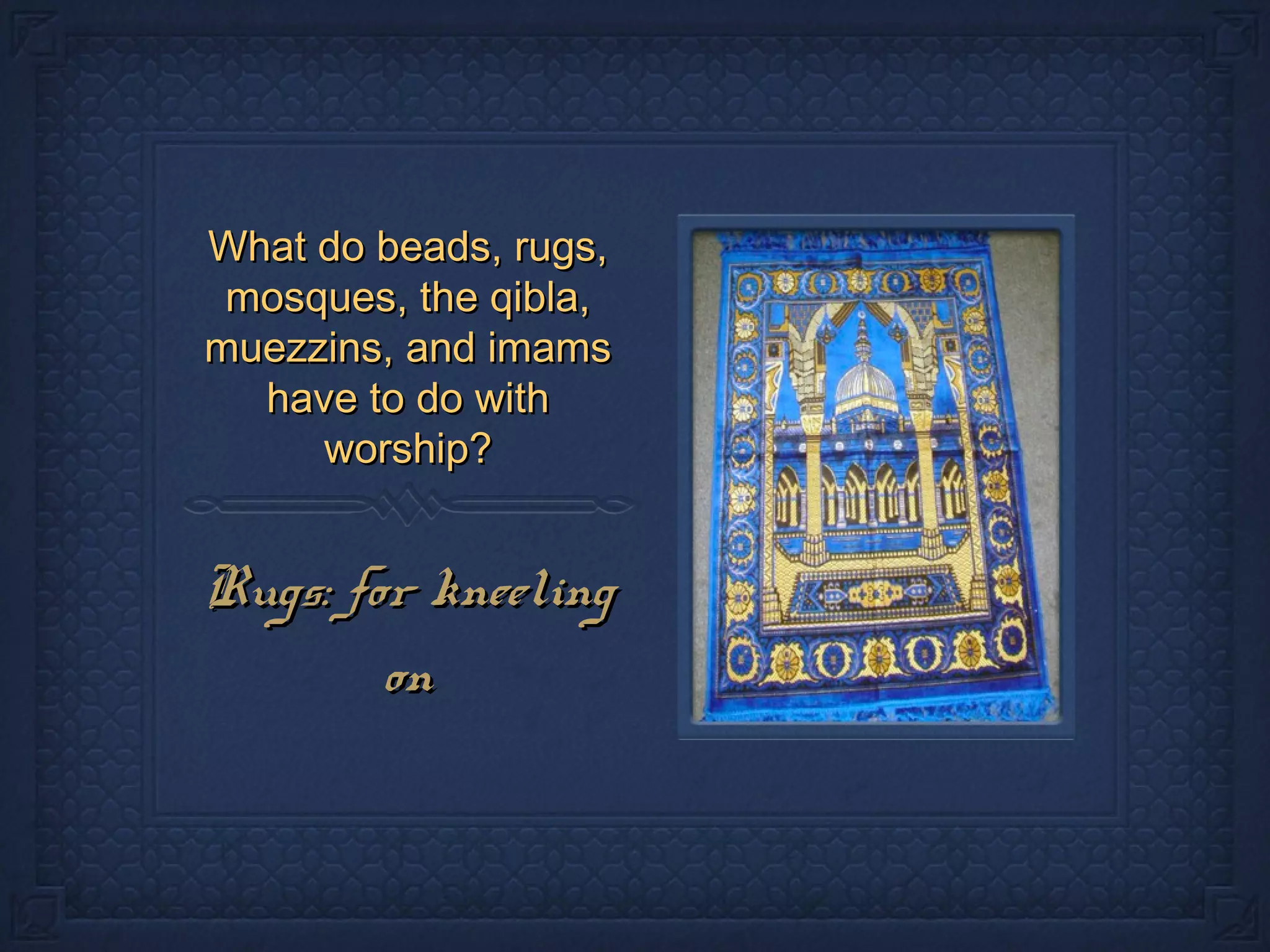
Rugs: for kneelingRugs: for kneeling
onon
What do beads, rugs,What do beads, rugs,
mosques, the qibla,mosques, the qibla,
muezzins, and imamsmuezzins, and imams
have to do withhave to do with
worship?worship?
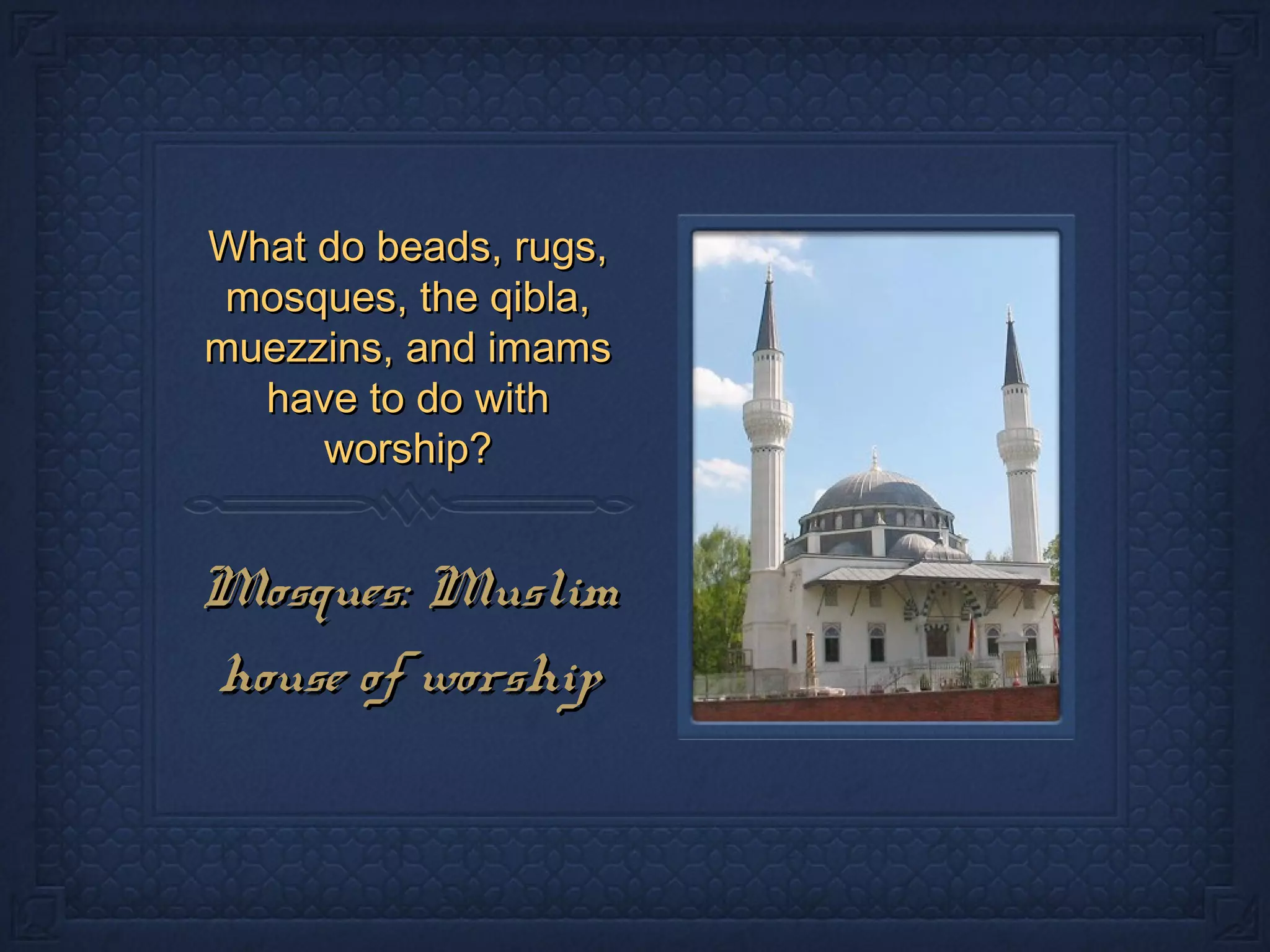
Mosques: MuslimMosques: Muslim
house of worshiphouse of worship
What do beads, rugs,What do beads, rugs,
mosques, the qibla,mosques, the qibla,
muezzins, and imamsmuezzins, and imams
have to do withhave to do with
worship?worship?
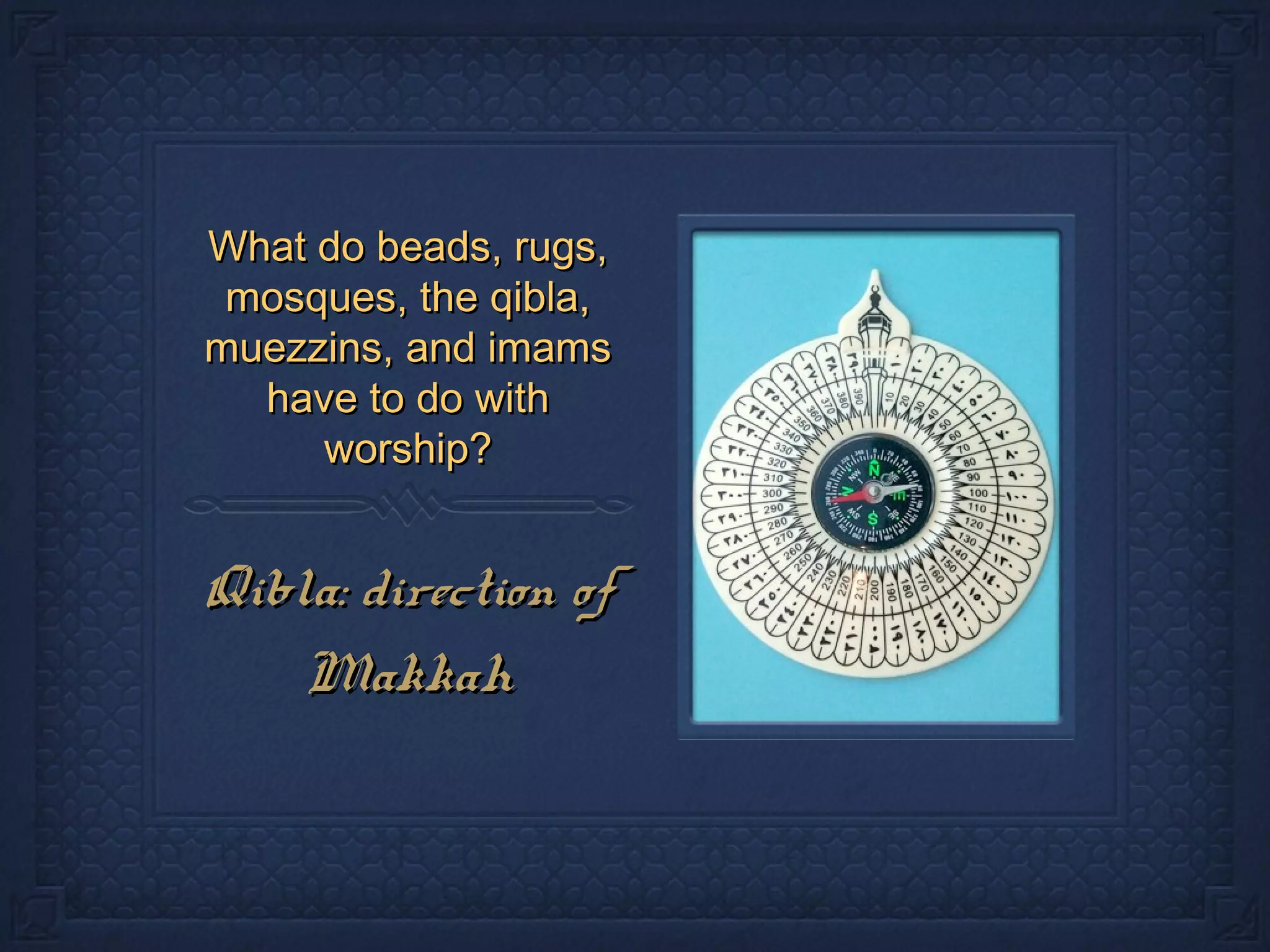
Qibla: direction ofQibla: direction of
MakkahMakkah
What do beads, rugs,What do beads, rugs,
mosques, the qibla,mosques, the qibla,
muezzins, and imamsmuezzins, and imams
have to do withhave to do with
worship?worship?
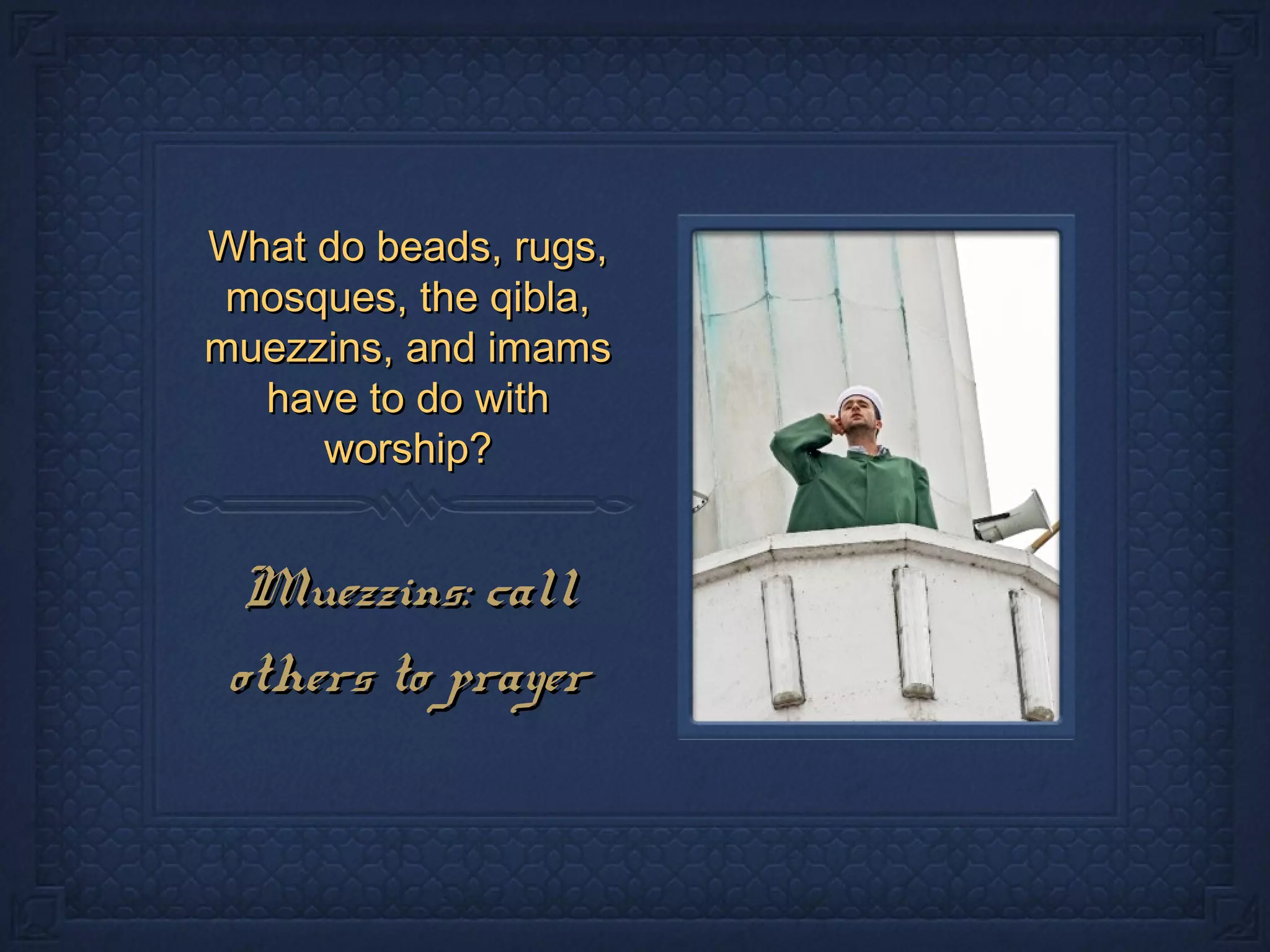
Muezzins: callMuezzins: call
others to prayerothers to prayer
What do beads, rugs,What do beads, rugs,
mosques, the qibla,mosques, the qibla,
muezzins, and imamsmuezzins, and imams
have to do withhave to do with
worship?worship?
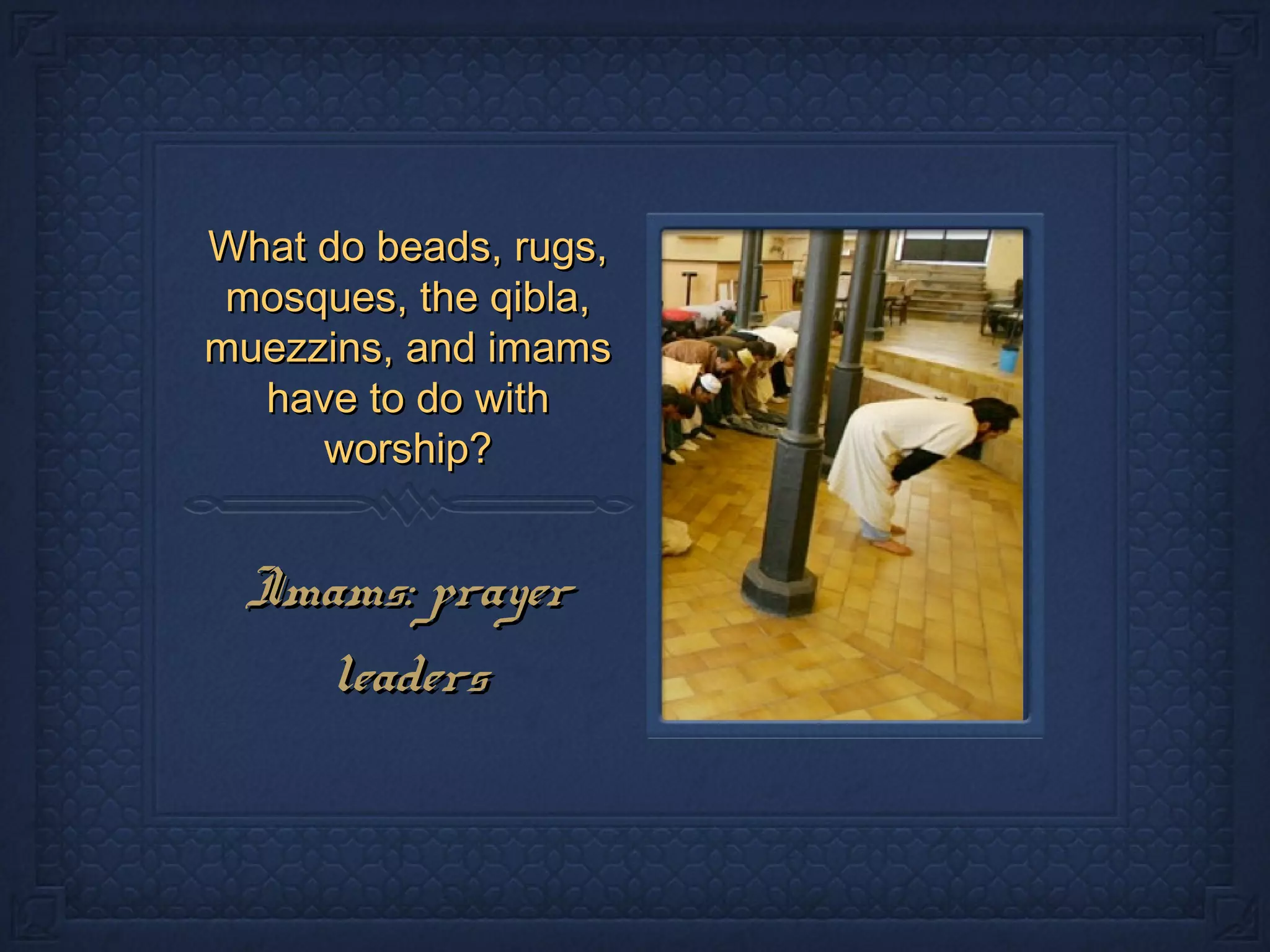
Imams: prayerImams: prayer
leadersleaders
The Third Pillar:The Third Pillar:
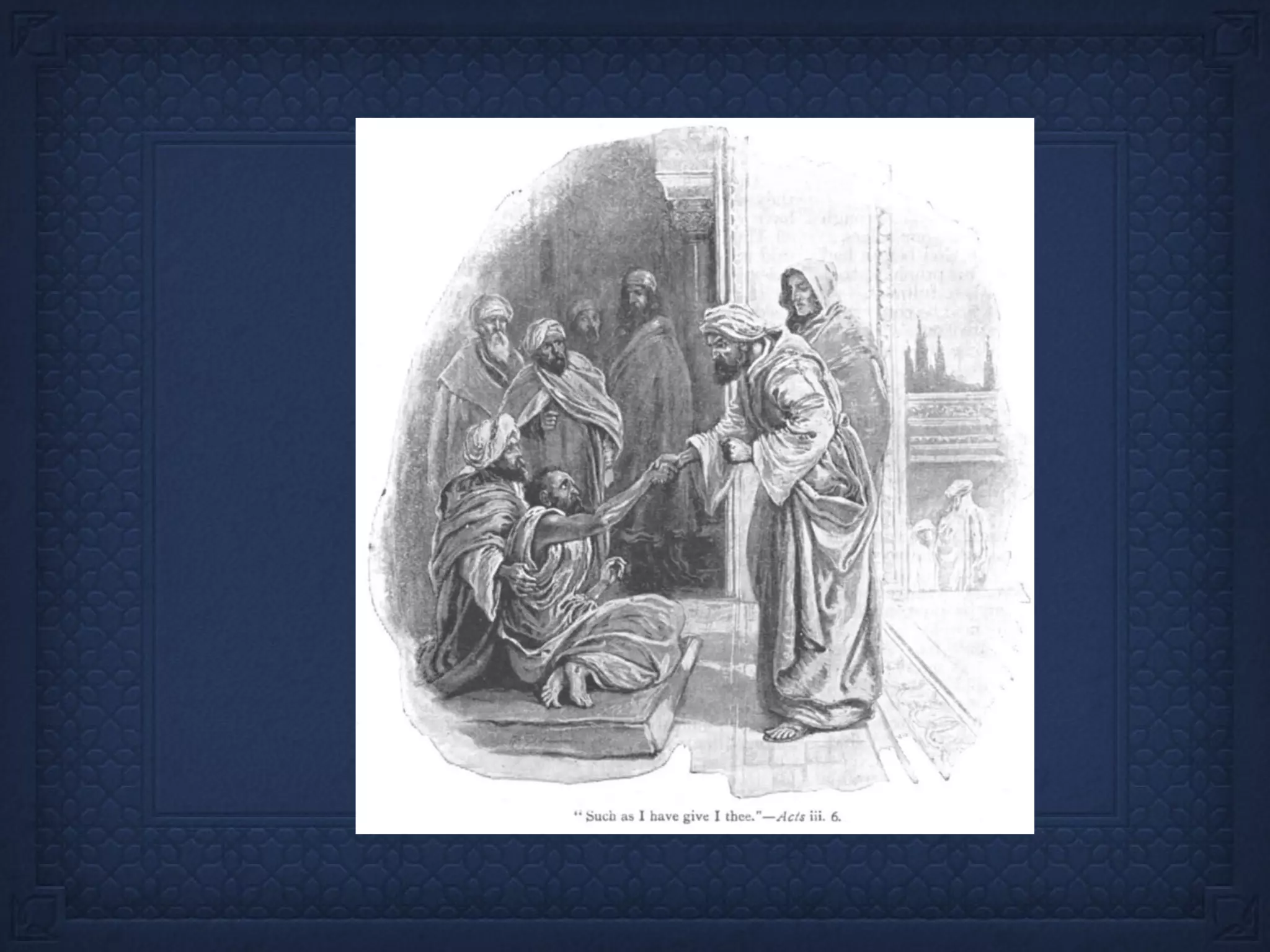
Zakat (Almsgiving)Zakat (Almsgiving)
Three Characteristics of ZakatThree Characteristics of Zakat
pays for orphanages, hospitals, souppays for orphanages, hospitals, soup
kitchens, and clothing and shelter for thekitchens, and clothing and shelter for the
poor.poor.
They give about one 2.5% surplus wealthThey give about one 2.5% surplus wealth
and possessions to the poor.and possessions to the poor.
It pays debts for the poor and helpsIt pays debts for the poor and helps
stranded travelers.stranded travelers.
The Fourth Pillar:The Fourth Pillar:
Siyam (Fasting)Siyam (Fasting)
Three Characteristics of SiyamThree Characteristics of Siyam
Siyam is daily fasting during Ramadan which isSiyam is daily fasting during Ramadan which is
the ninth month of Islamic calendar.the ninth month of Islamic calendar.
Muslims do not eat or drink between sunrise andMuslims do not eat or drink between sunrise and
sunset.sunset.
The end of Ramadan is celebrated with prayers,The end of Ramadan is celebrated with prayers,
special foods, and exchange of gifts,special foods, and exchange of gifts, and giving toand giving to
the poor. (eid al-fitr)the poor. (eid al-fitr)
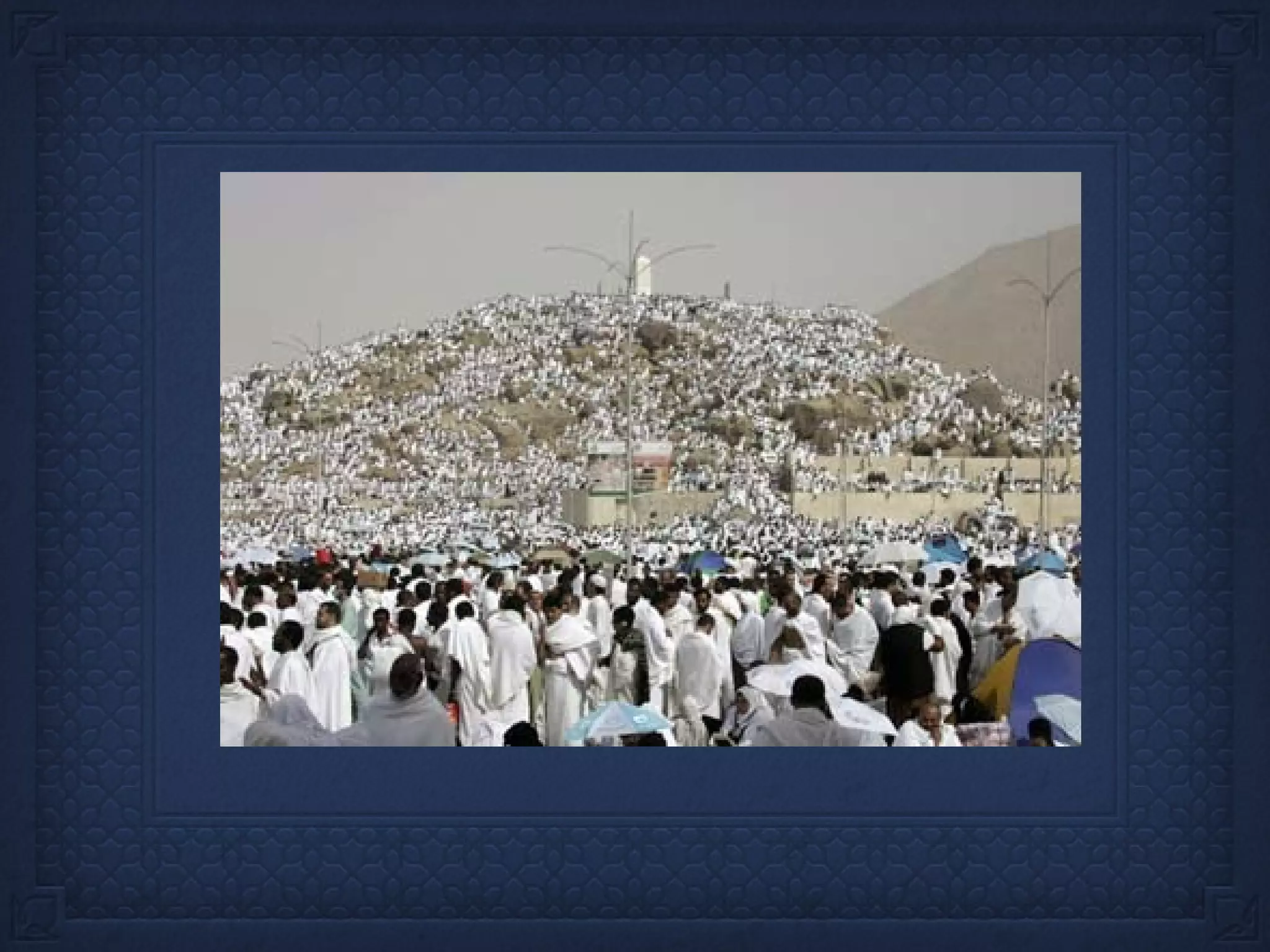
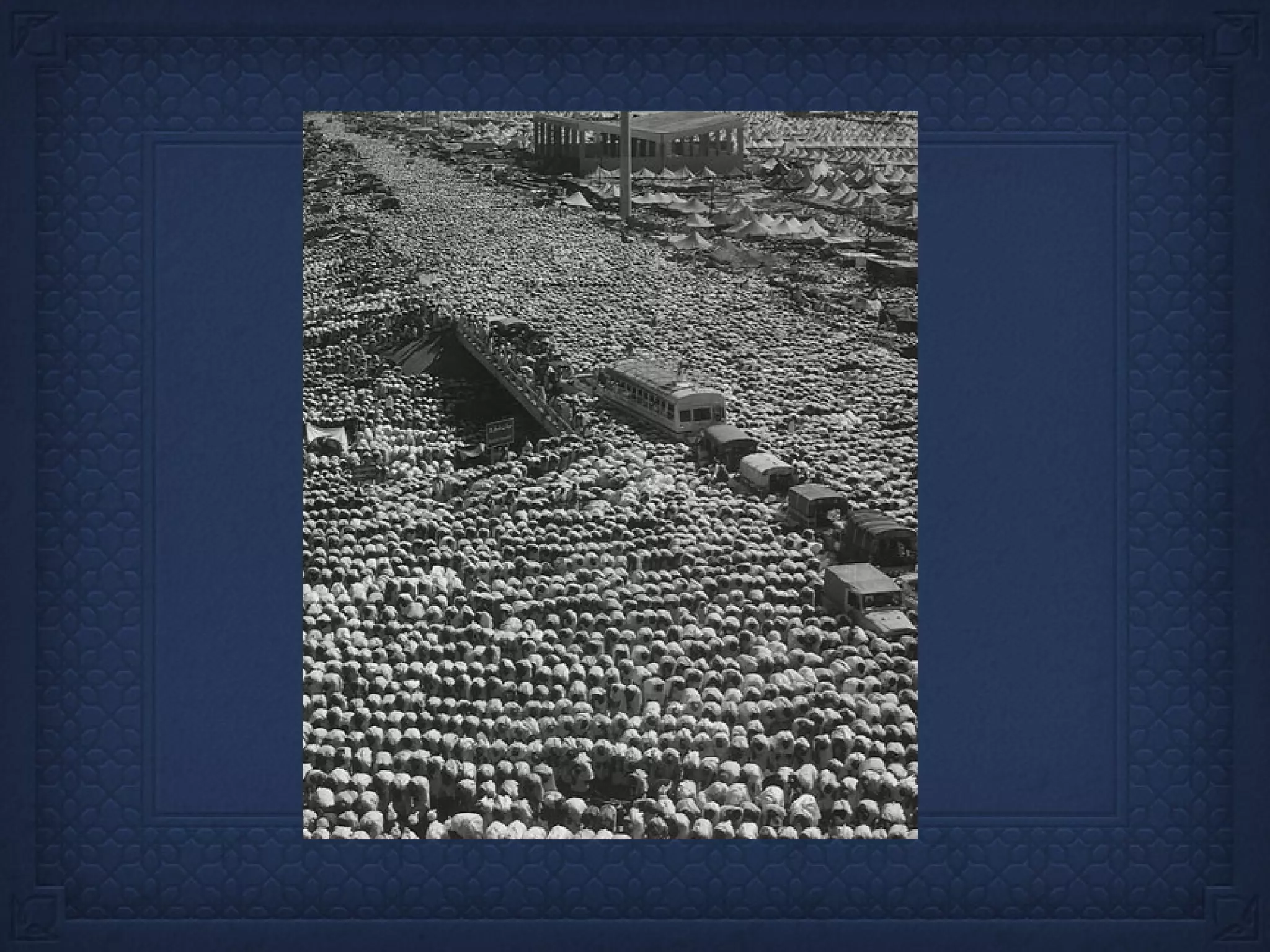
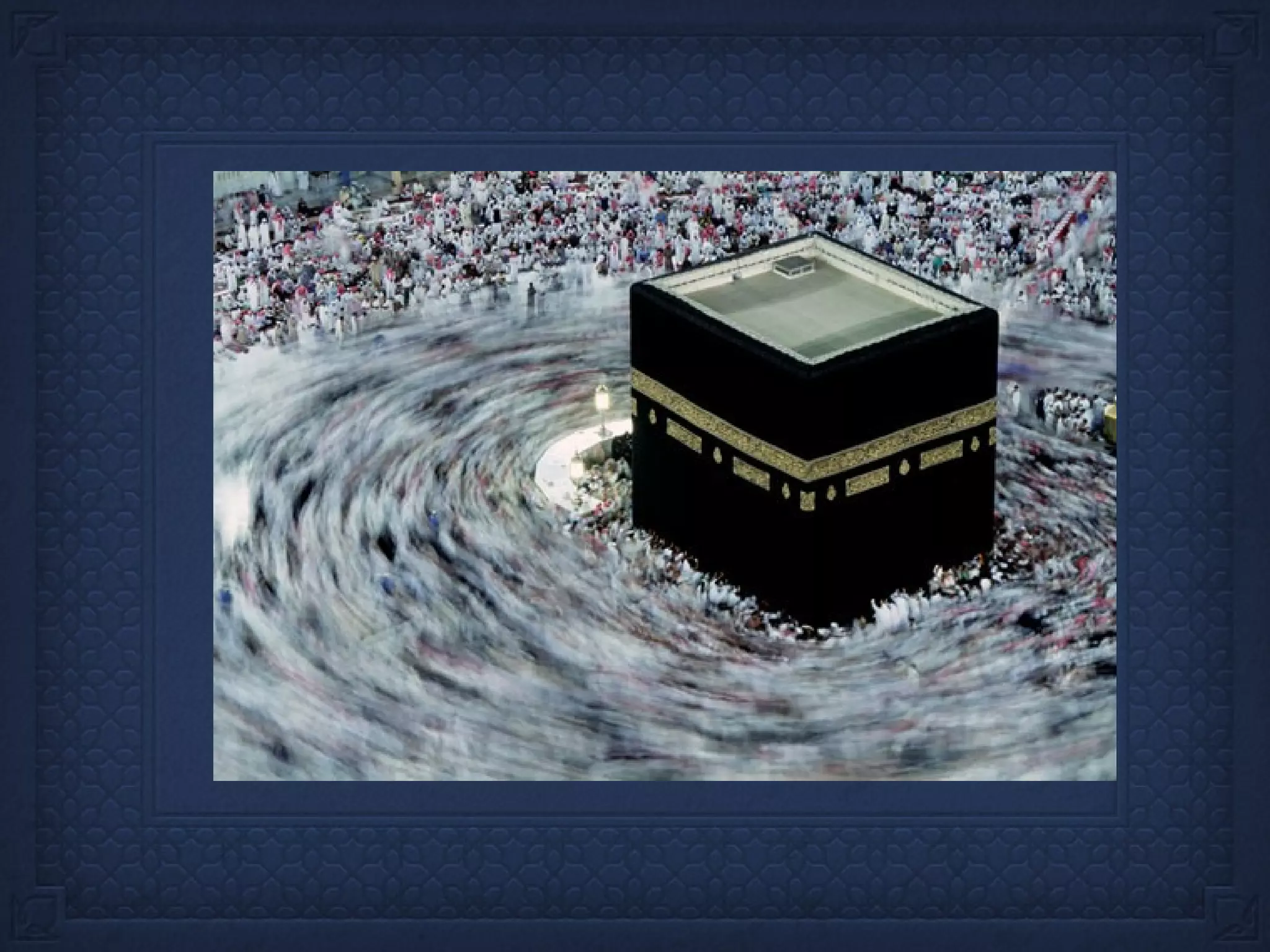
The Fifth Pillar: HajjThe Fifth Pillar: Hajj
(Pilgrimage)(Pilgrimage)
Three Characteristics of HajjThree Characteristics of Hajj
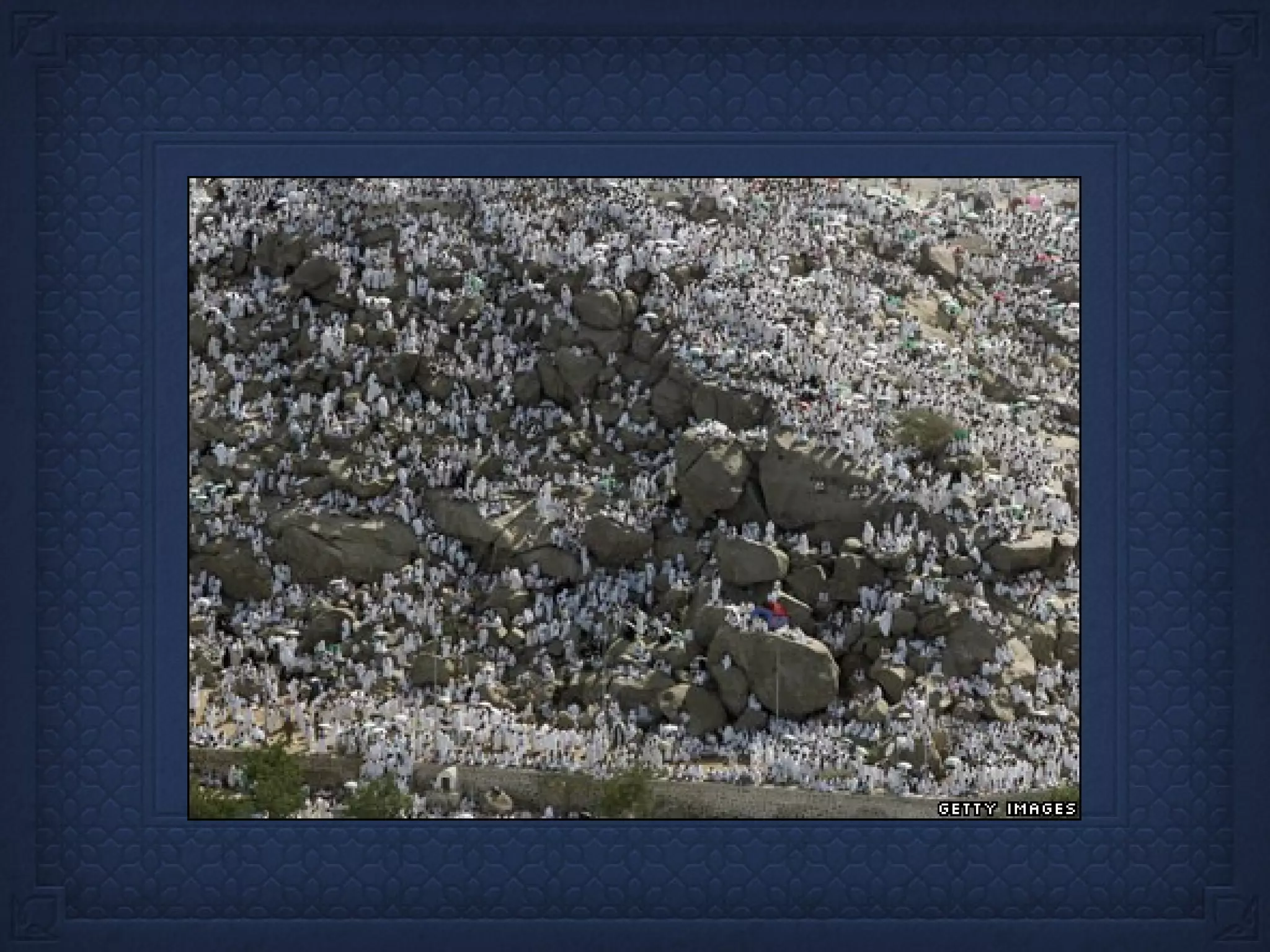
The hajj promotes fellowship and equality.The hajj promotes fellowship and equality.
They wear simple white clothing.They wear simple white clothing.
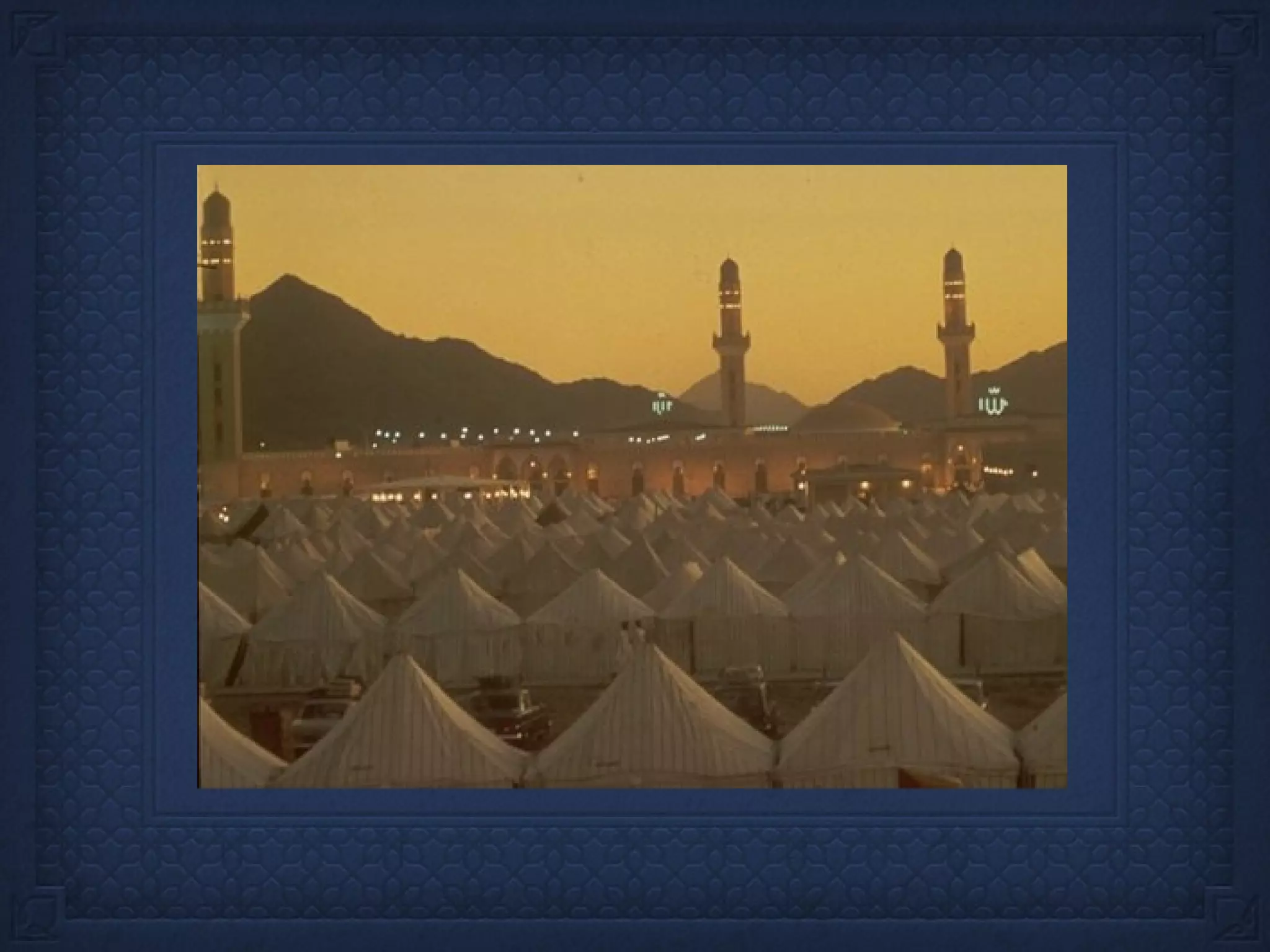
They travel along a passage between two small hills, asThey travel along a passage between two small hills, as
Hagar did when she searched for water. They camp inHagar did when she searched for water. They camp in
tents at Mina, pray at the plain of Arafat, and sometents at Mina, pray at the plain of Arafat, and some
climb Mount Arafat. Before leaving Makkah, theyclimb Mount Arafat. Before leaving Makkah, they
circle the Ka’ba seven MORE times.circle the Ka’ba seven MORE times.
JihadJihad
(Struggle)(Struggle)
1. What is Jihad?1. What is Jihad?
Jihad gives Muslims a way to respondJihad gives Muslims a way to respond
positively to external and internalpositively to external and internal
challenges.challenges.
What is the “lesserWhat is the “lesser
jihad”?jihad”?
The “lesser jihad” relates to the externalThe “lesser jihad” relates to the external
struggle against oppression, the outerstruggle against oppression, the outer
battle.battle.
What is the “greaterWhat is the “greater
jihad”?jihad”?
The “greater jihad” is the fight againstThe “greater jihad” is the fight against
all evil within oneself. To get an educationall evil within oneself. To get an education
is a “greater jihad”.is a “greater jihad”.
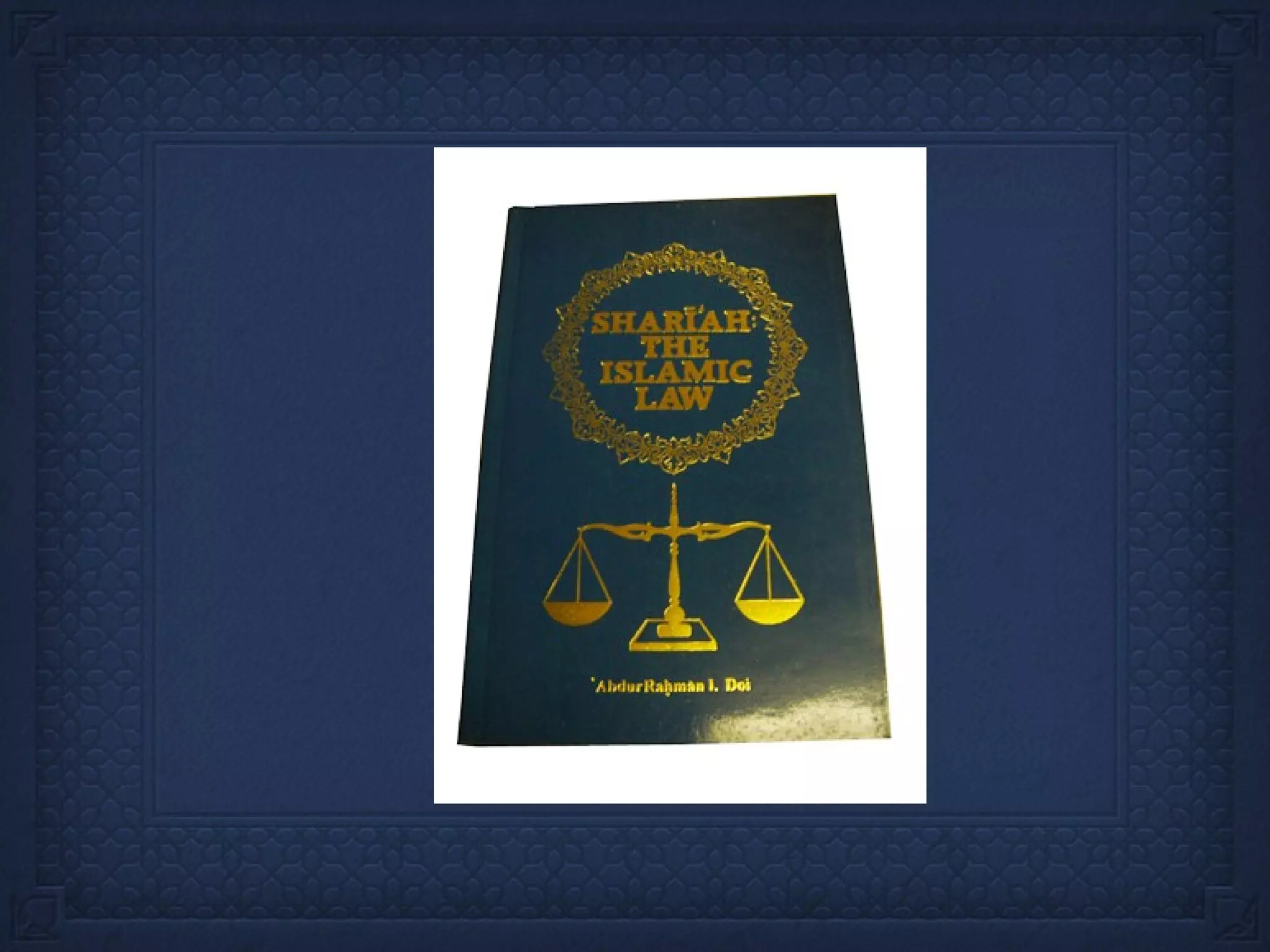
Shari’ah: IslamicShari’ah: Islamic
LawLaw
What is shari’ah and how did itWhat is shari’ah and how did it
develop?develop?
Shari’ah is the main part of the Islamic law based onShari’ah is the main part of the Islamic law based on
the Qur’an and the Sunnah. It guides Muslims inthe Qur’an and the Sunnah. It guides Muslims in
their personal behavior. It was developed by caliphs andtheir personal behavior. It was developed by caliphs and
scholars who used the Qur’an and the Sunnah to solvescholars who used the Qur’an and the Sunnah to solve
problems that arose.problems that arose.
What values does shari’ahWhat values does shari’ah
promote?promote?
It promotes obedience to the Qur’an and respect forIt promotes obedience to the Qur’an and respect for
others.others.
What are three examples ofWhat are three examples of
behaviors that shari’ah regulates?behaviors that shari’ah regulates?
Muslims may not:Muslims may not:
eat porkeat pork
drink alcoholdrink alcohol
gamblegamble
They must dress modestlyThey must dress modestly
How has shari’ah changed over theHow has shari’ah changed over the
years?years?
Western codes of law have replaced or supplementedWestern codes of law have replaced or supplemented
shari’ah in many Muslim countries. Shari’ah continuesshari’ah in many Muslim countries. Shari’ah continues
to develop in response to modern ways of life.to develop in response to modern ways of life.
First Pillar ~ Profession of Faith (‘There is noFirst Pillar ~ Profession of Faith (‘There is no
god, but God and Muhammad is the messenger ofgod, but God and Muhammad is the messenger of
God”)God”)
Second Pillar ~ Prayer (5 times a day...faceSecond Pillar ~ Prayer (5 times a day...face
towards Mecca:Ka’ba.towards Mecca:Ka’ba.
Third Pillar ~ Almsgiving (Charity to theThird Pillar ~ Almsgiving (Charity to the
Poor)Poor)
Fourth Pillar ~Fasting ~ Ramadan (can’tFourth Pillar ~Fasting ~ Ramadan (can’t
eat/drink from sunrise to sunset)eat/drink from sunrise to sunset)
Fifth Pillar ~ Hajj ~ Pilgrimage to MeccaFifth Pillar ~ Hajj ~ Pilgrimage to Mecca

Lesson 8 notes

  • 1.
    Chapter 8Chapter 8 TheTeachings of IslamThe Teachings of Islam
  • 2.
    8.2 ~ Backgroundon8.2 ~ Background on IslamIslam
  • 3.
    1. What doesUmmah1. What does Ummah mean?mean? Muslims belonged to a single Islamic community calledMuslims belonged to a single Islamic community called an ummah.an ummah. This consisted of many peoples and cultures.This consisted of many peoples and cultures.
  • 4.
    2. What isthe fraction of the amount2. What is the fraction of the amount of Muslims living in the world?of Muslims living in the world? It is the second largest religion in the world afterIt is the second largest religion in the world after Christianity.Christianity. 1 out of 5 people in the world are Muslim. (1/5)1 out of 5 people in the world are Muslim. (1/5)
  • 5.
    3. Islam, Christianityand Judaism all3. Islam, Christianity and Judaism all trace their origins to which prophet?trace their origins to which prophet? These three religions all trace their origins back toThese three religions all trace their origins back to ABRAHAM.ABRAHAM.
  • 6.
    4. How isthe Qur’an different from4. How is the Qur’an different from the Bible of Torah?the Bible of Torah? Muslims believe that the Bible and the Torah areMuslims believe that the Bible and the Torah are used as a source of guidance for people.used as a source of guidance for people. Muslims believe that the Qur’an was the FINALMuslims believe that the Qur’an was the FINAL book from God and how he wants his followers to actbook from God and how he wants his followers to act and worship.and worship.
  • 7.
    8.3~The Qur’an and8.3~TheQur’an and the Sunnahthe Sunnah
  • 8.
    What is thedifferenceWhat is the difference between the Qur’an & thebetween the Qur’an & the Sunnah?Sunnah? The Qur’an is Islam’s sacred book andThe Qur’an is Islam’s sacred book and considered to be the words of Godconsidered to be the words of God (Allah).(Allah). The Sunnah is the example set byThe Sunnah is the example set by Muhammad...think of it as Muhammad’sMuhammad...think of it as Muhammad’s words.words.
  • 9.
  • 10.
  • 11.
    2. How doMuslims show their2. How do Muslims show their respect for the Qur’an?respect for the Qur’an? They do not let the book touch the groundThey do not let the book touch the ground or get dirty. Most Muslims memorize allor get dirty. Most Muslims memorize all or part of the Qur’an.or part of the Qur’an.
  • 12.
    3. How arehadith related to the3. How are hadith related to the Sunnah?Sunnah? The Sunnah are Muhammad’s actualThe Sunnah are Muhammad’s actual words and deeds.words and deeds. The Hadith are examples (reports) ofThe Hadith are examples (reports) of what people have witnessed Muhammadwhat people have witnessed Muhammad doing.doing.
  • 13.
  • 14.
    Three Characteristics ofShahadahThree Characteristics of Shahadah ““There is no god but God, and MuhammadThere is no god but God, and Muhammad is the messenger of God.”is the messenger of God.” Allah is one, all-powerful God whoAllah is one, all-powerful God who created the universe.created the universe. Muslims believe that all three of theseMuslims believe that all three of these religions worship the same God.religions worship the same God.
  • 16.
    The Second Pillar:TheSecond Pillar: Salat (DailySalat (Daily Worship)Worship)
  • 17.
    Three Characteristics ofSalatThree Characteristics of Salat Muslims pray five times a day, whereverMuslims pray five times a day, wherever they are.they are. Muslims pray toward Makkah (Mecca).Muslims pray toward Makkah (Mecca). They must perform ritual washings ofThey must perform ritual washings of their hands, face, arms and feet.their hands, face, arms and feet.
  • 18.
    What do beads,rugs,What do beads, rugs, mosques, the qibla,mosques, the qibla, muezzins, and imamsmuezzins, and imams have to do withhave to do with worship?worship? Prayer Beads: usedPrayer Beads: used in reciting God’sin reciting God’s characteristics.characteristics.
  • 19.
    What do beads,rugs,What do beads, rugs, mosques, the qibla,mosques, the qibla, muezzins, and imamsmuezzins, and imams have to do withhave to do with worship?worship? Rugs: for kneelingRugs: for kneeling onon
  • 20.
    What do beads,rugs,What do beads, rugs, mosques, the qibla,mosques, the qibla, muezzins, and imamsmuezzins, and imams have to do withhave to do with worship?worship? Mosques: MuslimMosques: Muslim house of worshiphouse of worship
  • 21.
    What do beads,rugs,What do beads, rugs, mosques, the qibla,mosques, the qibla, muezzins, and imamsmuezzins, and imams have to do withhave to do with worship?worship? Qibla: direction ofQibla: direction of MakkahMakkah
  • 22.
    What do beads,rugs,What do beads, rugs, mosques, the qibla,mosques, the qibla, muezzins, and imamsmuezzins, and imams have to do withhave to do with worship?worship? Muezzins: callMuezzins: call others to prayerothers to prayer
  • 23.
    What do beads,rugs,What do beads, rugs, mosques, the qibla,mosques, the qibla, muezzins, and imamsmuezzins, and imams have to do withhave to do with worship?worship? Imams: prayerImams: prayer leadersleaders
  • 24.
    The Third Pillar:TheThird Pillar: Zakat (Almsgiving)Zakat (Almsgiving)
  • 25.
    Three Characteristics ofZakatThree Characteristics of Zakat pays for orphanages, hospitals, souppays for orphanages, hospitals, soup kitchens, and clothing and shelter for thekitchens, and clothing and shelter for the poor.poor. They give about one 2.5% surplus wealthThey give about one 2.5% surplus wealth and possessions to the poor.and possessions to the poor. It pays debts for the poor and helpsIt pays debts for the poor and helps stranded travelers.stranded travelers.
  • 27.
    The Fourth Pillar:TheFourth Pillar: Siyam (Fasting)Siyam (Fasting)
  • 28.
    Three Characteristics ofSiyamThree Characteristics of Siyam Siyam is daily fasting during Ramadan which isSiyam is daily fasting during Ramadan which is the ninth month of Islamic calendar.the ninth month of Islamic calendar. Muslims do not eat or drink between sunrise andMuslims do not eat or drink between sunrise and sunset.sunset. The end of Ramadan is celebrated with prayers,The end of Ramadan is celebrated with prayers, special foods, and exchange of gifts,special foods, and exchange of gifts, and giving toand giving to the poor. (eid al-fitr)the poor. (eid al-fitr)
  • 29.
    The Fifth Pillar:HajjThe Fifth Pillar: Hajj (Pilgrimage)(Pilgrimage)
  • 30.
    Three Characteristics ofHajjThree Characteristics of Hajj The hajj promotes fellowship and equality.The hajj promotes fellowship and equality. They wear simple white clothing.They wear simple white clothing. They travel along a passage between two small hills, asThey travel along a passage between two small hills, as Hagar did when she searched for water. They camp inHagar did when she searched for water. They camp in tents at Mina, pray at the plain of Arafat, and sometents at Mina, pray at the plain of Arafat, and some climb Mount Arafat. Before leaving Makkah, theyclimb Mount Arafat. Before leaving Makkah, they circle the Ka’ba seven MORE times.circle the Ka’ba seven MORE times.
  • 36.
  • 37.
    1. What isJihad?1. What is Jihad? Jihad gives Muslims a way to respondJihad gives Muslims a way to respond positively to external and internalpositively to external and internal challenges.challenges.
  • 38.
    What is the“lesserWhat is the “lesser jihad”?jihad”? The “lesser jihad” relates to the externalThe “lesser jihad” relates to the external struggle against oppression, the outerstruggle against oppression, the outer battle.battle.
  • 39.
    What is the“greaterWhat is the “greater jihad”?jihad”? The “greater jihad” is the fight againstThe “greater jihad” is the fight against all evil within oneself. To get an educationall evil within oneself. To get an education is a “greater jihad”.is a “greater jihad”.
  • 41.
  • 42.
    What is shari’ahand how did itWhat is shari’ah and how did it develop?develop? Shari’ah is the main part of the Islamic law based onShari’ah is the main part of the Islamic law based on the Qur’an and the Sunnah. It guides Muslims inthe Qur’an and the Sunnah. It guides Muslims in their personal behavior. It was developed by caliphs andtheir personal behavior. It was developed by caliphs and scholars who used the Qur’an and the Sunnah to solvescholars who used the Qur’an and the Sunnah to solve problems that arose.problems that arose.
  • 43.
    What values doesshari’ahWhat values does shari’ah promote?promote? It promotes obedience to the Qur’an and respect forIt promotes obedience to the Qur’an and respect for others.others.
  • 44.
    What are threeexamples ofWhat are three examples of behaviors that shari’ah regulates?behaviors that shari’ah regulates? Muslims may not:Muslims may not: eat porkeat pork drink alcoholdrink alcohol gamblegamble They must dress modestlyThey must dress modestly
  • 45.
    How has shari’ahchanged over theHow has shari’ah changed over the years?years? Western codes of law have replaced or supplementedWestern codes of law have replaced or supplemented shari’ah in many Muslim countries. Shari’ah continuesshari’ah in many Muslim countries. Shari’ah continues to develop in response to modern ways of life.to develop in response to modern ways of life.
  • 47.
    First Pillar ~Profession of Faith (‘There is noFirst Pillar ~ Profession of Faith (‘There is no god, but God and Muhammad is the messenger ofgod, but God and Muhammad is the messenger of God”)God”) Second Pillar ~ Prayer (5 times a day...faceSecond Pillar ~ Prayer (5 times a day...face towards Mecca:Ka’ba.towards Mecca:Ka’ba. Third Pillar ~ Almsgiving (Charity to theThird Pillar ~ Almsgiving (Charity to the Poor)Poor) Fourth Pillar ~Fasting ~ Ramadan (can’tFourth Pillar ~Fasting ~ Ramadan (can’t eat/drink from sunrise to sunset)eat/drink from sunrise to sunset) Fifth Pillar ~ Hajj ~ Pilgrimage to MeccaFifth Pillar ~ Hajj ~ Pilgrimage to Mecca