Descriptive and Analytical
Research
Assignment Topic
Submitted To: Sir Zohaib
Submitted By: Bilal Israr
Class: LLB(Hones)Evening
Roll No: 09
Department: LAW
BZU Sub-Campus Vehari
Differentiate betweenDifferentiate between
Descriptive research and Analytical researchDescriptive research and Analytical research
Descriptive
Research
Descriptive Research
Used to obtain information concerning
the current status of a phenomena.
Purpose of these methods is to describe
“what exists” with respect to situational
variables.
Descriptive Research
Status descriptive survey
Explanatory descriptive studies
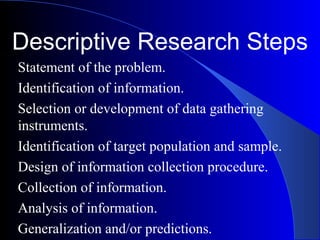
Descriptive Research Steps
Statement of the problem.
Identification of information.
Selection or development of data gathering
instruments.
Identification of target population and sample.
Design of information collection procedure.
Collection of information.
Analysis of information.
Generalization and/or predictions.
Survey Study
Survey studies assess the
characteristics of whole populations
of people or situations.
Analytical Research
Analytical research means carrying out
analysis on a phenomenon – Mostly
involves secondary data – ex-ante research-
before contemplated change
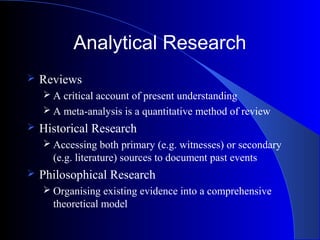
Analytical Research
 Reviews
 A critical account of present understanding
 A meta-analysis is a quantitative method of review
 Historical Research
 Accessing both primary (e.g. witnesses) or secondary
(e.g. literature) sources to document past events
 Philosophical Research
 Organising existing evidence into a comprehensive
theoretical model
Theory Of ResearchTheory Of Research
Research methodology is a way to find out
solution on any problem on a scientific basis.
Research has its special significance in solving
various operational and planning problems in
business and industry
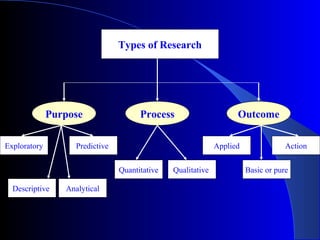
Types of Research
Purpose Process Outcome
Exploratory Predictive
Descriptive Analytical
QualitativeQuantitative Basic or pure
Applied Action
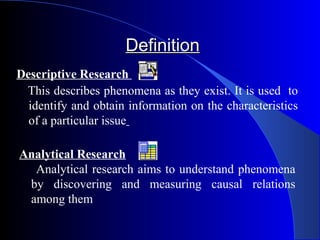
DefinitionDefinition
Descriptive Research
This describes phenomena as they exist. It is used to
identify and obtain information on the characteristics
of a particular issue
Analytical Research
Analytical research aims to understand phenomena
by discovering and measuring causal relations
among them
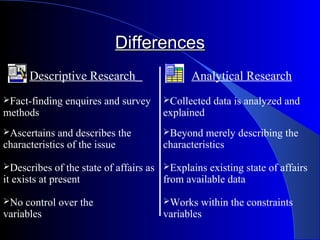
DifferencesDifferences
Descriptive Research Analytical Research
Fact-finding enquires and survey
methods
Ascertains and describes the
characteristics of the issue
Describes of the state of affairs as
it exists at present
No control over the
variables
Collected data is analyzed and
explained
Beyond merely describing the
characteristics
Explains existing state of affairs
from available data
Works within the constraints
variables
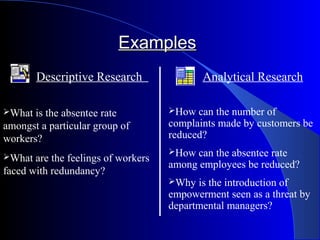
ExamplesExamples
Descriptive Research Analytical Research
What is the absentee rate
amongst a particular group of
workers?
What are the feelings of workers
faced with redundancy?
How can the number of
complaints made by customers be
reduced?
How can the absentee rate
among employees be reduced?
Why is the introduction of
empowerment seen as a threat by
departmental managers?
Thank
You !
Create by… Ch Bilal Israr
contact no. +923042400024

Descriptive and analytical research

  • 1.
    Descriptive and Analytical Research AssignmentTopic Submitted To: Sir Zohaib Submitted By: Bilal Israr Class: LLB(Hones)Evening Roll No: 09 Department: LAW BZU Sub-Campus Vehari
  • 2.
    Differentiate betweenDifferentiate between Descriptiveresearch and Analytical researchDescriptive research and Analytical research
  • 3.
  • 4.
    Descriptive Research Used toobtain information concerning the current status of a phenomena. Purpose of these methods is to describe “what exists” with respect to situational variables.
  • 5.
    Descriptive Research Status descriptivesurvey Explanatory descriptive studies
  • 6.
    Descriptive Research Steps Statementof the problem. Identification of information. Selection or development of data gathering instruments. Identification of target population and sample. Design of information collection procedure. Collection of information. Analysis of information. Generalization and/or predictions.
  • 7.
    Survey Study Survey studiesassess the characteristics of whole populations of people or situations.
  • 8.
    Analytical Research Analytical researchmeans carrying out analysis on a phenomenon – Mostly involves secondary data – ex-ante research- before contemplated change
  • 9.
    Analytical Research  Reviews A critical account of present understanding  A meta-analysis is a quantitative method of review  Historical Research  Accessing both primary (e.g. witnesses) or secondary (e.g. literature) sources to document past events  Philosophical Research  Organising existing evidence into a comprehensive theoretical model
  • 10.
    Theory Of ResearchTheoryOf Research Research methodology is a way to find out solution on any problem on a scientific basis. Research has its special significance in solving various operational and planning problems in business and industry
  • 11.
    Types of Research PurposeProcess Outcome Exploratory Predictive Descriptive Analytical QualitativeQuantitative Basic or pure Applied Action
  • 12.
    DefinitionDefinition Descriptive Research This describesphenomena as they exist. It is used to identify and obtain information on the characteristics of a particular issue Analytical Research Analytical research aims to understand phenomena by discovering and measuring causal relations among them
  • 13.
    DifferencesDifferences Descriptive Research AnalyticalResearch Fact-finding enquires and survey methods Ascertains and describes the characteristics of the issue Describes of the state of affairs as it exists at present No control over the variables Collected data is analyzed and explained Beyond merely describing the characteristics Explains existing state of affairs from available data Works within the constraints variables
  • 14.
    ExamplesExamples Descriptive Research AnalyticalResearch What is the absentee rate amongst a particular group of workers? What are the feelings of workers faced with redundancy? How can the number of complaints made by customers be reduced? How can the absentee rate among employees be reduced? Why is the introduction of empowerment seen as a threat by departmental managers?
  • 15.
    Thank You ! Create by…Ch Bilal Israr contact no. +923042400024