Host Card Emulation in Android:
What Does it Mean?
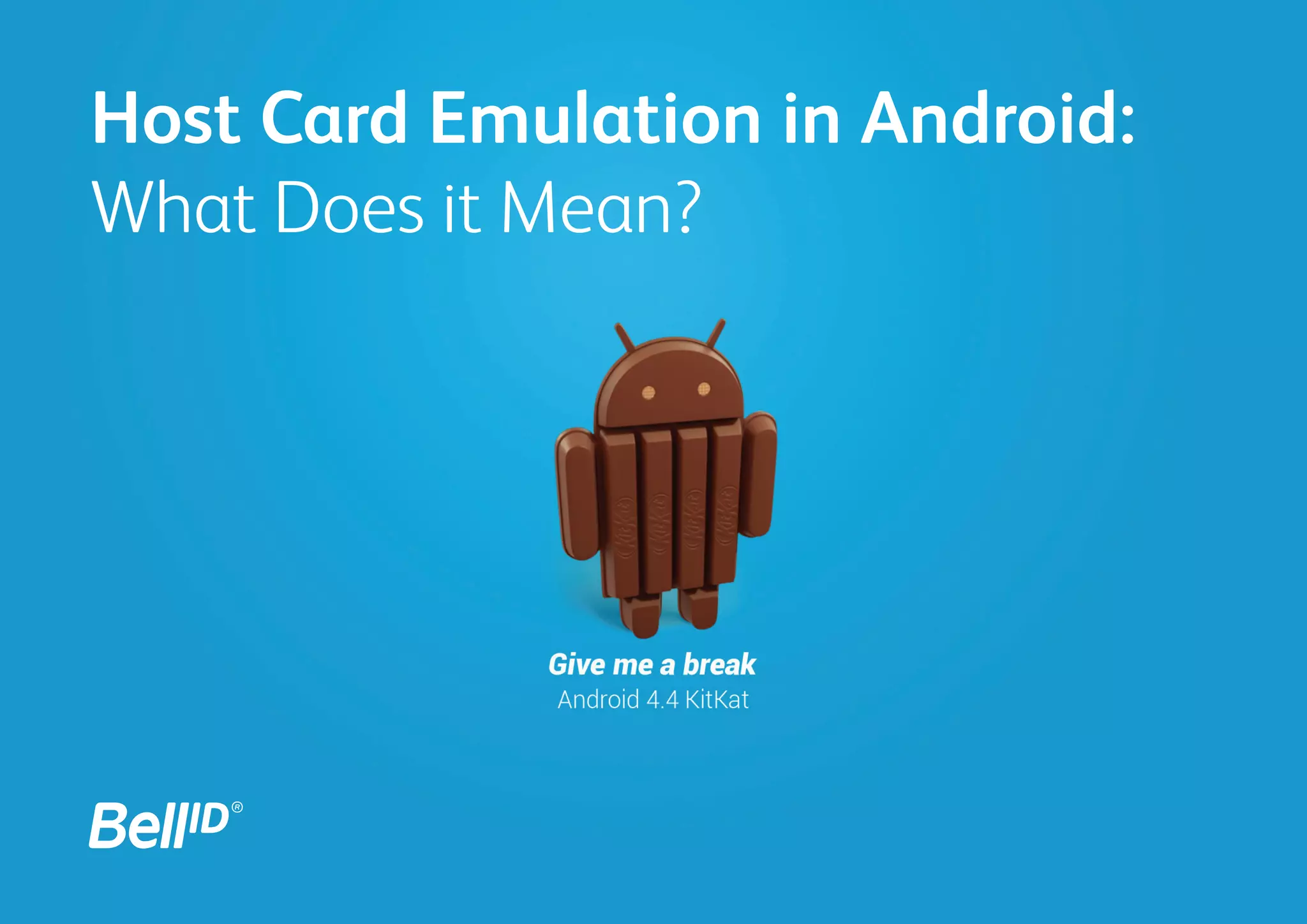
Android KitKat 4.4
spreads a new buzz around
Host Card Emulation (HCE).
HCE is wind in the sails
of near field communication
(NFC) based transactions.
But what exactly is HCE?
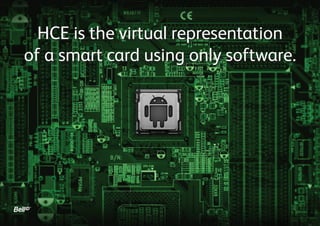
HCE is the virtual representation
of a smart card using only software.
It allows a mobile device
to emulate a payment
card and make NFC
mobile payments.
Transaction credentials
no longer need to be
stored inside the phone
(the secure element)
but can be hosted
remotely: in the cloud.
This offers more control
and direct access to
application issuers;
it eases the use of NFC.
Android dominates 81%*
of global smartphone
shipments.

*3rd quarter of 2013: http://bit.ly/1cku3FI
Service providers are now able
to offer direct services to a
large majority of smartphone
users.
What does all this mean?
HCE is now a viable alternative
for many card emulation projects
since no physical secure element
is needed in the phone.
Service providers now have
more available business models
and partners to work with.
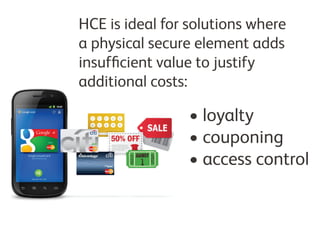
HCE is ideal for solutions where
a physical secure element adds
insufficient value to justify
additional costs:

•	loyalty
•	couponing
•	access control
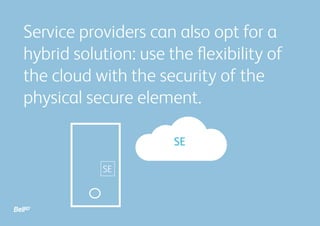
Service providers can also opt for a
hybrid solution: use the flexibility of
the cloud with the security of the
physical secure element.
SE
SE
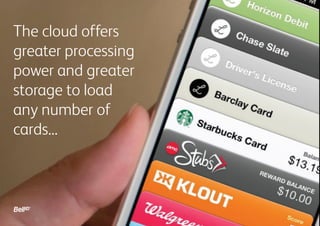
The cloud offers
greater processing
power and greater
storage to load
any number of
cards...
...while the physical
secure element
contains the levels
of accepted security.
Interested to learn more?
				 Watch our video!
Martin Cox
Global Head of Sales
m.cox@bellid.com

With over 20 years of expertise, Bell ID is considered the world’s leading provider of
lifecycle management solutions for tokens (e.g. smart cards, mobile NFC phones)
deployed in single and multi-application programmes.
www.bellid.com

Host Card Emulation in Android: What Does it Mean?

  • 1.
    Host Card Emulationin Android: What Does it Mean?
  • 2.
    Android KitKat 4.4 spreadsa new buzz around Host Card Emulation (HCE).
  • 3.
    HCE is windin the sails of near field communication (NFC) based transactions.
  • 4.
  • 5.
    HCE is thevirtual representation of a smart card using only software.
  • 6.
    It allows amobile device to emulate a payment card and make NFC mobile payments.
  • 7.
    Transaction credentials no longerneed to be stored inside the phone (the secure element) but can be hosted remotely: in the cloud.
  • 8.
    This offers morecontrol and direct access to application issuers; it eases the use of NFC.
  • 9.
    Android dominates 81%* ofglobal smartphone shipments. *3rd quarter of 2013: http://bit.ly/1cku3FI
  • 10.
    Service providers arenow able to offer direct services to a large majority of smartphone users.
  • 11.
    What does allthis mean?
  • 12.
    HCE is nowa viable alternative for many card emulation projects since no physical secure element is needed in the phone.
  • 13.
    Service providers nowhave more available business models and partners to work with.
  • 14.
    HCE is idealfor solutions where a physical secure element adds insufficient value to justify additional costs: • loyalty • couponing • access control
  • 15.
    Service providers canalso opt for a hybrid solution: use the flexibility of the cloud with the security of the physical secure element. SE SE
  • 16.
    The cloud offers greaterprocessing power and greater storage to load any number of cards...
  • 17.
    ...while the physical secureelement contains the levels of accepted security.
  • 18.
    Interested to learnmore? Watch our video!
  • 19.
    Martin Cox Global Headof Sales m.cox@bellid.com With over 20 years of expertise, Bell ID is considered the world’s leading provider of lifecycle management solutions for tokens (e.g. smart cards, mobile NFC phones) deployed in single and multi-application programmes. www.bellid.com