










Let’s play
Which
is
Which?
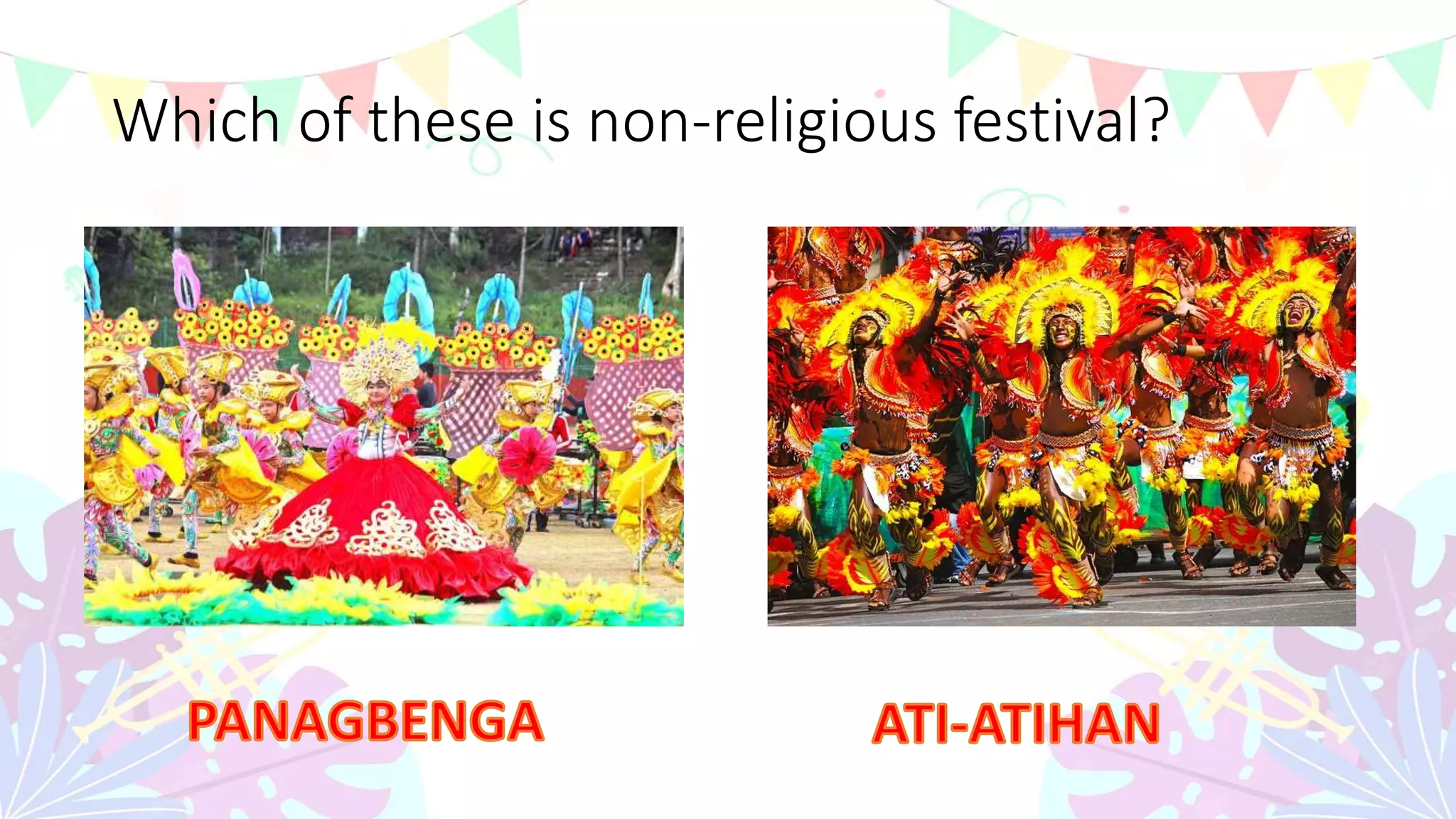
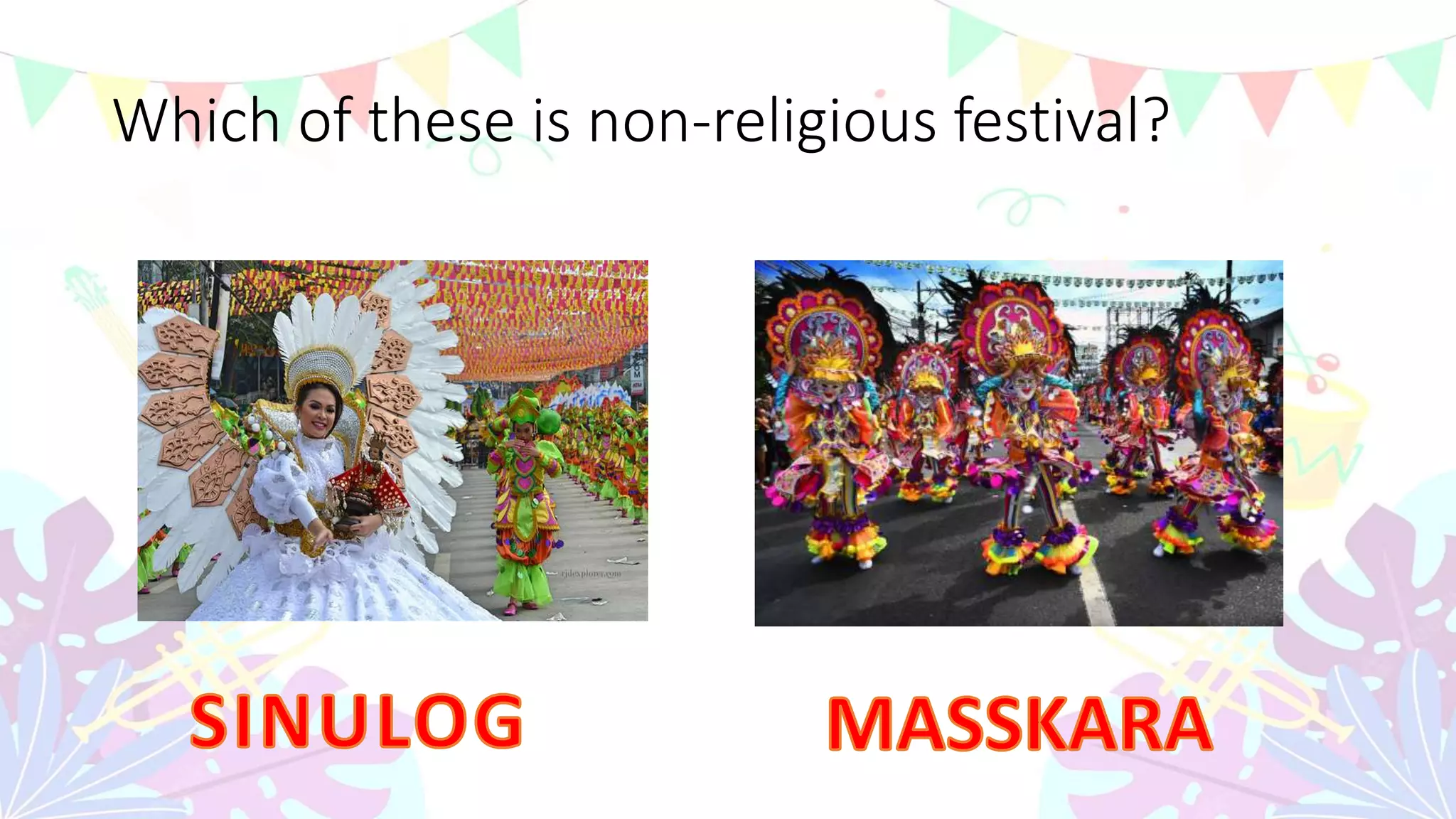
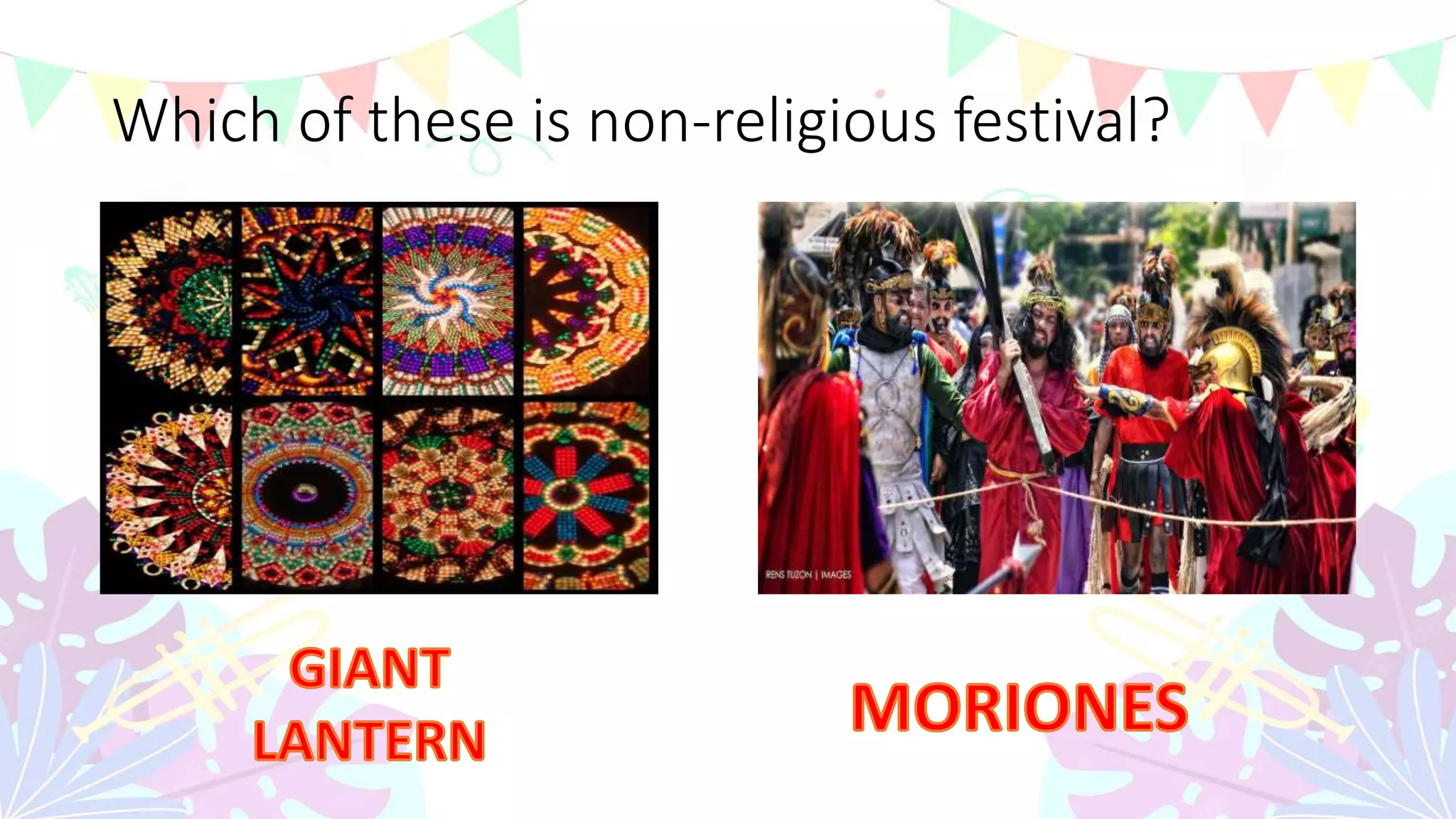
Which of these is non-religious festival?
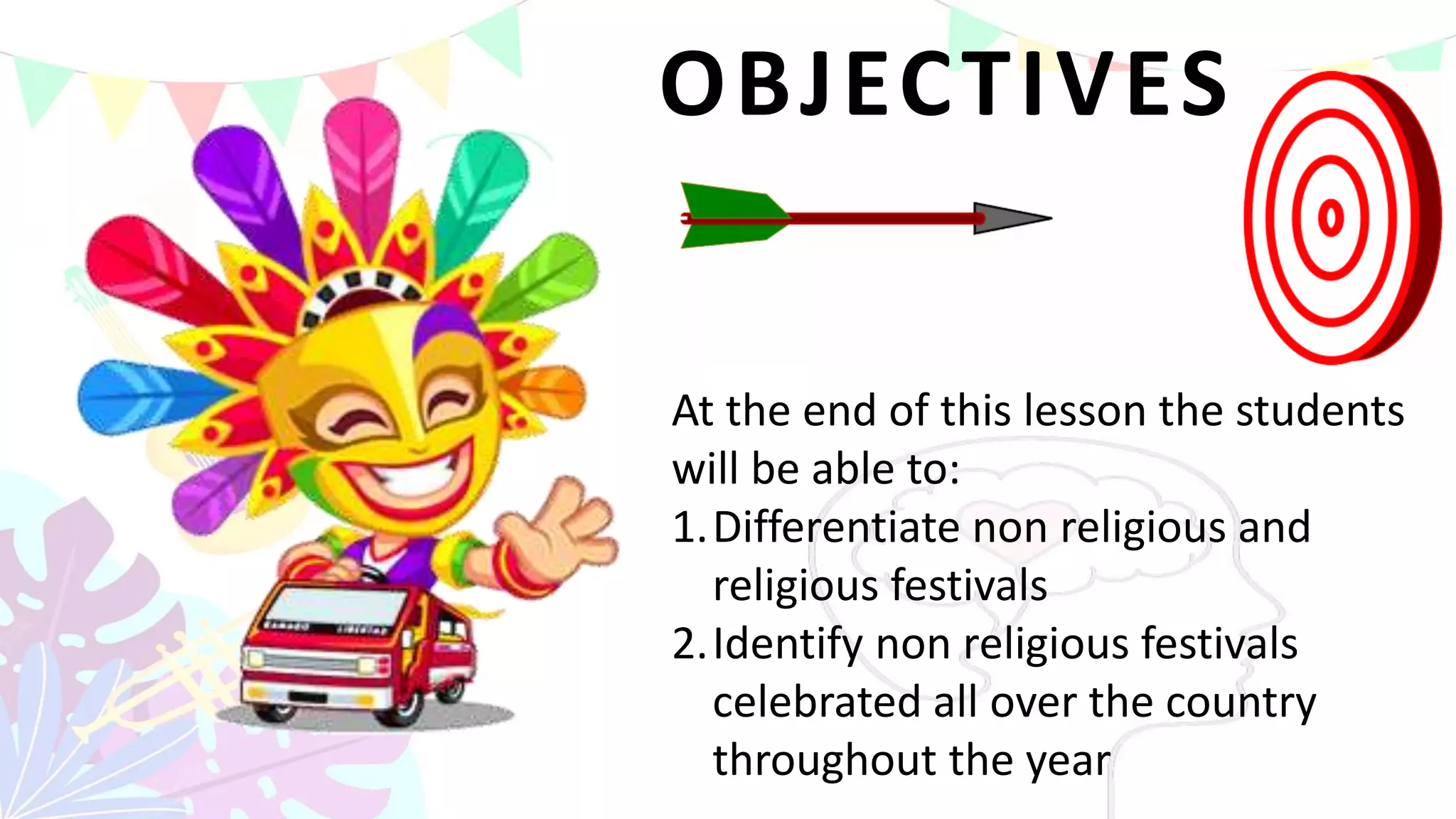
At the end of this lesson the students
will be able to:
1.Differentiate non religious and
religious festivals
2.Identify non religious festivals
celebrated all over the country
throughout the year
OBJECTIVES
F E S T I V A L D A N C E S
•are cultural dances performed to the
beats of instruments, usually percussion,
by a community sharing the same
culture.
•These are usually done in honor of a
Patrol Saint or in the thanks Giving of a
bountiful harvest.
Religious Festivals
• A special occasion of
feasting and celebration,
feasts have long been used
by religious followers to
honor God.
Non-Religious Festivals
• is a festival with a group
of people, community due
to tradition and culture.
Non-Religious Festivals
• form of thanks giving
celebration, or it is called
as ‘’pasasalamat’’
NON RELIGIOUS FESTIVALS
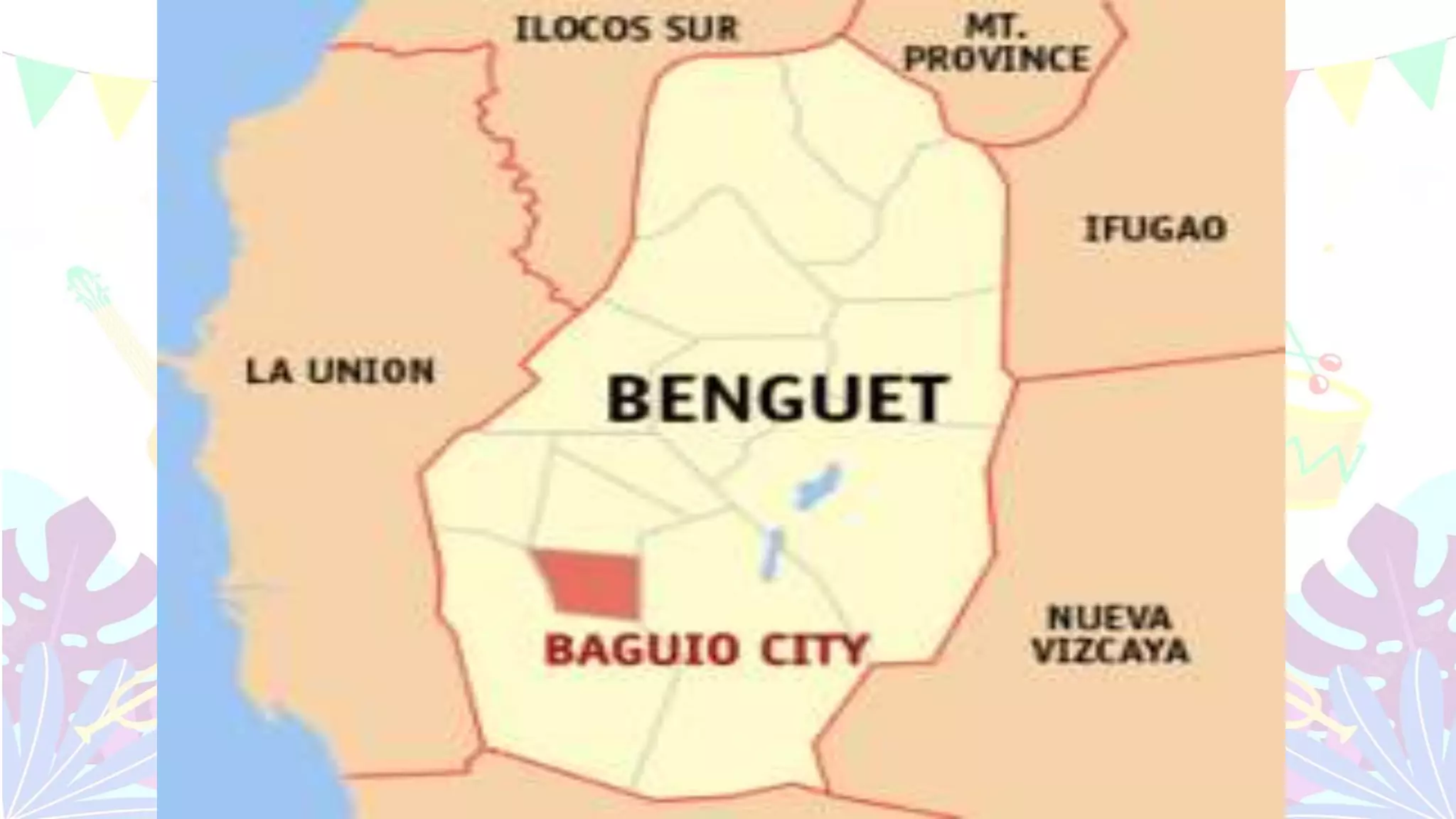
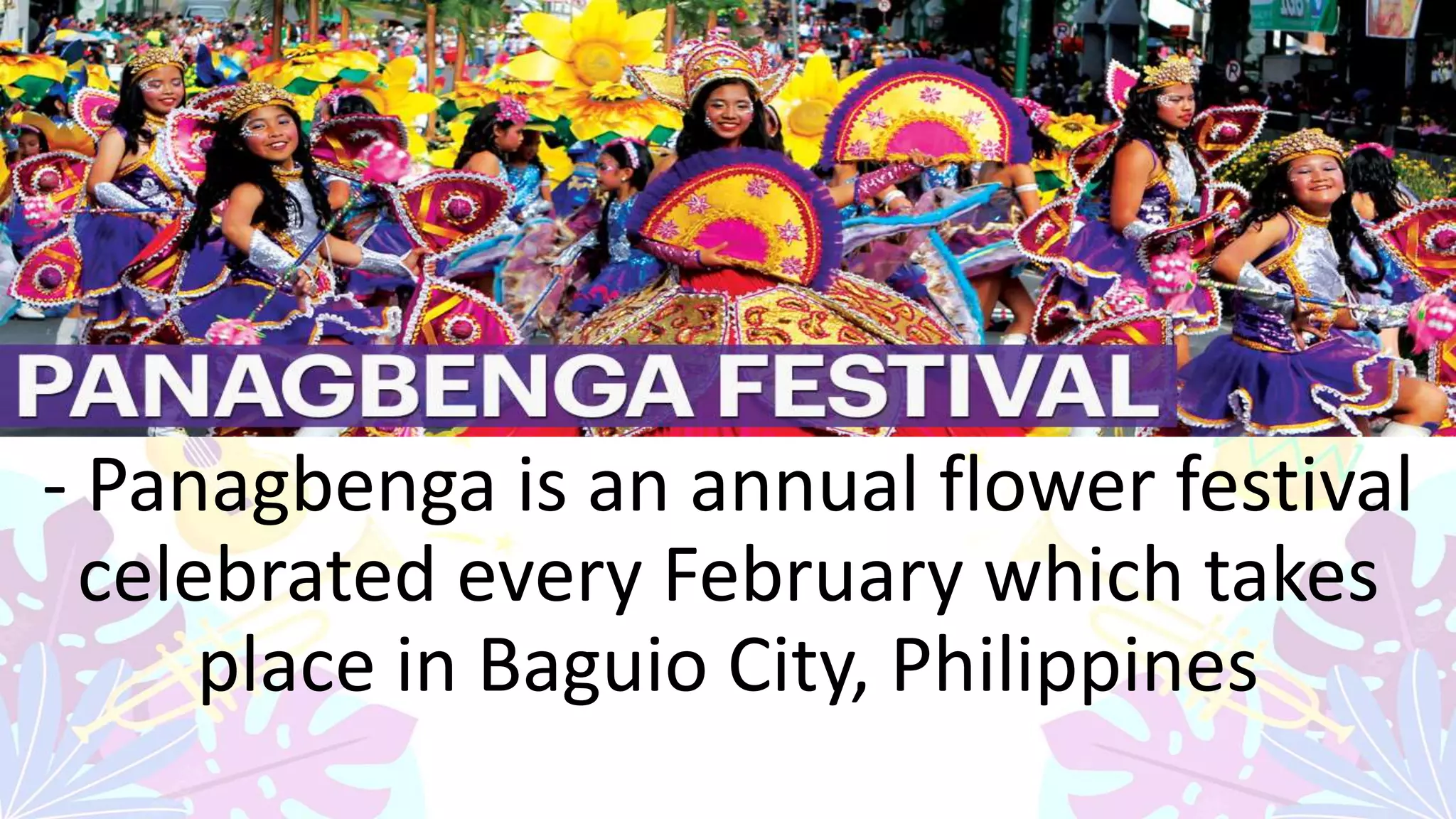
- Panagbenga is an annual flower festival
celebrated every February which takes
place in Baguio City, Philippines
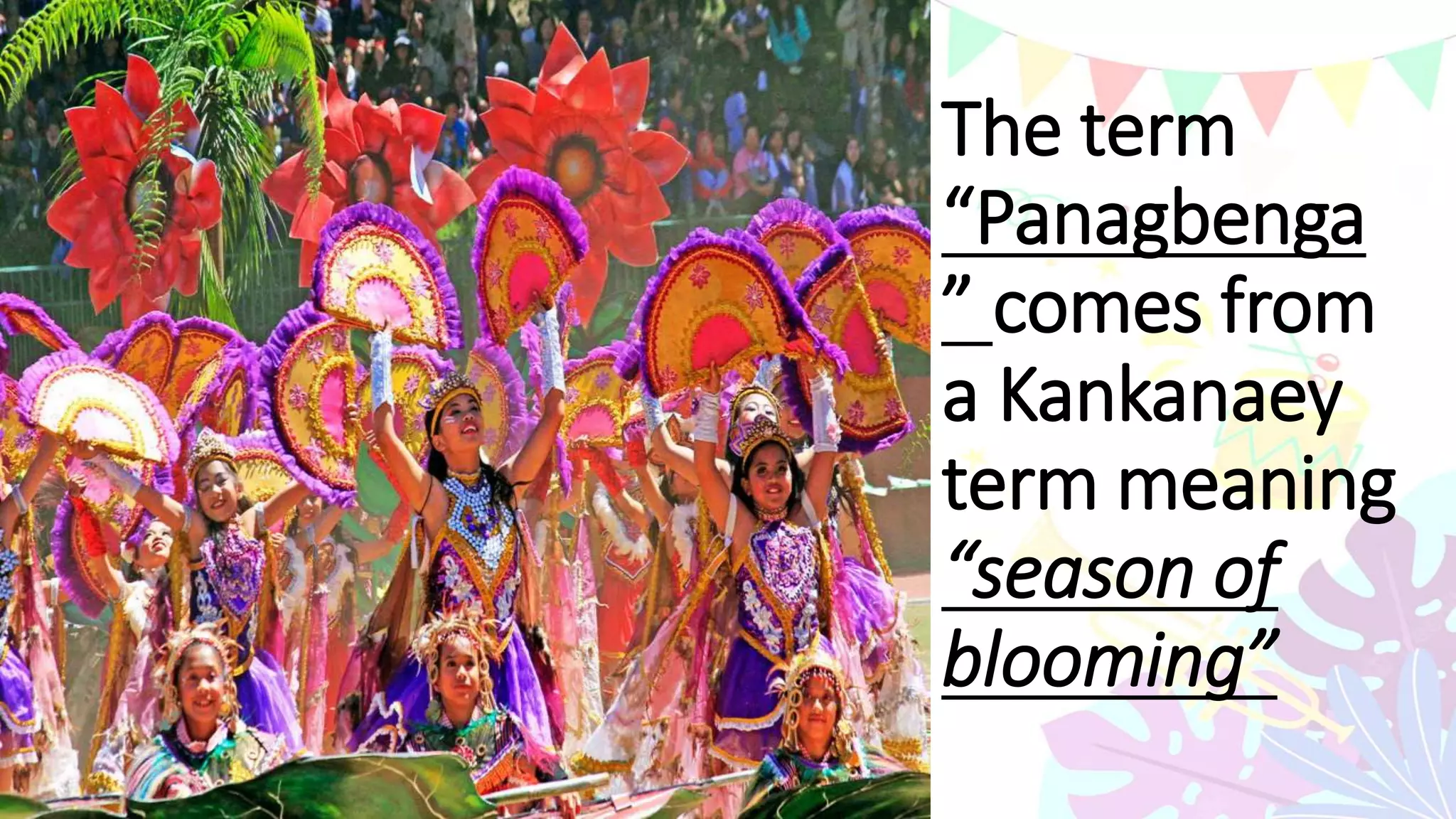
The term
“Panagbenga
” comes from
a Kankanaey
term meaning
“season of
blooming”
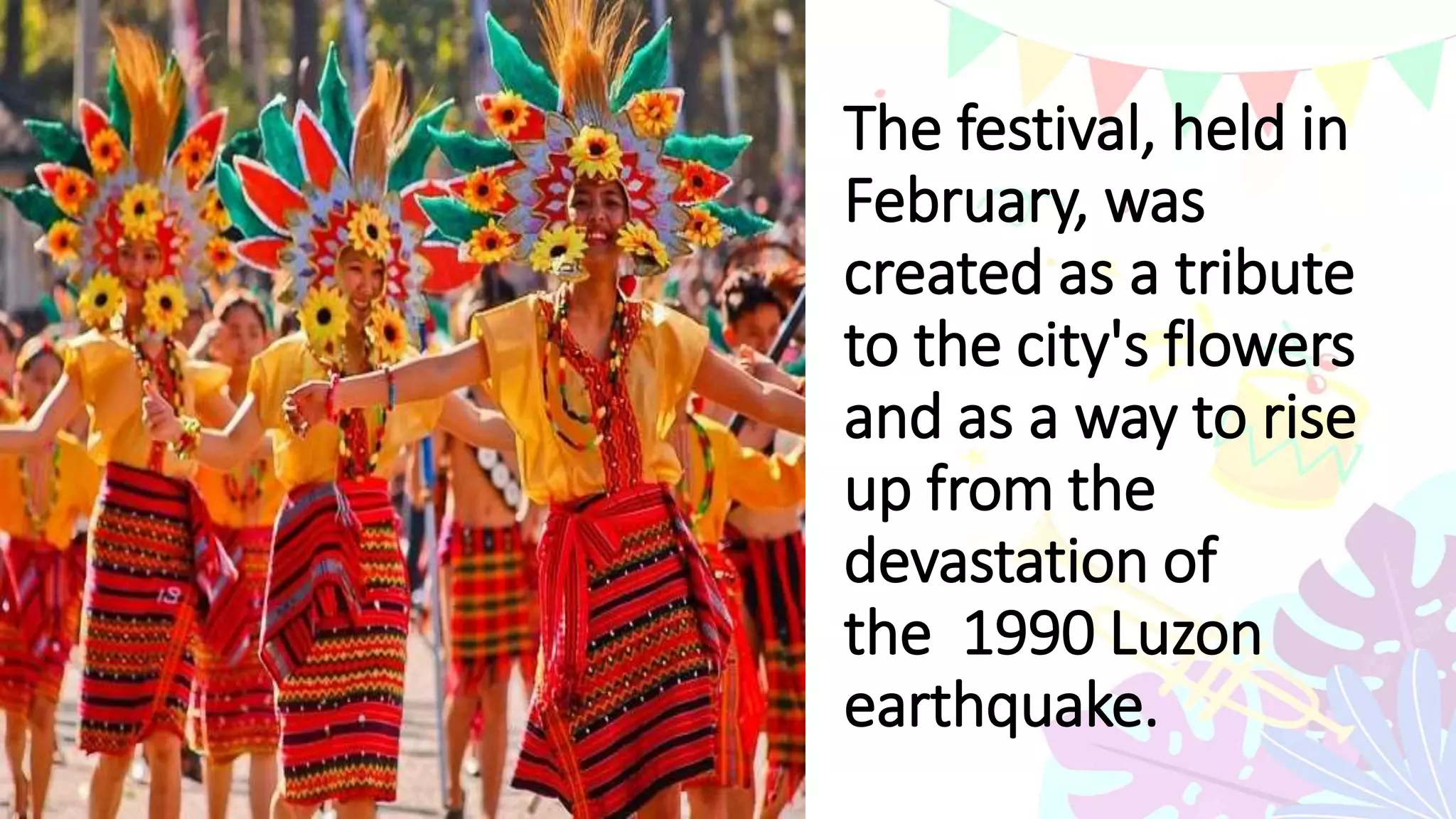
The festival, held in
February, was
created as a tribute
to the city's flowers
and as a way to rise
up from the
devastation of
the 1990 Luzon
earthquake.
-
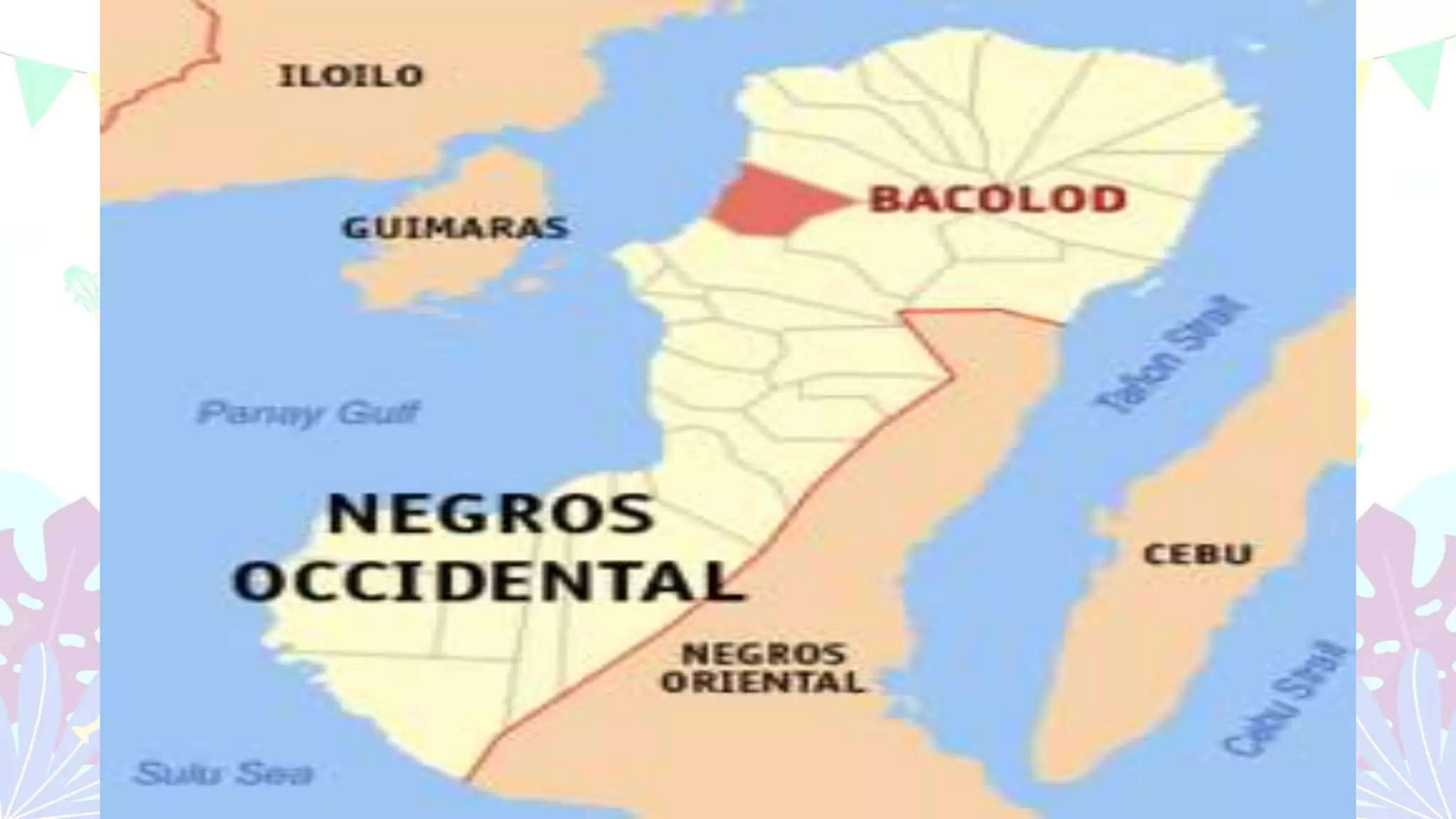
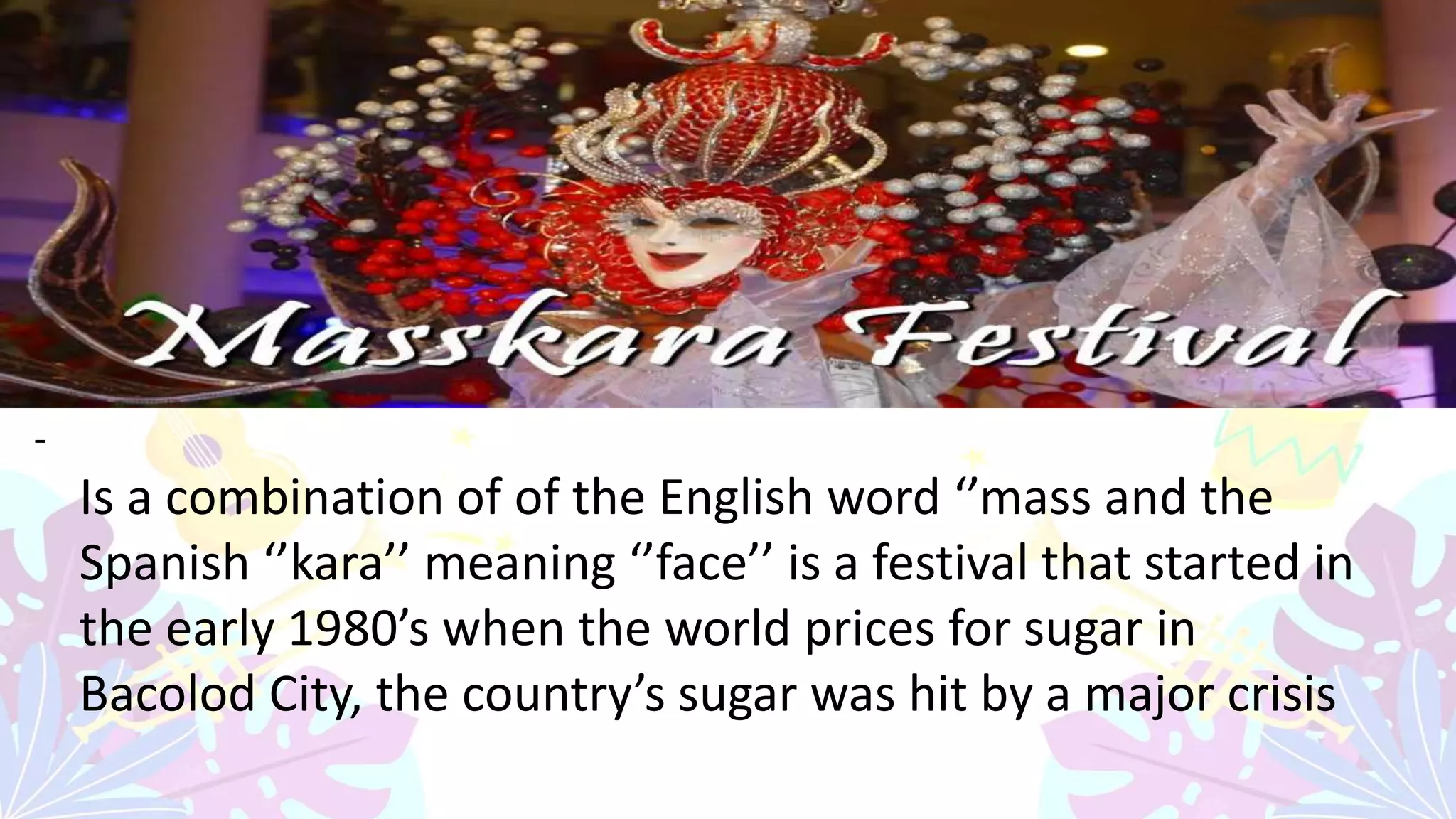
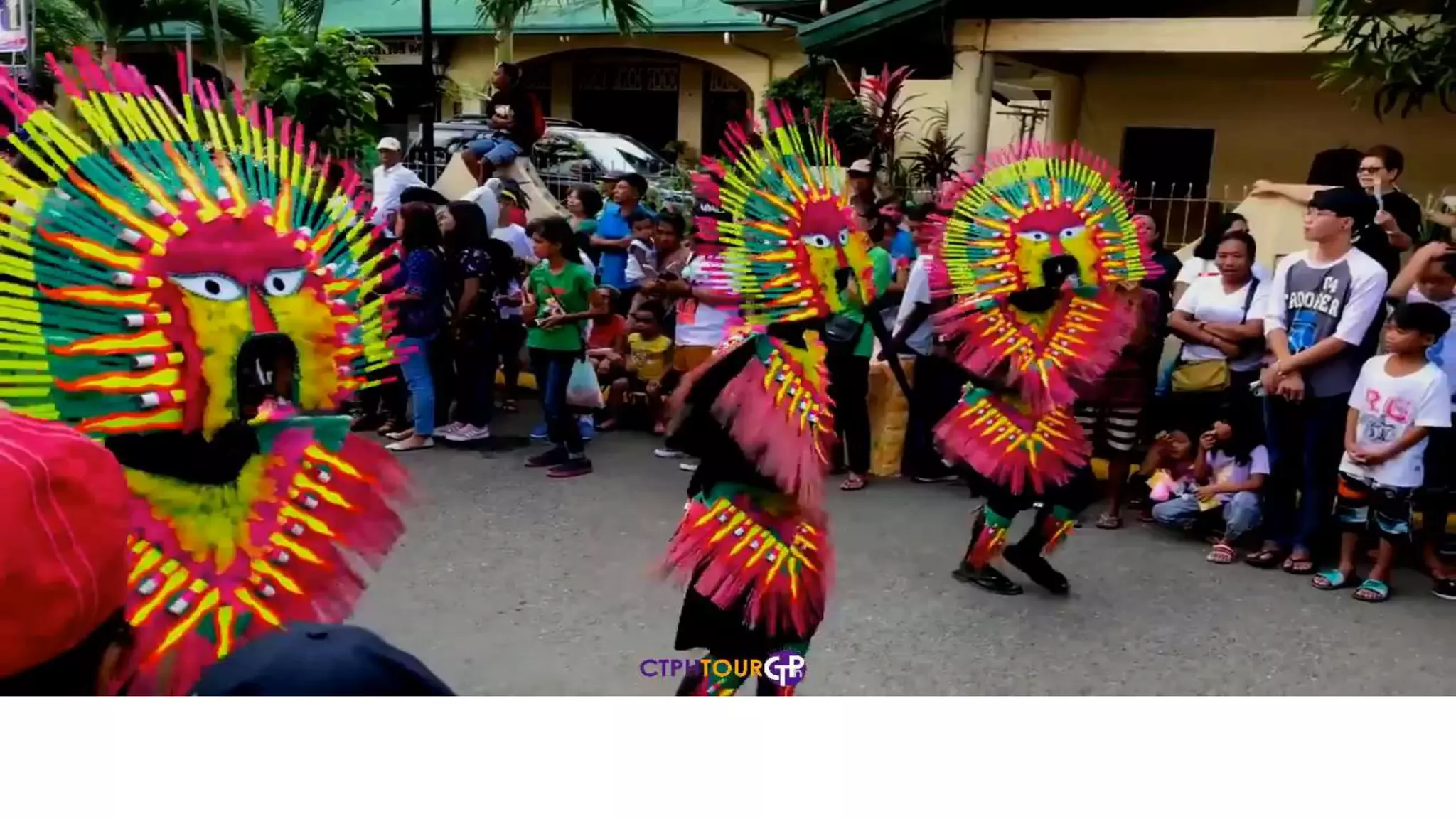
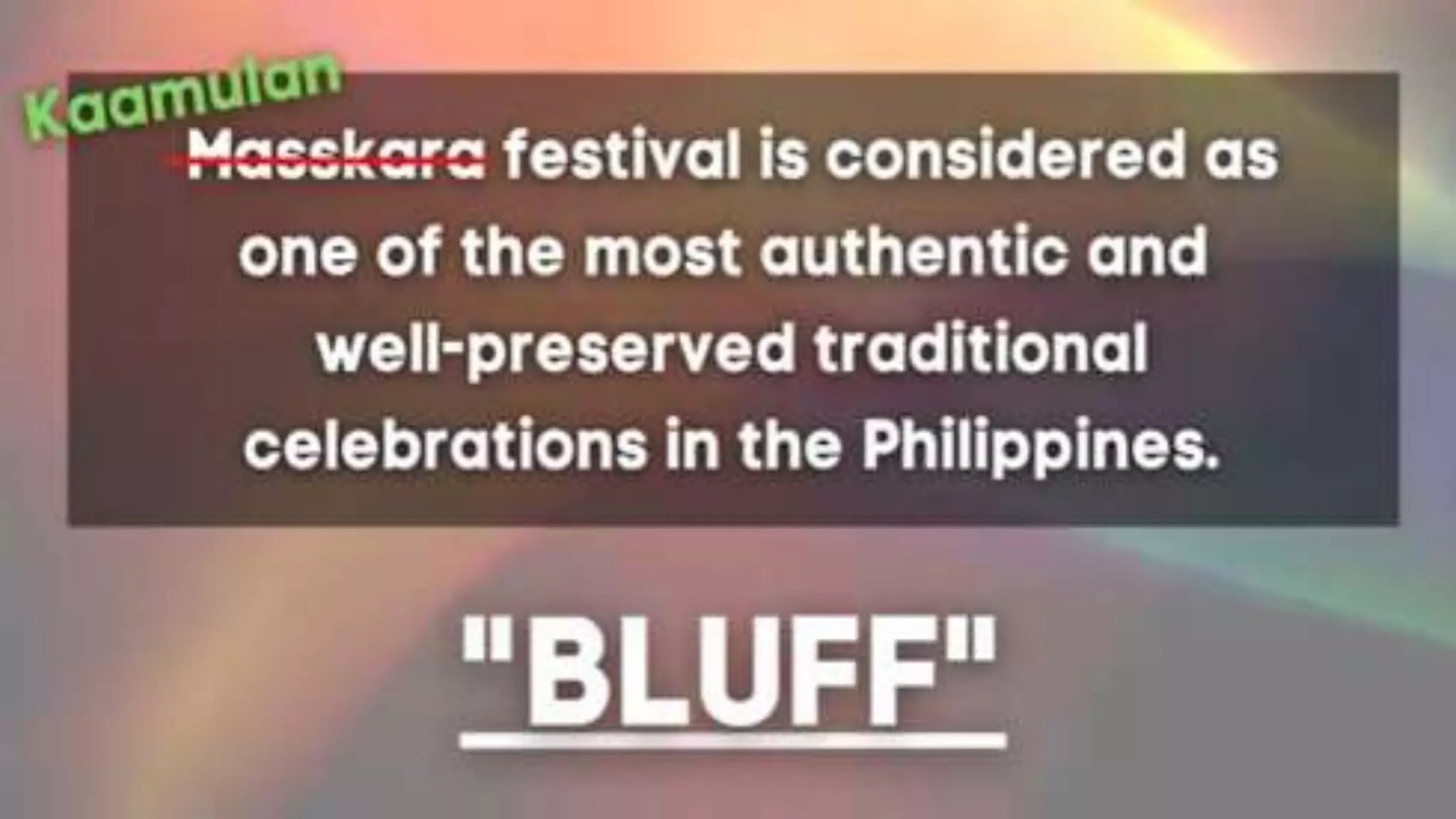
Is a combination of of the English word ‘’mass and the
Spanish ‘’kara’’ meaning ‘’face’’ is a festival that started in
the early 1980’s when the world prices for sugar in
Bacolod City, the country’s sugar was hit by a major crisis
-
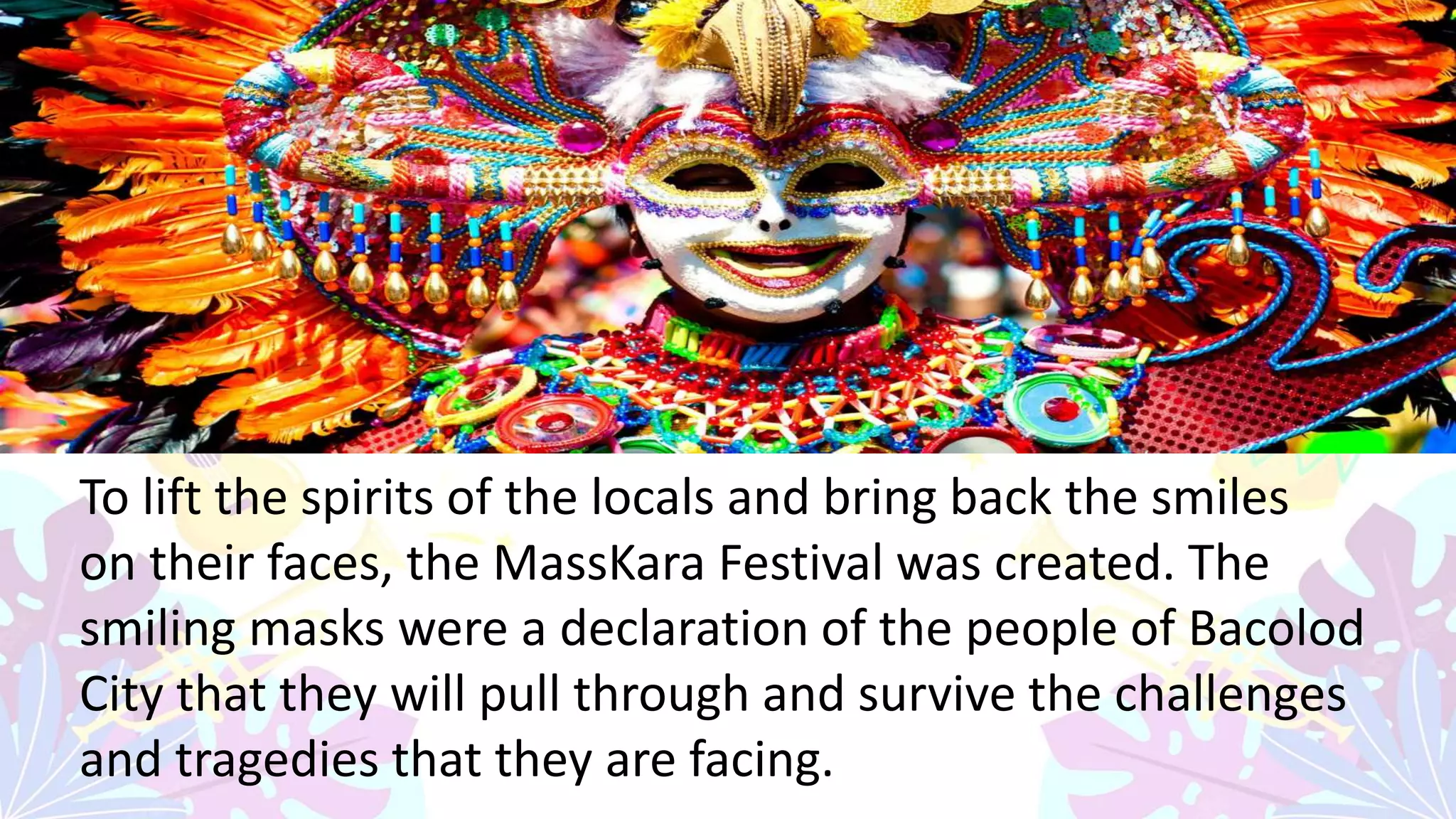
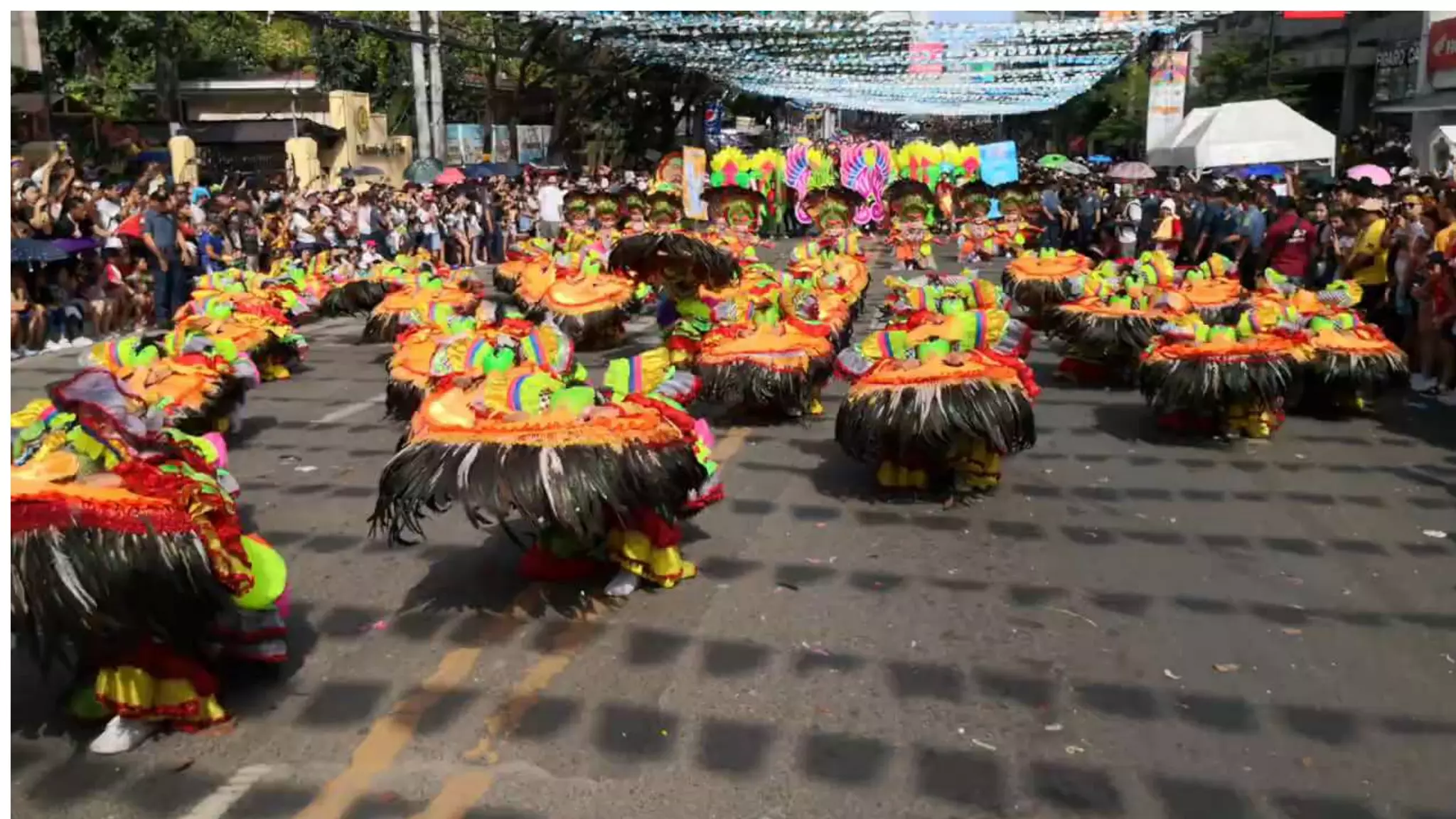
To lift the spirits of the locals and bring back the smiles
on their faces, the MassKara Festival was created. The
smiling masks were a declaration of the people of Bacolod
City that they will pull through and survive the challenges
and tragedies that they are facing.
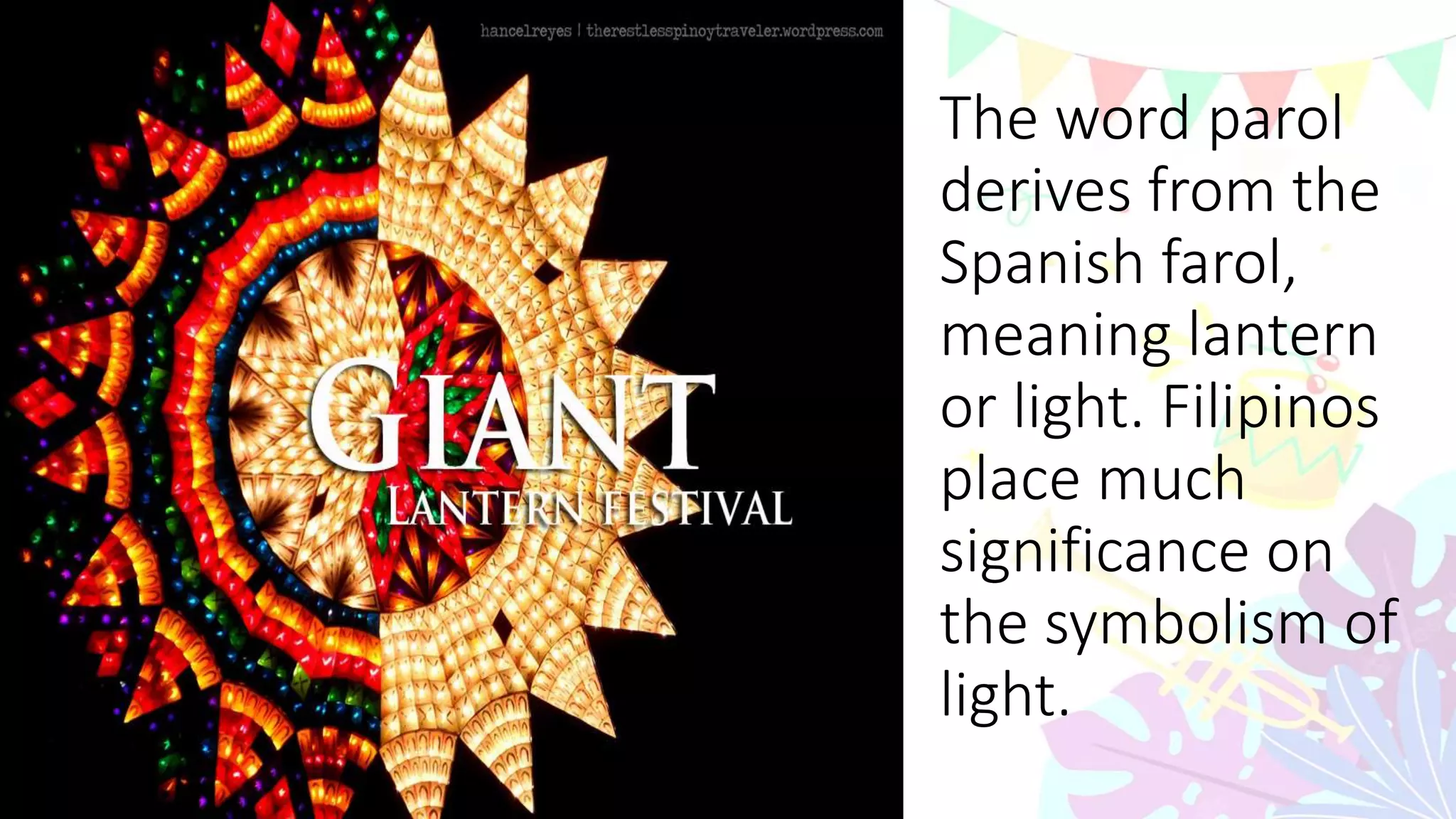
The word parol
derives from the
Spanish farol,
meaning lantern
or light. Filipinos
place much
significance on
the symbolism of
light.
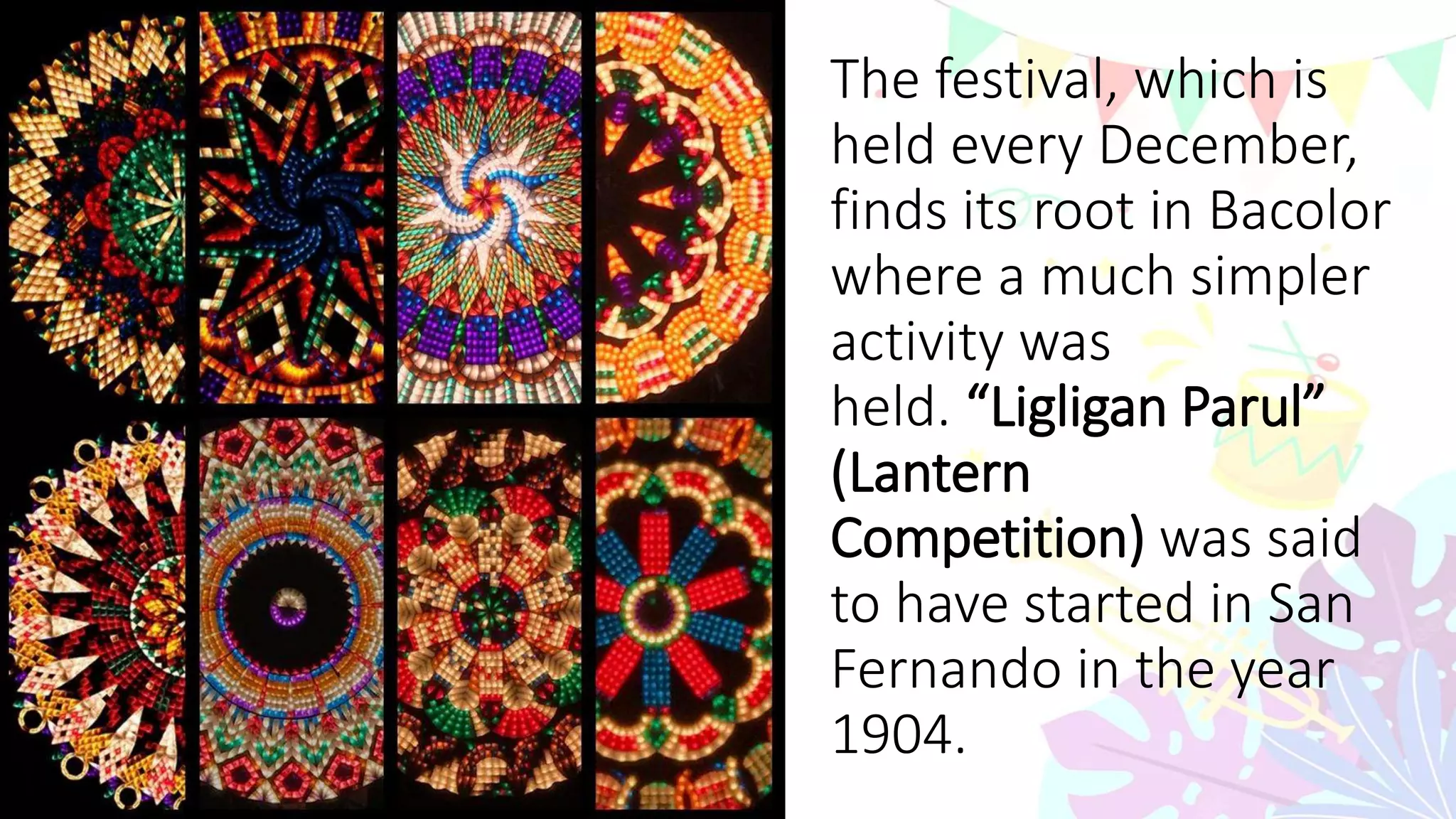
The festival, which is
held every December,
finds its root in Bacolor
where a much simpler
activity was
held. “Ligligan Parul”
(Lantern
Competition) was said
to have started in San
Fernando in the year
1904.
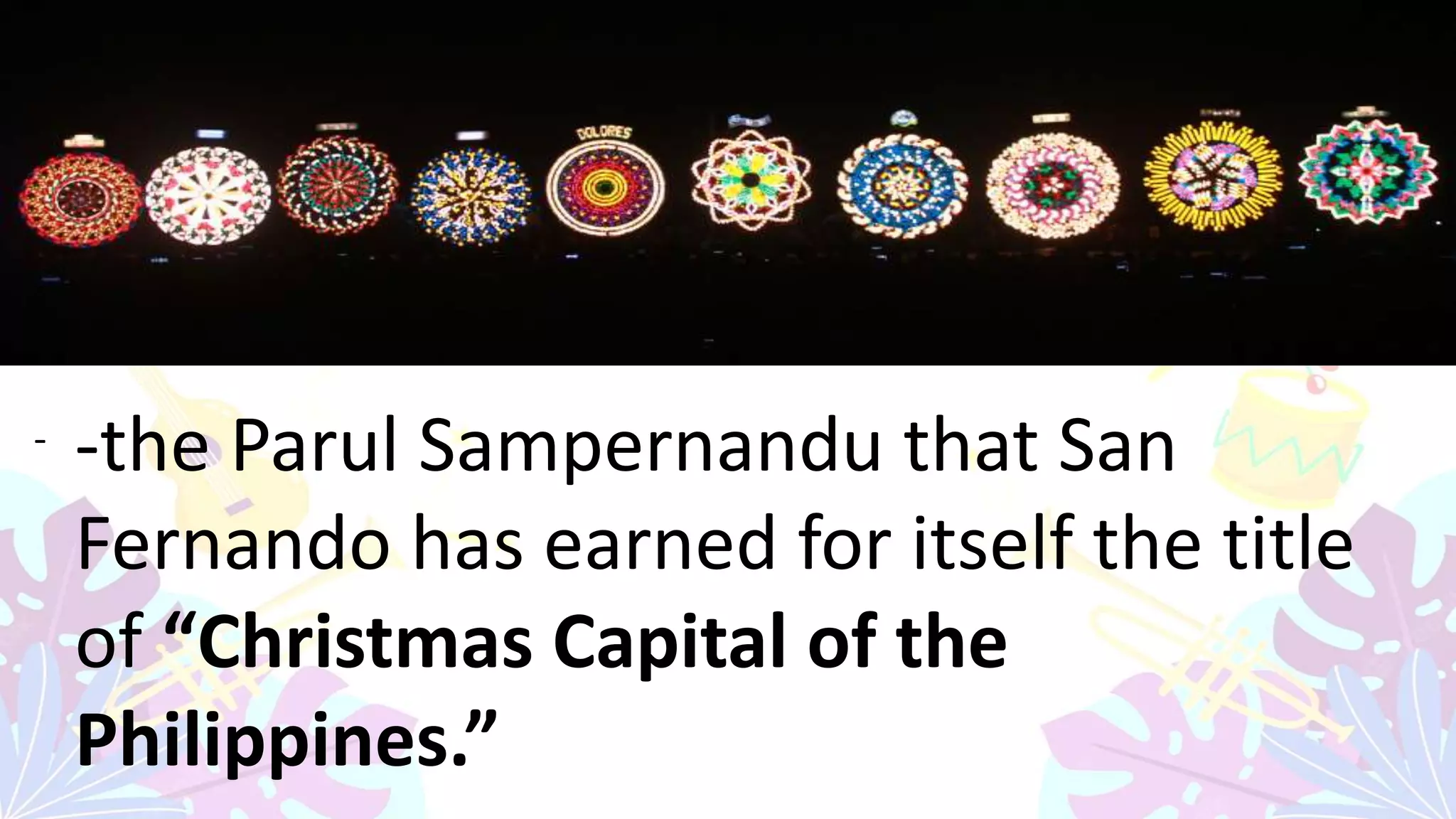
- -the Parul Sampernandu that San
Fernando has earned for itself the title
of “Christmas Capital of the
Philippines.”
10 BEST Religious and Non
Religious Festivals in the
Philippines
G E N E R A L I Z A T I O N
1. What do you think is the
importance of having a Festival
Dance in a community?
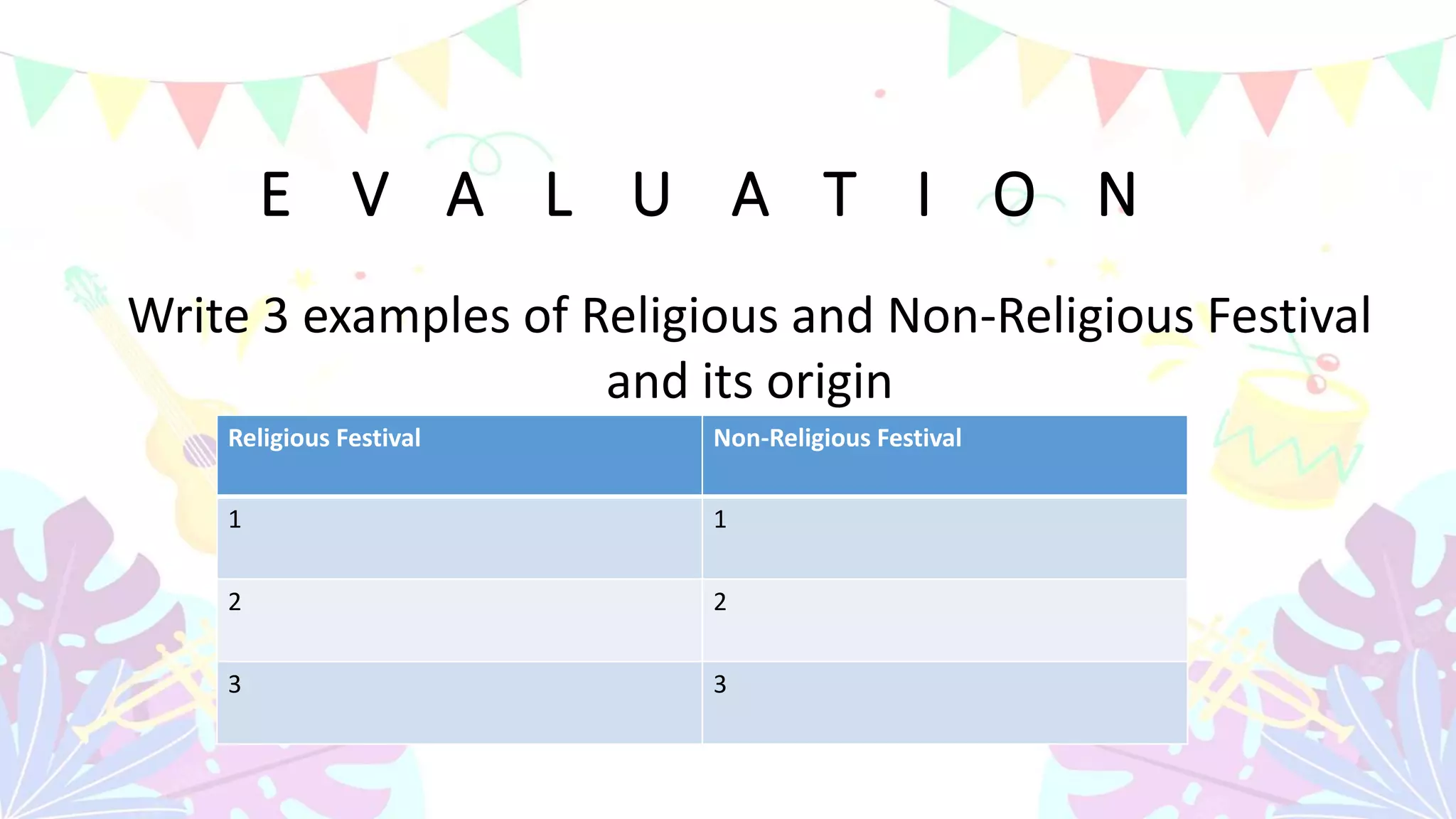
E V A L U A T I O N
Write 3 examples of Religious and Non-Religious Festival
and its origin
Religious Festival Non-Religious Festival
1 1
2 2
3 3
A G R E E M E N T
• Read about Representative
Philippine Theatrical Forms

Non- Religious Festivals.pptx

  • 2.
  • 3.
    Which of theseis non-religious festival?
  • 4.
    Which of theseis non-religious festival?
  • 5.
    Which of theseis non-religious festival?
  • 6.
    At the endof this lesson the students will be able to: 1.Differentiate non religious and religious festivals 2.Identify non religious festivals celebrated all over the country throughout the year OBJECTIVES
  • 8.
    F E ST I V A L D A N C E S •are cultural dances performed to the beats of instruments, usually percussion, by a community sharing the same culture. •These are usually done in honor of a Patrol Saint or in the thanks Giving of a bountiful harvest.
  • 9.
    Religious Festivals • Aspecial occasion of feasting and celebration, feasts have long been used by religious followers to honor God.
  • 10.
    Non-Religious Festivals • isa festival with a group of people, community due to tradition and culture.
  • 11.
    Non-Religious Festivals • formof thanks giving celebration, or it is called as ‘’pasasalamat’’
  • 12.
  • 15.
    - Panagbenga isan annual flower festival celebrated every February which takes place in Baguio City, Philippines
  • 16.
    The term “Panagbenga ” comesfrom a Kankanaey term meaning “season of blooming”
  • 17.
    The festival, heldin February, was created as a tribute to the city's flowers and as a way to rise up from the devastation of the 1990 Luzon earthquake.
  • 21.
    - Is a combinationof of the English word ‘’mass and the Spanish ‘’kara’’ meaning ‘’face’’ is a festival that started in the early 1980’s when the world prices for sugar in Bacolod City, the country’s sugar was hit by a major crisis
  • 22.
    - To lift thespirits of the locals and bring back the smiles on their faces, the MassKara Festival was created. The smiling masks were a declaration of the people of Bacolod City that they will pull through and survive the challenges and tragedies that they are facing.
  • 26.
    The word parol derivesfrom the Spanish farol, meaning lantern or light. Filipinos place much significance on the symbolism of light.
  • 27.
    The festival, whichis held every December, finds its root in Bacolor where a much simpler activity was held. “Ligligan Parul” (Lantern Competition) was said to have started in San Fernando in the year 1904.
  • 28.
    - -the ParulSampernandu that San Fernando has earned for itself the title of “Christmas Capital of the Philippines.”
  • 29.
    10 BEST Religiousand Non Religious Festivals in the Philippines
  • 41.
    G E NE R A L I Z A T I O N 1. What do you think is the importance of having a Festival Dance in a community?
  • 42.
    E V AL U A T I O N Write 3 examples of Religious and Non-Religious Festival and its origin Religious Festival Non-Religious Festival 1 1 2 2 3 3
  • 43.
    A G RE E M E N T • Read about Representative Philippine Theatrical Forms