Server Sent EventsIn Action
Andrei Rusu
May 30th, 2013
Who is eBuddy?
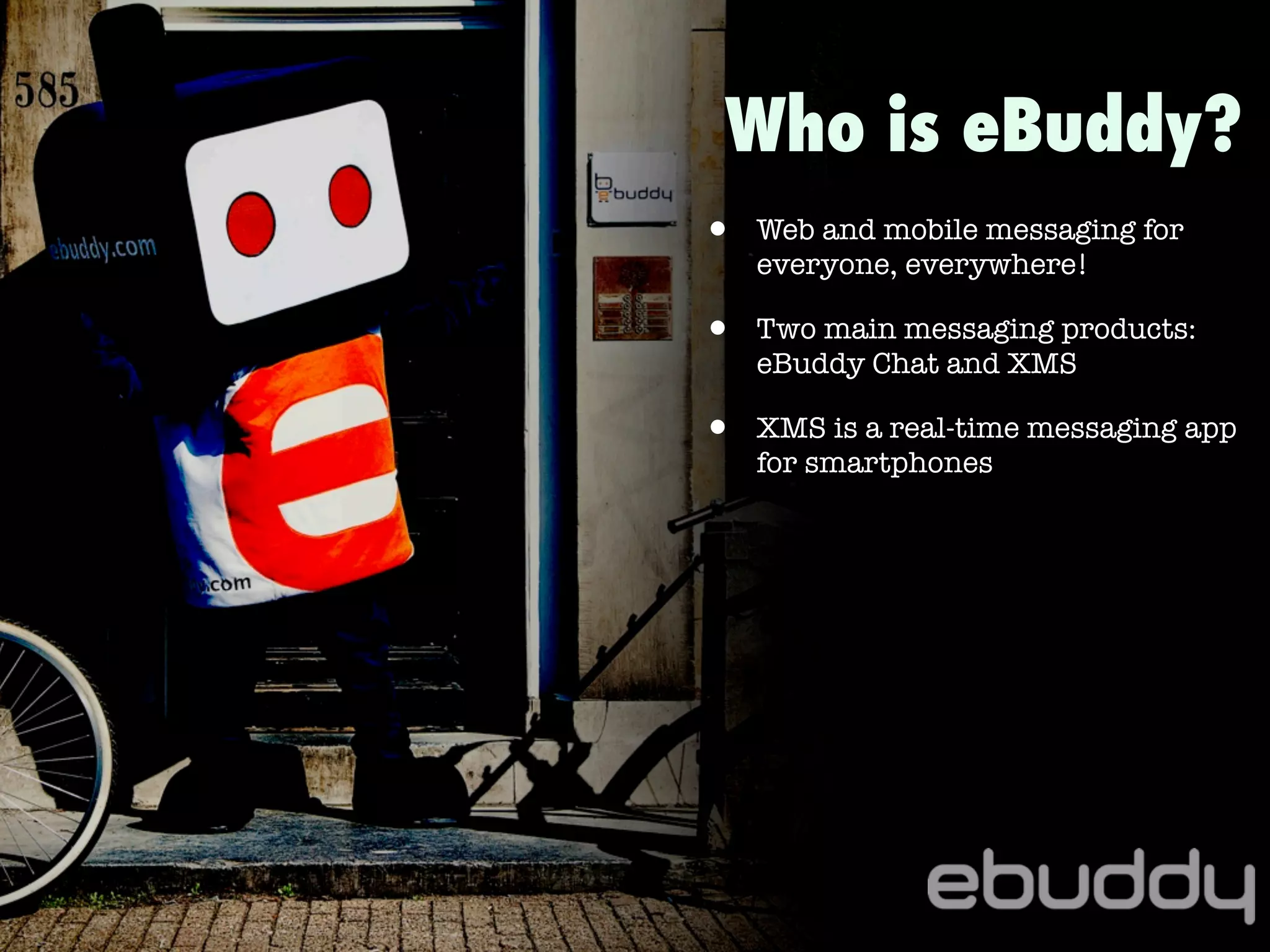
• Web and mobile messaging for
everyone, everywhere!
• Two main messaging products:
eBuddy Chat and XMS
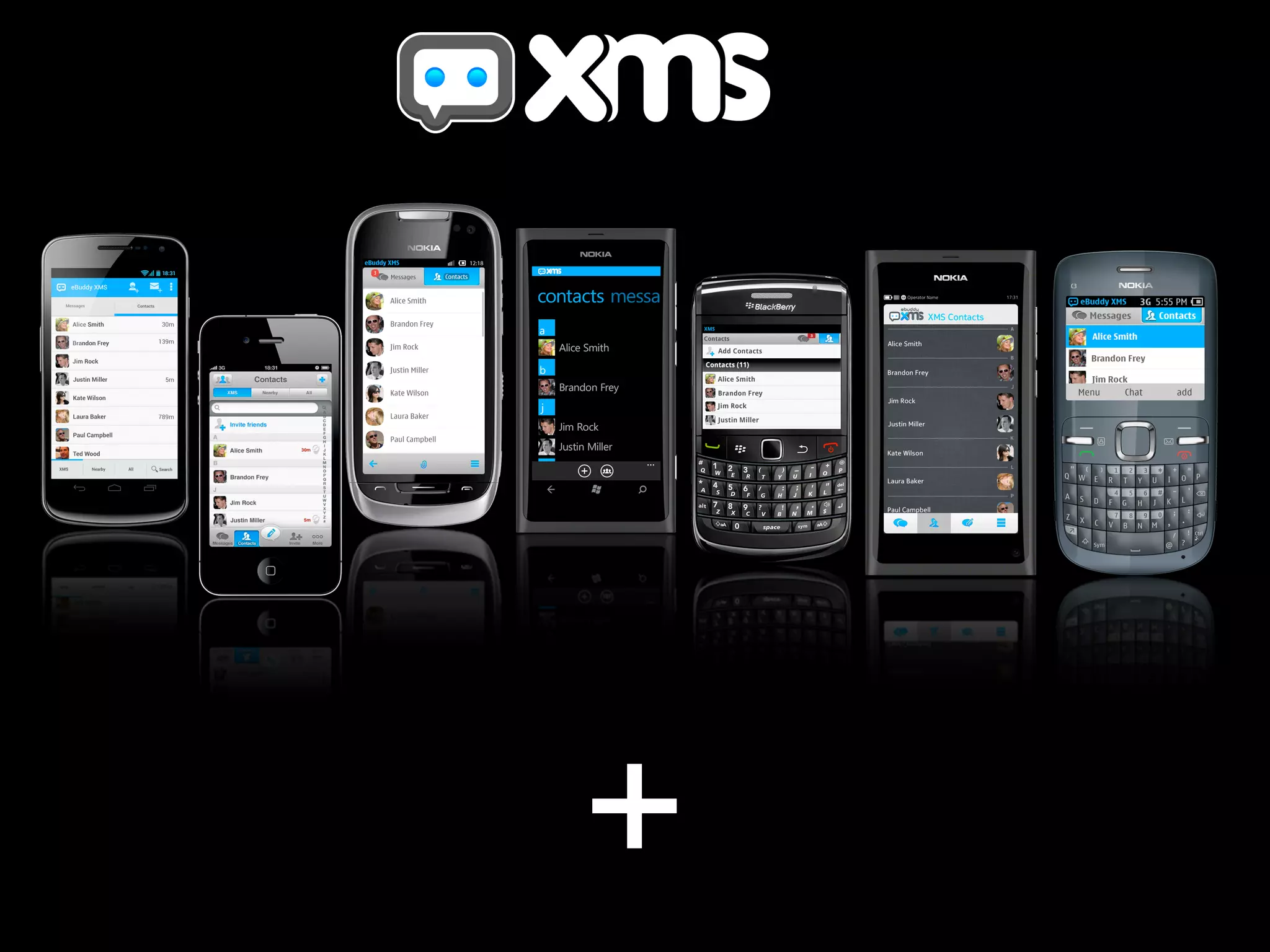
• XMS is a real-time messaging app
for smartphones
+
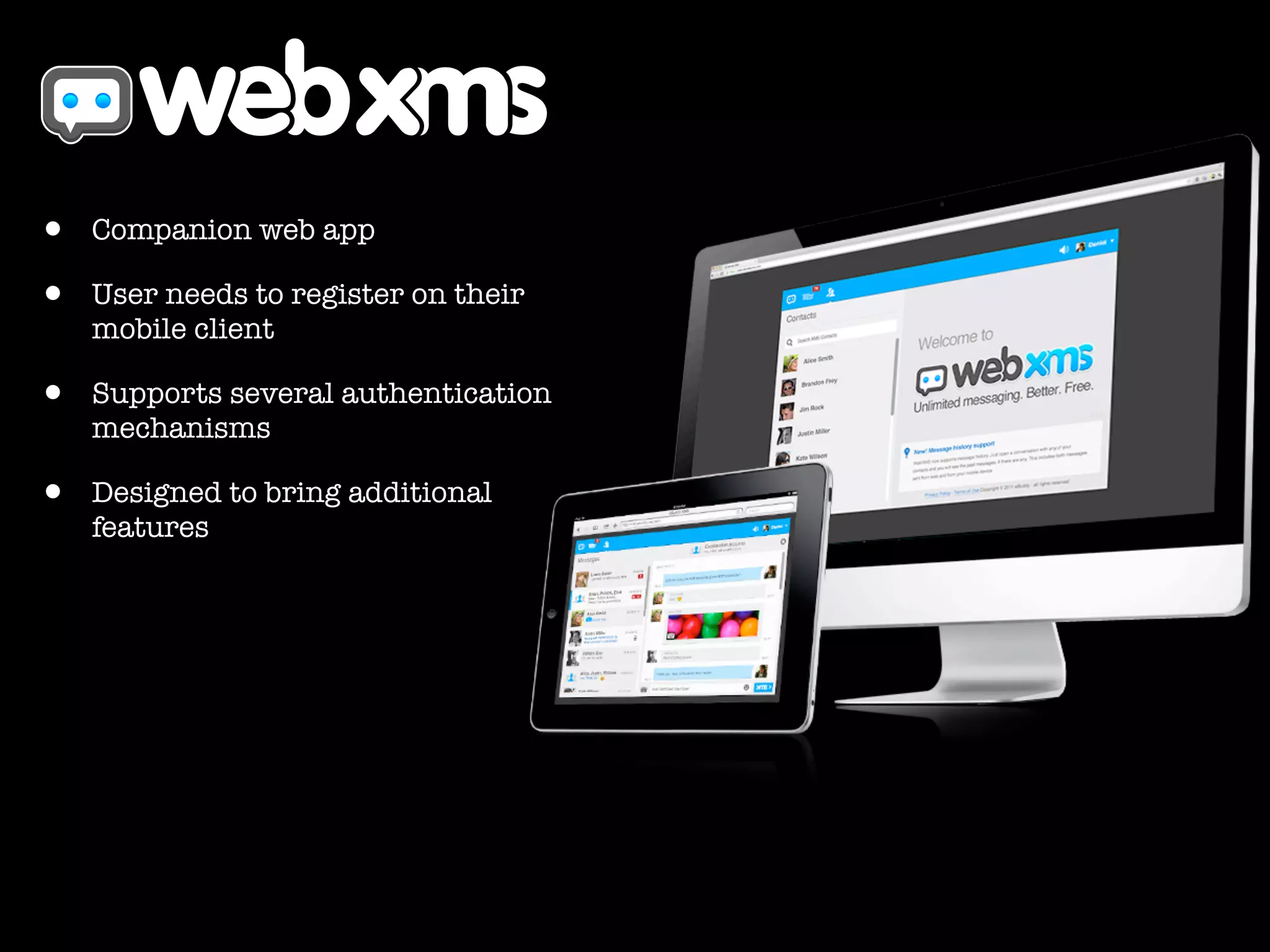
• Companion web app
• User needs to register on their
mobile client
• Supports several authentication
mechanisms
• Designed to bring additional
features
• HTML5 draft specification for implementing
real-time HTTP streaming
• Enables a web browser to receive push-like
notifications from a server
• New EventSource Javascript API
• Implemented in Web XMS - web.xms.me
Server ... what?
Implementation goals
• Improve the scalability of the
application in terms of concurrent
users
• Speedy communication with the
backend service
• Improve the connection handling and
stability
• HTML5 makes us look cool
Real-time communications
The dark days:
• Polling (short / long lived HTTP requests)
• Comet and reverse ajax
• Never-ending IFRAME(s) / script tags
• Flash sockets (since ActionScript 3)
HTML5 to the rescue!
• New connectivity APIs for scalable client-server messaging
• XHR2, WebSockets, Server-Sent Events
• No more iframe or script tag hacks
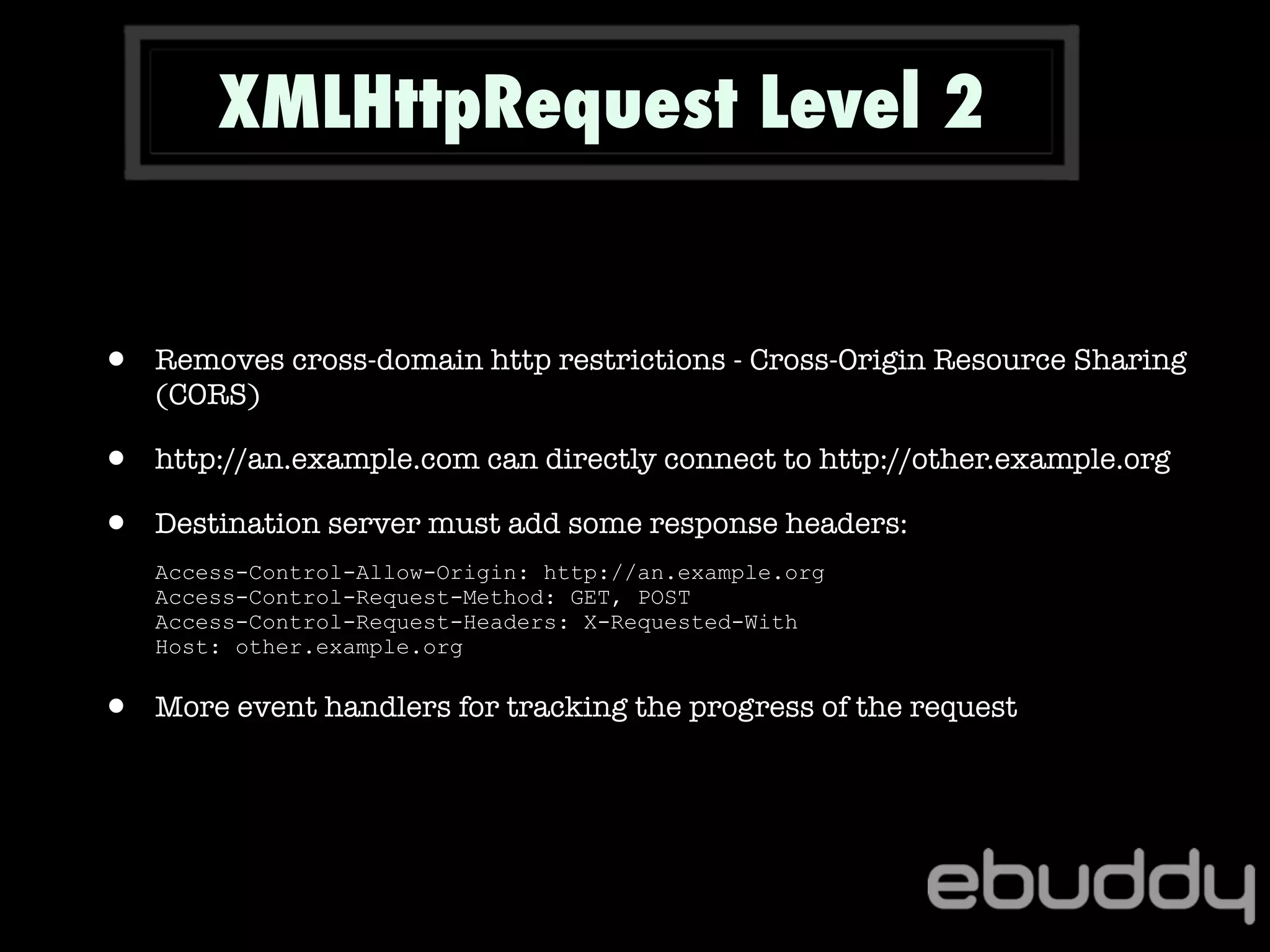
XMLHttpRequest Level 2
• Removes cross-domain http restrictions - Cross-Origin Resource Sharing
(CORS)
• http://an.example.com can directly connect to http://other.example.org
• Destination server must add some response headers:
Access-Control-Allow-Origin: http://an.example.org
Access-Control-Request-Method: GET, POST
Access-Control-Request-Headers: X-Requested-With
Host: other.example.org
• More event handlers for tracking the progress of the request
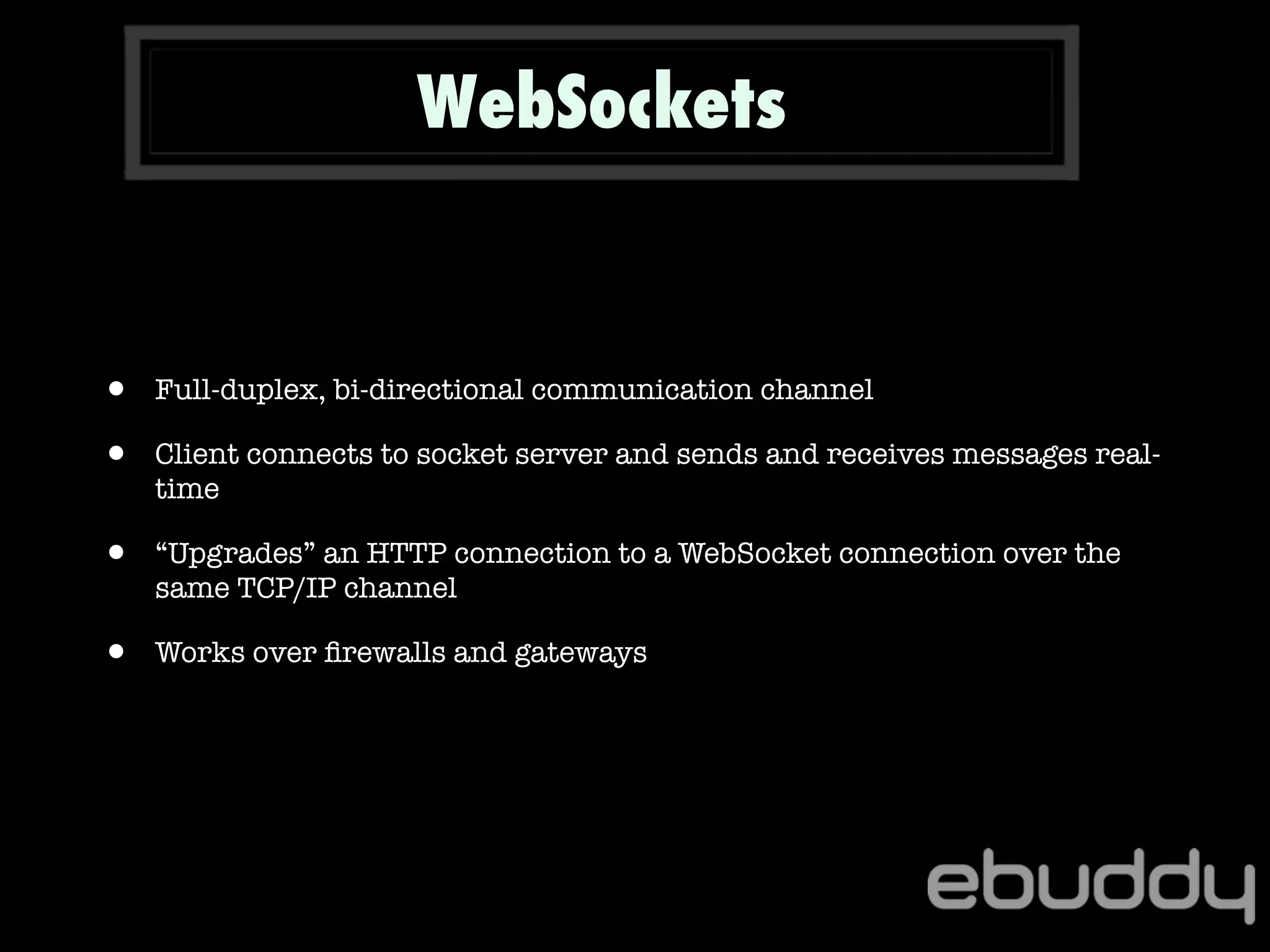
WebSockets
• Full-duplex, bi-directional communication channel
• Client connects to socket server and sends and receives messages real-
time
• “Upgrades” an HTTP connection to a WebSocket connection over the
same TCP/IP channel
• Works over firewalls and gateways
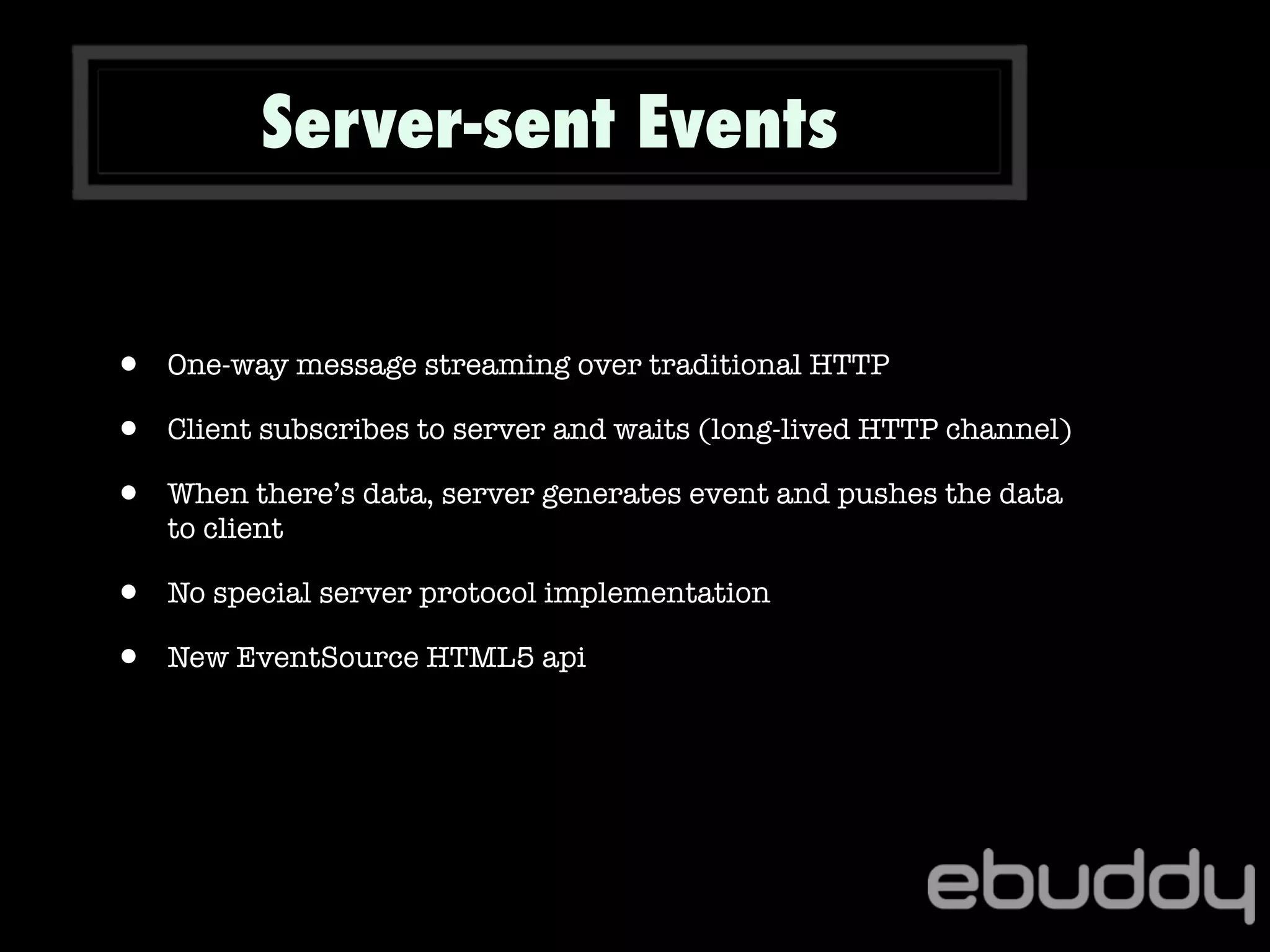
Server-sent Events
• One-way message streaming over traditional HTTP
• Client subscribes to server and waits (long-lived HTTP channel)
• When there’s data, server generates event and pushes the data
to client
• No special server protocol implementation
• New EventSource HTML5 api
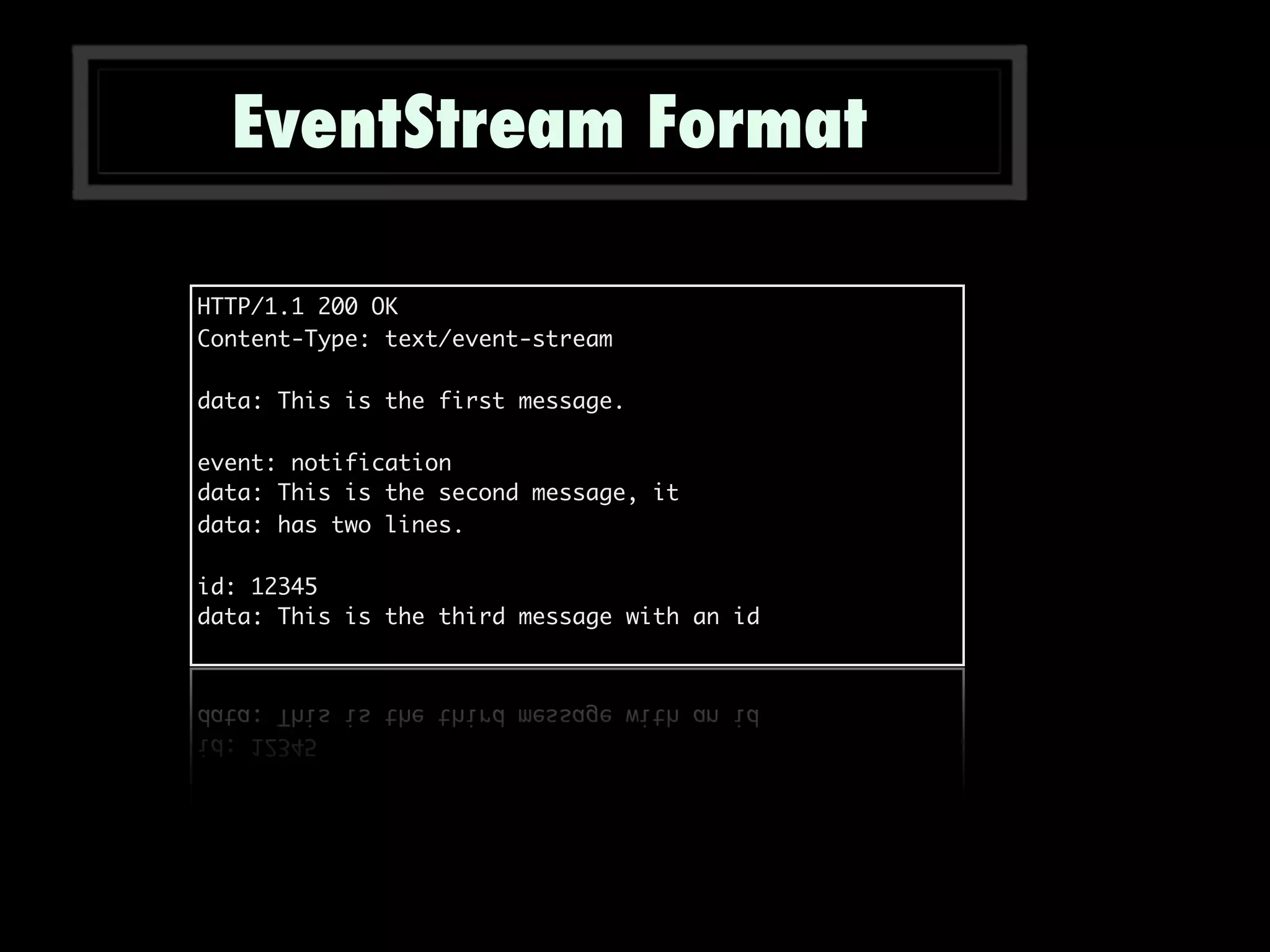
EventStream Format
HTTP/1.1 200 OK
Content-Type: text/event-stream
data: This is the first message.
event: notification
data: This is the second message, it
data: has two lines.
id: 12345
data: This is the third message with an id
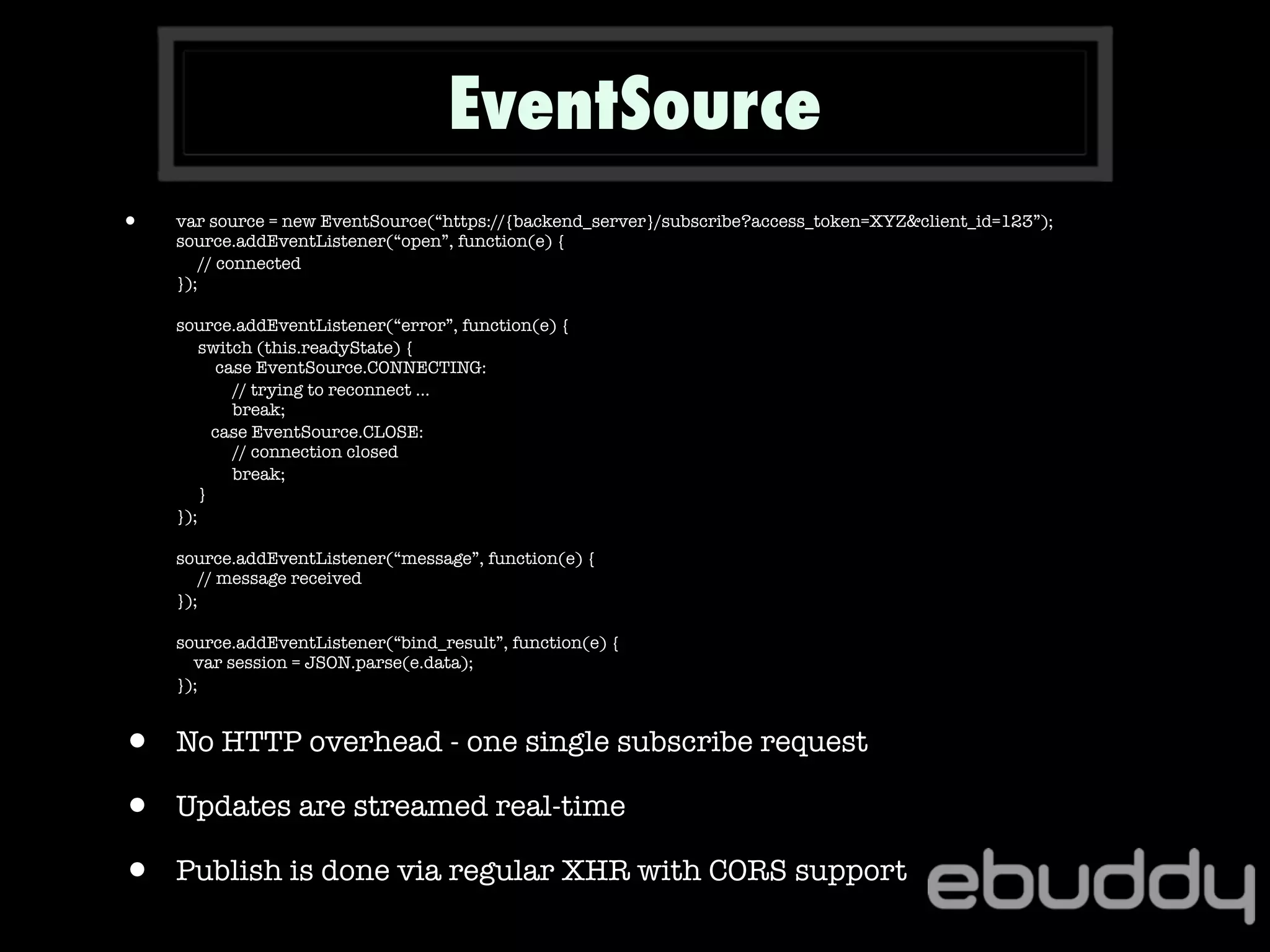
• var source = new EventSource(“https://{backend_server}/subscribe?access_token=XYZ&client_id=123”);
source.addEventListener(“open”, function(e) {
// connected
});
source.addEventListener(“error”, function(e) {
switch (this.readyState) {
case EventSource.CONNECTING:
// trying to reconnect ...
break;
case EventSource.CLOSE:
// connection closed
break;
}
});
source.addEventListener(“message”, function(e) {
// message received
});
source.addEventListener(“bind_result”, function(e) {
var session = JSON.parse(e.data);
});
• No HTTP overhead - one single subscribe request
• Updates are streamed real-time
• Publish is done via regular XHR with CORS support
EventSource
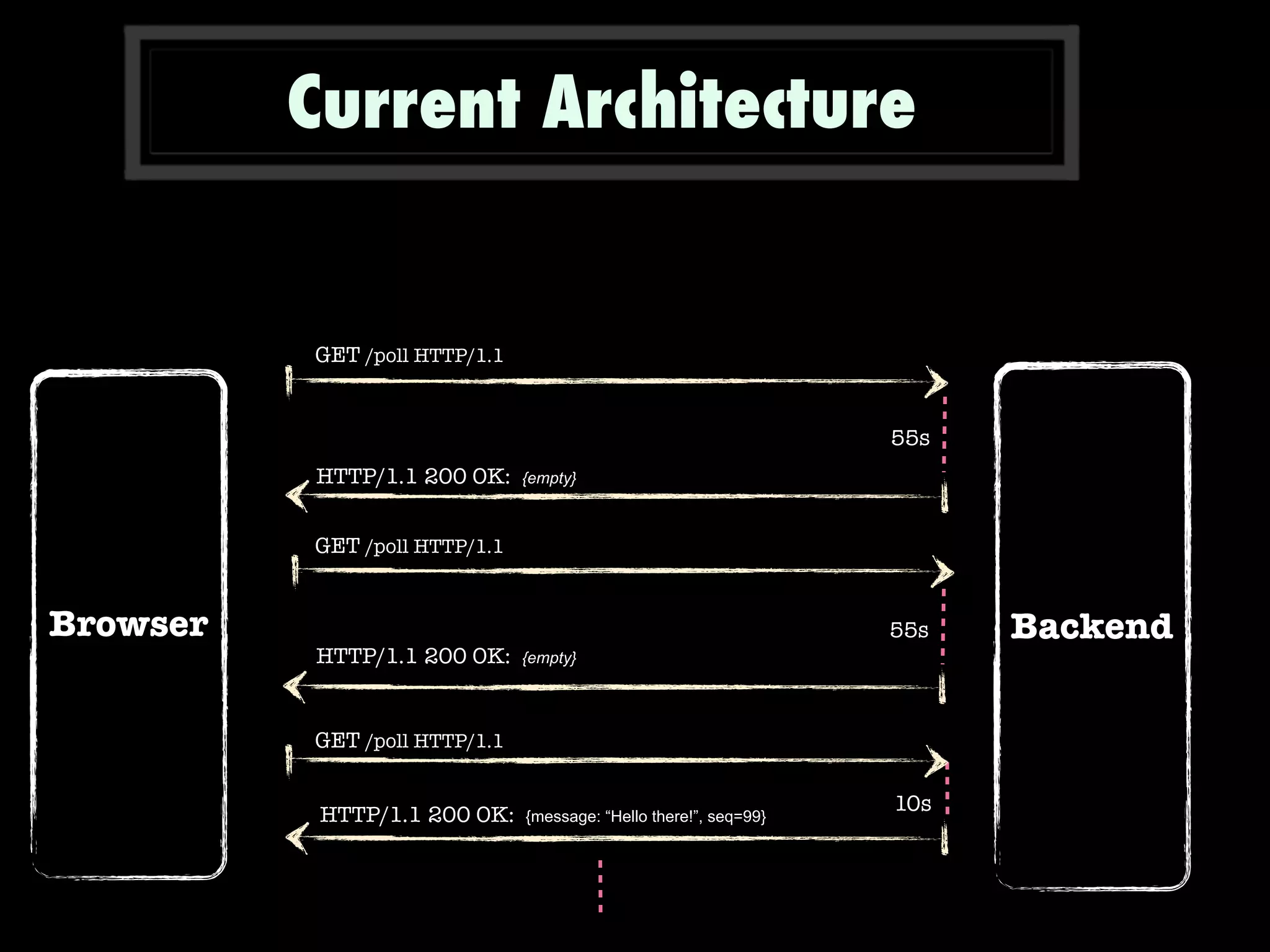
Current Architecture
Backend
GET /poll HTTP/1.1
Browser
10s
HTTP/1.1 200 OK: {empty}
55s
HTTP/1.1 200 OK: {message: “Hello there!”, seq=99}
55s
GET /poll HTTP/1.1
HTTP/1.1 200 OK: {empty}
GET /poll HTTP/1.1
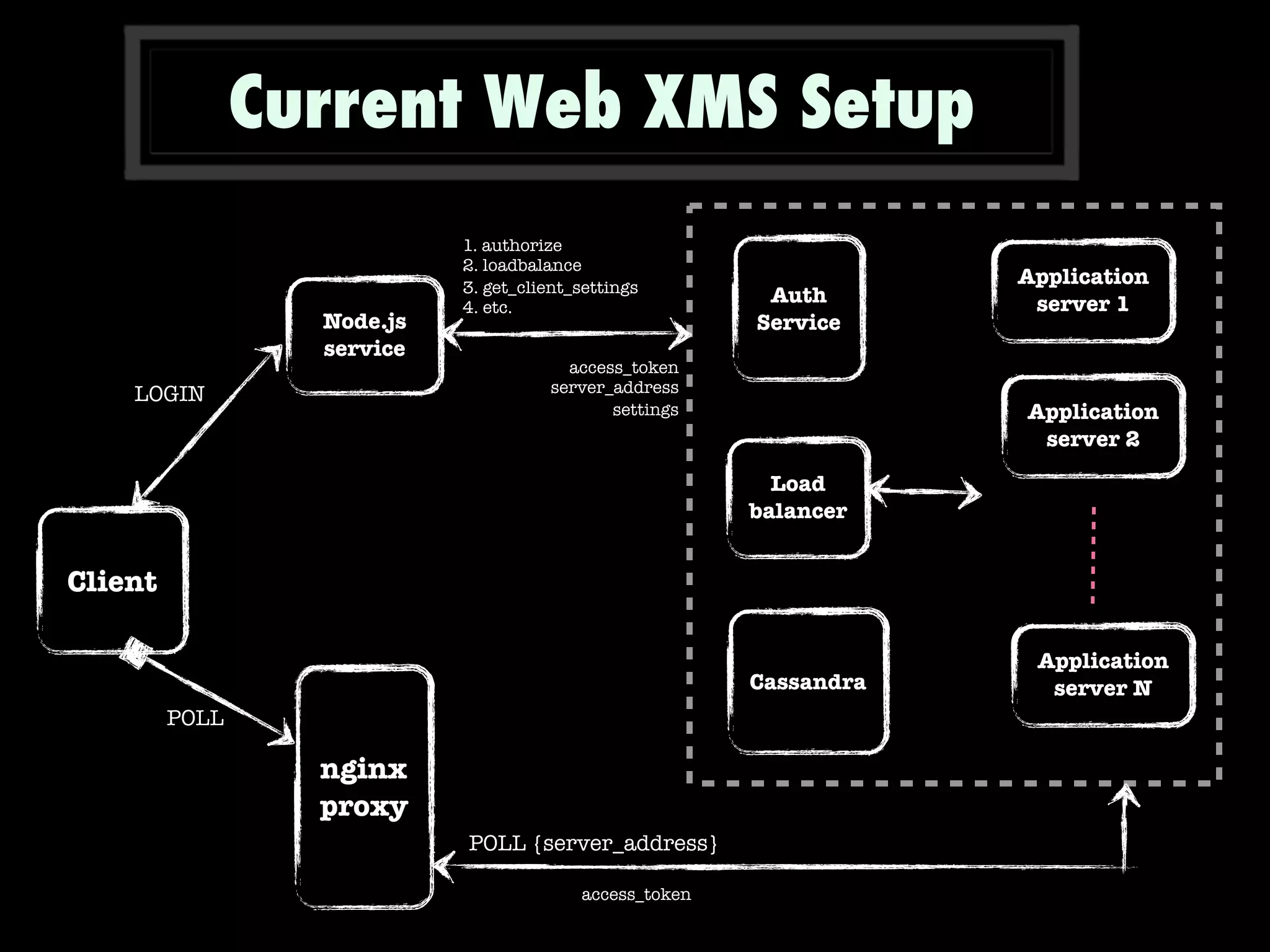
Current Web XMS Setup
Client
nginx
proxy
POLL
Auth
Service
Load
balancer
Node.js
service
LOGIN
Application
server 1
Application
server 2
Application
server NCassandra
1. authorize
2. loadbalance
3. get_client_settings
4. etc.
POLL {server_address}
access_token
server_address
settings
access_token
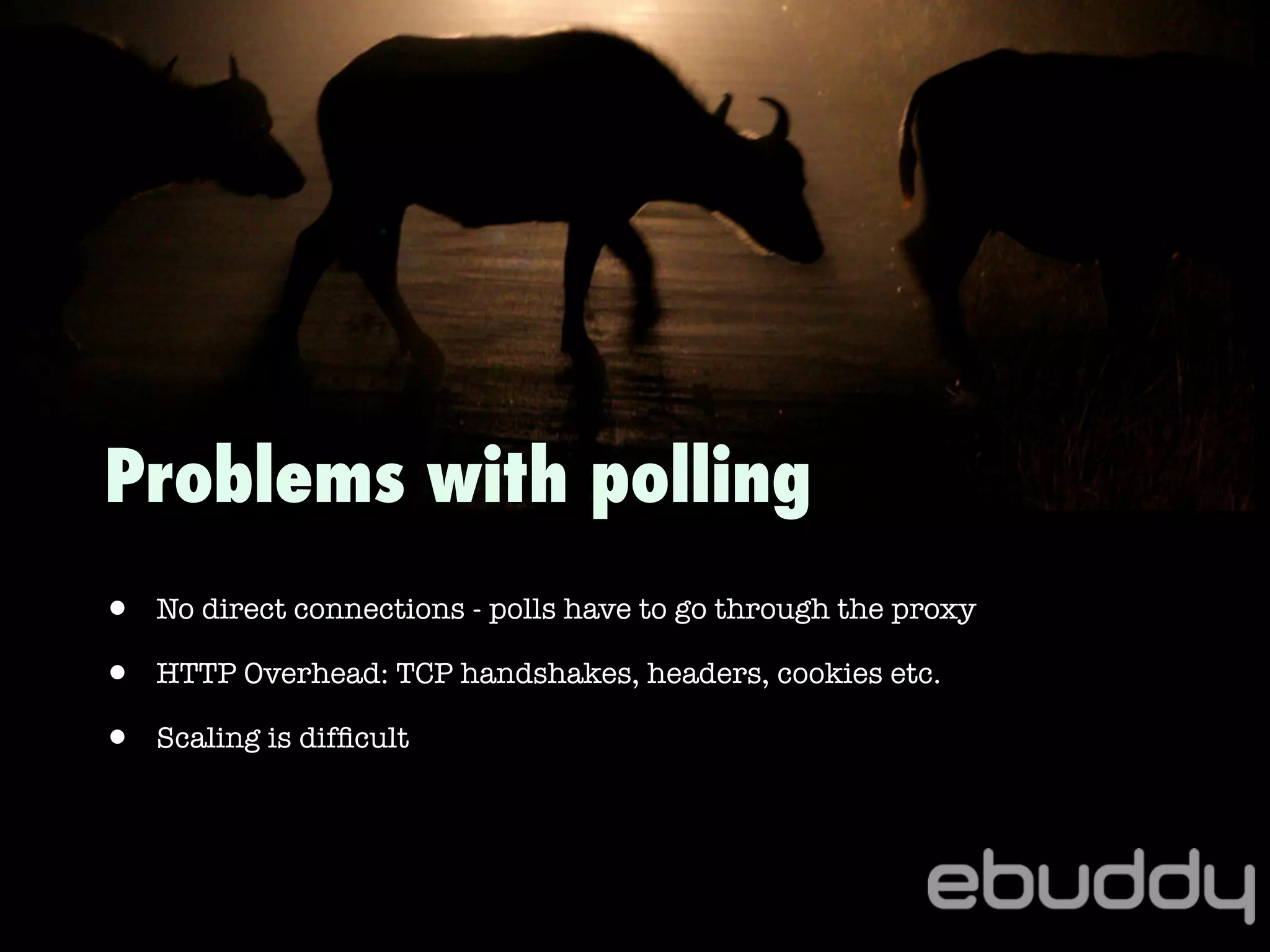
• No direct connections - polls have to go through the proxy
• HTTP Overhead: TCP handshakes, headers, cookies etc.
• Scaling is difficult
Problems with polling
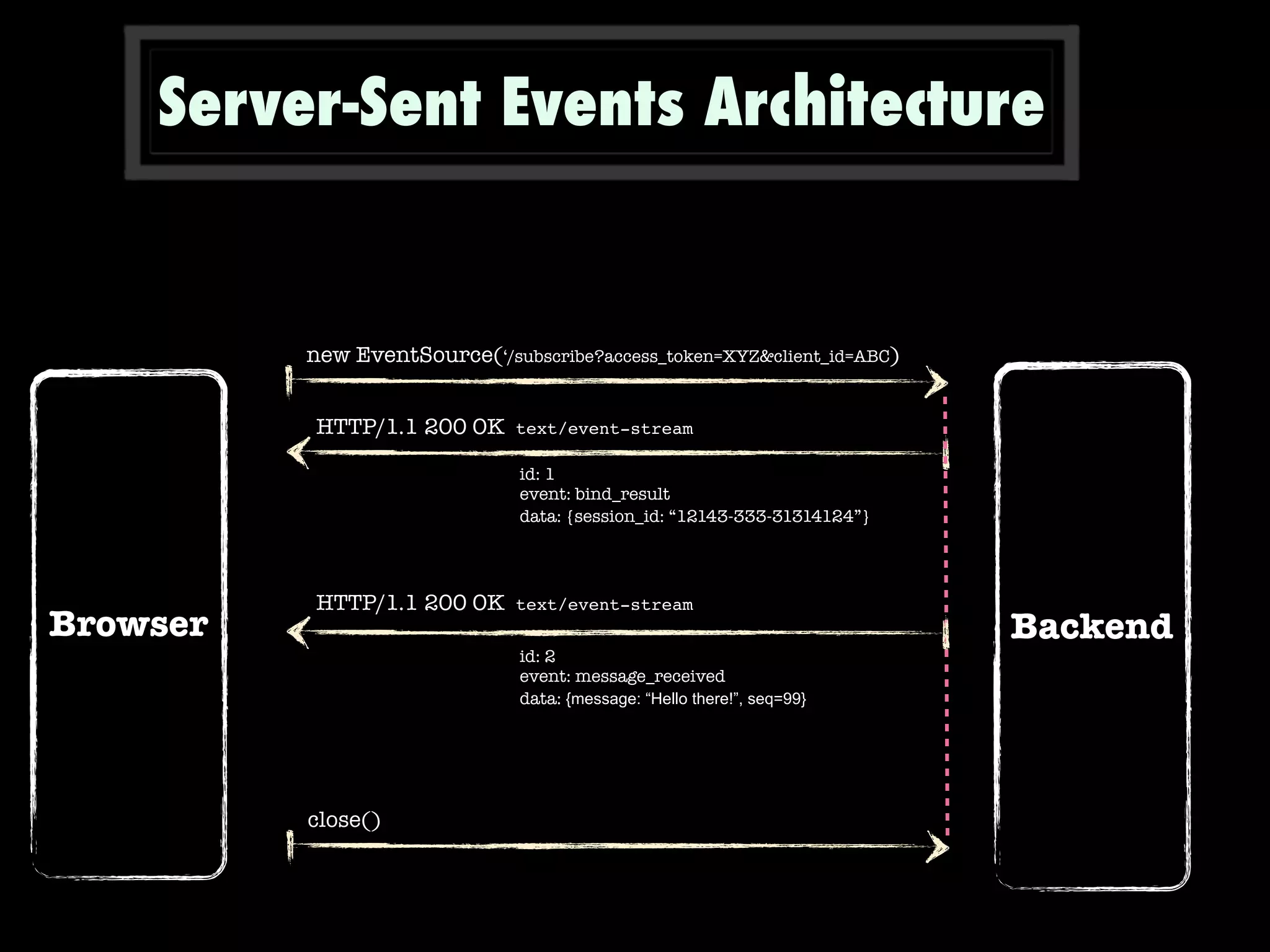
Server-Sent Events Architecture
Backend
new EventSource(‘/subscribe?access_token=XYZ&client_id=ABC)
Browser
close()
id: 1
event: bind_result
data: {session_id: “12143-333-31314124”}
id: 2
event: message_received
data: {message: “Hello there!”, seq=99}
HTTP/1.1 200 OK text/event-stream
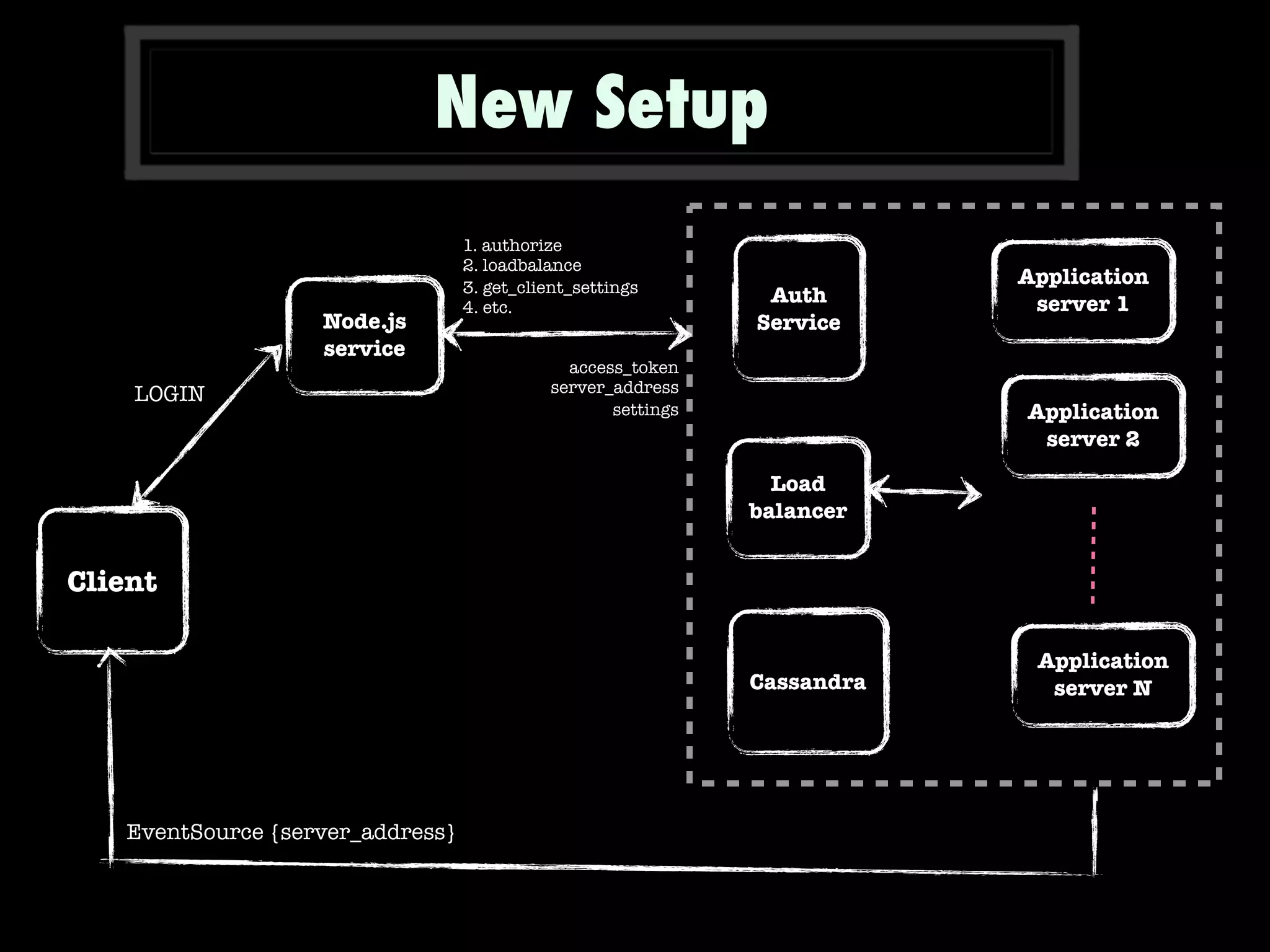
New Setup
Client
Auth
Service
Load
balancer
Node.js
service
LOGIN
Application
server 1
Application
server 2
Application
server NCassandra
1. authorize
2. loadbalance
3. get_client_settings
4. etc.
EventSource {server_address}
access_token
server_address
settings
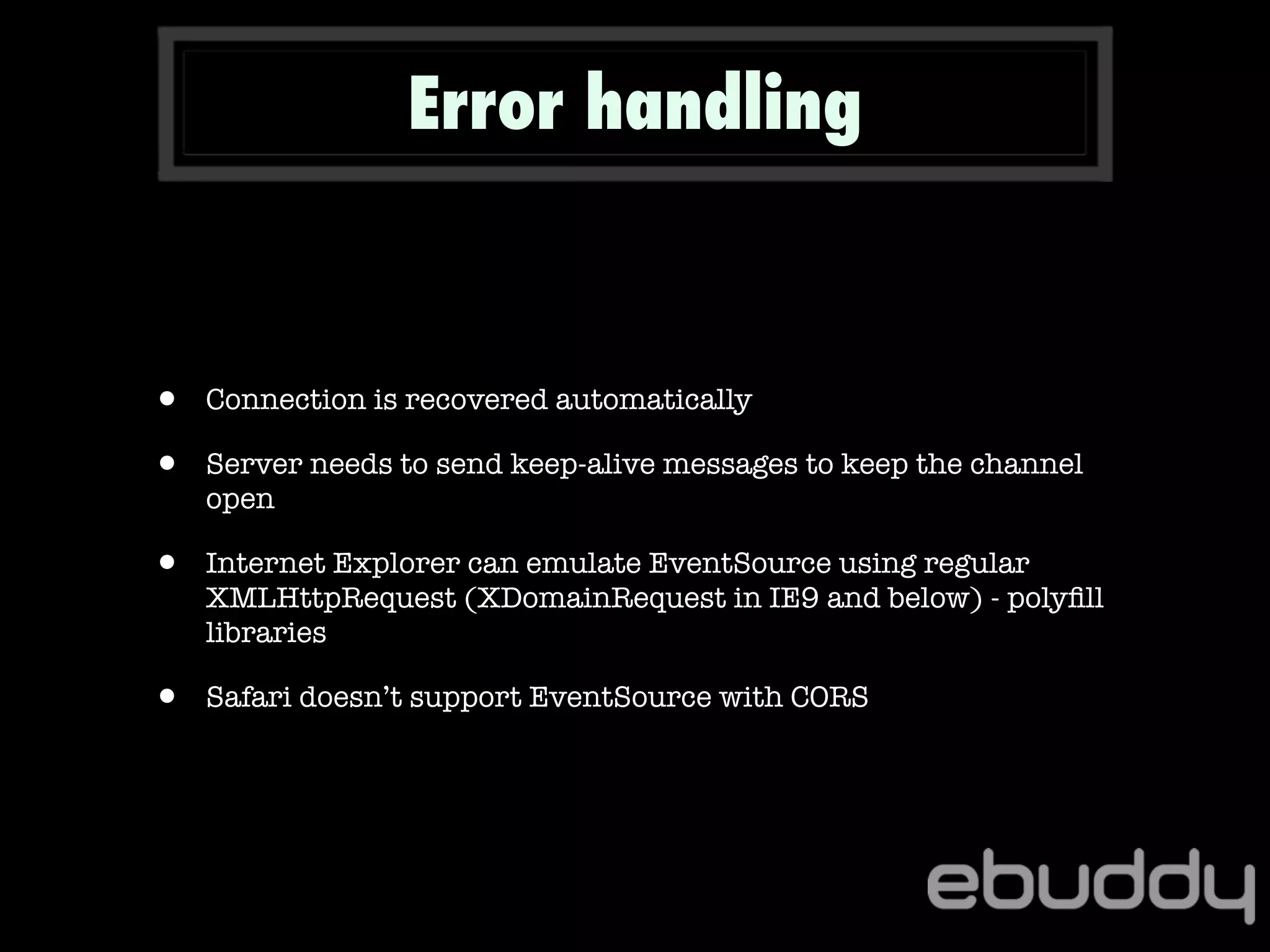
• Connection is recovered automatically
• Server needs to send keep-alive messages to keep the channel
open
• Internet Explorer can emulate EventSource using regular
XMLHttpRequest (XDomainRequest in IE9 and below) - polyfill
libraries
• Safari doesn’t support EventSource with CORS
Error handling
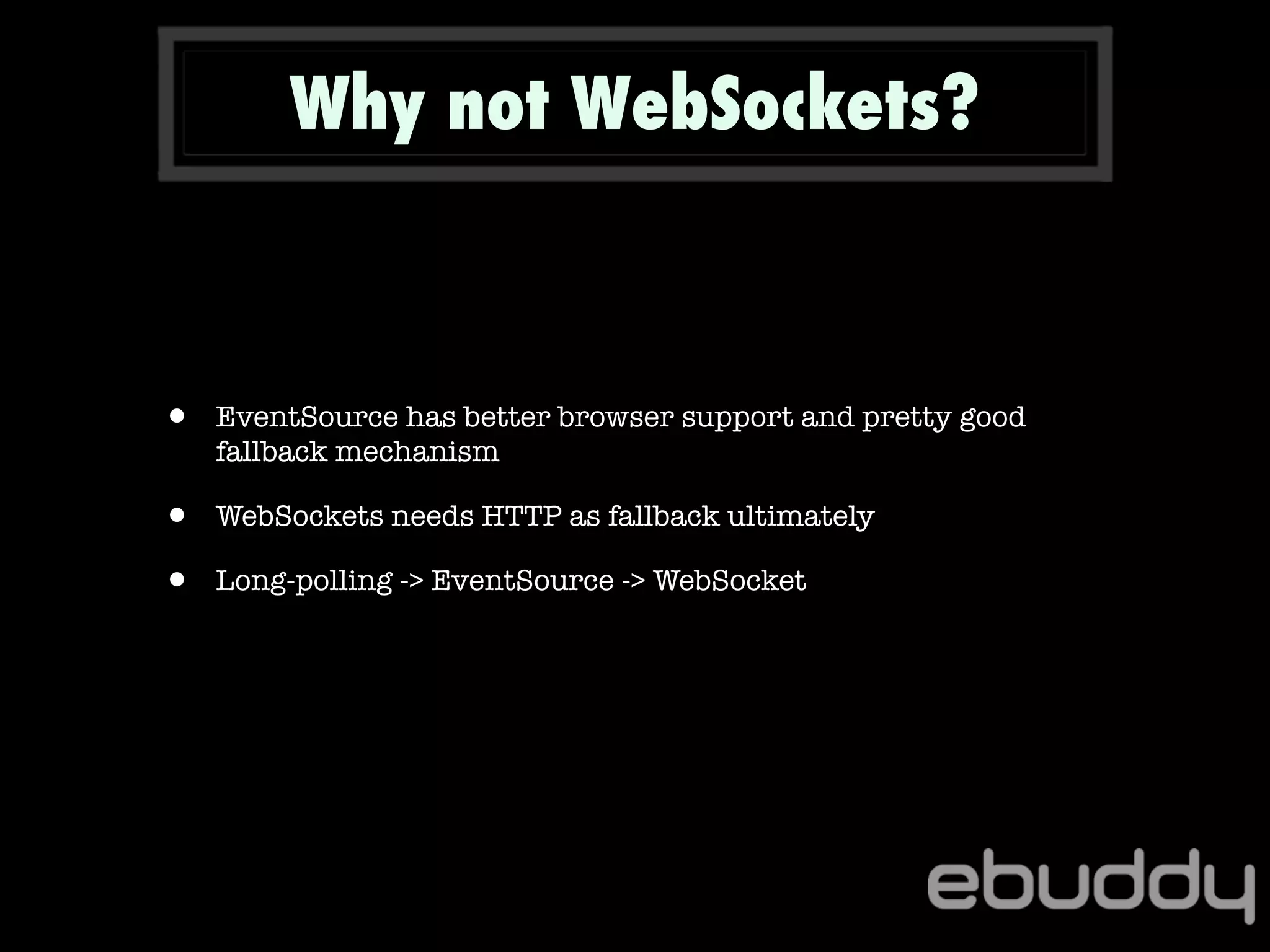
• EventSource has better browser support and pretty good
fallback mechanism
• WebSockets needs HTTP as fallback ultimately
• Long-polling -> EventSource -> WebSocket
Why not WebSockets?
Thanks!
visit http://xms.me to download XMS!

Server-Sent Events in Action

  • 1.
    Server Sent EventsInAction Andrei Rusu May 30th, 2013
  • 2.
    Who is eBuddy? •Web and mobile messaging for everyone, everywhere! • Two main messaging products: eBuddy Chat and XMS • XMS is a real-time messaging app for smartphones
  • 3.
  • 4.
    • Companion webapp • User needs to register on their mobile client • Supports several authentication mechanisms • Designed to bring additional features
  • 5.
    • HTML5 draftspecification for implementing real-time HTTP streaming • Enables a web browser to receive push-like notifications from a server • New EventSource Javascript API • Implemented in Web XMS - web.xms.me Server ... what?
  • 6.
    Implementation goals • Improvethe scalability of the application in terms of concurrent users • Speedy communication with the backend service • Improve the connection handling and stability • HTML5 makes us look cool
  • 7.
    Real-time communications The darkdays: • Polling (short / long lived HTTP requests) • Comet and reverse ajax • Never-ending IFRAME(s) / script tags • Flash sockets (since ActionScript 3)
  • 8.
    HTML5 to therescue! • New connectivity APIs for scalable client-server messaging • XHR2, WebSockets, Server-Sent Events • No more iframe or script tag hacks
  • 9.
    XMLHttpRequest Level 2 •Removes cross-domain http restrictions - Cross-Origin Resource Sharing (CORS) • http://an.example.com can directly connect to http://other.example.org • Destination server must add some response headers: Access-Control-Allow-Origin: http://an.example.org Access-Control-Request-Method: GET, POST Access-Control-Request-Headers: X-Requested-With Host: other.example.org • More event handlers for tracking the progress of the request
  • 10.
    WebSockets • Full-duplex, bi-directionalcommunication channel • Client connects to socket server and sends and receives messages real- time • “Upgrades” an HTTP connection to a WebSocket connection over the same TCP/IP channel • Works over firewalls and gateways
  • 11.
    Server-sent Events • One-waymessage streaming over traditional HTTP • Client subscribes to server and waits (long-lived HTTP channel) • When there’s data, server generates event and pushes the data to client • No special server protocol implementation • New EventSource HTML5 api
  • 12.
    EventStream Format HTTP/1.1 200OK Content-Type: text/event-stream data: This is the first message. event: notification data: This is the second message, it data: has two lines. id: 12345 data: This is the third message with an id
  • 13.
    • var source= new EventSource(“https://{backend_server}/subscribe?access_token=XYZ&client_id=123”); source.addEventListener(“open”, function(e) { // connected }); source.addEventListener(“error”, function(e) { switch (this.readyState) { case EventSource.CONNECTING: // trying to reconnect ... break; case EventSource.CLOSE: // connection closed break; } }); source.addEventListener(“message”, function(e) { // message received }); source.addEventListener(“bind_result”, function(e) { var session = JSON.parse(e.data); }); • No HTTP overhead - one single subscribe request • Updates are streamed real-time • Publish is done via regular XHR with CORS support EventSource
  • 14.
    Current Architecture Backend GET /pollHTTP/1.1 Browser 10s HTTP/1.1 200 OK: {empty} 55s HTTP/1.1 200 OK: {message: “Hello there!”, seq=99} 55s GET /poll HTTP/1.1 HTTP/1.1 200 OK: {empty} GET /poll HTTP/1.1
  • 15.
    Current Web XMSSetup Client nginx proxy POLL Auth Service Load balancer Node.js service LOGIN Application server 1 Application server 2 Application server NCassandra 1. authorize 2. loadbalance 3. get_client_settings 4. etc. POLL {server_address} access_token server_address settings access_token
  • 16.
    • No directconnections - polls have to go through the proxy • HTTP Overhead: TCP handshakes, headers, cookies etc. • Scaling is difficult Problems with polling
  • 17.
    Server-Sent Events Architecture Backend newEventSource(‘/subscribe?access_token=XYZ&client_id=ABC) Browser close() id: 1 event: bind_result data: {session_id: “12143-333-31314124”} id: 2 event: message_received data: {message: “Hello there!”, seq=99} HTTP/1.1 200 OK text/event-stream HTTP/1.1 200 OK text/event-stream
  • 18.
    New Setup Client Auth Service Load balancer Node.js service LOGIN Application server 1 Application server2 Application server NCassandra 1. authorize 2. loadbalance 3. get_client_settings 4. etc. EventSource {server_address} access_token server_address settings
  • 19.
    • Connection isrecovered automatically • Server needs to send keep-alive messages to keep the channel open • Internet Explorer can emulate EventSource using regular XMLHttpRequest (XDomainRequest in IE9 and below) - polyfill libraries • Safari doesn’t support EventSource with CORS Error handling
  • 20.
    • EventSource hasbetter browser support and pretty good fallback mechanism • WebSockets needs HTTP as fallback ultimately • Long-polling -> EventSource -> WebSocket Why not WebSockets?
  • 21.