
PRESENTED BY :
ASHA.B.NAIR
SECOND YEAR MSC NURSING
GOVT COLLEGE OF NURSING
KOTTAYAM
 Community mental health is the application of
specialized knowledge to population and
communities to promote and maintain mental
health, and to rehabilitate population at risk that
continue to have residual effects of mental
illness. - (Sreevani)
 Community Mental Health Nursing is the
application of knowledge of psychiatric nursing
in promoting and maintaining mental health of
people, to help in early diagnosis and care and to
rehabilitate the clients after mental illness.
- (Bimla Kapoor)
 The Community Mental Health Programme
includes all community facilities pertinent in
any way to prevention, treatment and
rehabilitation. - K.Park
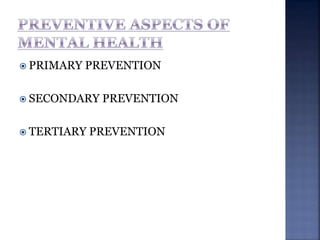
 PRIMARY PREVENTION
 SECONDARY PREVENTION
 TERTIARY PREVENTION
 To ensure treatment and prevention of mental
and neurological disorder.
 Use of mental health technology
 Application of mental health principles in
total national development to improve quality
of life.
 Inpatient services
 Outpatient services
 Partial hospitalization
 Emergency services
 Diagnostic services
 Pre-care and aftercare services including
foster home placement and home visiting
 Education services
 Training
 Research and evaluation.
 Early diagnosis and treatment
 Rehabilitation
 Group and individual psychotherapy
 Mental health education
 Use of modern psychoactive drugs
 After-care services
 Integration of mental health with primary
health care through the national mental
health program.
 Provision of tertiary care institutions for
treatment of mental disorders.
 Eradication stigmatization of mentally ill
patients and protecting their rights through
regulatory institutions like the central mental
health authority, and state mental health.
Objectives
 Basic mental health care to all the needy especially the
poor from rural, rural,slim and tribal areas.
 Application of mental health knowledge in general
health care and in social development.
 Promotion of community participation in mental
health service development and increase of efforts
towards self help in the community.
 Prevention and treatment of mental health and
neurological disorders and their associated dissbilities.
 Use of mental health technology to improve general
health services
 Application of mental health principles in total
national development to improve quality of life.
 Integration of mental health care services with
the existing general health services.
 Utilization of the existing infrastructure of
health services and also deliver the minimum
mental health care services.
 Provision of appropriate task oriented
training to the existing health staff.
 Linkage of mental health services with the
existing community development program.
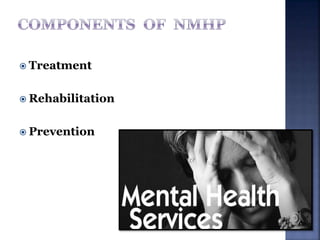
 Treatment
 Rehabilitation
 Prevention
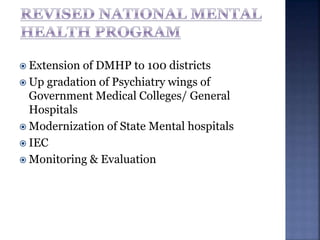
 Extension of DMHP to 100 districts
 Up gradation of Psychiatry wings of
Government Medical Colleges/ General
Hospitals
 Modernization of State Mental hospitals
 IEC
 Monitoring & Evaluation
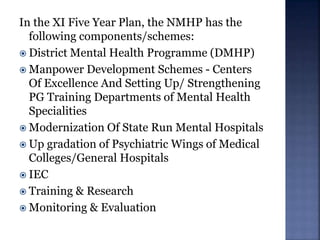
In the XI Five Year Plan, the NMHP has the
following components/schemes:
 District Mental Health Programme (DMHP)
 Manpower Development Schemes - Centers
Of Excellence And Setting Up/ Strengthening
PG Training Departments of Mental Health
Specialities
 Modernization Of State Run Mental Hospitals
 Up gradation of Psychiatric Wings of Medical
Colleges/General Hospitals
 IEC
 Training & Research
 Monitoring & Evaluation
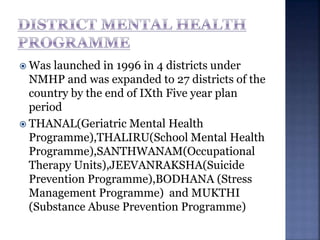
 Was launched in 1996 in 4 districts under
NMHP and was expanded to 27 districts of the
country by the end of IXth Five year plan
period
 THANAL(Geriatric Mental Health
Programme),THALIRU(School Mental Health
Programme),SANTHWANAM(Occupational
Therapy Units),JEEVANRAKSHA(Suicide
Prevention Programme),BODHANA (Stress
Management Programme) and MUKTHI
(Substance Abuse Prevention Programme)
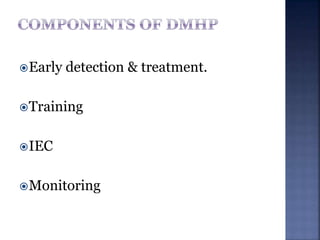
Early detection & treatment.
Training
IEC
Monitoring
 Non-availability of psychiatrists and other mental
health professionals like psychiatric social workers
and clinical psychologists in many states for
manning DMHPs.
 Lack of delegation of power for procuring medicines
and recruiting staff under the program at the
district level.
 The program was focused on catering mostly to
severely mentally ill and many important issues like
suicide prevention, workplace stress management,
adolescent mental health and college counseling
services which could benefit larger section of society
and were not covered under DMHP thus making
these important services inaccessible to the
community.
 Low level of community participation due to
stigma attached to mental illness.
 Lack of regular and dedicated monitoring and
facilitating mechanism.
 Lack of detailed operational guidelines for
implementation of the schemes.
 Lack of co-ordination between Department of
Medical Education and Health Department at
the State level lead to delays in
implementation of DMHPs.
 Some states were not able to take over the
funding of DMHP activities after the
completion of 5 years.
 Psychiatric Emergency Care
 Day-Treatment Programs
 Residential Treatment Programs
 Psychiatric Home Care
 Aftercare and rehabilitation
 Medication
 Individual and family therapy
 Crisis intervention
 Social skills training
 Assessment of family
 Assessment of community
 Planning and implementation
 Family interventions
 Community interventions
 Evaluation
 Assisting in the immediate diagnosis and
treatment of mental illnesses.
 Making special arrangements to protect and take
care of patients to prevent them,from physical
injuries and attempted suicides.
 Establishing the importance of mental health in
general patients and telling them the methods of
attaining good mental health
 Follow up of mental patients
 Conducting guidance clinics
 Assisting the patients in social rehabilitation after
their treatment
 Providing mental health education during home
visits,hospital nursing and community care
 Park, K. Park‘s Text book of Preventive and Social Medicine,
M/S Banarsidas Bhanot Publishers, Latest Edn.
 Gulani K, K. Community Health Nursing:Principles and
practices. Latest Edn.
 Bimala Kapoor “ Text book of psychiatric nursing”;volume-
2;kumar book publishers, volume-2 new delhi.
 Kamalam.S.(2005)Essentials of Community Health Nursing
Practices,2nd Edition,Jaypee brothers,New Delhi
 Swarnkar K. Community Health Nursing, Latest Edn.
 Asma Rahim(2008),Principles and Practices of Community
Medicine,1st Edition,Jaypee Publishers,New Delhi.
 www.google.com/books/communityhealthnursing
 www.wikipedia.com
 www.nrhm.gov.in
 www.arogykeralam.gov.in
Community mental health programme

Community mental health programme

  • 1.
    PRESENTED BY : ASHA.B.NAIR SECONDYEAR MSC NURSING GOVT COLLEGE OF NURSING KOTTAYAM
  • 2.
     Community mentalhealth is the application of specialized knowledge to population and communities to promote and maintain mental health, and to rehabilitate population at risk that continue to have residual effects of mental illness. - (Sreevani)  Community Mental Health Nursing is the application of knowledge of psychiatric nursing in promoting and maintaining mental health of people, to help in early diagnosis and care and to rehabilitate the clients after mental illness. - (Bimla Kapoor)
  • 3.
     The CommunityMental Health Programme includes all community facilities pertinent in any way to prevention, treatment and rehabilitation. - K.Park
  • 5.
     PRIMARY PREVENTION SECONDARY PREVENTION  TERTIARY PREVENTION
  • 6.
     To ensuretreatment and prevention of mental and neurological disorder.  Use of mental health technology  Application of mental health principles in total national development to improve quality of life.
  • 7.
     Inpatient services Outpatient services  Partial hospitalization  Emergency services  Diagnostic services  Pre-care and aftercare services including foster home placement and home visiting  Education services  Training  Research and evaluation.
  • 8.
     Early diagnosisand treatment  Rehabilitation  Group and individual psychotherapy  Mental health education  Use of modern psychoactive drugs  After-care services
  • 9.
     Integration ofmental health with primary health care through the national mental health program.  Provision of tertiary care institutions for treatment of mental disorders.  Eradication stigmatization of mentally ill patients and protecting their rights through regulatory institutions like the central mental health authority, and state mental health.
  • 10.
    Objectives  Basic mentalhealth care to all the needy especially the poor from rural, rural,slim and tribal areas.  Application of mental health knowledge in general health care and in social development.  Promotion of community participation in mental health service development and increase of efforts towards self help in the community.  Prevention and treatment of mental health and neurological disorders and their associated dissbilities.  Use of mental health technology to improve general health services  Application of mental health principles in total national development to improve quality of life.
  • 11.
     Integration ofmental health care services with the existing general health services.  Utilization of the existing infrastructure of health services and also deliver the minimum mental health care services.  Provision of appropriate task oriented training to the existing health staff.  Linkage of mental health services with the existing community development program.
  • 12.
  • 13.
     Extension ofDMHP to 100 districts  Up gradation of Psychiatry wings of Government Medical Colleges/ General Hospitals  Modernization of State Mental hospitals  IEC  Monitoring & Evaluation
  • 14.
    In the XIFive Year Plan, the NMHP has the following components/schemes:  District Mental Health Programme (DMHP)  Manpower Development Schemes - Centers Of Excellence And Setting Up/ Strengthening PG Training Departments of Mental Health Specialities  Modernization Of State Run Mental Hospitals  Up gradation of Psychiatric Wings of Medical Colleges/General Hospitals  IEC  Training & Research  Monitoring & Evaluation
  • 15.
     Was launchedin 1996 in 4 districts under NMHP and was expanded to 27 districts of the country by the end of IXth Five year plan period  THANAL(Geriatric Mental Health Programme),THALIRU(School Mental Health Programme),SANTHWANAM(Occupational Therapy Units),JEEVANRAKSHA(Suicide Prevention Programme),BODHANA (Stress Management Programme) and MUKTHI (Substance Abuse Prevention Programme)
  • 16.
    Early detection &treatment. Training IEC Monitoring
  • 17.
     Non-availability ofpsychiatrists and other mental health professionals like psychiatric social workers and clinical psychologists in many states for manning DMHPs.  Lack of delegation of power for procuring medicines and recruiting staff under the program at the district level.  The program was focused on catering mostly to severely mentally ill and many important issues like suicide prevention, workplace stress management, adolescent mental health and college counseling services which could benefit larger section of society and were not covered under DMHP thus making these important services inaccessible to the community.
  • 18.
     Low levelof community participation due to stigma attached to mental illness.  Lack of regular and dedicated monitoring and facilitating mechanism.  Lack of detailed operational guidelines for implementation of the schemes.  Lack of co-ordination between Department of Medical Education and Health Department at the State level lead to delays in implementation of DMHPs.  Some states were not able to take over the funding of DMHP activities after the completion of 5 years.
  • 19.
     Psychiatric EmergencyCare  Day-Treatment Programs  Residential Treatment Programs  Psychiatric Home Care  Aftercare and rehabilitation
  • 20.
     Medication  Individualand family therapy  Crisis intervention  Social skills training
  • 21.
     Assessment offamily  Assessment of community  Planning and implementation  Family interventions  Community interventions  Evaluation
  • 22.
     Assisting inthe immediate diagnosis and treatment of mental illnesses.  Making special arrangements to protect and take care of patients to prevent them,from physical injuries and attempted suicides.  Establishing the importance of mental health in general patients and telling them the methods of attaining good mental health  Follow up of mental patients  Conducting guidance clinics  Assisting the patients in social rehabilitation after their treatment  Providing mental health education during home visits,hospital nursing and community care
  • 23.
     Park, K.Park‘s Text book of Preventive and Social Medicine, M/S Banarsidas Bhanot Publishers, Latest Edn.  Gulani K, K. Community Health Nursing:Principles and practices. Latest Edn.  Bimala Kapoor “ Text book of psychiatric nursing”;volume- 2;kumar book publishers, volume-2 new delhi.  Kamalam.S.(2005)Essentials of Community Health Nursing Practices,2nd Edition,Jaypee brothers,New Delhi  Swarnkar K. Community Health Nursing, Latest Edn.  Asma Rahim(2008),Principles and Practices of Community Medicine,1st Edition,Jaypee Publishers,New Delhi.  www.google.com/books/communityhealthnursing  www.wikipedia.com  www.nrhm.gov.in  www.arogykeralam.gov.in