Curriculum Design: 
Issues in Management Education 
Anup Kumar Singh, Ph.D.
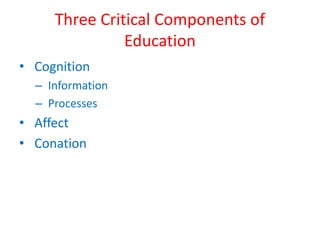
Three Critical Components of 
Education 
• Cognition 
– Information 
– Processes 
• Affect 
• Conation
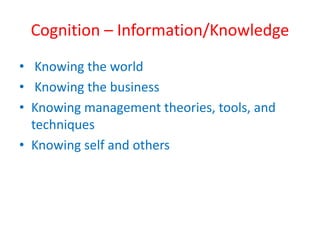
Cognition – Information/Knowledge 
• Knowing the world 
• Knowing the business 
• Knowing management theories, tools, and 
techniques 
• Knowing self and others
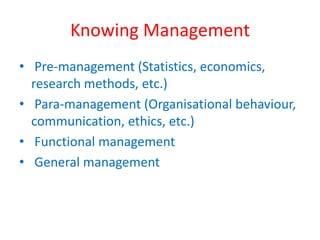
Knowing Management 
• Pre-management (Statistics, economics, 
research methods, etc.) 
• Para-management (Organisational behaviour, 
communication, ethics, etc.) 
• Functional management 
• General management
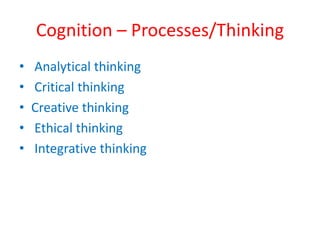
Cognition – Processes/Thinking 
• Analytical thinking 
• Critical thinking 
• Creative thinking 
• Ethical thinking 
• Integrative thinking
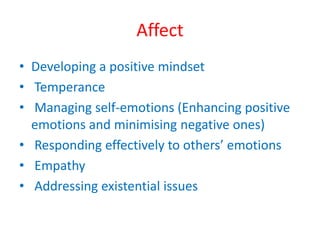
Affect 
• Developing a positive mindset 
• Temperance 
• Managing self-emotions (Enhancing positive 
emotions and minimising negative ones) 
• Responding effectively to others’ emotions 
• Empathy 
• Addressing existential issues
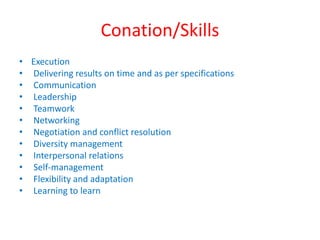
Conation/Skills 
• Execution 
• Delivering results on time and as per specifications 
• Communication 
• Leadership 
• Teamwork 
• Networking 
• Negotiation and conflict resolution 
• Diversity management 
• Interpersonal relations 
• Self-management 
• Flexibility and adaptation 
• Learning to learn
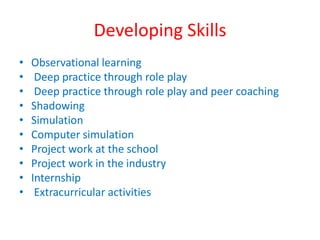
Developing Skills 
• Observational learning 
• Deep practice through role play 
• Deep practice through role play and peer coaching 
• Shadowing 
• Simulation 
• Computer simulation 
• Project work at the school 
• Project work in the industry 
• Internship 
• Extracurricular activities
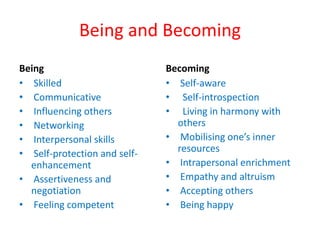
Being and Becoming 
Being 
• Skilled 
• Communicative 
• Influencing others 
• Networking 
• Interpersonal skills 
• Self-protection and self-enhancement 
• Assertiveness and 
negotiation 
• Feeling competent 
Becoming 
• Self-aware 
• Self-introspection 
• Living in harmony with 
others 
• Mobilising one’s inner 
resources 
• Intrapersonal enrichment 
• Empathy and altruism 
• Accepting others 
• Being happy

Mba curriculum

  • 1.
    Curriculum Design: Issuesin Management Education Anup Kumar Singh, Ph.D.
  • 2.
    Three Critical Componentsof Education • Cognition – Information – Processes • Affect • Conation
  • 3.
    Cognition – Information/Knowledge • Knowing the world • Knowing the business • Knowing management theories, tools, and techniques • Knowing self and others
  • 4.
    Knowing Management •Pre-management (Statistics, economics, research methods, etc.) • Para-management (Organisational behaviour, communication, ethics, etc.) • Functional management • General management
  • 5.
    Cognition – Processes/Thinking • Analytical thinking • Critical thinking • Creative thinking • Ethical thinking • Integrative thinking
  • 6.
    Affect • Developinga positive mindset • Temperance • Managing self-emotions (Enhancing positive emotions and minimising negative ones) • Responding effectively to others’ emotions • Empathy • Addressing existential issues
  • 7.
    Conation/Skills • Execution • Delivering results on time and as per specifications • Communication • Leadership • Teamwork • Networking • Negotiation and conflict resolution • Diversity management • Interpersonal relations • Self-management • Flexibility and adaptation • Learning to learn
  • 8.
    Developing Skills •Observational learning • Deep practice through role play • Deep practice through role play and peer coaching • Shadowing • Simulation • Computer simulation • Project work at the school • Project work in the industry • Internship • Extracurricular activities
  • 9.
    Being and Becoming Being • Skilled • Communicative • Influencing others • Networking • Interpersonal skills • Self-protection and self-enhancement • Assertiveness and negotiation • Feeling competent Becoming • Self-aware • Self-introspection • Living in harmony with others • Mobilising one’s inner resources • Intrapersonal enrichment • Empathy and altruism • Accepting others • Being happy