SUBMANDIBULAR SPACE
INFECTION
-VAISHNAVI KAMESWARI
III BDS
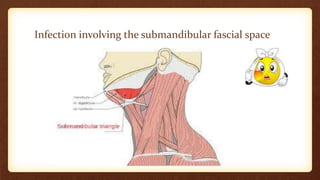
Infection involving the submandibular fascial space
CLASSIFICATION
• Primary –Directly related to teeth
• Mandibular
• Suprahyoid
ETIOLOGY
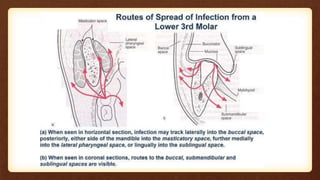
1. Infections of Mandibular 2nd & 3rd molars
2. From sublingual or submental spaces
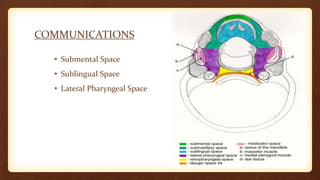
COMMUNICATIONS
• Submental Space
• Sublingual Space
• Lateral Pharyngeal Space
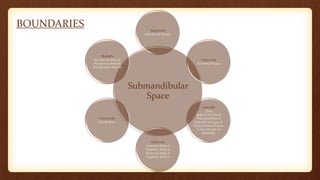
BOUNDARIES
Submandibular
Space
Superiorly
Mylohyoid Muscle
Anteriorly
Submetal Space
Laterally
Skin
Superficial Fascia
Platysma Muscle
Superficial Layer of
Deep Cervical Fascia
Lower Border of
Mandible
Inferiorly
Anterior Belly of
Digastric Muscle
Posterior belly of
Digastric Muscle
Posteriorly
Hyoid Bone
Medially
Mylohyoid Muscle
Hyoglossus Muscle
Styloglossus Muscle
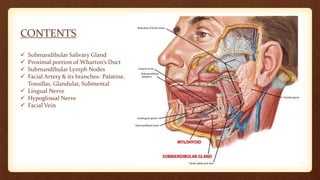
CONTENTS
 Submandibular Salivary Gland
 Proximal portion of Wharton’s Duct
 Submandibular Lymph Nodes
 Facial Artery & its branches- Palatine,
Tonsillar, Glandular, Submental
 Lingual Nerve
 Hypoglossal Nerve
 Facial Vein
CLINICAL FEATURES
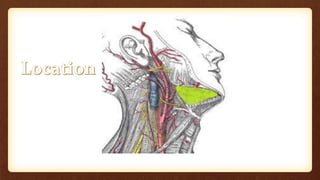
Most common
Location- Angle of the jaw
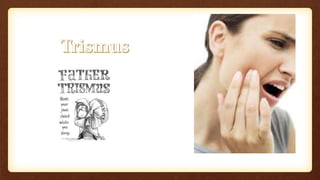
Trismus
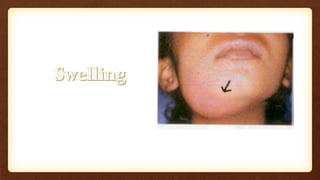
Swelling- Brawny, Indurated, Soft, Fluctuant
Inability to palpate
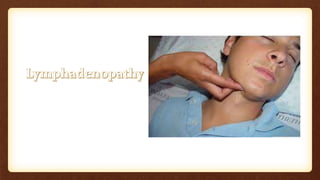
Lymphadenopathy
DIAGNOSIS
Clinical evaluation
If not obvious, CT is done
MANAGEMENT
Airway
Protection
Adequate
hydration
Rich nutritional
supplements
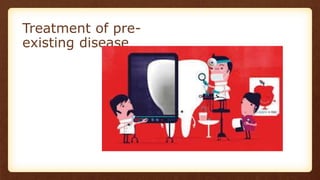
Treatment of pre-
existing disease
Treatment
MEDICAL
• Analgesics
* NSAID’s
• Antiseptic Mouth wash
• Antibiotics
*Penicillin
*Amoxicillin
*Ornidazole
*Cephalosporins
SURGICAL
• Extraction
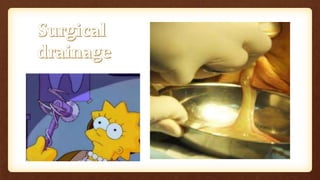
• Incision and
Drainage
COMPLICATIONS
Sialadenitis
Ludwig’s Angina
Lymphadenitis
Submandibular space infection

Submandibular space infection