

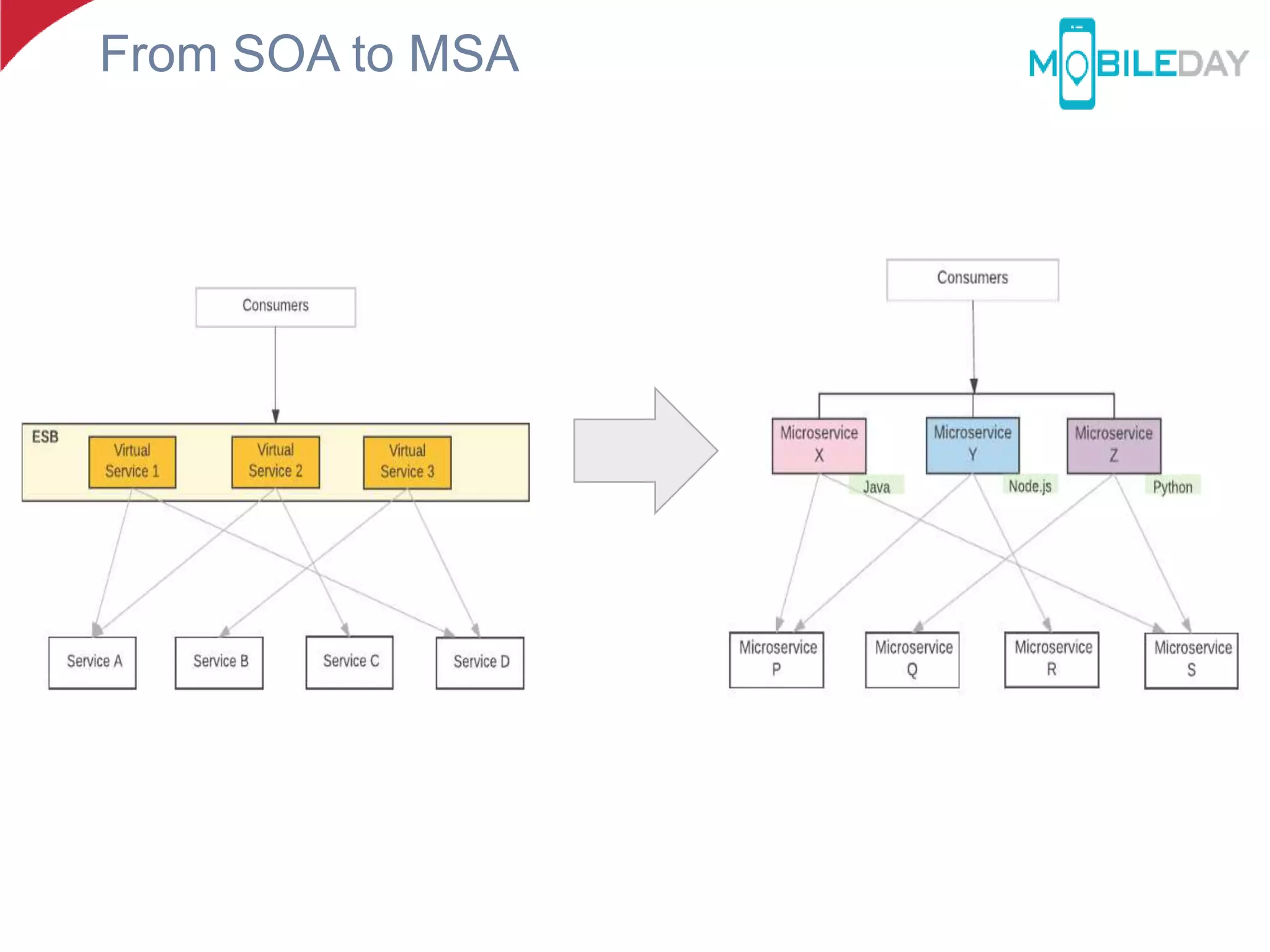
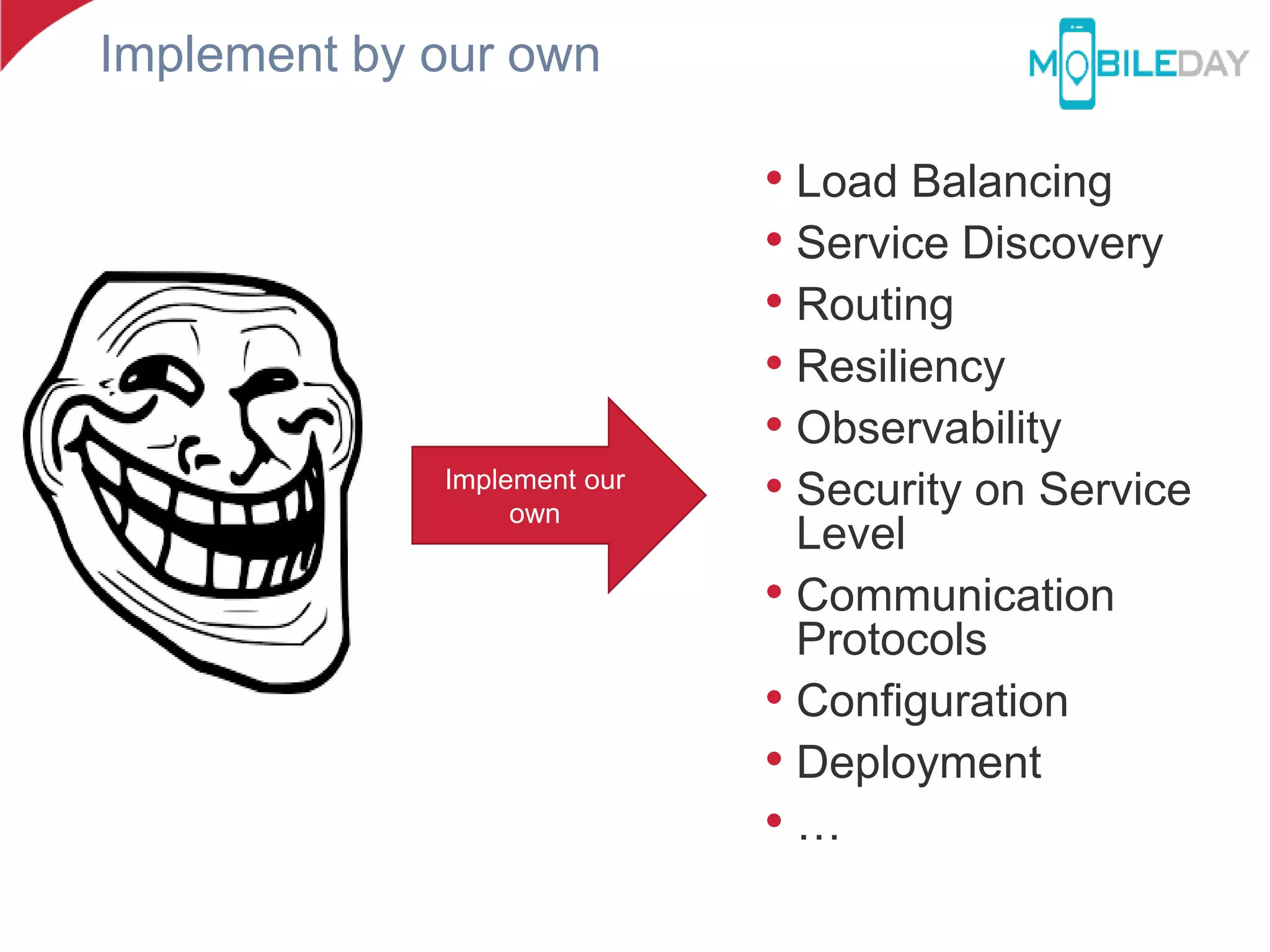



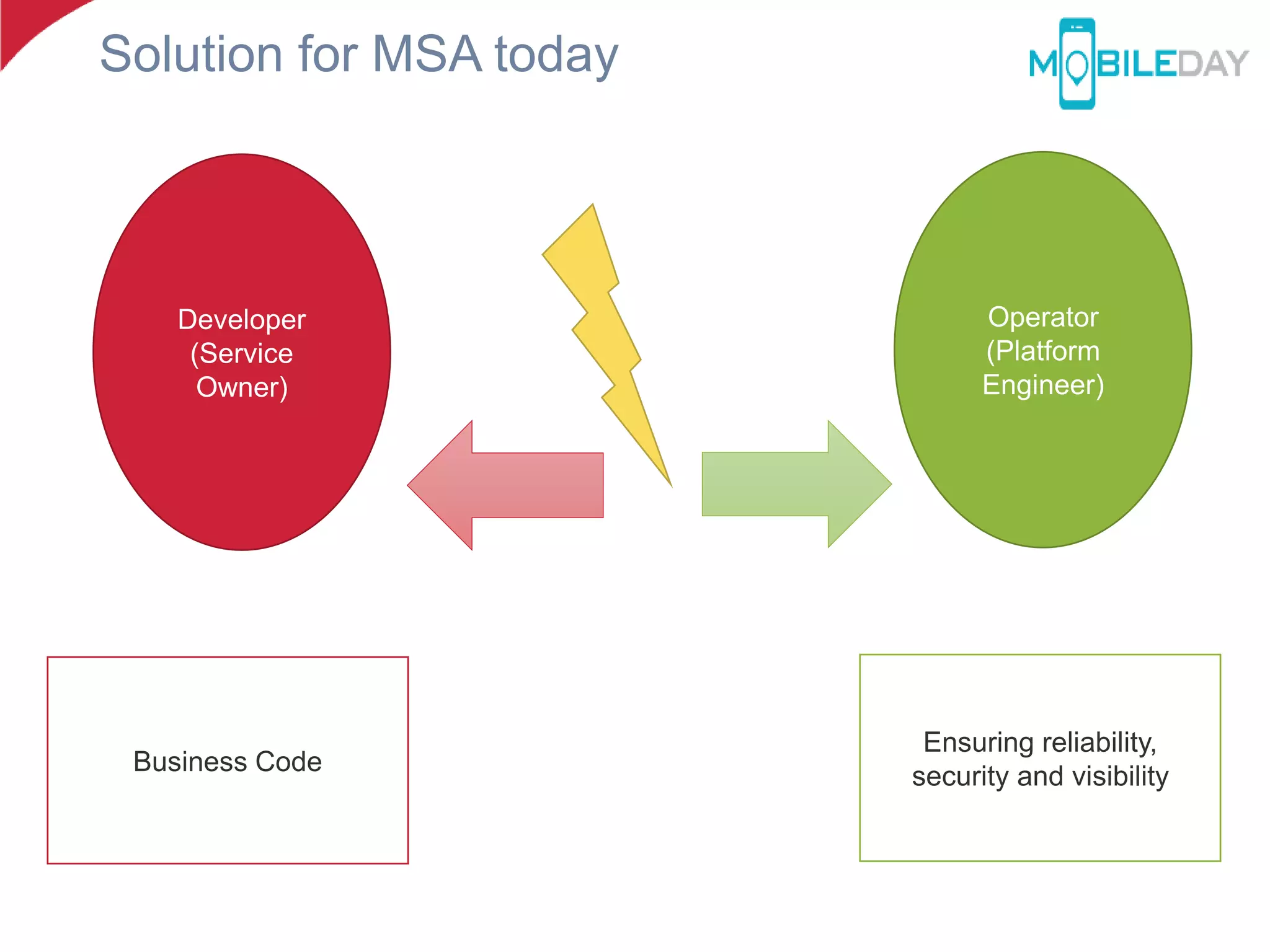
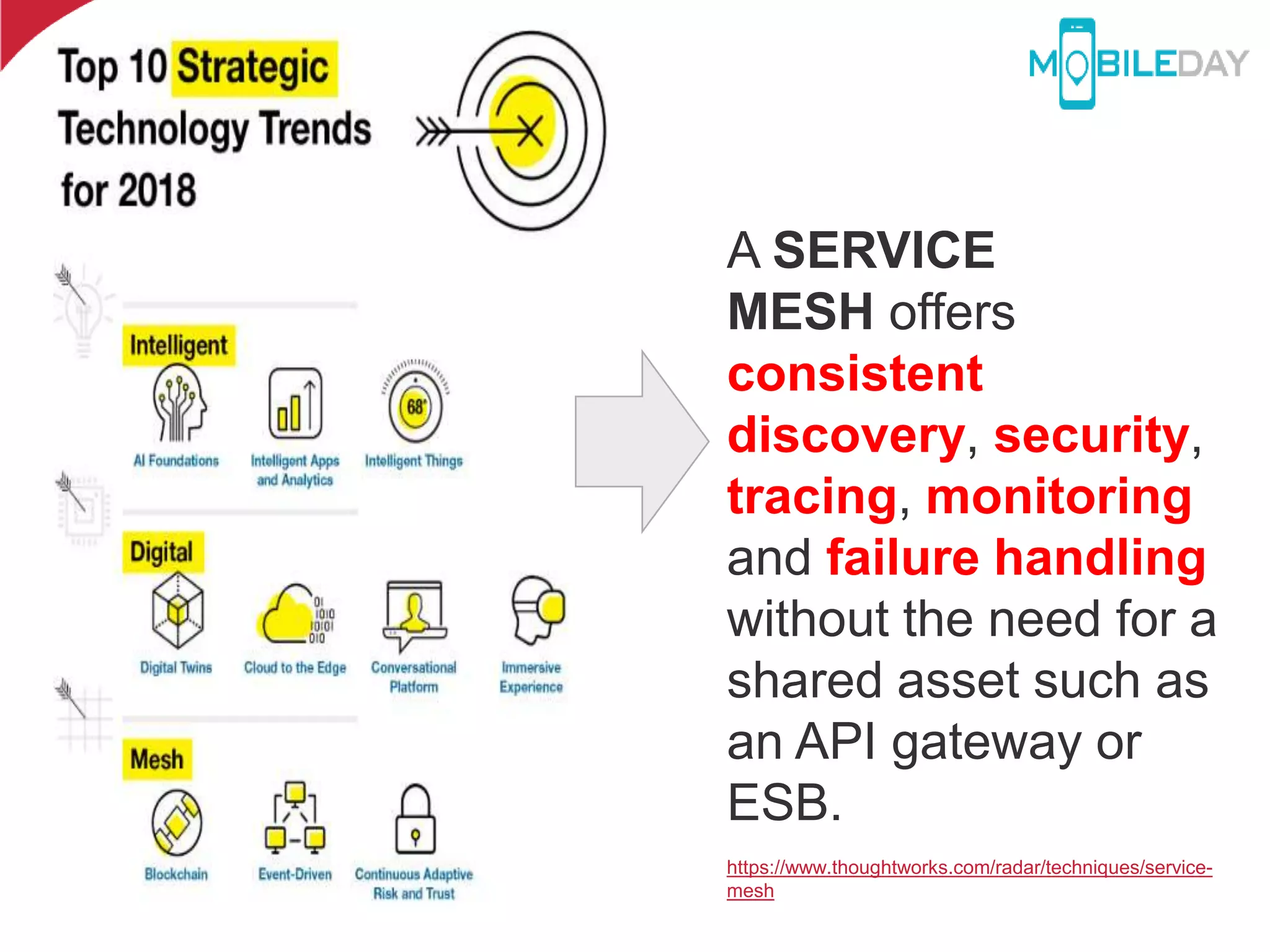
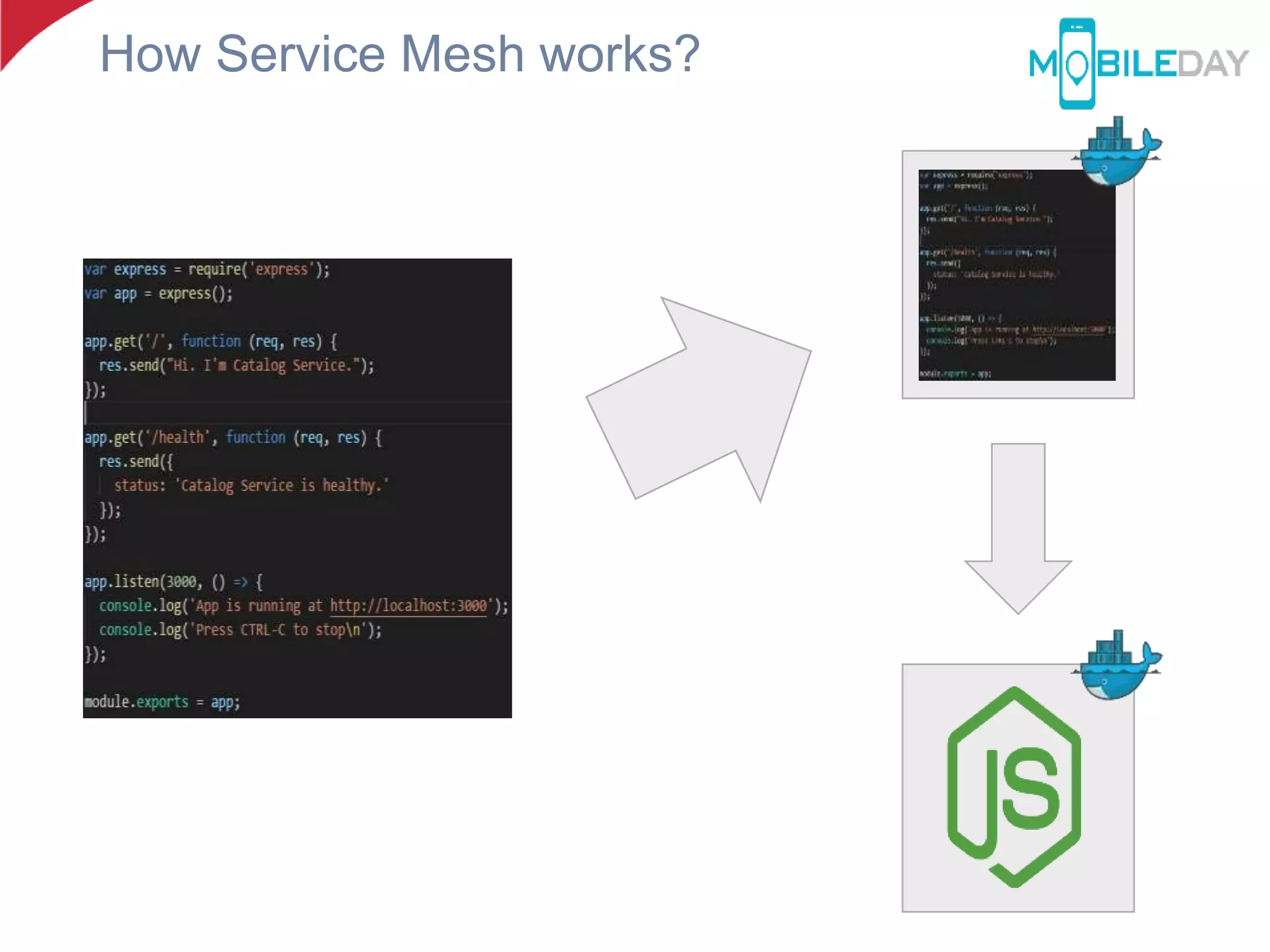
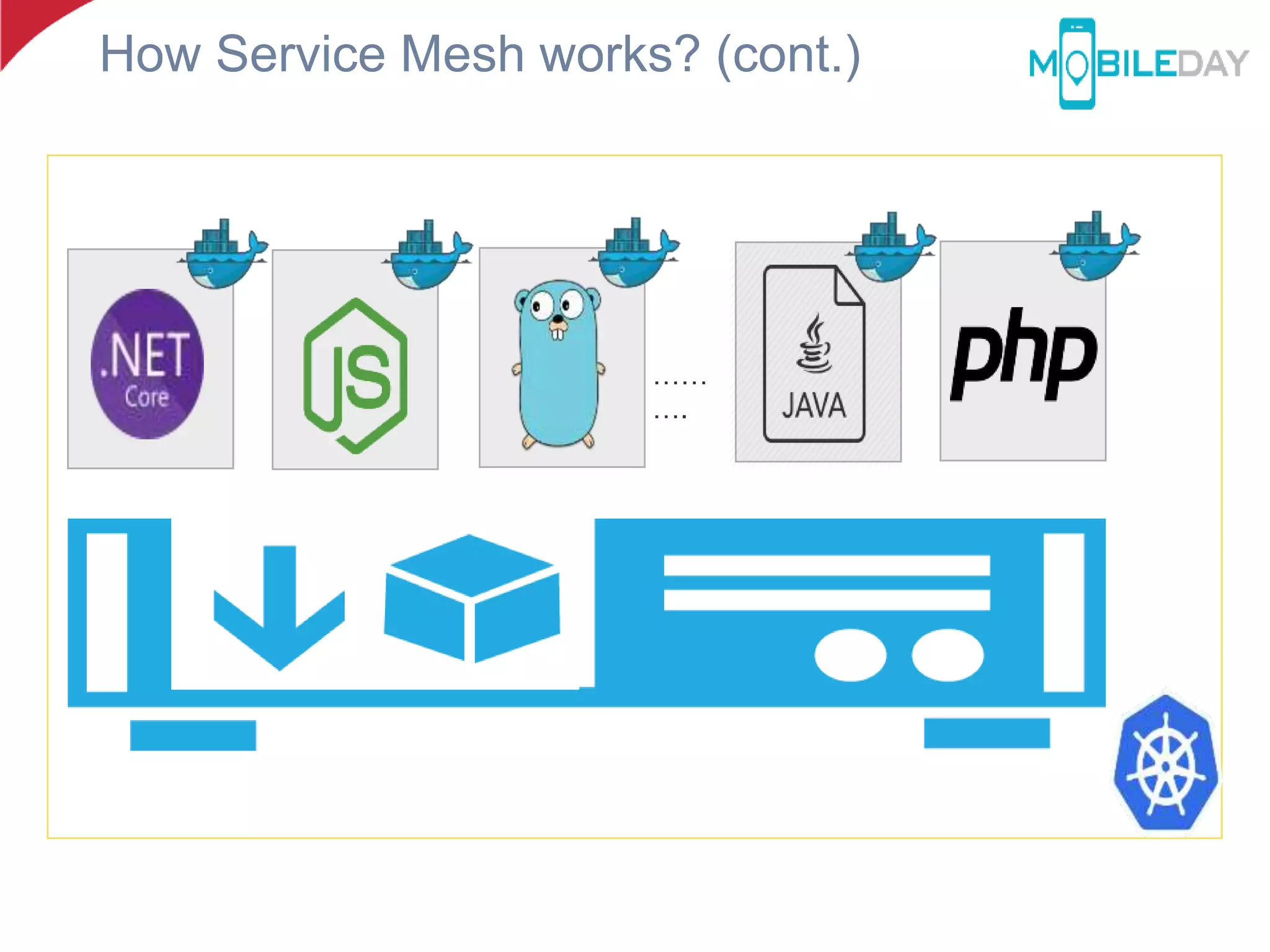
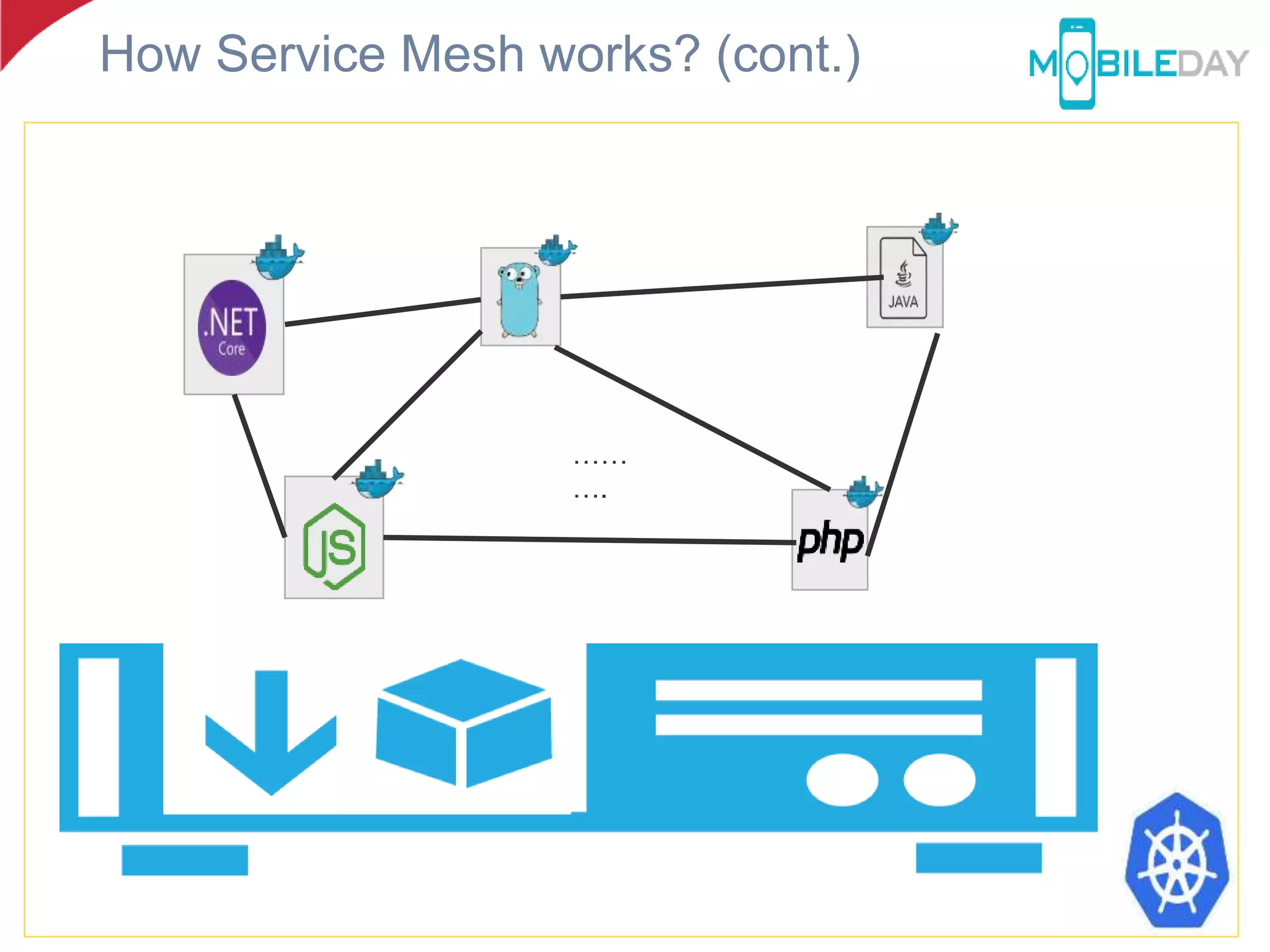
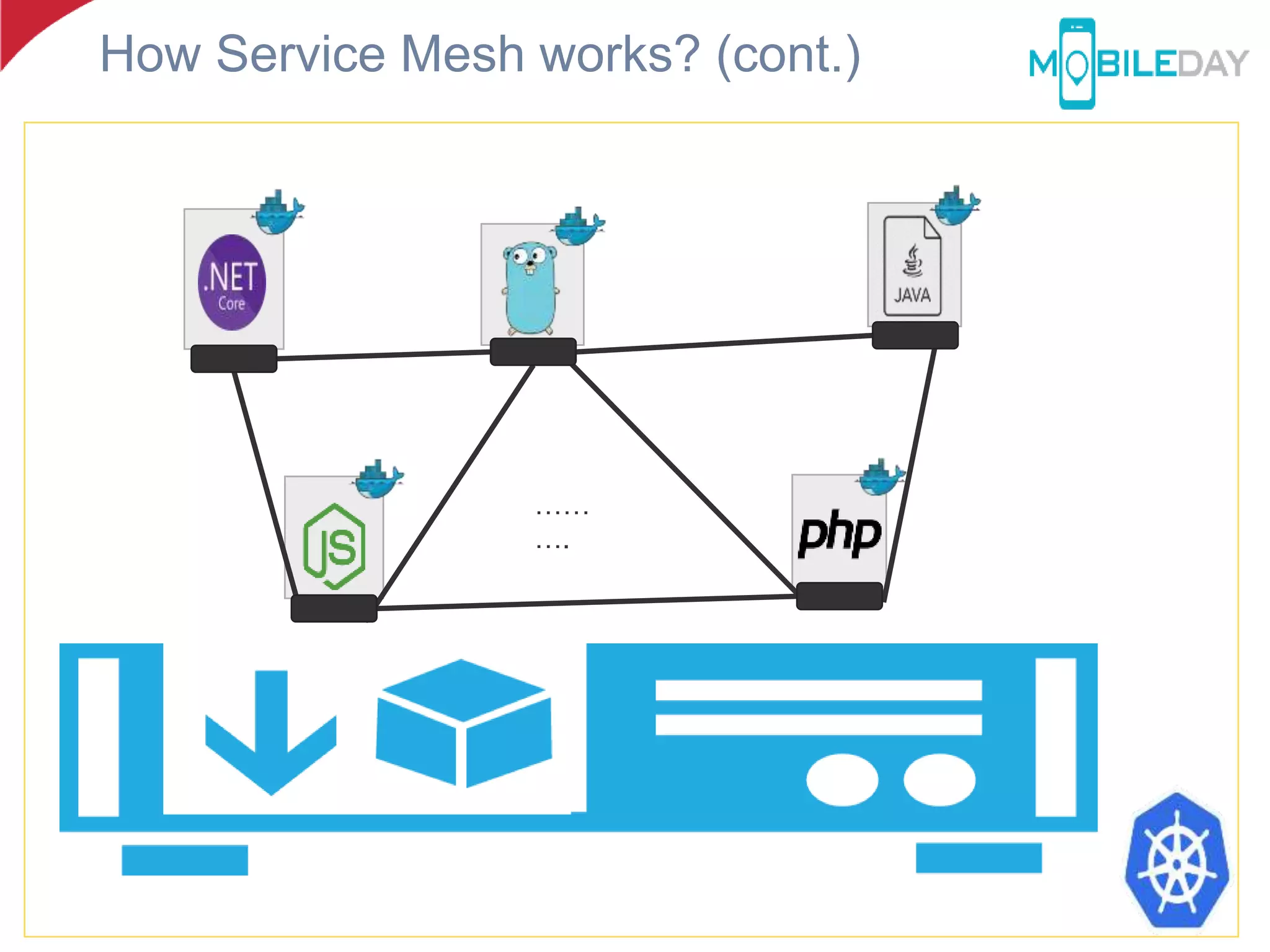
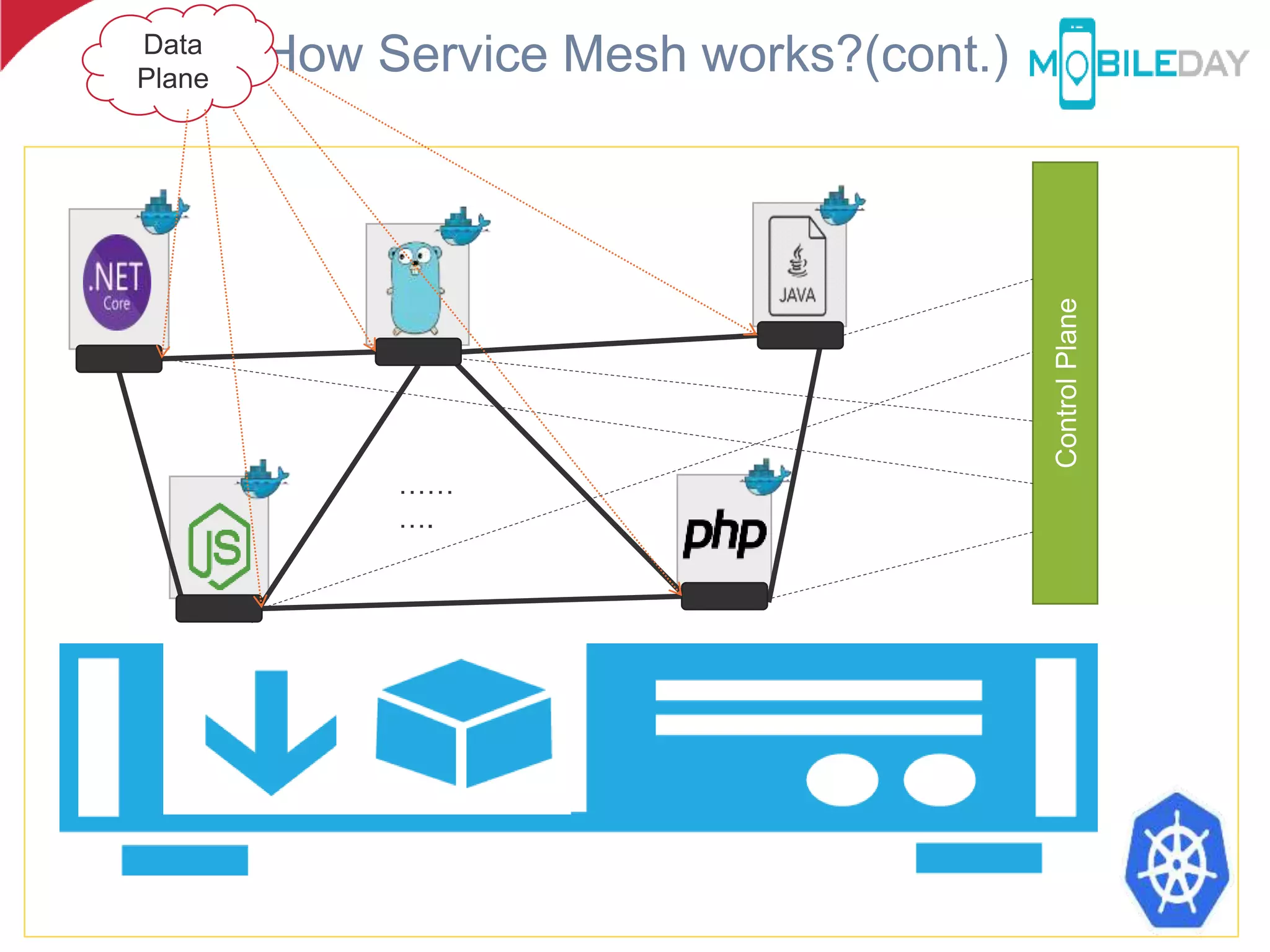
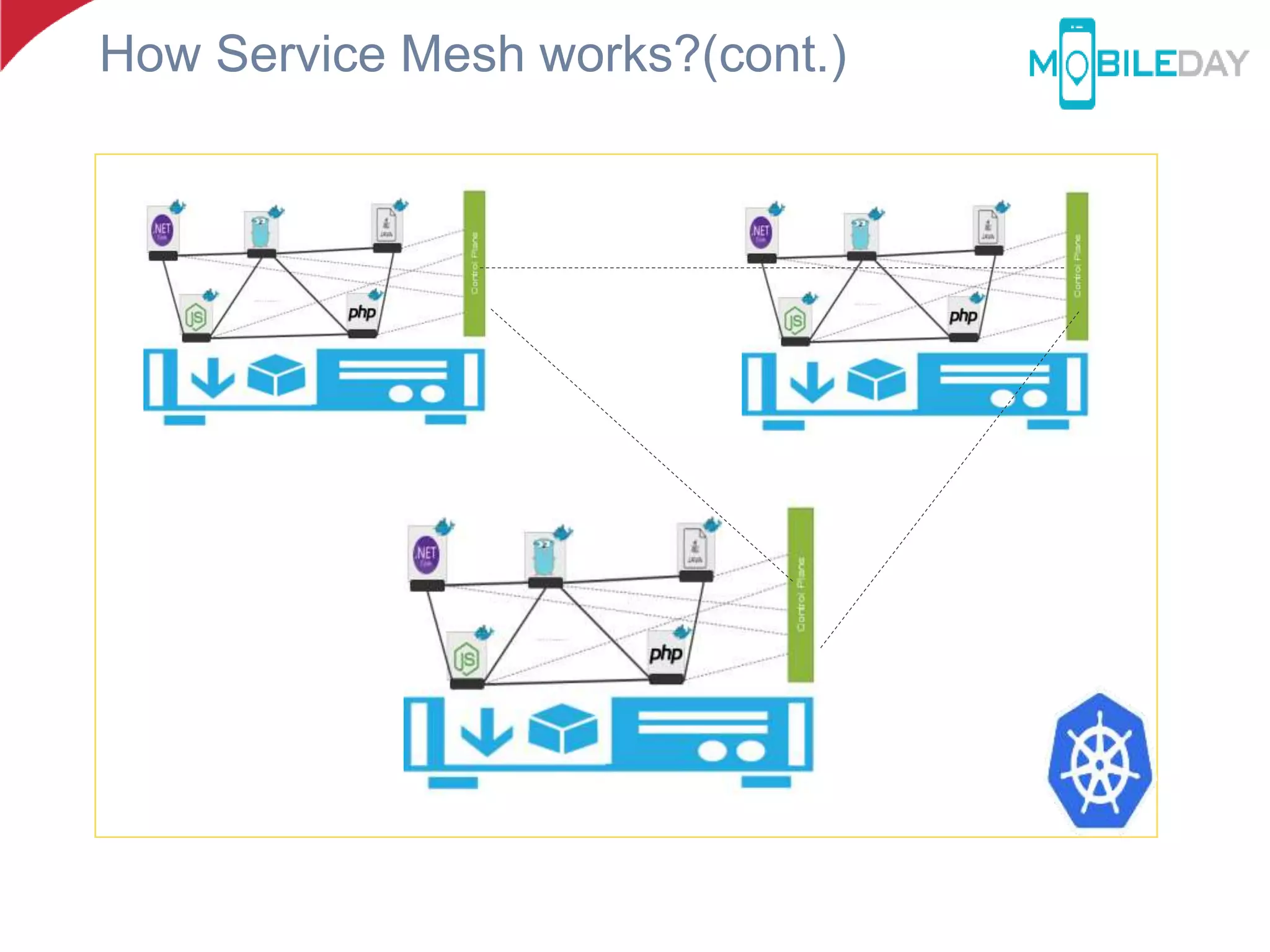

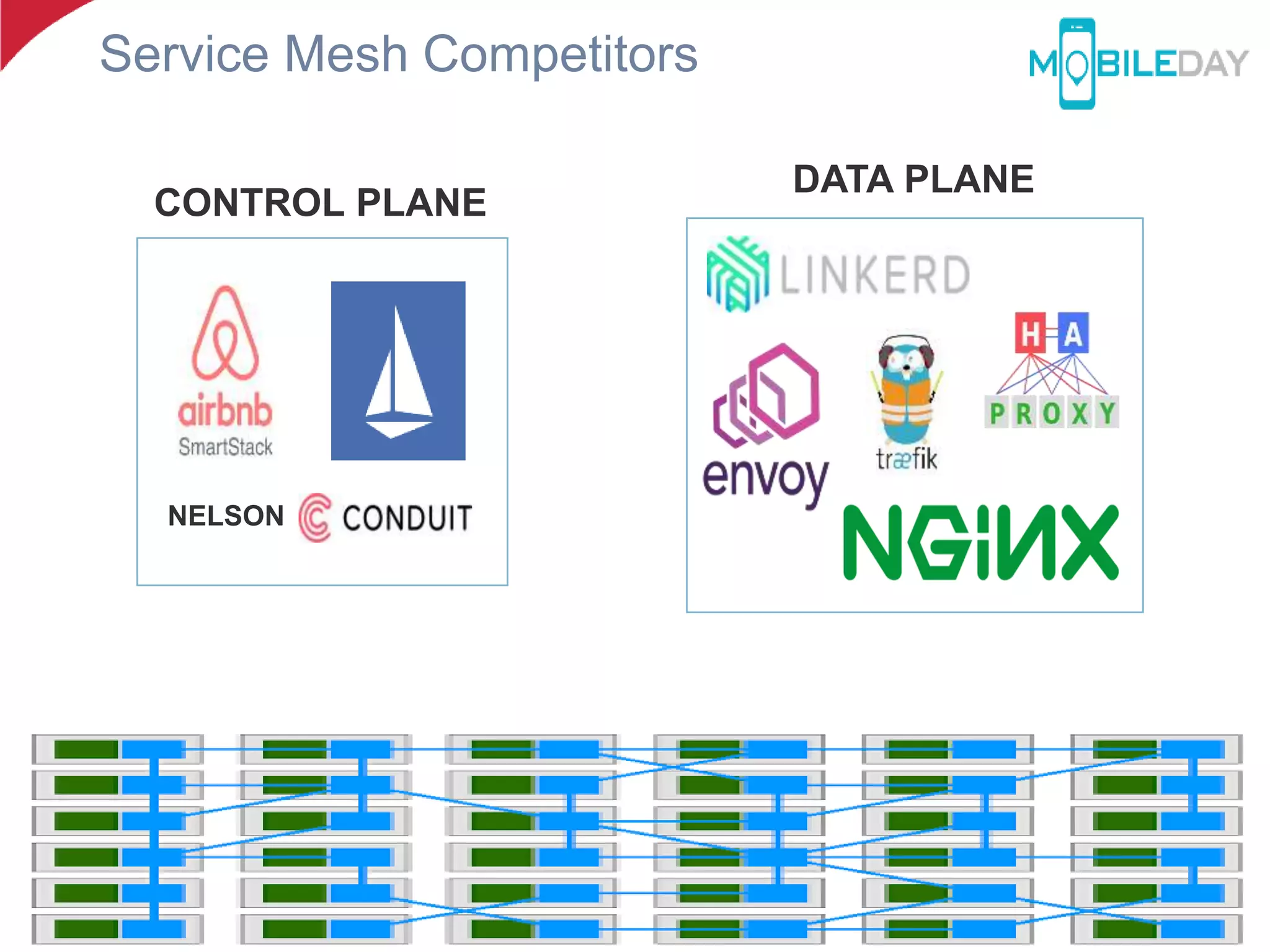
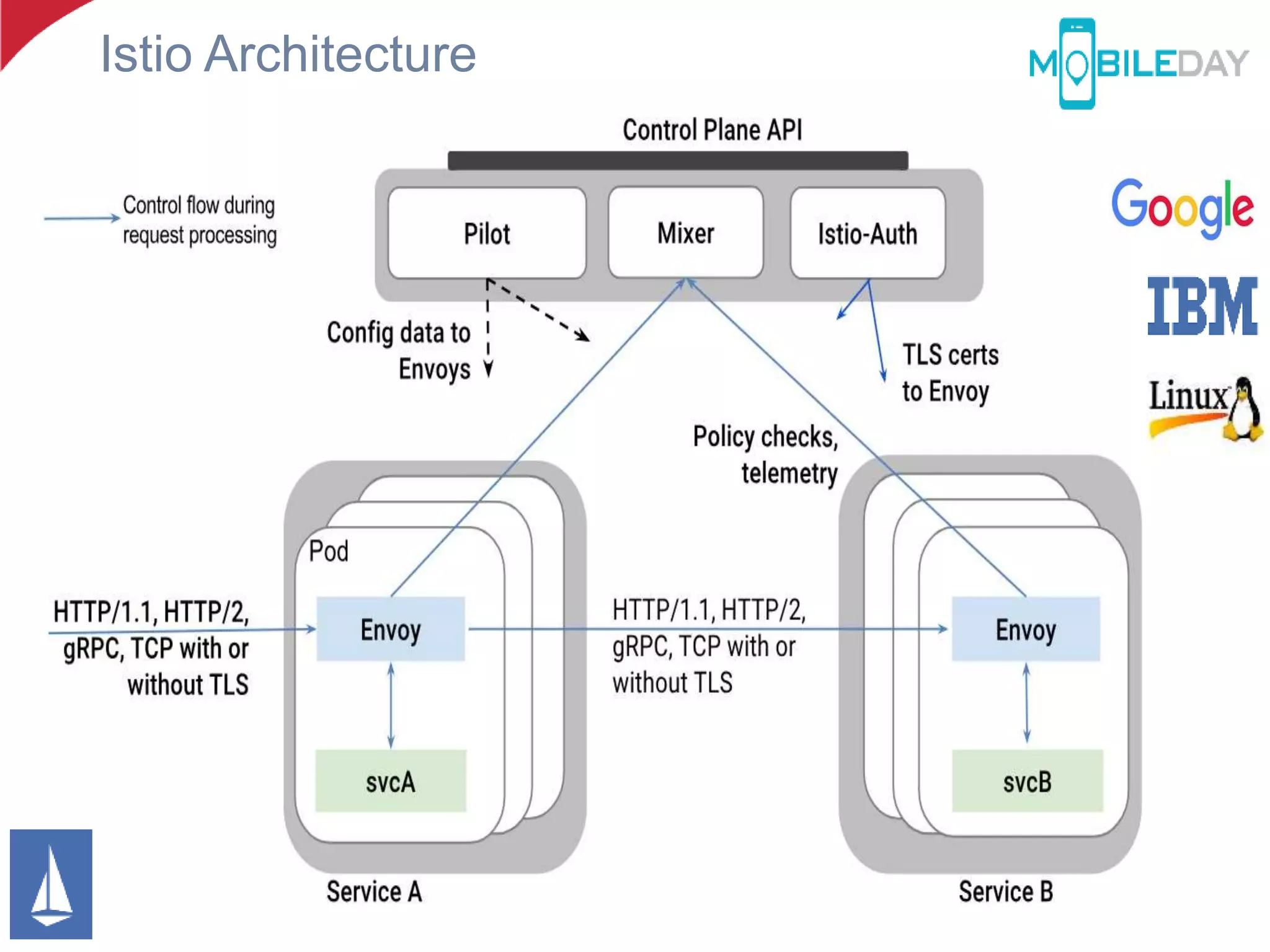



This document discusses service meshes for microservices. It describes the challenges of implementing common microservices patterns manually, such as service discovery and routing. A service mesh offers consistent approaches to these patterns without requiring a shared infrastructure component. Popular service mesh pioneers like Istio provide a control plane and data plane that intercept and manage traffic between services. While adding overhead, service meshes allow developers to focus on business code by handling concerns like tracing, security, and failure handling across the distributed system. The document outlines example architectures and invites attendees to future talks on related topics.


![[WSO2Con EU 2018] Enabling Agile Integration Teams](https://cdn.slidesharecdn.com/ss_thumbnails/wso2coneupzfkeynotenov2018olddonotuse1-181114085938-thumbnail.jpg?width=640&height=640&fit=bounds)
![[WSO2Con USA 2018] Adaptive and Iterative Integration for Microservices and C...](https://cdn.slidesharecdn.com/ss_thumbnails/adaptiveanditerativeintegrationformicroservicesandcloudnativearchitectures-kasun-180717041448-thumbnail.jpg?width=640&height=640&fit=bounds)


![[WSO2Con EU 2018] OpenAPI Specification 3 - The Evolution of Swagger](https://cdn.slidesharecdn.com/ss_thumbnails/kieselhorstdenniswso2con-openapi-181114060722-thumbnail.jpg?width=640&height=640&fit=bounds)


![[APIdays Singapore 2019] API Management in a Istio Service Mesh with WSO2 API...](https://cdn.slidesharecdn.com/ss_thumbnails/apidayssingapore-apimanagementinaistioservicemeshwithwso2apimanager-190425063516-thumbnail.jpg?width=640&height=640&fit=bounds)
![[WSO2 API Day Toronto 2019] Extending Service Mesh with API Management](https://cdn.slidesharecdn.com/ss_thumbnails/wso2apidaytoronto2019extendingservicemeshwithapimanagement-191113062812-thumbnail.jpg?width=640&height=640&fit=bounds)


