This document provides an overview of micro, small, and medium enterprises (MSMEs) in India. Some key points:
1. MSMEs are the backbone of India's industrial development, contributing nearly 8% of GDP, 40% of manufacturing output, and 45% of exports. They also provide the largest share of employment after agriculture.
2. MSMEs can be classified as micro, small, or medium based on the number of employees and amount invested in plant and machinery. Micro enterprises have less than 10 employees and investments under Rs. 25 lakh. Small enterprises have less than 50 employees and investments under Rs. 5 crore.
3. MSMEs play an important role in
In this document
Powered by AI
Introduction to MSMEs as backbone of development, contributing 8% to GDP, diverse industries, and employment source.
Emergence from Gandhi model and MSME Act 2006; Growth post-liberalization after 1991.
Explains classification of micro, small, and medium enterprises based on employment and investment.
Classification of micro, small, and medium services enterprises based on investment in plant and machinery.
Defines MSMEs by low production costs, innovation capacity, employment generation, and regional balance.
Highlights MSMEs contributions to employment, production, exports, resource utilization, and GDP increase.
Identifies financial, raw material, technological, and managerial problems confronting MSMEs.
Recommendations for overcoming challenges through technology supply, stakeholder involvement, and awareness.
Statistics: 31 million employment, 13 million MSMEs, 10% of exports, 45% of industrial production.
Details about banks providing loans tailored for MSME sector funding.
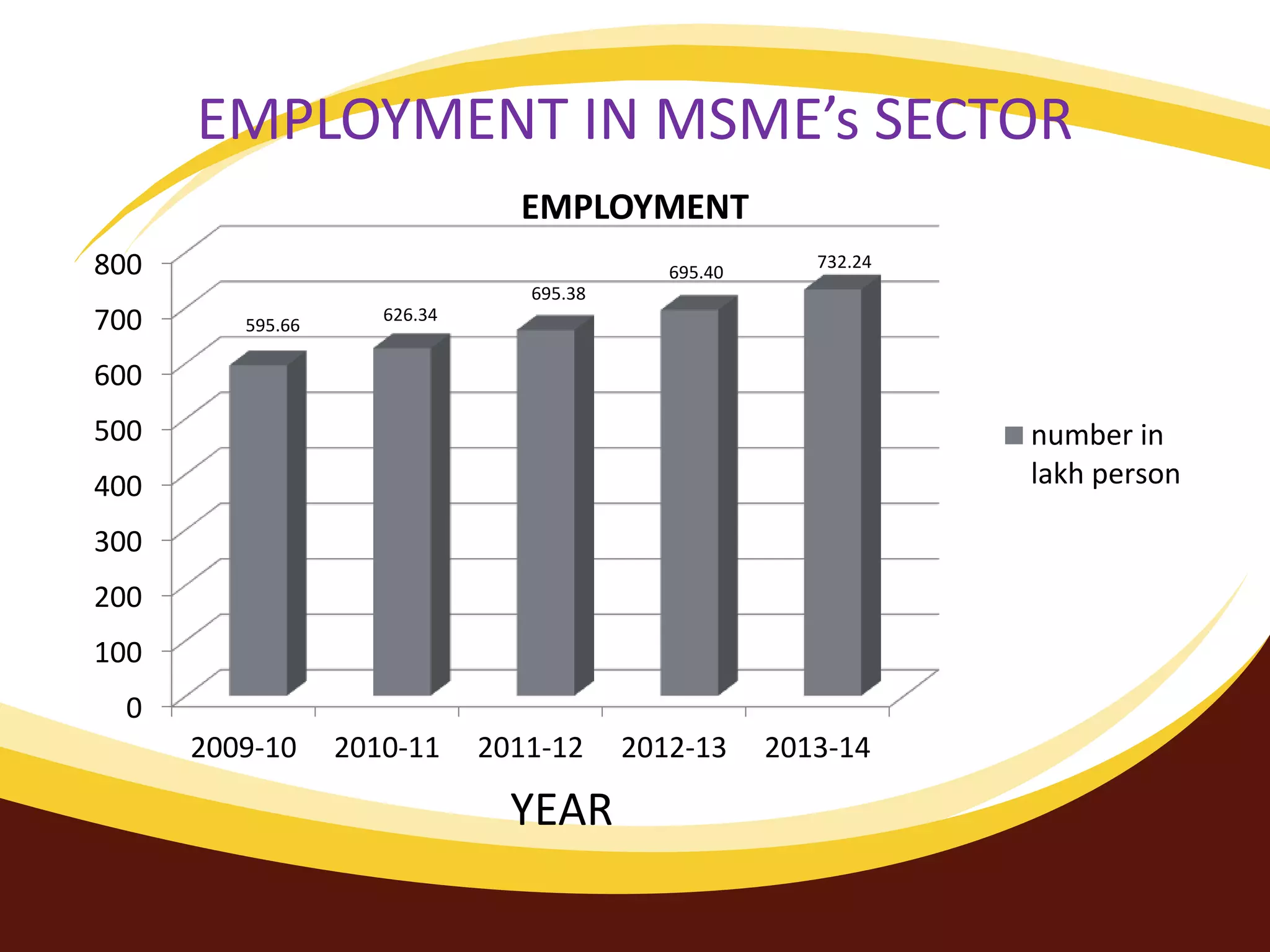
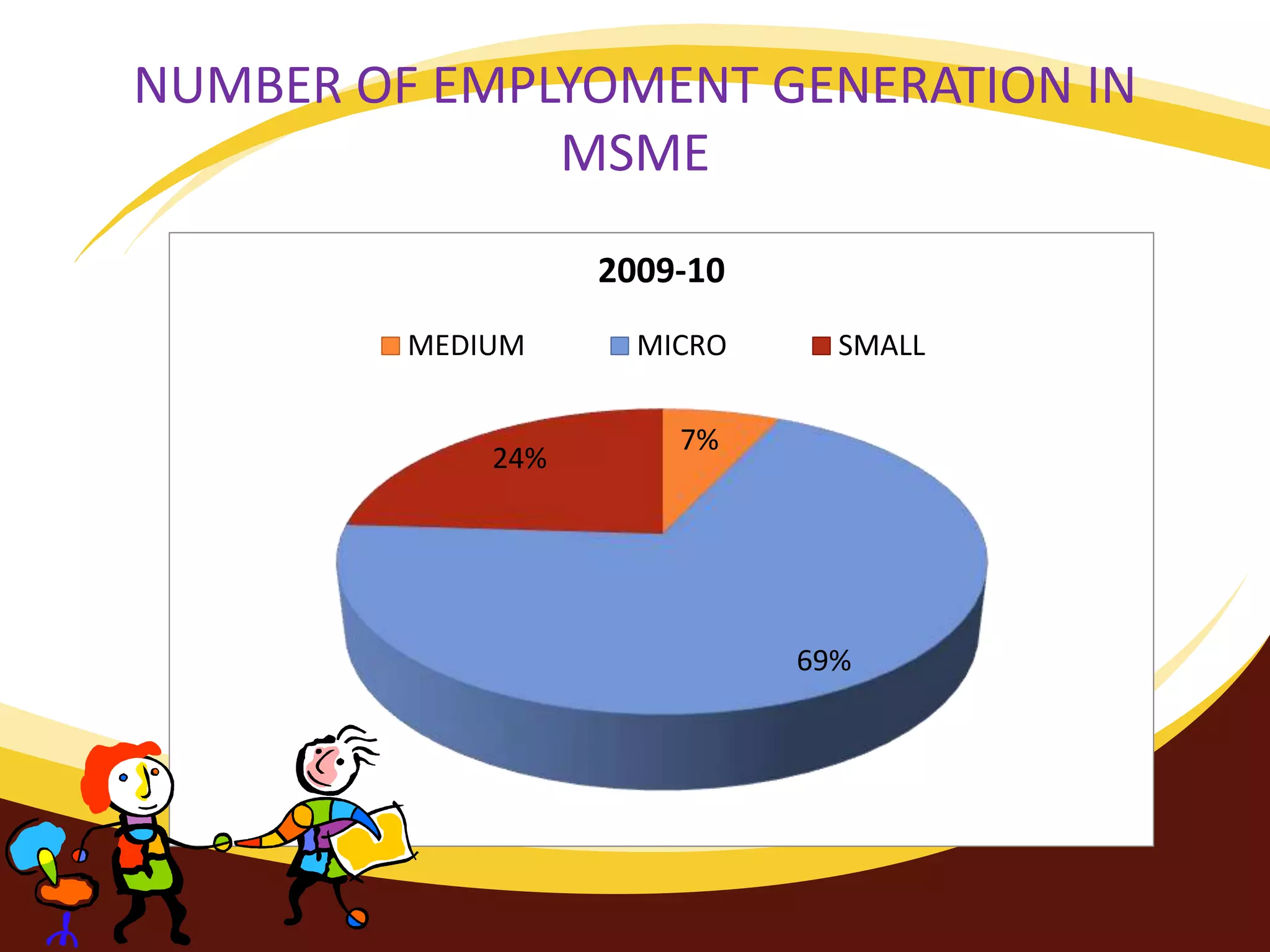
Graph shows employment numbers from 2009-2014 and distribution of employment across micro, small, and medium.
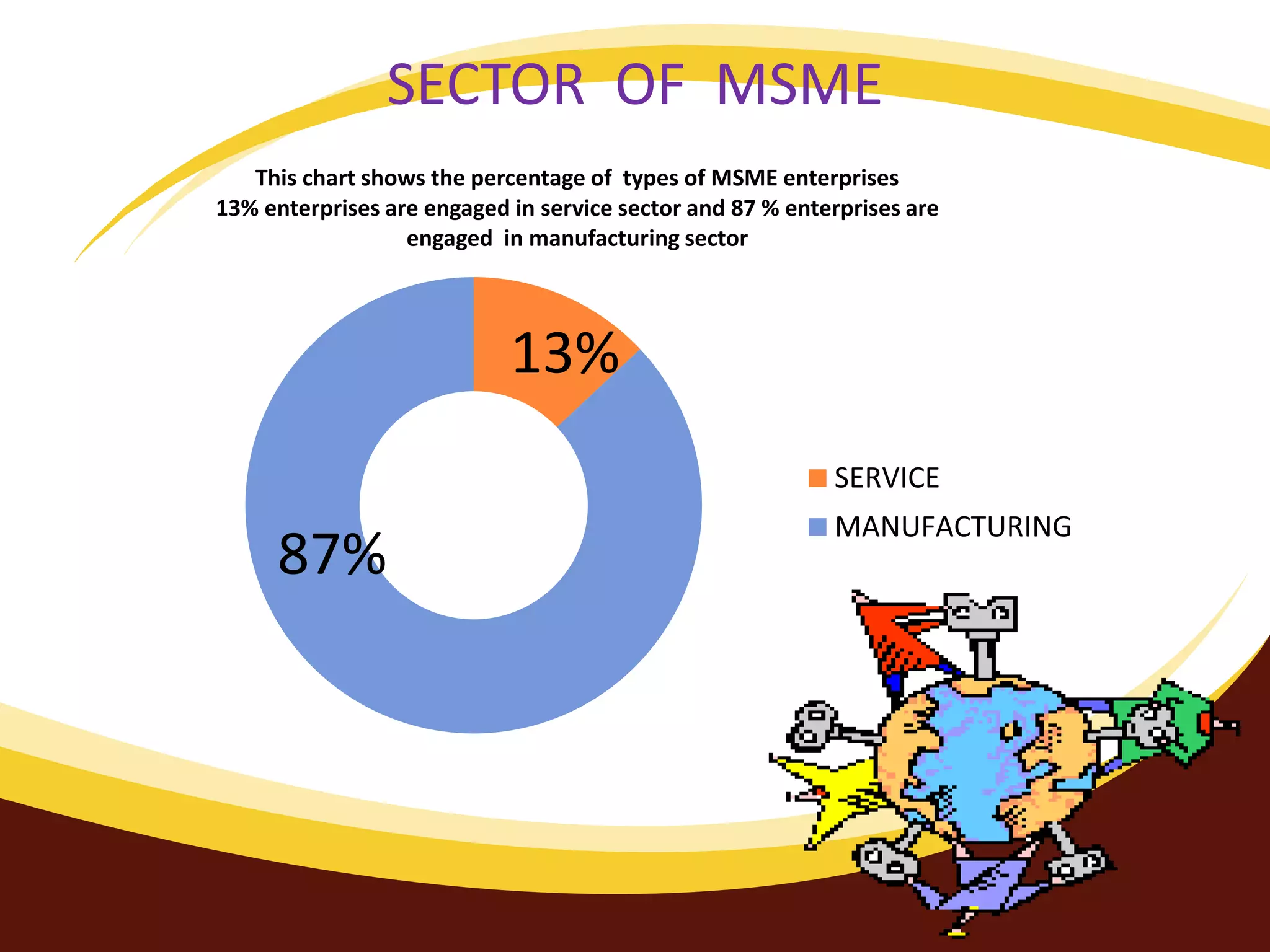
Percentage breakdown of MSME engagement in service (13%) vs manufacturing (87%) sectors.
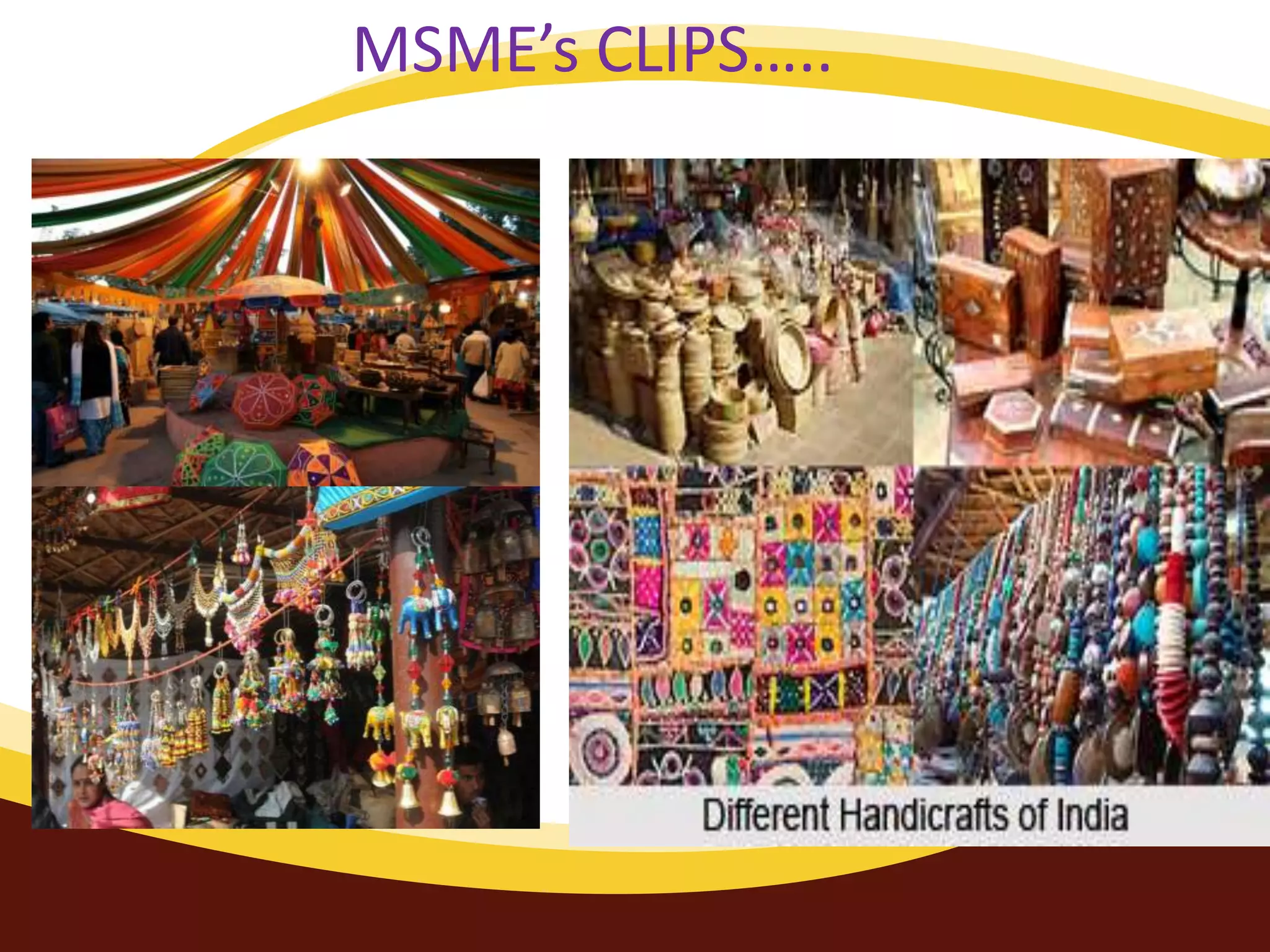
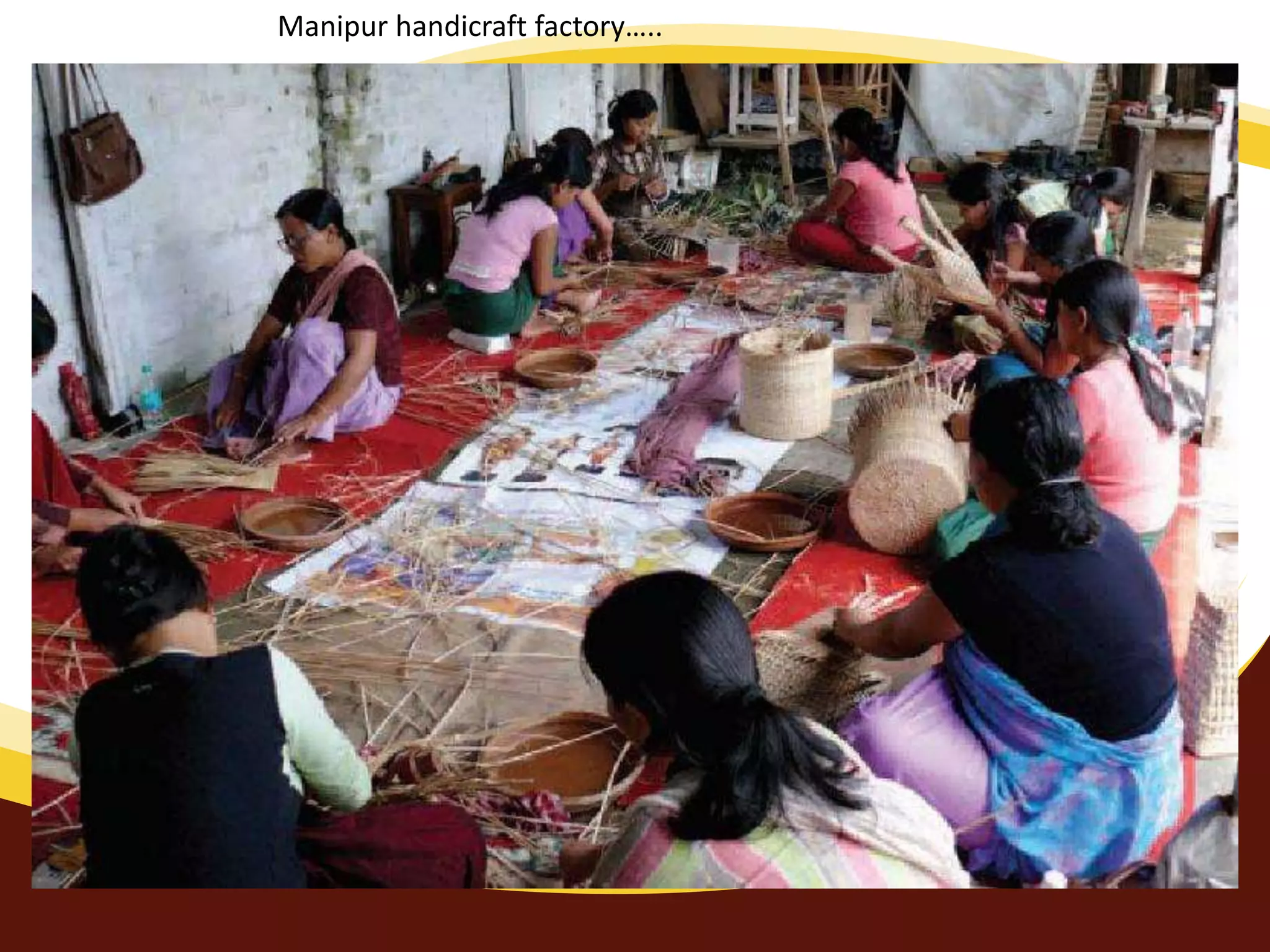
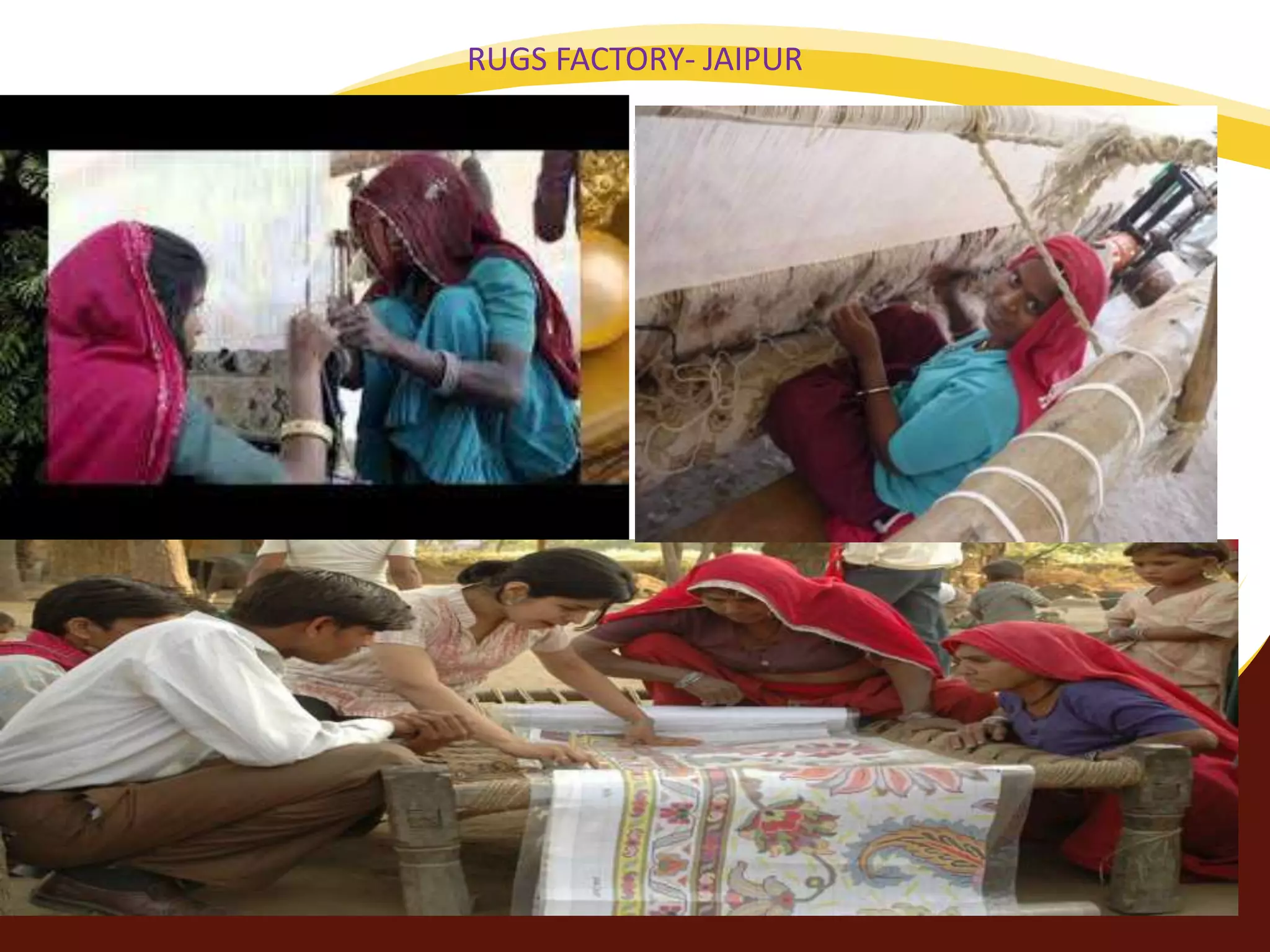
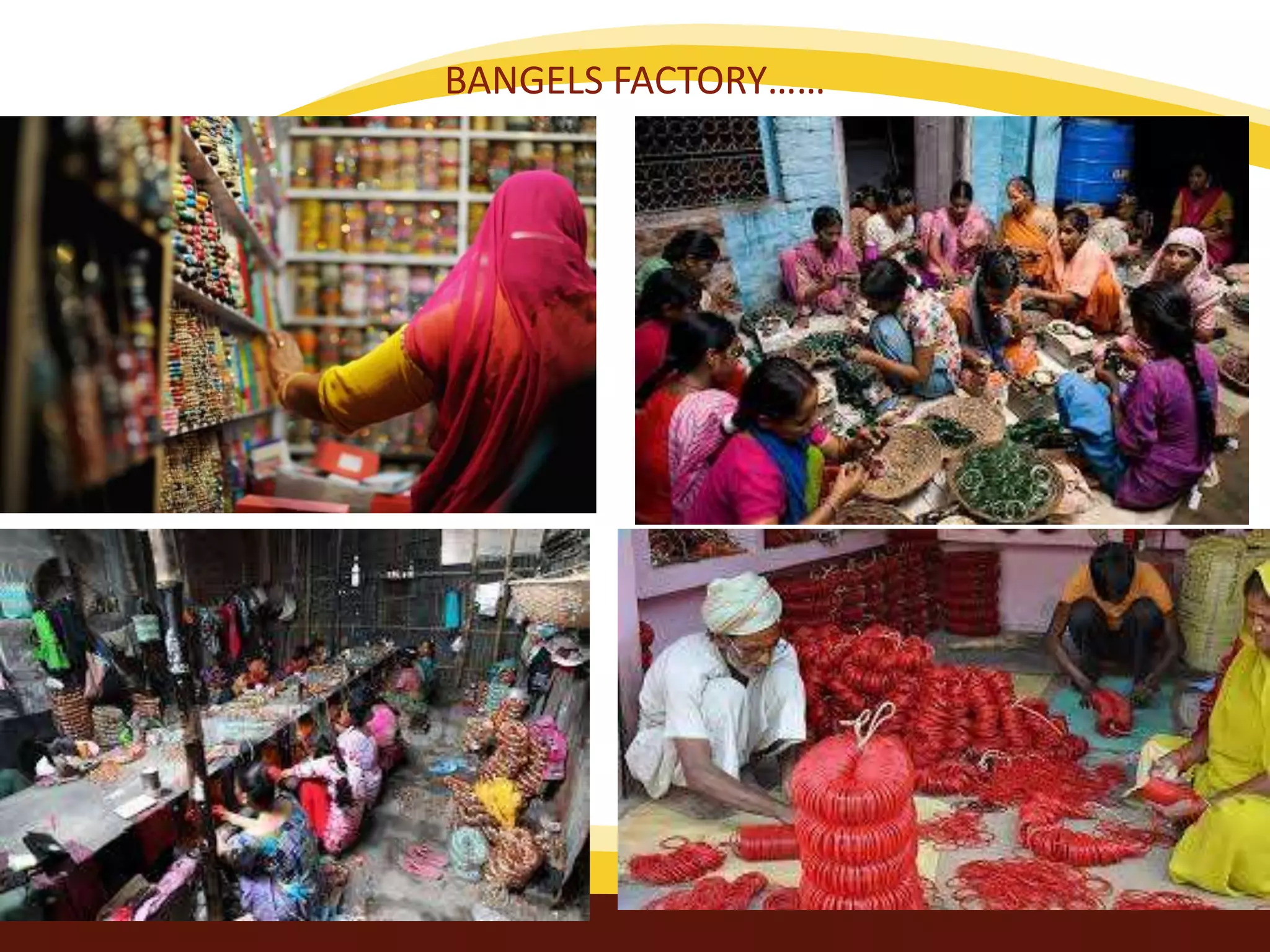
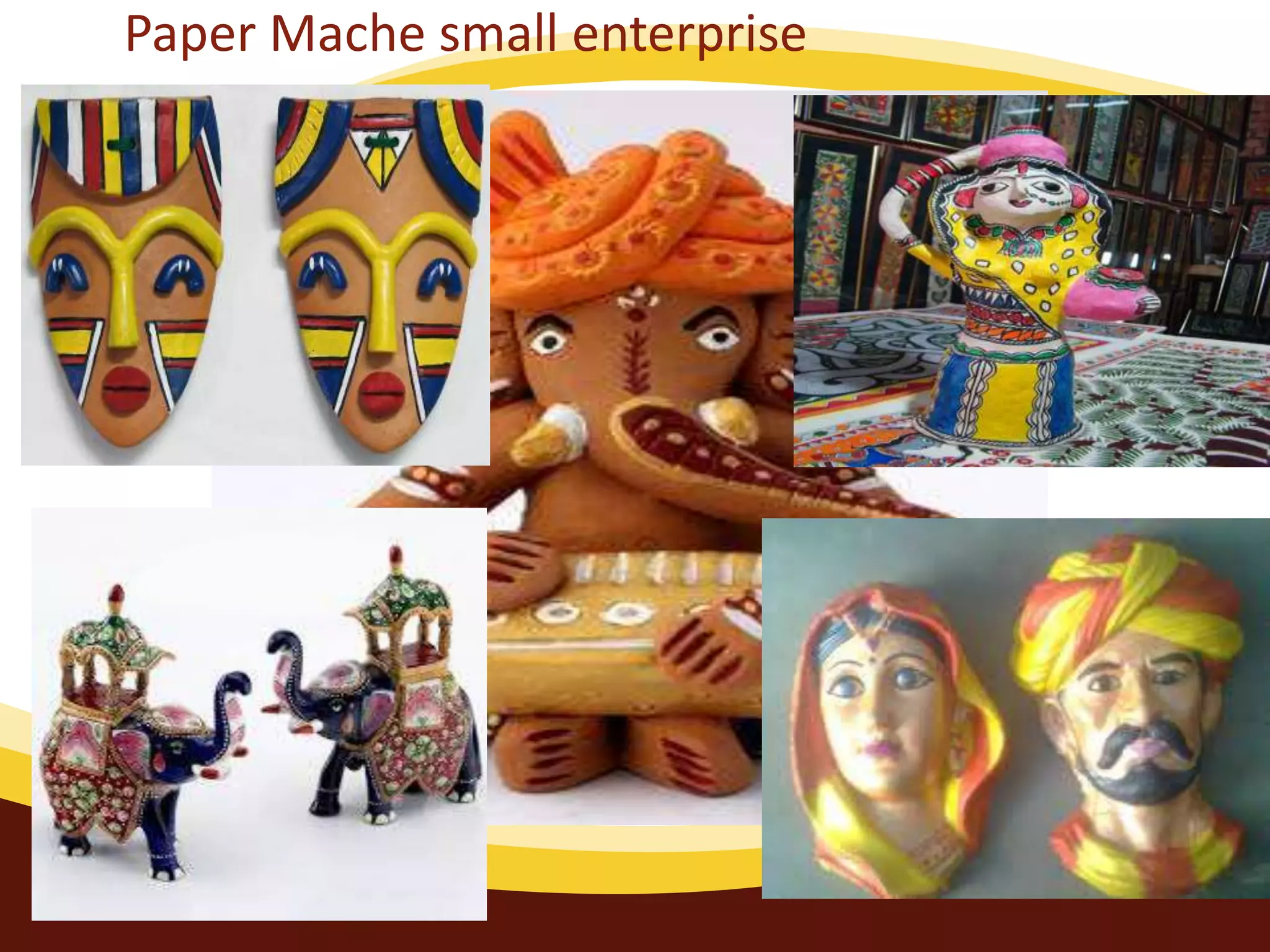
Clips showcasing various MSMEs, including handicraft, rugs, bangles, and paper mache factories.
INDEX
1. Introduction
2. Emergenceof MSME
3. Overview of types
4. Types of MSME (micro , small & medium)
5. Characteristics
6. Role of MSME
7. Problems
8. Suggestions
9. Contributions
10. Bar chart and pie chart
11. MSME clips from all over India
2.
INTRODUCTION
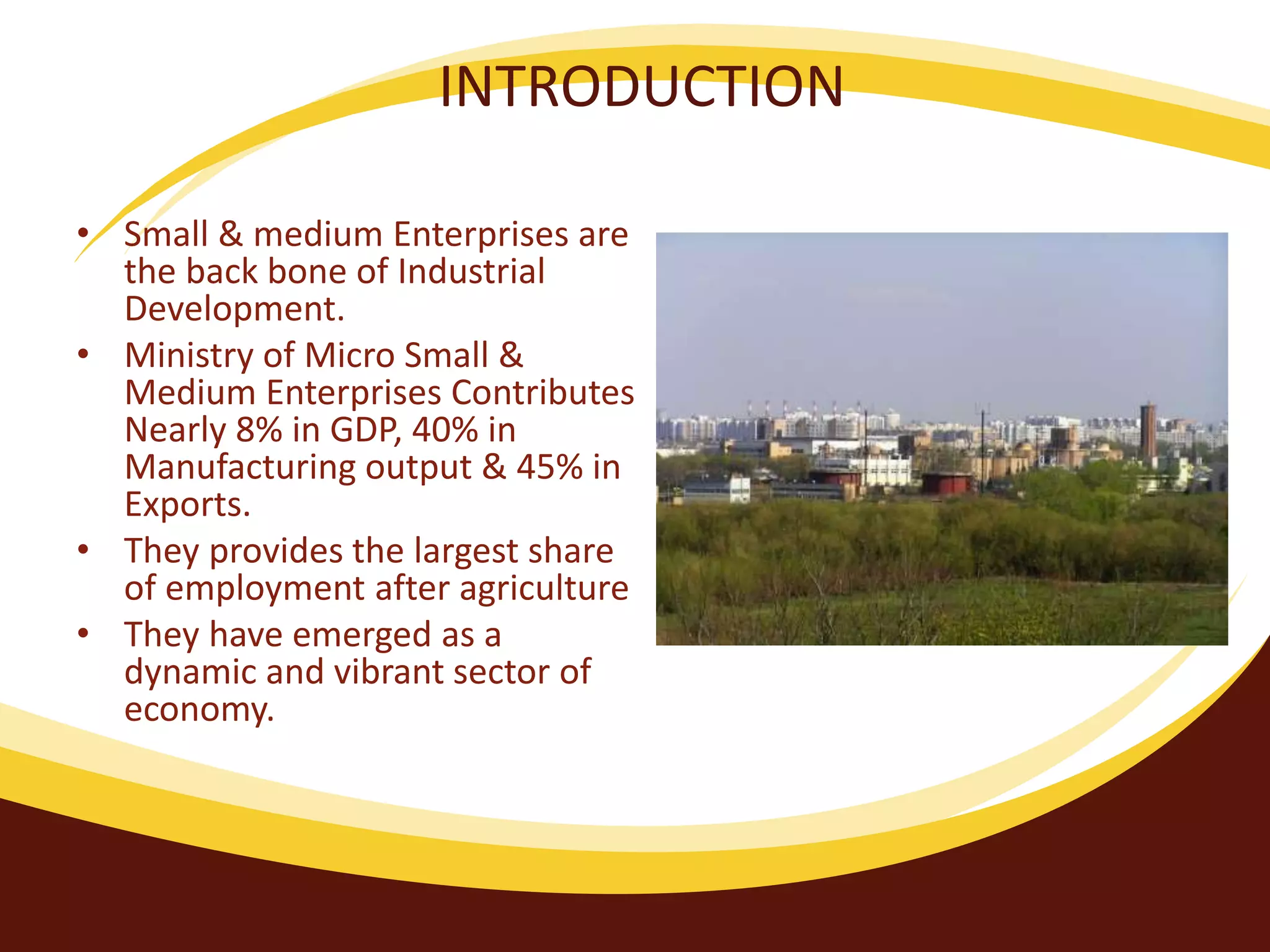
• Small &medium Enterprises are
the back bone of Industrial
Development.
• Ministry of Micro Small &
Medium Enterprises Contributes
Nearly 8% in GDP, 40% in
Manufacturing output & 45% in
Exports.
• They provides the largest share
of employment after agriculture
• They have emerged as a
dynamic and vibrant sector of
economy.
3.
INTRODUCTION
• They arewidely dispersed
across the country and
produces a diverse range of
product and service.
• It helps in the growth of a
country
• They are the nursery for
entrepreneurship and
innovation
4.
EMERGENCE OF MSME
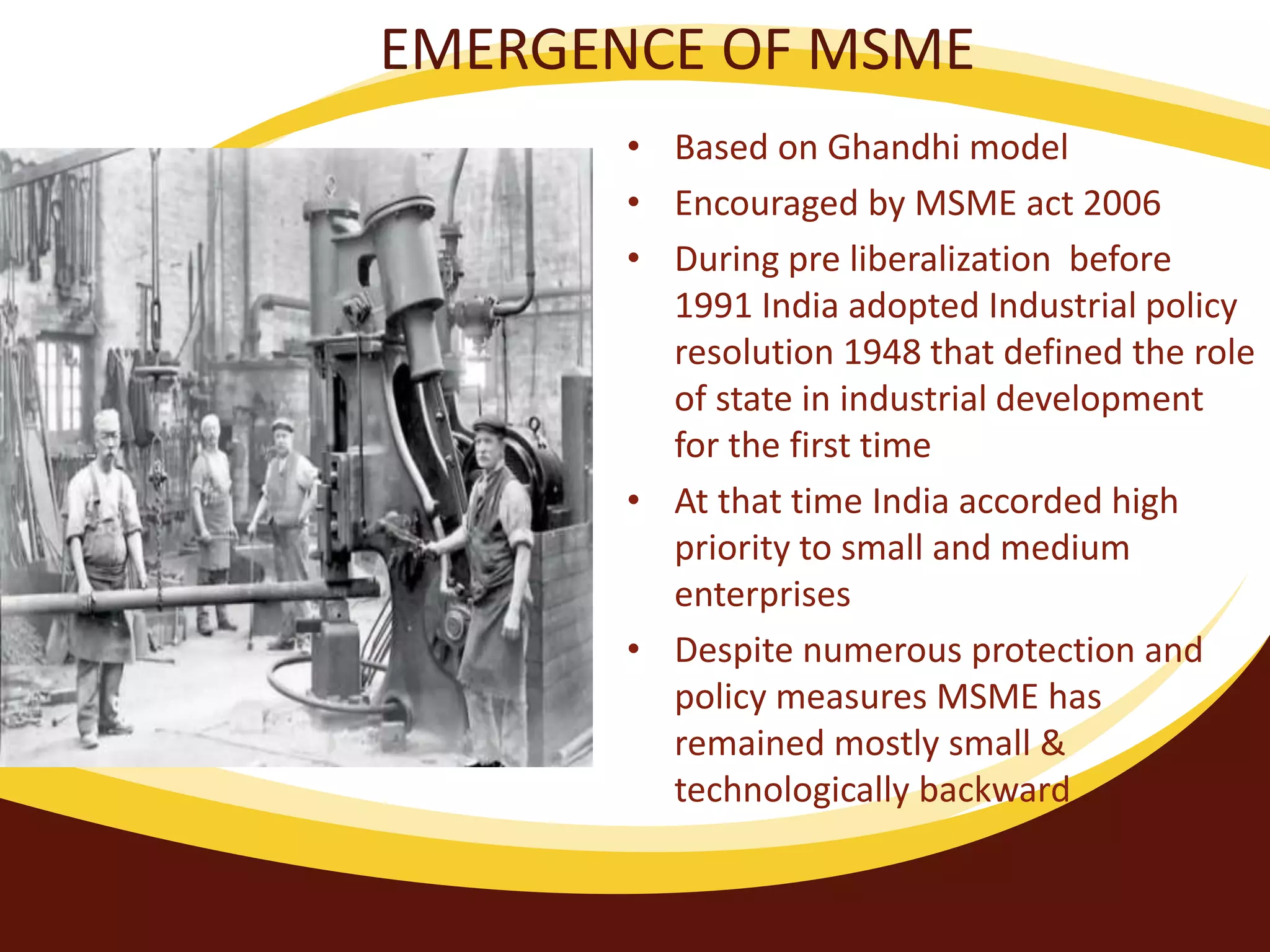
•Based on Ghandhi model
• Encouraged by MSME act 2006
• During pre liberalization before
1991 India adopted Industrial policy
resolution 1948 that defined the role
of state in industrial development
for the first time
• At that time India accorded high
priority to small and medium
enterprises
• Despite numerous protection and
policy measures MSME has
remained mostly small &
technologically backward
5.
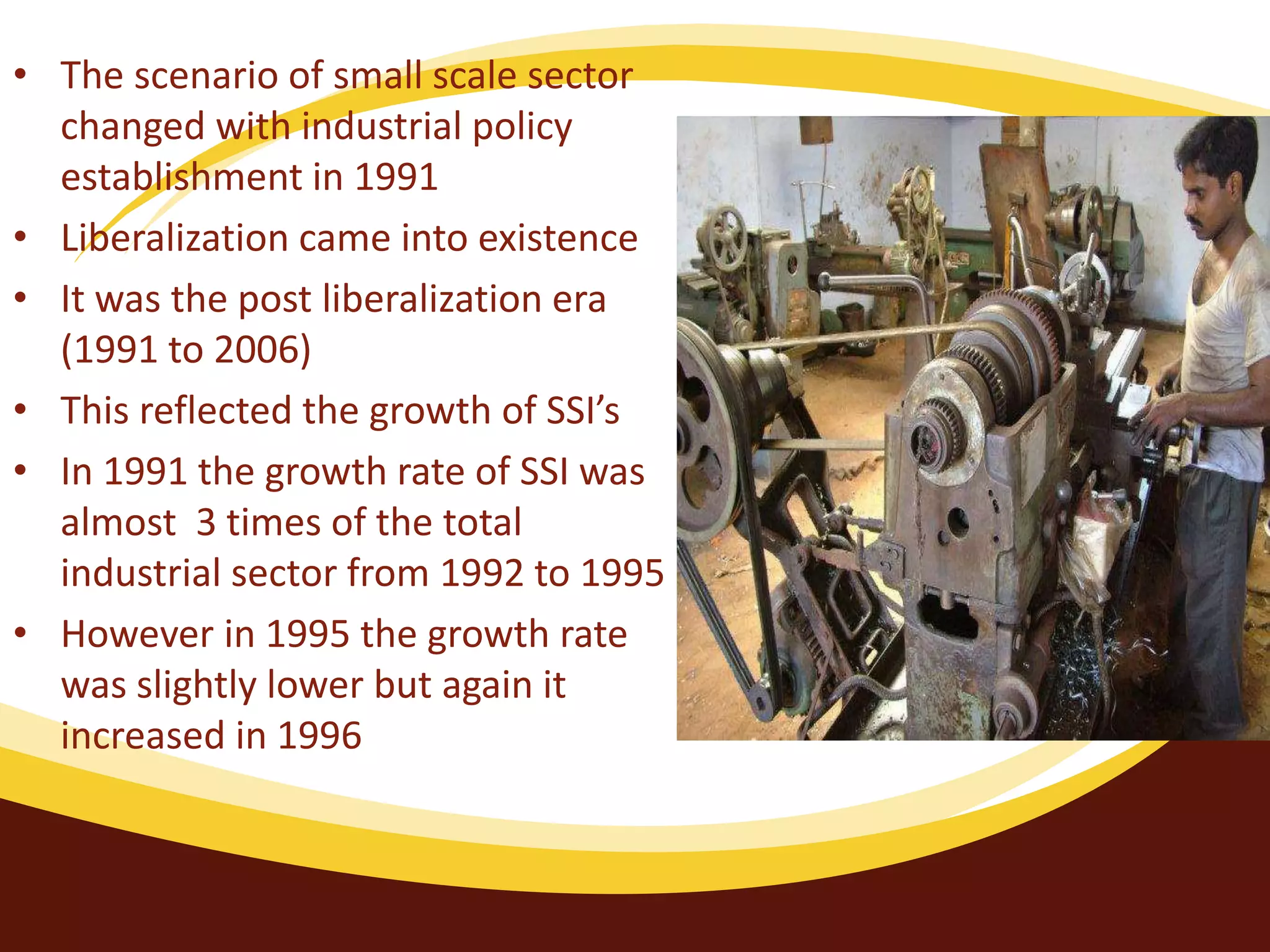
• The scenarioof small scale sector
changed with industrial policy
establishment in 1991
• Liberalization came into existence
• It was the post liberalization era
(1991 to 2006)
• This reflected the growth of SSI’s
• In 1991 the growth rate of SSI was
almost 3 times of the total
industrial sector from 1992 to 1995
• However in 1995 the growth rate
was slightly lower but again it
increased in 1996
MANUFACTURING ENTERPRISES
MICRO ENTERPRISE
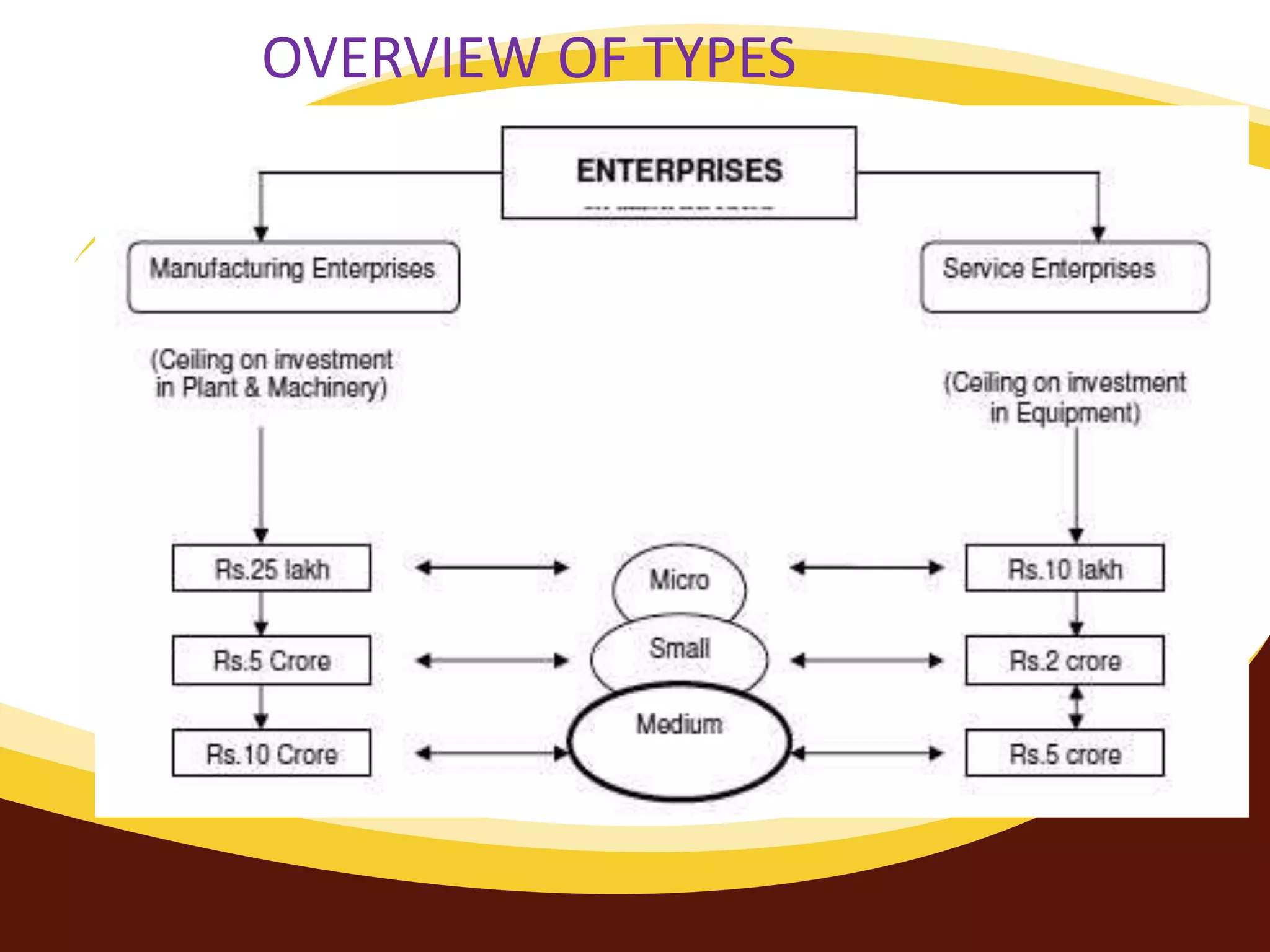
•Micro enterprise generally refers to a small
business employing 10 people or less
• It is an enterprise in which investments in
plant and machinery is between 5lakh to 25
lakh.
• These enterprises works and operates not by
choice but out of necessity
8.
SMALL ENTERPRISE
• Smallenterprise generally refers to a
business employing 50 persons or less
• It is an enterprise in which investments in
plant and machinery is between 25 lakh
to 5 crores.
• These enterprise works and operates to
earn a small amount of profit.
9.
MEDIUM ENTERPRISE
• Mediumenterprise refers to a business
employing maximum to 250 employees
• It is an enterprise in which investment in
plant and machinery is between 5 crores to
10 crores
• These enterprises works and operates to
earn a fair amount of profits to increase their
standard of living.
10.
SERVICE ENTERPRISES
MICRO ENTERPRISE
•An enterprise in which investment in plant
and machinery is up to 10 lakhs
SMALL ENTERPRISE
• An enterprise in which investment in plant
and machinery is from 10 lakhs to 2 crores
MEDIUM ENTERPRISE
• An enterprise in which investment in plant
and machinery is from 2crores to 5 crores.
11.
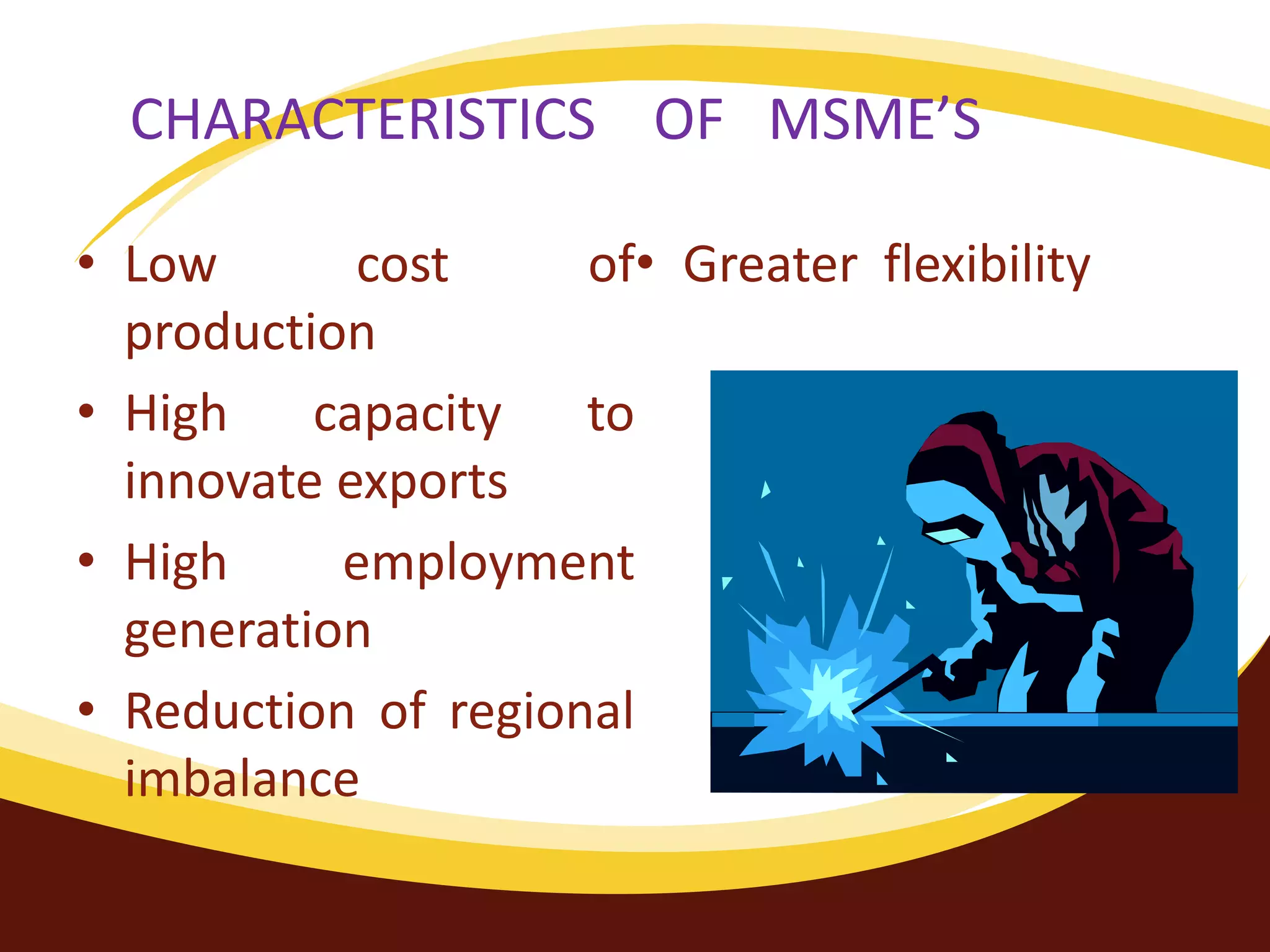
CHARACTERISTICS OF MSME’S
•Low cost of
production
• High capacity to
innovate exports
• High employment
generation
• Reduction of regional
imbalance
• Greater flexibility
12.
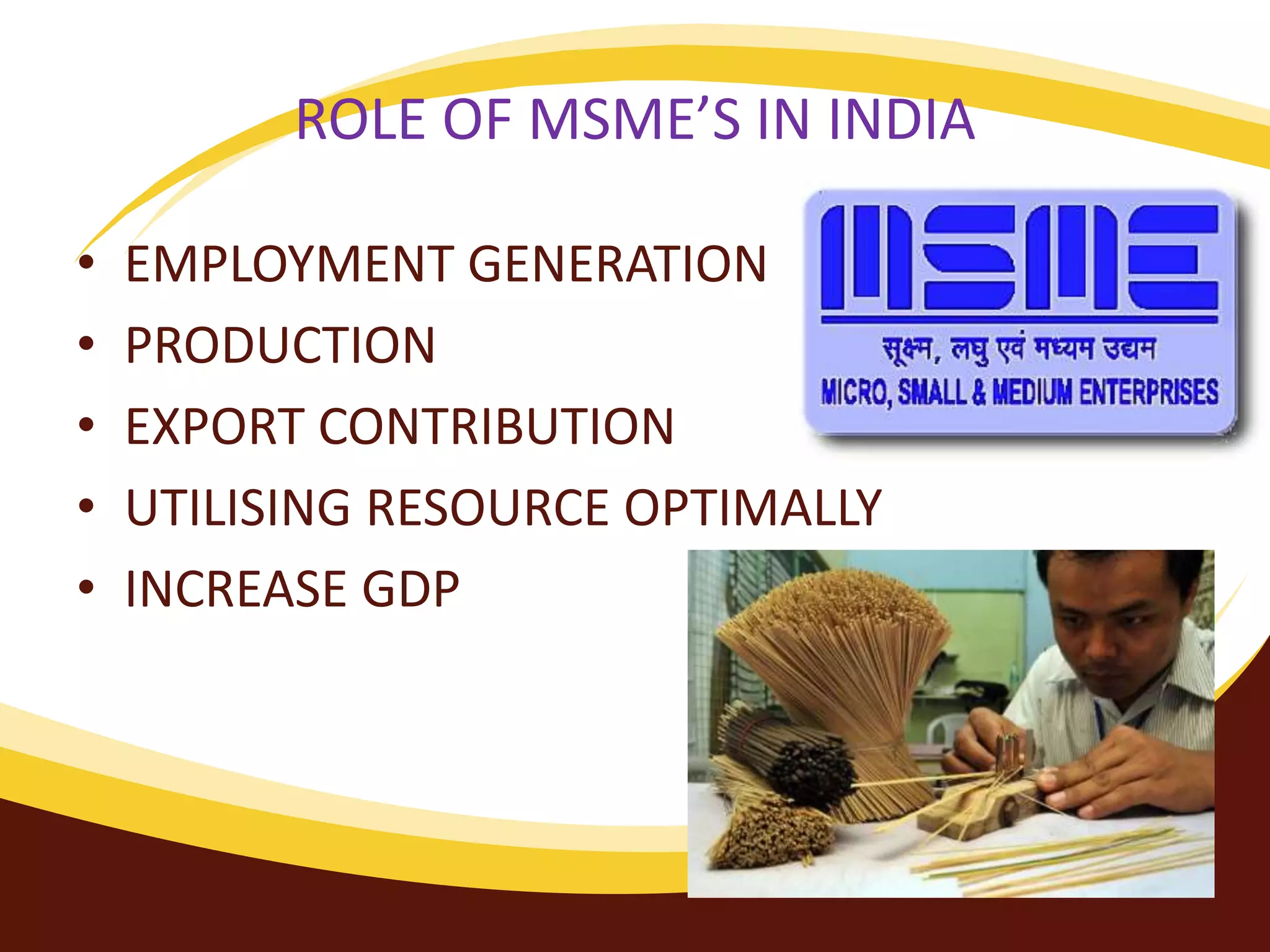
ROLE OF MSME’SIN INDIA
• EMPLOYMENT GENERATION
• PRODUCTION
• EXPORT CONTRIBUTION
• UTILISING RESOURCE OPTIMALLY
• INCREASE GDP
13.
PROBLEMS OF MSME’s
•Financial Problem- Credit
facility only up to 30%
• Raw material improper
• Technological problem –
Less Advertisement
• Managerial problem of
MSME
14.
SUGGESTIONS FOR IMPROVEMENT
•Supplyof technology
•Conduct of survey
•Awareness creation
•Involvement of stakeholders
•Venture capital
Interaction with research and
development sector
•Incrimination vehicle
15.
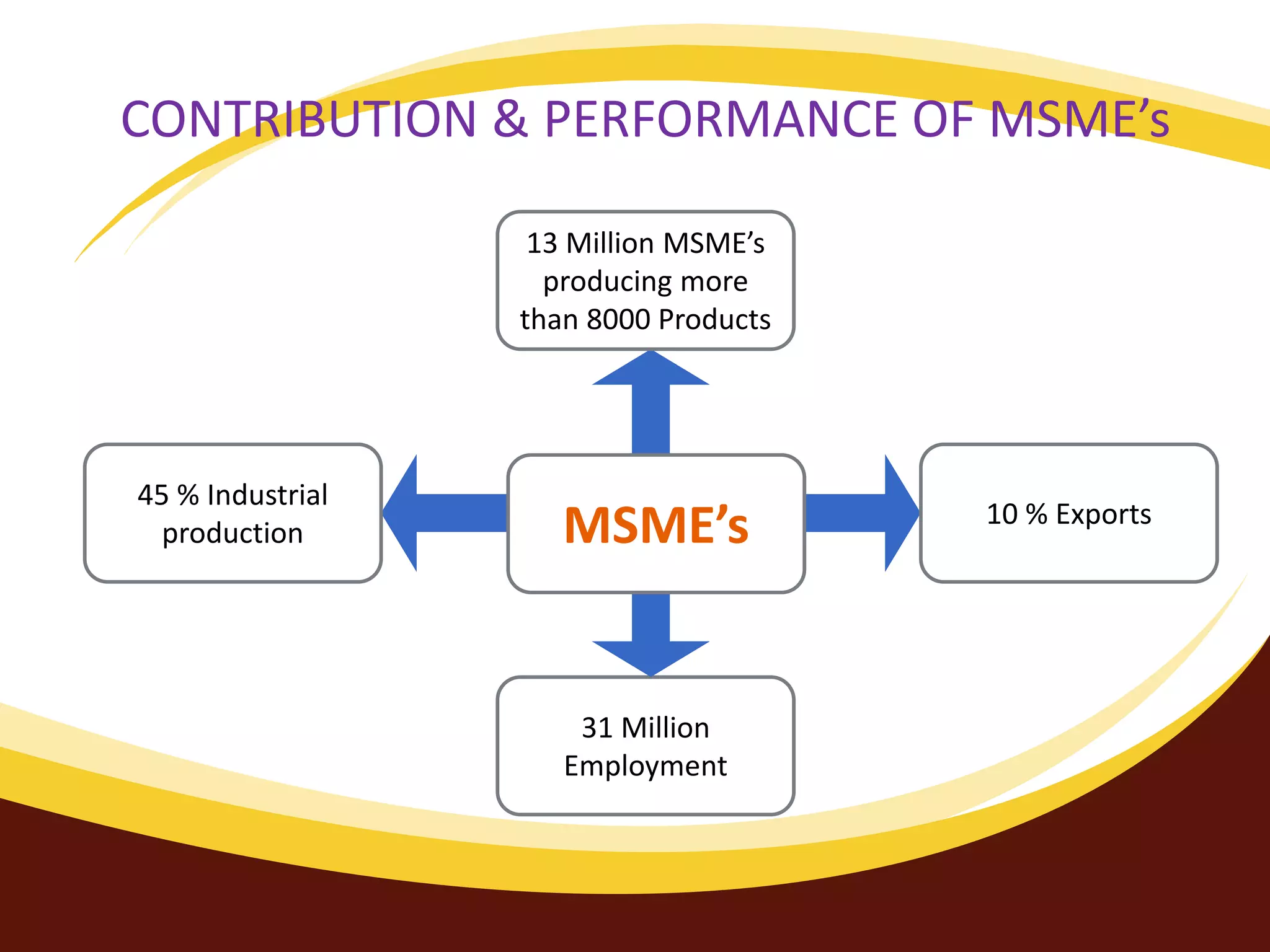
CONTRIBUTION & PERFORMANCEOF MSME’s
31 Million
Employment
13 Million MSME’s
producing more
than 8000 Products
10 % Exports
45 % Industrial
production MSME’s
SECTOR OF MSME
Thischart shows the percentage of types of MSME enterprises
13% enterprises are engaged in service sector and 87 % enterprises are
engaged in manufacturing sector
SERVICE
MANUFACTURING
13%
87%