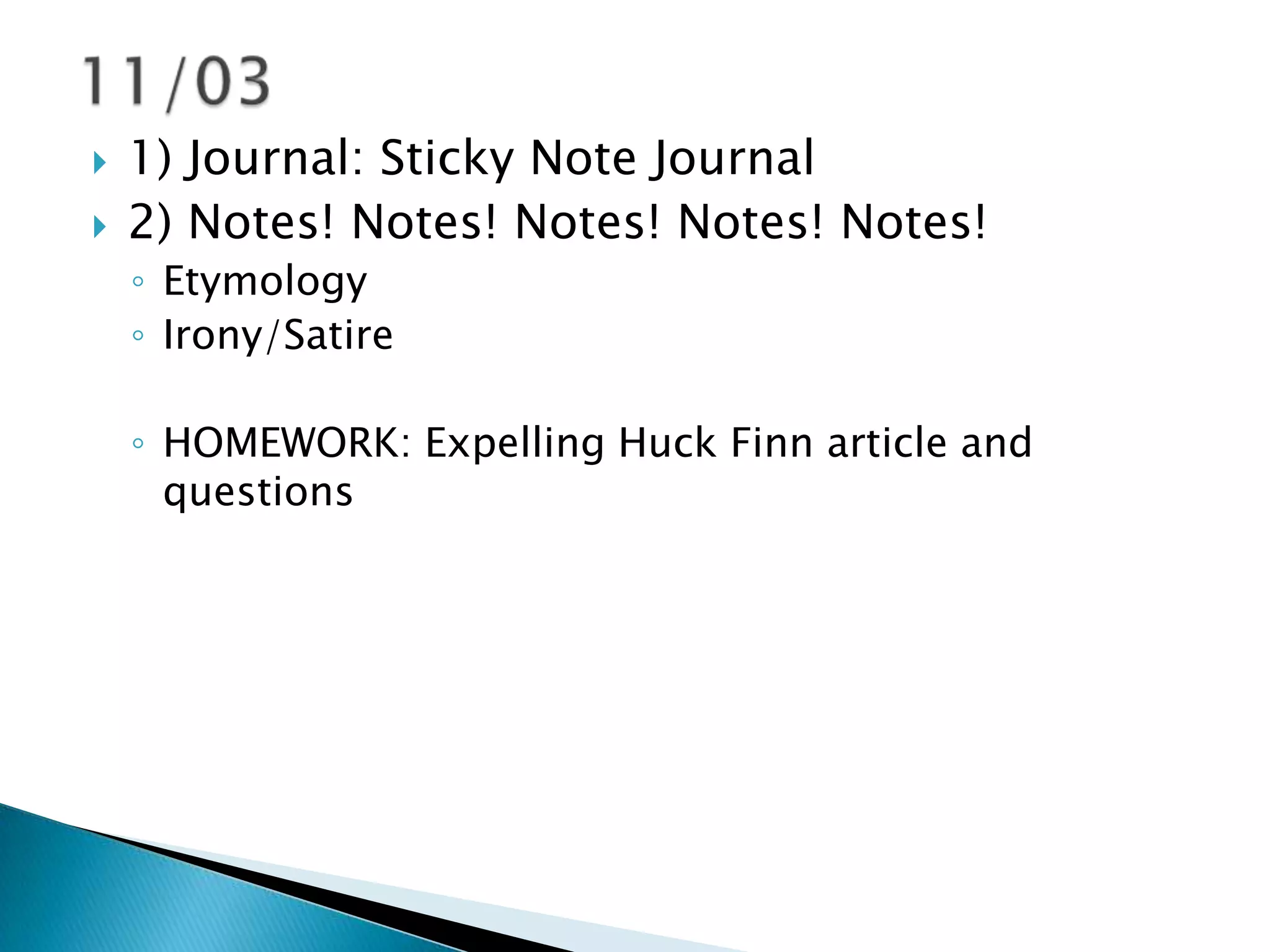
   1) Journal: Sticky Note Journal
   2) Notes! Notes! Notes! Notes! Notes!
    ◦ Etymology
    ◦ Irony/Satire

    ◦ HOMEWORK: Expelling Huck Finn article and
      questions
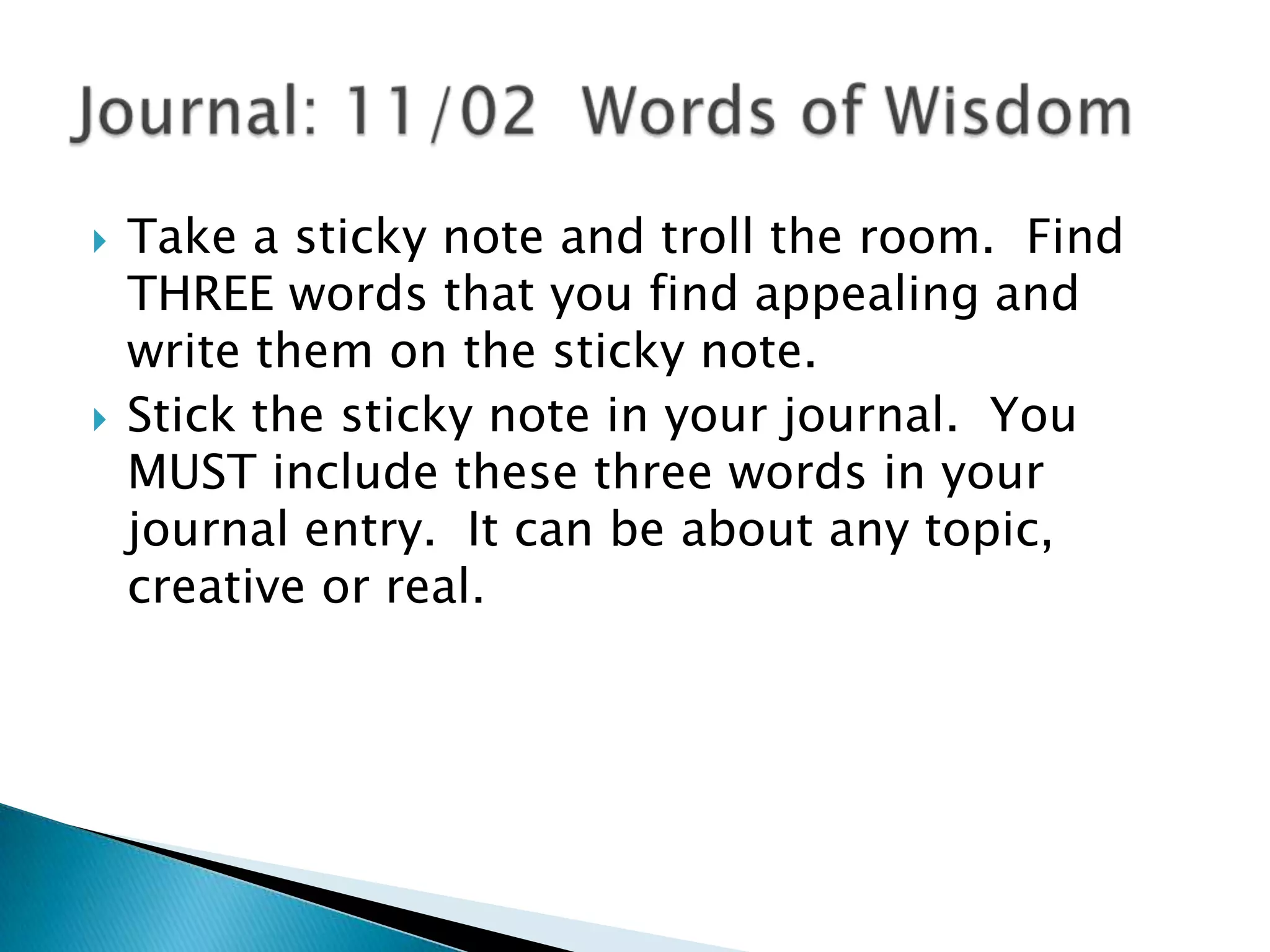
   Take a sticky note and troll the room. Find
    THREE words that you find appealing and
    write them on the sticky note.
   Stick the sticky note in your journal. You
    MUST include these three words in your
    journal entry. It can be about any topic,
    creative or real.
◦ Example: Peaceful Dreams         Disaster
  When I was a little girl, I had night terrors. I have
   vague memories of going to sleep and waking up in
   strange places. Like the living room floor, the bathtub,
   the stoop on the front porch. I am not sure what the
   exact content of these dreams were, just that I had a
   disastrous feeling as I drifted off to sleep. I know that
   these episodes terrified my parents. Even though the
   doctor said it was actually fairly common and not a
   symptom of anything, they would just pray for me to
   have peaceful sleep. Luckily, I grew out of them when I
   was about 8.
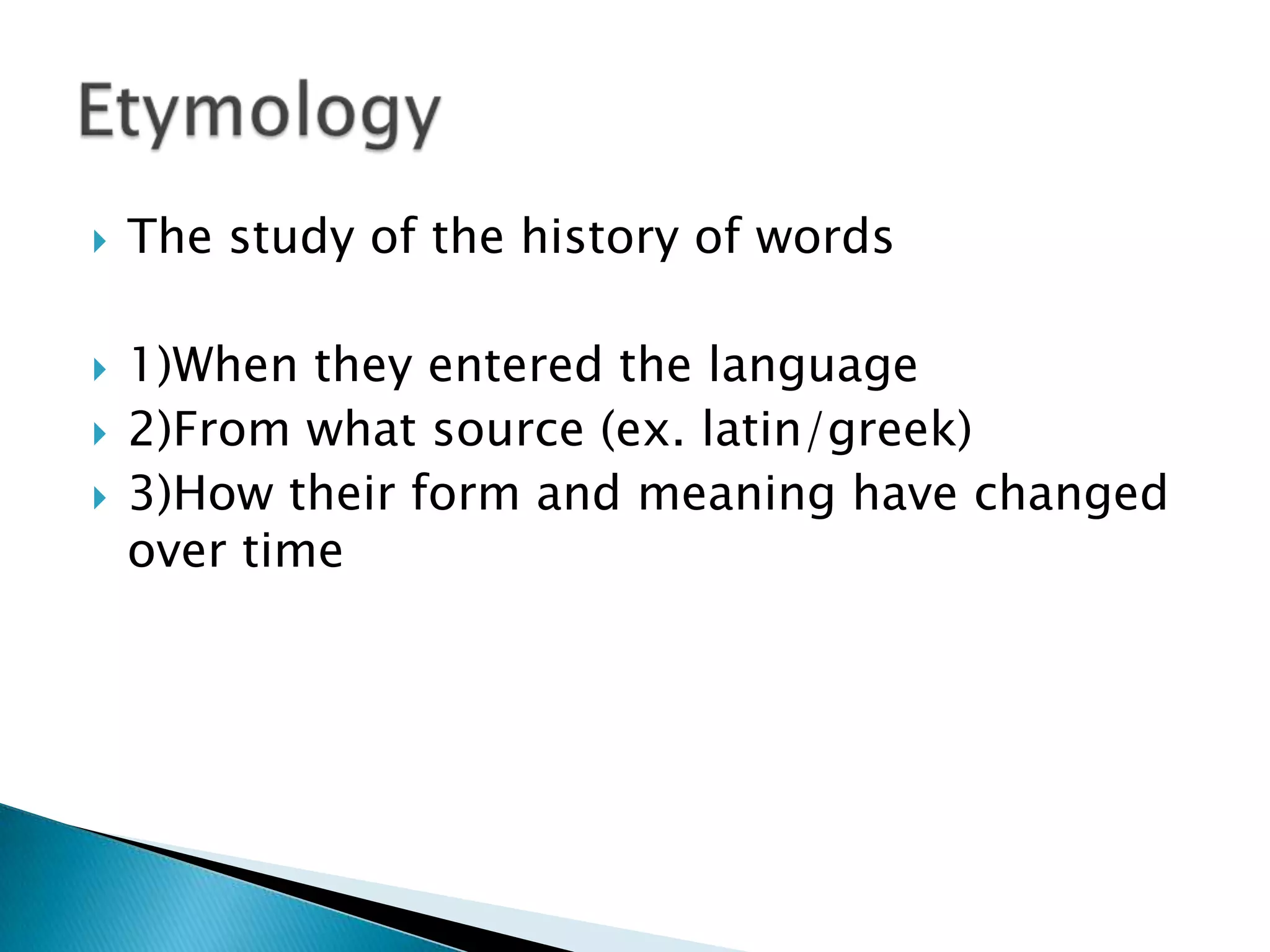
   The study of the history of words

   1)When they entered the language
   2)From what source (ex. latin/greek)
   3)How their form and meaning have changed
    over time
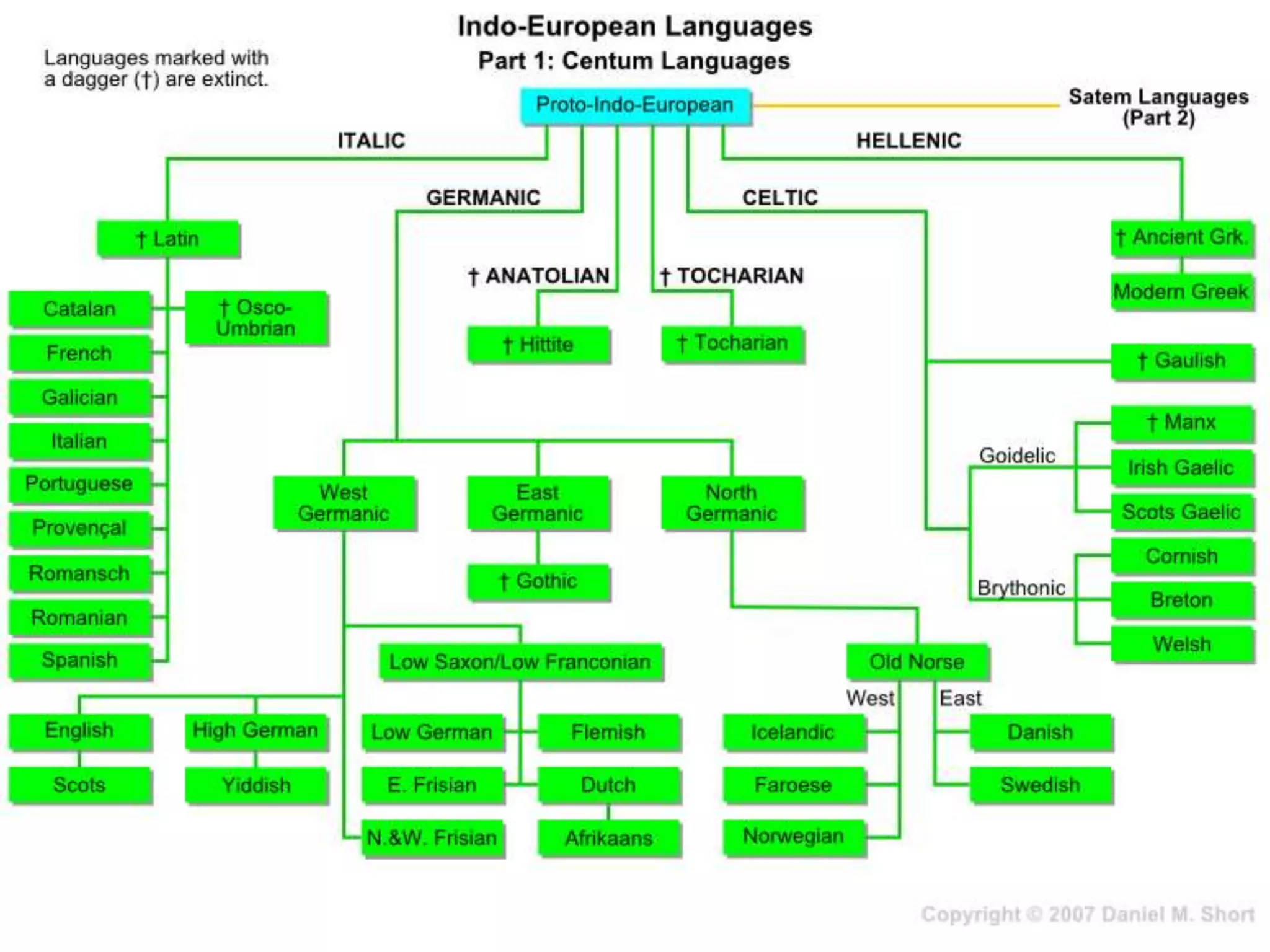
 Whatlanguage is English
derived from???
   German:
    http://www.youtube.com/watch?v=BsU6vLIaWH4

   Old English:

http://www.youtube.com/watch?v=hkaPNlOz0N4&
 feature=related

   Middle English:
    http://www.youtube.com/watch?v=QE0MtENfOM
    U
   Modern English:
   http://www.youtube.com/watch?v=lj3iNxZ8Dww
5000
1500
 Canyou think of any
words in existence today
that were not around in
Shakespeare’s time? (mid
1500’s)
 Can
    you think of any
words whose meaning
has changed since
Shakespeare’s time?
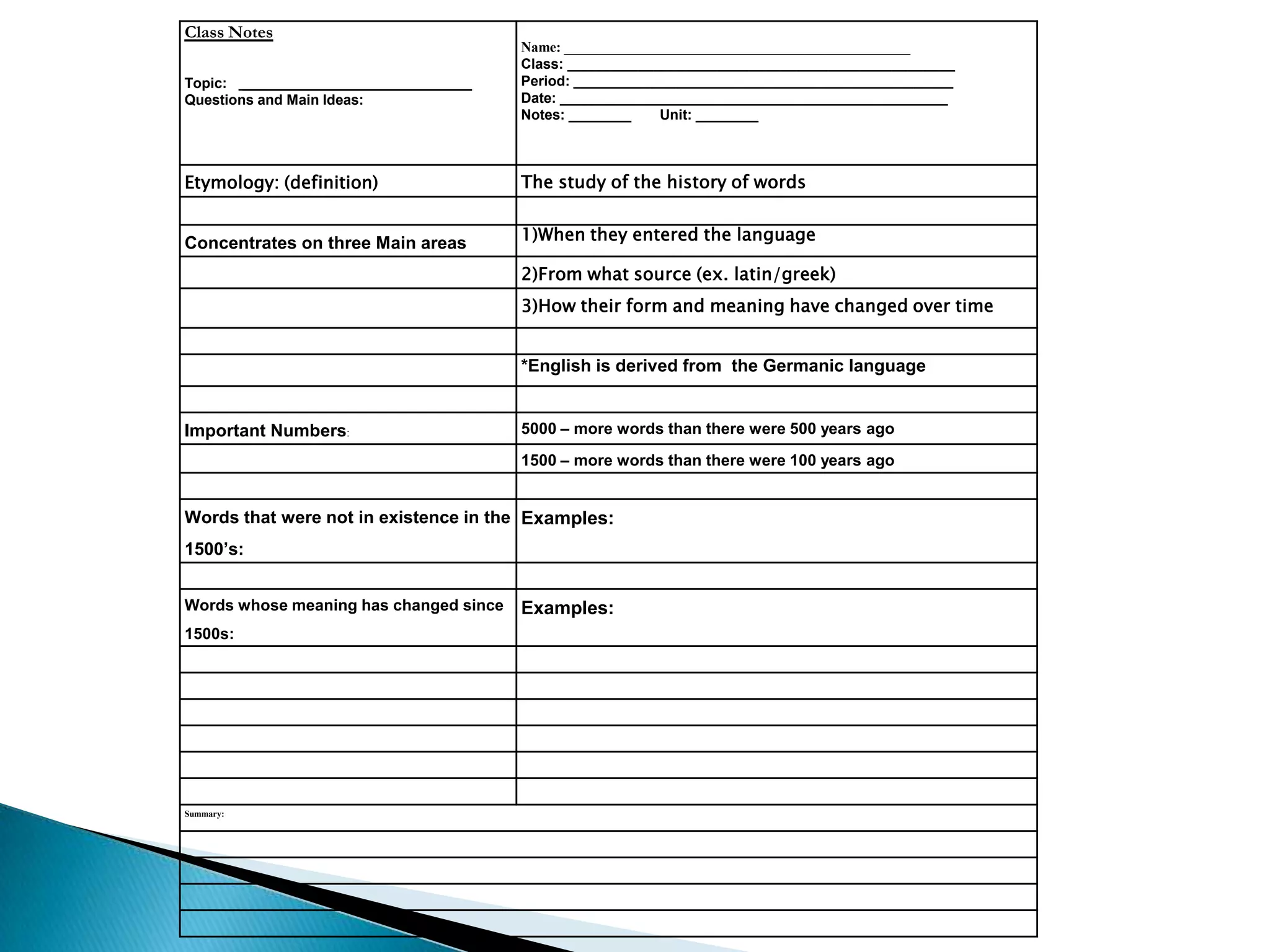
Class Notes
                                        Name: _________________________________________________
                                        Class: _________________________________________________
Topic: _____________________________    Period: ________________________________________________
Questions and Main Ideas:               Date: _________________________________________________
                                        Notes: ________    Unit: ________


Etymology: (definition)                 The study of the history of words


Concentrates on three Main areas        1)When they entered the language

                                        2)From what source (ex. latin/greek)
                                        3)How their form and meaning have changed over time


                                        *English is derived from the Germanic language


Important Numbers:                      5000 – more words than there were 500 years ago

                                        1500 – more words than there were 100 years ago


Words that were not in existence in the Examples:
1500’s:


Words whose meaning has changed since   Examples:
1500s:


Summary:
   Write one sentence that makes perfect sense
    today, that would have made NO sense 100
    years ago.
   My Example:
   While blogging on Facebook about his new
    grill, Sean was listening to ‘Lil Wayne on his
    MP3 and texting a hottie on his Slider.
   is the primary unit of a word, which carries
    the most significant aspects of content and
    cannot be reduced into smaller constituents
   Usually either Latin or Greek based
   http://www.youtube.com/watch?v=ZOJrjNR7
    ZZM
Class Notes
                                       Name: _________________________________________________
                                       Class: _________________________________________________
Topic: _____________________________   Period: ________________________________________________
Questions and Main Ideas:              Date: _________________________________________________
                                       Notes: ________    Unit: ________


Etymology: (definition)                The study of the history of words


Concentrates on three Main areas       1)When they entered the language

                                       2)From what source (ex. latin/greek)
                                       3)How their form and meaning have changed over time


                                       *English is derived from the Germanic language


Important Numbers:                     5000 – more words than there were 500 years ago

                                       1500 – more words than there were 100 years ago


Words that were not in existence in    Examples:
the 1500’s:


Words whose meaning has changed        Examples:
since 1500s:


Root Words:                            The smallest unit of a word. The part that carries the base
                                       meaning. Cannot be broken into smaller parts
                                       * Usually Greek or Latin Based
 EXAMPLES:

Summary:
Root   Meaning   Examples
   Meaning: Warlike
   Examples: (what word with this definition has
    BELLI as the root??)
   Answer:

   Belligerent
   Answer:
   Antebellum
   Answer:
   Rebellion
   Meaning:
   Water
   Answer:
   Aquarium
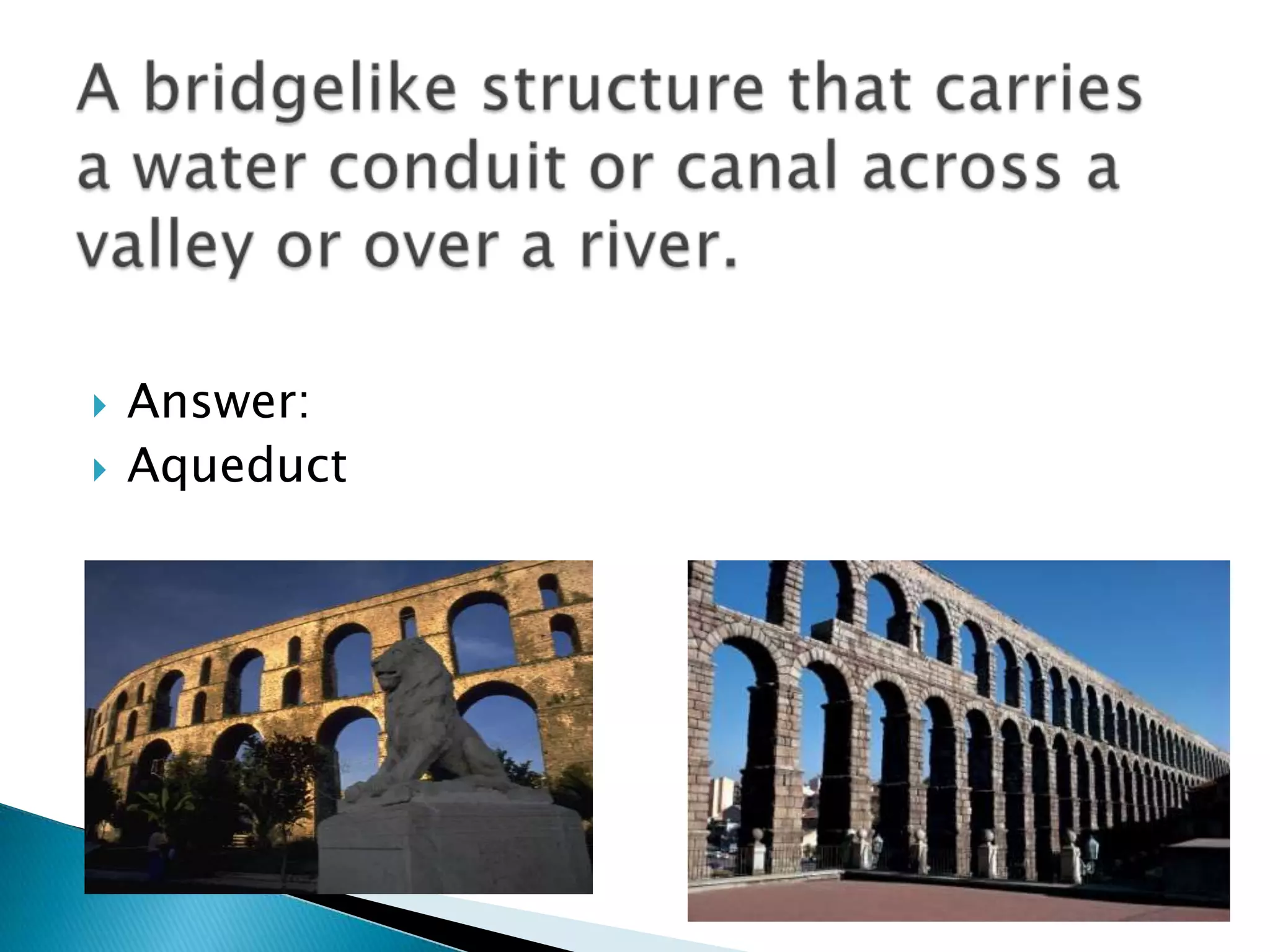
   Answer:
   Aqueduct
   Answer:
   Aquanaut
   Meaning:
   Believe
   Answer:
   Credible
   Answer:
   Credit
   Answer:
   Credo
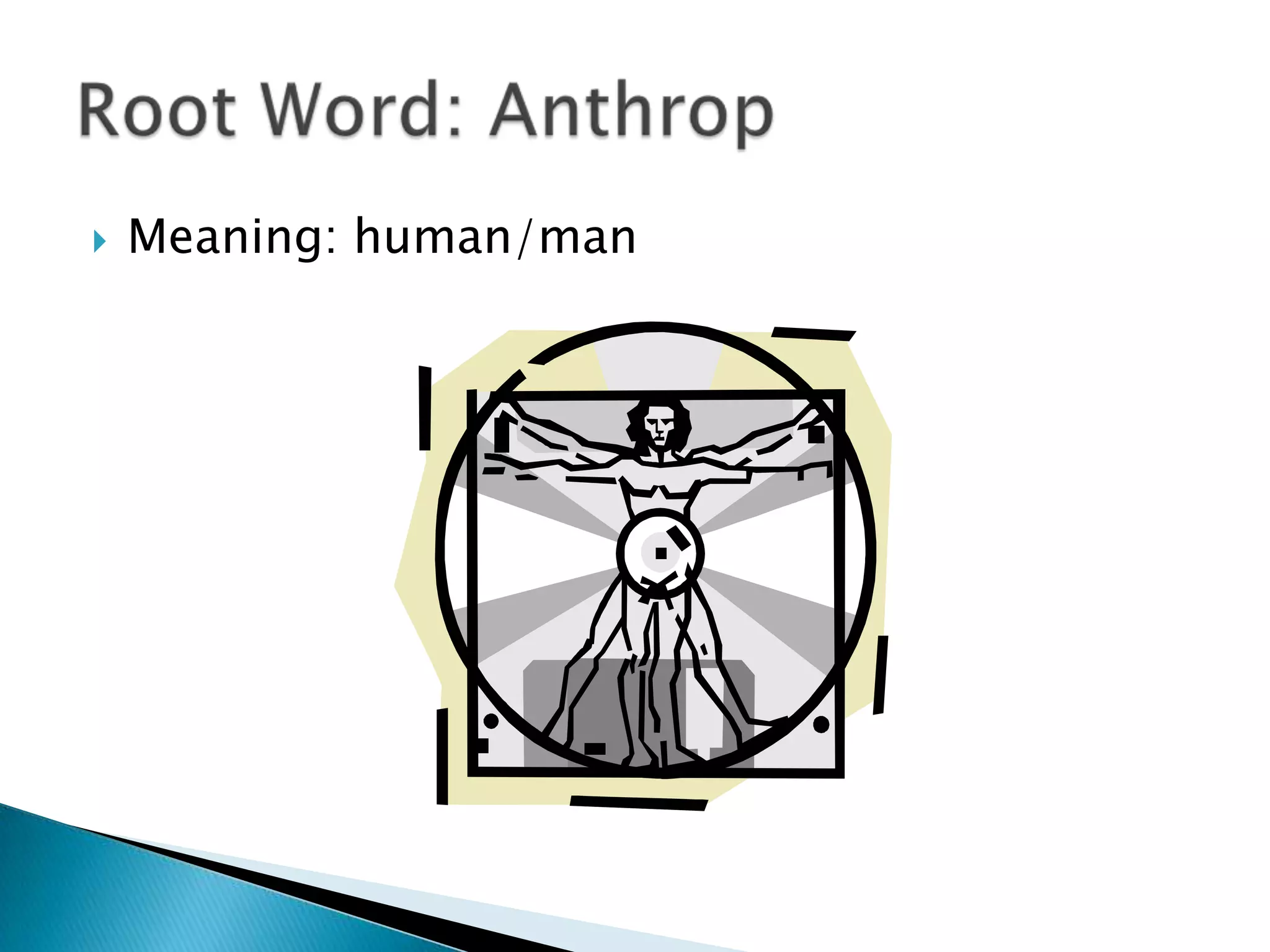
   Meaning: human/man
   Answer:
   Anthropology
   Answer:
   Misanthrope
   Meaning:
   Death
   Answer:
   Mortician
   Answer:
   Immortal
Root       Meaning      Examples
Belli          War/Warlike   Belligerent,
                             antebellum
Aqua/aque      Water         Aqaurium,
                             aquanaut
Cred           Believe       Credo, credible
Anthrop        Human/man     Anthropology
                             Misanthrope
Mor/Mort       Death         Mortician,
                             Immortal
   Write at least three sentences putting this
    lesson into your own words.

Etymology

  • 1.
    1) Journal: Sticky Note Journal  2) Notes! Notes! Notes! Notes! Notes! ◦ Etymology ◦ Irony/Satire ◦ HOMEWORK: Expelling Huck Finn article and questions
  • 2.
    Take a sticky note and troll the room. Find THREE words that you find appealing and write them on the sticky note.  Stick the sticky note in your journal. You MUST include these three words in your journal entry. It can be about any topic, creative or real.
  • 3.
    ◦ Example: PeacefulDreams Disaster  When I was a little girl, I had night terrors. I have vague memories of going to sleep and waking up in strange places. Like the living room floor, the bathtub, the stoop on the front porch. I am not sure what the exact content of these dreams were, just that I had a disastrous feeling as I drifted off to sleep. I know that these episodes terrified my parents. Even though the doctor said it was actually fairly common and not a symptom of anything, they would just pray for me to have peaceful sleep. Luckily, I grew out of them when I was about 8.
  • 5.
    The study of the history of words  1)When they entered the language  2)From what source (ex. latin/greek)  3)How their form and meaning have changed over time
  • 6.
     Whatlanguage isEnglish derived from???
  • 8.
    German: http://www.youtube.com/watch?v=BsU6vLIaWH4  Old English: http://www.youtube.com/watch?v=hkaPNlOz0N4& feature=related  Middle English: http://www.youtube.com/watch?v=QE0MtENfOM U  Modern English:  http://www.youtube.com/watch?v=lj3iNxZ8Dww
  • 9.
  • 10.
     Canyou thinkof any words in existence today that were not around in Shakespeare’s time? (mid 1500’s)
  • 11.
     Can you think of any words whose meaning has changed since Shakespeare’s time?
  • 12.
    Class Notes Name: _________________________________________________ Class: _________________________________________________ Topic: _____________________________ Period: ________________________________________________ Questions and Main Ideas: Date: _________________________________________________ Notes: ________ Unit: ________ Etymology: (definition) The study of the history of words Concentrates on three Main areas 1)When they entered the language 2)From what source (ex. latin/greek) 3)How their form and meaning have changed over time *English is derived from the Germanic language Important Numbers: 5000 – more words than there were 500 years ago 1500 – more words than there were 100 years ago Words that were not in existence in the Examples: 1500’s: Words whose meaning has changed since Examples: 1500s: Summary:
  • 13.
    Write one sentence that makes perfect sense today, that would have made NO sense 100 years ago.  My Example:  While blogging on Facebook about his new grill, Sean was listening to ‘Lil Wayne on his MP3 and texting a hottie on his Slider.
  • 14.
    is the primary unit of a word, which carries the most significant aspects of content and cannot be reduced into smaller constituents  Usually either Latin or Greek based  http://www.youtube.com/watch?v=ZOJrjNR7 ZZM
  • 15.
    Class Notes Name: _________________________________________________ Class: _________________________________________________ Topic: _____________________________ Period: ________________________________________________ Questions and Main Ideas: Date: _________________________________________________ Notes: ________ Unit: ________ Etymology: (definition) The study of the history of words Concentrates on three Main areas 1)When they entered the language 2)From what source (ex. latin/greek) 3)How their form and meaning have changed over time *English is derived from the Germanic language Important Numbers: 5000 – more words than there were 500 years ago 1500 – more words than there were 100 years ago Words that were not in existence in Examples: the 1500’s: Words whose meaning has changed Examples: since 1500s: Root Words: The smallest unit of a word. The part that carries the base meaning. Cannot be broken into smaller parts * Usually Greek or Latin Based EXAMPLES: Summary:
  • 16.
    Root Meaning Examples
  • 17.
    Meaning: Warlike  Examples: (what word with this definition has BELLI as the root??)
  • 18.
    Answer:  Belligerent
  • 19.
    Answer:  Antebellum
  • 20.
    Answer:  Rebellion
  • 21.
    Meaning:  Water
  • 22.
    Answer:  Aquarium
  • 23.
    Answer:  Aqueduct
  • 24.
    Answer:  Aquanaut
  • 25.
    Meaning:  Believe
  • 26.
    Answer:  Credible
  • 27.
    Answer:  Credit
  • 28.
    Answer:  Credo
  • 29.
    Meaning: human/man
  • 30.
    Answer:  Anthropology
  • 31.
    Answer:  Misanthrope
  • 32.
    Meaning:  Death
  • 33.
    Answer:  Mortician
  • 34.
    Answer:  Immortal
  • 35.
    Root Meaning Examples Belli War/Warlike Belligerent, antebellum Aqua/aque Water Aqaurium, aquanaut Cred Believe Credo, credible Anthrop Human/man Anthropology Misanthrope Mor/Mort Death Mortician, Immortal
  • 36.
    Write at least three sentences putting this lesson into your own words.