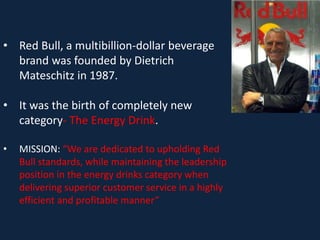
• Red Bull, a multibillion-dollar beverage
brand was founded by Dietrich
Mateschitz in 1987.
• It was the birth of completely new
category- The Energy Drink.
• MISSION: “We are dedicated to upholding Red
Bull standards, while maintaining the leadership
position in the energy drinks category when
delivering superior customer service in a highly
efficient and profitable manner”
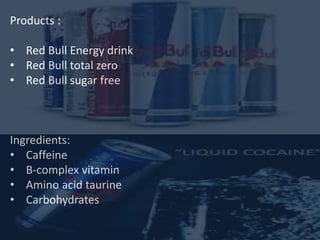
Products :
• Red Bull Energy drink
• Red Bull total zero
• Red Bull sugar free
Ingredients:
• Caffeine
• B-complex vitamin
• Amino acid taurine
• Carbohydrates
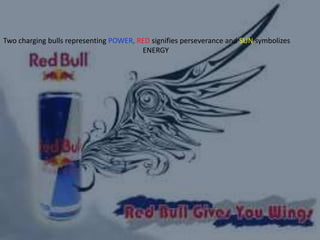
Two charging bulls representing POWER, RED signifies perseverance and SUN symbolizes
ENERGY
PRESENT POSITION IN THE MARKET:
• Markey share of 44%
• Positioned in 171 countries
• A history of 30 years
• #70 World’s most valuable brand
• Sales of around $6.4 B
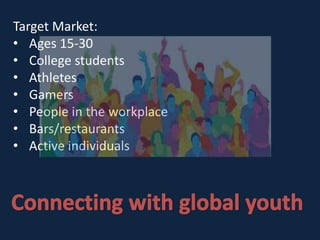
Target Market:
• Ages 15-30
• College students
• Athletes
• Gamers
• People in the workplace
• Bars/restaurants
• Active individuals
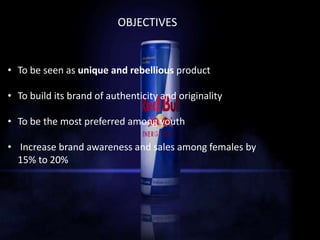
OBJECTIVES
• To be seen as unique and rebellious product
• To build its brand of authenticity and originality
• To be the most preferred among youth
• Increase brand awareness and sales among females by
15% to 20%
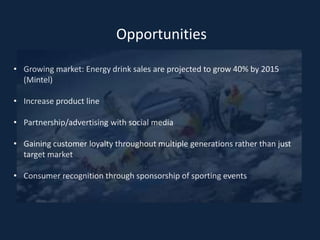
Opportunities
• Growing market: Energy drink sales are projected to grow 40% by 2015
(Mintel)
• Increase product line
• Partnership/advertising with social media
• Gaining customer loyalty throughout multiple generations rather than just
target market
• Consumer recognition through sponsorship of sporting events
MARKETING STRATEGIES:
• Sponsorships
• Seeding program
• Sampling program
PROMOTION
Red Bull takes advantage of BUZZ MARKETING techniques:
• Personal selling: free distribution samples in college campuses, clubs, and places where
many young people hang out.
• Advertising: Strong athlete endorsements and sponsorship of events in the extreme sports
world.
• Social Media: Use Facebook and twitter to reach out to their consumers, release
promotions and endorse athletes.
• Build hype around their athletes and events with YouTube videos.
PROMOTION
EVENTS and EXPERIENCES:
• Create and host big tailgate tent party with games and giveaways
• Free spirit cans supplied by the Wings Team before the games and at the
tailgate party tent
• Competitions held throughout day to win ultimate Red Bull tailgate swag
• Live music or DJ at the tailgate tent
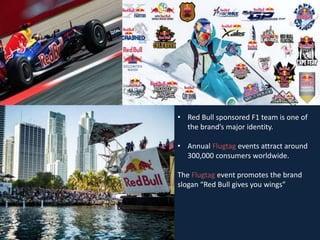
• Red Bull sponsored F1 team is one of
the brand’s major identity.
• Annual Flugtag events attract around
300,000 consumers worldwide.
The Flugtag event promotes the brand
slogan “Red Bull gives you wings”
THE COMPETITION
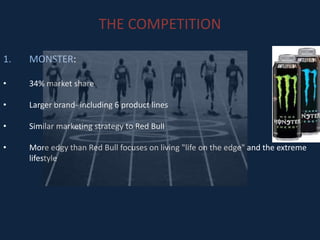
1. MONSTER:
• 34% market share
• Larger brand- including 6 product lines
• Similar marketing strategy to Red Bull
• More edgy than Red Bull focuses on living "life on the edge" and the extreme
lifestyle
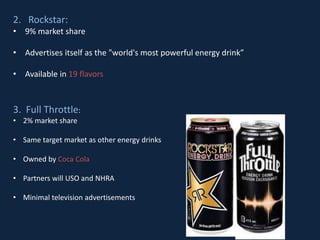
2. Rockstar:
• 9% market share
• Advertises itself as the "world's most powerful energy drink”
• Available in 19 flavors
3. Full Throttle:
• 2% market share
• Same target market as other energy drinks
• Owned by Coca Cola
• Partners will USO and NHRA
• Minimal television advertisements
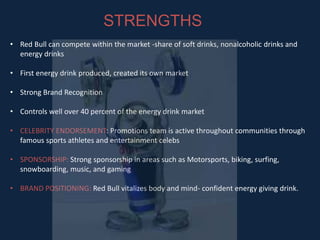
STRENGTHS
• Red Bull can compete within the market -share of soft drinks, nonalcoholic drinks and
energy drinks
• First energy drink produced, created its own market
• Strong Brand Recognition
• Controls well over 40 percent of the energy drink market
• CELEBRITY ENDORSEMENT: Promotions team is active throughout communities through
famous sports athletes and entertainment celebs
• SPONSORSHIP: Strong sponsorship in areas such as Motorsports, biking, surfing,
snowboarding, music, and gaming
• BRAND POSITIONING: Red Bull vitalizes body and mind- confident energy giving drink.
WEAKNESSES
• Product hasn't changed much over the years
• Limited packaging options at the retail level.
• Limited Product Line
• Only have 6 total: Original, Sugar-Free, Total Zero, and
the Red Bull editions
RISKS
• Health concerns: tougher rules from government on high caffeine content
• Failure in the new product/service
• Negative impact from extreme sports
• Unexpected threats reflecting poorly on the brands image:
1. events- getting out of control or irresponsible
1. sponsorships making bad decisions or being poor role models
Should Red Bull start traditional advertising?
Why or Why not?
• Modern media channels have to be used for advertising
• Traditional method is not effective to target youth market
• Strong presence in social media platforms and use of high technology
are important keeping in mind the target market
• The non-traditional advertising through continuing sponsoring its
present events bring brand awareness targeting the Gen Y.
VIEWS ON EFFECTIVENESS OF RED BULL’S SPONSORSHIP
• Stratos is being used as means of having their slogan “Red Bull
gives you wings”
• Sponsoring high energy events helps in promoting the concept
that Red Bull drinks can invoke such high energy and power to
consumer
• Company should draw a line when costs of sponsorship are very
high and do not foresee themselves being able to make any
profits/improvements or is ineffective
SUMMARY
Introduction
Market position
Target Market
Objectives
Opportunities
Marketing strategies
Promotion
Competition
Strengths, weakness and risks
Views on Sponsorship and Traditional advertising
Created by S SHAMANTH BHARGAV, PES
UNIVERSITY BANGALORE, during a marketing
internship under Mr. SAMEER MATHUR, IIM
LUCKNOW

Red bull case study

  • 2.
    • Red Bull,a multibillion-dollar beverage brand was founded by Dietrich Mateschitz in 1987. • It was the birth of completely new category- The Energy Drink. • MISSION: “We are dedicated to upholding Red Bull standards, while maintaining the leadership position in the energy drinks category when delivering superior customer service in a highly efficient and profitable manner”
  • 3.
    Products : • RedBull Energy drink • Red Bull total zero • Red Bull sugar free Ingredients: • Caffeine • B-complex vitamin • Amino acid taurine • Carbohydrates
  • 4.
    Two charging bullsrepresenting POWER, RED signifies perseverance and SUN symbolizes ENERGY
  • 5.
    PRESENT POSITION INTHE MARKET: • Markey share of 44% • Positioned in 171 countries • A history of 30 years • #70 World’s most valuable brand • Sales of around $6.4 B
  • 7.
    Target Market: • Ages15-30 • College students • Athletes • Gamers • People in the workplace • Bars/restaurants • Active individuals
  • 8.
    OBJECTIVES • To beseen as unique and rebellious product • To build its brand of authenticity and originality • To be the most preferred among youth • Increase brand awareness and sales among females by 15% to 20%
  • 9.
    Opportunities • Growing market:Energy drink sales are projected to grow 40% by 2015 (Mintel) • Increase product line • Partnership/advertising with social media • Gaining customer loyalty throughout multiple generations rather than just target market • Consumer recognition through sponsorship of sporting events
  • 10.
    MARKETING STRATEGIES: • Sponsorships •Seeding program • Sampling program
  • 11.
    PROMOTION Red Bull takesadvantage of BUZZ MARKETING techniques: • Personal selling: free distribution samples in college campuses, clubs, and places where many young people hang out. • Advertising: Strong athlete endorsements and sponsorship of events in the extreme sports world. • Social Media: Use Facebook and twitter to reach out to their consumers, release promotions and endorse athletes. • Build hype around their athletes and events with YouTube videos.
  • 12.
    PROMOTION EVENTS and EXPERIENCES: •Create and host big tailgate tent party with games and giveaways • Free spirit cans supplied by the Wings Team before the games and at the tailgate party tent • Competitions held throughout day to win ultimate Red Bull tailgate swag • Live music or DJ at the tailgate tent
  • 13.
    • Red Bullsponsored F1 team is one of the brand’s major identity. • Annual Flugtag events attract around 300,000 consumers worldwide. The Flugtag event promotes the brand slogan “Red Bull gives you wings”
  • 14.
    THE COMPETITION 1. MONSTER: •34% market share • Larger brand- including 6 product lines • Similar marketing strategy to Red Bull • More edgy than Red Bull focuses on living "life on the edge" and the extreme lifestyle
  • 15.
    2. Rockstar: • 9%market share • Advertises itself as the "world's most powerful energy drink” • Available in 19 flavors 3. Full Throttle: • 2% market share • Same target market as other energy drinks • Owned by Coca Cola • Partners will USO and NHRA • Minimal television advertisements
  • 16.
    STRENGTHS • Red Bullcan compete within the market -share of soft drinks, nonalcoholic drinks and energy drinks • First energy drink produced, created its own market • Strong Brand Recognition • Controls well over 40 percent of the energy drink market • CELEBRITY ENDORSEMENT: Promotions team is active throughout communities through famous sports athletes and entertainment celebs • SPONSORSHIP: Strong sponsorship in areas such as Motorsports, biking, surfing, snowboarding, music, and gaming • BRAND POSITIONING: Red Bull vitalizes body and mind- confident energy giving drink.
  • 17.
    WEAKNESSES • Product hasn'tchanged much over the years • Limited packaging options at the retail level. • Limited Product Line • Only have 6 total: Original, Sugar-Free, Total Zero, and the Red Bull editions
  • 18.
    RISKS • Health concerns:tougher rules from government on high caffeine content • Failure in the new product/service • Negative impact from extreme sports • Unexpected threats reflecting poorly on the brands image: 1. events- getting out of control or irresponsible 1. sponsorships making bad decisions or being poor role models
  • 19.
    Should Red Bullstart traditional advertising? Why or Why not? • Modern media channels have to be used for advertising • Traditional method is not effective to target youth market • Strong presence in social media platforms and use of high technology are important keeping in mind the target market • The non-traditional advertising through continuing sponsoring its present events bring brand awareness targeting the Gen Y.
  • 20.
    VIEWS ON EFFECTIVENESSOF RED BULL’S SPONSORSHIP • Stratos is being used as means of having their slogan “Red Bull gives you wings” • Sponsoring high energy events helps in promoting the concept that Red Bull drinks can invoke such high energy and power to consumer • Company should draw a line when costs of sponsorship are very high and do not foresee themselves being able to make any profits/improvements or is ineffective
  • 21.
    SUMMARY Introduction Market position Target Market Objectives Opportunities Marketingstrategies Promotion Competition Strengths, weakness and risks Views on Sponsorship and Traditional advertising
  • 22.
    Created by SSHAMANTH BHARGAV, PES UNIVERSITY BANGALORE, during a marketing internship under Mr. SAMEER MATHUR, IIM LUCKNOW